
Setting of the story
Giovanni's Room
David leaves Hella asleep and goes alone to Nice, drinks through the bars and leaves with a sailor. Baldwin never names the port, but a harbour is why a sailor is in the town.
The harbour at the eastern end of Nice, and the reason there is a sailor in the bar where David's engagement ends.
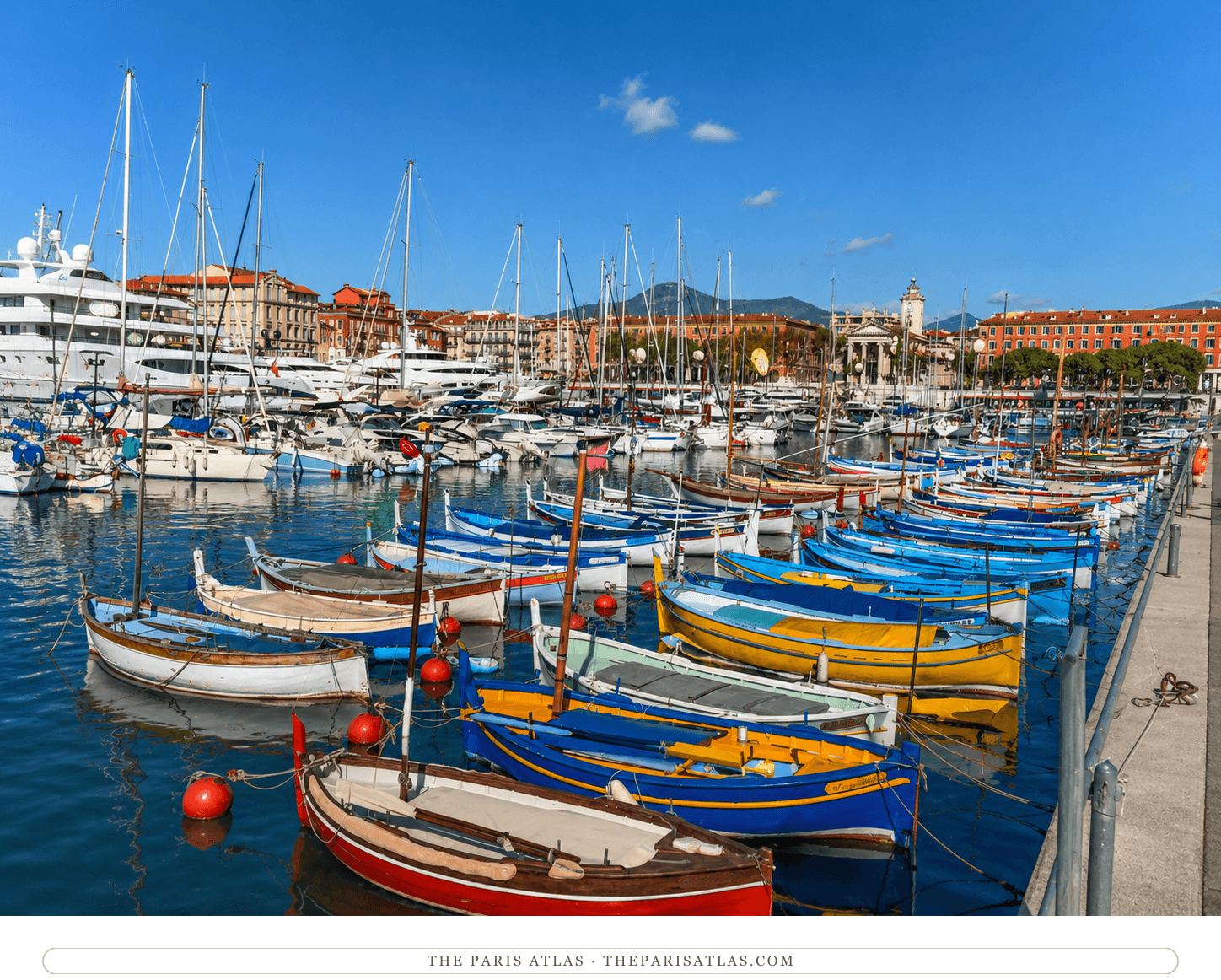
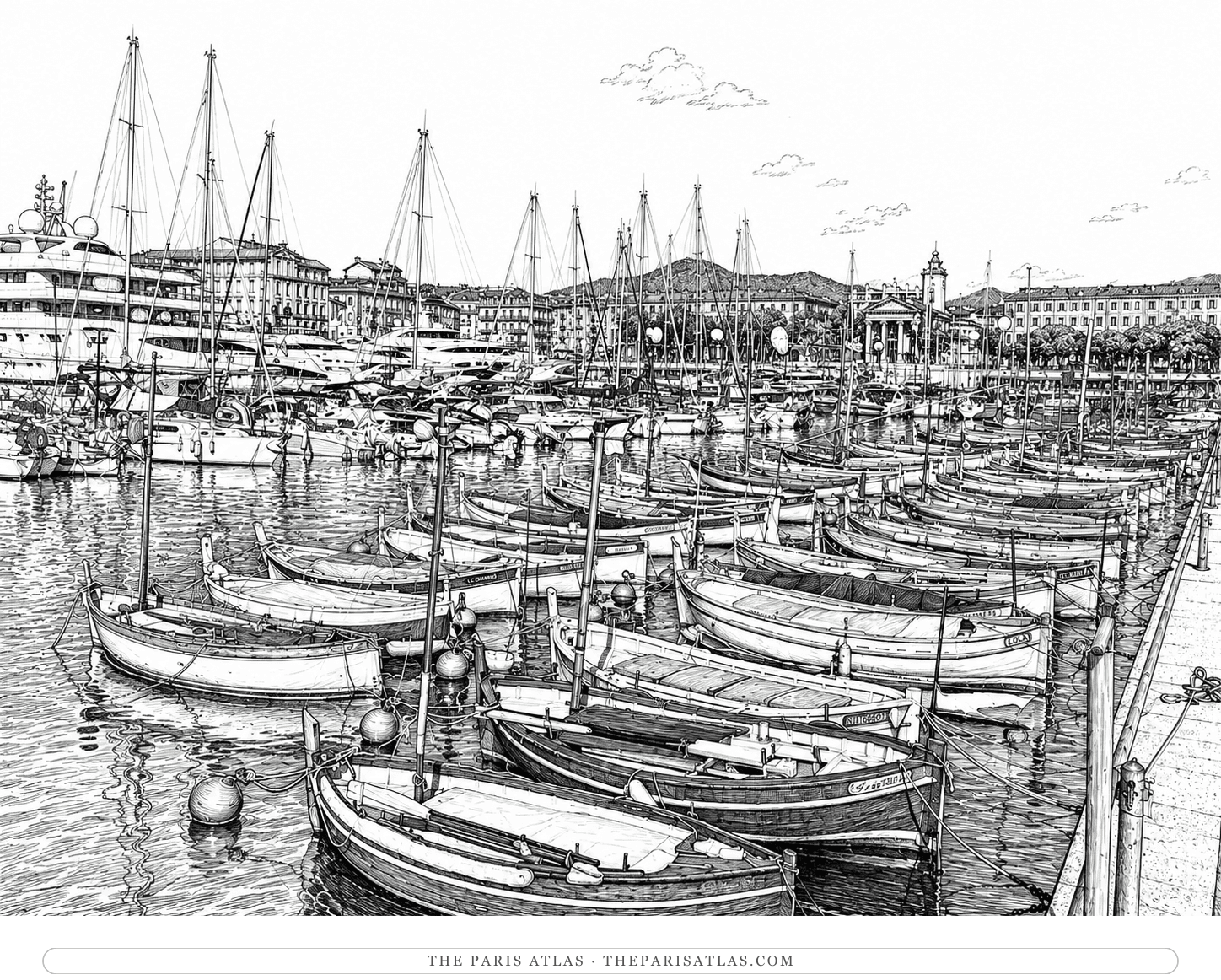
The old port of Nice was dug from 1749, when the city belonged to the House of Savoy and its trade had outgrown a beach. It is a rectangular basin at the eastern end of the seafront, under the hill of the Château, and it has been the working end of a holiday town ever since. Ferries leave from it for Corsica. Fishing boats called pointus, double-ended and painted, are still moored along the inner quay.
James Baldwin sends David here at the end of Giovanni's Room, though he never uses the word port.[1]
What Baldwin does write is a sequence. David has left Hella asleep in their house in the south and gone, alone, to Nice. He roams the bars of the town, and at the end of the first night he goes up the stairs of a dark hotel with a sailor. The sailor's leave is not over. The sailor has friends. David stays with them for days, and on the last night of that leave, drinking in a crowded bar, he looks into the mirror and sees Hella's face behind him. She has come to find him. The engagement ends there, in front of the sailor, who asks whether she has got the wrong bar.[1]
The port is the inference, and it is a reasonable one. Nice is a Mediterranean port city; a sailor on shore leave with several days to spend and friends to introduce is a man moving through the bars near his ship. Baldwin does not draw the harbour, but he puts a sailor at the centre of the scene, and the harbour is why the sailor is in the town at all.[2]
That is worth stating plainly rather than dressing up. The port is a probable setting, inferred from the characters Baldwin chose, not a place he names. He names Nice. He names the bars. He does not name the water.
What the port supplies to the book is anonymity. A harbour town's bars run on people who will be gone in a week, which is precisely what David wants on the night he is trying to stop being himself. He is not looking for a relationship; he has just refused one. The transience is the appeal, and a port is where transience is the local industry.[3]
The basin is easy to visit and has changed less than the seafront. The Quai Lunel and the Quai des Docks run the length of it, the ferry terminal sits at the far end, and the bars along the quays still open onto the water.
Digging begins on the basin, under the House of Savoy.
Nice is transferred to France; the port keeps its trade.
Giovanni's Room is published. David goes alone to Nice, picks up a sailor, and Hella finds him in a bar on the sailor's last night of leave.
Setting of the story
David leaves Hella asleep and goes alone to Nice, drinks through the bars and leaves with a sailor. Baldwin never names the port, but a harbour is why a sailor is in the town.

James Baldwin wrote about The Old Port of Nice in Giovanni's Room.
The sources below include histories, archival materials, scholarly research, and official records that informed this page. They document The Old Port of Nice, the people connected to it, and its place in Nice.


Published analysis and historical context used in preparing the The Old Port of Nice page.

Web source consulted for documented facts and historical context presented on the The Old Port of Nice page.
Web source consulted for documented facts and historical context presented on the The Old Port of Nice page.
Web source consulted for documented facts and historical context presented on the The Old Port of Nice page.
These references provide the documented foundation for this page's history and context. Claim-level citations remain attached to the specific claims they support.
 Explore more resources
Newsletter
The cafés, studios, and walk-up flats where the work was made — one story from the map in every letter.