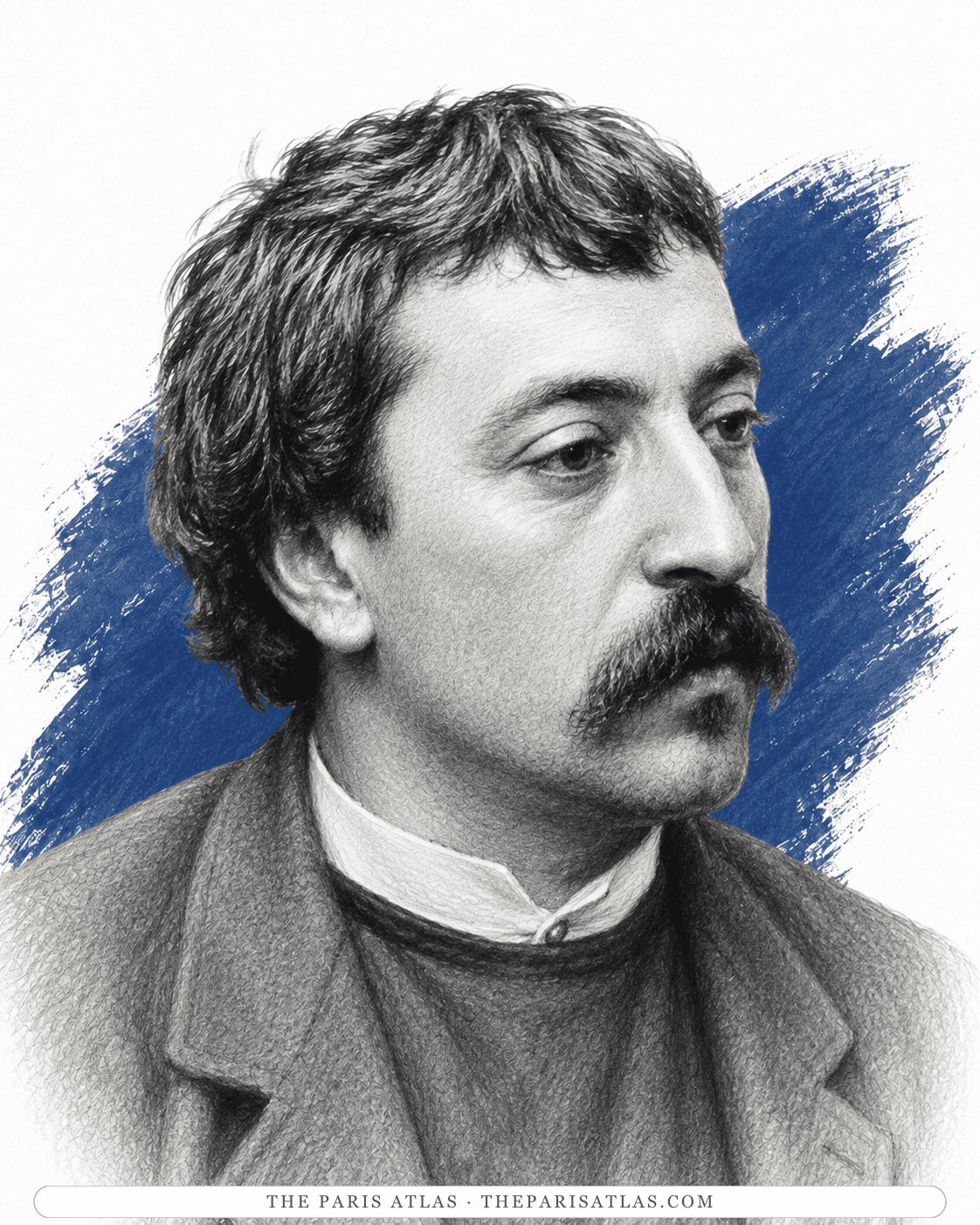
Paul Gauguin
Paul Gauguin worked as a broker's agent at the Paris Bourse from 1871 until the crash of 1882 destroyed his income and pushed him into painting full time.
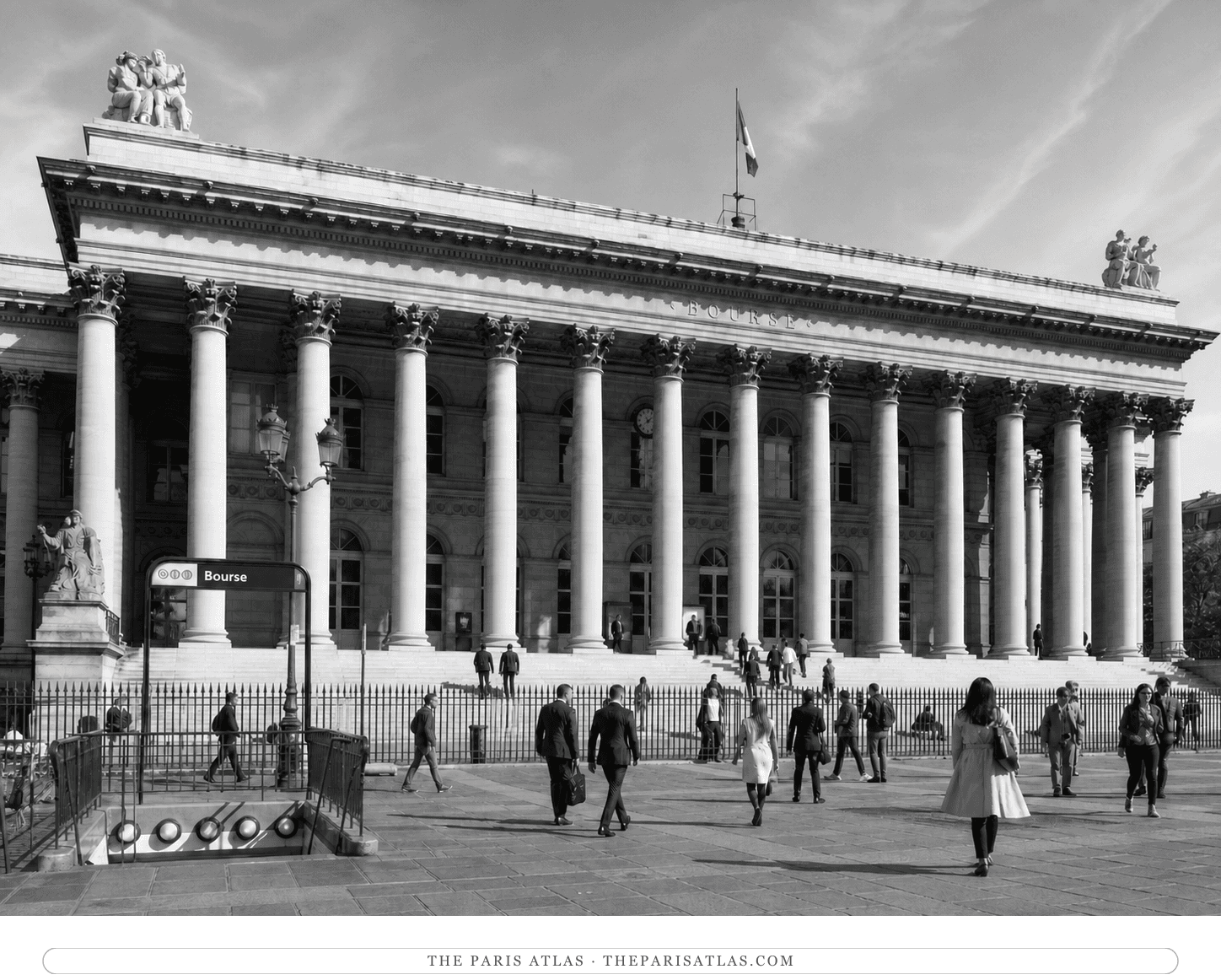
The neoclassical temple of the Paris stock exchange, where Paul Gauguin worked as a broker's agent from 1871 until the crash of 1882 turned him into a full-time painter.
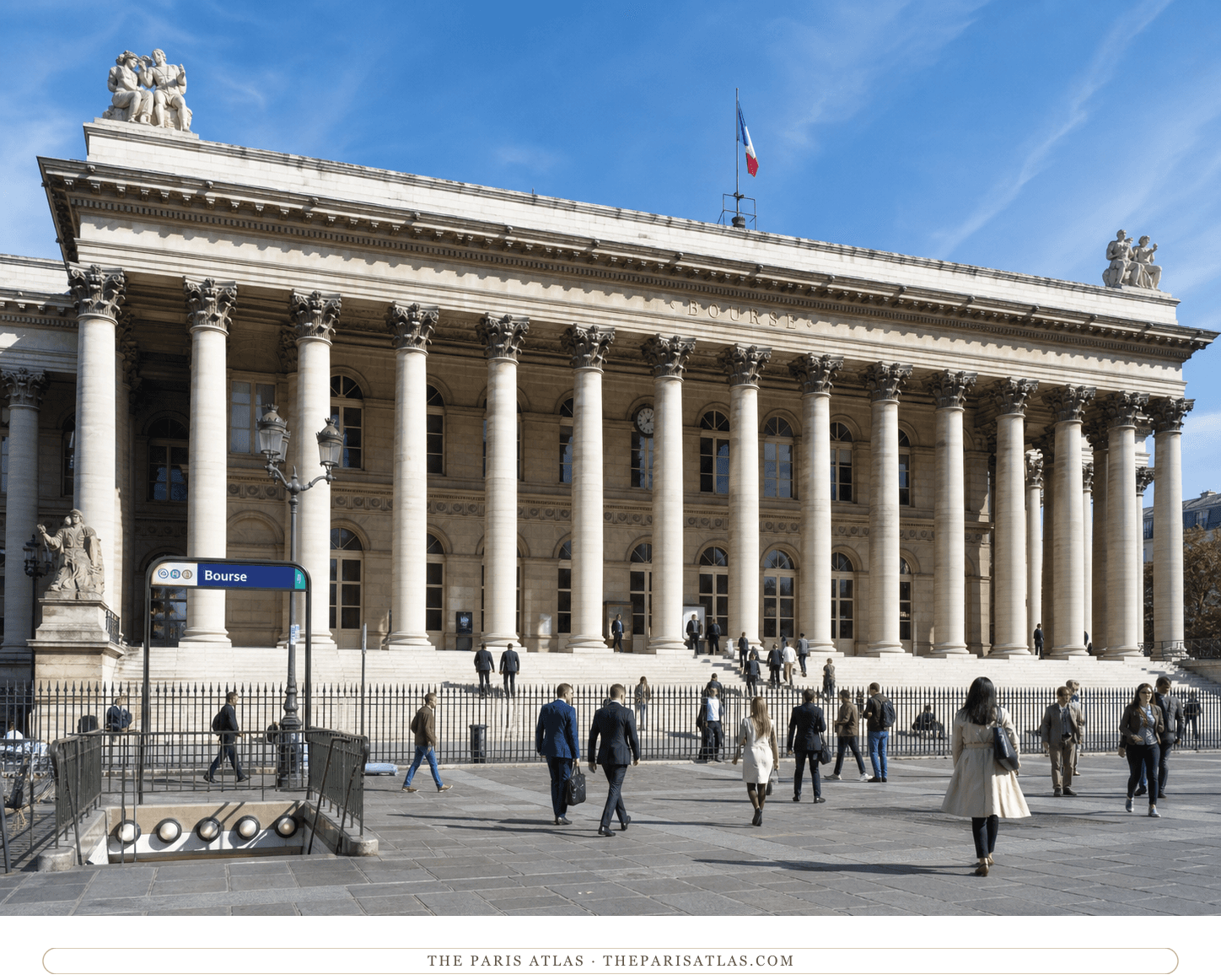
The Palais Brongniart is a Roman temple built to house a stock exchange, which tells you most of what the July Monarchy thought about finance. It opened in 1826 and the Bourse traded here for over a century and a half.[1]
Its colonnaded exterior gave an unstable and speculative activity the visual language of permanence. Traders, agents, clerks and messengers worked inside a purpose-built financial institution while the surrounding streets filled with banks, newspapers and commercial offices. Gauguin's employment belonged to this dense professional district, far from the later image of the solitary painter in a remote landscape.[1]
Paul Gauguin worked here from 1871, placed through his guardian Gustave Arosa's connections, and he was good at it. For eleven years he was a prosperous bourgeois with a Danish wife, five children and a growing collection of Impressionist pictures bought out of his earnings — a Sunday painter with money.[2]
The salary did cultural work as well as domestic work. It paid for canvases and materials, allowed Gauguin to buy paintings by Pissarro and Cézanne, and placed him in the unusual position of patron and aspiring colleague at once. He could study owned works repeatedly and support artists before his own pictures had a dependable market.
Gauguin's progress during these years was not secret or negligible. He met Pissarro through Arosa, learned from him, and began exhibiting with the Impressionists in 1879. The transformation from broker to artist had already started inside the period of employment. The crash did not create an interest in painting; it removed the income that had financed its growth.[3]
The Paris market crashed in 1882 and took his living with it. What is striking is what he did next: rather than find another position, he decided at thirty-four to paint full time. The family went to Rouen to economise, then to Copenhagen to his wife's relations, and the marriage did not survive the decision. He returned to Paris in 1885 effectively destitute with one of his sons.[4]
Calling that decision heroic leaves too much out. Mette and the children had been supported by the career he declined to replace, and the attempt to live from painting exposed them to instability they had not chosen. Gauguin's later poverty was real, but so was the labour transferred to his wife when the conventional income ended. The Bourse address makes the ethical cost part of the geography.
Every subsequent thing — Pont-Aven, Martinique, Arles, Tahiti, the Marquesas — proceeds from a choice made when this building stopped paying him.[5]
The exchange itself eventually left the building and trading became electronic. Palais Brongniart now operates as an events and conference venue. The surrounding square and exterior are public; entry depends on programmed events rather than a standing museum visit. Its present corporate use is different, but the architecture still communicates the authority finance wanted when Gauguin worked here.
The job title can obscure the daily structure it imposed. Financial work required attendance, information, relationships and disciplined timing; painting occupied the hours around it. Gauguin's later insistence on total artistic freedom emerged after years of successfully dividing those demands. His competence in one field also helps explain the strategic planning visible later in auctions, exhibitions and the construction of his public persona.
The crash did not physically destroy Palais Brongniart, but it changed the household attached to Gauguin's earnings. Market contraction reduced opportunities in the profession and diminished the value of investments and collections. Choosing not to pursue comparable salaried work turned a financial downturn into a permanent biographical break. The building supplies a concrete institution behind the abstract phrase 'the market crashed.'
Pissarro's influence developed while Gauguin was still employed. Weekends and holidays could be used to paint, and exhibitions gave the amateur increasingly public standing. That overlap is crucial: he did not resign first and then discover a vocation. By 1882, painting had already become serious enough that losing finance presented him with competing identities rather than a blank future.
The later voyages depended on skills learned in this commercial world more than the anti-bourgeois legend admits. Gauguin understood value, scarcity, promotion and the need to assemble buyers. He organised sales to fund travel and fashioned difference as part of the work's appeal. Rejecting the Bourse did not erase the broker's awareness of a market.
Today the building is neither an operating stock exchange nor an art-historical museum devoted to Gauguin. It is a monumental events venue whose programme determines interior access. The page can therefore say exactly what is there: Palais Brongniart itself stands, the public can use the surrounding square, and conferences or events occupy the interior. Gauguin's former workplace is historical, not a surviving trading floor.
That present use preserves a public-facing institutional building while changing its economic function. A visitor can read the columns, steps and central position from the square without purchasing access or assuming an event is open. The architecture is the surviving object; Gauguin's desk, routine and trading environment are not. This distinction lets the page connect finance to the painter's biography without presenting a modern conference interior as nineteenth-century evidence.
Gauguin begins work at the Bourse.
The market crashes and he loses his living.
He commits to painting full time.
Yes, for around eleven years, and a successful one. He painted as an amateur and collected Impressionists on his earnings before the 1882 crash pushed him into painting full time.
The exchange has gone; the building now hosts events and conferences, so the interior is open for programmed occasions rather than as a general visit.
Paul Gauguin worked as a broker's agent at the Paris Bourse from 1871 until the crash of 1882 destroyed his income and pushed him into painting full time.
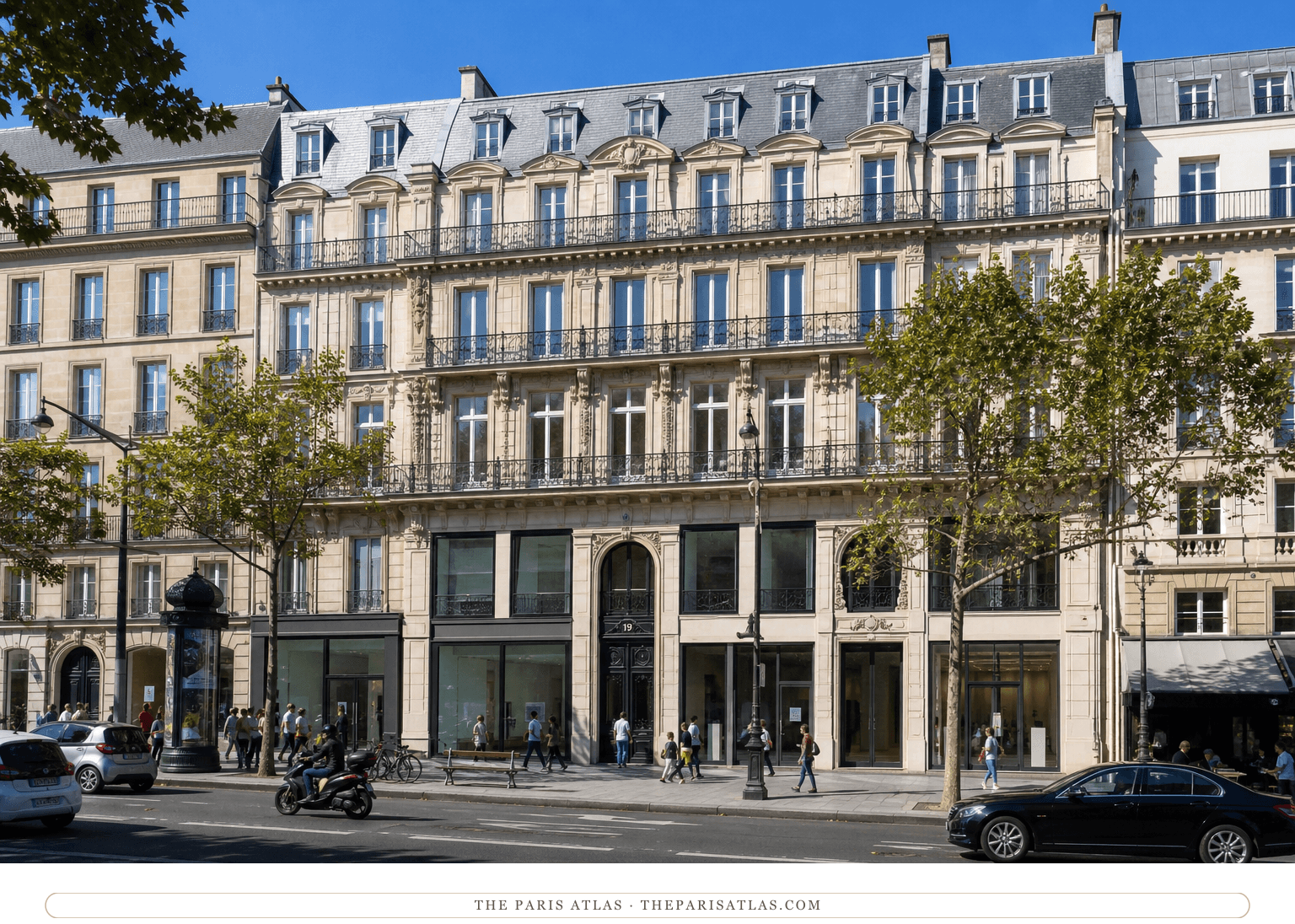
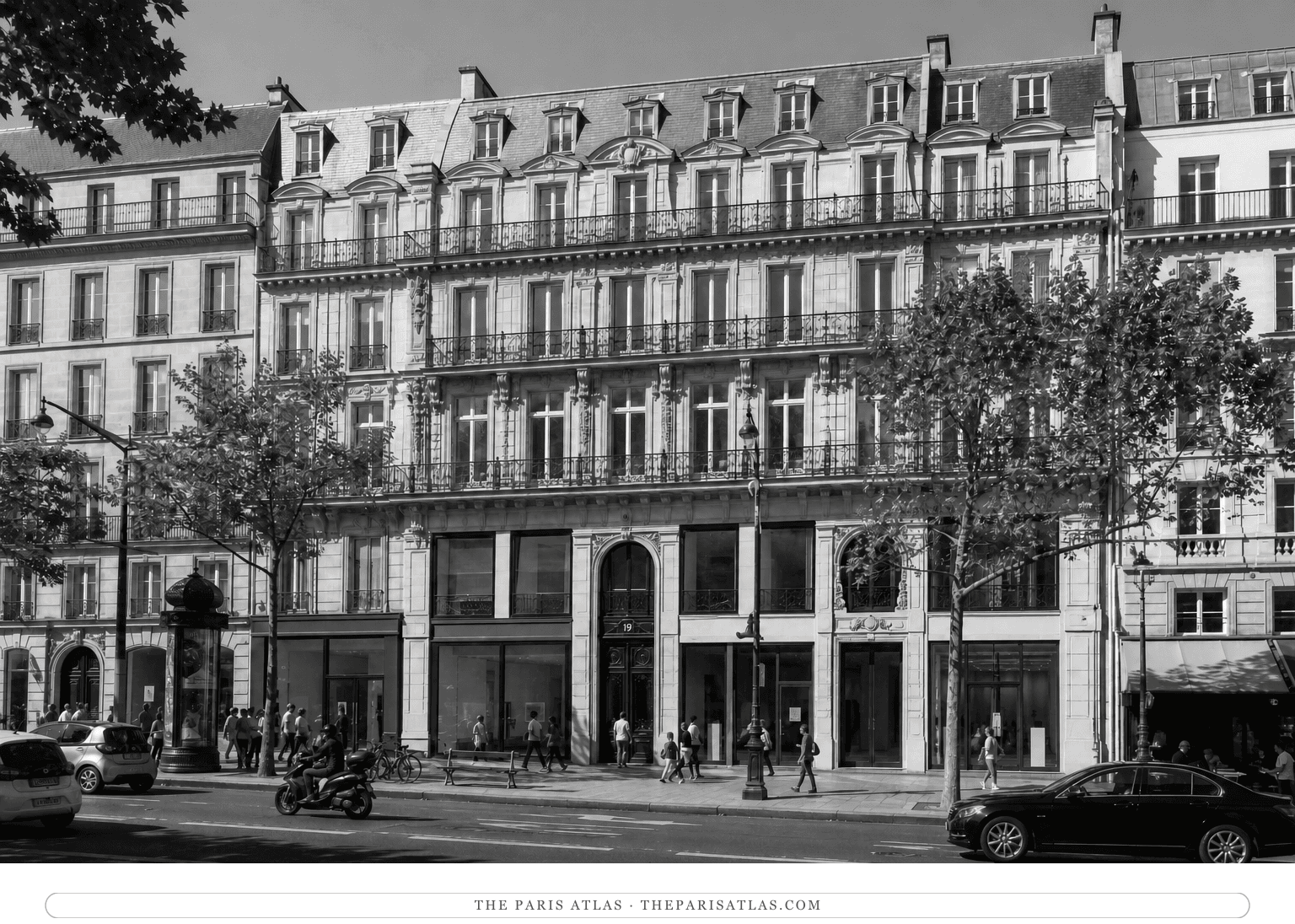
The Boussod, Valadon gallery on the boulevard Montmartre, where Berthe Morisot was given her first solo exhibition in 1892 — at the age of fifty-one, and three years before her death.
Visit the place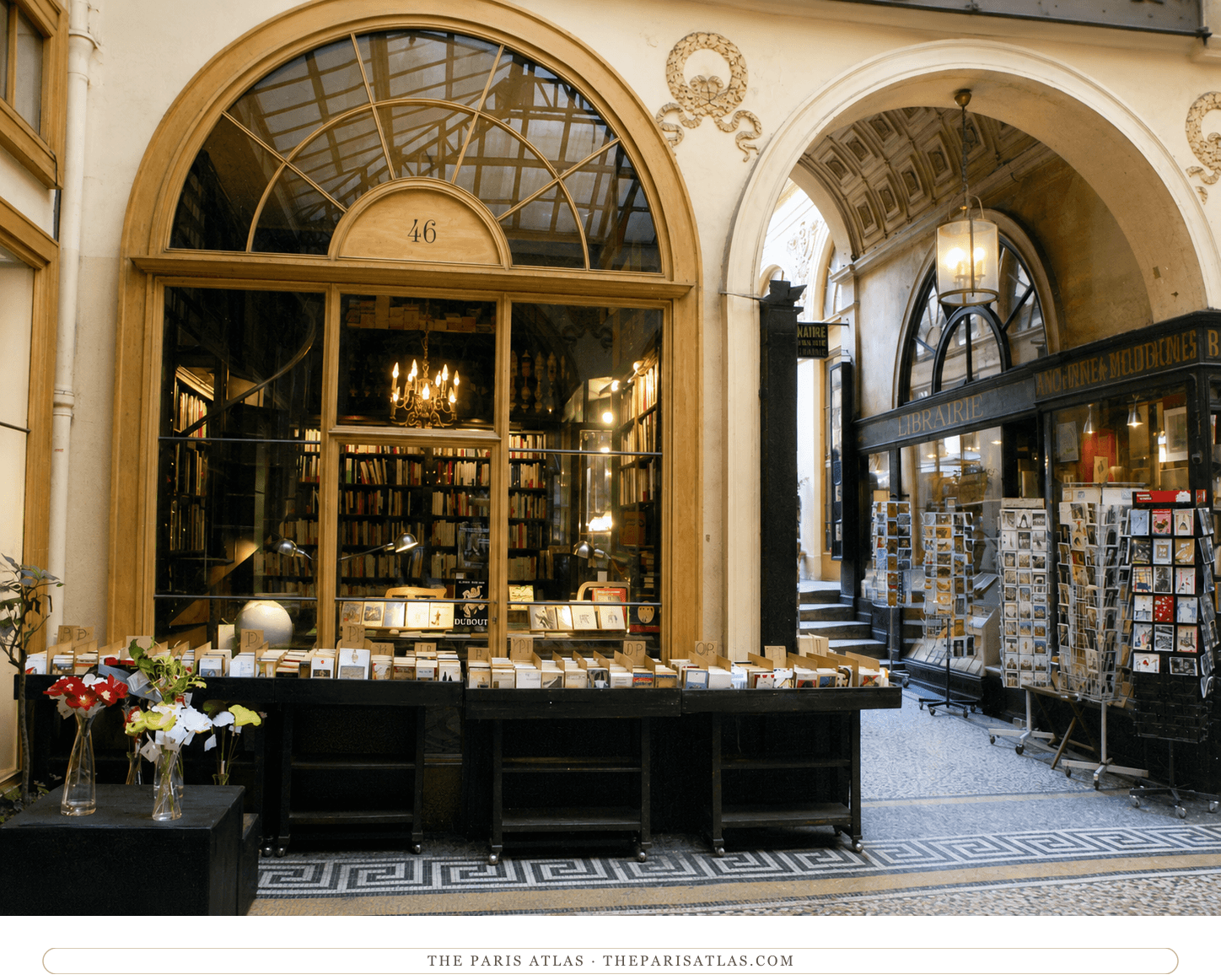
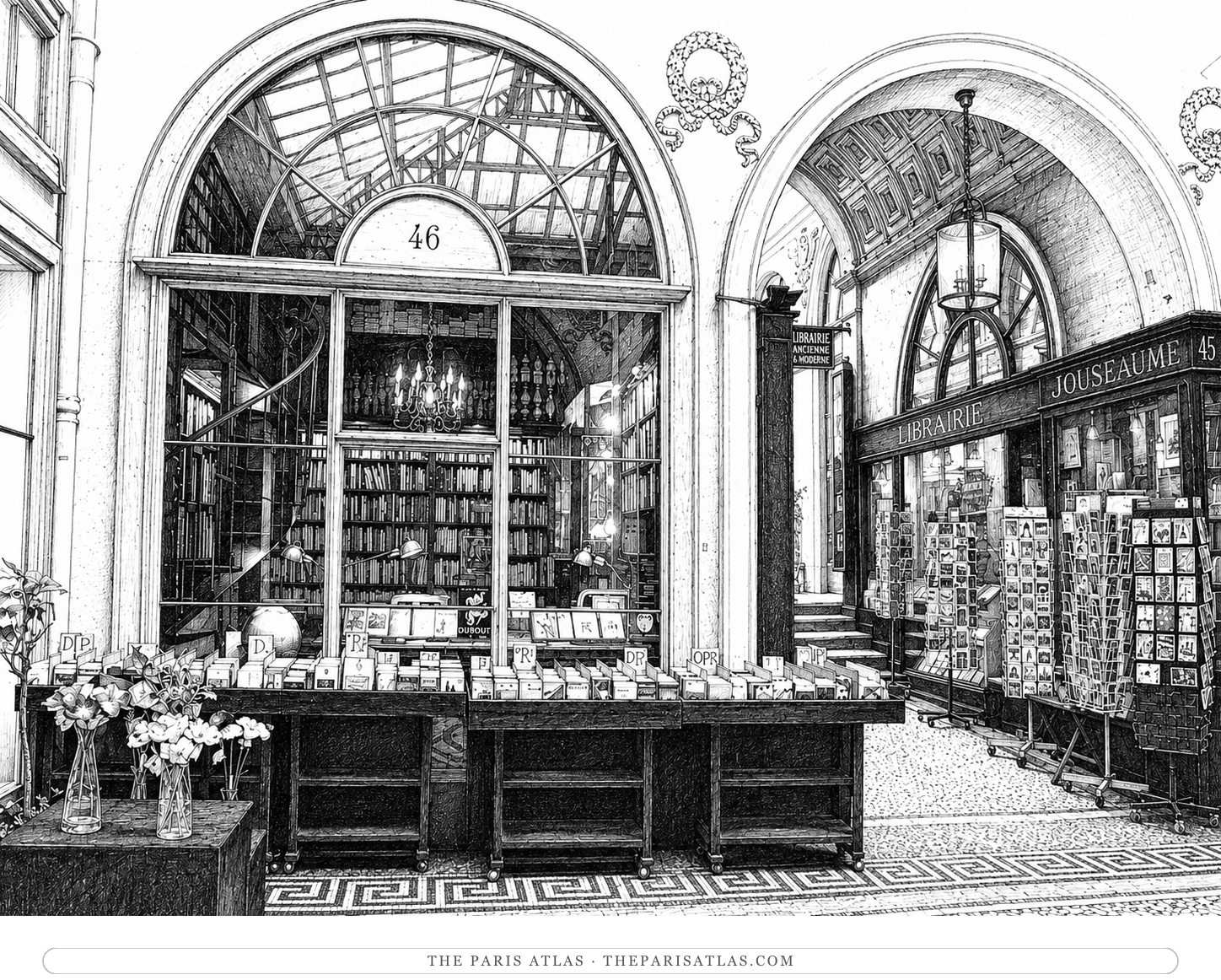
A glass-roofed 1820s shopping arcade near the Palais-Royal, and home to the bookshop the City of Paris calls Colette's haunt.
Visit the place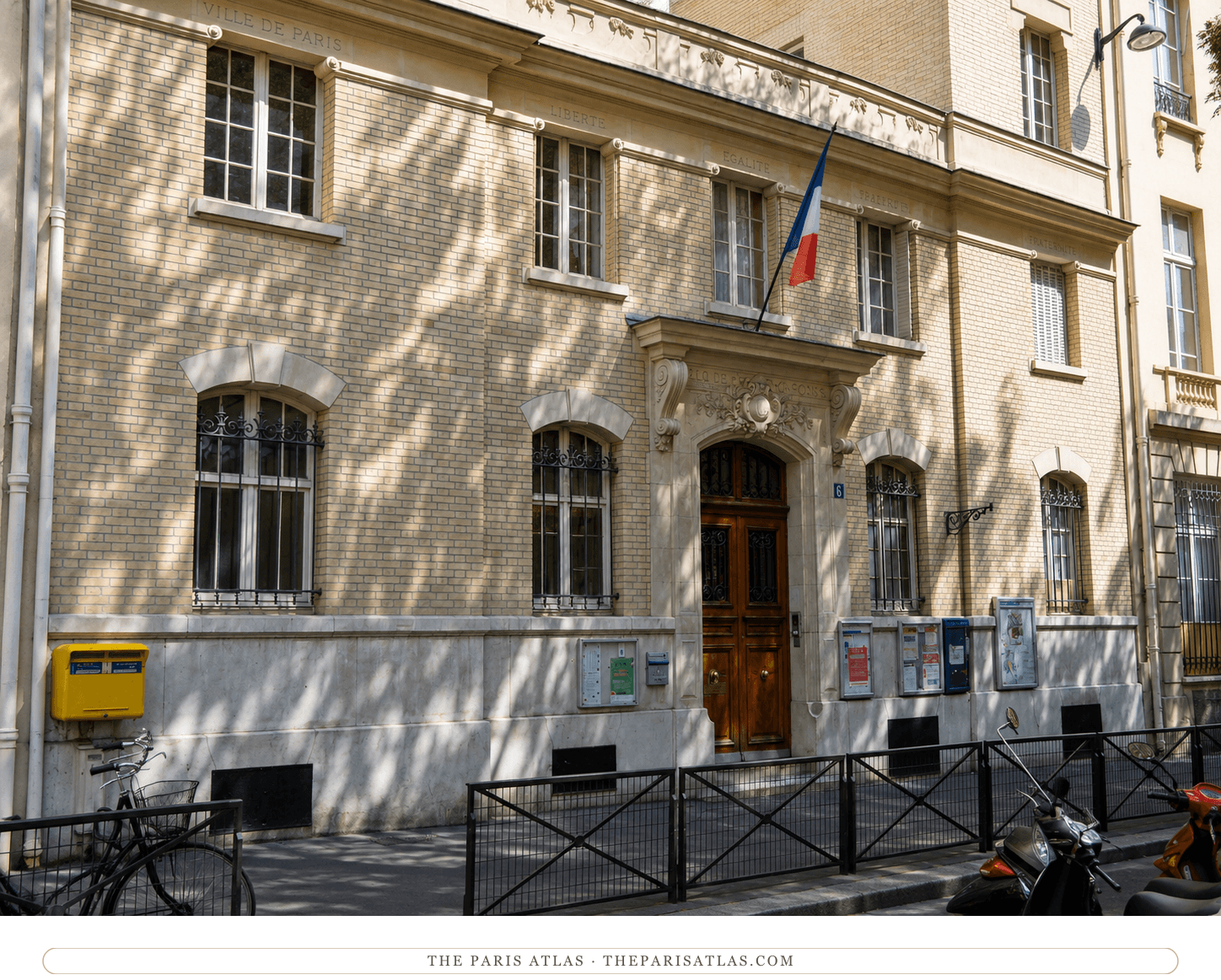
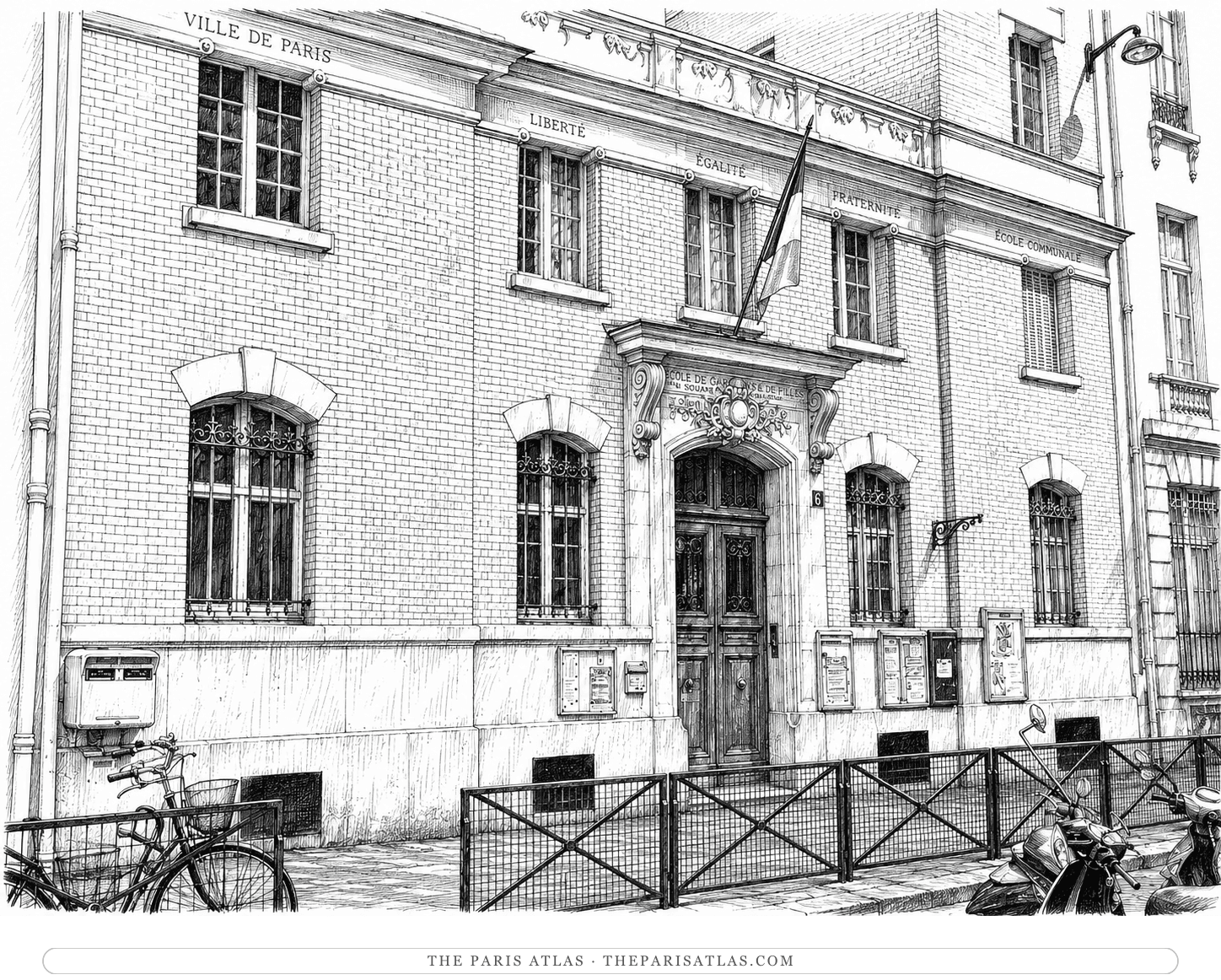
The municipal school Louis-Ferdinand Céline attended from 1900 to 1905, two minutes' walk from the family shop in the Passage Choiseul — the first classroom of the boy then registered as Louis-Ferdinand Destouches.
Visit the place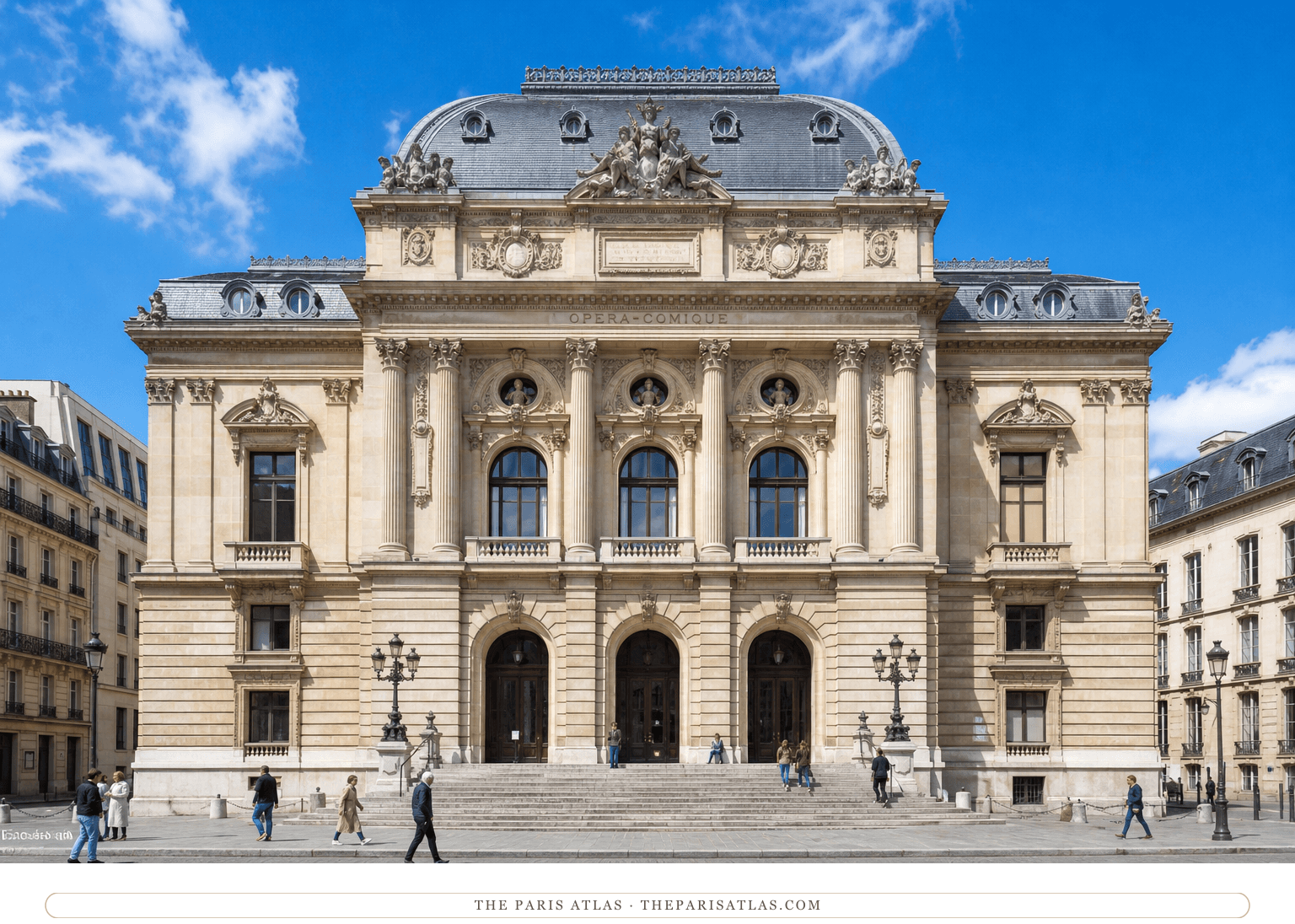
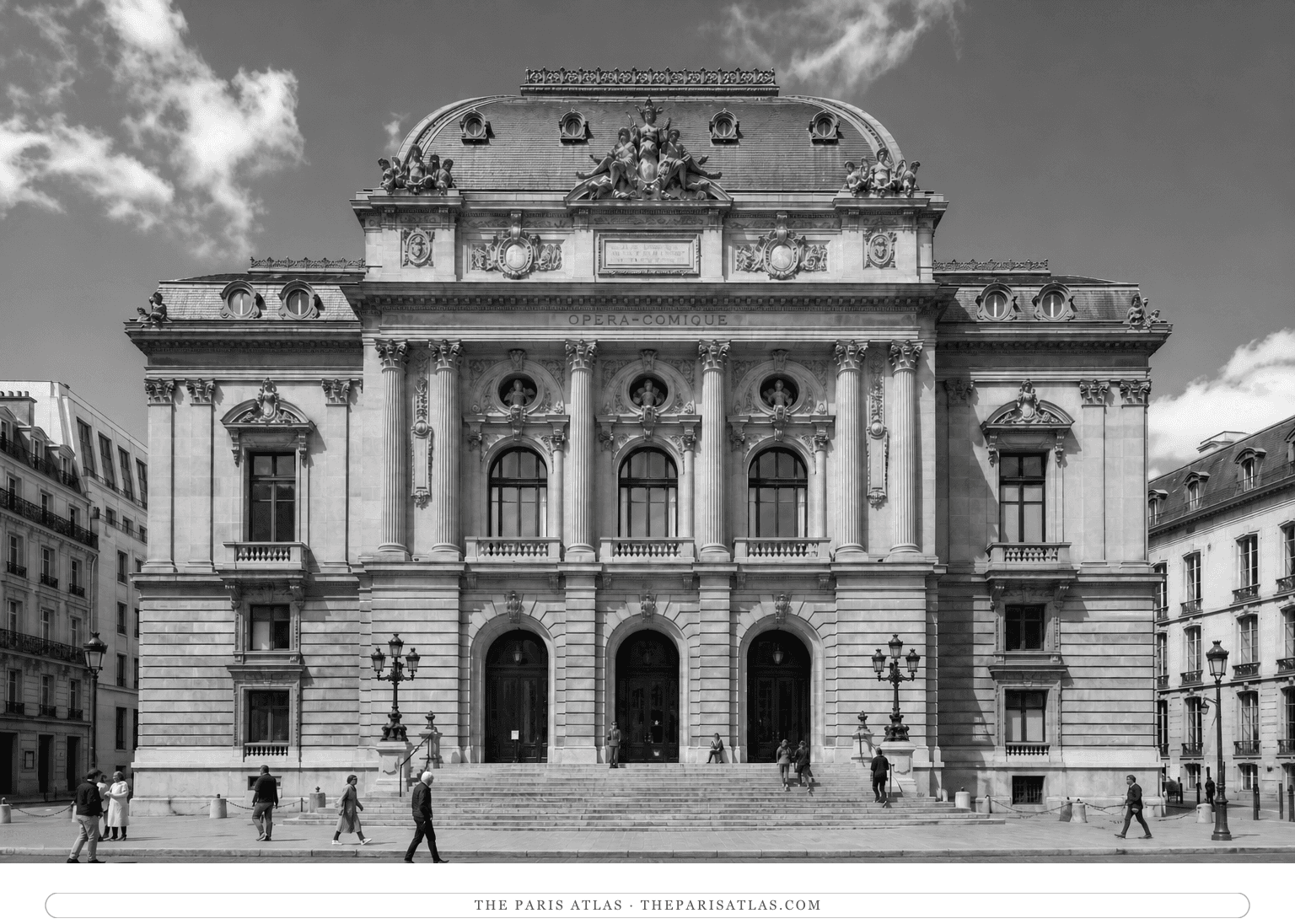
The Salle Favart, where Debussy's only completed opera, Pelléas et Mélisande, was first performed on 30 April 1902 — after nearly a decade of work and a dress rehearsal that turned into a public row.
Visit the placeThe sources below include histories, archival materials, scholarly research, and official records that informed this page. They document Palais Brongniart (the Paris Bourse), the people connected to it, and its place in Paris.


Web source consulted for documented facts and historical context presented on the Palais Brongniart (the Paris Bourse) page.
Web source consulted for documented facts and historical context presented on the Palais Brongniart (the Paris Bourse) page.
Web source consulted for documented facts and historical context presented on the Palais Brongniart (the Paris Bourse) page.
Web source consulted for documented facts and historical context presented on the Palais Brongniart (the Paris Bourse) page.
These references provide the documented foundation for this page's history and context. Claim-level citations remain attached to the specific claims they support.
 Explore more resources
Newsletter
The cafés, studios, and walk-up flats where the work was made — one story from the map in every letter.