
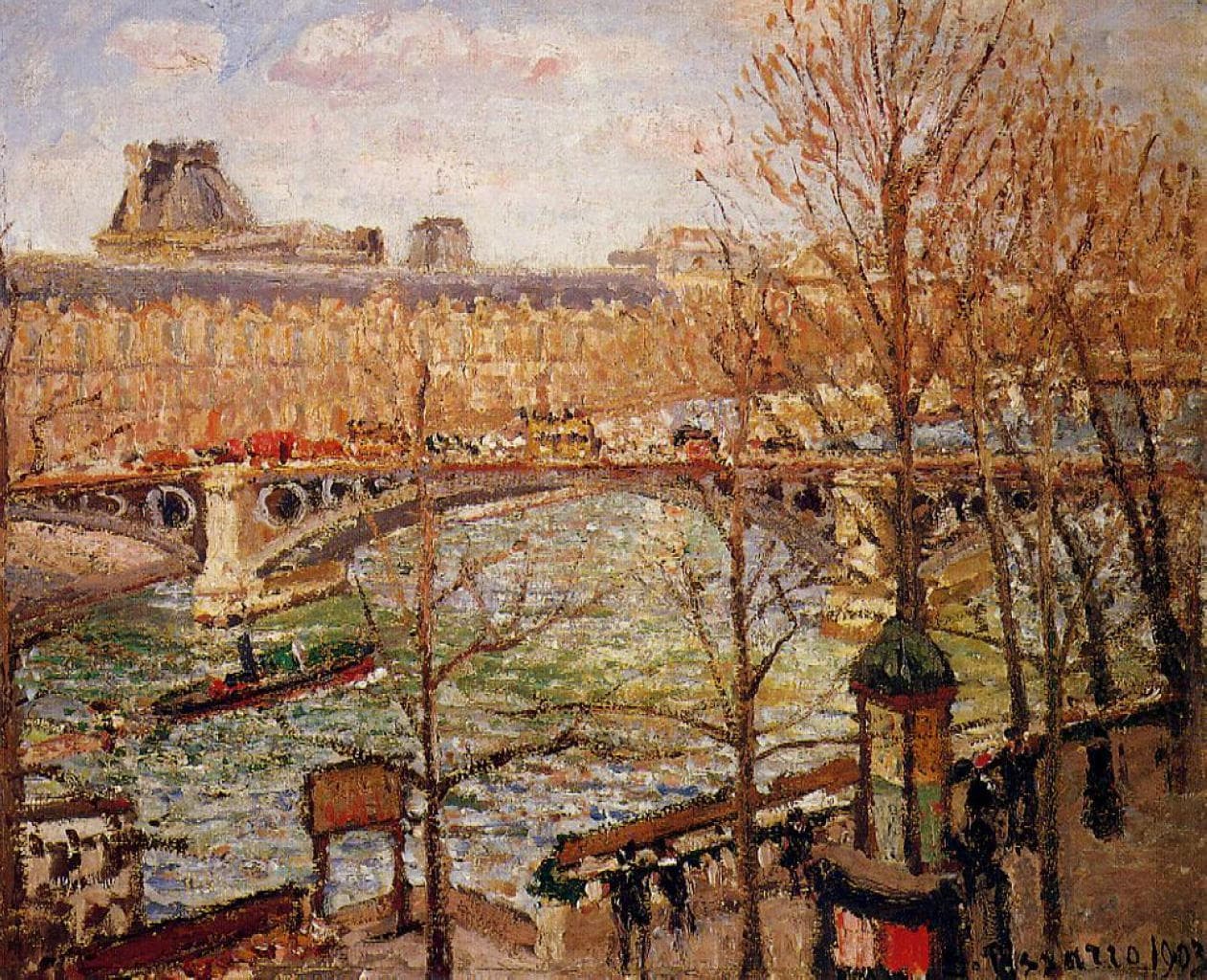
Depicts this place
The Pont du Carrousel, Afternoon
Painted from a third-floor window of the Hôtel du Quai Voltaire in 1903, in the last series Pissarro finished. The bridge in it is Polonceau's 1834 iron crossing, demolished thirty years later.
The crossing from the Louvre to the rue des Saints-Pères: an 1834 iron bridge replaced by a stone one in 1939, with distinctive telescoping streetlamps designed to rise after dark.
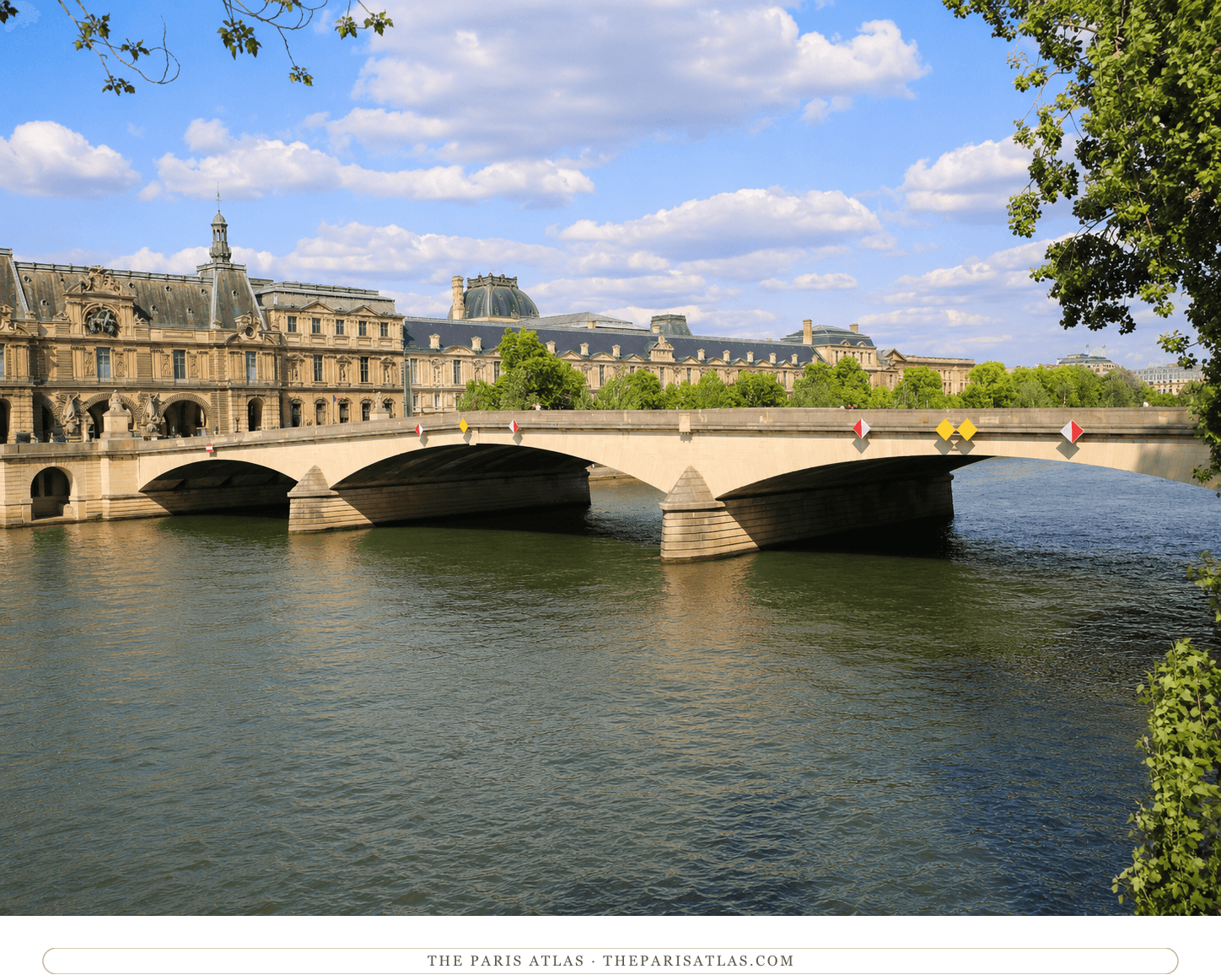
The Pont du Carrousel runs from the Louvre's Flore wing to the foot of the rue des Saints-Pères, which is the walk between the museums of the right bank and the bookshops and galleries of the left. It is one of the plainer bridges in central Paris and one of the most used.
The first bridge here opened in 1834 and was interesting. Antoine-Rémy Polonceau built it with hollow tubes of cast iron rather than solid ribs, which made it lighter and cheaper than anything comparable, and he faced the ironwork in wood to keep it from looking industrial. It was called the Pont des Saints-Pères by nearly everyone, after the street it landed on, whatever the official name said.[1]
By the 1930s it was too narrow and too low for river traffic, and it was replaced. The present bridge, finished in 1939, is reinforced concrete faced in stone, with three shallow arches set deliberately flat so that barges can pass beneath. The four allegorical statues at its corners — Abundance, Industry, the Seine, the City of Paris — were carved by Louis Petitot for the 1834 bridge and moved onto the new one, which is why they are a century older than the thing they stand on.[1]
The detail worth knowing is the lighting. The lamp columns at the four corners telescope: they stand about twelve metres by day and extend to around twenty at night, which was Lucien Lambert's solution to lighting a bridge without cluttering the view of the Louvre in daylight. They still work.[1]
Camille Pissarro painted it in the last months of his life. From November 1902 to May 1903 he worked from room 32 on the third floor of the Hôtel du Quai Voltaire, a few hundred metres downstream, painting the quai Malaquais and the bridge in changing light — his only series made from the Left Bank. He left in May, meant to start another Paris series in the autumn, and died in November instead. The Pont du Carrousel, Afternoon comes out of that window.[2]
What he painted was Polonceau's iron bridge, not this one. The stone crossing here now went up thirty-six years after his death, which makes the picture a record of something that no longer exists at an address that still does.[3]
The bridge carries no famous scene of its own. It matters because it is one of the two or three crossings the writers on both banks used constantly without bothering to name it — the shortest walk from the Louvre to Saint-Germain.
Polonceau's cast-iron bridge opens, known to Parisians as the Pont des Saints-Pères.
The ironwork is rebuilt in steel as the original tubes wear out.
The present stone-faced bridge opens, slightly downstream of the old one.
Depicts this place
Painted from a third-floor window of the Hôtel du Quai Voltaire in 1903, in the last series Pissarro finished. The bridge in it is Polonceau's 1834 iron crossing, demolished thirty years later.
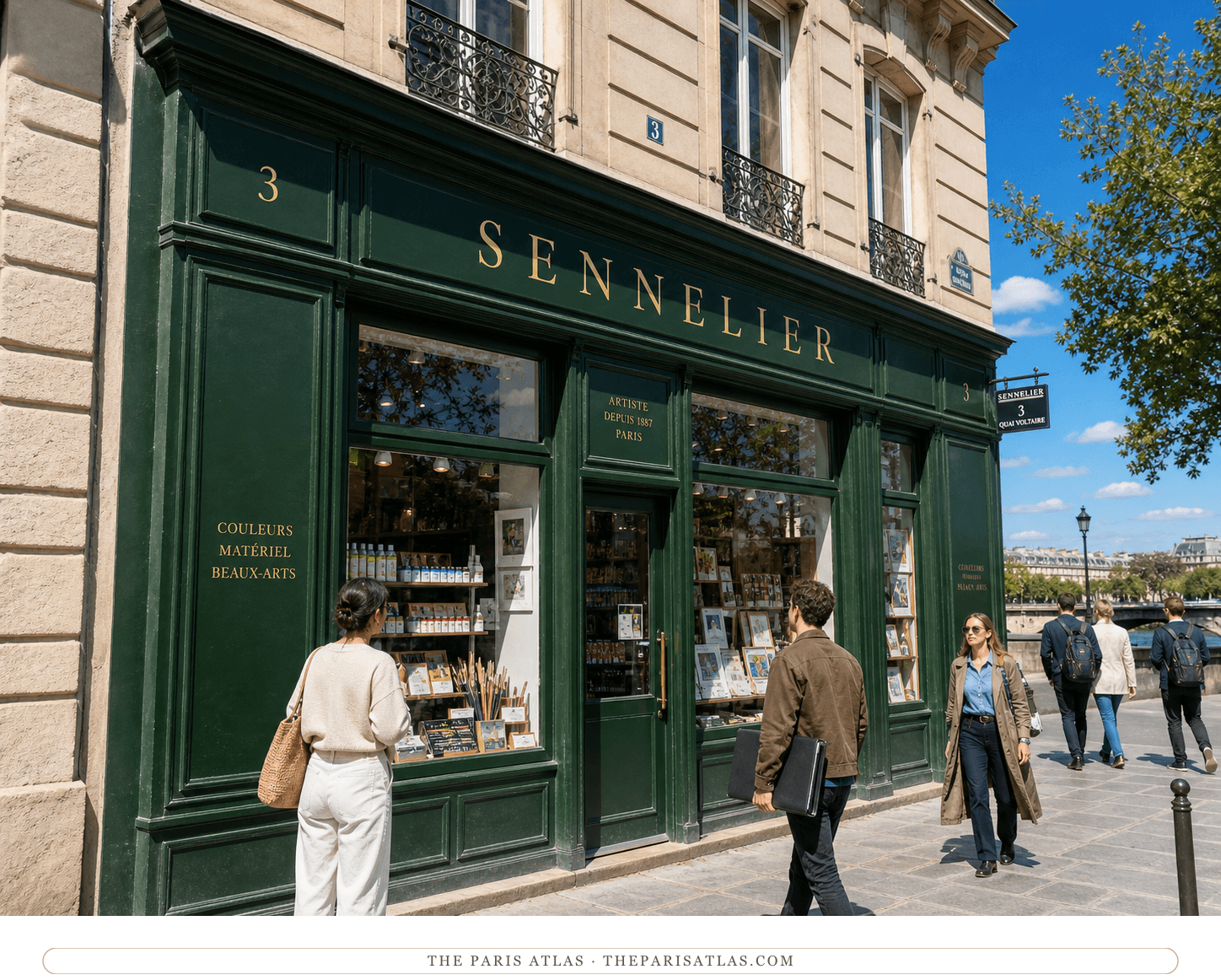
The artists' colourman opened by Gustave Sennelier on the quai Voltaire in 1887, opposite the Louvre — still trading, still grinding pigment, and still looking very much as it did.
Visit the place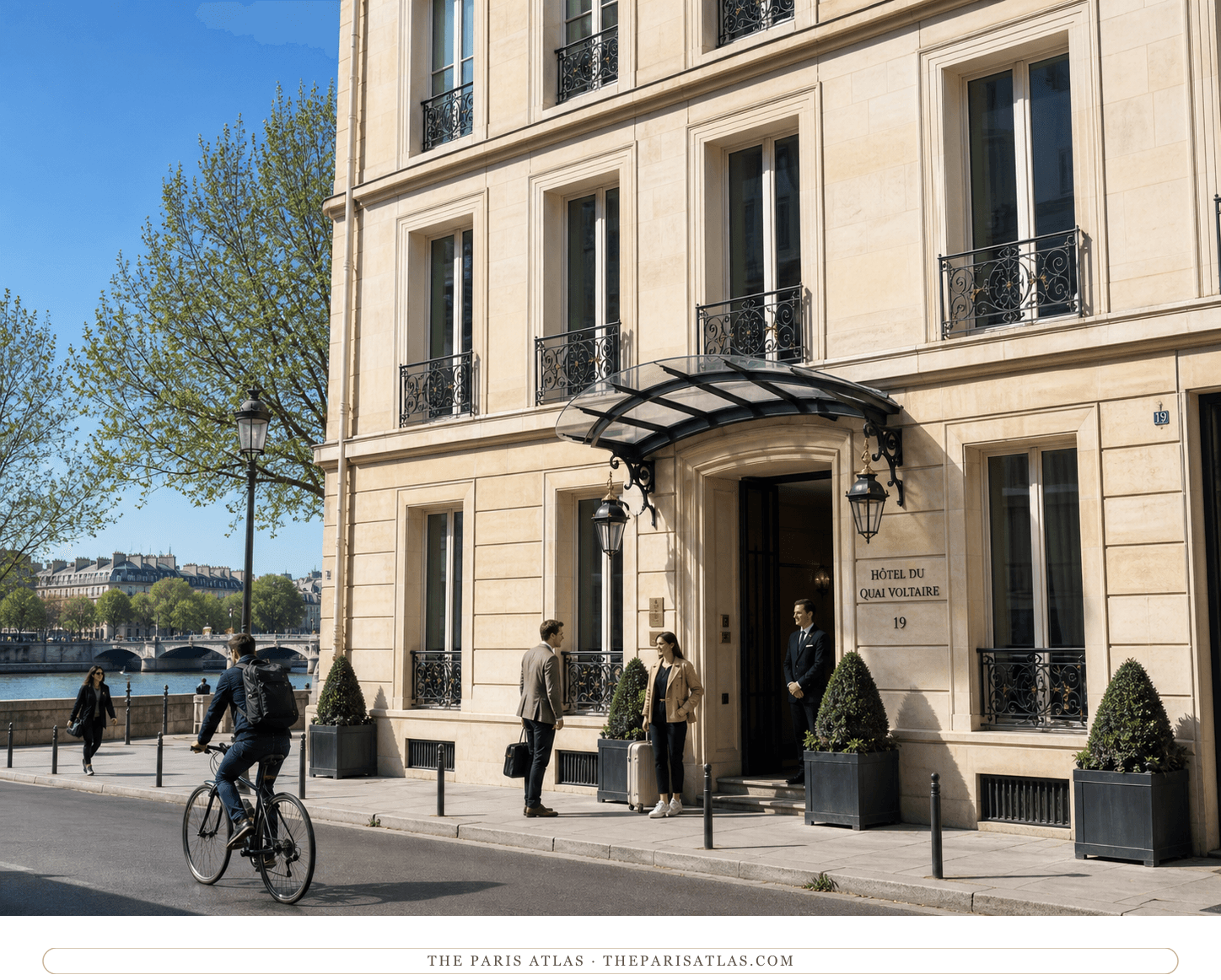
The hotel facing the Louvre across the Seine where Camille Pissarro took a third-floor room in the spring of 1903 and painted the Pont Royal, the Pavillon de Flore and the river — the last series he made in Paris.
Visit the place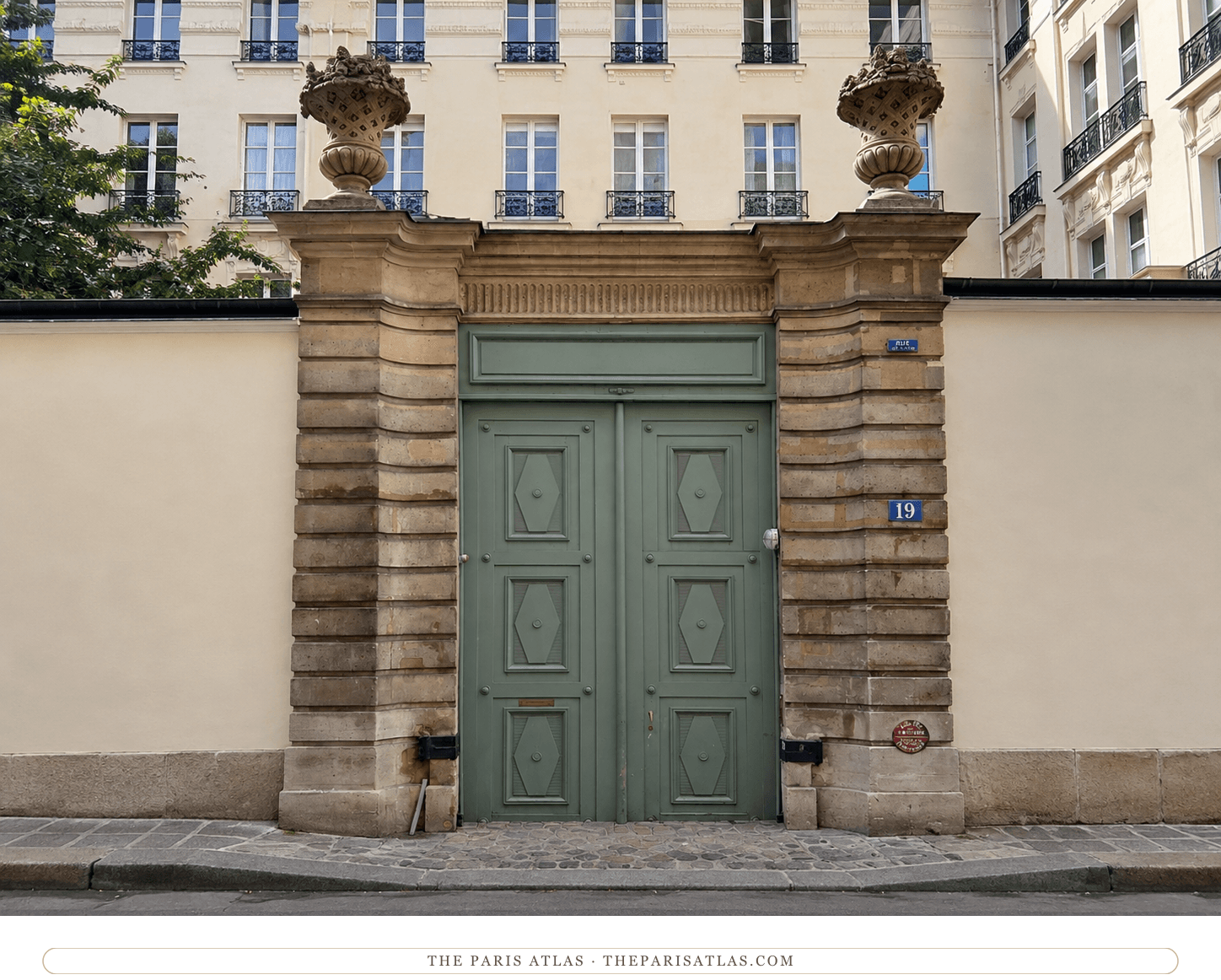
The Paris town house of Harry and Caresse Crosby, and the address of the Black Sun Press, which published D. H. Lawrence, James Joyce, Hemingway and Hart Crane in editions made to be beautiful rather than to sell.
Visit the place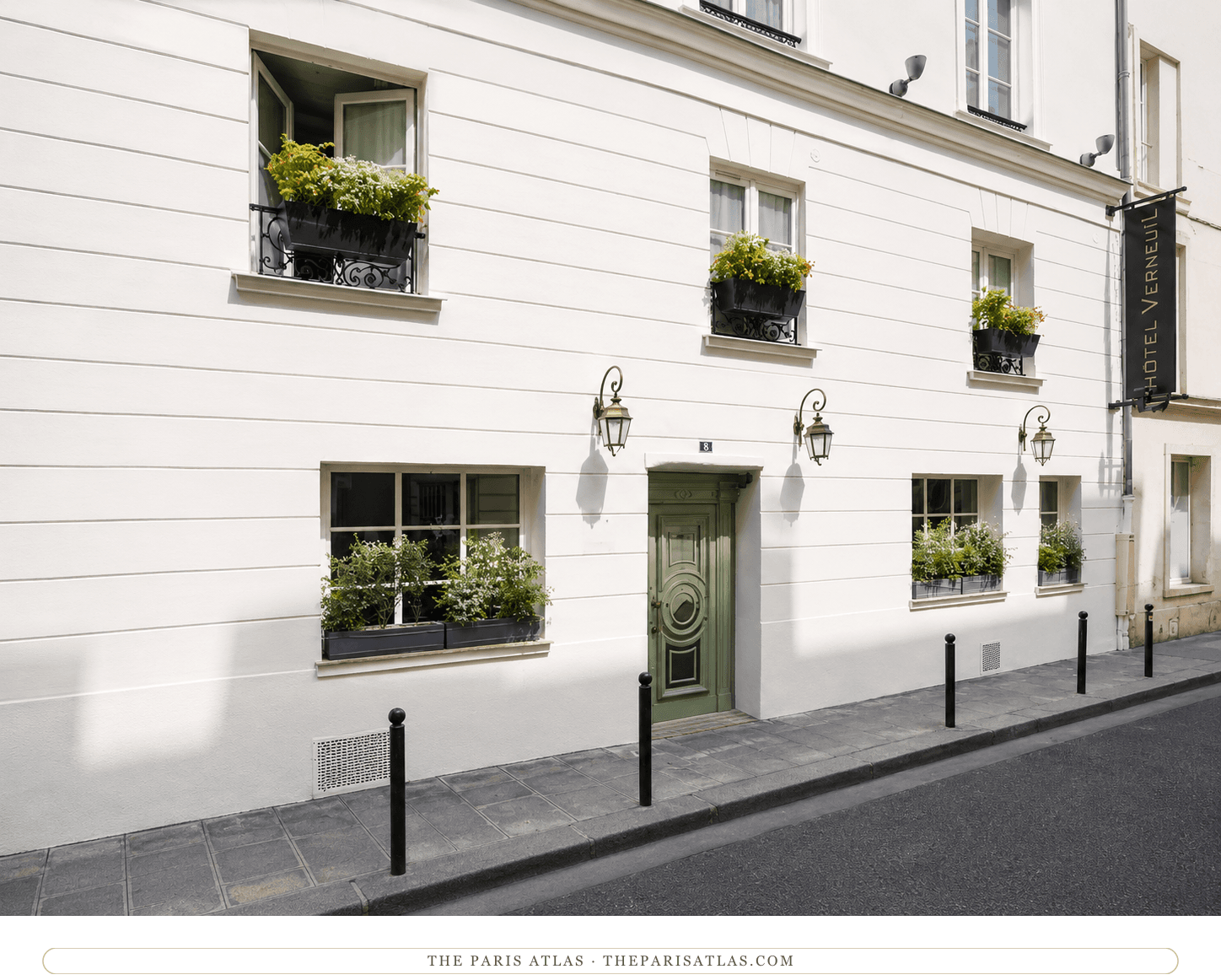
The Left Bank hotel where James Baldwin settled after arriving in Paris in November 1948, and where his first published essays were written.
Visit the placeThe sources below include histories, archival materials, scholarly research, and official records that informed this page. They document Pont du Carrousel, the people connected to it, and its place in Paris.


The civil engineers' heritage record of the bridge: Polonceau's three arches of composite wood and cast iron of 1831-1834, the reinforced-concrete spans of 1935-1939, and the telescopic lamp masts raised at dusk.
Web source consulted for documented facts and historical context presented on the Pont du Carrousel page.
Web source consulted for documented facts and historical context presented on the Pont du Carrousel page.

The city's own street register: the present bridge replaced the 1832-1834 crossing slightly upstream, known as the pont des Saints-Pères.
These references provide the documented foundation for this page's history and context. Claim-level citations remain attached to the specific claims they support.
 Explore more resources
Newsletter
The cafés, studios, and walk-up flats where the work was made — one story from the map in every letter.


