

The Delicate Prey and Other Stories
The first collection, and the one these four stories were written after.
Read our take
by Paul Bowles
Four Moroccan stories in which kif, not alcohol, is the way out of the ordinary world.
City Lights published these four stories in San Francisco in 1962. Every one turns on kif. Salam uses what smoking suggests to him to get rid of a man he fears. He of the Assembly loses himself in his own kif-dream and then starts acting it out. Idir beats Lahcen in the old contest between the smoker and the drinker. Driss, a soldier, uses kif to prove magic to an officer who does not believe in it. Bowles's own note is explicit about what links them: for all four men the pipe is a way of reaching a state of communication with other people, and above all with themselves.
The four stories are A Friend of the World, He of the Assembly, The Story of Lahcen and Idir, and The Wind at Beni Midar. They are short, and the book is short — the 1962 first edition runs to about sixty pages.
City Lights was the right publisher for it. Lawrence Ferlinghetti's press had been publishing the Beats for a decade, and Bowles by 1962 had been in Tangier fifteen years and was the American writer most associated with kif.
The contest in The Story of Lahcen and Idir — the smoker outwitting the drinker — is a traditional Moroccan form, and Bowles hands it over without explaining it to the reader.
Four stories, sixty pages, one organising idea. If The Delicate Prey is too long a way in, this is the short one.
Ferlinghetti's press published it at the height of the Beat years, and it puts Bowles in the company he actually kept in Tangier.
His prefatory note names what the four stories share — the pipe as a way of reaching communication with others and with oneself. He rarely explains himself that plainly.
1947
Bowles settles in Tangier, fifteen years before these stories are collected.
1962
City Lights Books publishes A Hundred Camels in the Courtyard in San Francisco.
1981
City Lights issues a second edition, running to about ninety pages. Its ISBN is frequently misapplied to copies of the 1962 first.
2002
The Library of America collects all four stories in Paul Bowles: Collected Stories & Later Writings.


The first collection, and the one these four stories were written after.
Read our take
Fez in 1954, and the fullest version of the Morocco these stories move through.
Read our take
The Tangier novel, where the drugged passages do at length what these stories do briefly.
Read our take
The essays, where Bowles writes about the same country as himself rather than through a character.
Read our takeA collection of four Moroccan short stories by Paul Bowles, published by City Lights Books in San Francisco in 1962. All four turn on kif, which in these stories does the work alcohol does elsewhere.
A Friend of the World, He of the Assembly, The Story of Lahcen and Idir, and The Wind at Beni Midar.
It comes from a Moroccan saying about what kif gives the smoker. Bowles takes the phrase as the book's title and states the connection between the four stories in a prefatory note.
The City Lights first edition of 1962, which runs to about sixty pages and carries no ISBN. The ISBN 9780872860025 that booksellers commonly list against 1962 copies belongs to the second edition of 1981, which is about ninety pages.
All four are collected complete in the Library of America volume Paul Bowles: Collected Stories & Later Writings, and in The Stories of Paul Bowles from Harper Perennial.
No. Four stories in sixty pages make this the shortest entry into his Moroccan work. The Delicate Prey and Other Stories is the fuller one, and The Spider's House is the novel set in the same country.
Explore authors with a similar voice, perspective, and influence.
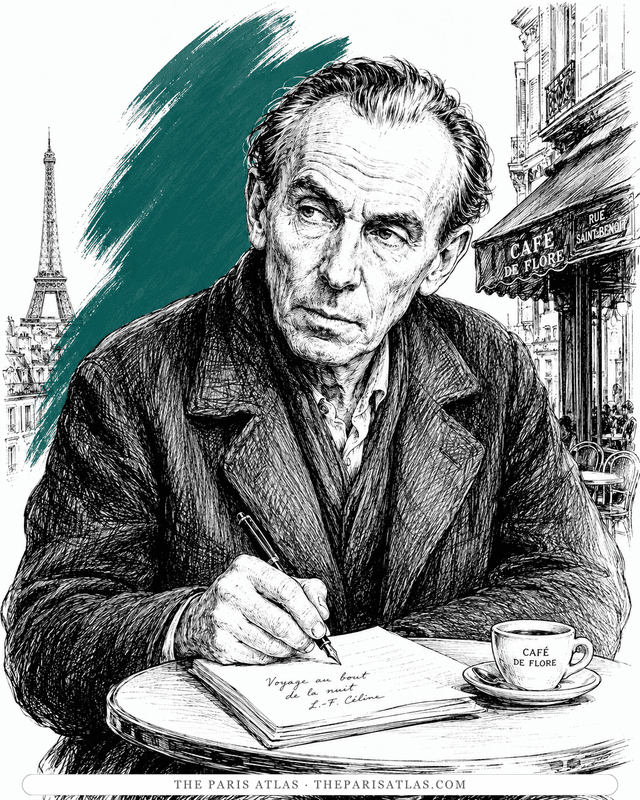
The doctor of the Paris slums who wrote the century's blackest, funniest novel — and changed the sound of French prose.
View author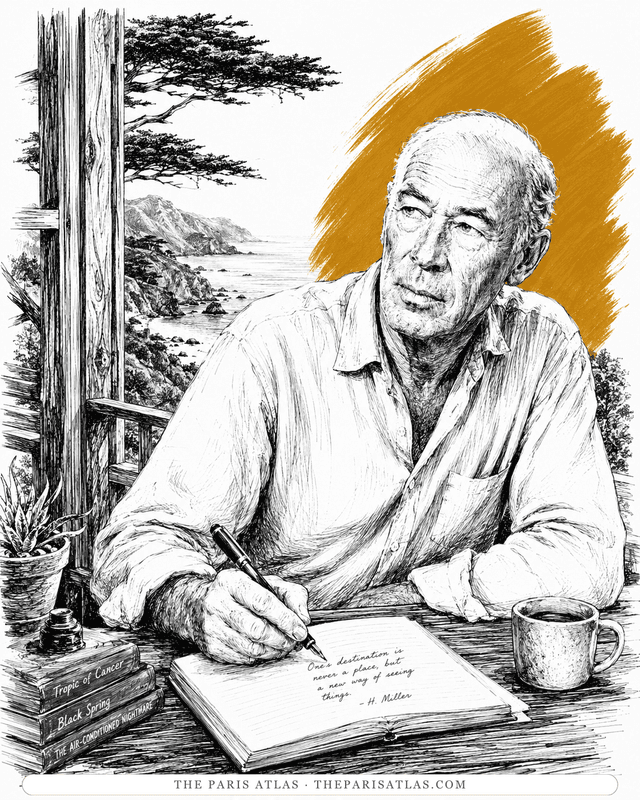
The Brooklyn dropout who arrived in Paris broke at thirty-eight and wrote the exuberant, banned books that ended American censorship.
View author
War correspondent who covered the Spanish Civil War, D-Day, and conflicts across five more decades; Hemingway's third wife, 1940–1945.
View authorThe sources below include the primary text, editions, scholarship, archival materials, and other records that informed this page. They document A Hundred Camels in the Courtyard, its publication, and its place in literary history.


The Library of America volume that reprints all four stories, and the authority for the contents list.
The Library of America's author record.
City Lights' own catalogue page, the source for the publication details and for Bowles's statement of what links the four stories.
Open Library edition records, used to separate the 1962 first edition from the 1981 second.
The primary text is the baseline reference for every book page. Additional references document publication history, interpretation, and historical context where that evidence is available.
 Explore more resources