Set here
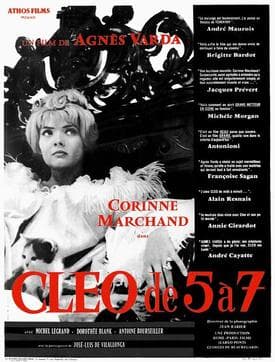
Cléo from 5 to 7
Varda shot the film on location across Paris in close to real time, so its addresses are the film's clock rather than its decoration.
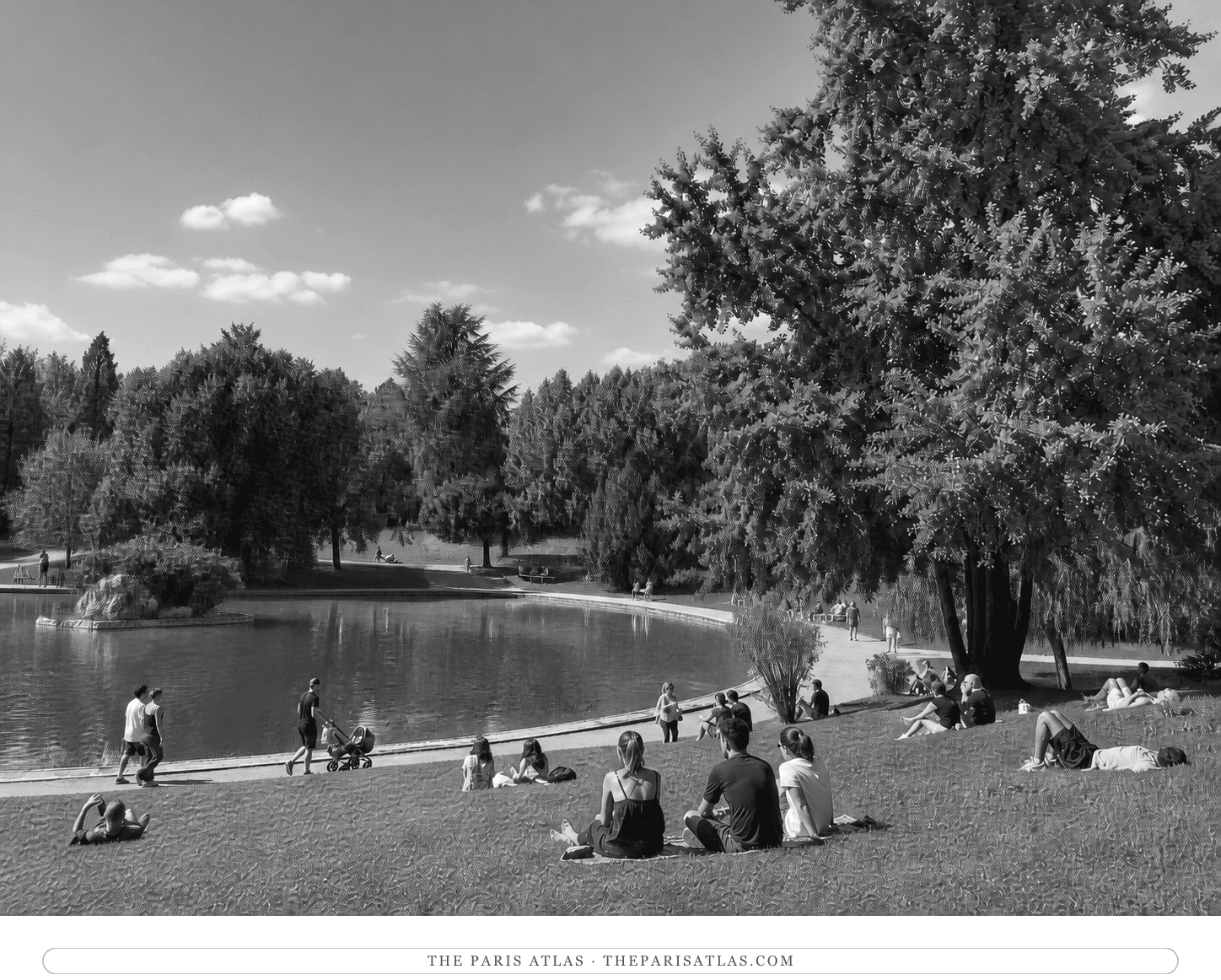
One of the four big parks Napoleon III and Haussmann gave Paris, laid out between 1867 and 1878 on the site of the old Montrouge quarries in the 14th arrondissement. It has a lake, a waterfall, a ginkgo and a giant sequoia, and it is the park Agnès Varda used for the long central sequence of Cléo from 5 to 7.
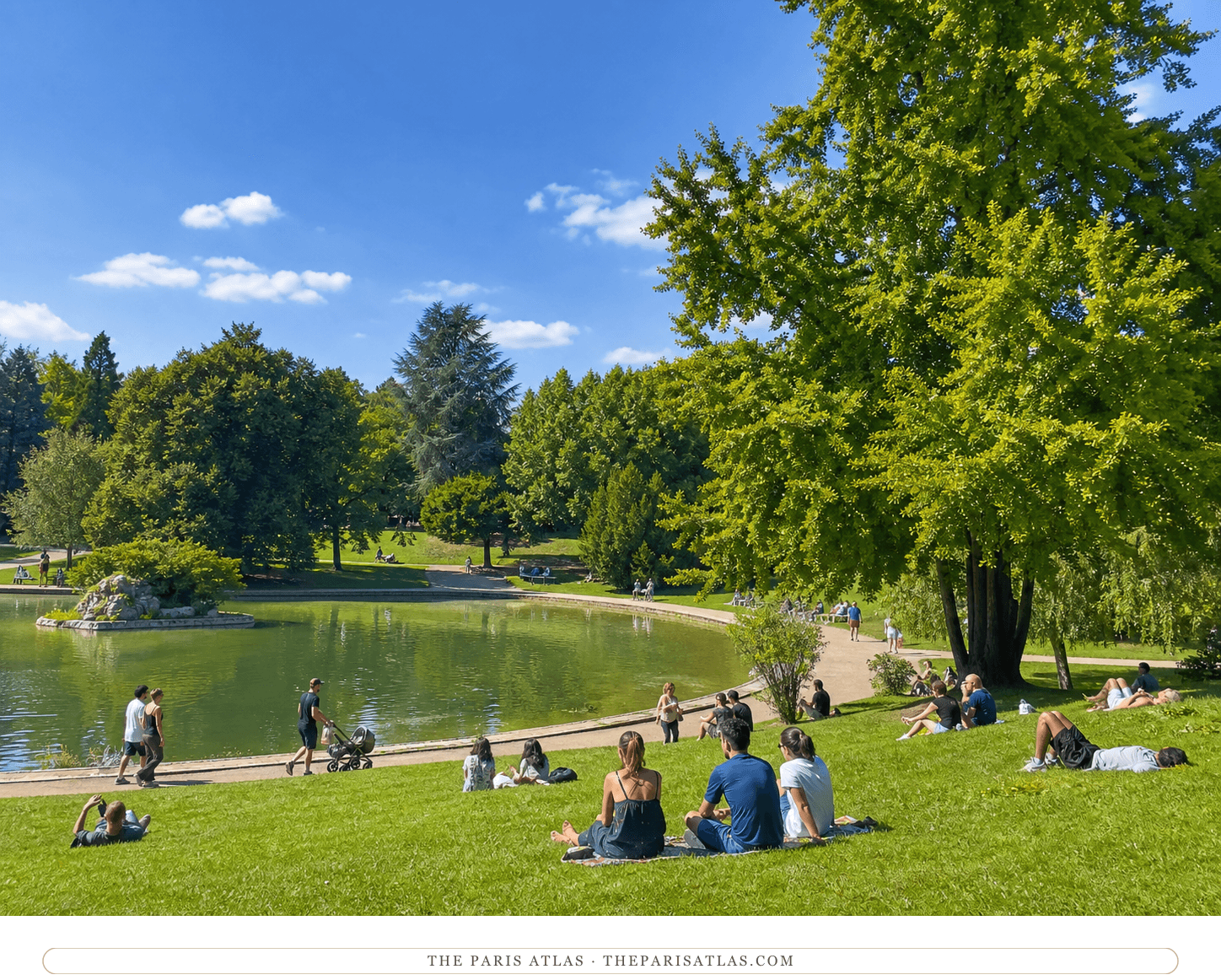
Parc Montsouris is one of the four large parks created under Napoleon III as part of Haussmann's rebuilding of Paris — the southern counterpart to the Buttes-Chaumont in the north, with the Bois de Boulogne and the Bois de Vincennes at the western and eastern edges. Work began in 1867 and was not entirely finished until 1878.
The engineer was Jean-Charles Adolphe Alphand, who ran the city's parks and gardens service and is effectively responsible for the way public green space in Paris looks; the planting was designed with the landscape gardener Jean-Pierre Barillet-Deschamps.
What makes it unusual is what was there first. The plain of Montsouris was occupied by the quarries of Montrouge — the same limestone workings that run under this part of Paris and that hold the Catacombs a little to the north. The park is landscaped over worked-out ground, which is why it rolls and dips the way it does rather than lying flat.
Inside there is a lake, a waterfall, and trees worth the walk on their own: a ginkgo biloba — the tree the French call l'arbre aux quarante écus — and a giant sequoia with a substantial trunk. A five-metre obelisk of dark stone stands in the grounds, and the meteorological observatory of Montsouris, dating in its present form from 1947, sits at the edge of the park.
For film, this is the setting of the long central passage of Cléo from 5 to 7, where Cléo walks down to the waterfall and meets the soldier Antoine. The Palais du Bardo, the Tunisian pavilion visible in the film on the way into the park, burned down in the 1990s; the waterfall is still there.
The plain of Montsouris is occupied by the Montrouge quarries.
Work begins on the park under Alphand, as part of Napoleon III and Haussmann's programme of public parks.
The park is completed.
The meteorological observatory of Montsouris takes its present form at the edge of the park.
Agnès Varda films the central sequence of Cléo from 5 to 7 by the park's waterfall.
The Palais du Bardo, the Tunisian pavilion in the grounds, burns down.
A large public park in the 14th arrondissement of Paris, laid out between 1867 and 1878 as one of the four major parks created under Napoleon III and Haussmann. It covers rolling ground on the site of the former Montrouge quarries and contains a lake, a waterfall and a number of notable trees.
Jean-Charles Adolphe Alphand, the engineer who ran the city's parks and gardens service under Haussmann, working with the landscape gardener Jean-Pierre Barillet-Deschamps. Alphand is the figure most responsible for the look of Parisian public green space.
Yes. The site was occupied by the quarries of Montrouge — part of the same limestone workings that run beneath this part of Paris and that hold the Catacombs. The park's rolling, dipping ground is landscaping over worked-out quarry land.
From May to the end of August the park is open 7 a.m. to 9.30 p.m., and from mid-July to early September it stays open until just before midnight. Winter hours are shorter. Entry is free. Verified against the Ville de Paris listing on 24 August 2026.
The long central sequence of Agnès Varda's Cléo from 5 to 7 (1962), in which Cléo walks down through the park to the waterfall and meets a soldier called Antoine. The waterfall is still there; the Palais du Bardo seen on the way in burned down in the 1990s.
The main address is 2 rue Gazan in the 14th arrondissement, in the south of the city near the Cité Universitaire. It is a short walk from the RER B, and sits within reach of the Catacombs and Montparnasse if you are working through the 14th.
Set here
Varda shot the film on location across Paris in close to real time, so its addresses are the film's clock rather than its decoration.
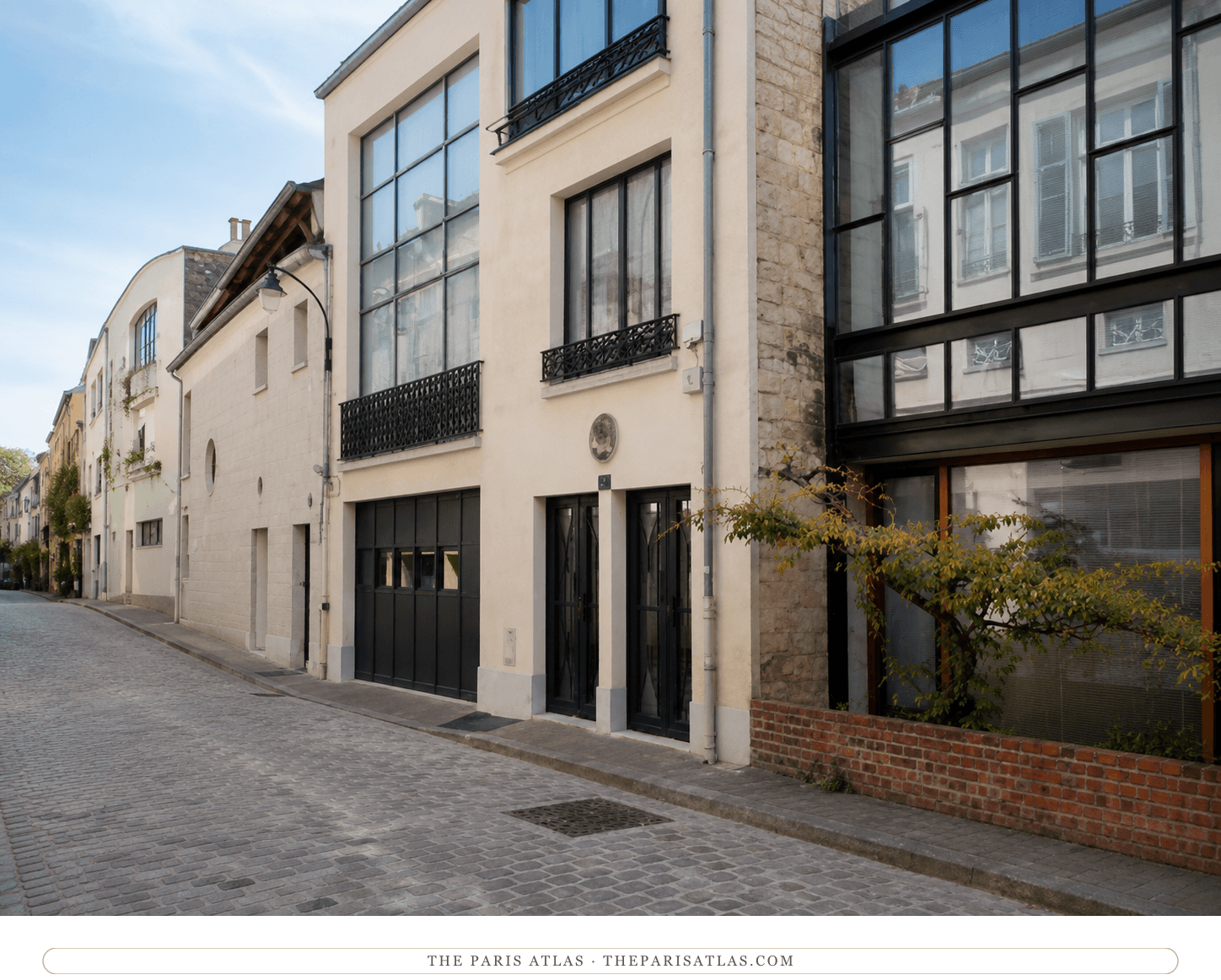
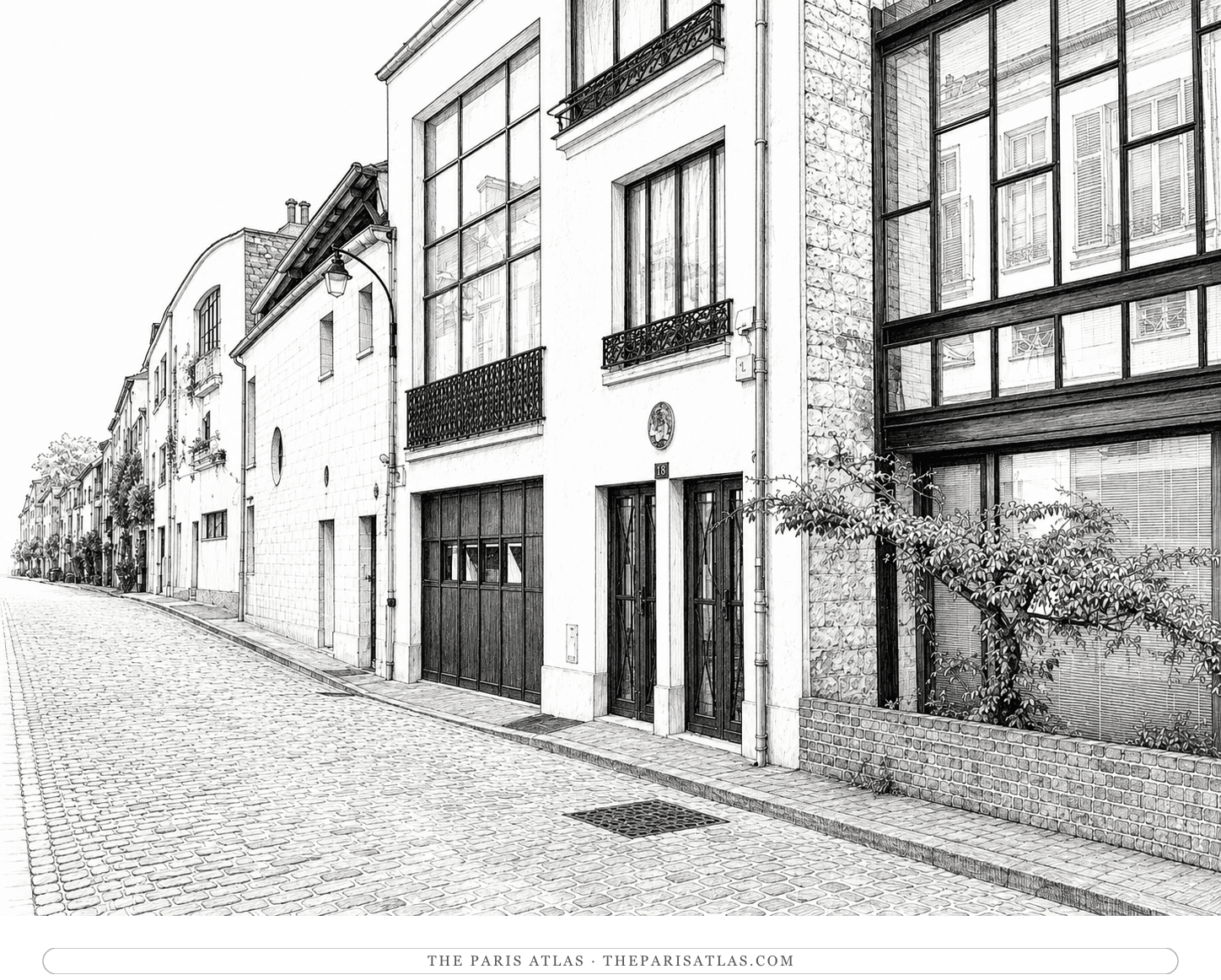
Henry Miller's studio flat from 1934 to 1939 — the headquarters of the Villa Seurat circle, and the address where Tropic of Cancer was delivered to the door the day he moved in.
Visit the place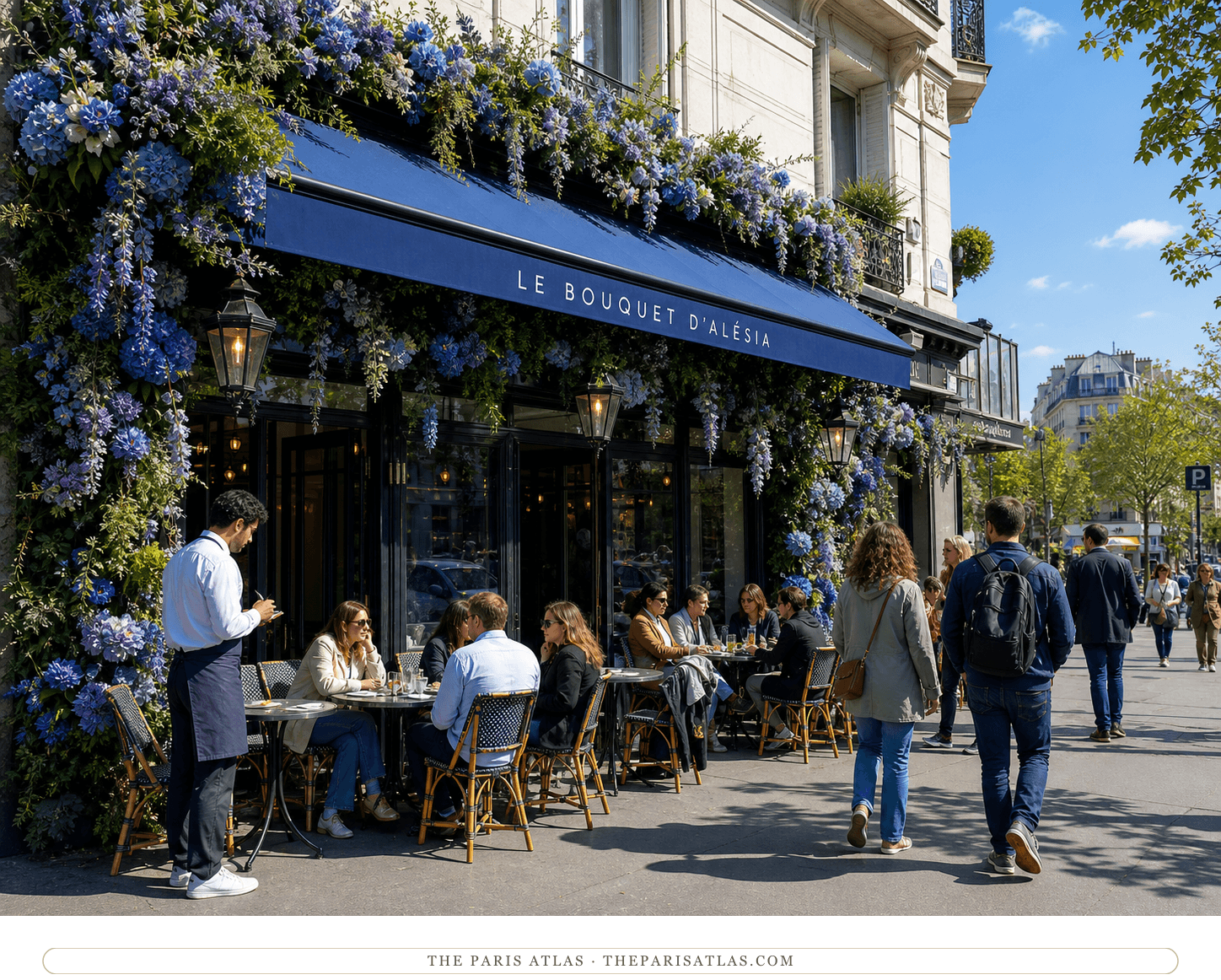
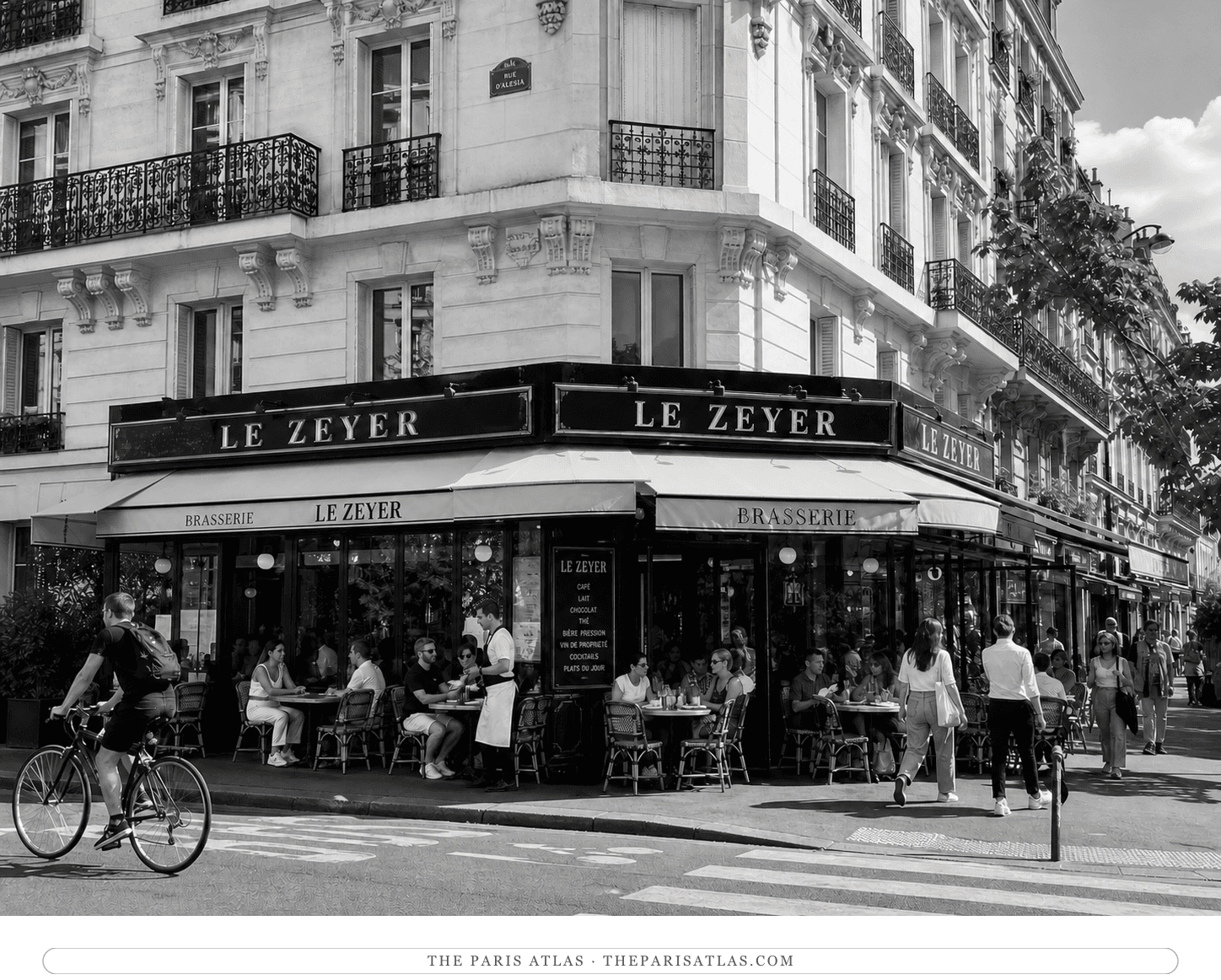
A corner café-brasserie in the 14th, and one of the few Paris addresses Henry Miller names himself. In a manuscript dated 17 March 1937 he places himself here, examining a section of the café's marble counter with the painter David Edgar.
Visit the place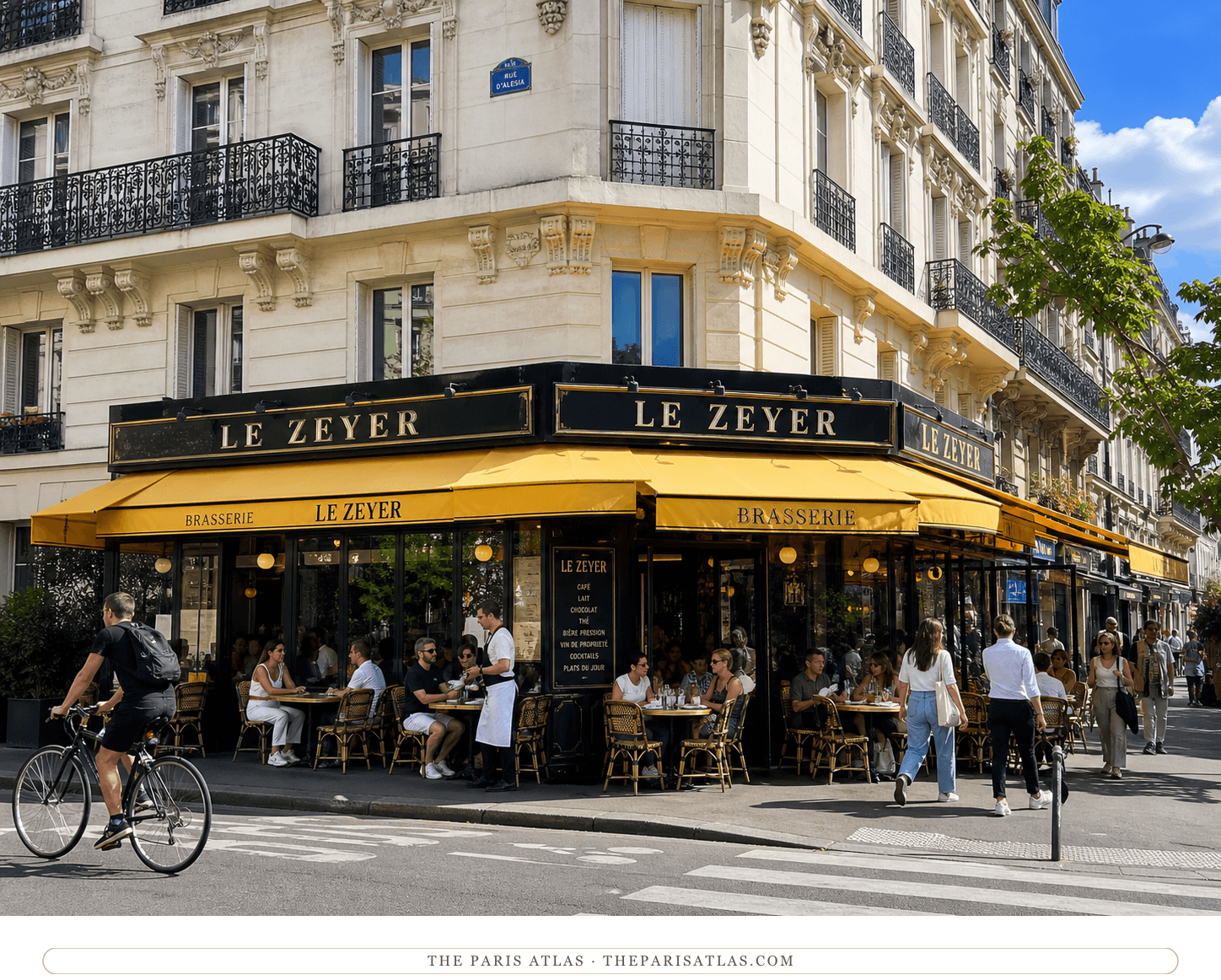
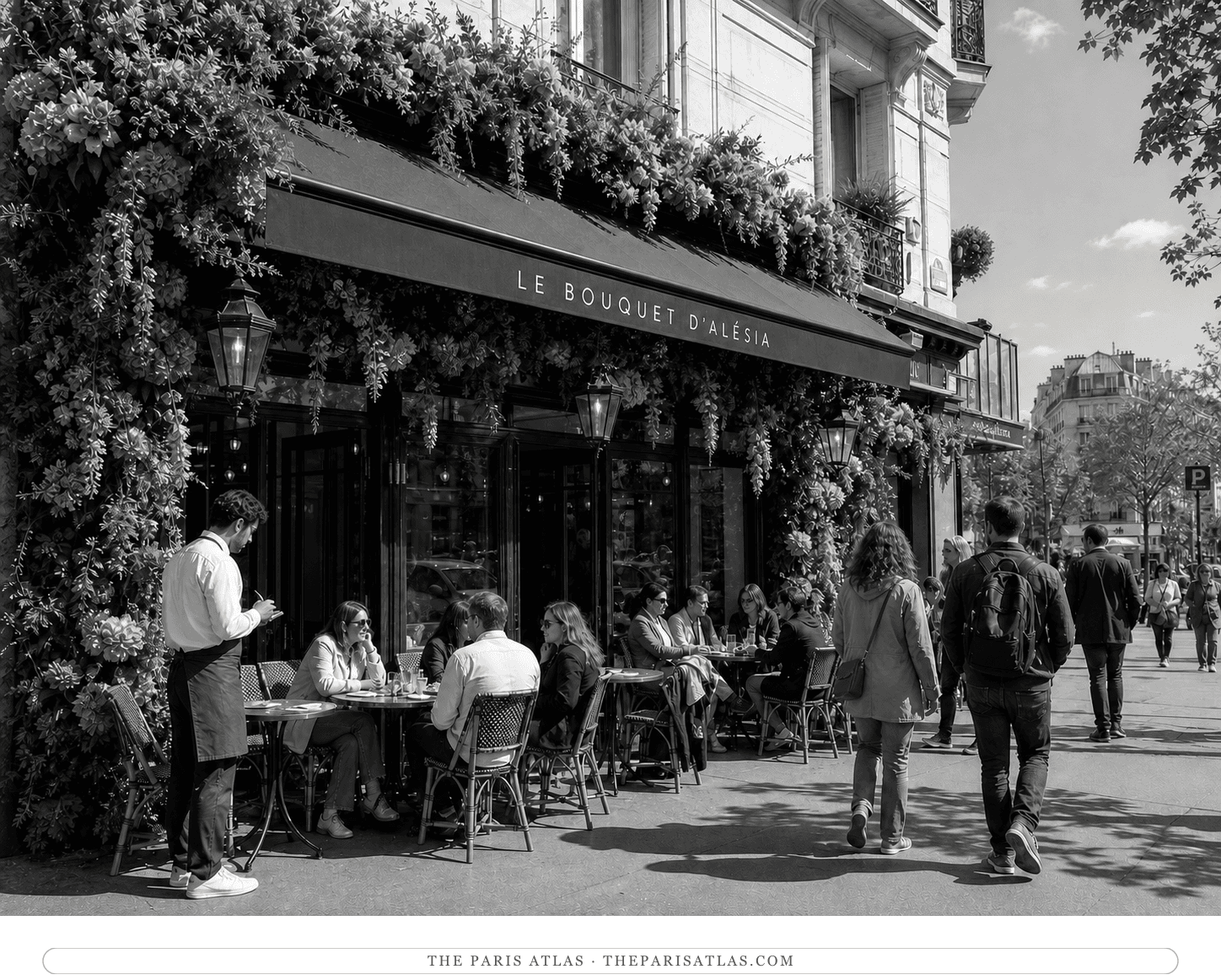
A corner café-brasserie in Alésia where Henry Miller met regularly with Alfred Perlès and Michael Fraenkel during the years that fed into Tropic of Cancer. Still trading on the same corner.
Visit the place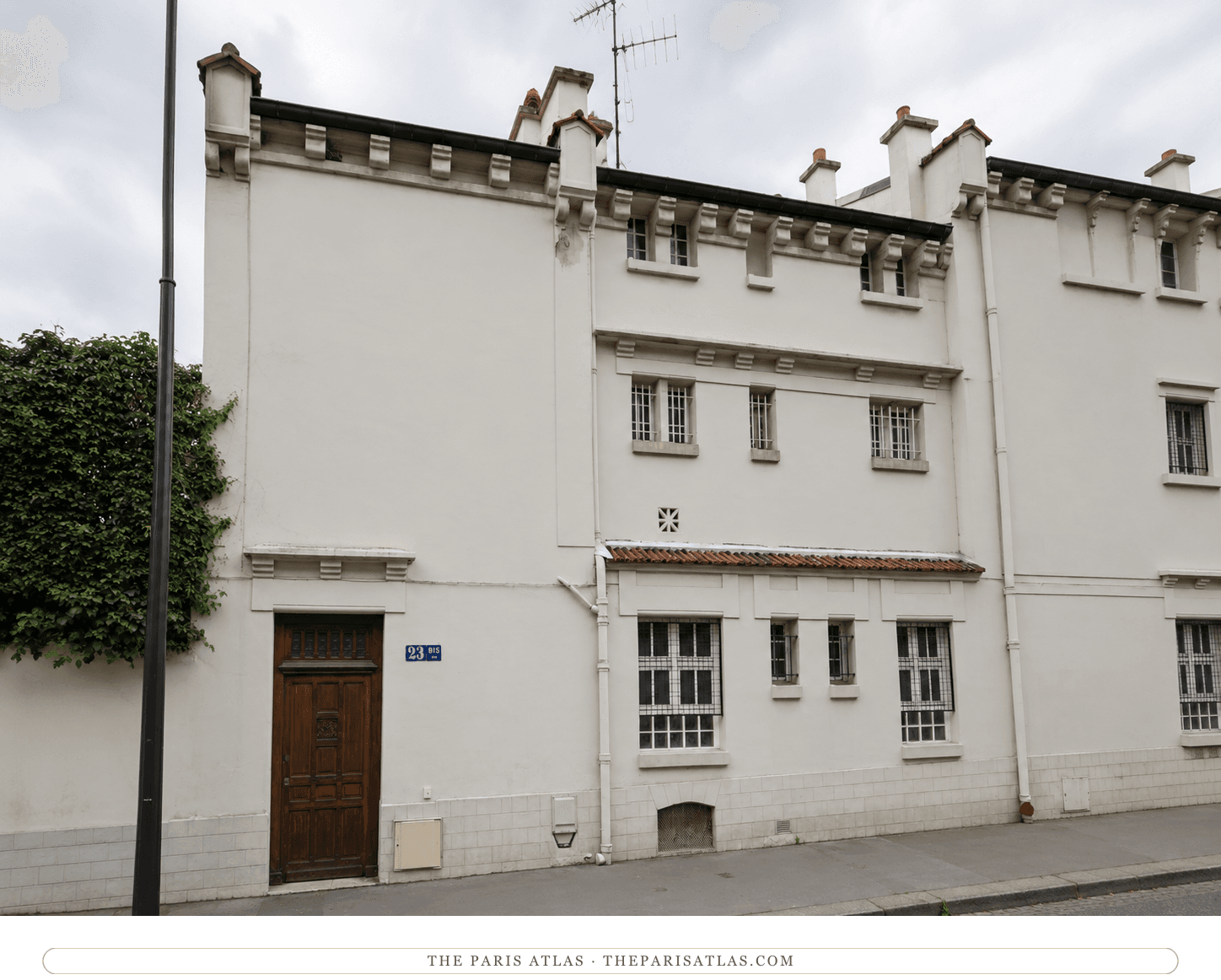
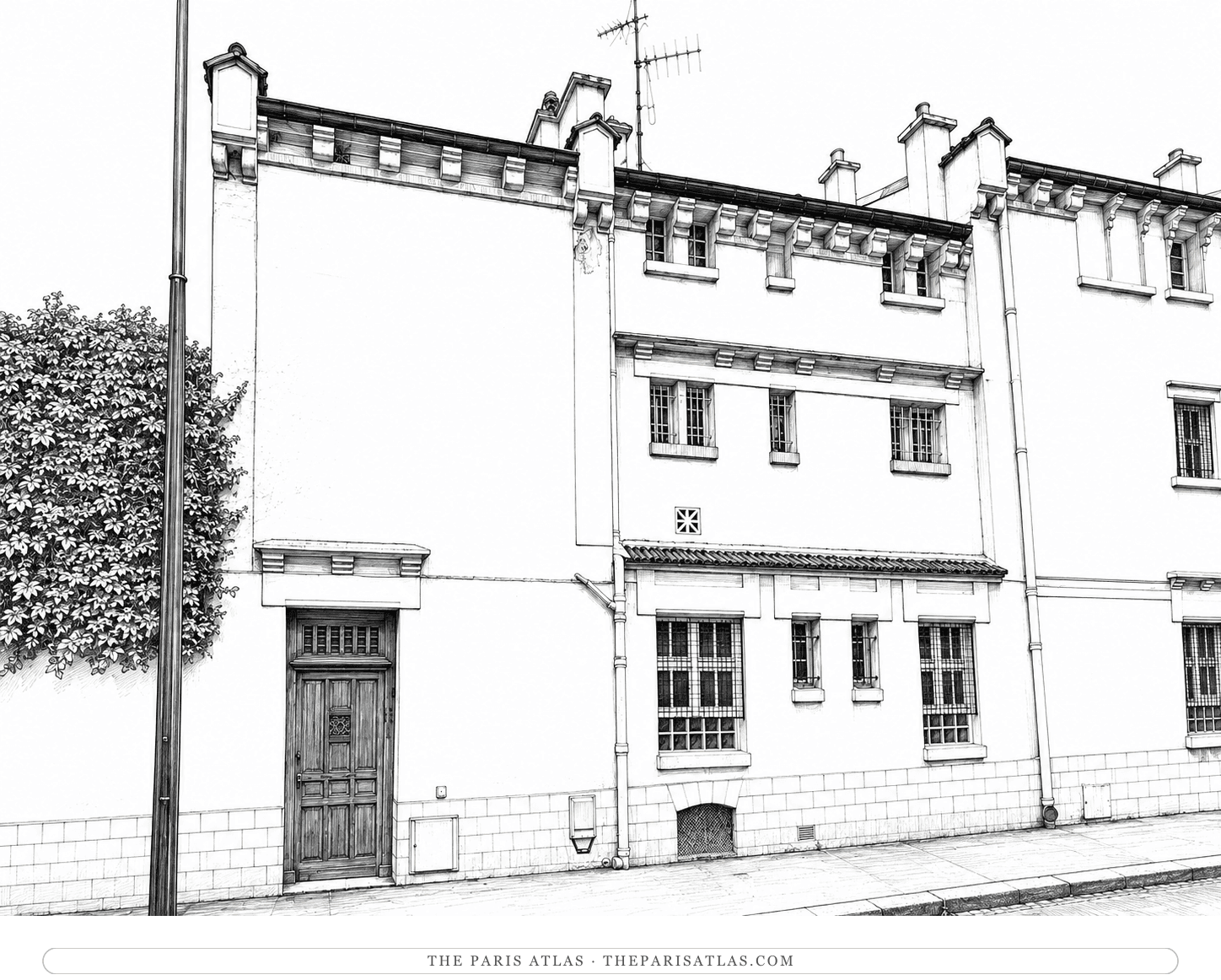
The Paris apartment where Blaise Cendrars and Raymone Duchâteau settled in 1950 after their marriage — his home for almost nine years, facing the rear wall of La Santé prison.
Visit the placeThe sources below include histories, archival materials, scholarly research, and official records that informed this page. They document Parc Montsouris, the people connected to it, and its place in Paris.


The city's own record: the 1867–1878 construction under Napoleon III, Haussmann and Alphand, the Montrouge quarries beneath, the address, hours, the notable trees, the obelisk and the observatory. Checked 24 August 2026.

The BFI on the park's role in Cléo from 5 to 7 and on the loss of the Palais du Bardo in the 1990s.
Map data used to verify addresses, geographic coordinates, and the placement associated with Parc Montsouris.
Official record used to verify names, dates, institutional details, or other factual information on this page.
These references provide the documented foundation for this page's history and context. Claim-level citations remain attached to the specific claims they support.
 Explore more resources
Newsletter
The cafés, studios, and walk-up flats where the work was made — one story from the map in every letter.