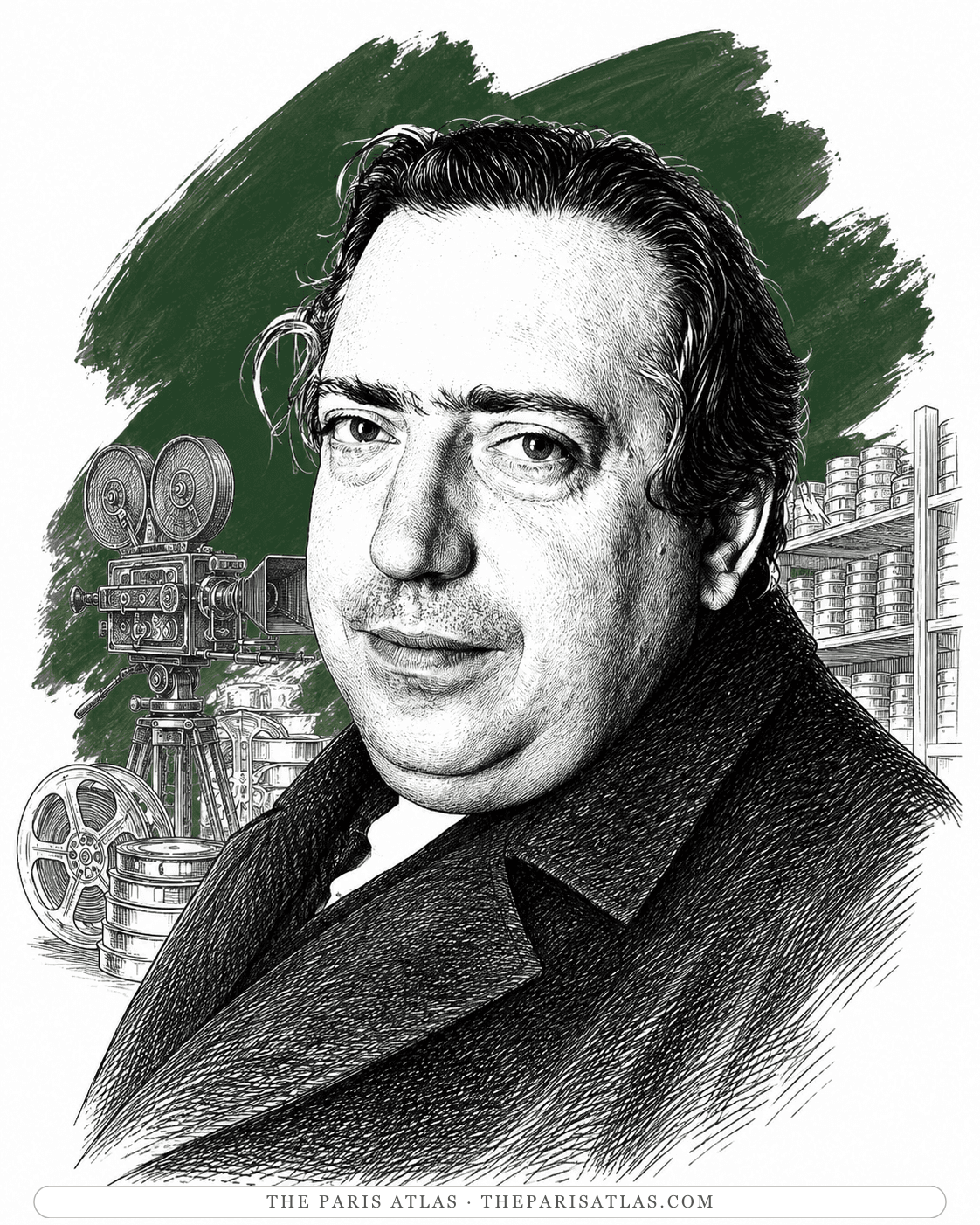
The Paris AtlasCharting the artists, works, and places worth returning to.
  • Filmmaker
  • Archivist
· French · 1912–1987

Georges Franju

Co-founder of the Cinémathèque française with Henri Langlois, and later a director of unsettling lyricism — the slaughterhouse documentary Le Sang des bêtes and the horror classic Les Yeux sans visage.

In images

Details

Lived
1912–1987
Born
12 April 1912
Birthplace
Fougères, France
Died
5 November 1987 · aged 75
Place of death
Paris, France
Nationality
French
Roles
FilmmakerArchivist

About Georges Franju

Georges Franju co-founded the Cinémathèque française with Henri Langlois in 1936, then spent more than a decade preserving and programming film before he began directing. Born in Fougères in 1912, he came to cinema through the film club the two men ran on borrowed money, and the collection they built became the film education a later generation of French directors would claim as its own.

As a director he worked at the edge of documentary and horror. Le Sang des bêtes (1949) filmed a Paris slaughterhouse with a calm that made the killing harder, not easier, to watch; Les Yeux sans visage (1960) turned a surgeon's search for a new face for his disfigured daughter into one of the strangest films in the horror tradition. He kept directing into the 1970s and died in Paris in 1987.

The film club and the Cinémathèque

Franju met Henri Langlois through his own twin brother, Jacques, in the mid-1930s, and the two young enthusiasts founded a film club, Le Cercle du cinéma, on five hundred francs borrowed from Langlois's parents. In 1934 they directed a short together, Le Métro, and out of the club grew the project that outlasted everything else they did: in 1936 they founded the Cinémathèque française, to collect and show the films that were then routinely scrapped for their silver.

Franju ran much of the archive's early administration while Langlois collected, and the Cinémathèque's screenings — silent films, Hollywood genre pictures, and new work shown side by side — became the education that Truffaut, Godard, and the rest of the Cahiers du cinéma circle claimed as their own. Franju stayed close to the institution for the rest of his life, presiding over it again after he stopped making films.

From archive to slaughterhouse

He worked as an archivist until 1949, when he made his solo directorial debut with Le Sang des bêtes, a documentary shot in the slaughterhouses on the edge of Paris. The film sets the ordinary work of killing against a quiet voice-over and the everyday life of the suburbs around it, and the flat calm is what makes it unbearable. A run of documentary shorts followed — Hôtel des Invalides (1951), a tour of the war museum that turns into an anti-war film, and Le Grand Méliès (1952), on the pioneer whose props the Cinémathèque had helped rescue.

Eyes Without a Face and the features

Franju's first feature, La Tête contre les murs (1959), was set in a psychiatric asylum. He followed it with Les Yeux sans visage (1960), in which a surgeon abducts young women in the hope of grafting a new face onto his disfigured daughter — a film that keeps its horror inside a strange, mournful beauty, and that has influenced directors far outside France. Thérèse Desqueyroux (1962) adapted the François Mauriac novel, and Judex (1963) was an affectionate homage to the silent crime serials of Louis Feuillade.

Franju belonged to an older generation than the New Wave, and he is best understood as one of its ancestors rather than a member: the Cinémathèque he co-founded trained the directors who made it, and his own films — poetic, cruel, and precise — were admired by them without being part of their movement. He died in Paris in 1987.

Life events

  1. 1912

    Born on 12 April in Fougères, in Brittany, the twin of his brother Jacques.

  2. 1934

    Meets Henri Langlois in the mid-thirties; the two direct a short, Le Métro, together.

  3. 1936

    Franju and Langlois found the Cinémathèque française.

  4. 1949

    Directs Le Sang des bêtes, the slaughterhouse documentary that is his solo debut.

  5. 1951

    Hôtel des Invalides turns a tour of the war museum into an anti-war film.

  6. 1959

    His first feature, La Tête contre les murs, set in a psychiatric asylum.

  7. 1960

    Les Yeux sans visage, his best-known film and a landmark of the horror tradition.

  8. 1962

    Thérèse Desqueyroux, adapted from the novel by François Mauriac.

  9. 1963

    Judex, an homage to the silent serials of Louis Feuillade.

  10. 1987

    Dies in Paris on 5 November.

People they knew

Documented connections — every one carries its source.

Illustrated portrait of Henri Langlois

Henri Langlois

  • Archivist

Collaborated with · 1935

Franju and Langlois met in the mid-1930s, ran the film club Le Cercle du cinéma together on money borrowed from Langlois's parents, directed the short Le Métro, and in 1936 founded the Cinémathèque française.
The Kitchen Sisters — Archive Fever: Henri Langlois and the Cinémathèque française; FIAF (International Federation of Film Archives) — Henri Langlois, chronology entry

Organizations

Founded · 1936

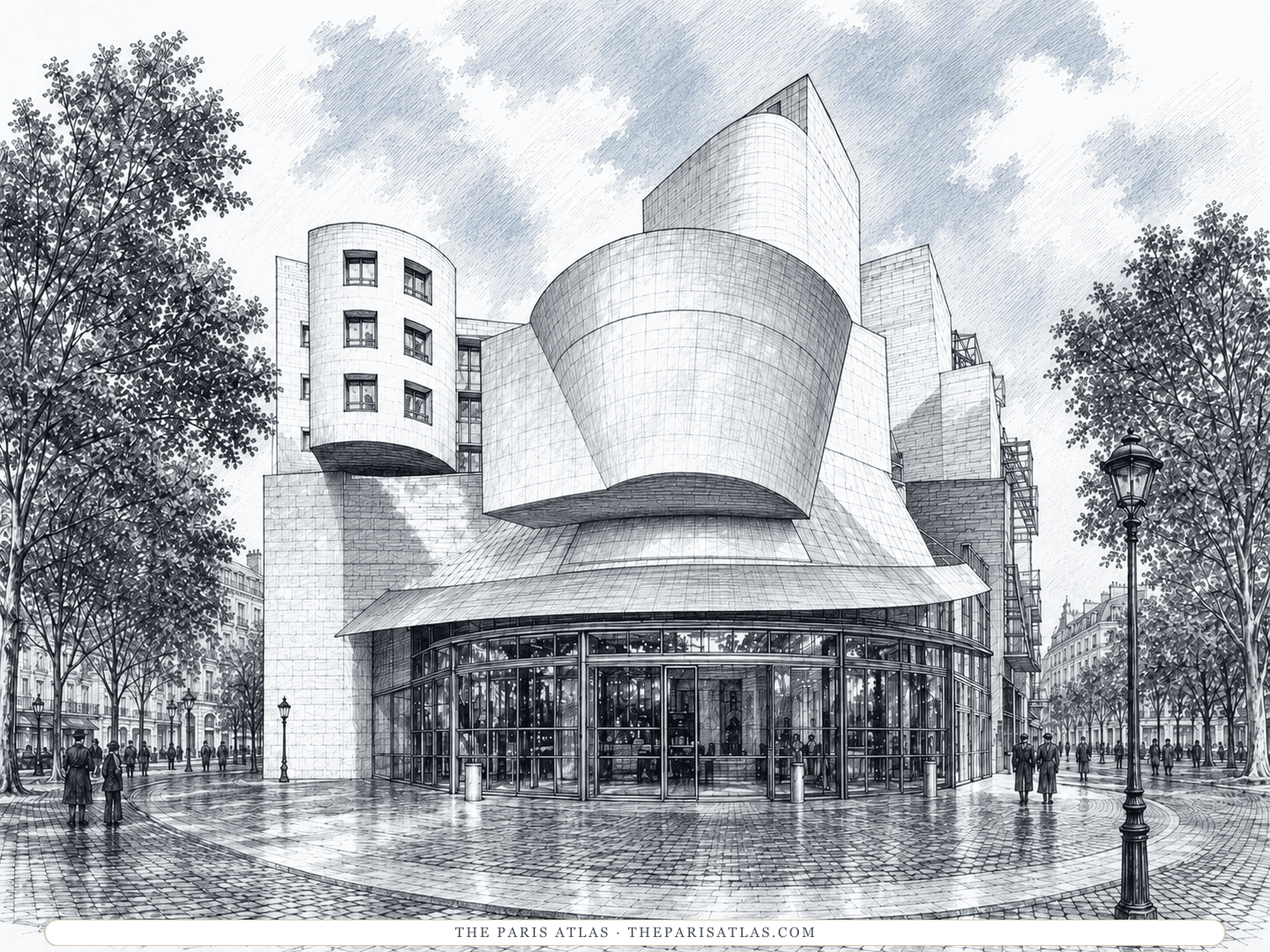
Cinémathèque française

The friend Langlois started the film society with in the mid-1930s; FIAF dates the founding of the archive it became to 1936.

The Kitchen Sisters — Archive Fever: Henri Langlois and the Cinémathèque française; FIAF (International Federation of Film Archives) — Henri Langlois, chronology entry

Questions about Georges Franju

Who was Georges Franju?

A French film archivist and director, born in 1912. He co-founded the Cinémathèque française with Henri Langlois in 1936, worked for years preserving film, and then became a director known for the documentary Le Sang des bêtes and the horror film Les Yeux sans visage. He died in 1987.

Did Georges Franju found the Cinémathèque française?

Yes, with Henri Langlois. The two met in the mid-1930s, ran a film club called Le Cercle du cinéma, and in 1936 founded the Cinémathèque française to collect and show films at a time when old prints were routinely destroyed.

What is Les Yeux sans visage?

Franju's 1960 film — Eyes Without a Face in English — about a surgeon who abducts young women trying to graft a new face onto his disfigured daughter. It is one of the most admired films in the horror tradition, holding its horror inside a strange, mournful beauty.

What is Le Sang des bêtes?

Franju's 1949 directorial debut, a short documentary filmed in the slaughterhouses on the edge of Paris. It sets the work of killing against a calm voice-over and the ordinary life of the suburbs, and the flatness of the treatment is what makes it so hard to watch.

Was Georges Franju part of the French New Wave?

No. He belonged to an older generation and is better described as one of the movement's ancestors. The Cinémathèque française he co-founded gave Truffaut, Godard, and the Cahiers du cinéma circle their film education, and his own films were admired by them without being part of their movement.

Sourced claims

Every connection the graph holds for Georges, with the evidence behind it.

Founded · 1936

Cinémathèque française

The friend Langlois started the film society with in the mid-1930s; FIAF dates the founding of the archive it became to 1936.

The Kitchen Sisters — Archive Fever: Henri Langlois and the Cinémathèque française; FIAF (International Federation of Film Archives) — Henri Langlois, chronology entry

Collaborated with · 1935

Henri Langlois

Franju and Langlois met in the mid-1930s, ran the film club Le Cercle du cinéma together on money borrowed from Langlois's parents, directed the short Le Métro, and in 1936 founded the Cinémathèque française.

The Kitchen Sisters — Archive Fever: Henri Langlois and the Cinémathèque française; FIAF (International Federation of Film Archives) — Henri Langlois, chronology entry