The Paris AtlasCharting the artists, works, and places worth returning to.
  • Author
  • Journalist
  • Critic
· British · 1904–1991

Graham Greene

English novelist of guilt and betrayal — Brighton Rock, The Power and the Glory, The Quiet American — who wrote the screenplay for the 1949 thriller The Third Man, spent the Second World War inside British intelligence reporting to Kim Philby, the officer later exposed as a Soviet agent, and lived for twenty-four years in a fourth-floor flat above the harbour at Antibes on the French Riviera, from which in 1982 he accused the courts and police of nearby Nice of corruption.

Details

Lived
1904–1991
Born
1904
Birthplace
Berkhamsted, Hertfordshire, England
Died
1991
Place of death
Vevey, Switzerland
Nationality
British
Married
Vivien Dayrell-Browning · 1927–1991
Partner
Catherine Walston · 1946–1978Yvonne Cloetta · 1959–1991
Children
Lucy Caroline Greene, Francis Greene
Roles
AuthorJournalistCritic

About Graham Greene

Graham Greene wrote twenty-five novels across sixty years, most of them about people who fail a test they did not ask to sit: a teenage gangster in Brighton, a drunk priest in Mexico, a worn-out English journalist in Saigon. He was received into the Roman Catholic Church at twenty-one and spent the rest of his life arguing with it, which is why the phrase "Catholic novelist" both fits him and irritated him.

His France was not Paris. In 1966 he left England for good and moved to Antibes, the small walled port on the Côte d'Azur — the Mediterranean coast of south-eastern France — between Cannes and Nice, and stayed twenty-four years, in what the New York Times described in 1982 as an unremarkable fourth-floor apartment overlooking the harbour. Paris touches his life at angles rather than head-on: the film column he wrote in the 1930s, over six hundred reviews in five years; the bit part he took, under a false name, in a film by the French director François Truffaut shot up the coast; and the pamphlet of 1982, J'Accuse: The Dark Side of Nice — French for "I accuse" — whose title he borrowed knowingly from the novelist Émile Zola and whose target was Jacques Médecin, the mayor of the city ten miles along the shore.

Berkhamsted, Balliol, and a conversion

Henry Graham Greene was born on 2 October 1904 at St John's, Chesham Road, Berkhamsted, a town north-west of London, the fourth of six children of Charles Henry Greene and Marion Raymond Greene. His father was a housemaster at Berkhamsted School — a master in charge of one of the boarding houses — and became its headmaster in 1911, so the boy grew up as both pupil and headmaster's son, which is roughly the worst arrangement a school can offer anyone. He took his degree at Balliol College, Oxford, in 1925, edited the student magazine The Oxford Outlook, and met his future wife Vivien Dayrell-Browning when she wrote to tell him he had got something wrong in one of his articles.

Vivien was a Catholic convert, and in February 1926 Greene took religious instruction and was received into the Roman Catholic Church; they married in October 1927. He sub-edited at The Times in London until 1930 and published his first novel, The Man Within, in 1929. The Catholicism is not decoration on the books that followed. Brighton Rock (1938) turns on Pinkie, a seventeen-year-old leader of a razor-carrying gang who believes in damnation and not in mercy, and on Rose, the girl who loves him and will not let him be judged; The Power and the Glory (1940) follows an alcoholic priest with an illegitimate child through a Mexican state that has outlawed the Church, and asks whether a bad priest can still be a real one.

Six hundred mornings in the dark

From 1935 to 1942 Greene worked for The Spectator, the London weekly of politics and the arts — first as its film critic, then from 1940 as literary editor. He reviewed over six hundred films in what he called mornings in the dark, and he marked hard. In June 1937 he also became film critic and literary editor of a new magazine, Night and Day; it lasted until December, when a libel action brought on behalf of the nine-year-old American film star Shirley Temple closed the magazine down. Greene's review had suggested that her films were being sold to grown men on the child's coquettishness, which the court treated as a gross outrage; damages were paid to Temple and her studio. He went to Mexico the following year partly to be somewhere else while the row burned out — and came back with the material for The Power and the Glory.

The best joke of the column was at his own expense. On 12 January 1940 The Spectator ran Greene's review of the film Twenty-One Days, starring the actors Laurence Olivier and Vivien Leigh. "I have no good word to say of it," he began — and he had written most of its screenplay. He vowed, in the same review, never to do it again, and then spent decades doing it again: sixty-six films have been made from his work. The one everybody knows is The Third Man, directed by Carol Reed in 1949 from an original screenplay Greene wrote for the purpose and published as a novella in 1950 — the story of a man who arrives in post-war Vienna, then a bombed city divided into zones between the four occupying armies, to meet a friend and finds the funeral instead. In the British Film Institute's poll of 1999 it was voted the greatest British film ever made.

The war, and the man who turned out to be a spy

In 1940 Greene worked for the Ministry of Information, the British government's wartime department for propaganda and public information, commissioning books and pamphlets for the war effort; in October a German bomb wrecked the family house at 14 North Side, Clapham Common. In 1941 he was recruited into the Secret Intelligence Service — SIS, better known as MI6, Britain's foreign spying agency — and in 1942 was posted to Freetown, in the British colony of Sierra Leone, a swampy, boring, malarial station where he wrote most of the novel The Ministry of Fear (1943). In 1943 he came home to Section V at St Albans, the counter-intelligence branch covering Spain and Portugal, where his immediate superior was Kim Philby, a rising officer of the service.

Philby was secretly working for the Soviet Union, and was not publicly exposed until 1963, when he fled to Moscow — which means Greene had spent the war reporting to a man whose real employer was the other side. Greene left the service in May 1944 and became a director of the publishers Eyre and Spottiswoode until 1948, but he kept what he called informal links with the old firm, his private name for the intelligence service, for most of his life. The tradecraft — the working craft of spying, the meetings, cover stories and reports — went straight into the fiction: the ruined agents of The Quiet American (1955), Our Man in Havana (1958) and The Human Factor (1978) are written by somebody who had filed the reports himself.

Catherine Walston

Catherine Walston was an American-born woman of great wealth — born in Rye, New York, in 1916, married at nineteen to the English farmer and politician Harry Walston, and the lady of a Cambridgeshire country house hung with paintings by Picasso and Renoir. She converted to Catholicism in 1945–46 and asked Greene, whose books had helped push her towards it, to be her godfather at the baptism; he agreed but did not attend, and his wife Vivien stood in for him at the ceremony. The correspondence began in September 1946 and the affair shortly after: a dinner at Rules, the old London restaurant, and a kiss afterwards on the grating outside, a February 1947 flight over the snow-covered flatlands of East Anglia. "A lock of hair touches one's eyes in a plane with East Anglia under snow," Greene wrote, "and one is in love."

It lasted, in one form or another, until her death in 1978, and it produced roughly four hundred thousand words of letters, some sixty per cent of them written between 1947 and 1952. Nearly thirteen hundred of them are now at Georgetown University in Washington. The affair also produced the novel: The End of the Affair (1951), in which a wartime love ends because the woman has made a bargain with a God she does not believe in. Greene had been separated from Vivien since 1939 and never divorced her; she outlived him by twelve years.

Antibes: the France that was not Paris

In 1959 Greene met Yvonne Cloetta in Dahomey, the French colony in West Africa that is now Benin — a French-Swiss woman who became, in his word, his companion for the rest of his life. In 1966, the year Britain made him a Companion of Honour, an award limited to sixty-five living people at a time for services to the nation, he left London for Antibes, partly for tax reasons and partly to be near her, and never lived in England again. It was a small, contained life on a walled harbour: the fourth-floor flat above the port, a walk across town to his regular table at the restaurant Auberge Provençal, and a habit of being out of the country during the tourist season. He stayed until late 1990.

The oddest thing that happened to him there was a film. In 1972–73 François Truffaut, the French director whose Les Quatre Cents Coups (1959), released in English as The 400 Blows, had helped launch the New Wave — the movement of young French film-makers who shot in real streets with light cameras and made a virtue of improvisation — was shooting La Nuit américaine near Antibes. The title is the French term for the trick of filming in daylight through a filter so that the scene reads as night, which is why the film is called Day for Night in English. Unhappy with the actor playing a small part, an English insurance man, Truffaut advertised in the local paper for an English gentleman of a certain age. Greene, who admired his films, went and auditioned under the name Henry Graham, got the part, and played it. Truffaut had no idea who he had cast until someone recognised the face in the screening room after shooting; he telephoned to apologise and offered to cut the scene. Greene told him he had enjoyed himself enormously, and asked only that the credits not carry his name. The film won the Academy Award — the American film industry's Oscar — for Best Foreign Language Film in 1974.

J'Accuse: the dark side of Nice

Ten miles up the coast from Antibes is Nice, then run by Jacques Médecin, who had been its mayor since 1966 and, since 1967, a deputy — a member of the lower house of the French parliament — in the National Assembly, and who also controlled the local daily paper, Nice-Matin. Greene's quarrel with the city was personal before it was public. Yvonne Cloetta's elder daughter, Martine, had married a man from Nice; the marriage broke down in 1979, and after a divorce that gave Martine custody of the children, her former husband took one of them from her parents' house and the police did nothing. Investigating, Greene found that the man had a long criminal record and was on close terms with police officers and at least one judge, and that Martine's own lawyer had been visiting him throughout the divorce.

Greene's first move was to try to hand back his Légion d'honneur — France's highest decoration, which he held — to the French government. It was returned to him with the note that only his death or disgrace could forfeit it, and that keeping it might be useful to his campaign. In 1980 he wrote to Alain Peyrefitte, the writer who was then Minister of Justice, and an inspector general was sent to Nice; one local judge was transferred to another post. In January 1982 Greene took it public with a letter to The Times of London, and the press descended on Antibes. Médecin accused him of spitting in the soup — the French expression for fouling the place that feeds you; Nice-Matin wrote that the only scandal was the novelist's impudence.

The pamphlet came later that year: J'Accuse: The Dark Side of Nice, borrowing the title of the open letter the novelist Émile Zola published in a Paris newspaper in 1898 to accuse the French state of framing Alfred Dreyfus, an army officer wrongly convicted of spying for Germany. "I realize that the title has been used before," Greene said, drily, when he was still calling it tentative. He was seventy-seven, and he framed the point plainly: he was testing what a world reputation could do against a network of local officials protecting one another, and thinking of everyone who has no eminent writer to push their case. He did not live to see the end of it. Médecin fled France for Uruguay in September 1990 rather than face prosecution, was convicted in his absence in 1992, was extradited back to France in 1993 and convicted again of embezzlement and fraud; he died at Punta del Este in 1998.

Greene left Antibes in late 1990 for Corseaux, on Lake Geneva near Vevey in Switzerland, where his daughter Lucy Caroline lived. He was awarded Britain's Order of Merit — a personal gift of the sovereign, held by only twenty-four living people — in 1986, and published his last novel, The Captain and the Enemy, in 1988. He died at Vevey on 3 April 1991, aged eighty-six.
Life events

  1. 1904

    Born on 2 October at St John's, Chesham Road, Berkhamsted, fourth of six children; his father was a housemaster and later headmaster of Berkhamsted School.

    Ken Sherwood and Kevin Ruane, A Graham Greene timeline: his life and work

  2. 1926

    Received into the Roman Catholic Church in February; moves to London in March as a sub-editor at The Times.

    Ken Sherwood and Kevin Ruane, A Graham Greene timeline: his life and work

  3. 1935

    Begins seven years at The Spectator, first as film critic and from 1940 as literary editor; he would review over six hundred films.

    Ken Sherwood and Kevin Ruane, A Graham Greene timeline: his life and work; Mike Hill, Graham Greene, film reviewing and Twenty-One Days

  4. 1937

    Night and Day, where he is film critic from June, folds in December after a libel action brought on behalf of the nine-year-old Shirley Temple.

    Ken Sherwood and Kevin Ruane, A Graham Greene timeline: his life and work

  5. 1938

    Brighton Rock published; he goes to Mexico partly to escape the Shirley Temple furore.

    Ken Sherwood and Kevin Ruane, A Graham Greene timeline: his life and work

  6. 1941

    Recruited into the Secret Intelligence Service; posted to Freetown, Sierra Leone, in 1942, and in 1943 to Section V at St Albans under Kim Philby.

    Ken Sherwood and Kevin Ruane, A Graham Greene timeline: his life and work

  7. 1946

    Begins the relationship with Catherine Walston that becomes the great affair of his life and the source of The End of the Affair (1951).

    Ken Sherwood and Kevin Ruane, A Graham Greene timeline: his life and work; Kevin Ruane, Dear Heart: the Graham Greene-Catherine Walston correspondence, 1947-1978

  8. 1949

    The Third Man, directed by Carol Reed from Greene's original screenplay, is released; the story appears as a novella in 1950.

    About Graham Greene; Ken Sherwood and Kevin Ruane, A Graham Greene timeline: his life and work

  9. 1955

    The Quiet American published, out of his Indochina journeys from January 1951.

    Ken Sherwood and Kevin Ruane, A Graham Greene timeline: his life and work

  10. 1966

    Made a Companion of Honour and moves from London to Antibes, to be near Yvonne Cloetta and out of reach of the British tax authorities; he never lives in England again.

    Ken Sherwood and Kevin Ruane, A Graham Greene timeline: his life and work; Searching for Graham Greene in Switzerland

  11. 1973

    Plays an English insurance man in François Truffaut's La Nuit américaine, shot near Antibes, having auditioned as "Henry Graham"; Truffaut only learns whom he cast after filming.

    Graham Greene and Francois Truffaut: Footnote to a Film

  12. 1982

    After a letter to The Times of London in January, publishes J'Accuse: The Dark Side of Nice, accusing police, lawyers and judges in Nice of corruption protected from above.

    Richard Eder, On the Riviera, A Morality Tale by Graham Greene (1982); Ken Sherwood and Kevin Ruane, A Graham Greene timeline: his life and work

  13. 1990

    Jacques Médecin, mayor of Nice since 1966, flees to Uruguay in September rather than face corruption charges; Greene leaves Antibes for Corseaux, above Vevey, in the autumn.

    Craig R. Whitney, Jacques Medecin, 70, Dies; French Mayor (1998); Searching for Graham Greene in Switzerland

  14. 1991

    Dies at Vevey, Switzerland, on 3 April, aged eighty-six.

    Ken Sherwood and Kevin Ruane, A Graham Greene timeline: his life and work

People they knew

Documented connections — every one carries its source.

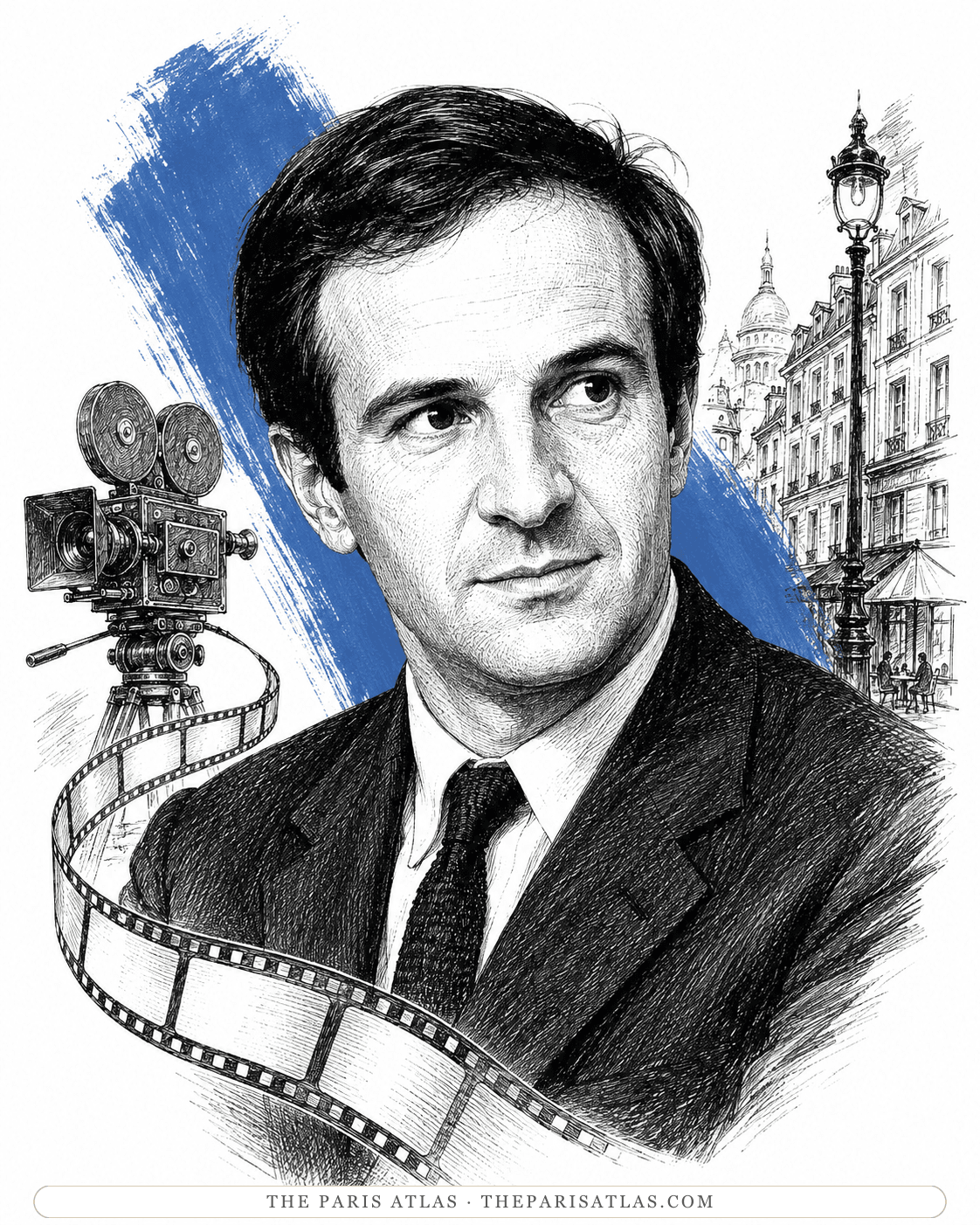
Illustrated portrait of François Truffaut

François Truffaut

  • Filmmaker
  • Critic
  • Actor

Met · 1973

Truffaut was shooting La Nuit américaine (Day for Night) on the Côte d'Azur near Antibes, where Greene had lived since 1966, and advertised in the local press for an English gentleman of a certain age to play a small part as an insurance man. Greene, an admirer of his films, auditioned under the name Henry Graham and got the role, delivering his lines directly to Truffaut's character; Truffaut had no idea whom he had cast until an associate recognised the novelist in the screening room after filming. He telephoned to apologise and offered to cut the scene. Greene refused, said he had enjoyed himself, and asked only to stay out of the credits.

Graham Greene and Francois Truffaut: Footnote to a Film

Questions about Graham Greene

Did Graham Greene live in Paris?

No. Greene's France was the Riviera, not the capital. He left England in 1966 and lived until late 1990 in Antibes, the walled port on the Côte d'Azur between Cannes and Nice, in a fourth-floor flat overlooking the harbour, near his companion Yvonne Cloetta. He then moved to Corseaux, above Vevey in Switzerland, where he died in 1991. Paris enters his life sideways — through the French cinema he reviewed in the 1930s, through a bit part in a film by the director François Truffaut, and through the French courts he took on in 1982.

What is J'Accuse: The Dark Side of Nice?

A pamphlet Greene published in 1982 — the title is French for "I accuse" — accusing the police, at least one judge and lawyers in Nice of corruption, and organised crime of flourishing there because the city's government protected it. It came out of a family case: the daughter of his companion Yvonne Cloetta had divorced a man from Nice in 1979, and when he took one of their children the police did not act. Greene found the man had a criminal record and friends inside the police and the courts. The title is borrowed from the novelist Émile Zola's open letter of 1898 accusing the French state of framing the army officer Alfred Dreyfus, and Greene said so himself: he knew the title had been used before.

Did Graham Greene work for MI6?

Yes. He was recruited into the Secret Intelligence Service — MI6, Britain's foreign intelligence agency — in 1941, was posted to Freetown in Sierra Leone in 1942, and in 1943 joined Section V at St Albans, the counter-intelligence section covering Spain and Portugal, reporting directly to Kim Philby, who was secretly working for the Soviet Union and was exposed only in 1963, when he fled to Moscow. Greene left the service in May 1944 but kept informal contact with what he called the old firm for much of his life.

Was Graham Greene a Catholic writer?

He was a Catholic who wrote novels, and he resisted the label the other way round. He was received into the Church in February 1926, before marrying Vivien Dayrell-Browning, a convert, in 1927. Four novels are unmistakably built on Catholic questions — Brighton Rock (1938), The Power and the Glory (1940), The Heart of the Matter (1948) and The End of the Affair (1951) — and all four are about damnation, mercy and whether a person can be judged from outside. He stopped going to mass in the 1950s and took the sacraments again near the end of his life.

Did Graham Greene write The Third Man?

Yes — as a screenplay first. Greene wrote The Third Man for the director Carol Reed, who filmed it in 1949 in bombed post-war Vienna, then divided between the four occupying armies, with Orson Welles as the penicillin racketeer Harry Lime; the story was published as a novella in 1950. Greene said Reed was one of the very few directors who brought his work to the screen at his own standard. Sixty-six films in all have been made from Greene's writing.

Was Graham Greene really in a François Truffaut film?

He was, uncredited and undetected. Truffaut was shooting La Nuit américaine (Day for Night) near Antibes and advertised in the local press for an English gentleman of a certain age to play a small part as an insurance man. Greene, a fan, auditioned under the name Henry Graham and got the job; Truffaut only found out whom he had cast when someone recognised him in the screening room afterwards. Truffaut phoned to apologise and offered to cut the scene; Greene said he had enjoyed it and asked only to stay out of the credits. The film won the 1974 Academy Award for Best Foreign Language Film.

Who was Catherine Walston?

An American-born, English-married woman of great wealth — born in Rye, New York, in 1916 — who converted to Catholicism in 1945–46 partly through reading Greene, asked him to be her godfather at her baptism, and became the central relationship of his adult life from 1946 until her death in 1978. He wrote her something like four hundred thousand words; nearly thirteen hundred letters, cards and notes are held at Georgetown University in Washington. The End of the Affair (1951) came directly out of the relationship.

How did Graham Greene die, and where is he buried?

He died on 3 April 1991 at Vevey, on Lake Geneva in Switzerland, aged eighty-six, and is buried in the cemetery of Corseaux, the village just above the town where he had settled after leaving Antibes in late 1990. His companion of thirty years, Yvonne Cloetta, died at her home in Antibes in 2001; his wife Vivien, from whom he had lived apart since 1939 without ever divorcing, died in Oxford in 2003.

Sourced claims

Every connection the graph holds for Graham, with the evidence behind it.

Met · 1973

François Truffaut

Truffaut was shooting La Nuit américaine (Day for Night) on the Côte d'Azur near Antibes, where Greene had lived since 1966, and advertised in the local press for an English gentleman of a certain age to play a small part as an insurance man. Greene, an admirer of his films, auditioned under the name Henry Graham and got the role, delivering his lines directly to Truffaut's character; Truffaut had no idea whom he had cast until an associate recognised the novelist in the screening room after filming. He telephoned to apologise and offered to cut the scene. Greene refused, said he had enjoyed himself, and asked only to stay out of the credits.

Graham Greene and Francois Truffaut: Footnote to a Film

References

References

The sources below include biographies, scholarly essays, interviews, and primary materials that informed this page. They reflect both the historical record and ongoing critical conversations about Graham Greene and their work.

  1. 1A Graham Greene timeline: his life and work

    Graham Greene Birthplace Trust
    View source
  2. 2About Graham Greene

    Graham Greene Birthplace Trust
    View source
  3. 3Dear Heart: the Graham Greene-Catherine Walston correspondence, 1947-1978

    Graham Greene Birthplace Trust
    View source
  4. 4Graham Greene and Francois Truffaut: Footnote to a Film

    Graham Greene Birthplace Trust
    View source
  5. 5Graham Greene, film reviewing and Twenty-One Days

    Graham Greene Birthplace Trust
    View source
  1. 6Searching for Graham Greene in Switzerland

    Graham Greene Birthplace Trust
    View source
  2. 7On the Riviera, A Morality Tale by Graham Greene

    The New York Times, 5 February 1982, 1982
    View source
  3. 8Jacques Medecin, 70, Dies; French Mayor

    The New York Times, 19 November 1998, 1998
    View source
  4. 9Jacques Medecin - Base de donnees des deputes francais depuis 1789

    Assemblee nationale, Paris
    View source
i
Why these sources are here

These references anchor the page in the documented record and in the scholarly conversations around Graham Greene. Every claim on this page traces back to one or more of the works listed here.

Explore more resources
Browse all authors