The Paris AtlasCharting the artists, works, and places worth returning to.
  • Restaurateur
· Basque

Louis Baruc

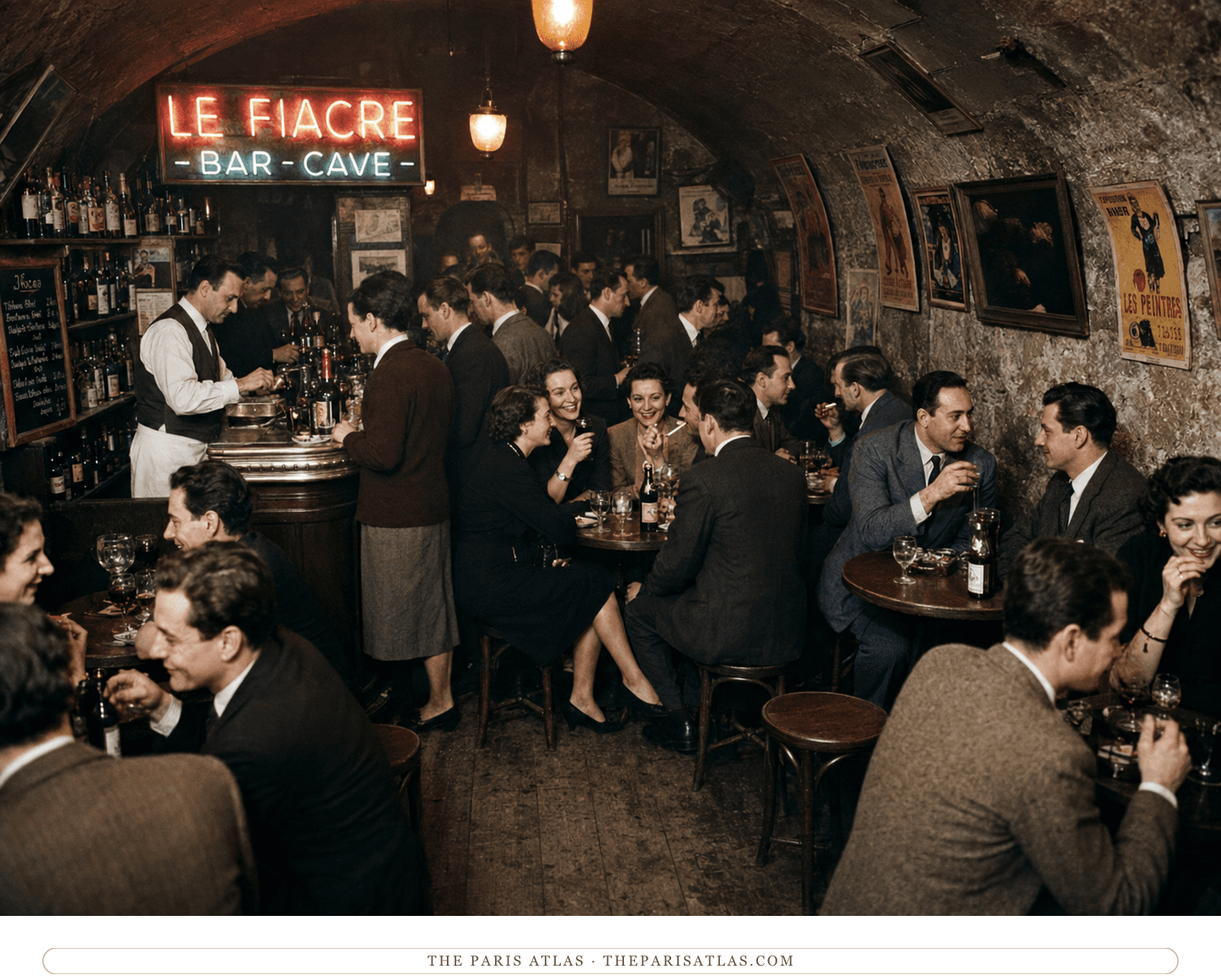
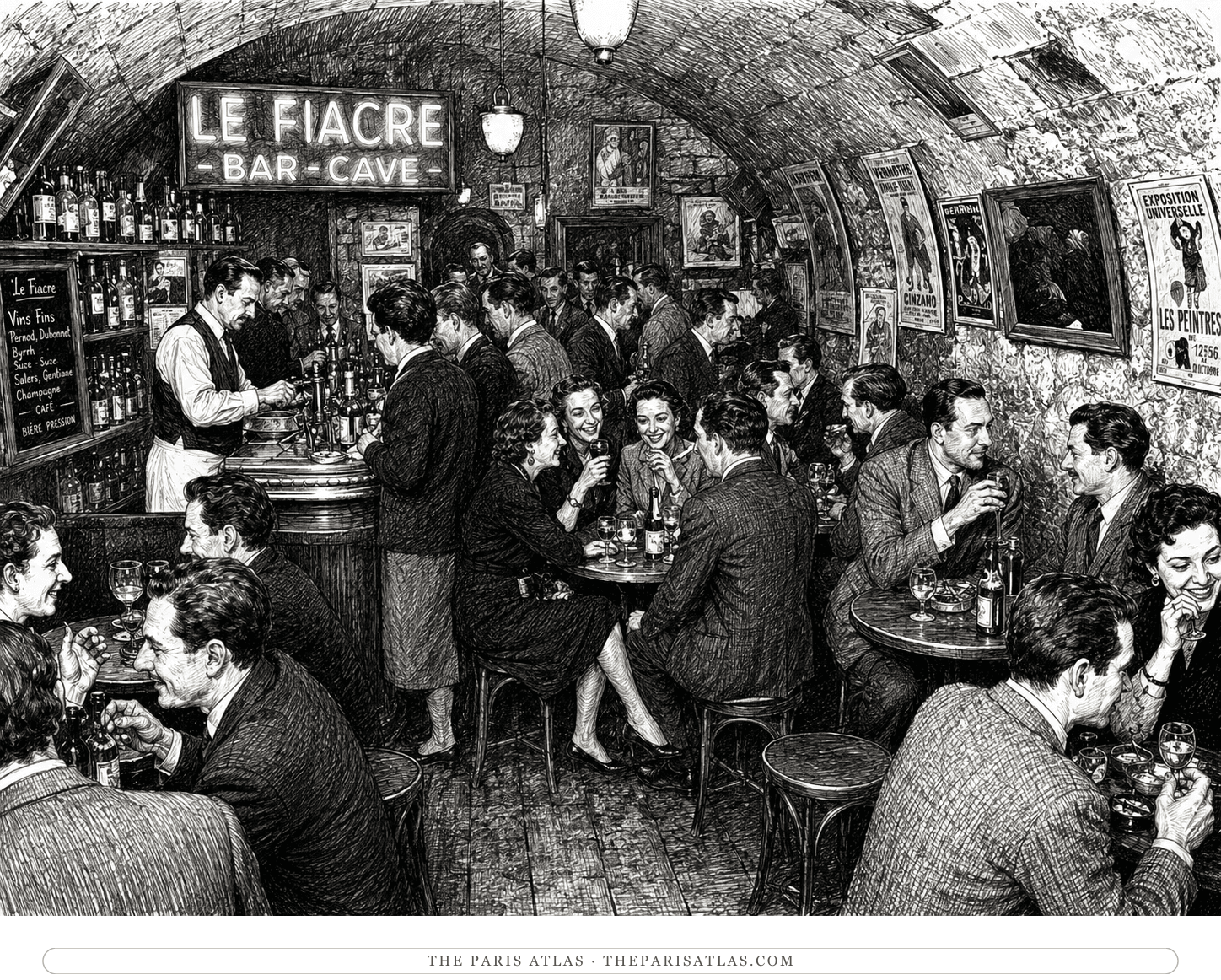
The restaurateur who ran Le Fiacre at 4 rue du Cherche-Midi through the 1950s, when it was the centre of homosexual Paris. He kept a twelve-table restaurant on the floor above the bar, and its well-connected diners were what kept the police away from the men drinking below.

Details

Nationality
Basque
Roles
Restaurateur
Also known as
Loulou · Louise

About Louis Baruc

Louis Baruc was Basque by origin and trained at Maxim's and at Fouquet's before taking over Le Fiacre, at 4 rue du Cherche-Midi, in the 1950s. Everyone called him Loulou; Nicholas Boggs records that customers also called him Louise.

He ran the house on two floors, with two clienteles that never mixed. The premier étage held a sober restaurant of twelve tables with a forty-franc menu, and it drew Parisian show business — Pierre Cardin was among the diners. The ground floor held a small gay bar, packed to the walls, whose customers had far less money and much more to lose. From 1949 until the end of the 1960s a prefectural order forbade men to dance together in public, and administrative closure was the standing threat to any bar of this kind. The trade upstairs was what bought the room downstairs its tolerance.

The New York Times account of James Baldwin's Paris says that Le Fiacre's owner became the basis for Guillaume in Giovanni's Room. Nicholas Boggs's 2025 biography reaches the same conclusion independently, indexing Baruc by name and reading Guillaume as very much in the vein of Louis. Baldwin never confirmed the identification in any letter or interview in the public record.
Louis Baruc’s Places

The cataloged places connected to Louis Baruc — through the books, and through the documented record.

Places you can enter today appear first, followed by addresses to see from outside and sites that have vanished.

In works

Works in these pages connected to Louis through the claims of the graph.

Cover of Giovanni's Room by James Baldwin

Inspired · Book

Giovanni's Room

James Baldwin · 1956

The New York Times says Le Fiacre's owner became the basis for Guillaume. Nicholas Boggs's 2025 biography reaches the same conclusion independently, indexing Baruc by name and reading Guillaume as very much in the vein of him.

Samuel Rutter, Exploring James Baldwin's Old Haunts in New York and Paris (2020); Nicholas Boggs, Baldwin: A Love Story (2025)

Sourced claims

Every connection the graph holds for Louis, with the evidence behind it.

Worked at

Le Fiacre (4 rue du Cherche-Midi)

Baruc took over Le Fiacre in the 1950s and ran it on two floors: a twelve-table restaurant with a forty-franc menu on the premier étage, and a packed gay bar on the ground floor. He had trained at Maxim's and at Fouquet's.

Julian Jackson, Living in Arcadia: Homosexuality, Politics, and Morality in France from the Liberation to AIDS (2009), ch. 2, "The Shadow of the Occupation, 1942–1955", p. 49; Quelle est l'histoire des premiers bars gays à Paris : chronologie et lieux; Un siècle de lieux mythiques de la nuit LGBT à Paris (2024)

Inspired

Giovanni's Room

The New York Times says Le Fiacre's owner became the basis for Guillaume. Nicholas Boggs's 2025 biography reaches the same conclusion independently, indexing Baruc by name and reading Guillaume as very much in the vein of him.

Samuel Rutter, Exploring James Baldwin's Old Haunts in New York and Paris (2020); Nicholas Boggs, Baldwin: A Love Story (2025)

Sources and further reading

  • Samuel Rutter, Exploring James Baldwin's Old Haunts in New York and Paris (2020)
  • Nicholas Boggs, Baldwin: A Love Story (2025)
  • Julian Jackson, Living in Arcadia: Homosexuality, Politics, and Morality in France from the Liberation to AIDS (2009)
  • Quelle est l'histoire des premiers bars gays à Paris : chronologie et lieux
  • Un siècle de lieux mythiques de la nuit LGBT à Paris (2024)