The Paris AtlasCharting the artists, works, and places worth returning to.
  • Designer
  • Painter
· French · 1892–1989

Suzanne Lalique-Haviland

French designer who worked in glass, porcelain, textiles and stage design, and whose contributions to the Lalique firm were often manufactured under her father's signature.

Details

Lived
1892–1989
Born
1892
Died
1989
Nationality
French
Roles
DesignerPainter

About Suzanne Lalique-Haviland

Suzanne Lalique-Haviland (1892–1989) designed glass, porcelain, screens, wallpaper and stage sets across a career of more than sixty years. She was the daughter of the jeweller and glassmaker René Lalique and Alice Ledru, and the granddaughter of the sculptor Auguste Ledru.[1] Her mother was the subject of one of her father's finest pieces of jewellery, a necklace designed for Augustine-Alice Ledru and now in the Metropolitan Museum of Art.[2]

Designing for her father's firm

She began designing for the Lalique business in 1910, at eighteen, producing powder boxes, bonbonnières and other small decorative objects. Through the 1920s her contribution widened into the glass itself, and she worked on the design of vases and bowls during the decade when the firm was establishing its Art Deco vocabulary.[1]

How much of that work carries her name is an open question. The Musée Lalique states plainly that she worked on many of the projects attributed to René Lalique, without itemising which.[1] The clearest test case is the Tourbillons vase of 1926. The Metropolitan Museum of Art catalogues it as her father's design, while Lalique's own centenary account of the model credits Suzanne with conceiving it, after an unfurling fern.[3][4] Both accounts come from institutions with good reason to know, and they do not agree.

Porcelain, screens and paint

In 1917 she married the photographer Paul Burty-Haviland, which connected her to a second family in the decorative arts. She began designing Limoges porcelain for William Haviland, showed that work at the 1925 Exposition internationale des arts décoratifs et industriels modernes in Paris, and continued designing porcelain into the 1930s.[1]

Alongside the manufactured work she designed and painted a series of decorative screens between 1914 and 1927, and produced motifs for wallpaper. She also painted for herself rather than for production: more than 130 canvases survive that were never made for sale.[1]

The theatre, and a second career

In 1937 she was commissioned to design the scenery for Luigi Pirandello's Chacun sa vérité at the Comédie-Française.[1] The following year she was appointed chef décoratrice there, and she ran the sets and costumes workshops for the next three decades, from 1938 to 1971.[5]

That is the part of her career with the largest surviving body of work. She put her hand to roughly eighty productions at the Comédie-Française. What the house remembers is less any single set than a consistency of tone across them: she made the scenery and costume shops work to one design rather than two.[5] The Musée Lalique counts more than fifty performances between the 1930s and the 1970s, a figure that covers her work outside the Comédie-Française as well.[1]

She stepped down from the workshops in 1971, at seventy-nine, and died in 1989 aged ninety-seven. The Musée des Arts Décoratifs gave her theatre work an exhibition of its own, Suzanne Lalique et la scène, at the Musée Nissim de Camondo in 2018.[5]

Her career is a useful correction to the way design houses are usually described. The Lalique name belongs to a firm that employed designers, technicians and skilled workers, and for several decades one of those designers was the founder's daughter, whose work went out under his signature.[6]

Movements

The artistic and literary currents this life ran through.

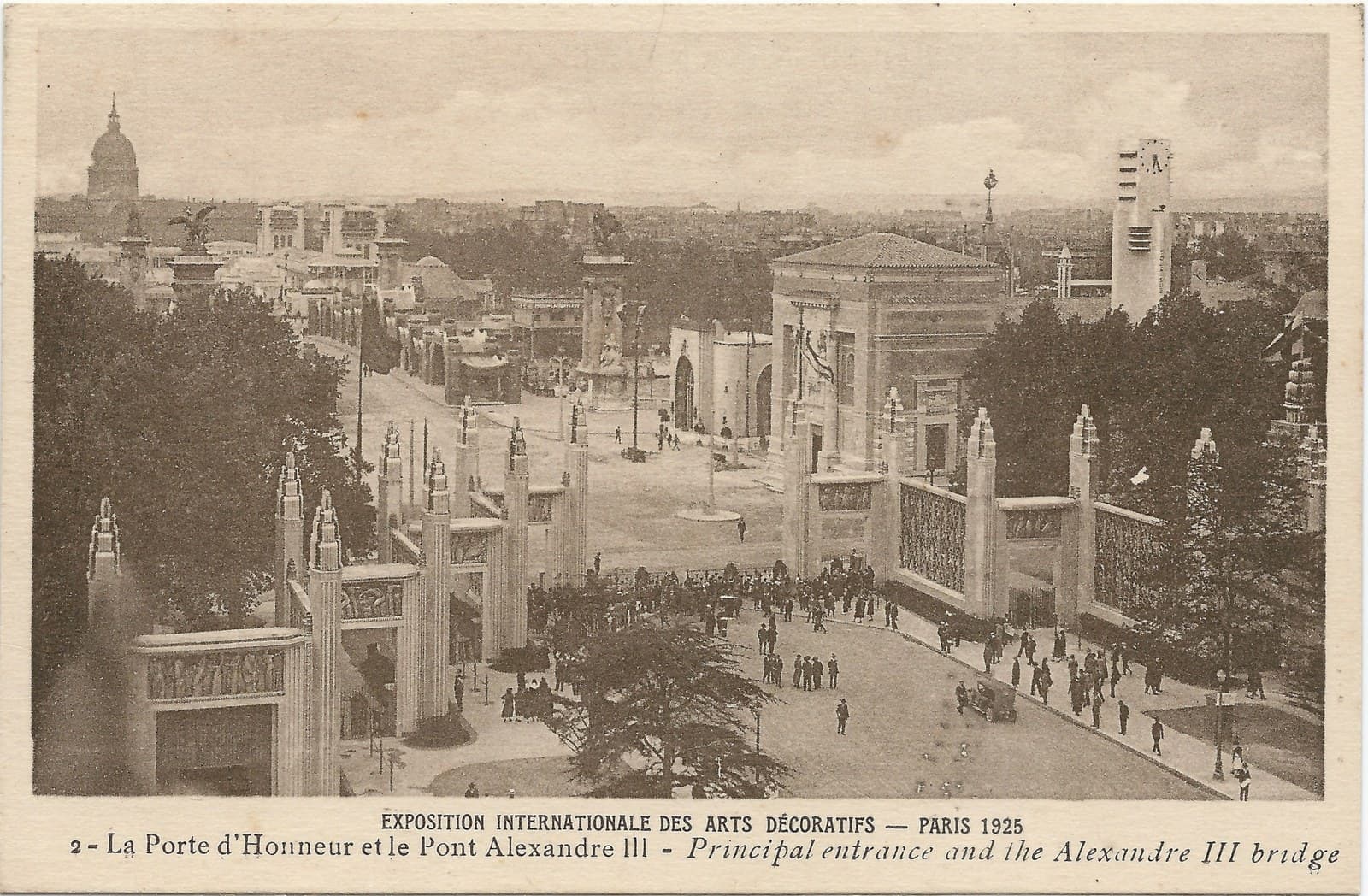
Aerial view of the 1925 Paris decorative arts exhibition: tall square pylons flanking the Porte d'Honneur entrance, crowds on the paths below, pavilions and a clock tower spreading toward the Invalides dome

Art & design movement · circa 1910–1939

Art Deco

Through the 1920s she worked on the design of vases and bowls for the Lalique firm, during the decade it was establishing its Art Deco vocabulary, and showed Limoges porcelain at the 1925 Paris decorative-arts exhibition. The company now credits her with the Tourbillons vase of 1926, which the Metropolitan Museum of Art still catalogues under her father's name.


Suzanne Lalique-Haviland; Tourbillons: A Century of Light in Motion

Questions about Suzanne Lalique-Haviland

Who was Suzanne Lalique-Haviland?

A French designer, 1892 to 1989, who worked in glass, porcelain, textiles, screens and stage design. She was René Lalique's daughter and designed for his firm from 1910, and she later spent decades designing for the theatre.

Did she design the Tourbillons vase?

The sources disagree. The Metropolitan Museum of Art catalogues the 1926 vase as René-Jules Lalique's design. Lalique's own centenary account credits Suzanne with conceiving it, inspired by an unfurling fern. Neither has been withdrawn.

Why is her work attributed to her father?

Because that is how the firm signed it. The Musée Lalique states that she worked on many projects attributed to René Lalique. A house signature identified the manufacturer, not the individual designer, which is common in decorative-arts businesses of the period and makes individual attribution difficult after the fact.

What did she design outside glass?

Limoges porcelain for William Haviland, shown at the 1925 Paris exhibition and continuing into the 1930s; painted decorative screens between 1914 and 1927; wallpaper motifs; and theatre design from 1937 onward, including some eighty productions at the Comédie-Française. She also left over 130 paintings made for herself rather than for sale.

How is she connected to the Haviland family?

By marriage. In 1917 she married the photographer Paul Burty-Haviland, and afterwards designed porcelain for William Haviland's Limoges firm. The double surname reflects both families she designed for.

Connections and Sources

Suzanne Lalique-Haviland’s connections to people, places, and works, with the sources behind each one.

Associated with · 1920–1939

Art Deco

Through the 1920s she worked on the design of vases and bowls for the Lalique firm, during the decade it was establishing its Art Deco vocabulary, and showed Limoges porcelain at the 1925 Paris decorative-arts exhibition. The company now credits her with the Tourbillons vase of 1926, which the Metropolitan Museum of Art still catalogues under her father's name.

Suzanne Lalique-Haviland; Tourbillons: A Century of Light in Motion

References

References

The sources below include biographies, scholarly essays, interviews, and primary materials that informed this page. They reflect both the historical record and ongoing critical conversations about Suzanne Lalique-Haviland and their work.

  1. 1abcdefgSuzanne Lalique-Haviland

    Website
    Musée Lalique
    Used for

    The principal source for this page: her parentage, the 1910 start designing for the firm, the 1920s glass, the 1917 marriage, the Limoges porcelain, the screens of 1914-27, the 130 paintings, the 1937 Pirandello commission and the fifty-odd productions that followed.

    View source
  2. 2Necklace designed for Augustine-Alice Ledru - René Lalique

    Website
    The Metropolitan Museum of Art
    Used for

    The necklace Rene Lalique designed for Augustine-Alice Ledru, Suzanne's mother.

    View source
  3. 3René Lalique, Tourbillons vase — collection record

    Website
    The Metropolitan Museum of Art
    Used for

    The holding museum's record for the Tourbillons vase, which catalogues Rene-Jules Lalique as its designer.

    View source
  1. 4Tourbillons: A Century of Light in Motion

    Website
    Lalique
    Used for

    The manufacturer's centenary presentation, which credits Suzanne with conceiving the 1926 Tourbillons design after an unfurling fern.

    View source
  2. 5abcSuzanne Lalique et la scène — exhibition, Musée Nissim de Camondo, 16 March to 17 June 2018

    Website
    Musée des Arts Décoratifs, Paris
    Used for

    The Musée des Arts Décoratifs on her theatre career: appointed chef décoratrice at the Comédie-Française in 1938, running the sets and costumes workshops until 1971, and some eighty productions there.

    View source
  3. 6Early life, training, and career

    Website
    Musée Lalique
    Used for

    The museum's biography of her father, and the shape of the business she designed inside.

    View source
i
Why these sources are here

These references anchor the page in the documented record and in the scholarly conversations around Suzanne Lalique-Haviland. Every claim on this page traces back to one or more of the works listed here.

Explore more resources