Colette's Three Earthly Paradises
A 1932 art book with Paul Jouve, a 1953 photobook with Izis, and a 1966 English autobiography assembled by Robert Phelps. Three separate works, one name, and a bibliography that has been confusing readers and catalogues for decades.
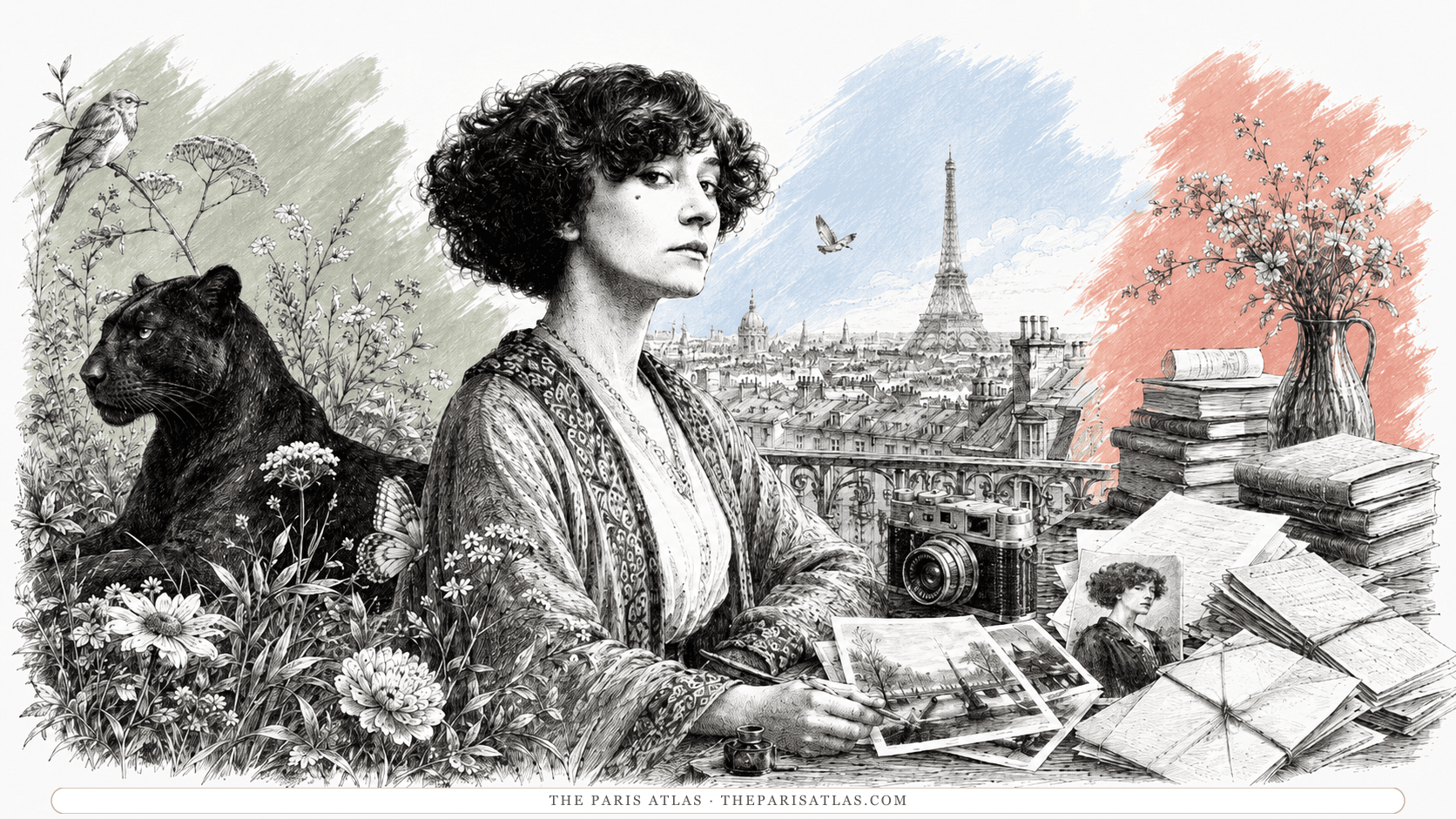
Three different books by Colette carry the name Earthly Paradise, or its French original, and they are not editions of one another. They share no texts. They were made with different collaborators, in different decades, for different kinds of reader. Catalogues and reader databases have been merging them for years, which is why a search for one of them so often returns another.[1]
The short version: the 1932 book is about animals, the 1953 book is about landscape, and the 1966 book is about her life.
Paradis terrestres, plural (1932)

Paradis terrestres (1932) is a fine-press art book, printed in Lausanne by Gonin et Cie at the start of that year. It holds ten short animal pieces — serpents, peacocks, a squirrel, the black panther and the lions, owls, leopards, monkeys — written to accompany wood-engraved animal compositions by Paul Jouve, the leading French animal artist of the day. It was issued unbound in sheets, on Japan paper, in a run of roughly 150 copies.[1]
Those same ten texts appeared later in 1932 as the opening section of Prisons and Paradise, an ordinary trade collection. That is where nearly everyone reads them. The art book is the rarity; the essay collection is the book.[1]
Paradis terrestre, singular (1953)

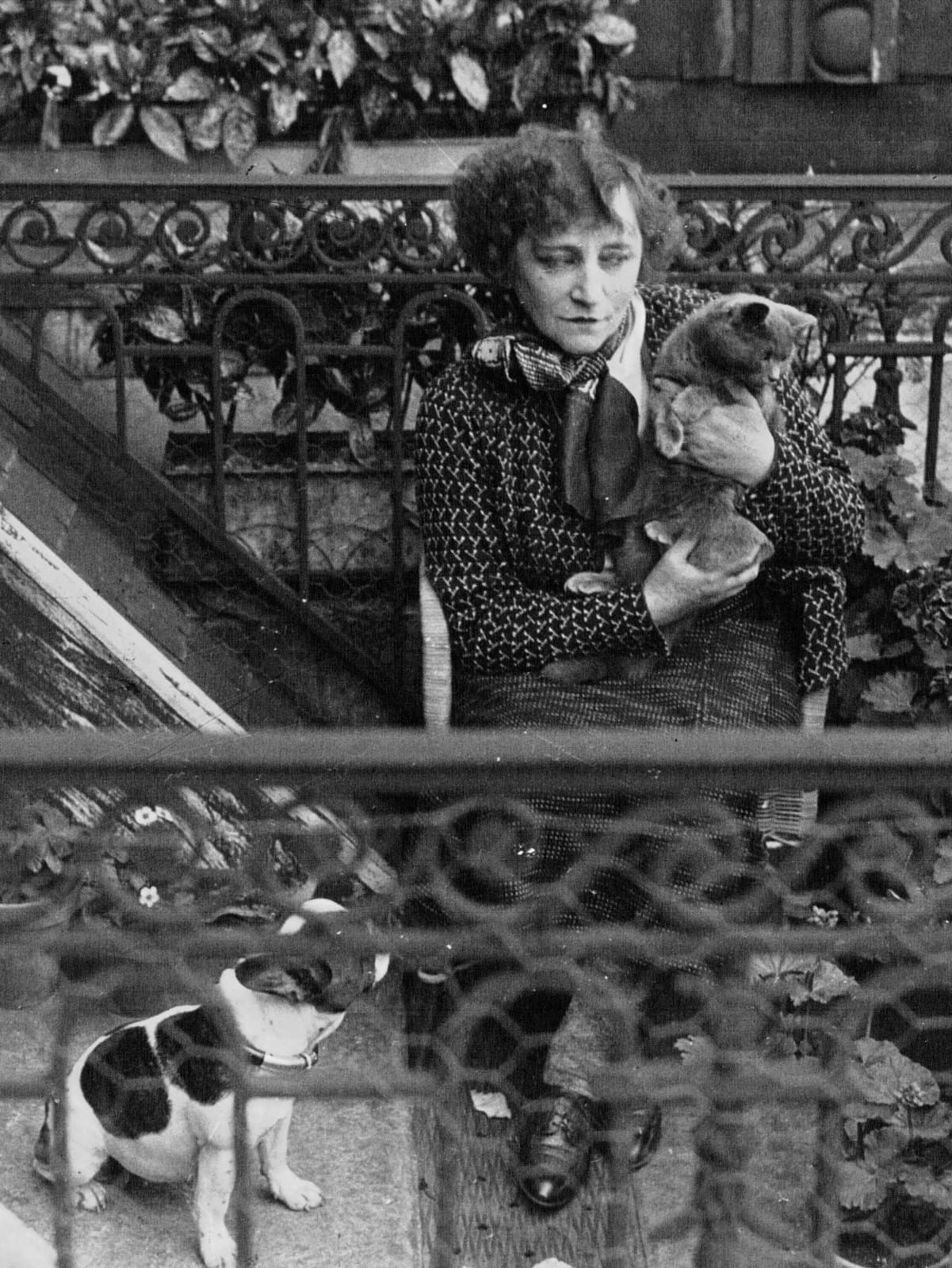
Paradis terrestre (1953) is a photobook, published in Lausanne twenty-one years later by the book club La Guilde du Livre. Its subject is landscape rather than animals: fifty black-and-white photographs by Izis, the Lithuanian-born photographer working in Paris, set against prose by Colette, who was eighty when it appeared.[1][2]
Most of that prose was not new. Four of the texts come from her 1949 collection In a Familiar Land, including a chapter already titled 'Paradis terrestre' — which is where this book got its name. Eight further pieces were written for the volume. It was printed in just over fifteen thousand copies for club members, the opposite of the 1932 book's hundred and fifty.[1]
Earthly Paradise, in English (1966)

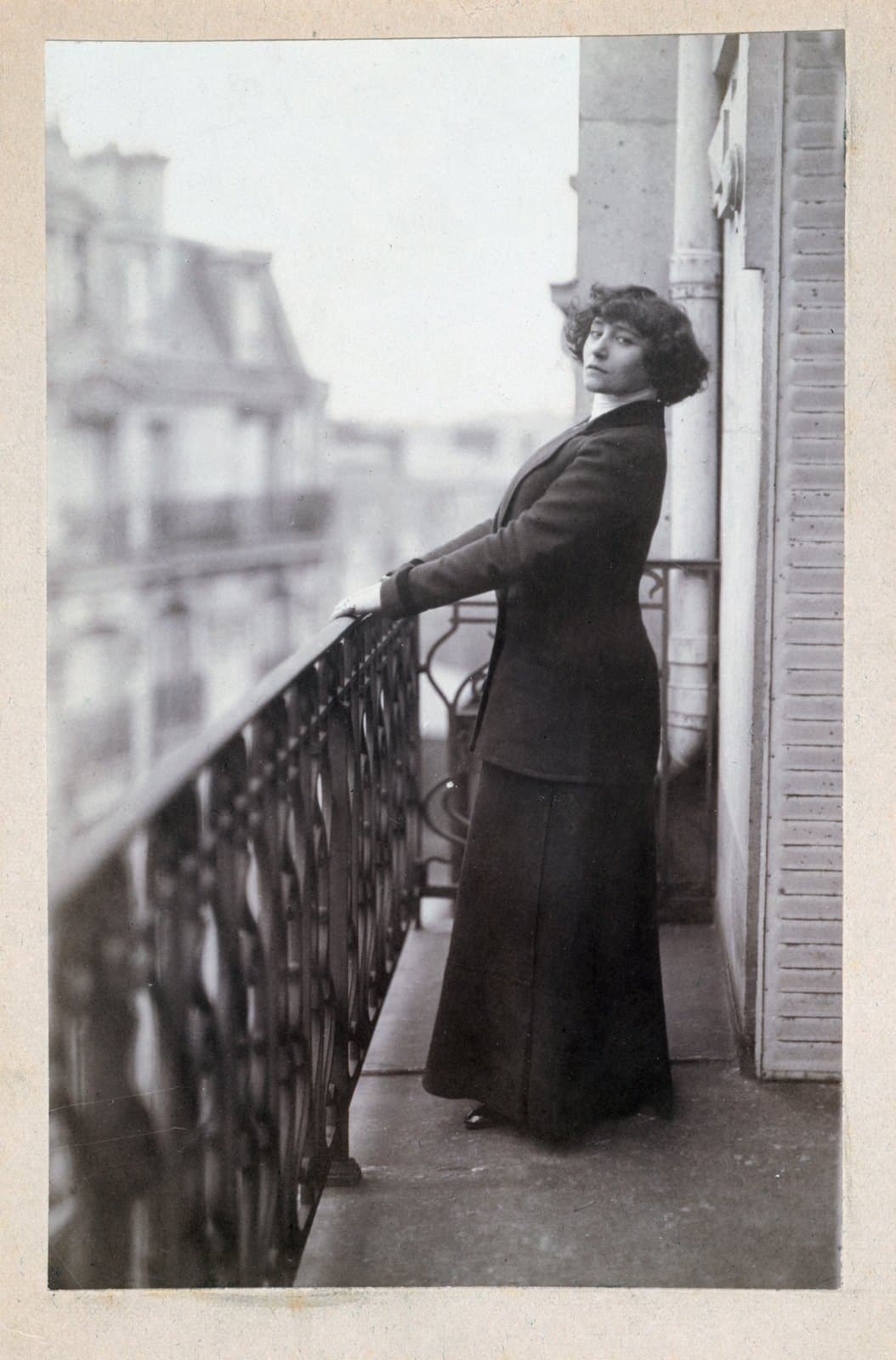
Earthly Paradise is the one most English-language readers actually mean. Published by Farrar, Straus & Giroux in 1966, twelve years after Colette's death, it is an autobiography she never wrote: the editor Robert Phelps read some forty of her books, selected passages of self-writing, and arranged them in the order the events happened, from the Burgundy childhood to the last years at the Palais-Royal. Every word is hers; the shape is his.[3][2]
Its title is simply the English of Colette's recurring phrase paradis terrestre. It is not a translation of either French book, and it shares no publication history with them — though some databases list it as first published in 1953, which it was not.
Why the confusion persists
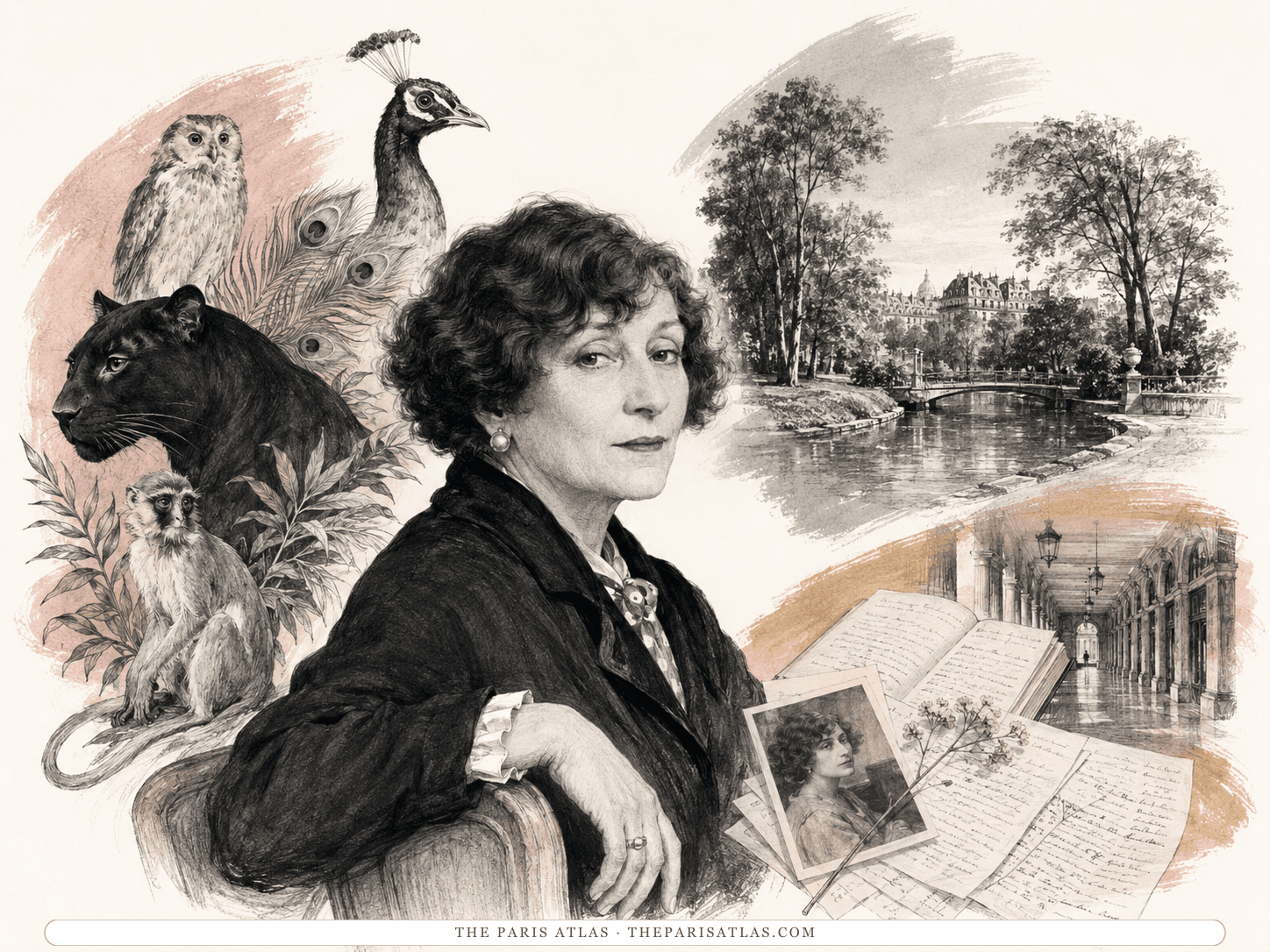
Three causes compound each other. The French titles differ by a single letter, and dealers catalogue the 1932 book indifferently as terrestres and terrestre. Both French books came out of the same small world of Lausanne illustrated publishing, on the same Edenic theme. And the phrase itself recurs across Colette's work — as a section of Prisons et paradis, as a chapter of En pays connu, and finally as Phelps's English title.
The reliable test is contents, not title. If it is about animals and engraved by Paul Jouve, it is 1932. If it is landscape photographed by Izis, it is 1953. If it is her life in English, assembled by Robert Phelps, it is 1966.



 View source