Gauguin and Van Gogh: Nine Weeks in the Yellow House
In the autumn of 1888 Vincent van Gogh persuaded Paul Gauguin to come south and start an artists' colony of two. It lasted sixty-three days, produced some of the most famous paintings in the world, and ended with a razor, a severed ear, and a story only one of them lived to keep telling.
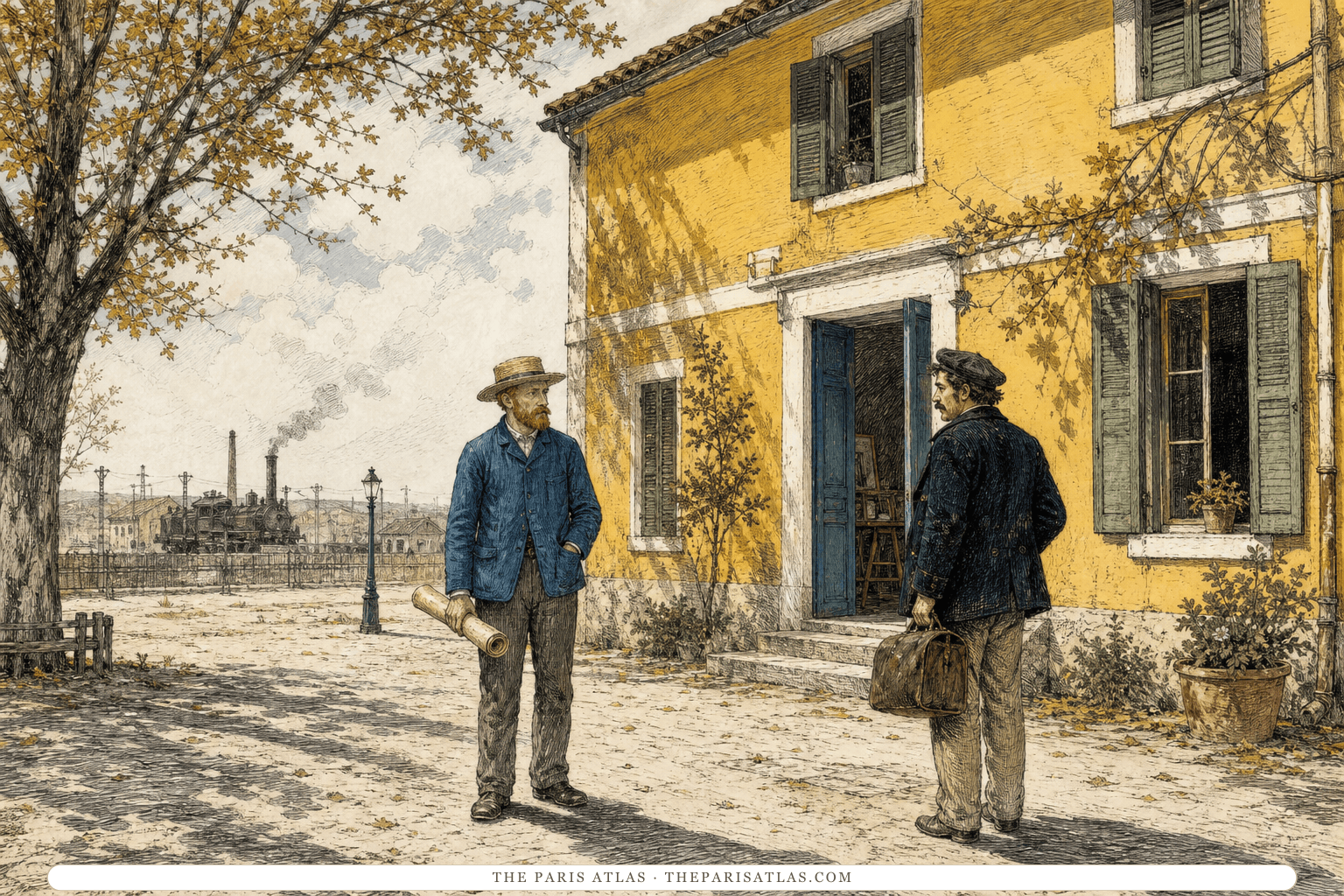
The most famous house-share in the history of art was a business arrangement before it was anything else. Vincent van Gogh had rented four rooms in a small yellow building on the place Lamartine in Arles and dreamed of filling them with painters — a Studio of the South, a working brotherhood far from Paris. His brother Theo, an art dealer who was keeping both Vincent and Paul Gauguin financially alive, made the dream concrete: Gauguin would go south, and Theo would support him in exchange for paintings. Gauguin, broke in Brittany and recovering his health, weighed the invitation for months. He was nobody's idea of a joiner. He went for the money and stayed for exactly sixty-three days.[1][2]
Van Gogh prepared for his guest the way other people prepare for a wedding. Through the late summer of 1888 he painted decorations for the house — among them the series of sunflowers in yellow vases intended for Gauguin's bedroom, now scattered among the great museums of the world and reproduced past all counting. The sunflowers were not a still-life exercise. They were a welcome.[1]
Sixty-three days of work
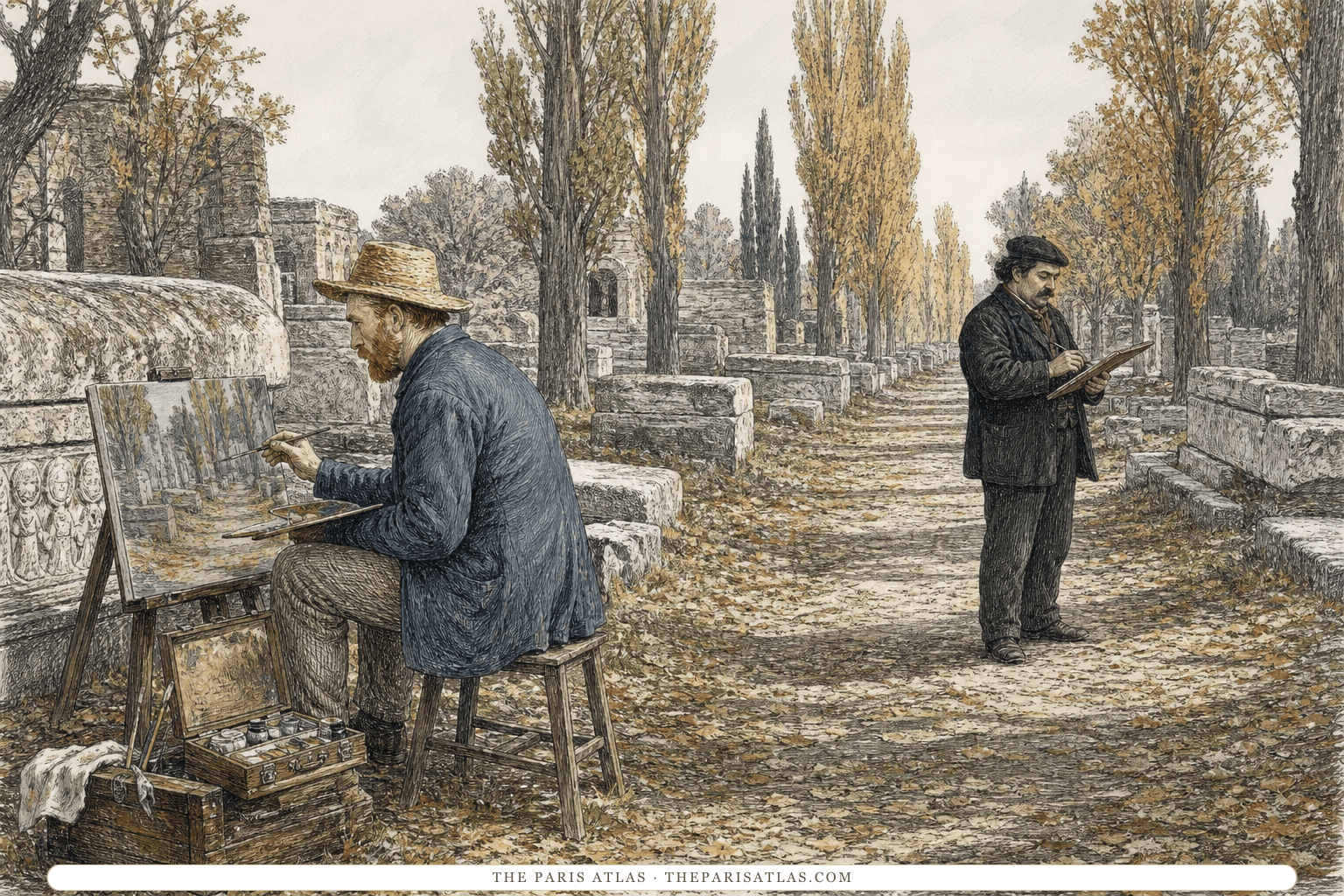
Gauguin arrived on 23 October 1888, and the working partnership began at once. They painted the same subjects side by side — the Alyscamps, the old Roman burial avenue; the vineyards; the women of Arles — and the surviving canvases let anyone compare, motif for motif, what each man saw in the identical spot. They shared expenses out of a box with a ledger. Gauguin, who had been a sailor and a stockbroker, ran the kitchen; by his own account the cooking improved when he took it over, which is the sort of thing his own account tends to say.[1]
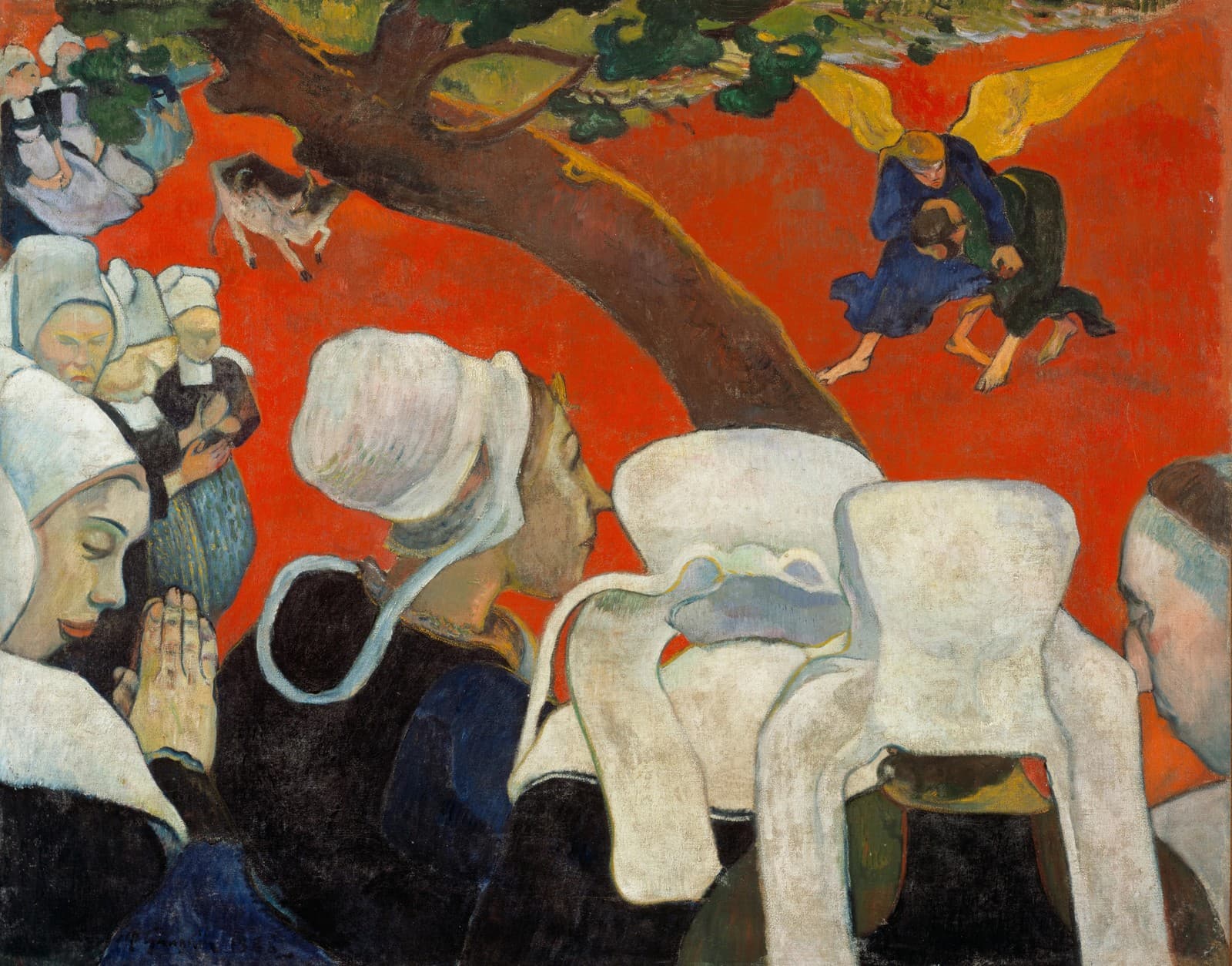
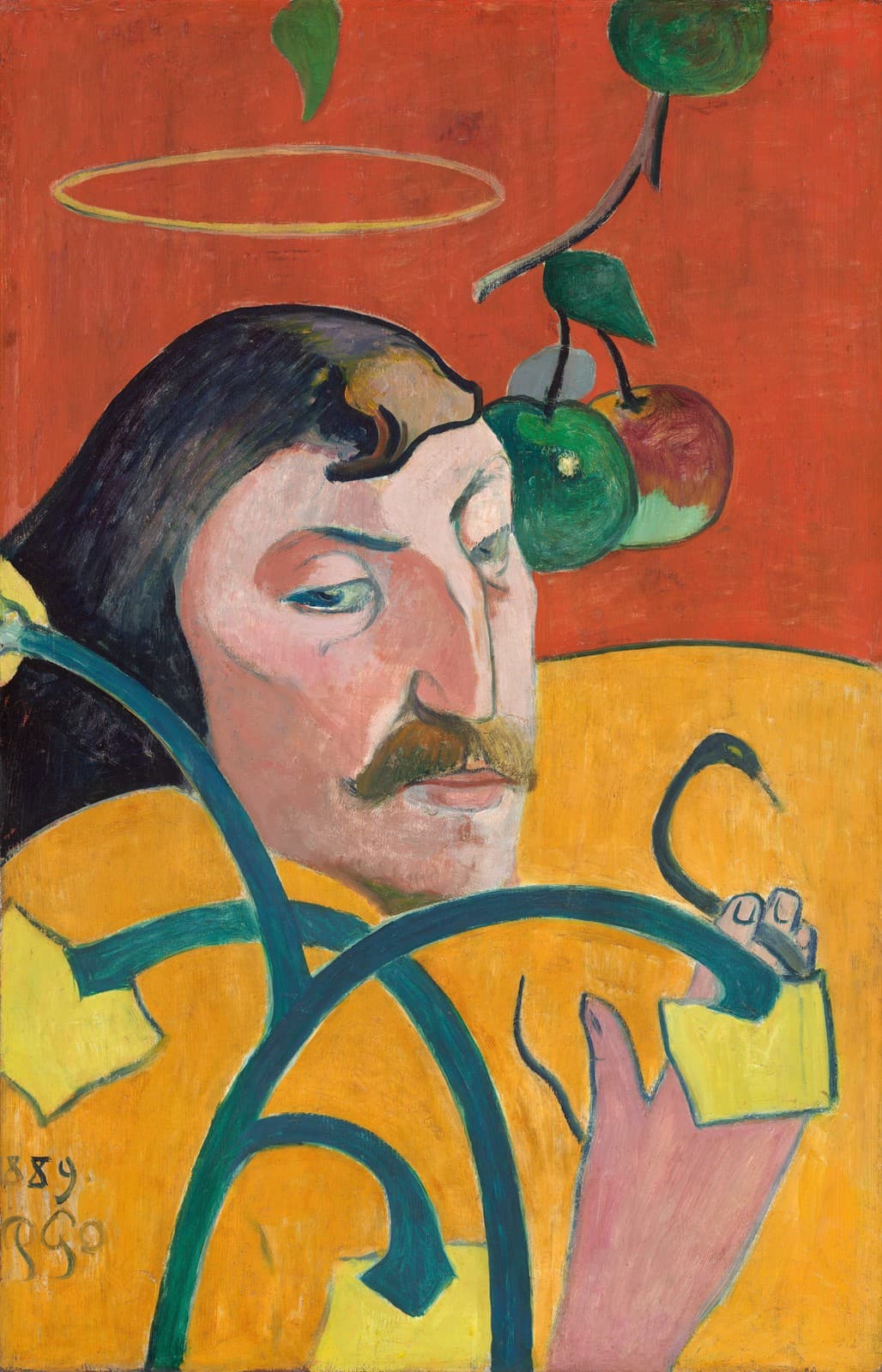
The argument that mattered was about method. Gauguin had spent 1888 inventing Synthetism in Brittany: paint from memory and imagination, simplify, let the picture be an idea. Van Gogh worked from the motif in front of him, at speed, in weather. For a few weeks each man bent toward the other — van Gogh painted memory pictures under Gauguin's influence and disliked the results; Gauguin painted Arles subjects with more observation than was his habit. The bending is visible in the canvases. So is the strain.[1][2]
The portrait that frightened its subject
In early December Gauguin painted van Gogh at work on his sunflowers — seated, eyes narrowed, brush extended toward a bouquet that had already become his signature. Van Gogh's reported verdict on the likeness has been quoted ever since: it was him, but him gone mad. The line comes to us through Gauguin's later memoir, which is worth remembering — nearly everything quotable about these nine weeks does. By December the two men were arguing in cafés and in the house, and van Gogh's letters record the electricity of the discussions wearing both men down.[3][1]
23 December 1888
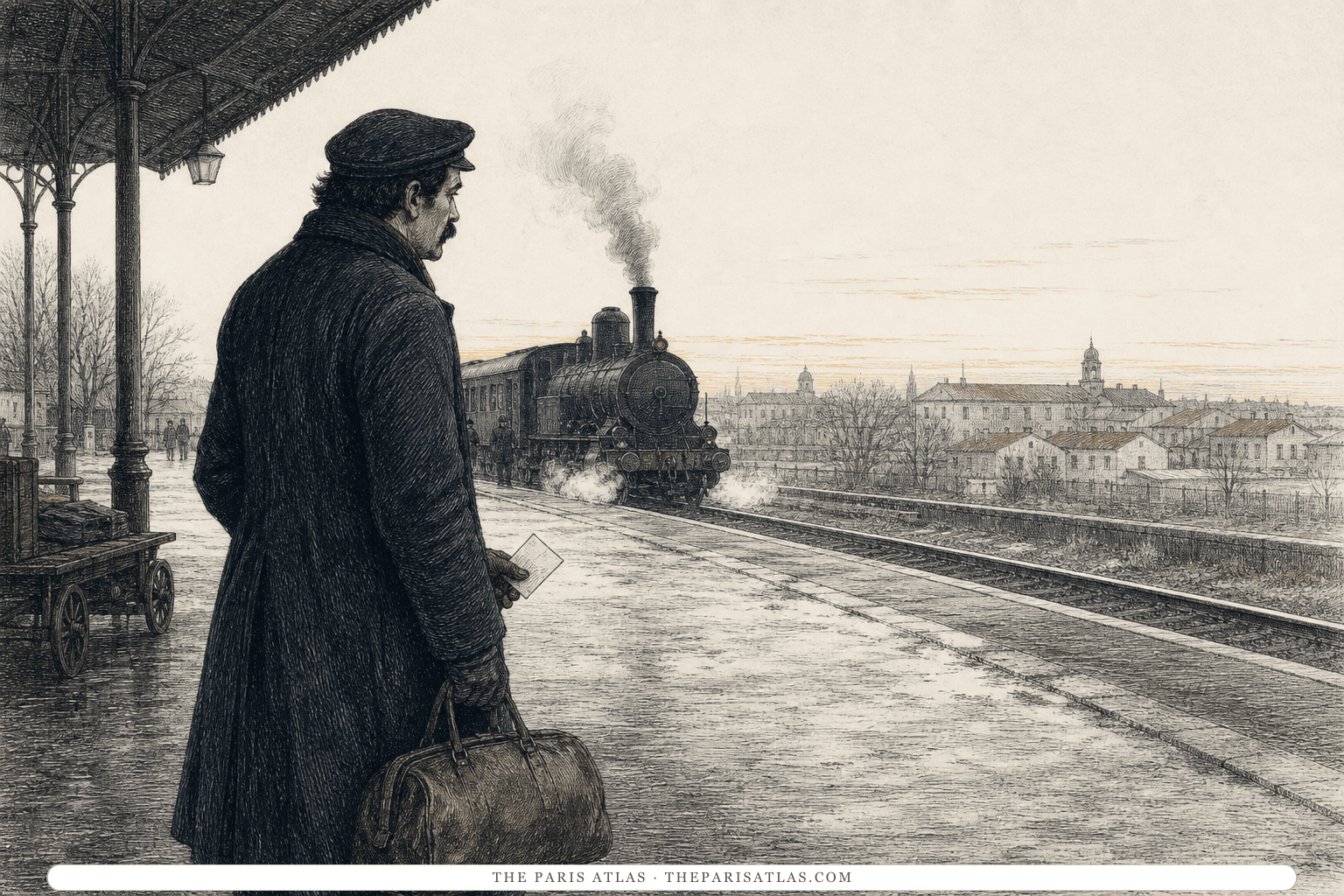
On the night of 23 December, van Gogh suffered the breakdown that ended the Studio of the South. The documented facts are stark and few. Van Gogh cut off part of his own left ear — how much has been argued over for a century — wrapped it, and delivered it to a young woman at a maison de tolérance near the place Lamartine. The police found him unconscious at home the next morning and took him to the hospital. Gauguin telegraphed Theo, who came south on the night train. Gauguin left Arles without visiting the hospital ward, and the two painters never saw each other again.[1][2]
Everything beyond that outline rests on shakier ground, and most of it rests on Gauguin. His memoir, written fifteen years later, has van Gogh following him through the dark with an open razor and turning back when confronted — a scene with no second witness, told by a man whose own writings freely mixed experience and invention, and who had reason to explain why he left. Some modern writers have proposed more dramatic revisions, including the theory that Gauguin himself did the cutting with a fencing sword; the evidence for it is circumstantial and most van Gogh scholars are unpersuaded. The honest version is unsatisfying and true: the two men who knew what happened that night are dead, one of them said little, and the other said too much.
What survived the wreck
The friendship, oddly, was not quite one of the casualties. The two men corresponded after Arles — practical letters, and warmer ones, van Gogh still addressing his 'dear friend Gauguin.' Van Gogh kept painting for nineteen more months, entered the asylum at Saint-Rémy by his own choice, and died of a self-inflicted gunshot in July 1890. Gauguin's response to the death was in character: guarded in public, and worked out in paint over years.[1]
The last word in the exchange came from the far side of the world. In 1901, in the Marquesas, thirteen years after the Yellow House and eleven after van Gogh's death, Gauguin painted sunflowers — grown from seed he had asked a friend to send, arranged in a Tahitian setting, unmistakably his dead housemate's flower. He never explained the paintings. He did not need to. The man who insisted that art should come from memory spent his last years proving it, one vase of borrowed yellow at a time.[2]
Nine weeks, two painters, one house. The Studio of the South failed as an institution and succeeded as an argument — memory against motif, argued in oil by the two men who would each, separately, teach the twentieth century half of what it knows about color. Van Gogh got the better paintings out of Arles. Gauguin got the better story, because he was the one left alive to tell it, and he told it his way.


 View source