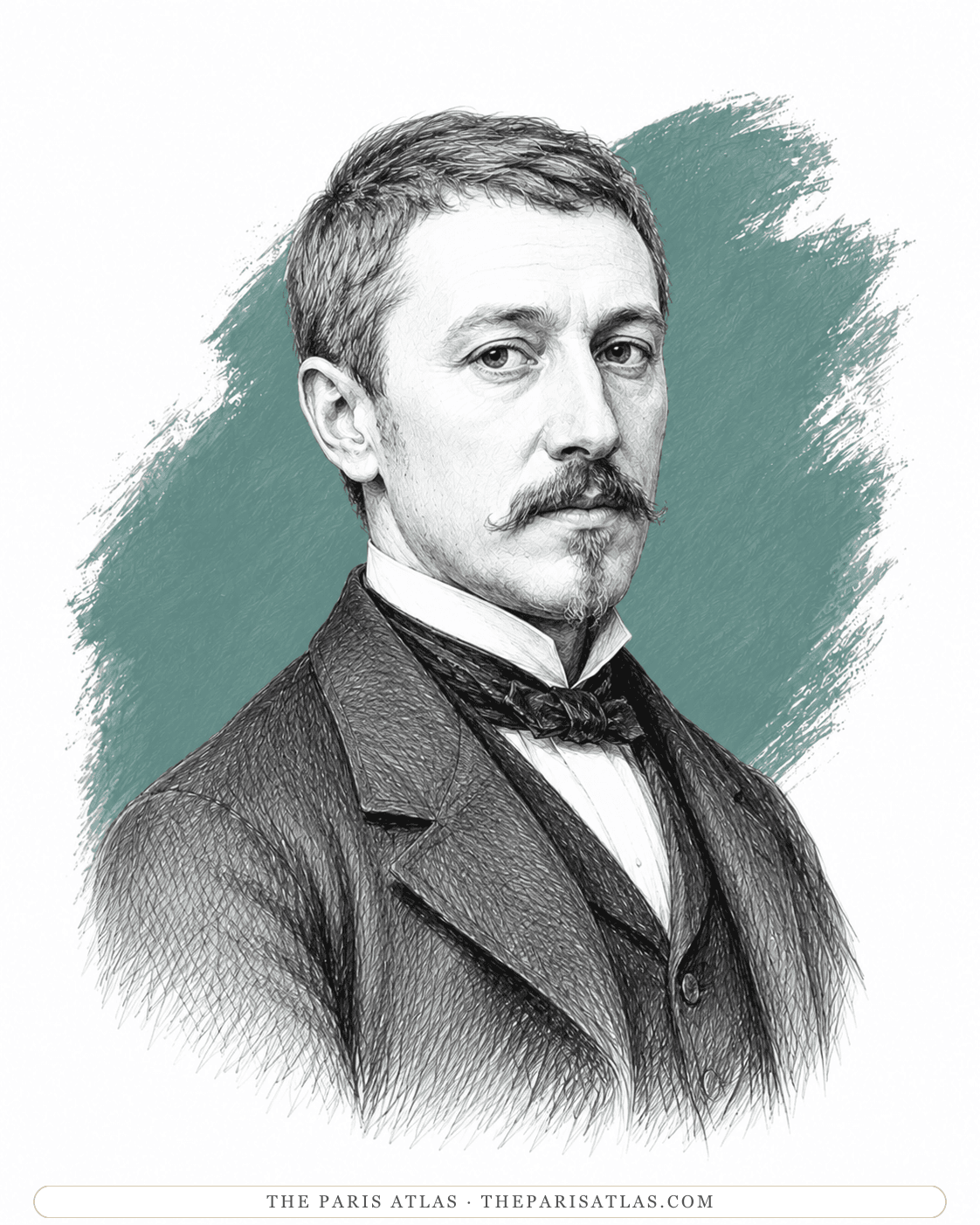
Gustave Caillebotte
Caillebotte painted the rue Halevy in 1878 from an upper-floor window, using the same steep downward angle as his boulevard Haussmann views.
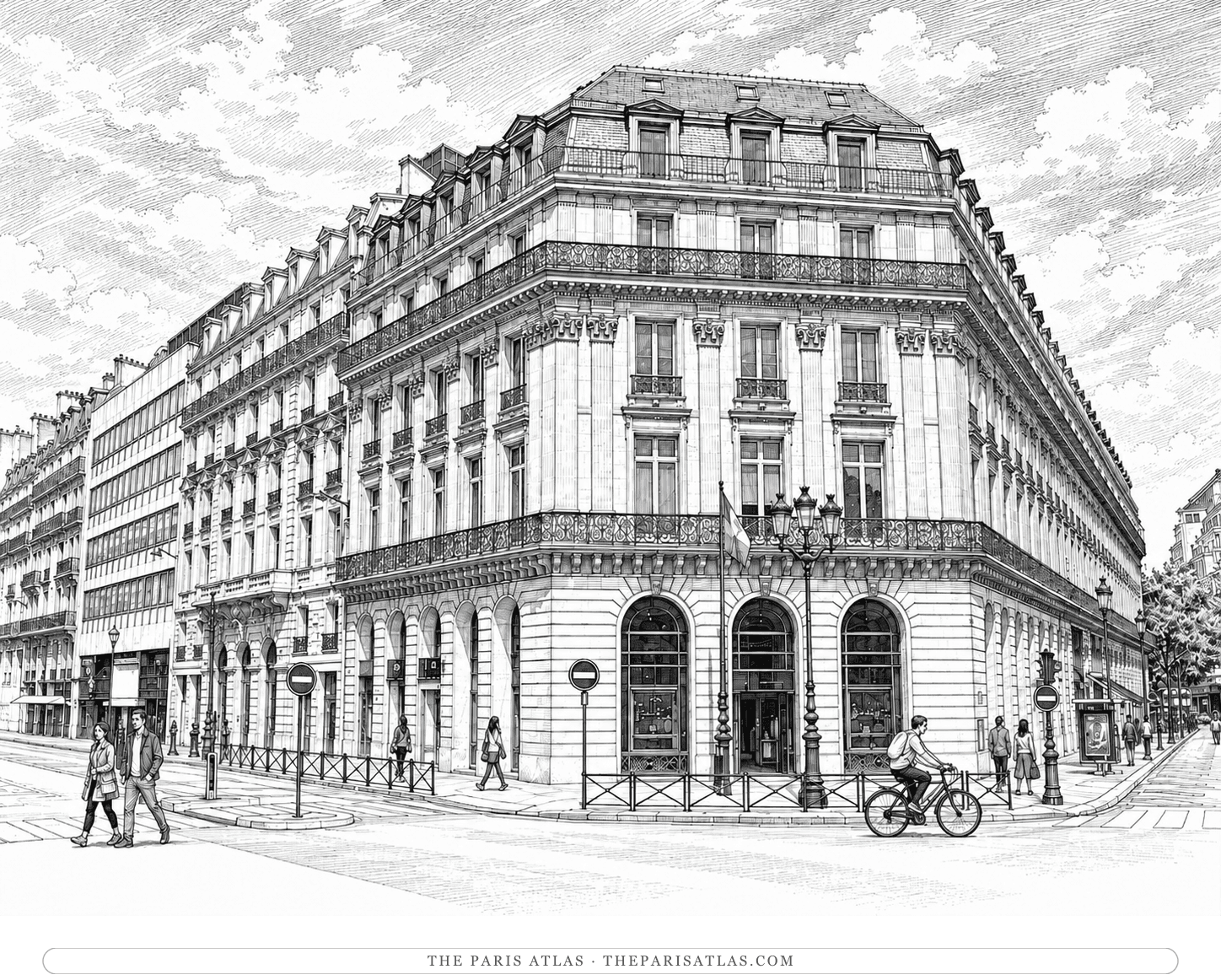
The short street running beside the Palais Garnier that Gustave Caillebotte painted in 1878, looking down from an upper window at the traffic and pedestrians below.
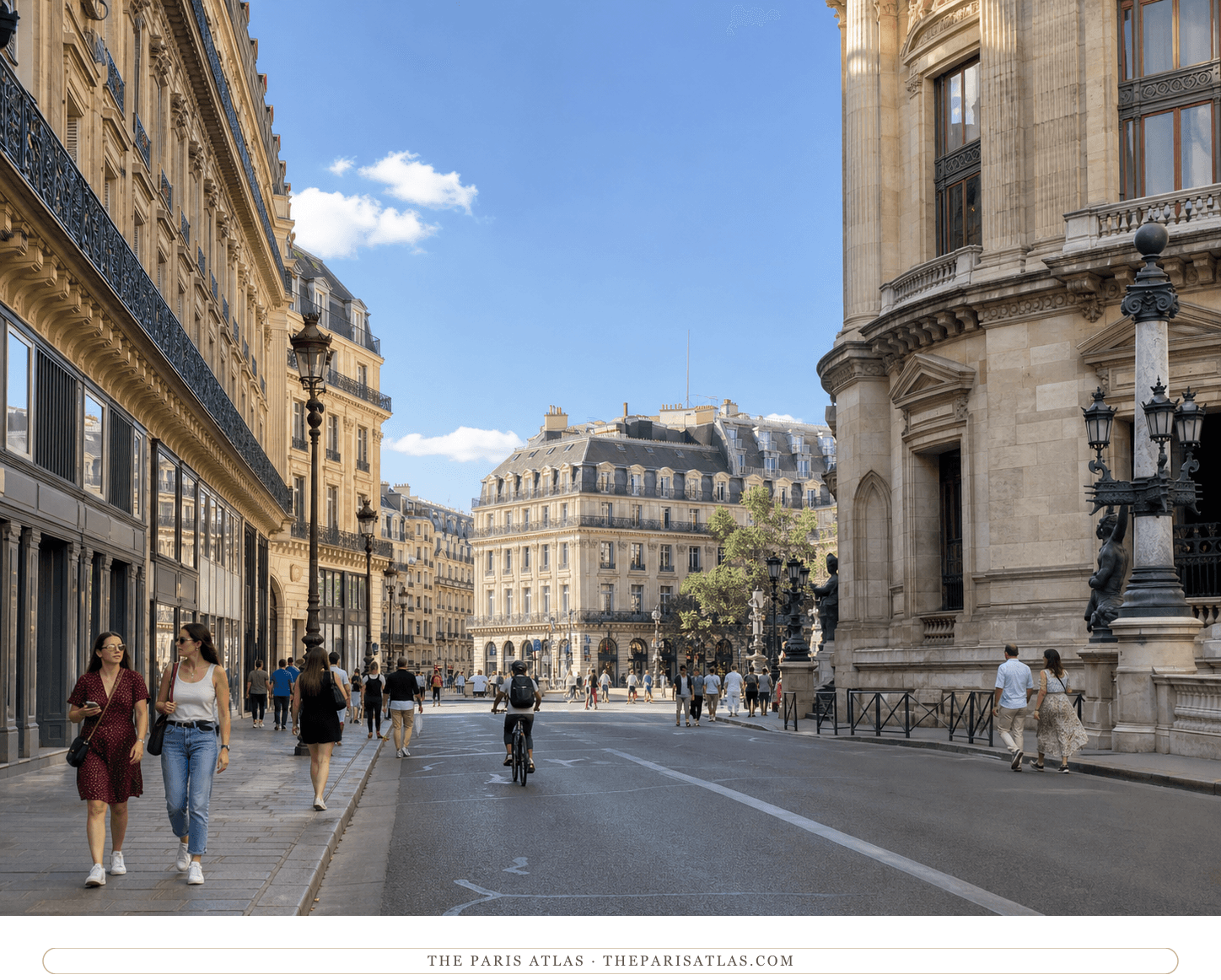
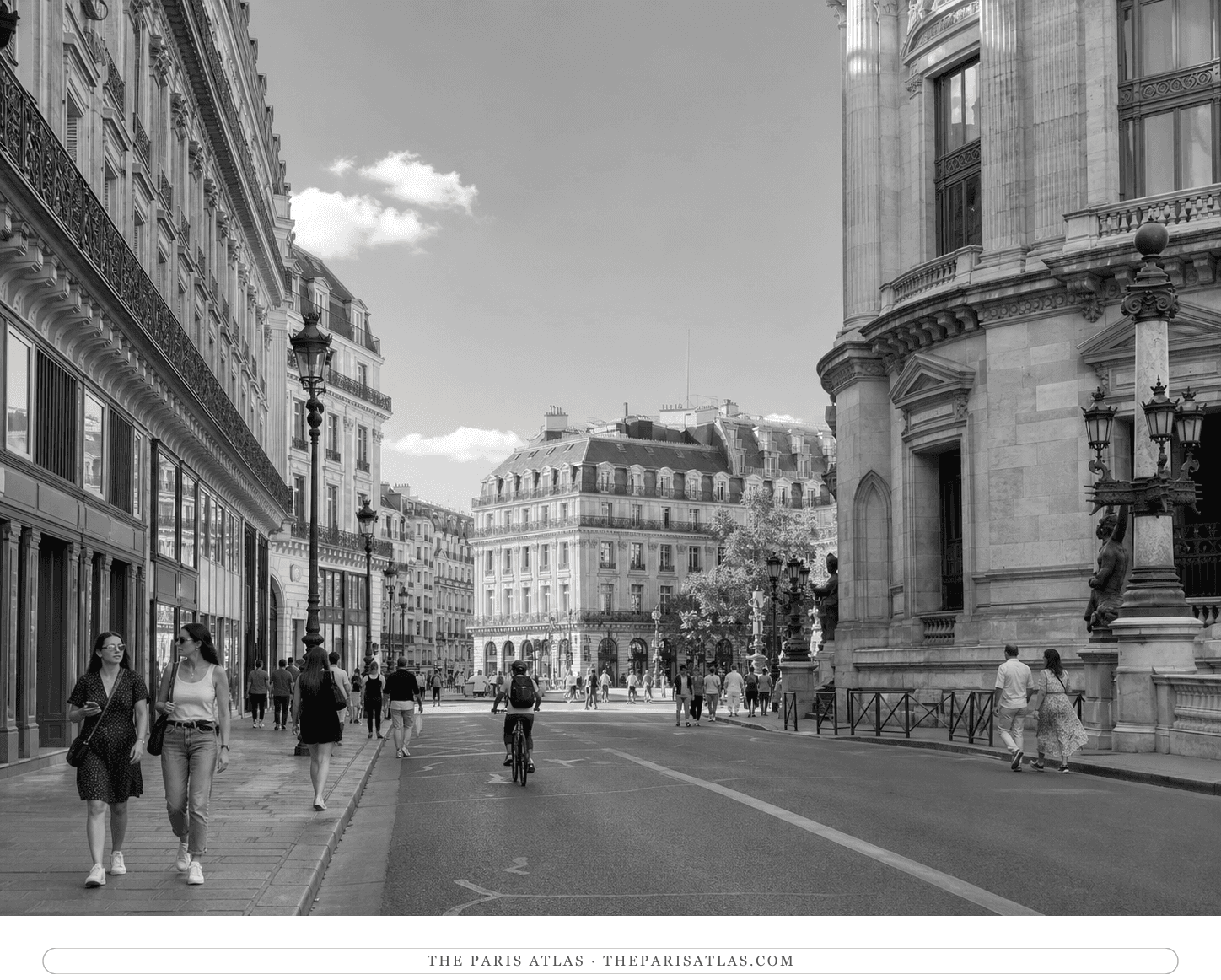
The rue Halévy was cut as part of the rebuilding around the new opera house, and it runs along the flank of the Palais Garnier. Gustave Caillebotte painted it in 1878 from an upper-floor window — the same steep downward look he had used on the boulevard Haussmann, turning the street into a diagonal band of roofs, awnings and small figures.
It is a good example of what separates him from the other Impressionists. Monet or Pissarro paint a boulevard as weather and light; Caillebotte paints it as geometry and social observation, from a height, with the perspective doing the argument.
Because the street sits inside the protected zone around the opera house, its buildings and proportions have been preserved unusually well. The view is recognisable.
Caillebotte paints the rue Halévy from an upper-floor window.
From street level, yes — the buildings and proportions survive because the street lies inside the protected architectural zone around the Palais Garnier. The painting's vantage was an upper-floor window, which is private.
Caillebotte painted the rue Halevy in 1878 from an upper-floor window, using the same steep downward angle as his boulevard Haussmann views.
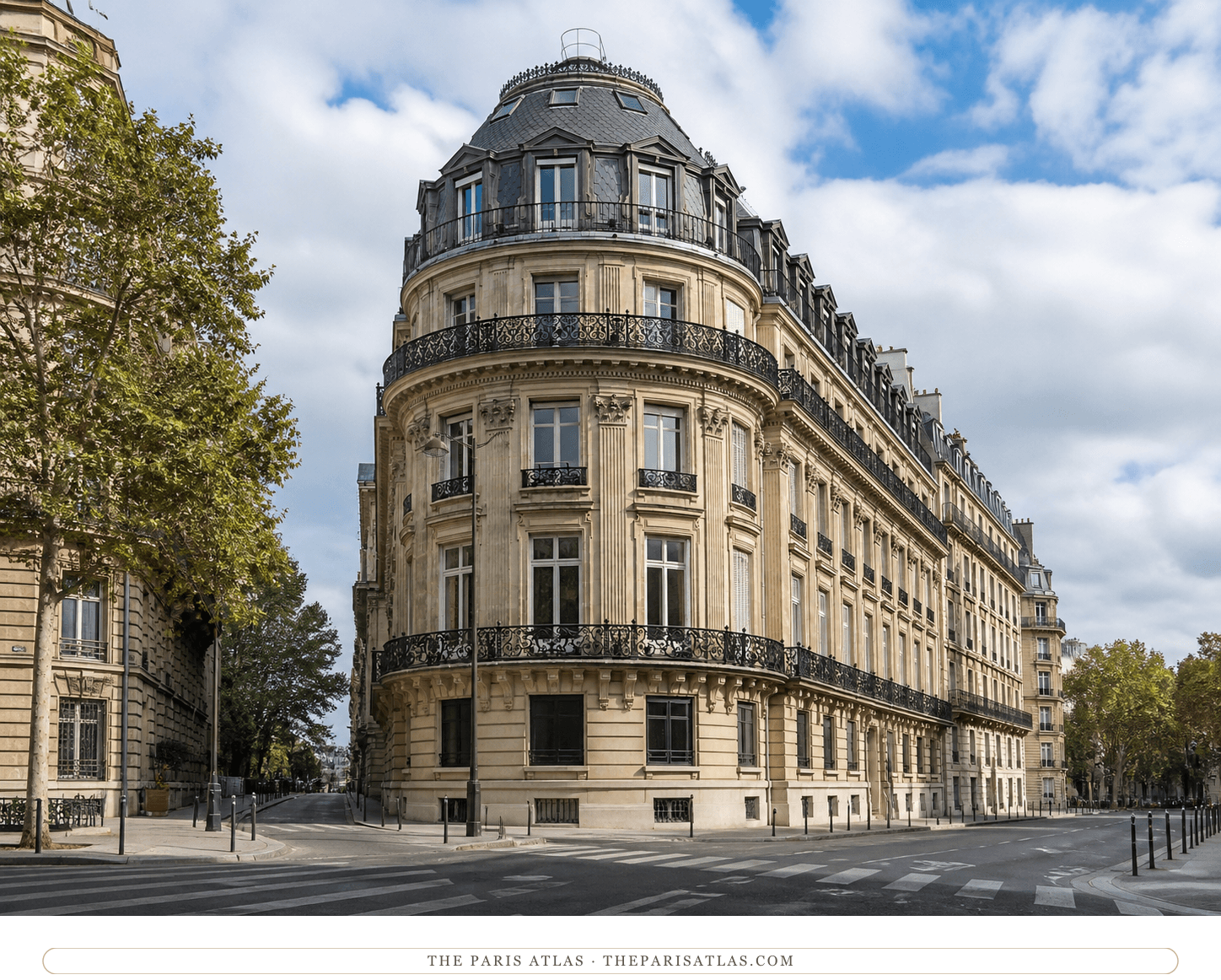
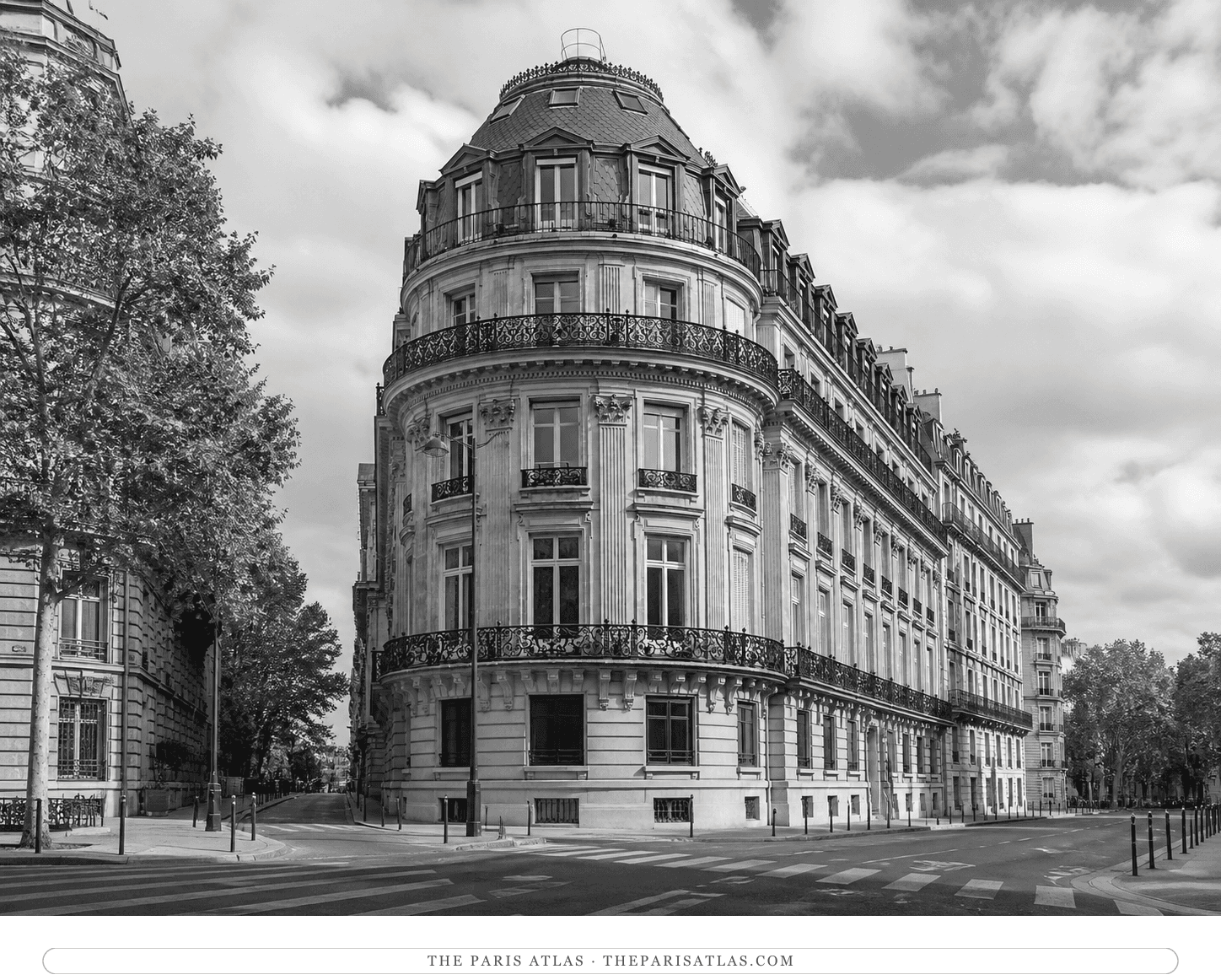
The sixth-floor apartment Gustave Caillebotte shared with his brother Martial after their mother's death — and the balcony from which he painted the boulevard looking almost straight down.
Visit the place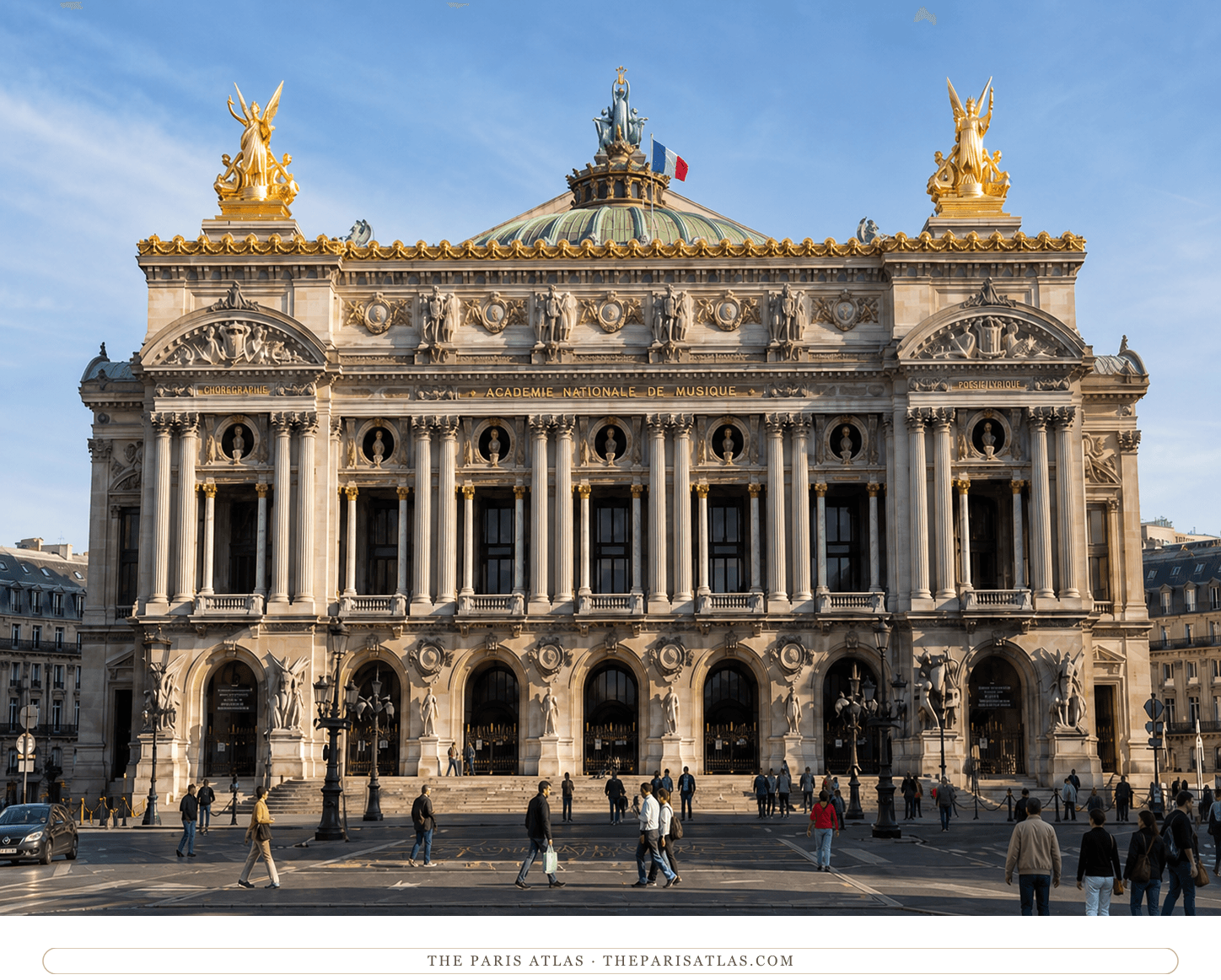
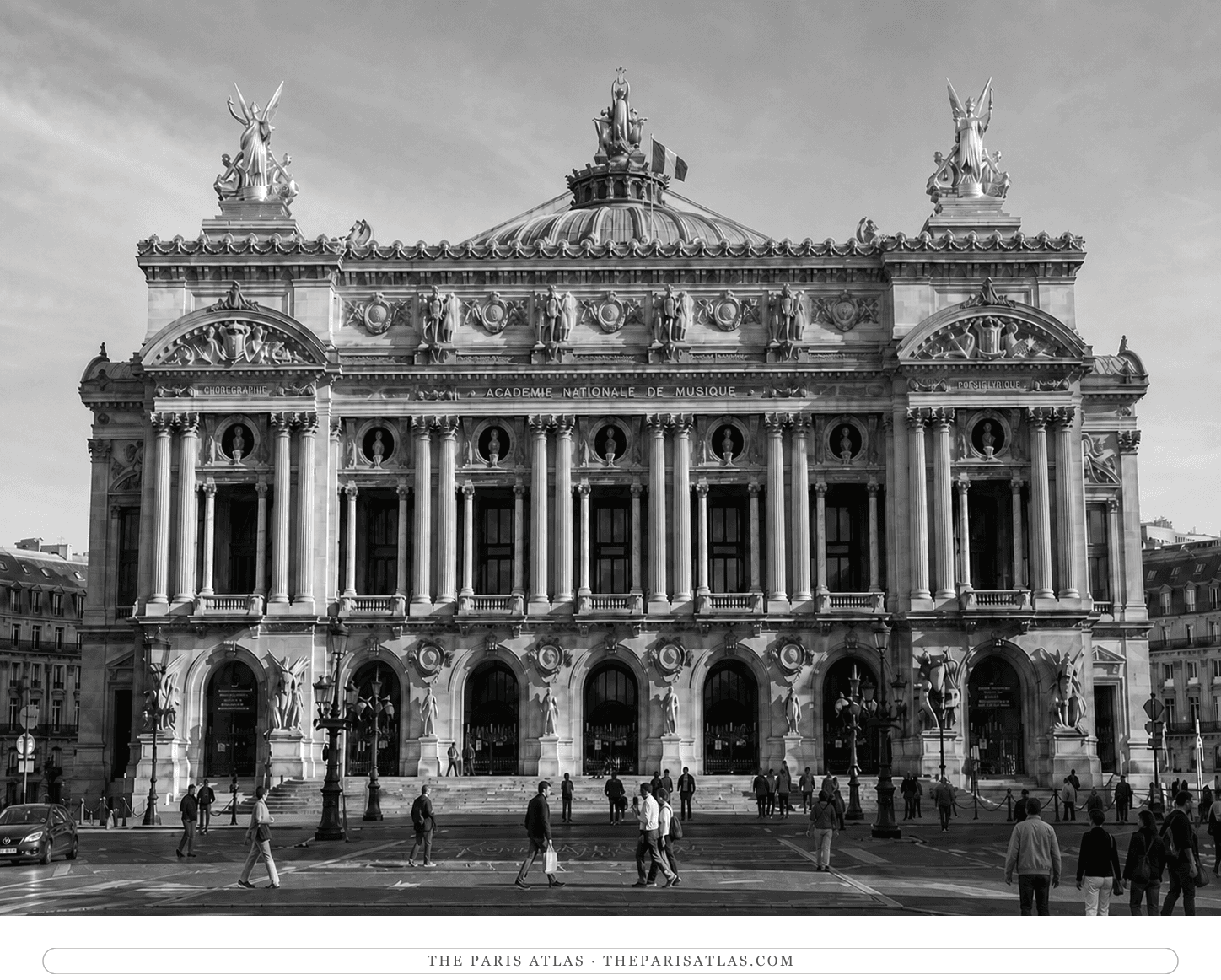
The Paris opera house — Charles Garnier's Second Empire palace on the place de l'Opéra, inaugurated on 5 January 1875 and the home of the Paris Opera ever since.
Visit the place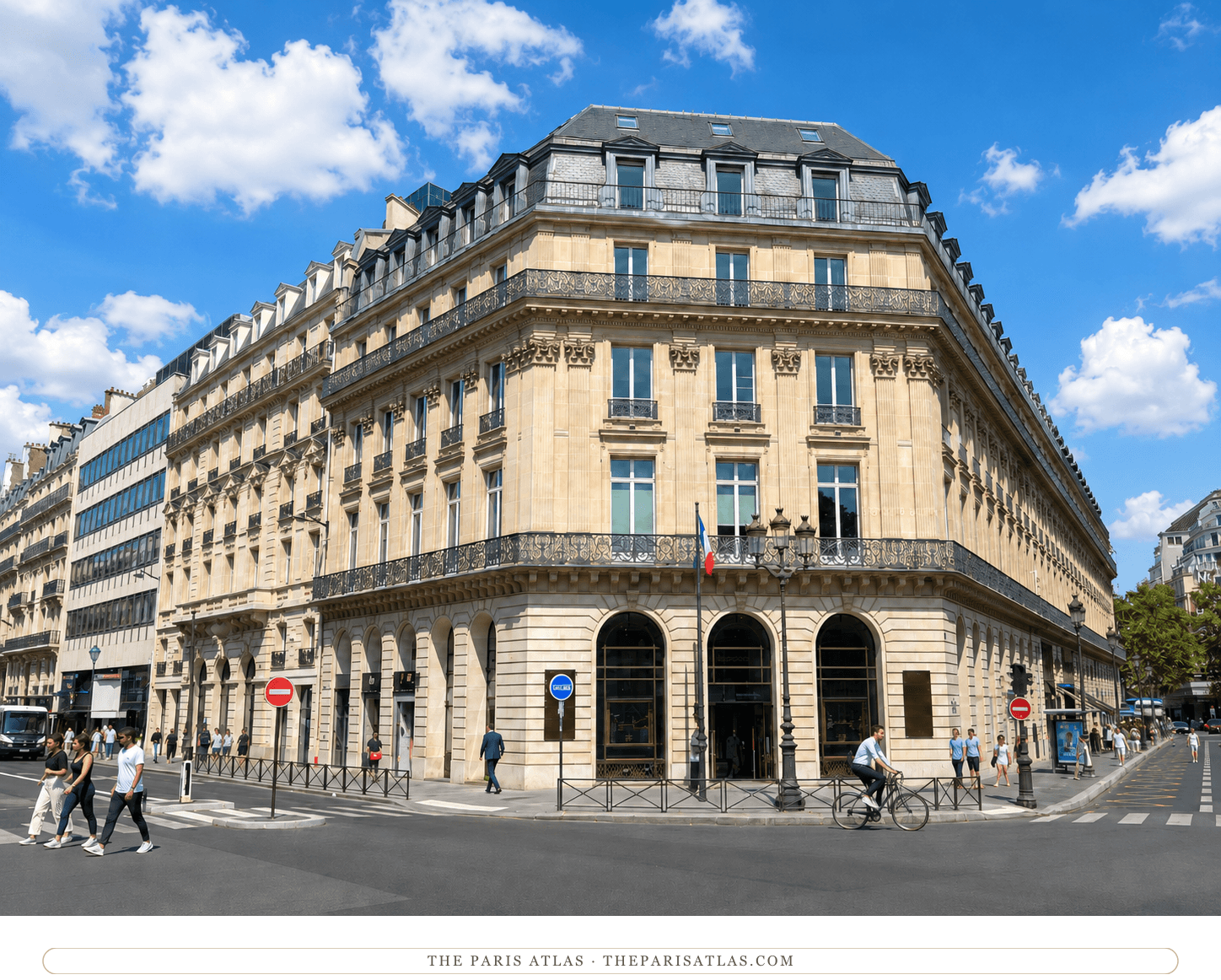
The office by the Opéra where American expatriates collected their mail and cashed their cheques, and where David goes to escape Giovanni's room in Baldwin's novel.
Visit the place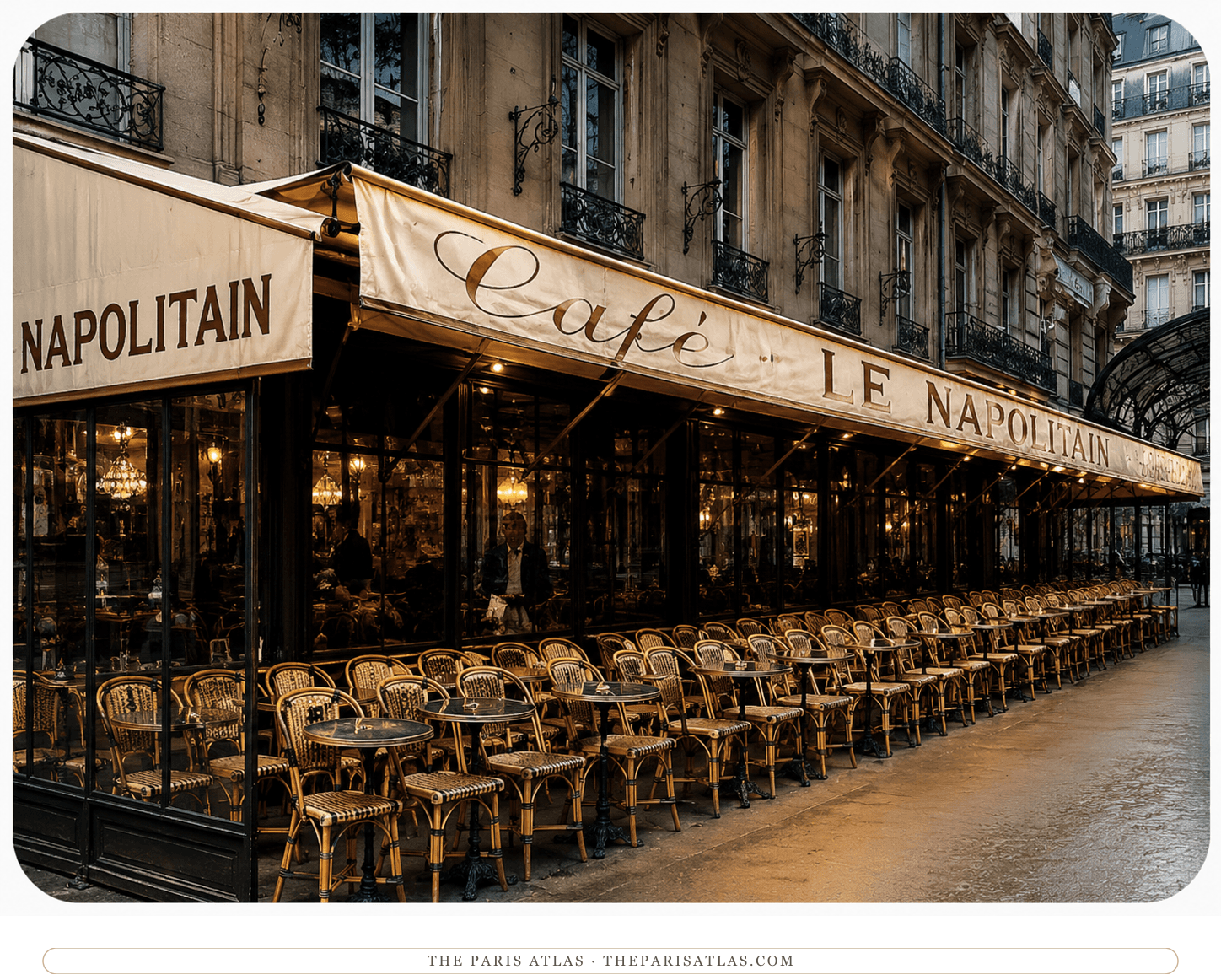
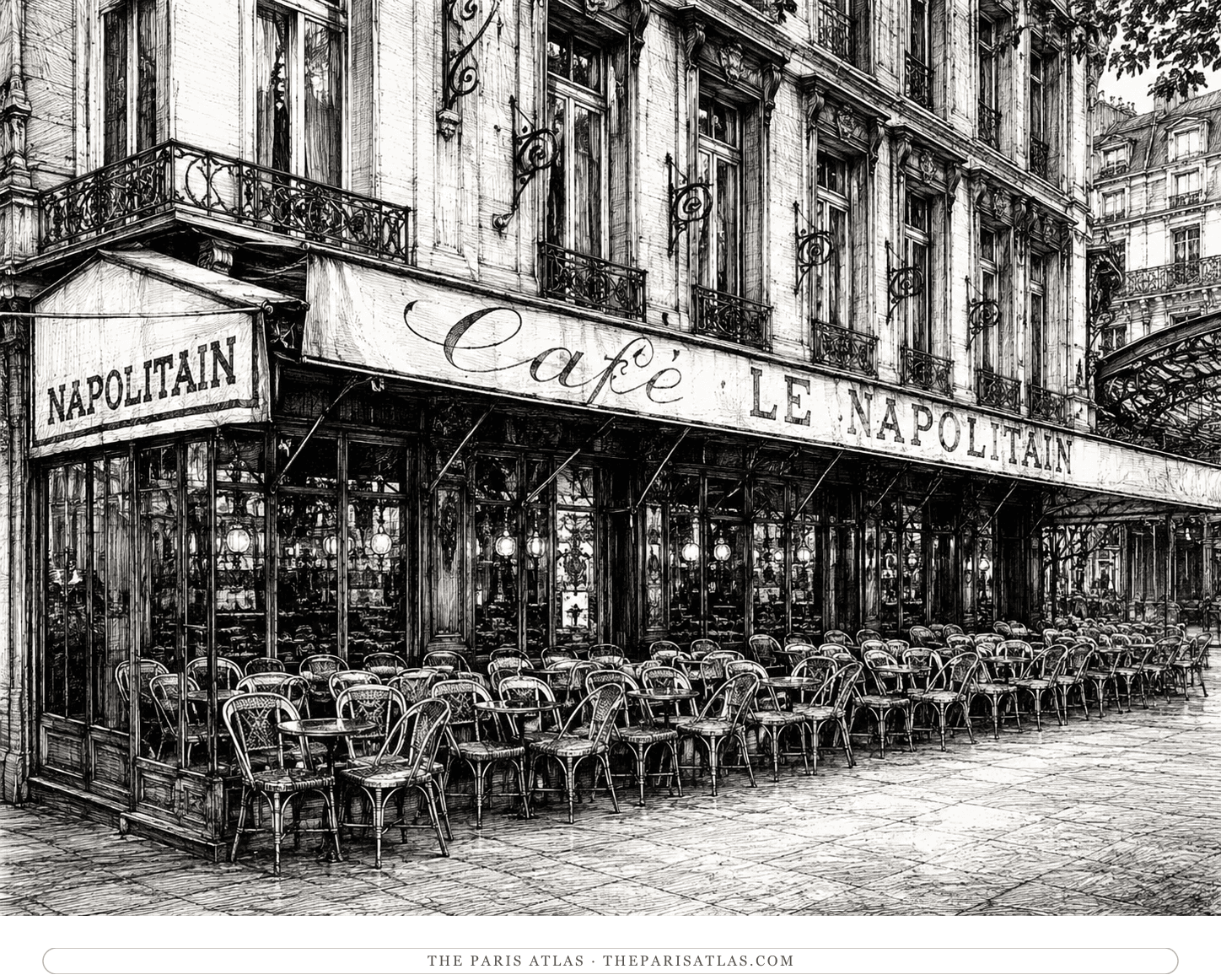
The boulevard terrace where the novel opens — an apéritif on the Right Bank, watching the evening crowd, the electric signs, and the last horse-cabs go by.
Visit the placeThe sources below include histories, archival materials, scholarly research, and official records that informed this page. They document Rue Halévy, the people connected to it, and its place in Paris.


Web source consulted for documented facts and historical context presented on the Rue Halévy page.
Web source consulted for documented facts and historical context presented on the Rue Halévy page.
Web source consulted for documented facts and historical context presented on the Rue Halévy page.
Web source consulted for documented facts and historical context presented on the Rue Halévy page.
These references provide the documented foundation for this page's history and context. Claim-level citations remain attached to the specific claims they support.
 Explore more resources
Newsletter
The cafés, studios, and walk-up flats where the work was made — one story from the map in every letter.