The Paris AtlasCharting the artists, works, and places worth returning to.
  • Poet
  • Translator
  • Author
· Greek · 1900–1971

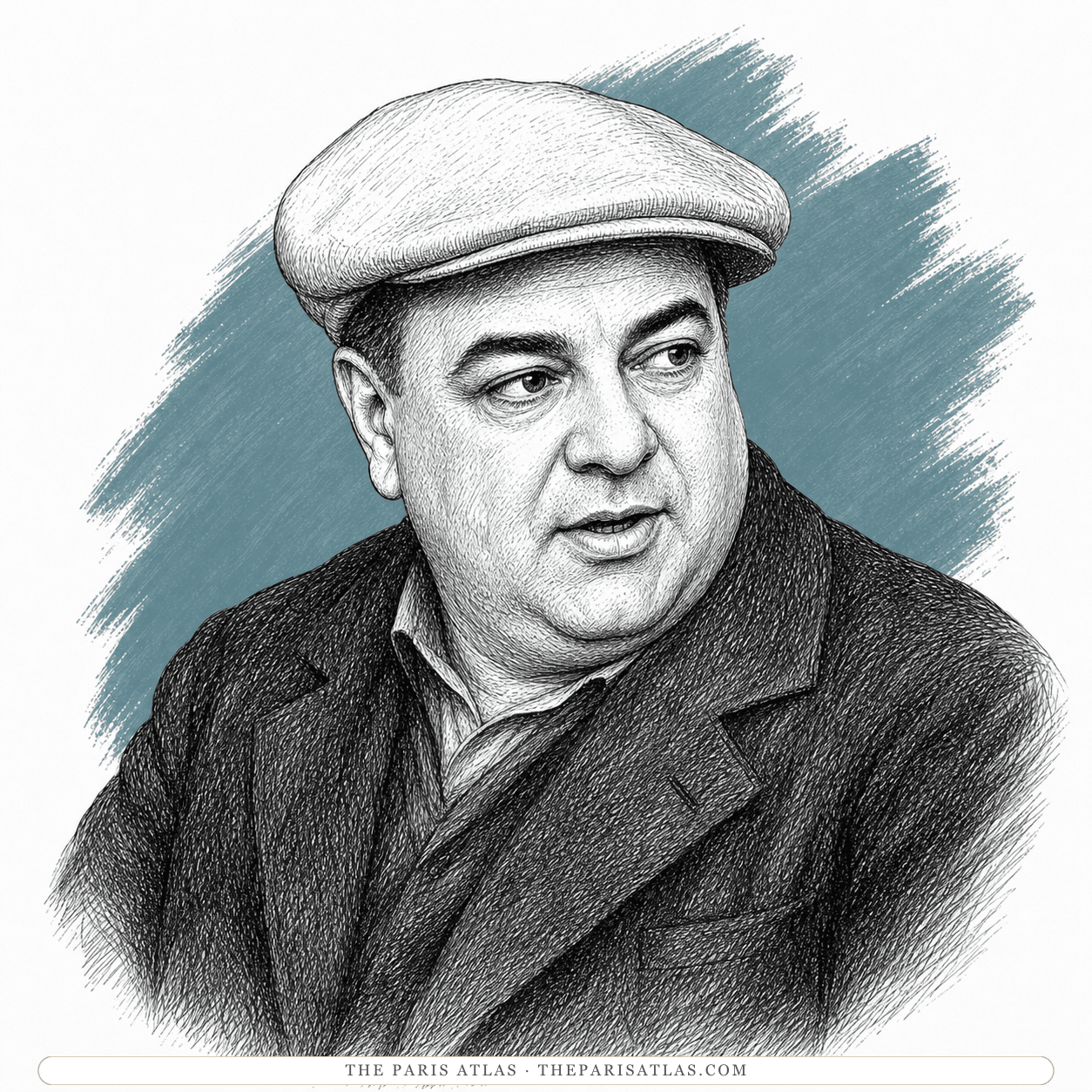
George Seferis

The Greek poet who won the Nobel Prize in Literature in 1963 and spent his whole working life as a diplomat. He appears under his real surname, Seferiades, in Henry Miller's The Colossus of Maroussi.

Details

Lived
1900–1971
Born
13 March 1900
Birthplace
Smyrna, Ottoman Empire (now İzmir, Turkey)
Died
20 September 1971 · aged 71
Place of death
Athens, Greece
Nationality
Greek
Married
Maria (Maro) Zannou · 1941–1971
Roles
PoetTranslatorAuthor
Also known as
Giorgos Seferiadis · Giorgos Seferis · Γιώργος Σεφέρης

About George Seferis

George Seferis was a Greek poet who spent his entire working life in his country's foreign service, and who in 1963 became the first Greek writer to win the Nobel Prize in Literature. He was born Giorgos Seferiadis in Smyrna, the Aegean port that is now İzmir in Turkey, and published under a shortened form of the family name. English-speaking readers often meet him for the first time in someone else's book. He appears under his real surname in The Colossus of Maroussi, the American writer Henry Miller's account of the months he spent travelling in Greece in 1939, as the closest friend of the man the book is named after, and the one who keeps asking questions about American writing well past midnight.

Smyrna, Athens, Paris

He was born on 13 March 1900, the son of Stelios and Despo Seferiadis. His father was a lawyer from a well-off Smyrna family who had taken a doctorate at the Sorbonne in 1897 and gone home to practise; he later taught law at the University of Athens. Smyrna at the time was the Ottoman Empire's main commercial port for trade with the West and held a large Greek population, and the family belonged to its prosperous middle class.

The Seferiadis family left Smyrna for Athens in 1914. Eight years later the Greek campaign in Asia Minor collapsed and Kemalist forces destroyed the city. Seferis finished his secondary schooling in Athens, then read law in Paris from 1918 to 1924 and spent a further year in London. He was eighteen when he arrived in France and twenty-five when he came back. The poets he read in those years, Baudelaire and Rimbaud and Mallarmé and above all Valéry, set the direction of everything he wrote afterwards.

A poet inside the foreign ministry

He entered the Greek Ministry of Foreign Affairs in 1926 and never left it until he retired. He worked in Athens until 1931, at the Greek consulate in London from 1931 to 1934, and as consul at Koritsa (Korçë, in Albania) from 1936 to 1938. In 1938 he moved to the ministry's press department, where his job was to hand communiqués to foreign correspondents.

The poetry ran alongside the postings. His first collection, Strophe, appeared in 1931; the Greek title carries both meanings, a turn of verse and a turning point, and Greek critics took it as the second. E Sterna (The Cistern) followed in 1932, and Mythistorema in 1935, twenty-four short poems that put the Odyssey into modern speech and became the model for most of what he wrote afterwards. He was also a working translator, and it was Eliot he translated first: The Waste Land and Murder in the Cathedral both went into Greek under his hand.

The name on the covers was Seferis, a shortened form of Seferiadis. Why he chose it is not recorded.

The summer Henry Miller came

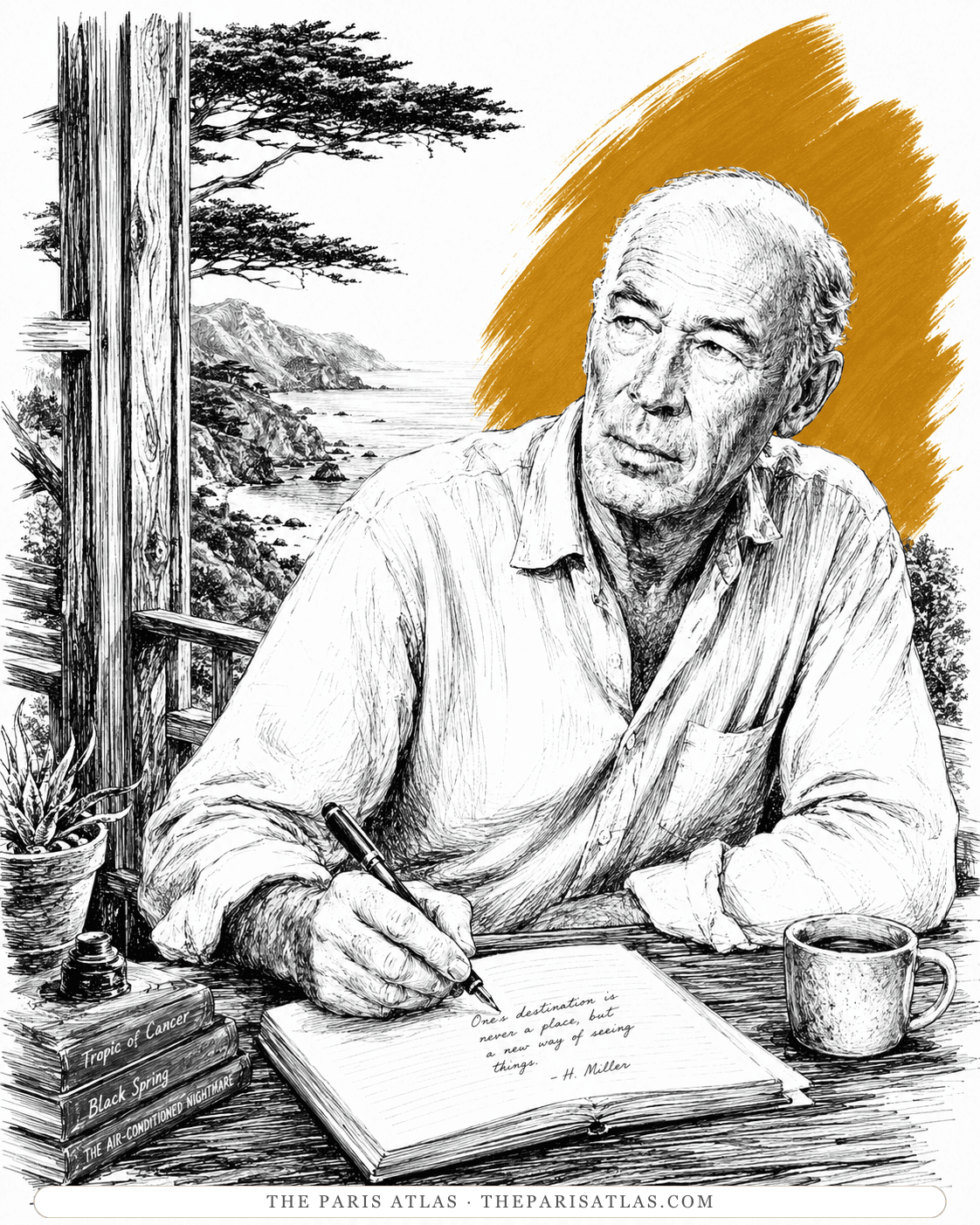
In 1939 Miller left Paris for Greece at the invitation of Lawrence Durrell and stayed until the war forced him home. He was introduced to Seferis after midnight in the main square in Athens by George Katsimbalis, the editor whose talk gives the resulting book its title. Miller could read the poems only in translation and said so, then wrote a portrait of the man anyway: widely travelled, endlessly curious, and better than anyone else present at getting people who disagreed to stop. The book calls him Seferiades throughout, because that is what his friends called him.

The connection outlasted the trip. In 1948 Durrell was one of three translators of The King of Asine and Other Poems, published in London and among the first substantial selections of Seferis to appear in English.

War, exile, and the embassies

He married Maria Zannou, known as Maro, in April 1941. Days later Germany invaded Greece, and Seferis left the mainland with the rest of the government. The exile took him to Crete, then Egypt, then South Africa, where he worked at the Greek embassy in Pretoria from 1941 to 1943, then Italy. He returned to a liberated Athens in 1944.

The rest of the career reads like a list of capitals: Ankara from 1948 to 1950, London from 1951, minister to Lebanon, Syria, Jordan and Iraq from 1953 to 1956, and finally ambassador to the United Kingdom from 1957, the last post before he retired to Athens. He sat on the Greek delegation to the United Nations during the talks over Cyprus, and the poems of Logbook III came out of his time on the island.

The Nobel Prize, 1963

The Swedish Academy gave him the 1963 prize in literature "for his eminent lyrical writing, inspired by a deep feeling for the Hellenic world of culture". He was the first Greek national to win a Nobel Prize in any of the five categories awarded since 1901, and the Academy said openly that it was also paying a debt to modern Greek literature. Greek critics agreed and pointed out the writers who had died without it, among them Kostis Palamas, C. P. Cavafy and Angelos Sikelianos.

Honorary doctorates followed from Cambridge in 1960, Oxford and Thessaloniki in 1964, and Princeton in 1965.

  • Strophe (Turning Point), 1931. The first collection, and the last one written in rhyme.
  • Mythistorema, 1935. The book that made his reputation.
  • Imerologio Katastromatos I–III (Logbook I–III), 1940, 1944 and 1955. The war poems, and then the Cyprus poems.
  • Kihle (Thrush), 1947.
  • Dokimes (Essays), 1962. The criticism, which shaped Greek literary argument for decades.
  • Tria Krypha Poiemata (Three Secret Poems), 1966. The last collection, and the hardest.

In English the standard text is Collected Poems 1924–1955, translated by Edmund Keeley and Philip Sherrard and published by Princeton University Press in 1967 with the Greek facing.

The colonels, and the funeral

A group of army officers seized the Greek state in 1967 and ran it for seven years. Seferis was invited to hold the Charles Eliot Norton professorship of poetry at Harvard for 1969–70 and turned it down, unwilling to lecture abroad while free expression was forbidden at home. He had also declined, while a fellow at the Institute for Advanced Study in Princeton in 1968, to attack the regime from outside the country. He thought the criticism had to be made in Greece.

In March 1969, after two years of censorship, detentions and torture, he made it. His statement was broadcast by the BBC and handed to every newspaper in Athens on the same day, in defiance of martial law. He called the state of the country a humiliation and demanded that the dictatorship end.

We have all learned that in dictatorial regimes the beginning may seem easy, yet tragedy lurks, inexorably in the end.

George Seferis, statement broadcast by the BBC, March 1969

He did not live to see the colonels fall. He died in Athens on 20 September 1971, after a long hospitalisation, of complications following stomach surgery. Two days later more than ten thousand people followed the car carrying his body from Plaka to the First Cemetery, singing the national anthem and Mikis Theodorakis's setting of "Denial", an early Seferis poem that had become a resistance song. The junta had banned public gatherings. The police made no arrests.

His will left his manuscripts and papers to the Gennadius Library in Athens. Maro Seferis signed the deed of gift on 27 February 1973, and the collection has been the basis of most serious work on him since.

Life events

  1. 1900

    Born Giorgos Seferiadis in Smyrna, on 13 March.

    Giorgos Seferis – Facts, Nobel Prize in Literature 1963; Martha E. Klironomos, Seferis, George (13 March 1900 – 20 September 1971)

  2. 1914

    The family leaves Smyrna for Athens, where his father teaches law at the university.

    Martha E. Klironomos, Seferis, George (13 March 1900 – 20 September 1971)

  3. 1918–1924

    Reads law in Paris, and the French Symbolists alongside it.

    Martha E. Klironomos, Seferis, George (13 March 1900 – 20 September 1971)

  4. 1926

    Enters the Greek Ministry of Foreign Affairs, beginning a career that runs to his retirement.

    Giorgos Seferis – Biographical, Nobel Prize in Literature 1963

  5. 1931

    Publishes his first collection, Strophe, and takes up a posting at the Greek consulate in London.

    Giorgos Seferis – Biographical, Nobel Prize in Literature 1963

  6. 1935

    Publishes Mythistorema, which rewrites the Odyssey in modern Greek speech.

    Giorgos Seferis – Biographical, Nobel Prize in Literature 1963

  7. 1939

    Meets Henry Miller in Athens, introduced after midnight by George Katsimbalis.

    Henry Miller, The Colossus of Maroussi (1941)

  8. 1941

    Marries Maria (Maro) Zannou in April; days later Germany invades and he leaves with the government for Crete, Egypt and South Africa.

    Martha E. Klironomos, Seferis, George (13 March 1900 – 20 September 1971)

  9. 1957

    Appointed ambassador to the United Kingdom, and joins the Greek delegation to the United Nations during the Cyprus talks.

    Giorgos Seferis – Biographical, Nobel Prize in Literature 1963; Martha E. Klironomos, Seferis, George (13 March 1900 – 20 September 1971)

  10. 1963

    Wins the Nobel Prize in Literature, the first Greek national to win a Nobel Prize in any category.

    Giorgos Seferis – Facts, Nobel Prize in Literature 1963; Martha E. Klironomos, Seferis, George (13 March 1900 – 20 September 1971)

  11. 1969

    Breaks two years of silence with a statement against the military regime, broadcast by the BBC and distributed to the Athens papers.

    Martha E. Klironomos, Seferis, George (13 March 1900 – 20 September 1971)

  12. 1971

    Dies in Athens on 20 September. His funeral two days later becomes the largest public demonstration the junta had yet faced.

    Giorgos Seferis – Facts, Nobel Prize in Literature 1963; Natalia Vogeikoff-Brogan, Fifty Years After George Seferis's Death (2021)

Featured in these books

Cover of The Colossus of Maroussi by Henry Miller

The Colossus of Maroussi

by Henry Miller

How George appears in its pages: The Greek poet who published as George Seferis and later won the Nobel Prize in Literature. In the book he is Katsimbalis's closest friend, and the man who walks Henry Miller home at night.

Read the character guide
People they knew

Documented connections — every one carries its source.

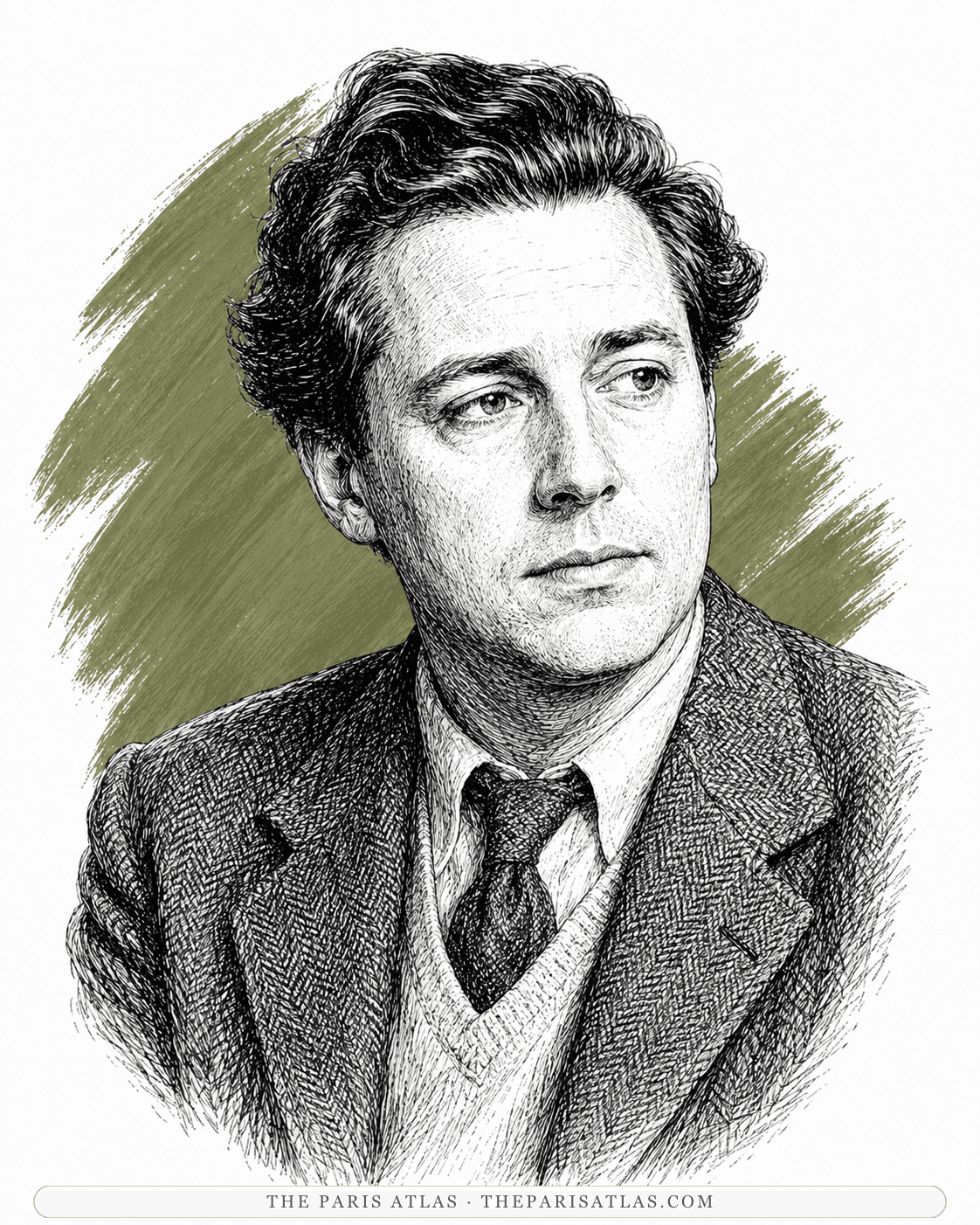
Illustrated portrait of Lawrence Durrell

Lawrence Durrell

  • Author
  • Poet

Met · 1939

They were in the same Athens circle in 1939, and the acquaintance became a working one: Durrell was among the translators of The King of Asine and Other Poems, published in London in 1948 and one of the first substantial selections of Seferis in English.

Henry Miller, The Colossus of Maroussi (1941); Martha E. Klironomos, Seferis, George (13 March 1900 – 20 September 1971)

Illustrated portrait of George Katsimbalis

George Katsimbalis

  • Editor
  • Critic
  • Translator

Met

The central friendship of both men's working lives: Seferis published his criticism in the journal Katsimbalis directed, and the two wrote to each other from 1924 until 1970. Ikaros published the correspondence in Athens in 2009.

Martha E. Klironomos, Seferis, George (13 March 1900 – 20 September 1971); Κατσίμπαλης, Γιώργος Κ., 1899–1978

Illustrated portrait of Henry Miller

Henry Miller

  • Author

Met · 1939

Katsimbalis made the introduction after midnight in the main square in Athens, following a long meal at a taverna in Piraeus. Miller had heard the name earlier that season on Corfu.

Henry Miller, The Colossus of Maroussi (1941); Martha E. Klironomos, Seferis, George (13 March 1900 – 20 September 1971)

Questions about George Seferis

Who was George Seferis?

A Greek poet and career diplomat (1900–1971) who won the Nobel Prize in Literature in 1963. He wrote poetry in modern Greek that reworks Homeric myth into contemporary speech, translated T. S. Eliot into Greek, and served in the Greek foreign ministry from 1926 until his retirement, ending as ambassador to the United Kingdom.

Why is he called Seferiades in The Colossus of Maroussi?

Because that was his real name. He was born Giorgos Seferiadis and published under the shortened pen name Seferis. Henry Miller met him as a friend rather than as a writer, and used the name his friends used.

Did George Seferis win the Nobel Prize?

Yes, in 1963, "for his eminent lyrical writing, inspired by a deep feeling for the Hellenic world of culture". He was the first Greek national to win a Nobel Prize in any of the categories awarded since 1901.

Was Seferis really a diplomat as well as a poet?

For thirty-six years. He joined the Greek Ministry of Foreign Affairs in 1926 and held posts in London, Albania, South Africa, Turkey, Lebanon and Britain, finishing as ambassador in London. He wrote the poetry in the margins of that job and never gave it up for writing.

What is "Denial", the poem sung at his funeral?

An early rhymed poem from his 1931 collection Strophe, set to music by the composer Mikis Theodorakis in the 1960s. The song became an anthem of resistance to the Greek military dictatorship, and the crowd of more than ten thousand who followed his coffin in September 1971 sang it in the street.

How did George Seferis die?

He died in Athens on 20 September 1971 of complications following stomach surgery, after a long stay in hospital. He was seventy-one, and the colonels he had denounced two years earlier were still in power.

Where should an English reader start?

Collected Poems 1924–1955, translated by Edmund Keeley and Philip Sherrard for Princeton University Press in 1967, prints the Greek and the English on facing pages and remains the standard edition. For the essays, On the Greek Style (1966).

Sourced claims

Every connection the graph holds for George, with the evidence behind it.

Met · 1939

Lawrence Durrell

They were in the same Athens circle in 1939, and the acquaintance became a working one: Durrell was among the translators of The King of Asine and Other Poems, published in London in 1948 and one of the first substantial selections of Seferis in English.

Henry Miller, The Colossus of Maroussi (1941); Martha E. Klironomos, Seferis, George (13 March 1900 – 20 September 1971)

Met

George Katsimbalis

The central friendship of both men's working lives: Seferis published his criticism in the journal Katsimbalis directed, and the two wrote to each other from 1924 until 1970. Ikaros published the correspondence in Athens in 2009.

Martha E. Klironomos, Seferis, George (13 March 1900 – 20 September 1971); Κατσίμπαλης, Γιώργος Κ., 1899–1978

Met · 1939

Henry Miller

Katsimbalis made the introduction after midnight in the main square in Athens, following a long meal at a taverna in Piraeus. Miller had heard the name earlier that season on Corfu.

Henry Miller, The Colossus of Maroussi (1941); Martha E. Klironomos, Seferis, George (13 March 1900 – 20 September 1971)

Depicted in

The Colossus of Maroussi

Miller calls him Seferiades, his real surname, rather than the pen name on his books. The portrait is of the manner rather than the work: the questions, the collecting, the walk home.

Henry Miller, The Colossus of Maroussi (1941)

Sources and further reading

  • Giorgos Seferis – Facts, Nobel Prize in Literature 1963
  • Giorgos Seferis – Biographical, Nobel Prize in Literature 1963
  • Martha E. Klironomos, Seferis, George (13 March 1900 – 20 September 1971)
  • Natalia Vogeikoff-Brogan, Fifty Years After George Seferis's Death (2021)
  • Thomas Skouteris, The Vocabulary of Progress in Interwar International Law: An Intellectual Portrait of Stelios Seferiades (2005)
  • Jeffrey L. Buller, George Seferis (2024)
  • Henry Miller, The Colossus of Maroussi (1941)
Browse all authors