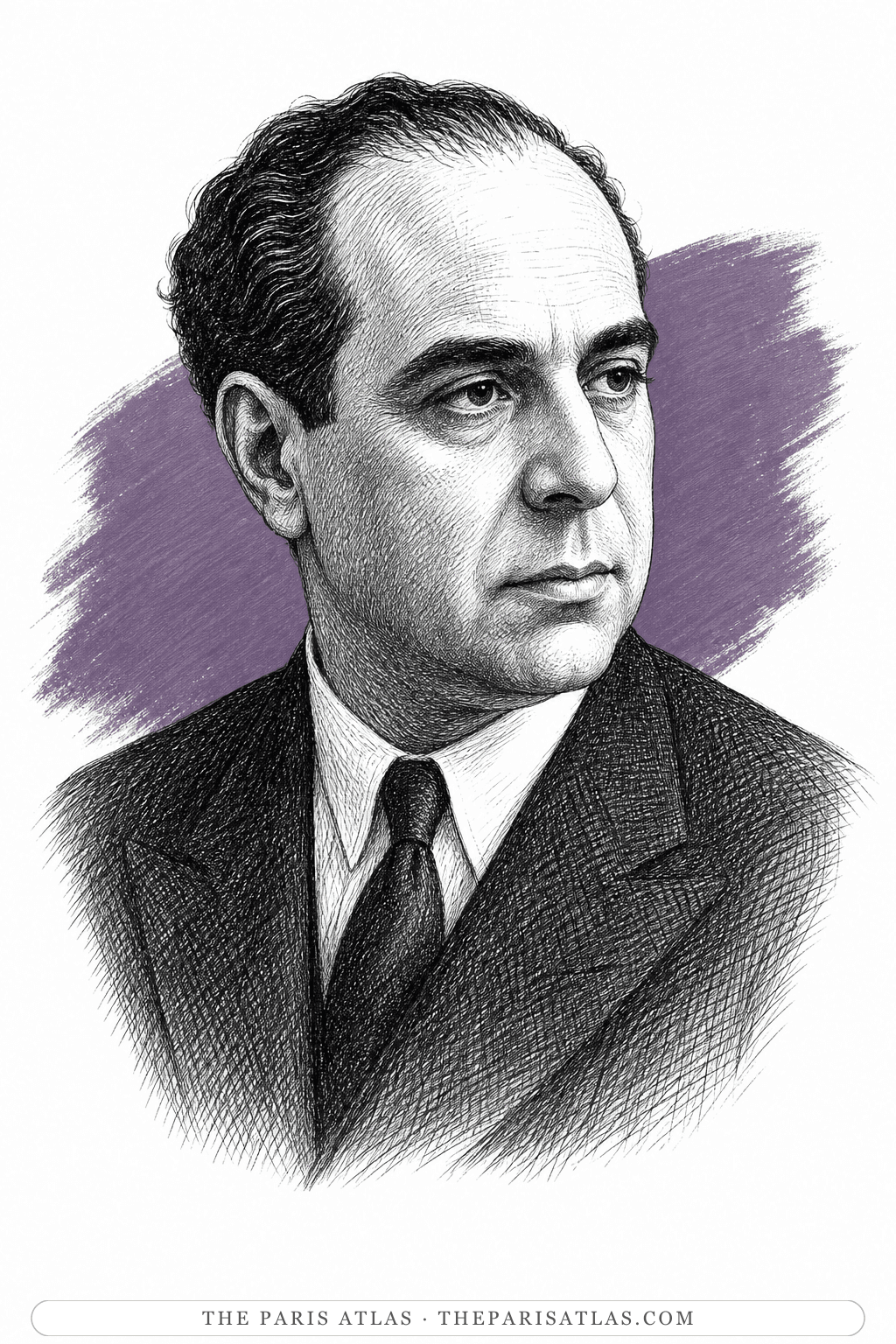
George Seferiades
The Greek poet who published as George Seferis and later won the Nobel Prize in Literature. In the book he is Katsimbalis's closest friend, and the man who walks Henry Miller home at night.
To find out: about American writing, about jazz, about whatever the person in front of him happens to know.
The book

At a glance
- The poet Miller met through Katsimbalis, and one of his closest friends in Athens
- George Seferis
- Smyrna, after years spent abroad
- Bachelor rooms on Kydathenaion Street, with a yard of jazz records
- His sister Jeanne, whom Miller met at the same rooms
- George Seferiades · Smyrna
Who they are in the book
Spoiler-freeGeorge Seferiades was a Greek poet who published under the pen name George Seferis, and who later won the Nobel Prize in Literature. The Colossus of Maroussi is a travel book, the American writer Henry Miller's account of the months he spent in Greece in 1939, and Seferiades appears in it under his real surname.
Miller heard the name before he met the man. On Corfu, a doctor called Theodore Stephanides who translated Greek poems into English told him about a poet called Seferis, which is George Seferiades' pen name, and in the same conversation about a talker called Katsimbalis. Later that season Katsimbalis introduced them, after midnight, in the big square in Athens.
Miller could read the poems only in translation and says it made no difference to his verdict: "I know his work only from translation, but even if I had never read his poetry I would say this is the man who is destined to transmit the flame." What the book records in detail is the manner rather than the work. Seferiades asks questions without stopping, collects things, and keeps putting his hat back on to walk a visitor home.
This profile is drawn from the New Directions text, read in the Internet Archive's scan of the 1958 printing.
How George Seferiades Is Portrayed
- The introduction after midnightFollowing a long meal at a taverna in Piraeus, the party came back to the main square in Athens, still crowded past midnight. Katsimbalis picked out the spot where his friends were sitting, and Miller was introduced to Seferiades and to Captain Antoniou of the ship Acropolis. They immediately started asking him about America and American writers.
- What Miller made of himHe was from Smyrna originally and had lived abroad for years. Miller calls him more Asiatic than any other Greek he met, and describes him as languorous, suave, vital, and capable of surprising feats of strength and agility. He is also, in Miller's reading, the peacemaker of the group, the one who reconciles opposed schools of thought.
- The questionsHe asked constantly, in several languages at once. He wanted to know about the disappearance of the American writer Ambrose Bierce, about the Greenberg manuscripts the poet Hart Crane had used, and whether the novelists Erskine Caldwell and William Faulkner gave a true picture of the American South.
- The jazz recordsAt his bachelor rooms on Kydathenaion Street, Miller was startled to hear Cab Calloway coming off the gramophone. Seferiades pointed to a file of albums about a yard long and started offering Louis Armstrong, Fats Waller, Count Basie, Pee Wee Russell. He subscribed to the French magazine Le Jazz Hot, and wanted to know what life was like for Black musicians in America.
- The plot of landOne afternoon he took Miller to look at a piece of land where he thought he might build himself a bungalow. Miller found it shabby and forlorn at first sight, and then could not hold on to that impression, because Seferiades walked him from spot to spot rhapsodising about the herbs, the flowers, the shrubs, the rocks, the clay and the slopes.
- Walking Miller homeTheir real conversations began on the high verandah at Amaroussion, where Seferiades took Miller's arm and walked him up and down in the dusk. He usually put his hat on at the end of an evening and walked Miller back to his hotel. Miller insists it was not politeness but a demonstration of friendship.
- What he said about KatsimbalisHe knew Katsimbalis better than anyone in the book, was sometimes impatient with him and sometimes furious, and never once ran him down. If he learned Miller had just come from him he would ask whether Katsimbalis had told the story about the coins he found. If he thought Miller had been shortchanged he would take his arm afterwards: "too bad he didn't give you the whole story to-night; there is a wonderful part which he tells sometimes when he's in very good spirits—it's a pity you had to miss it."
- The letter Miller decided not to produceSeferiades gave Miller a letter from the Bureau of Tourisme before he went to Crete. Coming back, stuck at a railway station and pressing to reach Athens, Miller found himself being questioned by a courteous man he took for a police inspector, and thought better of it. Good credentials, he says, only make a suspicious man worse. He backed down the steps and disappeared into the crowd.
Seferiades delivers the book's verdict on its title character. On Miller's last evening the three of them said goodbye at a bus station in the middle of Athens, and as Miller turned away, leaving Katsimbalis sitting in the bus, Seferiades walked him home and said with feeling that Katsimbalis was a great fellow and something extraordinary, a human phenomenon. Miller notes that he said it as though he were the one leaving.
If you like The Colossus of Maroussi


If you like Henry Miller
Explore authors with a similar voice, perspective, and influence.

Louis-Ferdinand Céline
Miller's acknowledged master at making literature out of the gutter. Journey gave him permission; Cancer is what he did with it.
View author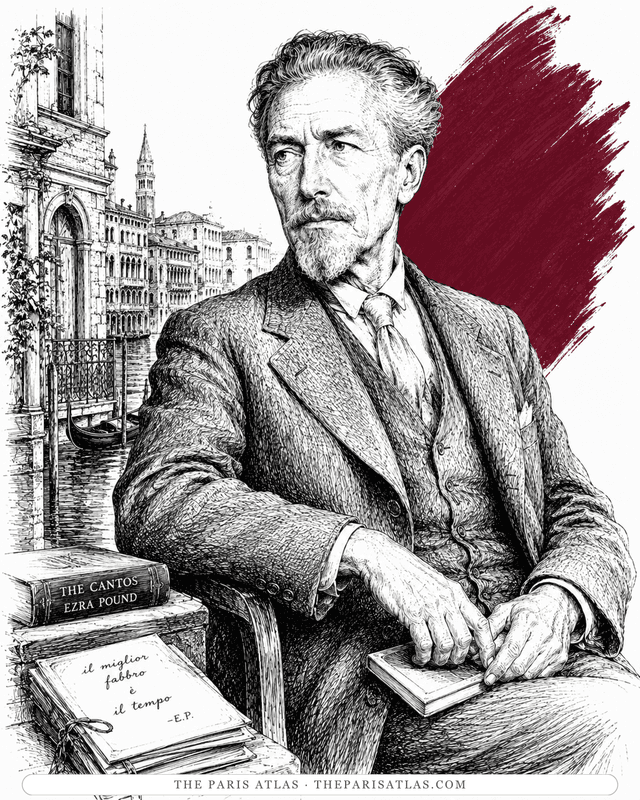
Ezra Pound
Pound read Cancer and sent Miller a famously backhanded postcard. Both believed literature's job was to wake the reader by any means necessary.
View author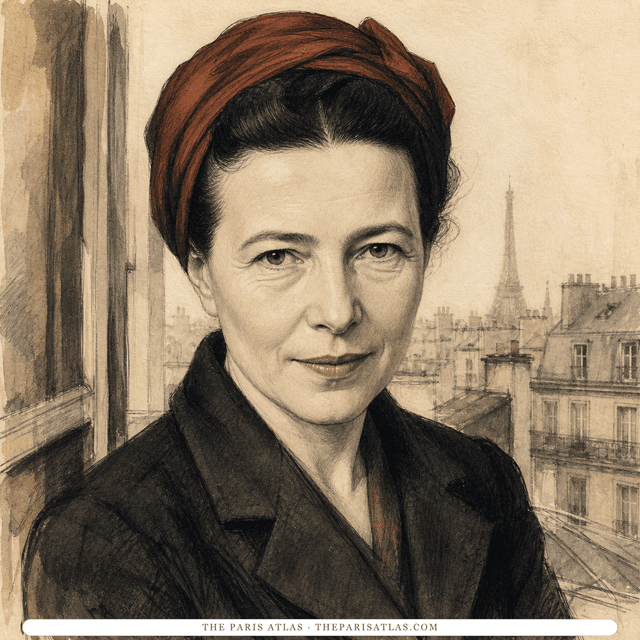
Simone de Beauvoir
French writer and philosopher whose novels, memoirs, and social analysis examined freedom, gender, responsibility, aging, and the material conditions that shape a life.
View author