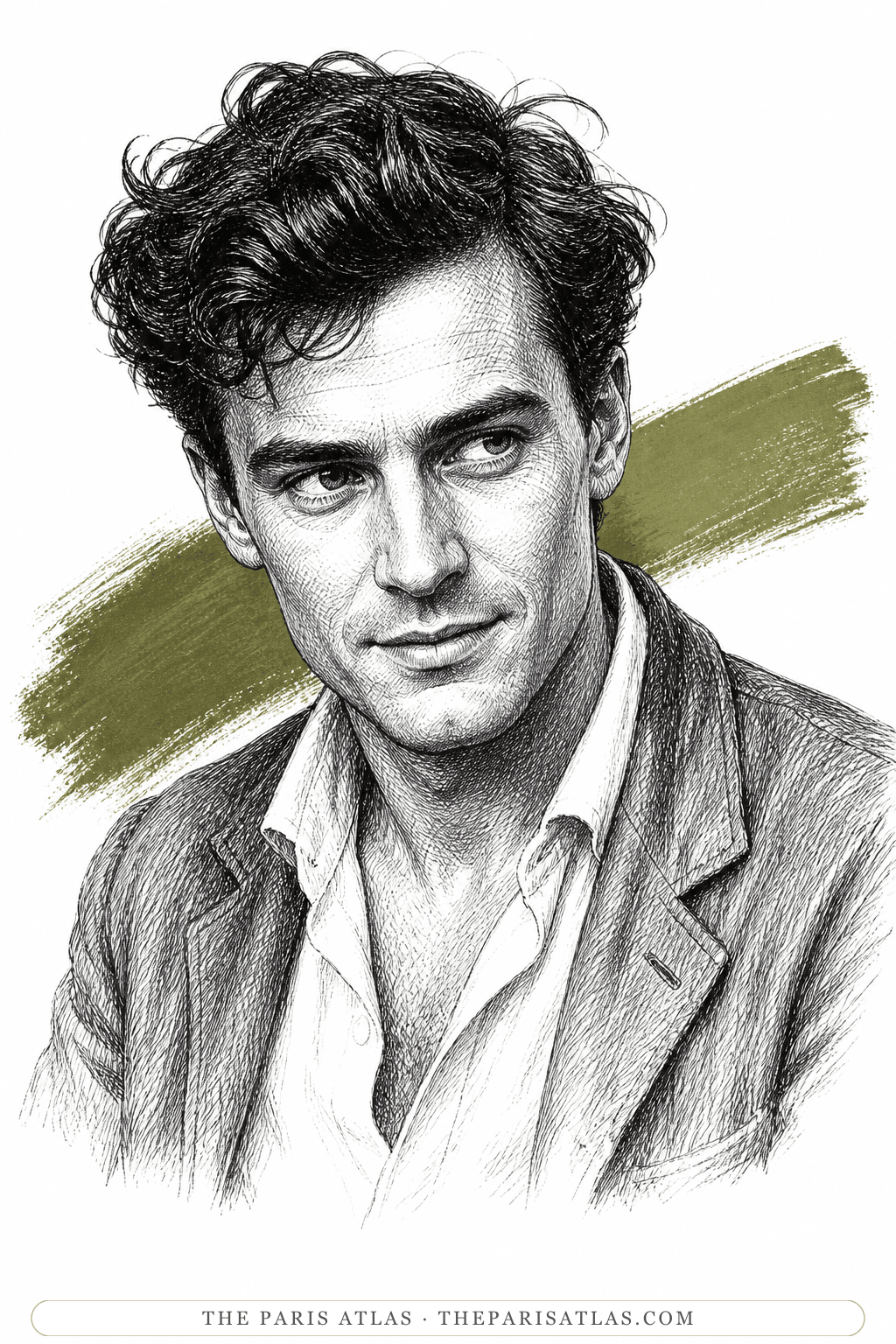
Lawrence Durrell
The British poet and novelist who was living on Corfu and kept inviting Henry Miller to come. Miller went, and Durrell is his companion for much of the trip.
To be with the Greek forces in Albania when the fighting starts, rather than with his own countrymen.
The book

At a glance
- The friend whose invitation brought Miller to Greece, and his companion for much of the trip
- Kalami, at the north end of Corfu, then a flat on Anagnastopolou Street in Athens
- His wife Nancy, and Spiro Americanus, his driver and fixer on Corfu
- The Black Book, which Miller calls a chronicle of the English death, and a prose piece called "Zero" dedicated to Miller
- In India, near the Tibetan frontier, which he said the Peloponnese reminded him of
- Lawrence Durrell · 1912–1990 · British, born in India
Who they are in the book
Spoiler-freeLawrence Durrell was a British poet and novelist who had made his home on the Greek island of Corfu. The Colossus of Maroussi is a travel book, the American writer Henry Miller's account of the months he spent in Greece in 1939, and Durrell appears in it under his own name as the friend whose invitations got him there.
The two had been writing to each other for years. Miller says the letters that arrived at his studio in the Villa Seurat in Paris were poems as much as letters, mixing the real Greece with a mythical one so thoroughly that he suspected Durrell of laying it on to coax him aboard a boat. One envelope produced a thick sheaf of prose called "Zero," dedicated to Miller. When Miller finally sailed, Durrell was waiting on the dock at Corfu with his factotum, Spiro Americanus, and drove him an hour north to the village of Kalami.
When the Greek army mobilised the household left Corfu for Athens, and Durrell turns up through the rest of the book: at an observatory, halfway down an underground staircase at Mycenae, at the wheel of a borrowed car with failing brakes on a wet mountain road. Miller clearly liked him, and still set down his rudeness about his own countrymen without softening it.
This profile is drawn from the New Directions text, read in the Internet Archive's scan of the 1958 printing.
How Lawrence Durrell Is Portrayed
- The letters that started the tripFor months before Miller left Paris, letters had been coming from Corfu. Miller says that when these arrived at the Villa Seurat he used to think Durrell had taken a sniff of coke before oiling his pen, and that the blend of history and myth in them was so complete he assumed it was salesmanship. He later decided the confusion was in Greece itself.
- In the waterThe first thing they did at Kalami, before lunch, was swim in front of the house. Miller had not been in the sea for almost twenty years. He describes Durrell and his wife Nancy as a couple of dolphins who practically lived in the water.
- A week of pressure to read one poemThere was plenty to read in the house and Miller did not want to look at any of it. Durrell laid siege to him for about a week to get him to read Shakespeare's sonnets, and Miller eventually read one, which he believes was "The Phoenix and the Turtle."
- The water jug he would not let Miller carryWatching Corfiot women haul heavy jugs up the slopes from the well, Miller wanted to carry one himself to find out what the walk cost. Durrell threw up his hands. It was not done, he said, and he begged Miller not to try it for his sake, because he would lose caste and the Greeks would laugh at them both. Miller gave up the idea.
- The quarrel on the hotel terraceAfter the Greek army was mobilised and everyone left Corfu for Athens, the party breakfasted around noon on the terrace of the Hotel Cecil. A bad argument broke out between Durrell and Nancy. Miller felt helpless, pitied them both, and calls it a private quarrel that used the war as camouflage.
- Wanting to enlist for GreeceDurrell talked about joining the Greek forces on the Albanian frontier. As Miller reads it, the point was not to be killed but to be with the Greeks rather than the English, because he thought better of them. Miller said as little as he could, on the theory that arguing would only feed the impulse.
- The night at the observatoryTheodore Stephanides, a doctor on Corfu who did astronomy as an amateur, arranged a visit to the observatory in Athens. Their hosts talked about weights and distances. Durrell looked at the star cluster called the Pleiades through the telescope and exclaimed "Rosicrucian!" The astronomers wanted to know what he meant by that, and Miller says the pair of them behaved throughout like delighted children.
- Halfway down the staircase at MycenaeWith a flashlight this time, Durrell went first down the slippery stair to the underground well, Nancy next, Miller last. Halfway down they stopped and argued about going on. Miller was terrified of the buttress giving way and of slipping into the pit, and was relieved when Durrell agreed, after a good deal of persuading, to turn back.
- The Christmas driveOn Christmas Eve Miller sat waiting on the terrace of the King George Hotel from ten in the morning until two, when Durrell and Nancy turned up in a borrowed English car with bad brakes. Durrell was laughing and swearing, said he intended to run the car into the ground, and said he hoped Miller would miss his boat. Crossing the mountains in a downpour, wrestling a loose wheel, he held forth on the Greek romance Daphnis and Chloe while the rain came in from the sides and the windscreen wipers gave out.
- Driving past a friend without stoppingOutside Sparta they passed a friend of Durrell's on the road and exchanged a nod. Miller asked whether they had fallen out. Durrell was surprised by the question. Miller does not claim to remember the exact words of the answer, but says the substance was that an Englishman was bad enough at home, and that stopping would have spoiled the holiday.
- The last goodbye, twiceDurrell tried hard to talk Miller into staying an extra night, assuring him that nothing in the country ran to schedule. He and Nancy stood on the hotel steps waving as the carriage pulled away. Hours later, with the train delayed again, a bellhop brought Miller a note from Durrell asking him back for dinner. Miller decided against it, mostly because he did not want to say goodbye a second time.
Durrell has the last word. Miller finished writing in New York, and just as he set down his final line the postman brought him a letter from Durrell dated 10 August 1940. Miller printed it whole as the end of the book.
It describes a drunken night on the steps of the Acropolis when Katsimbalis stood at the edge of the precipice and crowed like a cockerel until the roosters of Attica answered him from all over the valley. Durrell signed off LARRY and told Miller he wished he would write it, because it was part of the mosaic.
If you like The Colossus of Maroussi


If you like Henry Miller
Explore authors with a similar voice, perspective, and influence.

Louis-Ferdinand Céline
Miller's acknowledged master at making literature out of the gutter. Journey gave him permission; Cancer is what he did with it.
View author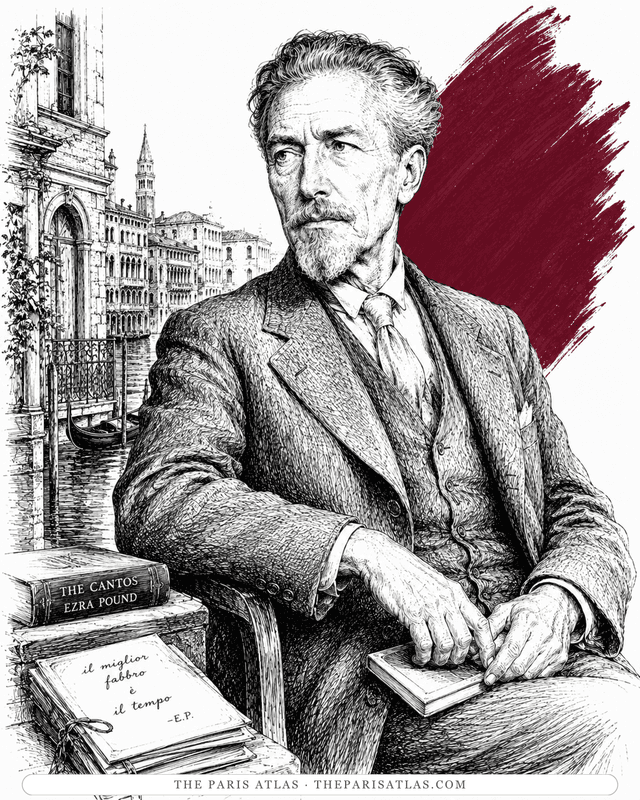
Ezra Pound
Pound read Cancer and sent Miller a famously backhanded postcard. Both believed literature's job was to wake the reader by any means necessary.
View author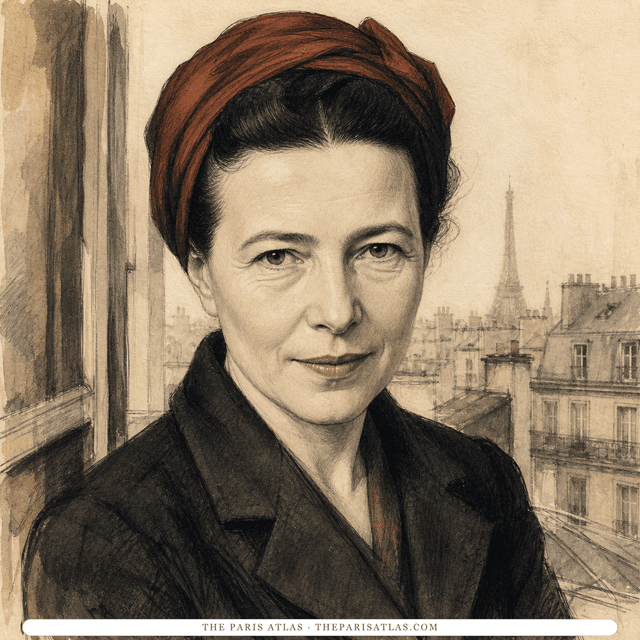
Simone de Beauvoir
French writer and philosopher whose novels, memoirs, and social analysis examined freedom, gender, responsibility, aging, and the material conditions that shape a life.
View author