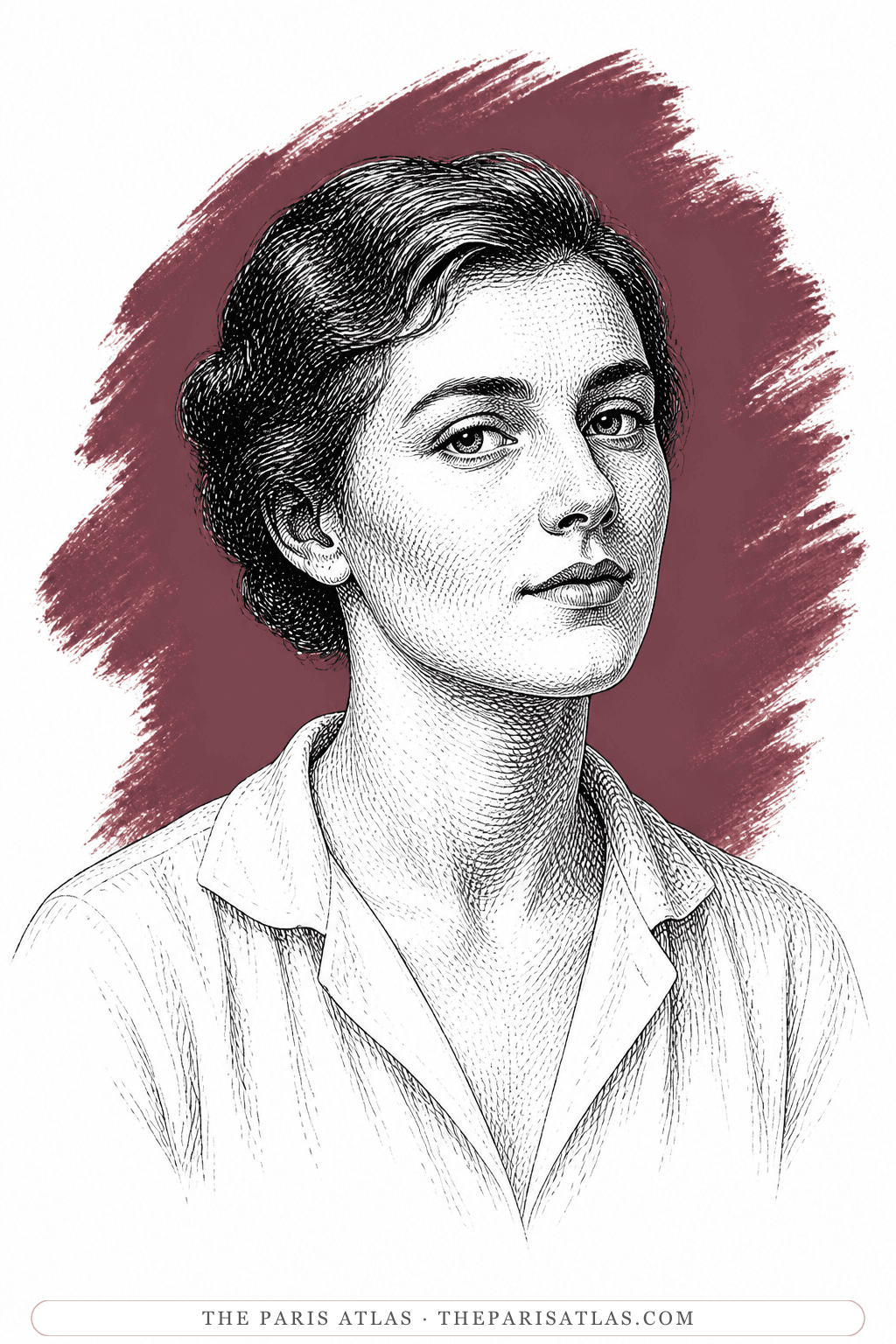
Nancy Durrell
The wife of the British novelist Lawrence Durrell. The couple were living on the Greek island of Corfu, and their invitation brought Henry Miller there in 1939. She is with him for much of the trip, and Miller quotes her once.
The book

At a glance
- Lawrence Durrell's wife, and Miller's companion for much of his time in Greece
- Kalami, at the north end of Corfu, and then Athens
- Argos, Mycenae and Tripolis by borrowed car, then on to Epidaurus and Olympia after Miller left
- Intelligent and far-seeing, and in the water one of a couple of dolphins
- "Why don't you try to do something?" — to her husband, over a car stalled in a flood
Who they are in the book
Spoiler-freeNancy Durrell was born Nancy Isobel Myers, and she was the first wife of Lawrence Durrell, the British poet and novelist. She had trained as an art student and ran a photographic studio with him in London before they married there in January 1935; two months later the couple left for Greece. The Colossus of Maroussi is a travel book, the American writer Henry Miller's account of the months he spent in Greece in 1939, the last year before the war reached the country. The Durrells were living on the Greek island of Corfu at the time, and it was their invitation that got Miller onto the boat. He calls her Nancy throughout.
She is in a great deal of the book and described in almost none of it. Miller swims with her on Corfu, leaves the island on a boat with her, follows her down an underground staircase at Mycenae, drives across the Peloponnese with her at Christmas, and is waved off by her at the end. What he tells the reader about her across all of that comes to a few words: that she and her husband were intelligent and far-seeing, and that in the water the two of them were like a couple of dolphins.
The one remark Miller sets down in her own words comes in the last days of the trip, in a borrowed car that has died in a flooded road three miles outside the town of Tripolis. "Why don't you try to do something?" she says. Miller notes that her husband gave the answer he usually gave when she offered advice, which was "why don't you shut up?", and that he made a few automatic motions at the engine while he said it. The car started.
All of this is Miller's account. He was the couple's guest on Corfu and their travelling companion afterwards, and he wrote the book after he had left Greece for America.
This profile is drawn from the New Directions text, read in the Internet Archive's scan of the 1958 printing.
How Nancy Durrell Is Portrayed
- Swimming at the house on CorfuThe Durrells' house was at Kalami, at the north end of Corfu, and the first thing the party did there was get into the sea. Miller had not been in the water for almost twenty years. He describes Nancy and her husband as a couple of dolphins who practically lived in it. After lunch they slept, then rowed about a mile to a small cove with a white shrine on it and swam there naked.
- The argument at the hotel in PatrasWhen the Greek army was mobilised the whole household left Corfu by boat for Athens. They went ashore at Patras and stopped at the Hotel Cecil, where a room cost Miller about 23 cents a day. Breakfasting towards noon on the terrace above the sea, Nancy and her husband had a bad argument. Miller says he felt helpless and could only pity them both, and that it was really a private quarrel in which the war was used as camouflage. In the same passage he calls the pair of them intelligent and far-seeing.
- The boat that took Miller off CorfuMiller was back at the house on Corfu on his own. When the autumn rains came they washed out the steep goat path up to the highway and blocked the roads with fallen rock and trees, and he was marooned there for days at a time. Nancy arrived without warning to collect some household belongings. She was going back to Athens on the same boat that afternoon, and Miller decided on the spot to go with her.
- Down the staircase at MycenaeAt the ruins of Mycenae, in the Peloponnese, a slippery staircase runs underground to a well. Miller had been partway down it once before, with the Greek writer George Katsimbalis, and it had frightened him badly. The second time the three of them had a flashlight and went down in single file: Lawrence Durrell first, Nancy second, Miller behind her. About halfway they stopped and argued about going further. Miller was afraid the buttress at the head of the stairs would give way and afraid of slipping into the pit, and was relieved when Durrell agreed to turn back. Going up, he made sure he was first instead of last.
- The morning of the boiled eggsAt a hotel in Tripolis it rained all night and was still pouring at breakfast. Lawrence Durrell ordered boiled eggs and sent them back twice for being underdone, complaining at length each time and ringing for the proprietor's wife, who was serving. Nancy and Miller sat it out in a nook overlooking the square, finished their tea and toast, ordered more, and smoked a couple of cigarettes. Miller eventually looked out of the window and saw the woman crossing the square in the rain under an umbrella, carrying the egg in her hand.
- The car that stopped in the floodDriving back towards Tripolis in hail and thunder, on a road flooded like a rice field, the car shuddered and stopped dead about three miles short of the town. There was no traffic and no way of getting help, and Miller had one train to catch if he was to make his boat. After ten or fifteen minutes the joking stopped. "Why don't you try to do something?" said Nancy. Her husband gave the answer Miller says he usually gave when she offered advice, "why don't you shut up?", while making a few automatic motions at the engine. It started, and they reached the hotel at top speed.
- The goodbye at TripolisMiller's train left at four, so the three of them had a last meal together first. A horse and carriage waited at the door, and Nancy and her husband stood on the hotel steps waving as it pulled away in what Miller calls a teeming mist made of rain and tears. They were going on to Epidaurus and then to Olympia. Miller, sailing for America, writes that he would be going back to jail. Back in Athens he gathered what friends he could for a last dinner. The Durrells were not among them, and he guessed they were still stuck at the hotel in Tripolis.
If you like The Colossus of Maroussi


If you like Henry Miller
Explore authors with a similar voice, perspective, and influence.

Louis-Ferdinand Céline
Miller's acknowledged master at making literature out of the gutter. Journey gave him permission; Cancer is what he did with it.
View author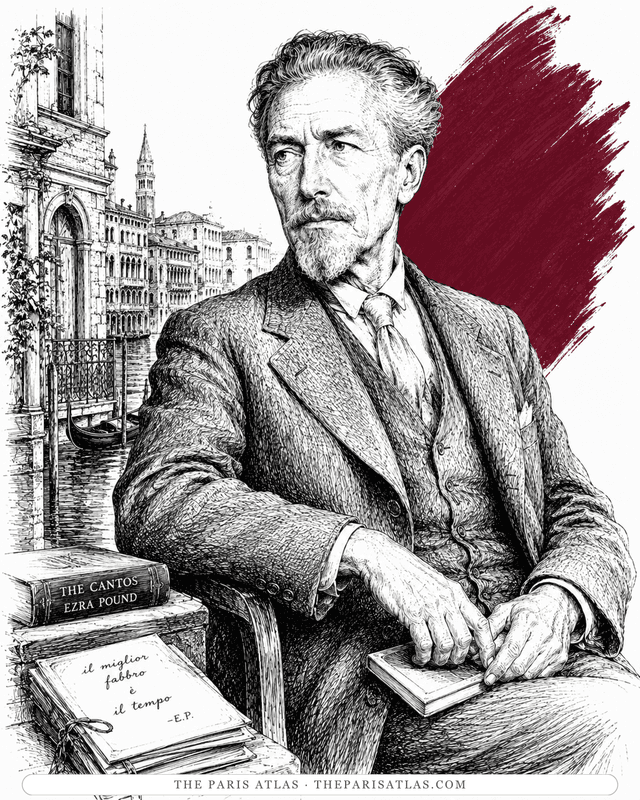
Ezra Pound
Pound read Cancer and sent Miller a famously backhanded postcard. Both believed literature's job was to wake the reader by any means necessary.
View author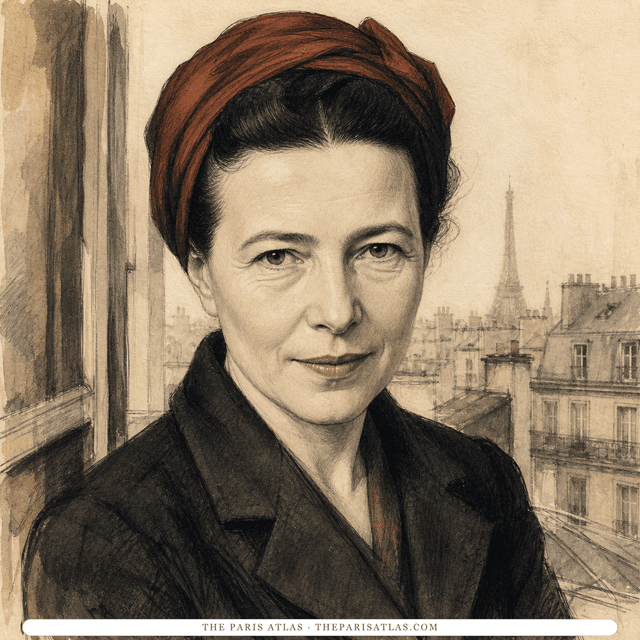
Simone de Beauvoir
French writer and philosopher whose novels, memoirs, and social analysis examined freedom, gender, responsibility, aging, and the material conditions that shape a life.
View author