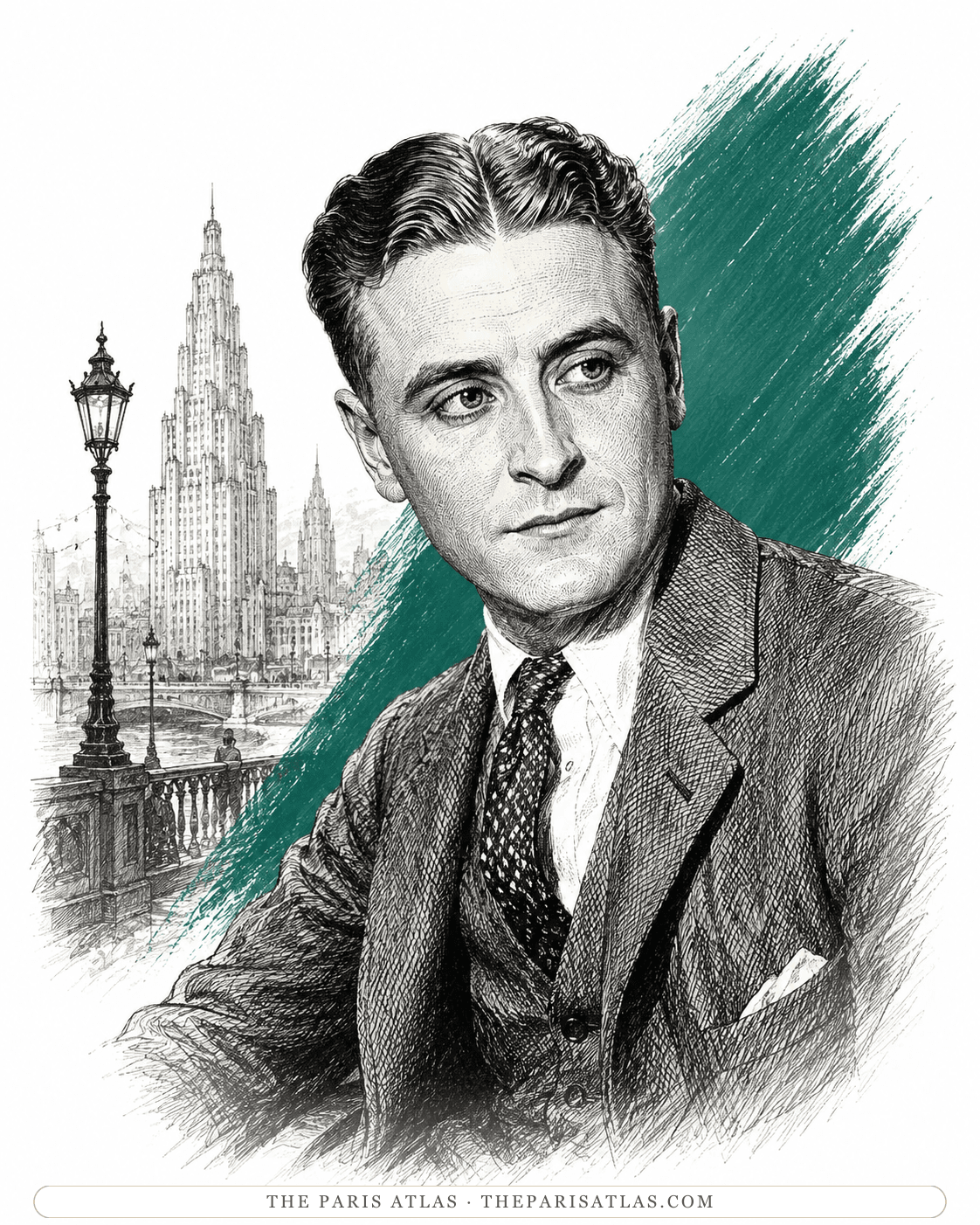
F. Scott Fitzgerald
- Author
Child of · 1921
Frances Scott “Scottie” Fitzgerald was born in St. Paul on 26 October 1921, the only child of F. Scott and Zelda Fitzgerald.
The only child of Scott and Zelda Fitzgerald — a writer and Democratic party organiser who gave her father's manuscripts to Princeton and managed his revival.
Frances Scott Fitzgerald, always called Scottie, was born in St. Paul on 26 October 1921, the only child of F. Scott Fitzgerald and Zelda Fitzgerald. Much of her childhood was spent at boarding school while her mother was in psychiatric care and her father worked in Hollywood; the letters he wrote her about reading, money and character are among his best-known nonfiction.
She became a journalist and wrote for The New Yorker, The Washington Post and other papers, and worked for decades in Democratic party politics. In 1950 she gave the core of her father's manuscripts and papers to Princeton University, creating the archive on which Fitzgerald scholarship still rests, and in 1975 she had her parents reinterred together in the family plot at Rockville, Maryland.
Scottie Fitzgerald was born in St. Paul, Minnesota, on 26 October 1921. Her father wrote down what her mother said as she came out of the anaesthetic. It ran: "Oh, God, goofo I'm drunk. Mark Twain. Isn't she smart—she has the hiccups. I hope it's beautiful and a fool—a beautiful little fool."[1]
Four years later he gave a reworked version of that line to Daisy Buchanan in The Great Gatsby, where it reads: "I'm glad it's a girl. And I hope she'll be a fool—that's the best thing a girl can be in this world, a beautiful little fool." The two are often quoted as if they were the same sentence. Zelda Fitzgerald said hers in a hospital room in 1921, about a real baby. The novel's version is dialogue written in 1925 for a character who barely mentions her daughter again.
The family sailed for France in May 1924, when Scottie was two, and spent most of the next seven years there. Their addresses can be traced almost year by year. From late April 1925 they lived at 14 rue de Tilsitt near the Arc de Triomphe, a fifth-floor walk-up that the scholar Matthew Bruccoli described as a gloomy place full of imitation eighteenth-century furniture. In April 1928 they took an apartment at 58 rue de Vaugirard, opposite the Luxembourg Gardens. In October 1929 they moved to 10 rue Pergolèse in the sixteenth arrondissement. The summers went to the Riviera, at St. Raphaël, Cap d'Antibes and Juan-les-Pins.[2]
She was raised largely by staff. An English nanny, Lillian Maddock, was hired in 1924, and Ernest Hemingway claimed she taught the child to speak with a Cockney accent. Her father, for all his drinking, paid her real attention. He bought toy soldiers from the Nain Bleu shop and staged battles with her on the floor, Agincourt being his favourite. He used a toy gendarme as a go-between when he had to discipline her. Catching her reading a French children's book during one punishment, he made her read it aloud to him in English instead of spanking her.[3]
The famous names came through the house without registering much on a small child. Her own summary, written decades later, was that she had been much too young to do more than curtsey to Hemingway, Thomas Wolfe and Gertrude Stein. What she did remember were the small Braque and Picasso drawings her parents bought on the Murphys' advice, and a grand mock wedding that Gerald Murphy once staged for her.[4]
In the spring of 1930 her mother collapsed and entered a clinic outside Paris, then two more in Switzerland. Scottie, eight years old, stayed on in Paris in the care of her governess and went to school at the Cours Dieterlin. Her father, living near the Swiss clinic, came to see her for four or five days a month, and the parents of a Paris playmate were asked to keep an eye on her. The family went home to America in September 1931.
Back in the United States the family moved between Montgomery, Alabama, and Baltimore. At the Baltimore house her father read Great Expectations aloud to her and taught her chess. She went to the Calvert School, briefly to the Bryn Mawr School, and from September 1936 to the Ethel Walker School in Simsbury, Connecticut.
From about that time Harold Ober, her father's literary agent, and his wife Anne effectively became her guardians. She spent holidays with them in Scarsdale, New York, and by her own account lived with them for four years during the war. It began, she wrote, when her father decided to dump her on the Obers for a summer month. After he died, Harold Ober advanced most of her tuition so that she could finish college.
The letters her father sent her from Baltimore and then from Hollywood are among his best-known nonfiction. The most quoted, written in August 1933 when she was eleven, sets out two lists. Things to worry about: courage, cleanliness, efficiency, horsemanship. Things not to worry about: popular opinion, dolls, the past, the future. In October 1936 he wrote that nothing any good isn't hard, and asked whether she was quitting on him. She was frank about how she received them at the time. She examined them for cheques and news, she said, then put them in her lower right-hand drawer.
Scottie entered Vassar College in September 1938 and graduated in June 1942. She helped found a musical theatre troupe there called OMGIM, an early sign of the benefit revues she would go on writing for the rest of her life.[5]
Her father died of a heart attack in Hollywood on 21 December 1940, seventeen months before her graduation. She was nineteen. The Catholic Church refused him burial at St. Mary's in Rockville, Maryland, on the grounds that he had not kept up his religious obligations, so he was buried in the town's other cemetery. Her mother died on 10 March 1948 in a fire at Highland Hospital in Asheville, North Carolina, which killed nine women locked in for the night. Zelda Fitzgerald was forty-seven, and was identified by her slipper. Scottie was twenty-six.[1]
She married Lieutenant Samuel Jackson Lanahan in February 1943 and had four children: Tim, Eleanor, Samuel and Cecilia. After Vassar she worked as a publicist at Radio City Music Hall and then as a researcher and reporter at Time. From 1945 she wrote for The New Yorker, contributing the Table for Two column, book reviews, and in December 1947 her first published fiction, "The Stocking Present".[5]
In 1953 she joined the staff of the Democratic Digest, and from there her career ran on two tracks for thirty years. She wrote for Adlai Stevenson's presidential campaign in 1956 and became a political columnist for the Northern Virginia Sun. She contributed to The Washington Post, including its News to Me column in 1966 and 1967. She worked on the Humphrey campaign in 1968 and the McGovern campaign in 1972, riding its Grassroots Grasshopper train tour that October, and was still campaigning with Walter Mondale in the 1980s.
Alongside the journalism she wrote and directed benefit musical comedies, mostly for the Multiple Sclerosis Society, from the mid-1950s into the 1960s. The titles give the flavour: Jolly's Folly (1957), See How They Run (1960), How to Succeed in Washington by Really Trying (1962), Stop the Press (1966). The producer David Merrick considered one of them for Broadway. In 1970 she published Don't Quote Me!: Washington Newswomen and the Power Society, written with Winzola McLendon.
In 1950 Scottie gave her father's papers to Princeton University Library. The gift included the autograph manuscript of The Great Gatsby, the manuscripts of This Side of Paradise, The Beautiful and Damned, Tender Is the Night and The Last Tycoon, his correspondence with Hemingway, H. L. Mencken and his editor Maxwell Perkins, and the family scrapbooks. Every serious book about Fitzgerald since has been built on that collection.
She then spent thirty-five years dealing with the consequences. She cooperated with the biographers. Arthur Mizener published the first life of her father in 1951. Andrew Turnbull edited the Letters to His Daughter in 1965 with her introduction, and Nancy Milford researched her biography of Zelda through the 1960s. She worked with the scholar Matthew J. Bruccoli for two decades and co-edited The Romantic Egoists (1974), a pictorial life of her parents assembled from their own scrapbooks. She handled the film and stage rights, including those for the 1974 Great Gatsby, and read the screenplay.
She also declined to take a side between her parents, which the partisans of each kept asking her to do. Her position was set down near the end of her life. She had never been able to buy the notion that her father's drinking led her mother to the sanatorium, and she did not think her mother led him to the drinking either. She pointed out that he had arranged Zelda's 1934 exhibition of paintings in New York and edited her short stories.
The grave at Rockville had meanwhile fallen into disrepair. Members of the local women's club raised it with Scottie, the case went to the Archbishop of Washington, and permission was given. On 7 November 1975 her parents were reinterred together in the Fitzgerald family plot at St. Mary's Catholic Church in Rockville, the ground the church had refused in 1940. The headstone carries the last line of The Great Gatsby: "So we beat on, boats against the current, borne back ceaselessly into the past."
Her elder son Tim Lanahan died by suicide in 1973, at twenty-seven. The news reached her by long-distance telephone at a party in Montgomery. She had divorced Samuel Lanahan in 1967 and married C. Grove Smith, an advertising executive who later worked at the Commerce Department. That marriage ended in 1979.
In 1973 she moved to Montgomery, Alabama, her mother's home town, and lived in the Old Cloverdale neighbourhood for the rest of her life. There she learned something about her own family that redirected her last decade of public work. Her grandfather, the judge Anthony D. Sayre, had sponsored the Alabama election law of 1893, whose backers said its purpose was to maintain white supremacy and to produce a ticket that only white men would vote on. Scottie put much of her remaining energy into voter registration and outreach, and into encouraging young Alabama women to stand for office.
She died of cancer at her home in Montgomery on 18 June 1986, aged 64. She had told her children shortly before that she wished she had given up smoking years earlier. The previous year she had asked the priest at St. Mary's in Rockville to be buried near her parents, and her letter confirming the arrangement arrived on the day of her funeral. She is buried beside them.
Born Frances Scott Fitzgerald on 26 October in St. Paul, Minnesota, the only child of F. Scott and Zelda Fitzgerald.
The family sails for France in May; an English nanny, Lillian Maddock, is hired to look after her on the Riviera.
The Fitzgeralds take an apartment at 14 rue de Tilsitt in Paris in late April.
The family lives at 58 rue de Vaugirard, opposite the Luxembourg Gardens, from April to August.
In October the family moves to an apartment at 10 rue Pergolèse in the sixteenth arrondissement.
Her mother enters a clinic outside Paris in April and then Prangins in Switzerland; Scottie stays in Paris with her governess and attends the Cours Dieterlin.
Zelda Fitzgerald is released from Prangins in September and the family returns to America.
Her father sends the August letter listing what to worry about and what not to, written when she is eleven.
Enters the Ethel Walker School in Simsbury, Connecticut, in September; Harold and Anne Ober begin acting as her guardians.
Enters Vassar College in September.
Her father dies of a heart attack in Hollywood on 21 December, aged 44; the Catholic Church refuses him burial at St. Mary's in Rockville.
Graduates from Vassar in June, having helped found the musical theatre troupe OMGIM.
Marries Lieutenant Samuel Jackson Lanahan in New York in February.
Begins writing for The New Yorker, after work as a publicist at Radio City Music Hall and a researcher at Time.
Her mother dies on 10 March in a fire at Highland Hospital in Asheville, North Carolina, that kills nine women.
Gives her father's manuscripts and papers to Princeton University Library, including the autograph manuscript of The Great Gatsby.
Joins the staff of the Democratic Digest.
Writes for Adlai Stevenson's presidential campaign and becomes a political columnist for the Northern Virginia Sun.
Andrew Turnbull publishes Letters to His Daughter with her introduction, first printed in Esquire that October.
Divorces Samuel Lanahan and marries C. Grove Smith.
Publishes Don't Quote Me!: Washington Newswomen and the Power Society, written with Winzola McLendon.
Her elder son Tim Lanahan dies by suicide at twenty-seven; she moves to Montgomery, Alabama.
Co-edits The Romantic Egoists, a pictorial life of her parents built from their scrapbooks, with Matthew J. Bruccoli and Joan M. Kerr.
Her parents are reinterred together in the Fitzgerald plot at St. Mary's, Rockville, on 7 November, under a stone carrying the last line of The Great Gatsby.
Her second marriage ends in divorce.
Dies of cancer at her home in Montgomery on 18 June, aged 64, and is buried beside her parents at Rockville.
Child of · 1921
Frances Scott “Scottie” Fitzgerald was born in St. Paul on 26 October 1921, the only child of F. Scott and Zelda Fitzgerald.
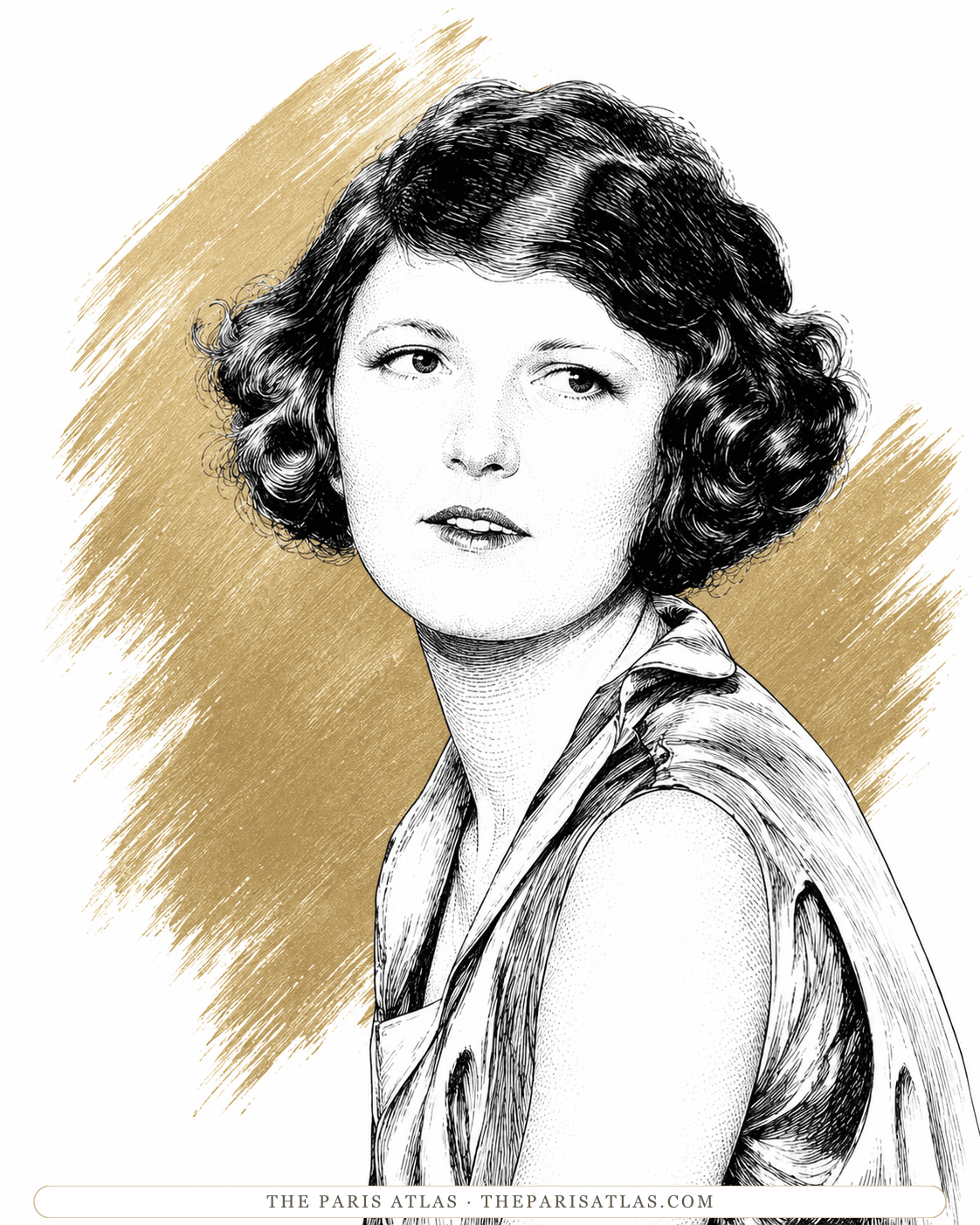
Child of · 1921
Scottie Fitzgerald was the only child of Zelda Fitzgerald, born in St. Paul on 26 October 1921.
One. Frances Scott Fitzgerald, known all her life as Scottie, was born in St. Paul, Minnesota, on 26 October 1921 and died in Montgomery, Alabama, on 18 June 1986. She became a journalist and a Democratic party organiser, and she is the reason her father's manuscripts survive as a public archive.
She said a version of it. F. Scott Fitzgerald wrote down what his wife said as she came round from the anaesthetic after Scottie's birth in 1921, which included the words "I hope it's beautiful and a fool—a beautiful little fool". Four years later he reworked the line into dialogue for Daisy Buchanan in The Great Gatsby. The novel's wording is not identical to what Zelda Fitzgerald said, though the two are often quoted as if they were.
At three documented addresses. From late April 1925 the family lived at 14 rue de Tilsitt near the Arc de Triomphe. From April to August 1928 they were at 58 rue de Vaugirard, opposite the Luxembourg Gardens. From October 1929 they were at 10 rue Pergolèse in the sixteenth arrondissement. In 1930 and 1931, while her mother was in a Swiss clinic, Scottie stayed on in Paris with a governess and attended the Cours Dieterlin.
As a small child, yes, but she made no claims about it. Her own account was that she had been much too young to do more than curtsey to Hemingway, Thomas Wolfe and Gertrude Stein. Hemingway for his part claimed that her English nanny had taught her to speak with a Cockney accent.
In 1950 she donated her father's papers to Princeton University Library. The gift included the autograph manuscript of The Great Gatsby, the manuscripts of This Side of Paradise, The Beautiful and Damned, Tender Is the Night and The Last Tycoon, his correspondence with Ernest Hemingway, H. L. Mencken and Maxwell Perkins, and the family scrapbooks. It is the collection on which Fitzgerald scholarship still rests.
It is the Fitzgerald family plot, but they did not go there first. When F. Scott Fitzgerald died in 1940 the Catholic Church refused him burial at St. Mary's in Rockville, Maryland, so he was buried in the town's other cemetery, and Zelda Fitzgerald was buried above his grave in 1948. In 1975 Scottie obtained the Archbishop of Washington's permission and had them both reinterred in the family plot at St. Mary's on 7 November.
The last line of The Great Gatsby: "So we beat on, boats against the current, borne back ceaselessly into the past." It was carved for the 1975 reinterment that Scottie Fitzgerald arranged.
Of cancer, at her home in Montgomery, Alabama, on 18 June 1986, aged 64. She had told her children shortly before that she wished she had stopped smoking years earlier. She is buried beside her parents in the Fitzgerald plot at St. Mary's in Rockville, Maryland.
Child of · 1921
Frances Scott “Scottie” Fitzgerald was born in St. Paul on 26 October 1921, the only child of F. Scott and Zelda Fitzgerald.
Child of · 1921
Scottie Fitzgerald was the only child of Zelda Fitzgerald, born in St. Paul on 26 October 1921.
The sources below include biographies, scholarly essays, interviews, and primary materials that informed this page. They reflect both the historical record and ongoing critical conversations about Scottie Fitzgerald and their work.


Matthew Bruccoli's account of the Paris and Riviera years, used for the addresses, the toy soldiers and the household.
Jeffrey Meyers on the France years, the nanny Lillian Maddock and the pictures her parents bought.
Her own introduction to The Romantic Egoists, the source for her recollection of curtseying to Hemingway, Wolfe and Stein.

Archival evidence used to document the historical record connected to Scottie Fitzgerald.
Princeton's finding aid, whose provenance note records her 1950 gift and lists what it contained.
Account of the burial refusal of 1940 and the reinterment of 7 November 1975, including the epitaph.
State archive account of the Highland Hospital fire of 10 March 1948 in which Zelda Fitzgerald died.
Web source consulted for documented facts and historical context presented on the Scottie Fitzgerald page.
Web source consulted for documented facts and historical context presented on the Scottie Fitzgerald page.
Web source consulted for documented facts and historical context presented on the Scottie Fitzgerald page.
Web source consulted for documented facts and historical context presented on the Scottie Fitzgerald page.
Web source consulted for documented facts and historical context presented on the Scottie Fitzgerald page.
Web source consulted for documented facts and historical context presented on the Scottie Fitzgerald page.
Web source consulted for documented facts and historical context presented on the Scottie Fitzgerald page.
Web source consulted for documented facts and historical context presented on the Scottie Fitzgerald page.
Web source consulted for documented facts and historical context presented on the Scottie Fitzgerald page.
Web source consulted for documented facts and historical context presented on the Scottie Fitzgerald page.
Web source consulted for documented facts and historical context presented on the Scottie Fitzgerald page.
Web source consulted for documented facts and historical context presented on the Scottie Fitzgerald page.
Web source consulted for documented facts and historical context presented on the Scottie Fitzgerald page.
Web source consulted for documented facts and historical context presented on the Scottie Fitzgerald page.
Web source consulted for documented facts and historical context presented on the Scottie Fitzgerald page.
These references anchor the page in the documented record and in the scholarly conversations around Scottie Fitzgerald. Every claim on this page traces back to one or more of the works listed here.
 Explore more resources