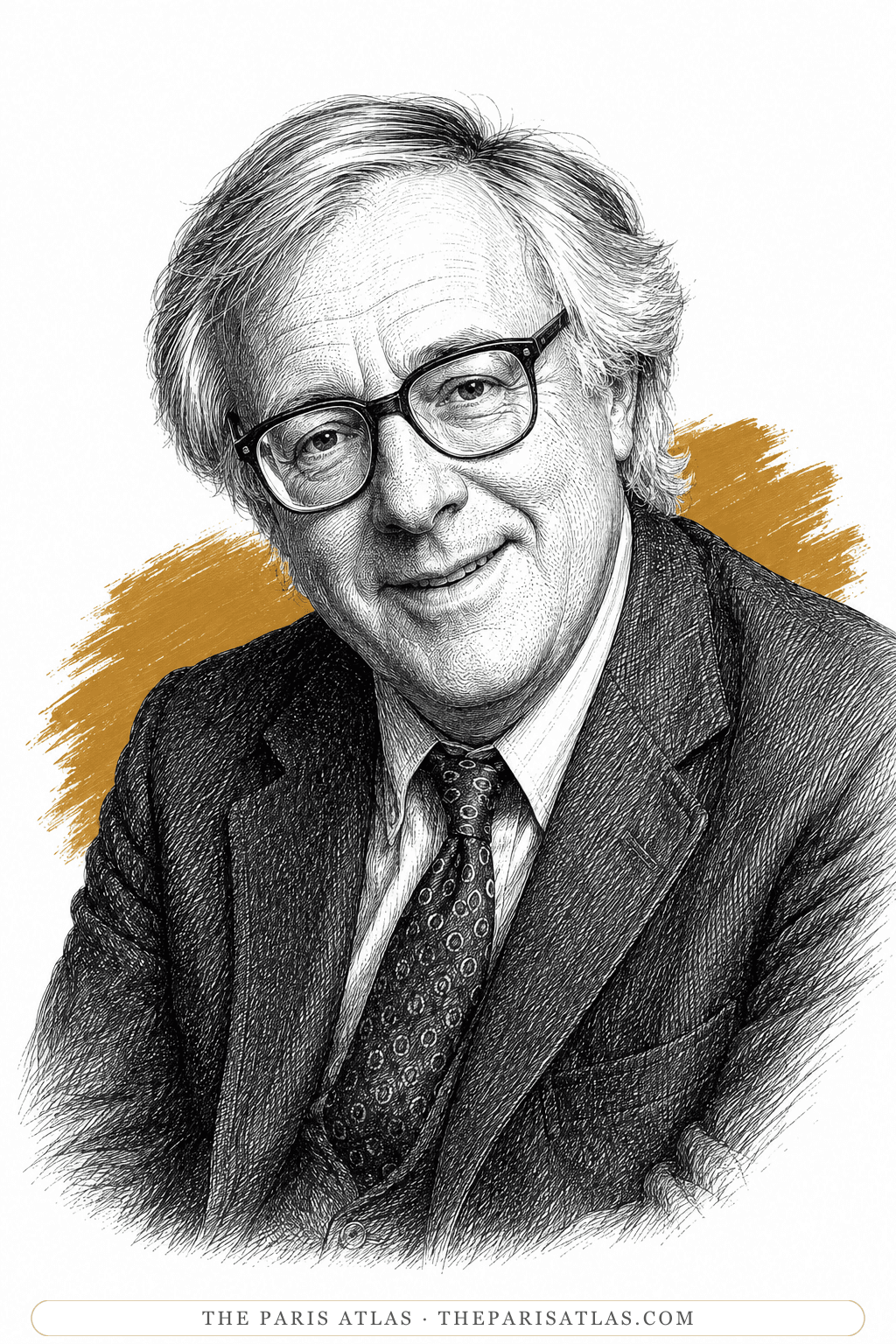
The Fog Horn
First published in 1951 as "The Beast from 20,000 Fathoms". A lighthouse's fog horn calls up a sea monster.
The Golden Apples of the Sun
Ray Bradbury
by Ray Bradbury
Ray Bradbury's 1953 collection of twenty-two stories, including "A Sound of Thunder", the time-travel hunt that ends with a crushed butterfly.
The Golden Apples of the Sun is Ray Bradbury's third book of short stories, published by Doubleday in Garden City, New York, in 1953, with drawings by Joe Mugnaini.[1] Its twenty-two stories include "A Sound of Thunder", in which a hunter travels back to the age of dinosaurs and steps on a butterfly.[2][3] The book also holds "The Fog Horn", the story behind the film The Beast from 20,000 Fathoms, and "The Pedestrian", about a man stopped and questioned for walking at night.[4][5] The title comes from the last line of W. B. Yeats's poem "The Song of Wandering Aengus".[6]
The book opens with three lines from W. B. Yeats: "And pluck till time and times are done / The silver apples of the moon, / The golden apples of the sun."[5] They are the closing lines of "The Song of Wandering Aengus", from Yeats's 1899 collection The Wind Among the Reeds.[6]
The twenty-two stories are not linked, and they move freely between kinds of story. "The Fog Horn" is set in a lighthouse. "The Pedestrian" follows a man who loves to walk the silent streets at night. "The Big Black and White Game" is about a baseball game watched by a crowd of families.[2][5][7]
The story most readers come for is "A Sound of Thunder", thirteenth in the book. In the year 2055 a company called Time Safari, Inc. takes rich hunters back millions of years to shoot dinosaurs.[2][3]
A hunter named Eckels pays ten thousand dollars to shoot a Tyrannosaurus. The guide, Travis, explains the rules. Hunters stay on a metal path that floats six inches above the ground, and they shoot only animals that were about to die anyway.[3]
Before they leave, Eckels mentions the presidential election held the day before. Keith has beaten Deutscher, a candidate who, the man at the desk says, would have brought the worst kind of dictatorship.[3]
In "A Sound of Thunder", the time machine takes Eckels, Travis, Travis's assistant Lesperance and two other hunters, Billings and Kramer, back sixty million years. Lesperance has already marked with red paint a Tyrannosaurus that was about to die anyway under a falling tree.[3]
When the dinosaur appears, Eckels panics. He stumbles back to the time machine while the others shoot. Travis is furious to find that Eckels has left the path, and makes him go back to dig the bullets out of the dead animal.[3]
On the way home, Travis tells Eckels he might kill him yet. They arrive back in 2055, and at first the office looks the same.[3]
The sign on the wall now reads in strange spelling, starting "TYME SEFARI INC.". Eckels scrapes the mud from his boots and finds a butterfly crushed in it.
He asks who won the election. The man at the desk laughs and says Deutscher, of course. Eckels drops to his knees and begs for a way to undo it. Travis raises his rifle, and the story ends with a sound of thunder.
"A Sound of Thunder" first appeared in Collier's magazine on 28 June 1952, a year before the book. Much of the story is a lecture.
Travis, the safari guide, explains why hunters must never step off the path. Kill one mouse, he says, and you kill all the mice that would have come from it. Then the foxes that needed those mice starve, and so on up the chain. In the end a caveman goes hungry, and a whole future people is never born.
Step on a mouse and you crush the Pyramids.
When they return to 2055, small things have changed. The air smells slightly wrong, and the sign on the office wall is spelled differently. The result of the election is different too.
A crushed butterfly is the story's best-known image. The science writer Faye Flam, writing in The Philadelphia Inquirer after Ray Bradbury's death in 2012, described his picture of reality as a fabric so delicate that one crushed insect could change an election.
People often link the story to the phrase "the butterfly effect". The physicist Paul Halpern told Faye Flam that the phrase actually comes from the meteorologist Edward Lorenz. In the 1960s Edward Lorenz suggested that a butterfly's wings on one side of the world could lead to a storm on the other.
Paul Halpern used the story in a class on the nature of time at the University of the Sciences. He said its interest was the idea that a tiny change in the past could have enormous effects later.
"The Fog Horn" opens the book. The story first ran in The Saturday Evening Post on 23 June 1951 as "The Beast from 20,000 Fathoms". The 1953 film of that name was loosely based on it.
"The Pedestrian" is the second story. The story first appeared in The Reporter on 7 August 1951. Leonard Mead loves to walk the silent streets at night. One night he is caught in a bright light, ordered to speak up and questioned about his business.
In 2006 the story was reprinted in Match to Flame, a book edited by Donn Albright that gathers the stories leading up to Fahrenheit 451.
The American first edition has twenty-two stories, in an order that runs from "The Fog Horn" to "The Golden Apples of the Sun". The British edition from Rupert Hart-Davis, also 1953, left out two of them: "The Big Black and White Game" and "The Great Fire".
In 1959 Doubleday combined the book with A Medicine for Melancholy in one volume, Twice Twenty-Two. Later American paperbacks mixed these stories with others, such as "R Is for Rocket" and "The Rocket Man".
Harper Perennial's 2005 paperback is called A Sound of Thunder and Other Stories. The paperback has most of this book, but not "The Pedestrian", "Invisible Boy" or "Hail and Farewell", and it adds stories such as "The Rocket Man" and "The Long Rain".
In 1956 the Paris publisher Denoël brought out the collection as Les Pommes d'or du soleil, translated by Richard Negrou. The book was number 14 in Denoël's science-fiction series, Présence du futur, which had begun in 1954 with The Martian Chronicles.
Gallimard in Paris reissued it in 2011 in its Folio science-fiction series. Philippe Gindre revised Richard Negrou's translation and completed it.
The silver apples of the moon, The golden apples of the sun.
Step on a mouse and you crush the Pyramids.
TIME SAFARI, INC. SAFARIS TO ANY YEAR IN THE PAST. YOU NAME THE ANIMAL. WE TAKE YOU THERE. YOU SHOOT IT.
Embedded in the mud, glistening green and gold and black, was a butterfly, very beautiful and very dead.
The time-travel story about the crushed butterfly first appeared in book form here. Reading it among Ray Bradbury's other stories of 1953 shows how wide his range was.
"The Fog Horn" became The Beast from 20,000 Fathoms in 1953, and "A Sound of Thunder" was filmed in 2005.
"The Pedestrian", about a man stopped for walking at night, was later collected with the other stories that led to Fahrenheit 451.
The Encyclopedia of Science Fiction puts Ray Bradbury's strongest work between 1946 and 1955, and this book falls right in the middle.
The hunter in "A Sound of Thunder" who pays to shoot a Tyrannosaurus.
The safari guide in "A Sound of Thunder", who warns the hunters never to leave the path.
The man in "The Pedestrian" who likes to walk the silent streets at night.
Travis's assistant, who marks the animals that are safe to shoot.
First published in 1951 as "The Beast from 20,000 Fathoms". A lighthouse's fog horn calls up a sea monster.
A man who walks at night is stopped and questioned. Reprinted in 2006 among the stories that led to Fahrenheit 451.
Ray Bradbury's 1945 story for The American Mercury, reprinted in The Best American Short Stories of 1946.
First published in Collier's in 1952. A time-travelling hunter steps off the path and changes the future.
The title story and the last in the book.
1945
"The Big Black and White Game" appears in The American Mercury, and is later reprinted in The Best American Short Stories of 1946.
1951
"The Fog Horn" appears in The Saturday Evening Post on 23 June as "The Beast from 20,000 Fathoms".
1951
"The Pedestrian" appears in The Reporter on 7 August.
1952
"A Sound of Thunder" appears in Collier's on 28 June.
1953
Doubleday publishes The Golden Apples of the Sun, twenty-two stories with drawings by Joe Mugnaini. Hart-Davis publishes a shorter British edition in London.
1953
The film The Beast from 20,000 Fathoms, developed from "The Fog Horn", is released.
1956
Denoël publishes Les Pommes d'or du soleil in Paris, translated by Richard Negrou, as number 14 of Présence du futur.
1959
Doubleday combines the book with A Medicine for Melancholy as Twice Twenty-Two.
2005
Harper Perennial publishes A Sound of Thunder and Other Stories, and a film of "A Sound of Thunder" is released.


The Illustrated Man
Ray Bradbury
Ray Bradbury's previous collection, from 1951. Its stories "The Rocket Man" and "The Long Rain" now share a paperback with "A Sound of Thunder".
Read our takeThe Martian Chronicles
Ray Bradbury
Ray Bradbury's linked Mars stories of 1950, from the same years as these.
Read our take
"The Pedestrian" was later collected among the stories that led to Ray Bradbury's novel about a fireman who burns books.
Read our takeSomething Wicked This Way Comes
Ray Bradbury
Ray Bradbury's 1962 novel takes the small-town horror of some of these stories to full length.
Read our takeThe story was first collected in The Golden Apples of the Sun, published by Doubleday in 1953, where it is the thirteenth story. Many recent paperbacks print it in A Sound of Thunder and Other Stories.
In 2055 a company sells hunting trips back to the age of dinosaurs. The hunters must stay on a floating path, because the smallest change to the past could change the future. One hunter, Eckels, panics during the hunt.
No, though the two are often linked. The physicist Paul Halpern told The Philadelphia Inquirer in 2012 that the phrase comes from the meteorologist Edward Lorenz, who used a butterfly to explain chaos theory in the 1960s.
From the last line of W. B. Yeats's poem "The Song of Wandering Aengus", published in The Wind Among the Reeds in 1899. Ray Bradbury printed the poem's last three lines at the front of the book.
Twenty-two, including "The Fog Horn", "The Pedestrian", "The Big Black and White Game", "A Sound of Thunder" and the title story. The British edition of 1953 left out two of them.
Yes, released in 2005. The Encyclopedia of Science Fiction calls it a financial flop.
Through its French edition. Denoël in Paris published it in 1956 as Les Pommes d'or du soleil, the fourteenth book in its Présence du futur science-fiction series.
Explore authors with a similar voice, perspective, and influence.
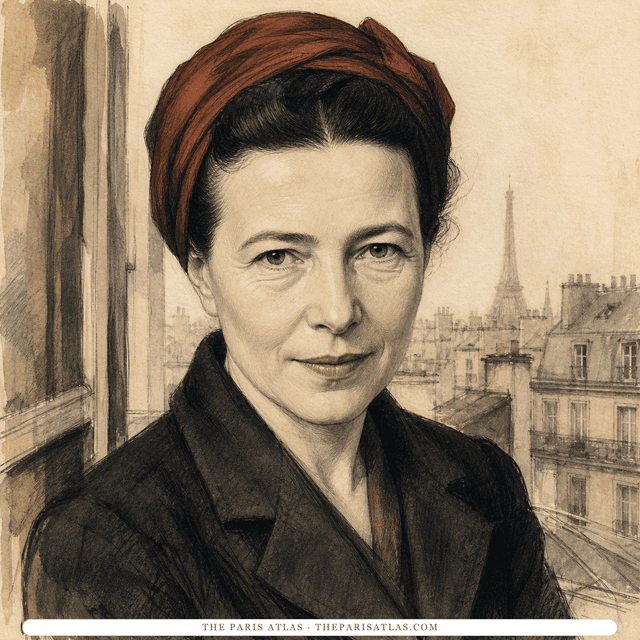
French writer and philosopher whose novels, memoirs, and social analysis examined freedom, gender, responsibility, aging, and the material conditions that shape a life.
View author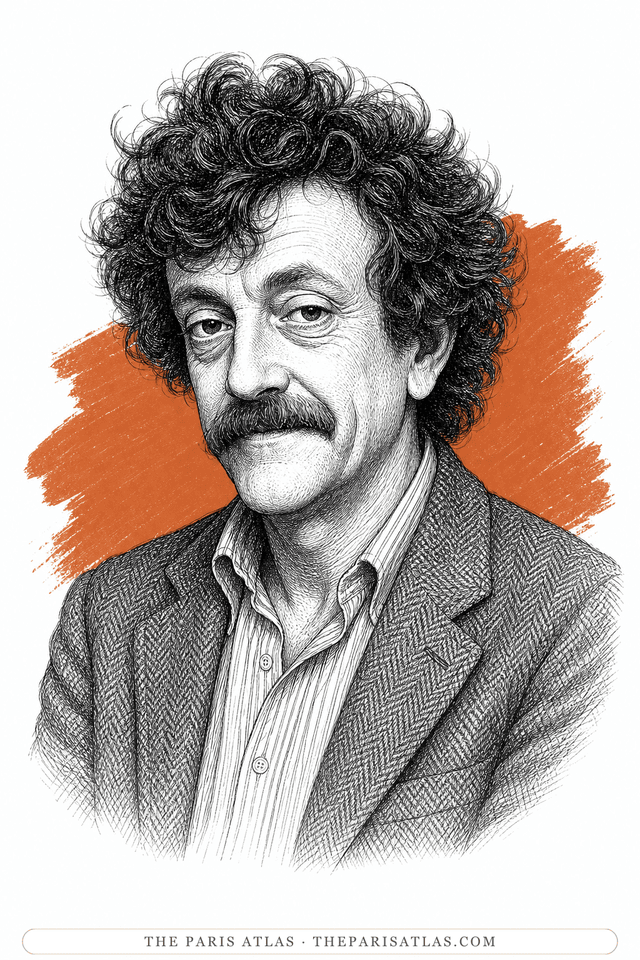
American novelist whose fiction combines satire, science fiction, and the experience of surviving the bombing of Dresden.
View author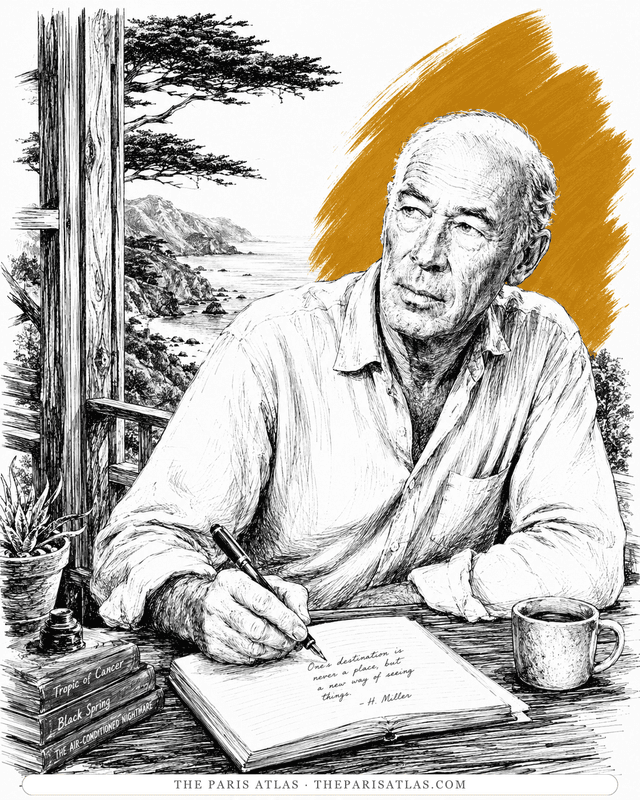
The Brooklyn dropout who arrived in Paris broke at thirty-eight and wrote the exuberant, banned books that ended American censorship.
View authorThe sources below include the primary text, editions, scholarship, archival materials, and other records that informed this page. They document The Golden Apples of the Sun, its publication, and its place in literary history.

First edition: Garden City, Doubleday, 1953, 250 pages, drawings by Joe Mugnaini.

First magazine appearances, the British edition, and the films of "The Fog Horn" and "A Sound of Thunder".
Contents of the 2005 Harper Perennial paperback.
Biography: "The Big Black and White Game" in The American Mercury and The Best American Short Stories of 1946.
Faye Flam on the story and the butterfly effect, with Paul Halpern.
"The Pedestrian" among the stories that led to Fahrenheit 451.
The 2005 film of A Sound of Thunder.
First French edition.
Number 1 of Présence du futur.
Revised French edition.
Open Library edition records, used to confirm that each English-language ISBN listed resolves to this book or its omnibus editions.
The primary text represented by this page, used for descriptions of the work’s contents and for any quoted passages shown here.
The primary text is the baseline reference for every book page. Additional references document publication history, interpretation, and historical context where that evidence is available.
 Explore more resources