
The Veldt
First published in The Saturday Evening Post in 1950 as "The World the Children Made". Two children and a nursery that makes anything real.
The Illustrated Man
Ray Bradbury
by Ray Bradbury
Ray Bradbury's 1951 collection of eighteen stories, told as the moving tattoos on one stranger's body, including "The Veldt" and "The Rocket Man".
The Illustrated Man is a collection of short stories by Ray Bradbury, published by Doubleday in Garden City, New York, in 1951.[1] A frame story ties the eighteen tales together. On a walking tour of Wisconsin, the narrator meets a man covered in tattoos, and at night the pictures move and act out stories about the future.[2] The collection includes "The Veldt", about two children and a nursery that can make anything they imagine real, and "The Rocket Man", which later inspired Elton John's song.[3][4]
The book opens with a prologue called "The Illustrated Man". The narrator is on a walking tour of Wisconsin when he meets a stranger covered in tattoos.[2][5]
At night, as the narrator lies awake beside him, the tattoos start to move. Each one plays out a story, and each story becomes one chapter of the book.[2][6] Kirkus Reviews noted one more detail: a bare patch of skin, where the viewer can see their own future.[7]
The stories go in many directions. Several are about rockets and space. A husband cannot stop leaving his family for the stars in "The Rocket Man", and in "Kaleidoscope" astronauts drift apart in space after their ship explodes.[2]
Others stay on Earth and are about machines. In "The Veldt" a family buys a Happylife Home that does everything for them, and in "Marionettes, Inc." a man buys a robot copy of himself so he can take a holiday.[2]
A few are about people at their worst. In "The Other Foot", Black settlers on Mars wait for the first white man to arrive, and in "The Exiles" book-burners go after the ghosts of dead writers.[2] Kirkus Reviews summed up the range as religion, race, the atom bomb, rockets, literature, robots and children.[7]
In "The Veldt", George Hadley finds an old wallet of his in the nursery, chewed and bloodstained, and hears screams and roaring from the room. He decides to switch off the whole house and move the family to Iowa. The children, Wendy and Peter, beg for one more minute in the nursery.[3]
In "Kaleidoscope", an explosion throws a rocket crew into space, each man drifting alone. One of them, Hollis, falls toward Earth and burns up in the atmosphere. A boy in Illinois sees him and makes a wish on a falling star.[2]
In "The Long Rain", a crew stranded on Venus walk through rain that never stops, looking for a sun dome where they can get dry. Only one man reaches safety. In "The Highway", a farmer named Hernando watches cars flee an atomic war and wonders what the world they speak of means.[2]
In "The Other Foot", Hattie Johnson and the Black colony on Mars prepare to meet the first white man to arrive. He brings the news that Earth has been destroyed, and with it racism, and the colony has the chance of a new start.[2]
At the end of "The Veldt", the children lock their parents in the nursery with the lions. When David McClean arrives, he finds only Wendy and Peter, watching the lions eat something in the distance.
In "The Last Night of the World", everyone shares the same dream the night before the end of the world, and they meet their last hours calmly.
At the end of the frame story, the narrator sees a clear picture on the man's skin of the Illustrated Man waking up and strangling him. He runs off to the next town before the picture can come true.
The first story in the book is the best known. "The Veldt" first appeared in The Saturday Evening Post on 23 September 1950, under the title "The World the Children Made".
George and Lydia Hadley live in a fully automatic Happylife Home. The house dresses them, feeds them and rocks them to sleep. Its nursery can show any scene the children think of, with sound and smell. The children, Wendy and Peter, have stopped asking for Oz or Wonderland. Now the nursery is always an African plain, with lions feeding in the distance.
Lydia Hadley asks her husband to switch the house off for a while, so they can do things for themselves again. A psychologist friend, David McClean, tells George Hadley that the scene on the nursery walls shows how much the children resent their parents.
The official Ray Bradbury website describes the story in modern terms, as children who learn to control their virtual-reality nursery. A Soviet film, Vel'd, was made from it in 1987.
"The Rocket Man" is about a father who flies rockets for a living. He comes home for three days at a time, and each time he is already longing to go back into space.
The lyricist Bernie Taupin said he was taken with the way the story treats an astronaut's work as an everyday job. He took the idea and wrote the lyrics for "Rocket Man", and Elton John set them to music.
The frame story is short, but it gives the book its title and its ending. The stories run through a single night, while the narrator watches the tattoos move in the moonlight.
Ray Bradbury used the same figure again eleven years later. Mr. Dark, the tattooed owner of the carnival in Something Wicked This Way Comes, is another illustrated man.
Doubleday's first edition of 1951 has 251 pages. The British edition from Rupert Hart-Davis, published in London in 1952, is a revised version with fewer stories.
Kirkus Reviews singled out "The Veldt", "The Man", "The Fire Balloons" and "The Last Night of the World". The reviewer called it a book that was not limited by its special field.
Jack Smight filmed three of the stories as The Illustrated Man, released in 1969.
In 1954 the Paris publisher Denoël issued the collection as L'Homme illustré, translated by Constantin Andronikof. The book was number 3 in Denoël's new science-fiction series, Présence du futur, which had opened with The Martian Chronicles.
Gallimard in Paris reissued the translation in 2005 in its Folio science-fiction series, revised by Brigitte Mariot.
The pictures were moving, each in its turn, each for a brief minute or two. There in the moonlight, with the tiny tinkling thoughts and the distant sea voices, it seemed, each little drama was enacted.
I only know that I lay fascinated and did not move while the stars wheeled in the sky.
Happylife Home which had cost them thirty thousand dollars installed, this house which clothed and fed and rocked them to sleep and played and sang and was good to them.
The story of the nursery that makes children's thoughts real is the first in the book. Written in 1950, it describes something close to virtual reality.
The stories are short and stand alone, so they can be read in any order. The frame story about the tattooed man gives them a reason to sit together.
Bernie Taupin said the story of an astronaut father gave him the idea for the song Elton John made famous.
The Encyclopedia of Science Fiction calls the years around 1946 to 1955 Ray Bradbury's best, and The Illustrated Man comes from the middle of them.
A stranger covered in tattoos that move at night and act out stories about the future.
A man on a walking tour of Wisconsin who spends one night watching the tattoos.
The father in "The Veldt", who decides to switch the house off.
The children in "The Veldt", named after characters in Peter Pan.
The mother in "The Veldt", who wants to live without the machines for a while.
A psychologist and friend of the Hadleys in "The Veldt".
An astronaut in "Kaleidoscope" who looks back on his life as he falls toward Earth.
A settler on Mars in "The Other Foot".
First published in The Saturday Evening Post in 1950 as "The World the Children Made". Two children and a nursery that makes anything real.
A rocket crew drifts apart in space after an explosion.
Black settlers on Mars wait for the first white man to arrive.
A farmer watches cars flee an atomic war along the road past his field.
An astronaut father cannot stay home. The story inspired Bernie Taupin and Elton John's "Rocket Man".
Missionaries arrive on another world and find a place with no sin.
Everyone shares the same dream the night before the world ends, and meets the end calmly.
The ghosts of dead writers are hunted by book-burners.
Men stranded on Venus walk through endless rain looking for shelter.
A man buys a robot copy of himself so he can get away.
Only the children can see the invaders, who turn them against their parents.
1950
"The Veldt" appears in The Saturday Evening Post on 23 September as "The World the Children Made".
1951
Doubleday publishes The Illustrated Man in Garden City, New York, 251 pages.
1952
Rupert Hart-Davis publishes a British edition in London with a different selection of stories.
1954
Denoël publishes L'Homme illustré in Paris, translated by Constantin Andronikof, as number 3 of Présence du futur.
1969
Jack Smight's film The Illustrated Man, made from three of the stories, is released.
1987
A Soviet film of "The Veldt", Vel'd, is made.
2005
Gallimard reissues the French translation in Paris, revised by Brigitte Mariot, in Folio science-fiction.


The Martian Chronicles
Ray Bradbury
Ray Bradbury's book of Mars stories from a year earlier. "The Other Foot" and "The Fire Balloons" belong to the same Mars.
Read our takeThe Golden Apples of the Sun
Ray Bradbury
Ray Bradbury's next collection, from 1953, includes "A Sound of Thunder" and "The Fog Horn".
Read our takeSomething Wicked This Way Comes
Ray Bradbury
The tattooed man comes back as Mr. Dark, owner of the evil carnival in Ray Bradbury's 1962 novel.
Read our take
"The Exiles" has book-burners in it two years before Ray Bradbury's novel about a fireman who burns books.
Read our takeThe book is a collection of eighteen short stories by Ray Bradbury. They are framed as the tattoos of a stranger the narrator meets in Wisconsin. At night the tattoos move, and each one plays out a story, mostly about the future.
The Illustrated Man, where it is the first story. "The Veldt" first appeared in The Saturday Evening Post in 1950 under the title "The World the Children Made".
A family lives in an automatic house with a nursery that can create any scene the children imagine. The children keep turning it into an African plain full of lions. Their parents begin to worry about what the scene says about them.
Yes. According to the official Ray Bradbury website, the lyricist Bernie Taupin was taken with how the story treats an astronaut's work as an everyday job. He built the lyrics of "Rocket Man" on that idea.
Yes. Jack Smight made a film in 1969 from three of the stories.
Yes. Mr. Dark, the tattooed owner of the carnival in Ray Bradbury's 1962 novel, is taken from the Illustrated Man of this book.
Only through its French edition. Denoël in Paris published it in 1954 as L'Homme illustré, the third book in its Présence du futur science-fiction series.
Explore authors with a similar voice, perspective, and influence.
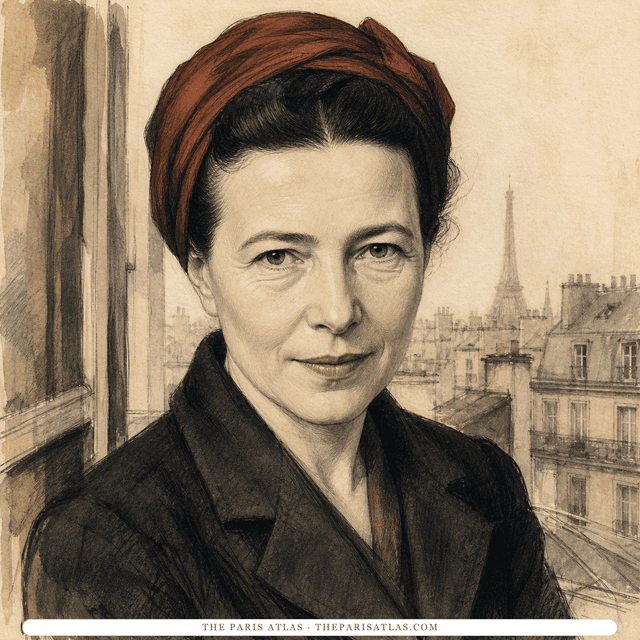
French writer and philosopher whose novels, memoirs, and social analysis examined freedom, gender, responsibility, aging, and the material conditions that shape a life.
View author
American novelist whose fiction combines satire, science fiction, and the experience of surviving the bombing of Dresden.
View author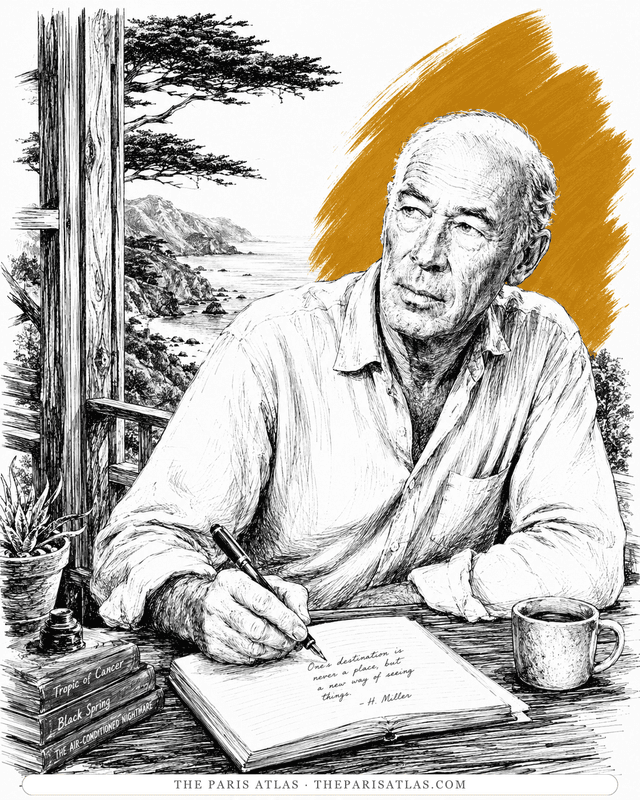
The Brooklyn dropout who arrived in Paris broke at thirty-eight and wrote the exuberant, banned books that ended American censorship.
View authorThe sources below include the primary text, editions, scholarship, archival materials, and other records that informed this page. They document The Illustrated Man, its publication, and its place in literary history.


First edition: Garden City, Doubleday, 1951, 251 pages.

Bernie Taupin and Elton John on "The Rocket Man".
Contents page and full-text search, used to place the prologue quotations.
The official site's description and prologue passage.
Mr. Dark as the Illustrated Man.
First magazine appearance of "The Veldt", the British edition and the films.
The 1969 film.
First French edition.
Number 1 of Présence du futur.
Revised French edition.
Open Library edition records, used to confirm that each English-language ISBN listed resolves to The Illustrated Man.
The primary text represented by this page, used for descriptions of the work’s contents and for any quoted passages shown here.
The primary text is the baseline reference for every book page. Additional references document publication history, interpretation, and historical context where that evidence is available.
 Explore more resources