The Seashell and the Clergyman
by Germaine Dulac
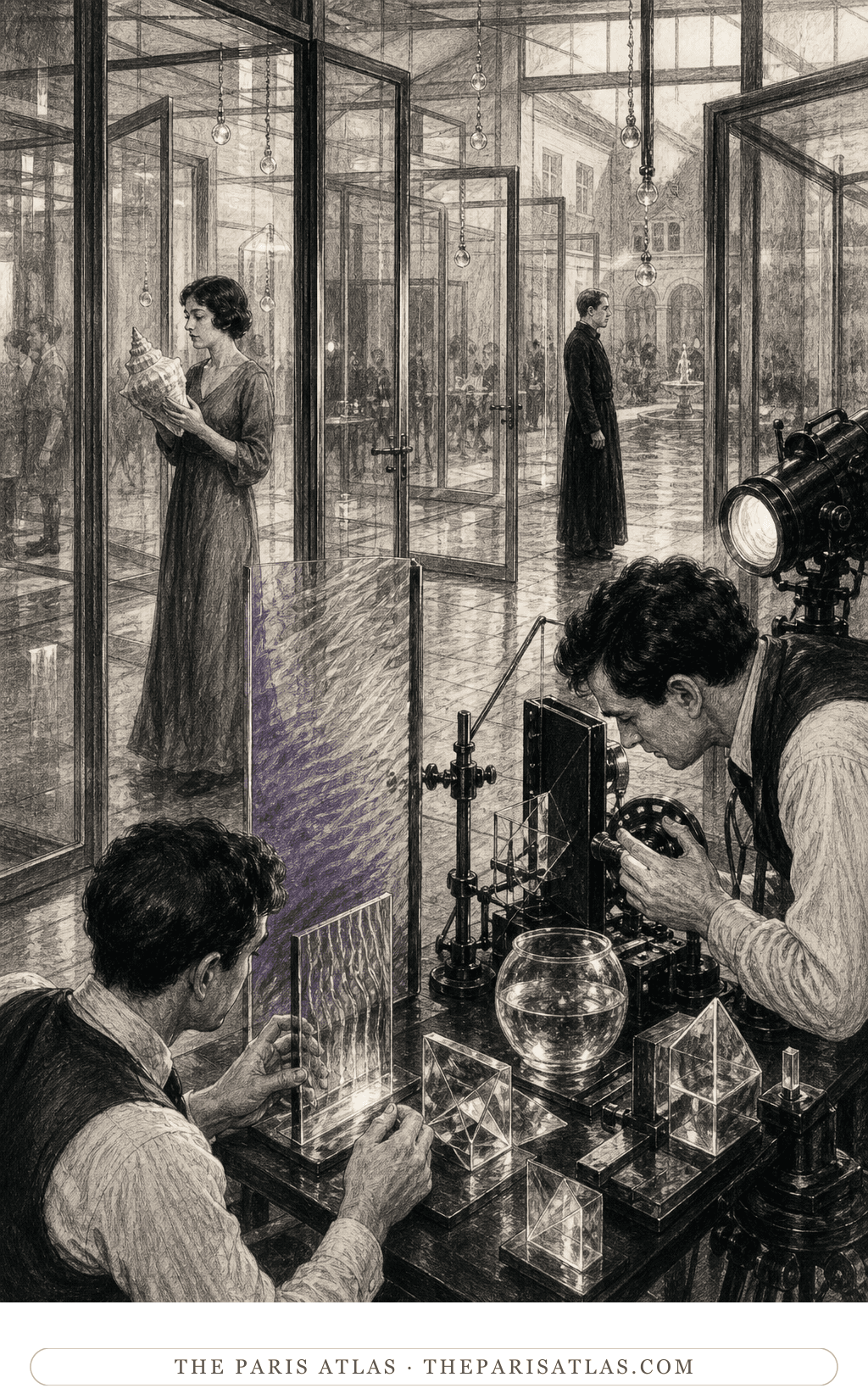
A clergyman crawls through the city of his own repressions — pursuing a white-robed woman, splitting an officer's face open like a shell, watching rooms stretch and multiply — in the film with the best claim to being surrealist cinema's first: Artaud's scenario, Dulac's direction, and a premiere riot a full year before Un Chien Andalou.
- 1928
- Avant-garde film
First through the door, and punished for it
Germaine Dulac had come to cinema from feminist journalism and had already made the movement's great domestic nightmare, The Smiling Madame Beudet (1923). Antonin Artaud, then in his surrealist period, wrote her a scenario designed to bypass story altogether — images obeying dream mechanics, a psychology acted out as objects. Dulac filmed it with every optical resource of the French avant-garde: superimposition, distorting mirrors, slow motion, rooms that breathe.
At the premiere at the Studio des Ursulines in February 1928, the surrealists staged a riot — insults shouted at the screen, mirrors from Breton's circle claiming the film had betrayed Artaud's text (Artaud's own position shifted with the telling). The quarrel guaranteed the film's fame and clouded Dulac's part in it for decades. The British censor's verdict became the film's immortal blurb: so cryptic as to be almost meaningless; if there is a meaning, it is doubtless objectionable.
History has resettled the credit: a year before Buñuel and Dalí picked up the razor, surrealist cinema begins here — directed by the movement's one great woman filmmaker.
Timeline
1927
Germaine Dulac directed the film from a scenario by Antonin Artaud, who had expected to shape it more than he did.
February 1928
Premiered at the Studio des Ursulines in Paris; the screening broke into disturbance, with Artaud's Surrealist circle objecting to Dulac's handling — a full year before Un Chien Andalou.
Frequently asked questions
What is The Seashell and the Clergyman?
A 1928 French film, often called the first Surrealist film — a clergyman pursuing a woman through the landscape of his own repressions. Germaine Dulac directed it from a scenario by Antonin Artaud.
Is it really the first Surrealist film?
It has a strong claim. It premiered in early 1928, a full year before Un Chien Andalou. The title is argued over, but chronologically it comes first.
Who made it?
Germaine Dulac directed; Antonin Artaud wrote the scenario. Artaud expected to control the film more than Dulac allowed, and the two fell out over it.
Why was its premiere a scandal?
The Studio des Ursulines screening erupted in disturbance, with Artaud's Surrealist allies objecting loudly to Dulac's treatment of his scenario.
What happens in it?
A clergyman crawls through a city of his own repressions, pursuing a white-robed woman and splitting an officer's face open like a shell, while rooms stretch and multiply.
How does it compare to Un Chien Andalou?
It predates Buñuel and Dalí's film by a year and shares the dream-logic, but it never became as notorious. Un Chien Andalou is the film history usually remembers as the Surrealist shock.
References
The sources below include collection records, catalogues, scholarly research, and primary materials that informed this page. They document The Seashell and the Clergyman, its making, and its place in cultural history.


1Encyclopaedia Britannica — Germaine Dulac
WebsiteUsed forWeb source consulted for documented facts and historical context presented on the The Seashell and the Clergyman page.
2The Museum of Modern Art — The Seashell and the Clergyman (collection record)
WebsiteUsed forWeb source consulted for documented facts and historical context presented on the The Seashell and the Clergyman page.

310 Great French Avant-Garde Films of the 1920s
PeriodicalBritish Film Institute, 2024Used forContemporary reporting or criticism used to document the historical reception and context of The Seashell and the Clergyman.
410 Great Feminist Films
PeriodicalBritish Film Institute, 2015Used forContemporary reporting or criticism used to document the historical reception and context of The Seashell and the Clergyman.
These references provide the documented foundation for this work's history and interpretation. Claim-level citations remain attached to the specific claims they support.
 Explore more resources