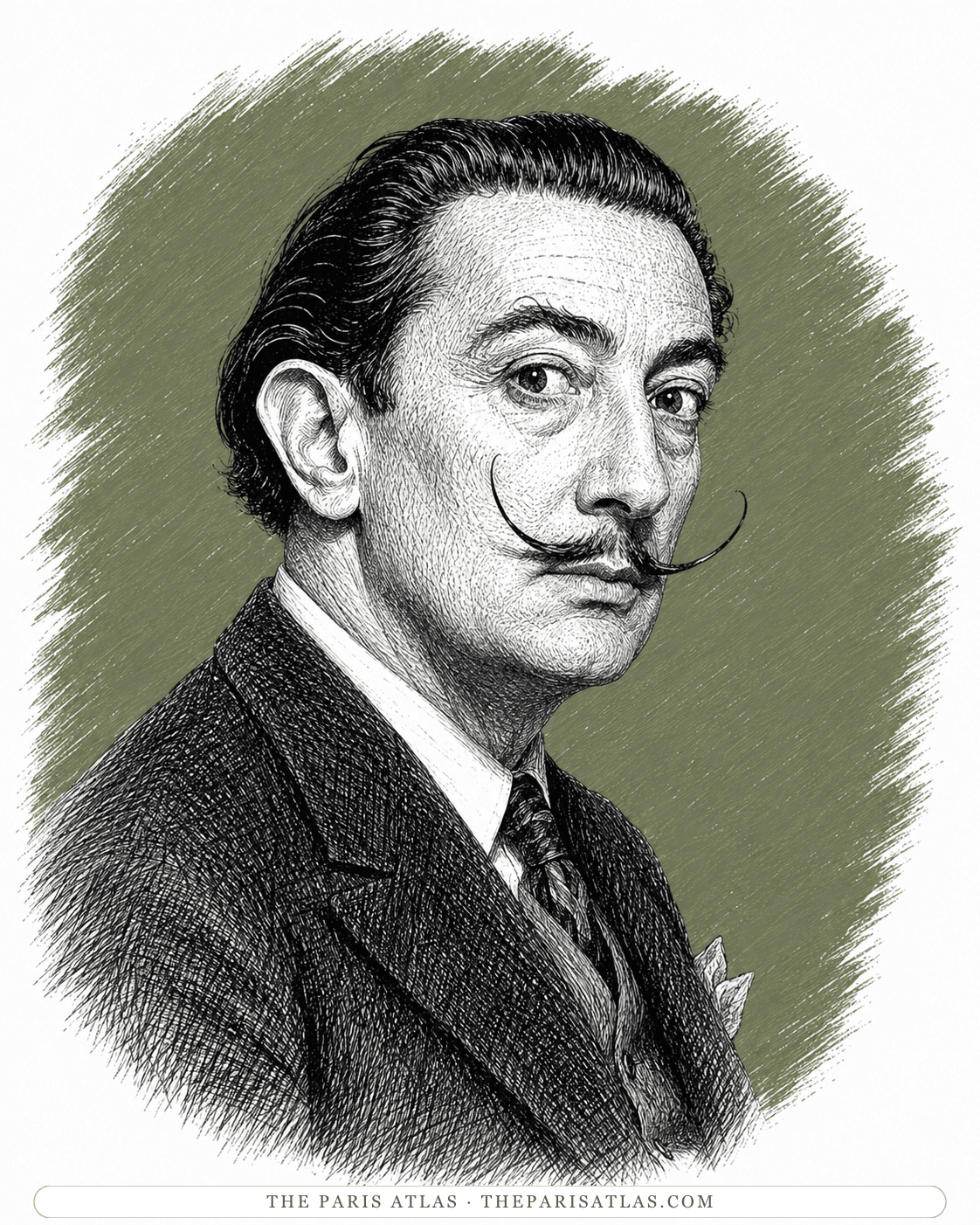
Salvador Dalí
Dalí's first film with Luis Buñuel was shown to the public here from 6 June 1929. It was around the film's presentation that he met Paul Éluard and Gala, who visited him in Cadaqués that summer and stayed for the rest of his life.
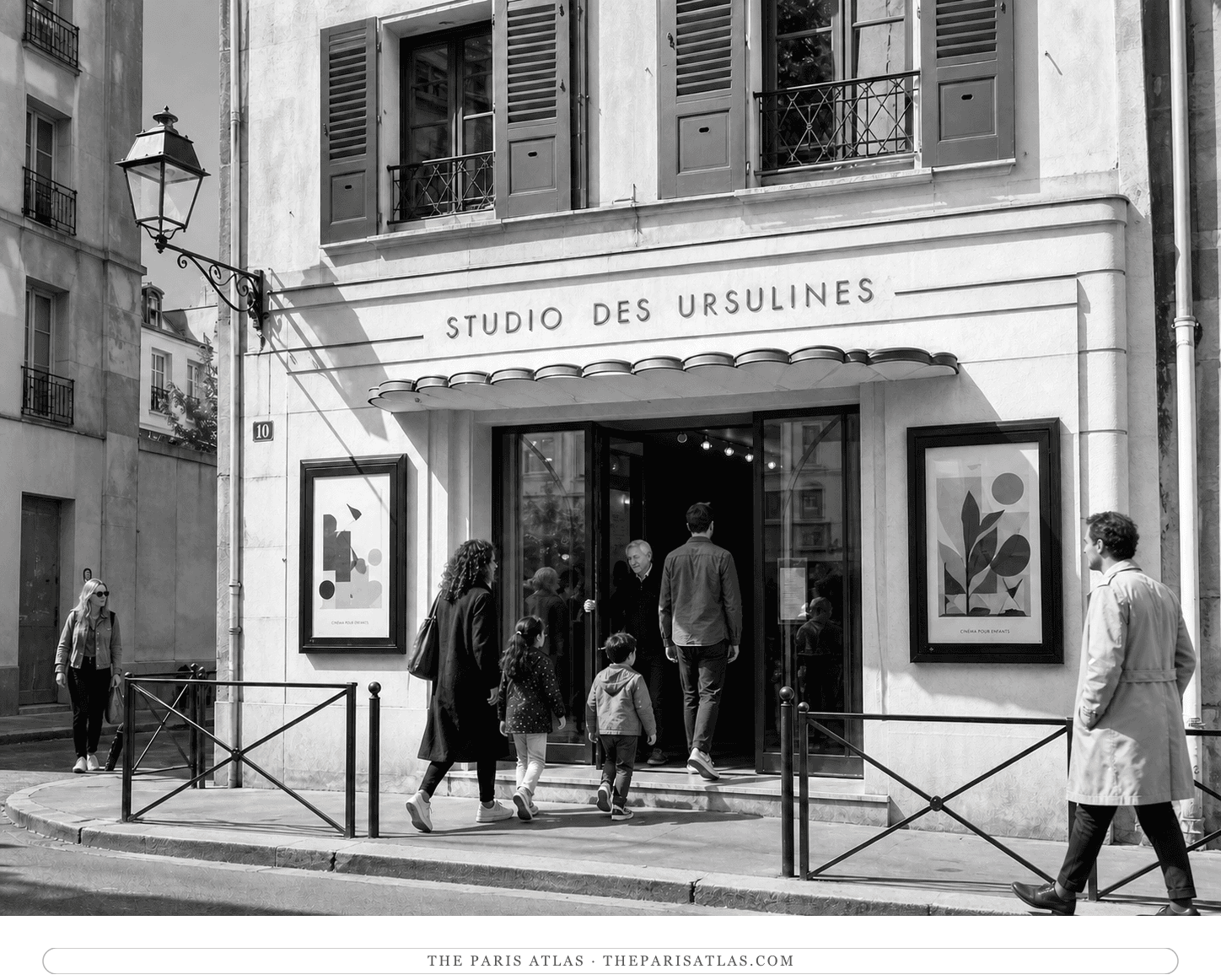
A small cinema in the Latin Quarter, opened in 1926 as one of the first art-house screens in Paris, and the room where Buñuel and Dalí's Un Chien andalou was first shown to the public in June 1929. It is still a working cinema.
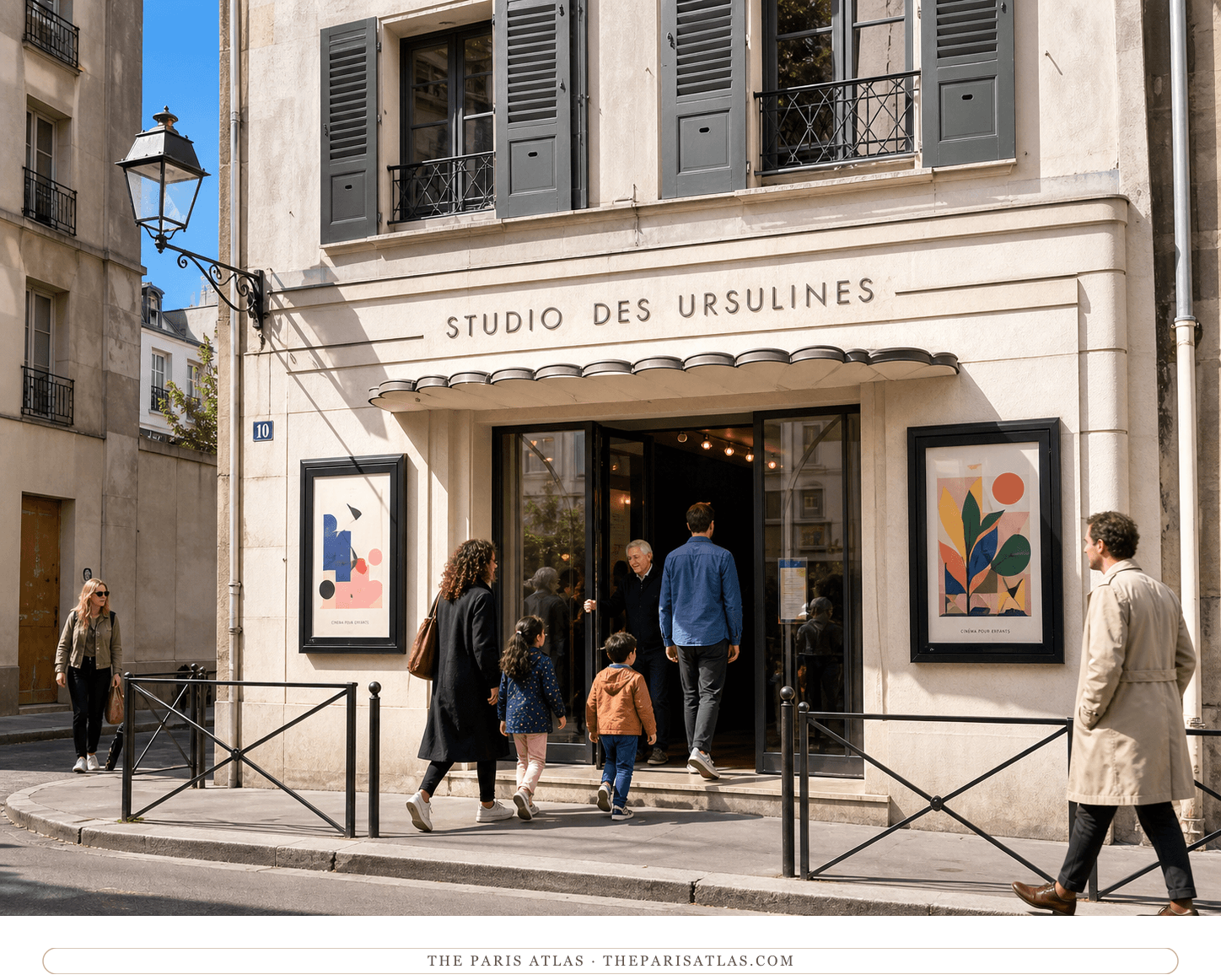
The Studio des Ursulines opened in 1926 on a quiet street behind the Panthéon, and it belongs to a specific moment: the point at which Paris decided that film could be shown the way paintings were shown. It was among the first cinemas in the city built for work that had no commercial distribution — the avant-garde, the foreign, the difficult.[1]
On 6 June 1929 it screened Un Chien andalou, the seventeen-minute film Salvador Dalí had made with Luis Buñuel. It opens with a woman's eye being sliced by a razor, and proceeds by a logic that refuses to resolve — a hand full of ants, a piano loaded with dead donkeys, bodies that move between rooms that do not connect.[2]
The film had been made deliberately to be unreadable. Dalí and Buñuel's stated rule while writing it was that no image be admitted that could be explained, and the point of showing it to this audience was to find out what an audience would do with that.[2]
What they did was make it a success. From 1 October 1929 the film moved to Studio 28 in Montmartre and ran for eight months, with faintings in the auditorium and, by the Pompidou's account, between thirty and fifty complaints to the police.[2]
The screening also changed Dalí's life directly. It was around the presentation of Un Chien andalou that he met the poet Paul Éluard and his wife Gala — who visited him in Cadaqués that summer, and stayed for the rest of his life.[3]
The Studio des Ursulines is still running as a cinema, which makes it a rare thing on a Surrealist map of Paris: not a plaque or a converted building, but the same kind of room doing the same job.[1]
The Studio des Ursulines opens as one of Paris's first art-house cinemas.
Un Chien andalou is first shown to the public here.
Dalí meets Paul Éluard and Gala around the film's presentation.
The film transfers to Studio 28 in Montmartre for an eight-month run.
At the Studio des Ursulines, 10 rue des Ursulines in the 5th arrondissement, from 6 June 1929. It transferred to Studio 28 in Montmartre on 1 October 1929 and ran there for eight months.
A small cinema in the Latin Quarter, opened in 1926 as one of the first art-house screens in Paris — built for films that had no commercial distribution. It is still operating today.
Because it was made that way. Dalí and Buñuel wrote it under a stated rule that no image be admitted if it could be explained. The result — the sliced eye, the ants in the palm, the piano loaded with dead donkeys — is not a puzzle with a solution but a sequence built to resist one.
Yes. It is still a working cinema on the same street, which makes it unusual on a Surrealist map of Paris: not a plaque or a converted building, but the same kind of room doing the same job a century later.
Dalí's first film with Luis Buñuel was shown to the public here from 6 June 1929. It was around the film's presentation that he met Paul Éluard and Gala, who visited him in Cadaqués that summer and stayed for the rest of his life.

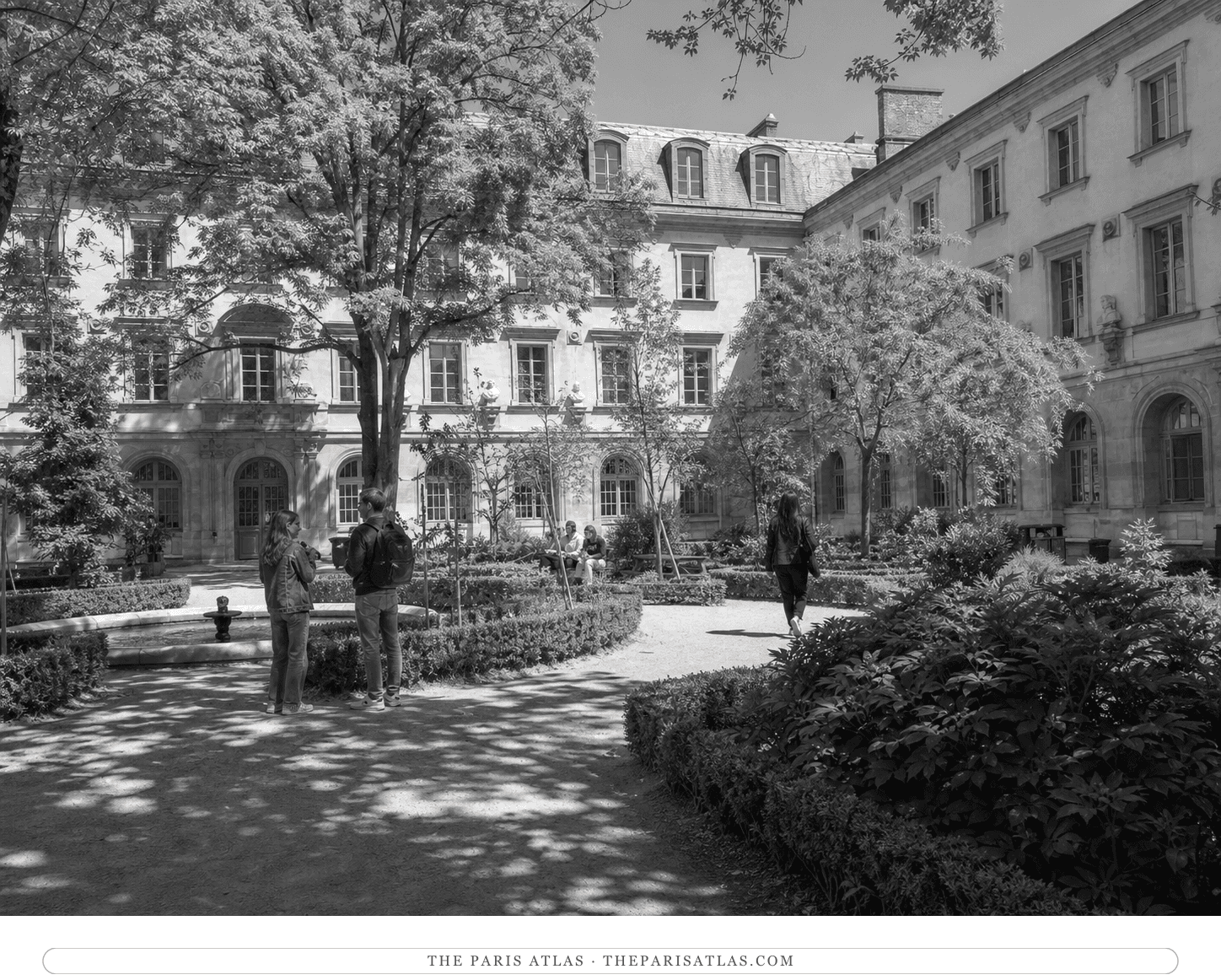
The grande école on the rue d'Ulm, behind the Panthéon — France's most selective humanities institution, and the building where Jean-Paul Sartre studied for the agrégation and Samuel Beckett arrived from Dublin in 1928 as a young English lecturer.
Visit the place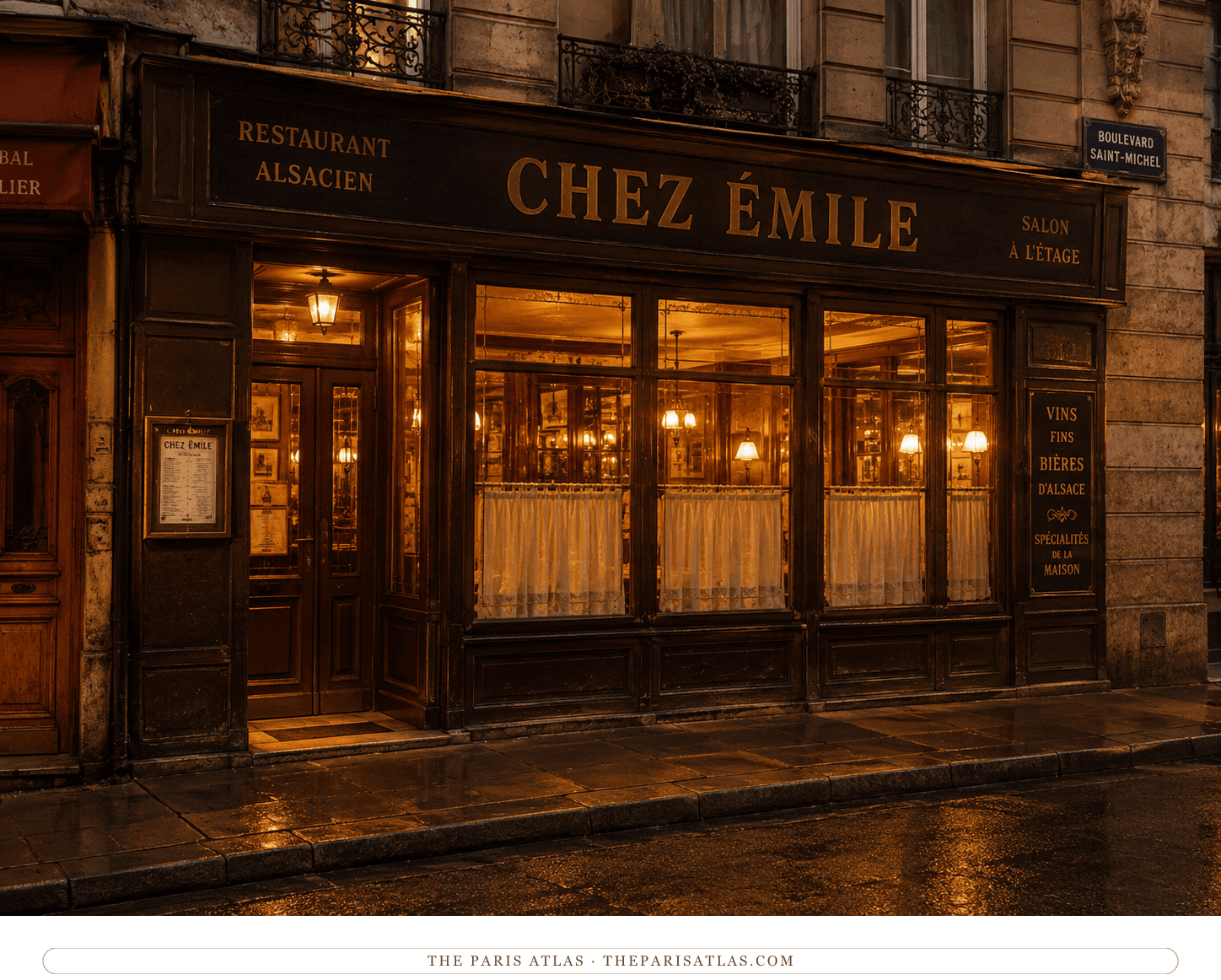
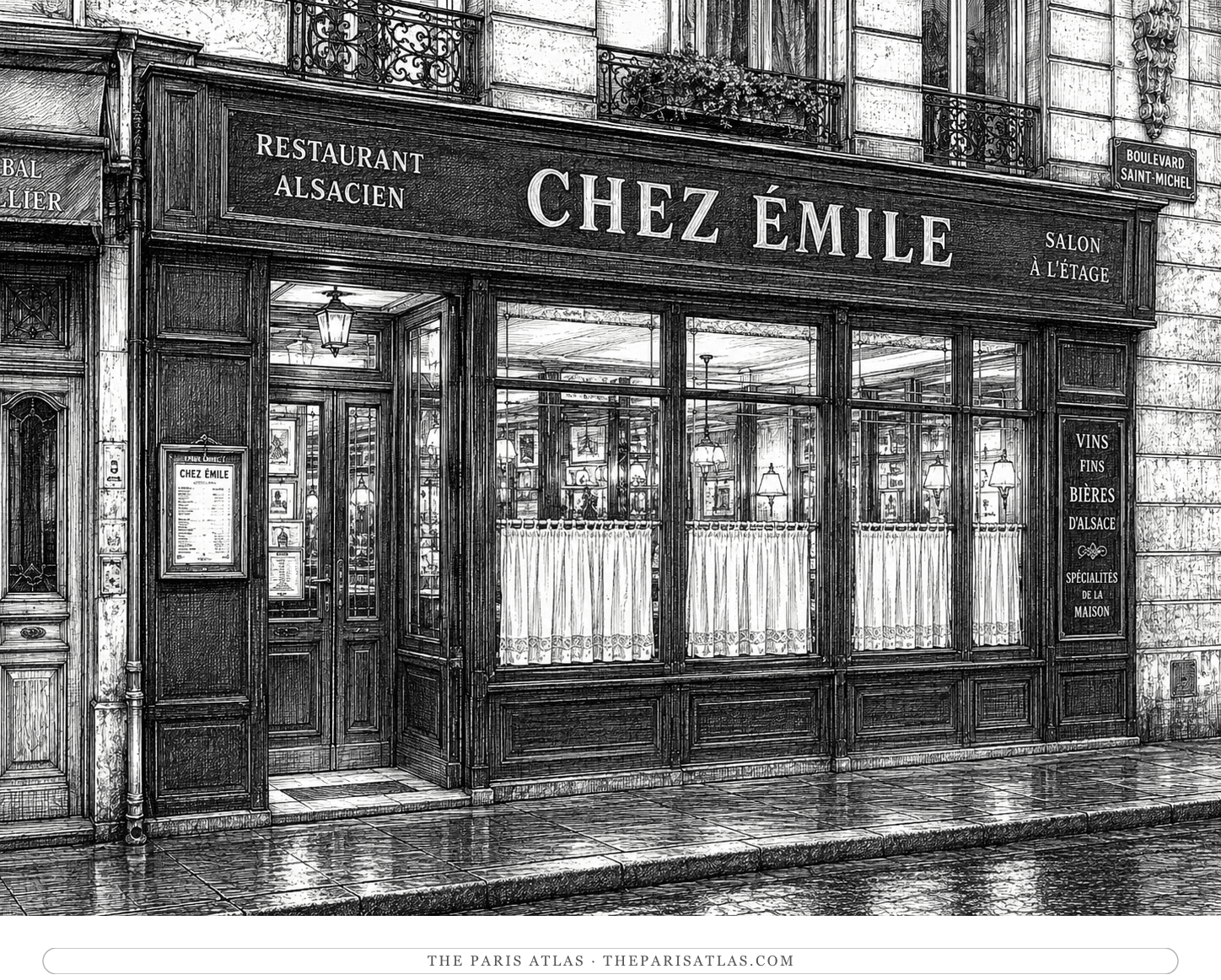
An Alsatian restaurant with an upper room at the quiet end of the Boul' Mich' — where Ford Madox Ford, Ezra Pound, and Sisley Huddleston talked for hours, and only the memoir remembers it.
Visit the place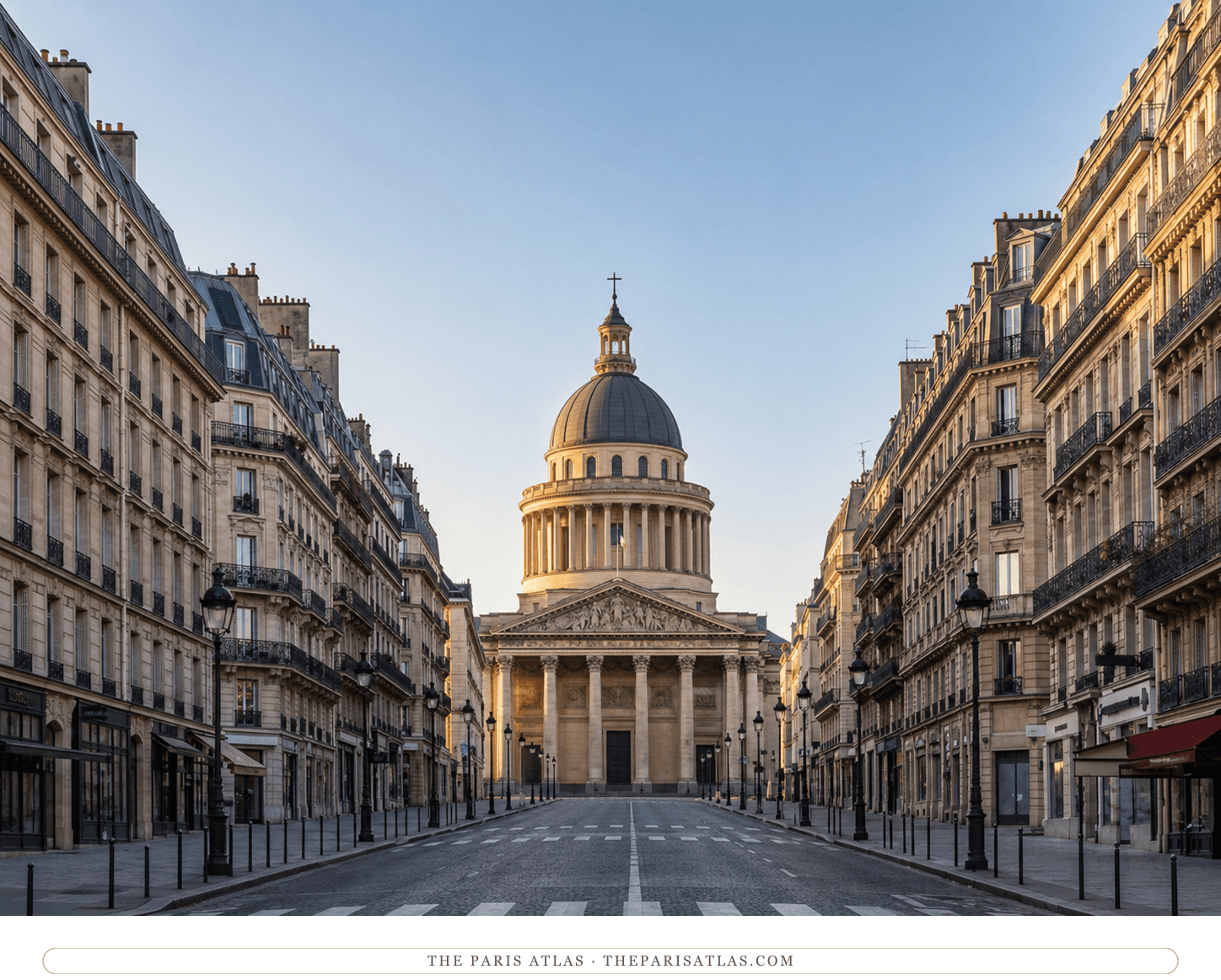
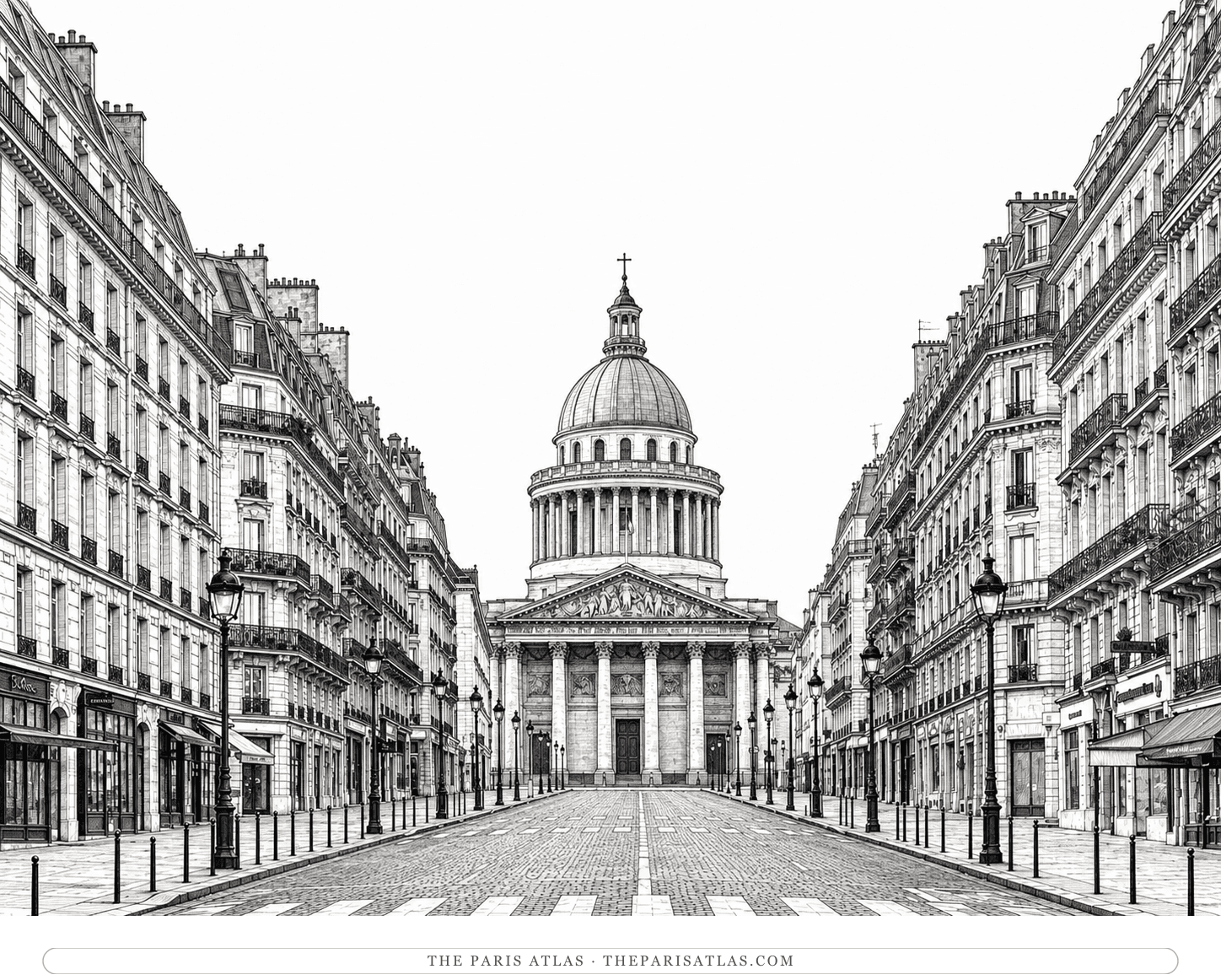
The street between the Luxembourg gardens and the Panthéon where the narrator of Ernest Hemingway's The Sun Also Rises stops for coffee and a brioche, on the one morning the novel shows him going to work. He never names the café.
Visit the place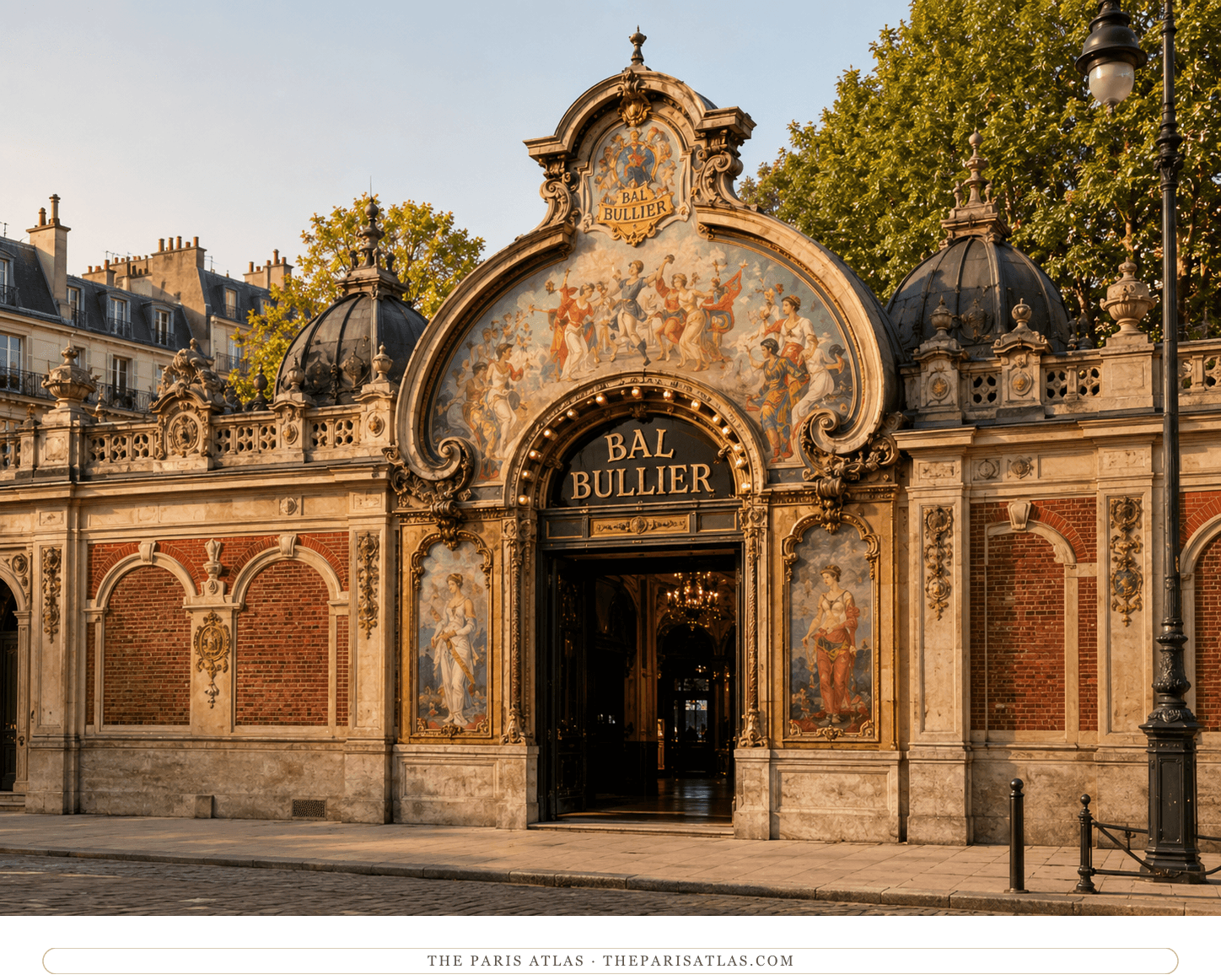
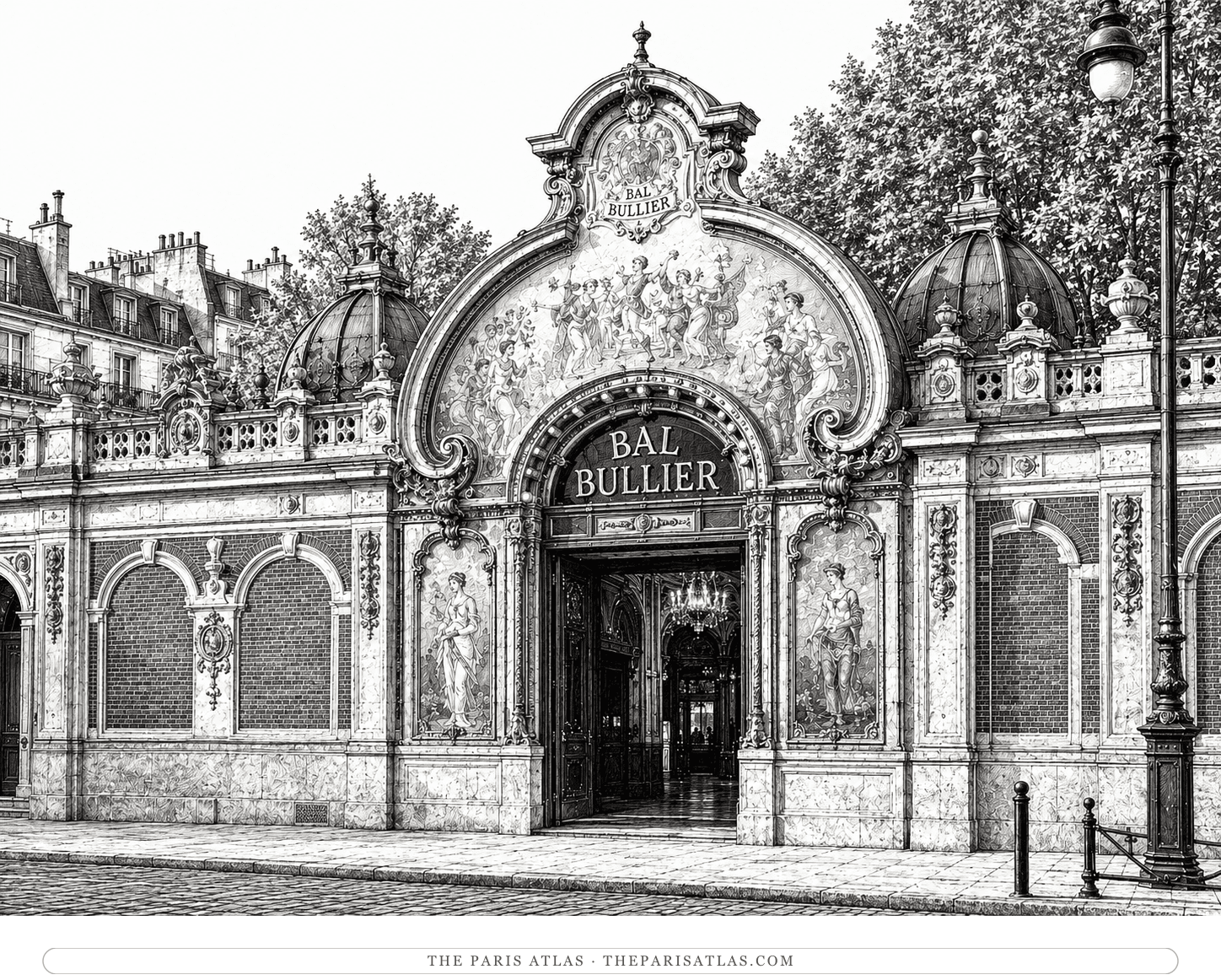
The students' dance hall behind the mock-oriental façade opposite the Closerie des Lilas — where the Latin Quarter danced for a century, and Robert and Sonia Delaunay painted the dancers.
Visit the placeThe sources below include histories, archival materials, scholarly research, and official records that informed this page. They document Studio des Ursulines, the people connected to it, and its place in Paris.


The Dalí Foundation's chronology, including his meeting with Paul Éluard and Gala around the film's presentation.

Map data used to verify addresses, geographic coordinates, and the placement associated with Studio des Ursulines.
These references provide the documented foundation for this page's history and context. Claim-level citations remain attached to the specific claims they support.
 Explore more resources
Newsletter
The cafés, studios, and walk-up flats where the work was made — one story from the map in every letter.