The Syndics
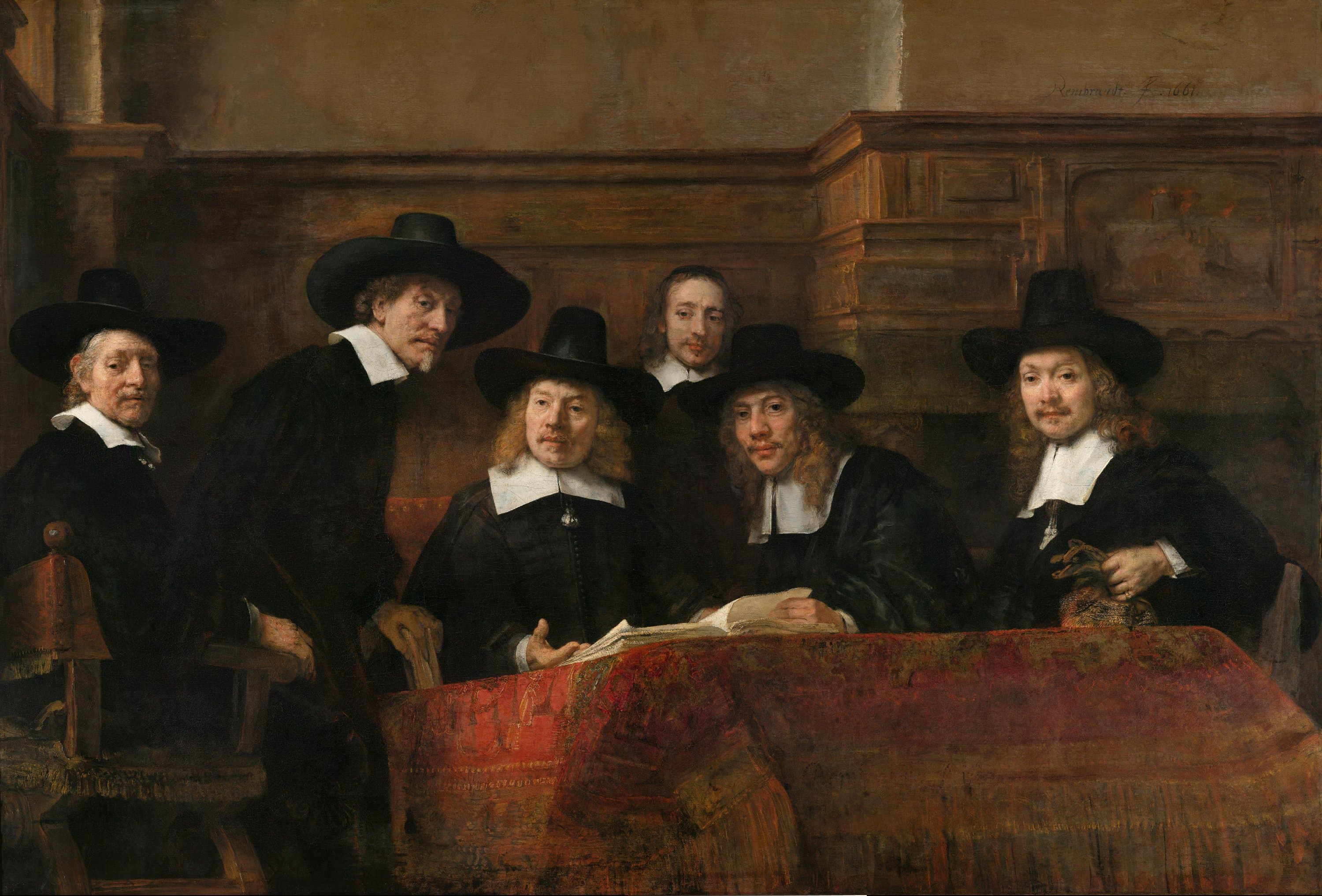
Five officials of the Amsterdam drapers' guild and their servant look up from a table covered with a red Persian rug, as if someone has just walked in. Rembrandt van Rijn painted them in 1662 for the guild's hall. The painting is known as The Syndics and hangs in the Rijksmuseum in Amsterdam.
- 1662
- Oil on canvas
- RijksmuseumAmsterdam, Netherlands
About Rembrandt van Rijn
What the painting shows
Six men in black are gathered behind a table in a wood-paneled room. A red Persian rug covers the table, and an open book lies on it. Five of the men wear tall black hats and wide white collars. The sixth, standing at the back without a hat, is their servant.
All six look up and out of the picture. The Rijksmuseum says Rembrandt made the scene lively by having the officials look up from their work, as if our arrival had interrupted them.
One man on the left is half out of his chair. He could be getting up or sitting down, and the Rijksmuseum reads the pose as a reaction to the visitor who has just come in.
The six men, from left to right
The Rijksmuseum names all six sitters. From left to right they are:
- Jacob van Loon (1595–1674), seated at the far left, the oldest of the officials.
- Volckert Jansz (1605/10–1681), the man rising from his chair.
- Willem van Doeyenburg (about 1616–1687), seated in the middle with his hand held out over the book.
- Frans Hendricksz Bel (1629–1701), the servant, standing bareheaded at the back.
- Aernout van der Mye (about 1625–1681), with his hand on the open book.
- Jochem de Neve (1629–1681), at the far right.
Rembrandt made drawings of single figures before he painted the group. Only two survive. One, in the Rijksmuseum, shows Jacob van Loon seated. The other is in the Museum Boijmans Van Beuningen in Rotterdam.
What sampling officials did
The men were the staalmeesters, or sampling officials, of the Amsterdam drapers' guild. Their job was to inspect the quality of cloth for the guild.
The Dutch word staal means a sample. The open book on the table is a book of cloth samples, which the Rijksmuseum calls the stalenboek.
The painting was ordered by the sitters themselves. The painting hung in the guild's hall, the Staalhof on the Staalstraat in Amsterdam.
A commission in a hard decade
The Rijksmuseum says Rembrandt had money troubles in the 1650s and moved to a rented house on the Rozengracht. The rich families of Amsterdam no longer came to him as often.
The drapers' guild still chose him. The Rijksmuseum takes the commission as a sign that he remained popular.
The same year brought a setback. His huge Conspiracy of the Batavians under Claudius Civilis was hung in Amsterdam's new town hall in July 1662 and taken down within months.
One real signature and one false one
The painting carries two signatures. The Rijksmuseum records the real one on the tablecloth: Rembrandt f. 1662. The real signature is hard to pick out from the pattern of the rug.
A second signature is painted clearly on the wall at the upper right, above the paneling: Rembrandt. f. 1661. The Rijksmuseum lists it as false. Someone other than Rembrandt added it, with the wrong year.
From the guild hall to the Rijksmuseum
The painting stayed in the Staalhof for more than a century. On November 27, 1771, it moved to the Konstkamer, a room in the Amsterdam town hall.
The City of Amsterdam lent it to the museum on August 15, 1808. The painting has been on loan from the city ever since.
Vincent van Gogh saw it at the Rijksmuseum in October 1885. He wrote to his brother Theo that The Syndics was perfect, the finest Rembrandt. In The Syndics, he added, Rembrandt is true to life, although even there he goes into the higher, into the very highest, infinite.
What scans of the paint show
Rijksmuseum researchers have scanned the painting to map the chemical elements in the paint. In a 2017 study they report arsenic in the tablecloth. The arsenic may come from orpiment, a yellow pigment they had just found in The Jewish Bride, but they say samples are needed to confirm it.
Where to see it
The painting hangs in the Rijksmuseum in Amsterdam, object number SK-C-6. The canvas is almost 2 meters high and nearly 2.8 meters wide.
Close reading
Reading the work, detail by detail
The Syndics looks like a row of men in black hats. Up close each face is different, the hands are busy, and there is a false signature on the wall that Rembrandt van Rijn did not write.
1.The false signature
High on the wall at the upper right, dark writing reads Rembrandt f. 1661. The Rijksmuseum lists this signature as false. The real one, Rembrandt f. 1662, is on the tablecloth, where it is hard to pick out from the pattern.
2.Jacob van Loon
Jacob van Loon, born in 1595, was the oldest of the five officials. He sits at the far left with white hair under his wide black hat. He looks straight out at the viewer. The Rijksmuseum owns a drawing Rembrandt made of him seated, as a study for this figure.
3.Volckert Jansz, half risen
Volckert Jansz is the only man not seated or standing straight. He leans forward, half out of his chair, and looks down toward us. The Rijksmuseum suggests he is about to stand up or sit down, having noticed that someone has come in.
4.Willem van Doeyenburg
Willem van Doeyenburg sits in the middle, with long, wavy fair hair under his hat. A small tassel hangs from his white collar. He looks straight out at the viewer with a calm face.
5.An open hand over the book
Willem van Doeyenburg's right hand is held out palm up over the open sample book. The gesture looks as if he is in the middle of explaining something, or showing the book to the newcomer. The fingers are painted in a few quick strokes.
6.Frans Hendricksz Bel, the servant
Frans Hendricksz Bel, the officials' servant, stands at the back. He is the only man without a hat. His face is framed by long brown hair, and he too looks straight at the viewer.
7.Aernout van der Mye
Aernout van der Mye has turned his head toward us while his body still faces the table. He has long, curly hair and a light moustache. His hand is on the open book, as if he has just been turning its pages.
8.Jochem de Neve
Jochem de Neve sits at the far right, with long brown hair under a tall hat and a large white collar. He and Frans Hendricksz Bel were the youngest men in the room, both born in 1629.
9.A bag and a pair of gloves
Jochem de Neve holds a pair of brown gloves in one hand. Below them, on the table, is a small round bag with a speckled pattern. The bag may be a money purse, but it is not clear what it is.
10.The book of samples
The open book on the table is the officials' book of cloth samples. The Rijksmuseum calls it the stalenboek. Its pages are painted in pale, loose strokes, and Aernout van der Mye's hand rests on them.
11.The Persian rug
A Persian rug covers the table and hangs down the front. Its pattern is painted in dabs of orange, gold and dark brown on red. Rijksmuseum researchers found arsenic in the tablecloth, which may come from a yellow pigment, but they say this still has to be confirmed.
12.Jacob van Loon's chair
At the far left, where Jacob van Loon sits, stands the tall back of a chair. The back is covered in red-brown leather or cloth, with a fringe along the bottom and a round knob on top.
13.Hands on the chairs
At the left, a bare hand rests on the arm of a chair. Next to it, a hand in a tan glove grips the top of a chair back. Both seem to belong to Volckert Jansz, pushing himself up or lowering himself down, but it is hard to be sure whose hands they are.
14.A painting above the fireplace
At the right, above the fireplace, is a large carved wooden surround with a dim picture set in it. The Rijksmuseum says this is a painting of a burning beacon. In the photograph the picture is hard to make out, and a few orange dabs near the top may be the fire.
Timeline
1662
Rembrandt paints the five sampling officials and their servant for the drapers' guild hall, the Staalhof, and signs the tablecloth.
1771
Moved on November 27 from the Staalhof to the Konstkamer in the Amsterdam town hall.
1808
The City of Amsterdam lends it to the museum on August 15.
1885
Vincent van Gogh sees it at the Rijksmuseum and calls it perfect, the finest Rembrandt.
2017
Rijksmuseum researchers report arsenic in the painted tablecloth.
Where to see it
Rijksmuseum
Amsterdam, Netherlands
A public viewing address has not yet been confirmed for this holding.
Collection displays can change. Check the Rijksmuseum's object record before making a special visit.
Frequently asked questions
Who are the men in The Syndics?
Five sampling officials of the Amsterdam drapers' guild and their servant. The Rijksmuseum names them from left to right as Jacob van Loon, Volckert Jansz, Willem van Doeyenburg, the servant Frans Hendricksz Bel, Aernout van der Mye and Jochem de Neve.
What is a syndic or sampling official?
An official who checked the quality of cloth for the drapers' guild. In Dutch they were called staalmeesters, from staal, a sample.
Why do they all look up?
The Rijksmuseum says Rembrandt had them look up from their work as if the viewer had just come in and interrupted them. One man is half out of his chair.
Why does it have two signatures?
Rembrandt signed it on the tablecloth, Rembrandt f. 1662. A second signature dated 1661, at the upper right, was added by someone else. The Rijksmuseum lists it as false.
Who is the man without a hat?
Frans Hendricksz Bel, the officials' servant. He stands at the back, between the seated men.
Where can I see it?
At the Rijksmuseum in Amsterdam, where it has been on loan from the City of Amsterdam since 1808. Check the museum's page before a visit, since displays can change.
More by Rembrandt van Rijn
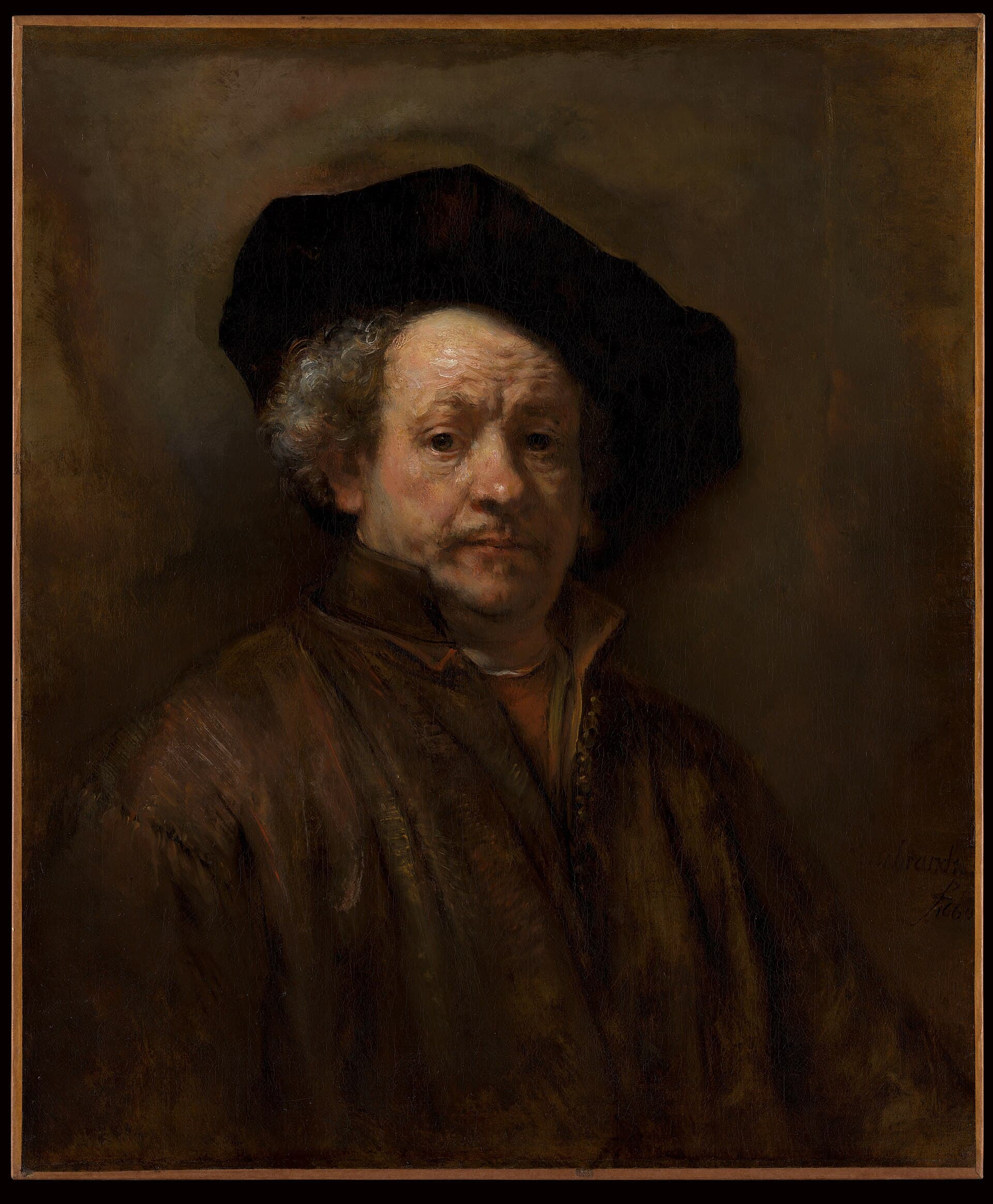
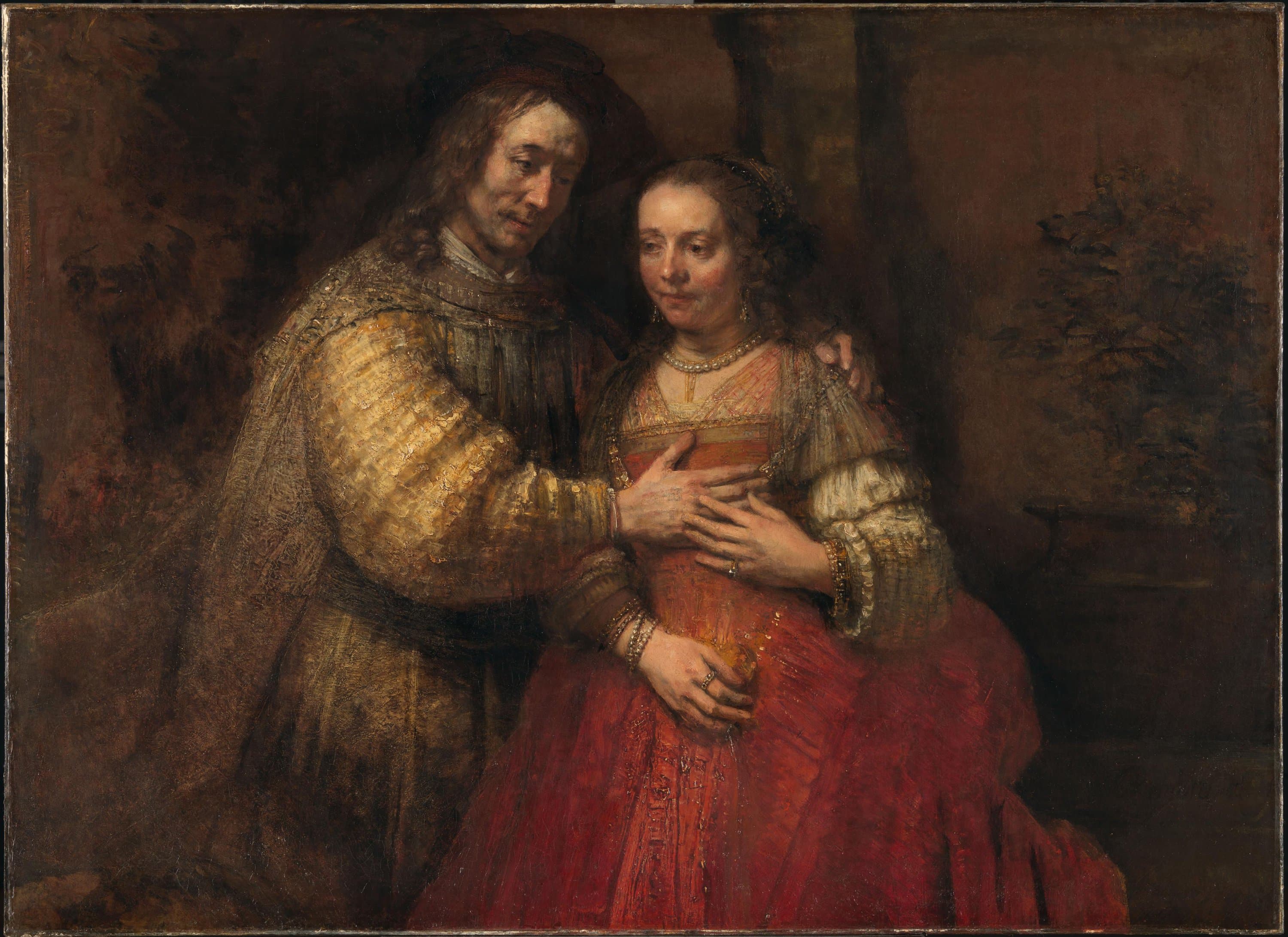
If you like Rembrandt van Rijn
Explore painters from the same movements and circles.
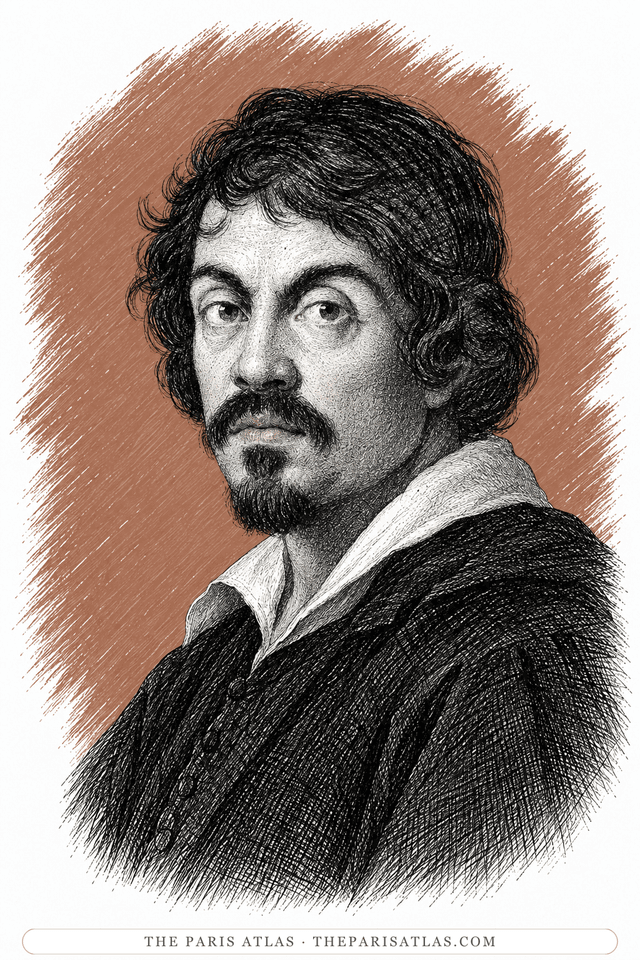
Caravaggio
Italian painter who worked from live models straight onto the canvas, without preparatory drawings, and lit them with a single hard light against a dark ground. He killed a man in Rome in May 1606, spent his last four years as a fugitive in Naples, Malta and Sicily, and died at thirty-eight.
View artist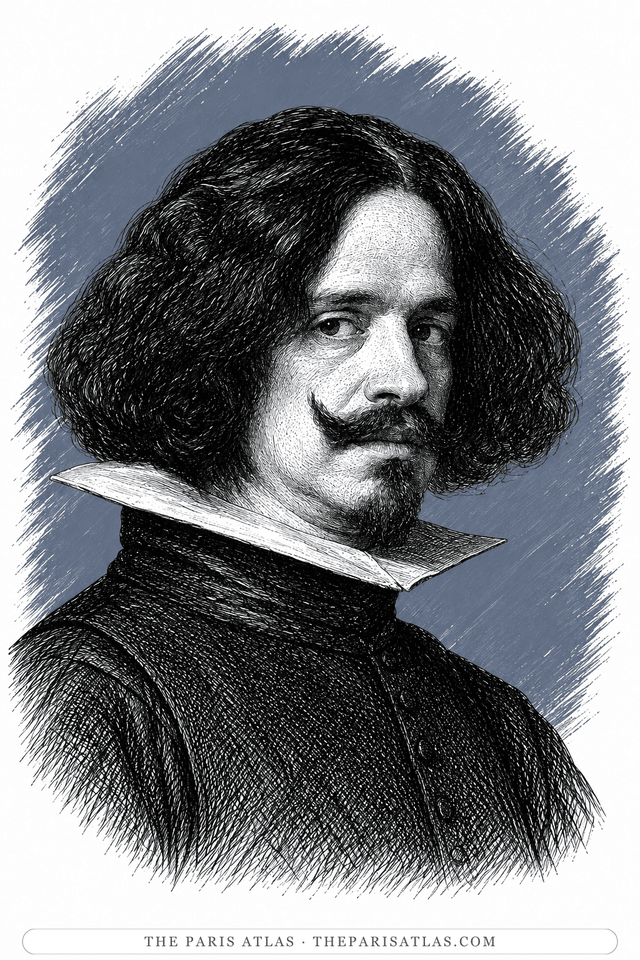
Diego Velázquez
Spanish painter who spent thirty-seven years in the household of Philip IV, painting the king, his family and the dwarfs and jesters of the palace, and who ended his career as the official responsible for housing and moving the court.
View artist
Johannes Vermeer
Dutch painter who worked in Delft and left fewer than forty paintings, most of them small scenes of one or two people in a quiet room lit from a window. Girl with a Pearl Earring, The Milkmaid and View of Delft are the best known.
View artist
References
The sources below include collection records, catalogues, scholarly research, and primary materials that informed this page. They document The Syndics, its making, and its place in cultural history.


1The Sampling Officials of the Amsterdam Drapers' Guild, known as 'The Syndics', 1662 — collection record (SK-C-6)
WebsiteRijksmuseumUsed forThe holding museum's record, with the six sitters named, and the image the close-reading views were cropped from.
2Rembrandt, A Syndic of the Drapers' Guild, Jacob van Loon, Seated, c. 1661–62 — collection record (RP-T-1896-A-3172)
WebsiteRijksmuseumUsed forThe Rijksmuseum's study drawing of Jacob van Loon, with notes on the officials' job, Volckert Jansz's pose and the surviving drawings.
3Letter 534 to Theo van Gogh, Nuenen, on or about 10 October 1885
WebsiteVan Gogh Museum and Huygens ING, 1885Used forVincent van Gogh's letter of October 1885 on The Syndics and The Jewish Bride.

4Artificial orpiment, a new pigment in Rembrandt's palette
PeriodicalHeritage Science 5, article 26 (doi:10.1186/s40494-017-0138-1), 2017Used forReports arsenic in the tablecloth of The Syndics, still to be confirmed.
5Batavernas trohetsed till Claudius Civilis — the Royal Swedish Academy of Fine Arts on its Rembrandt
WebsiteKungliga Akademien för de fria konsternaUsed forThe Claudius Civilis painting taken down from the Amsterdam town hall in 1662.
These references provide the documented foundation for this work's history and interpretation. Claim-level citations remain attached to the specific claims they support.
 Explore more resources