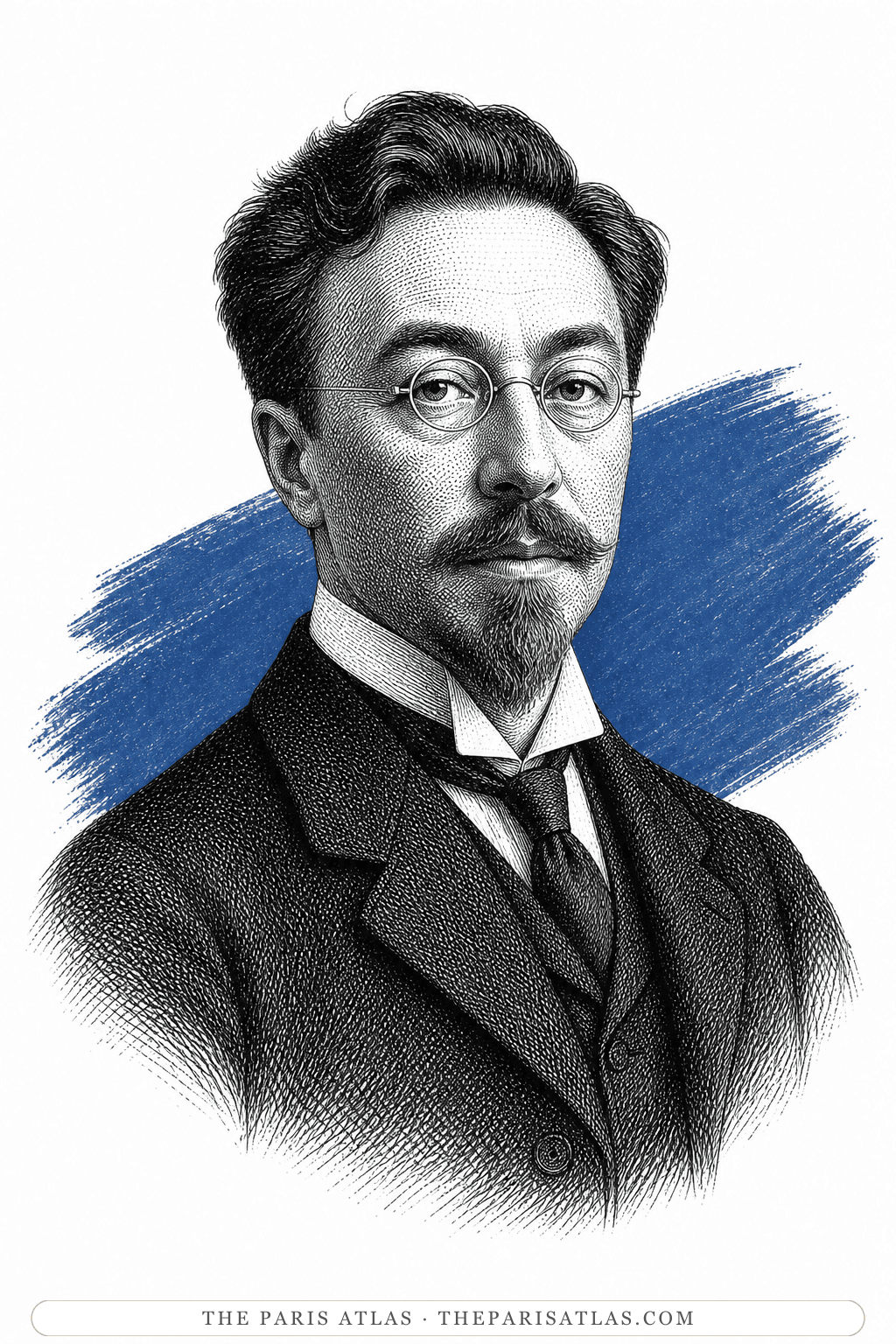
Wassily Kandinsky
Exhibited here · 1935
Christian Zervos gave Kandinsky a solo showing of recent watercolours at Cahiers d'Art in June 1935, at a point when few Paris dealers were interested in abstraction.
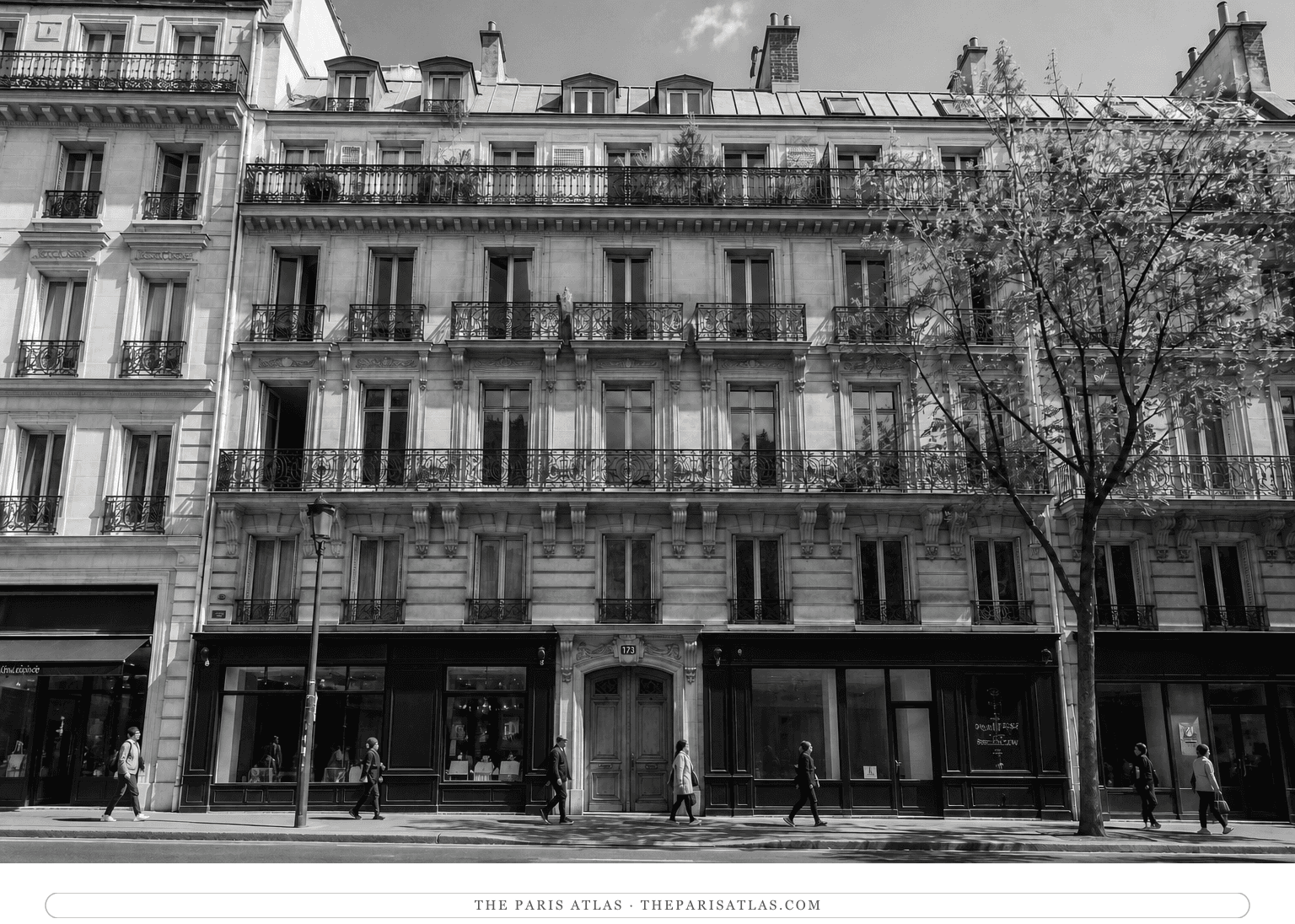
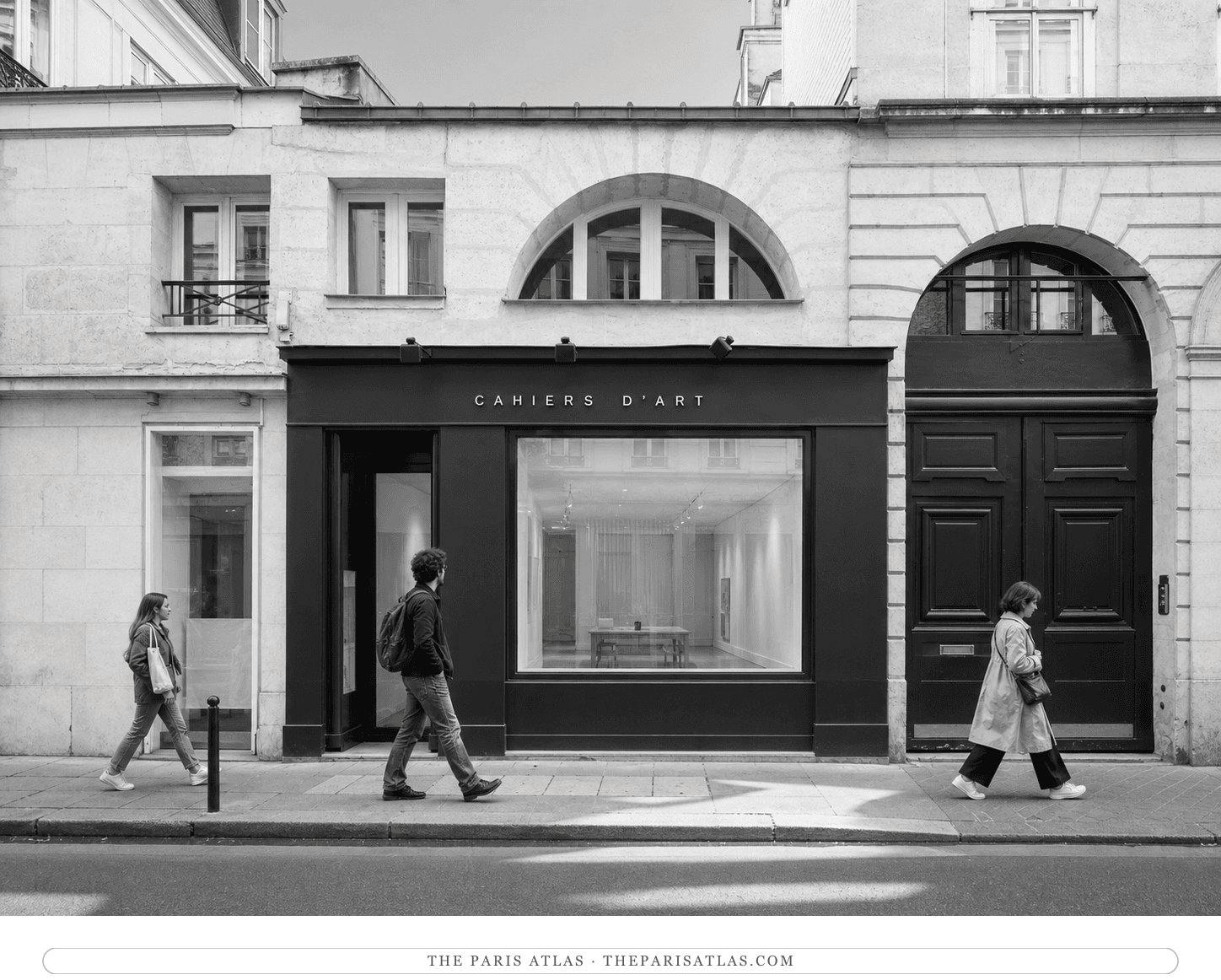
Christian Zervos's hybrid of art magazine, publishing house and gallery on the rue du Dragon, where Kandinsky showed watercolours in 1935 — and where the Picasso catalogue raisonné was compiled.
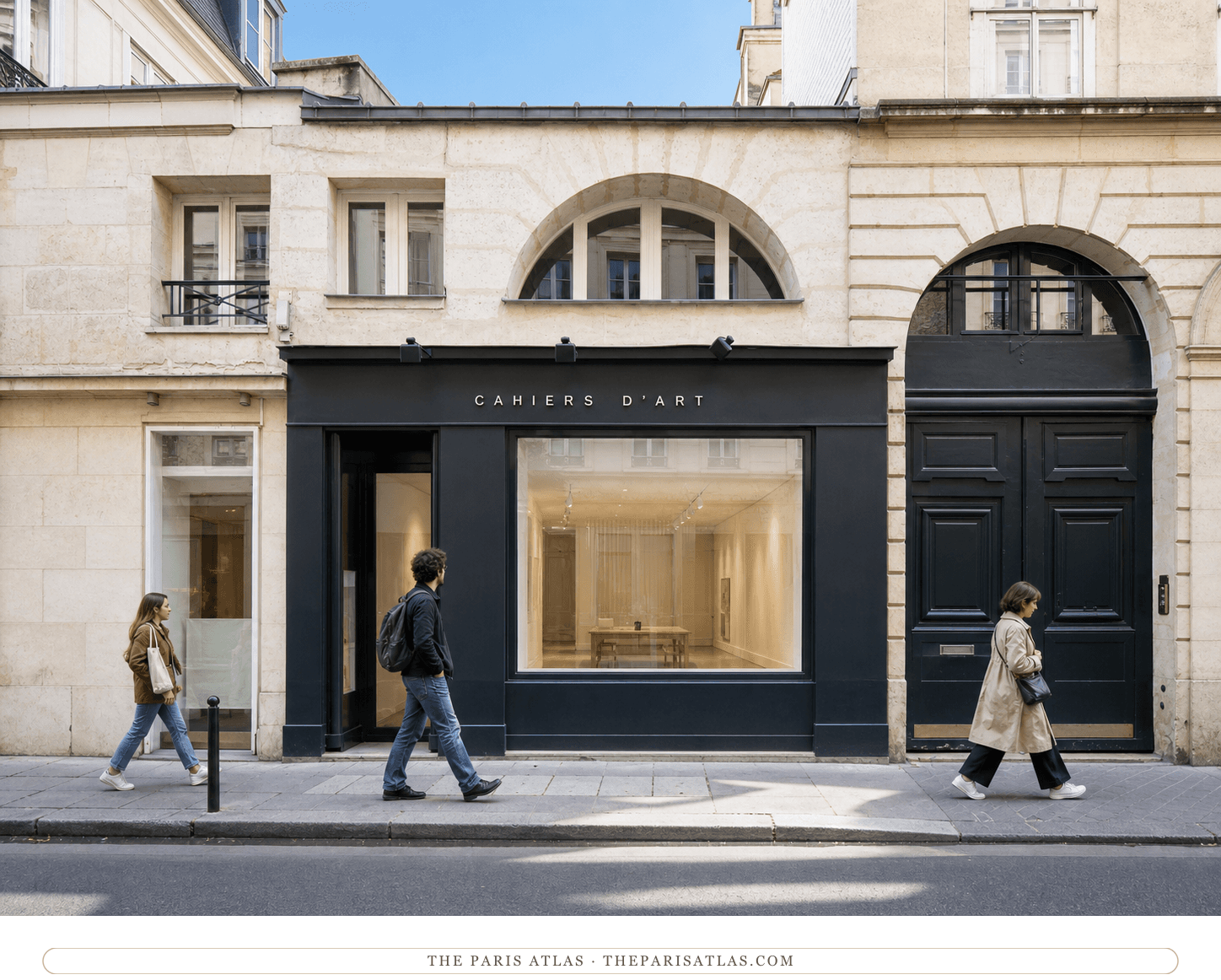
Christian Zervos ran Cahiers d'Art as three things at once: a review, a publisher and an exhibition space. In a period when the commercial trade was nervous about abstraction, that combination mattered — a painter could be written about, published and hung by the same person in the same building.
Wassily Kandinsky was one of the beneficiaries. Zervos championed him after his arrival from Germany, and in June 1935 gave him a solo showing of recent watercolours here, at a point when very few Paris dealers were interested in what he was doing.
Zervos's other monument is the Picasso catalogue raisonné, thirty-three volumes compiled over decades and still the standard reference, known simply as 'the Zervos'.
The building stands on a narrow street off the boulevard Saint-Germain. Cahiers d'Art was relaunched in 2012 and now again runs exhibitions and publishing from 14–15 rue du Dragon.
Kandinsky shows recent watercolours at Cahiers d'Art in June.
Christian Zervos's art review, which also functioned as a publishing house and a gallery. It supported abstraction when the commercial trade would not.
A Greek-French critic and publisher, best known for the thirty-three-volume Picasso catalogue raisonné and for backing Kandinsky in the 1930s.
Exhibited here · 1935
Christian Zervos gave Kandinsky a solo showing of recent watercolours at Cahiers d'Art in June 1935, at a point when few Paris dealers were interested in abstraction.
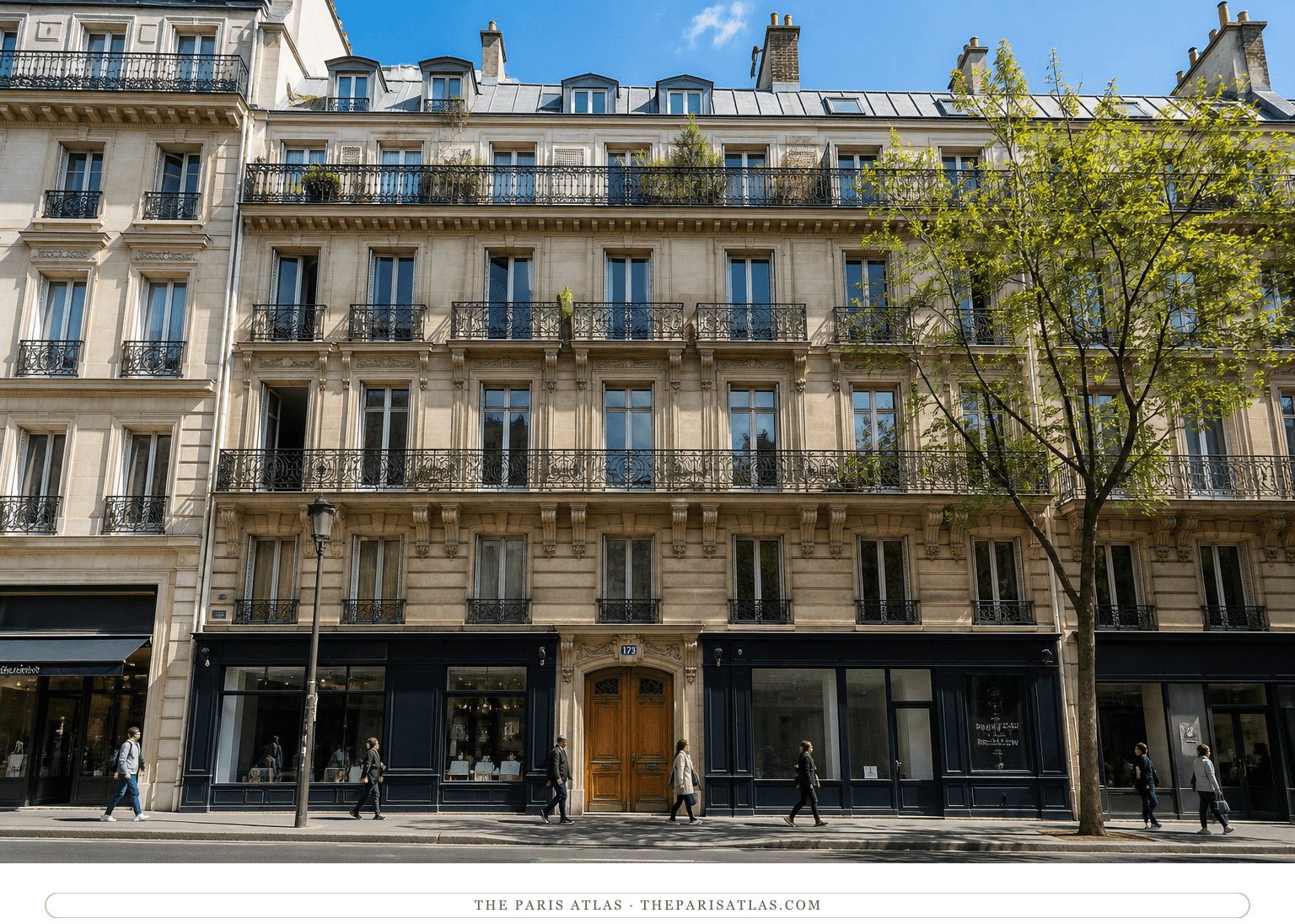
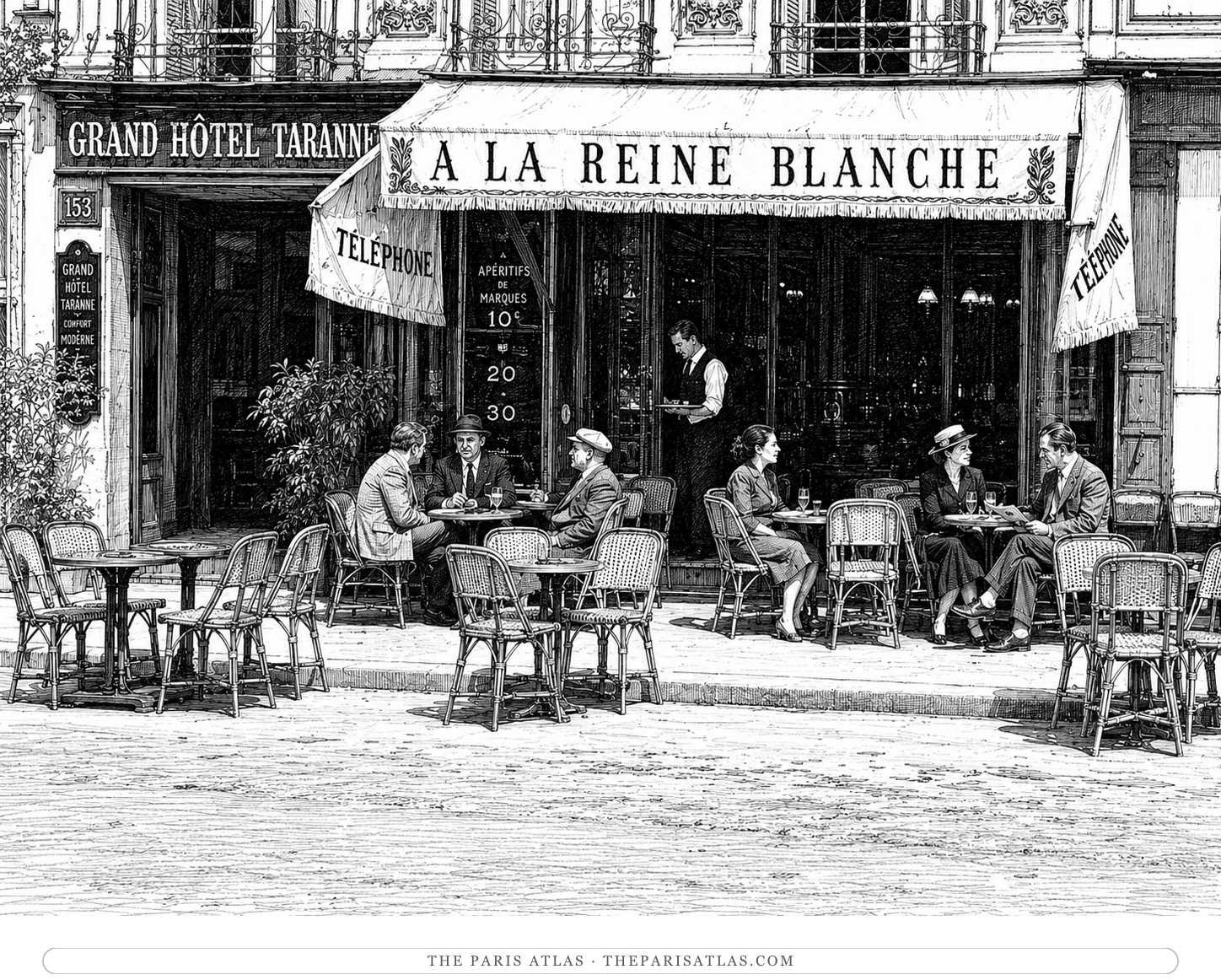
Where Djuna Barnes lived with the sculptor and silverpoint artist Thelma Wood during the 1920s — the relationship that Nightwood was written out of.
Visit the place
The cheap bar across the boulevard from the Café de Flore where James Baldwin drank through his first Paris years, and where he met Lucien Happersberger in 1949.
Visit the place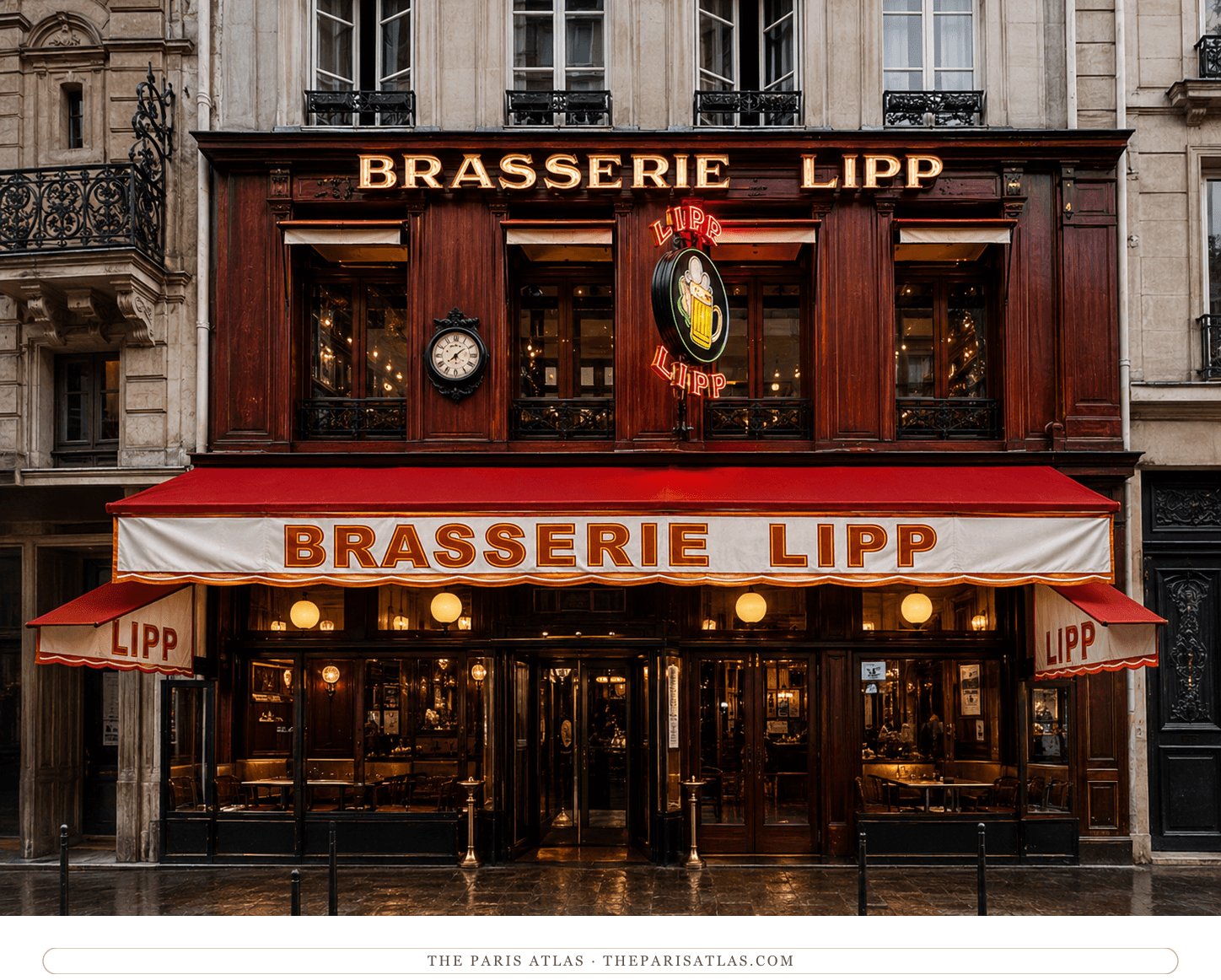
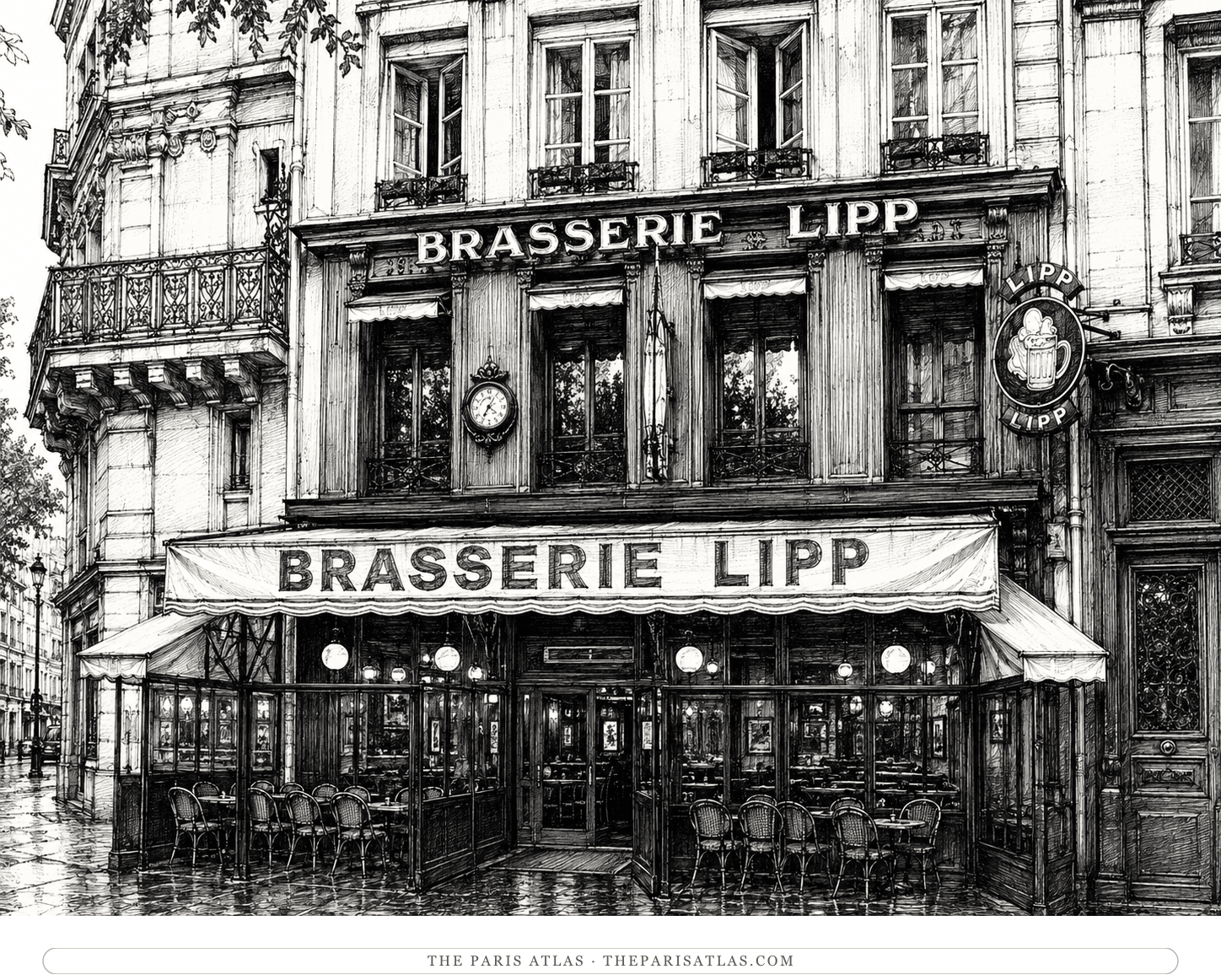
Beer, potato salad, and choucroute after a day's work. Ernest Hemingway considered it one of the best places in Paris.
Visit the place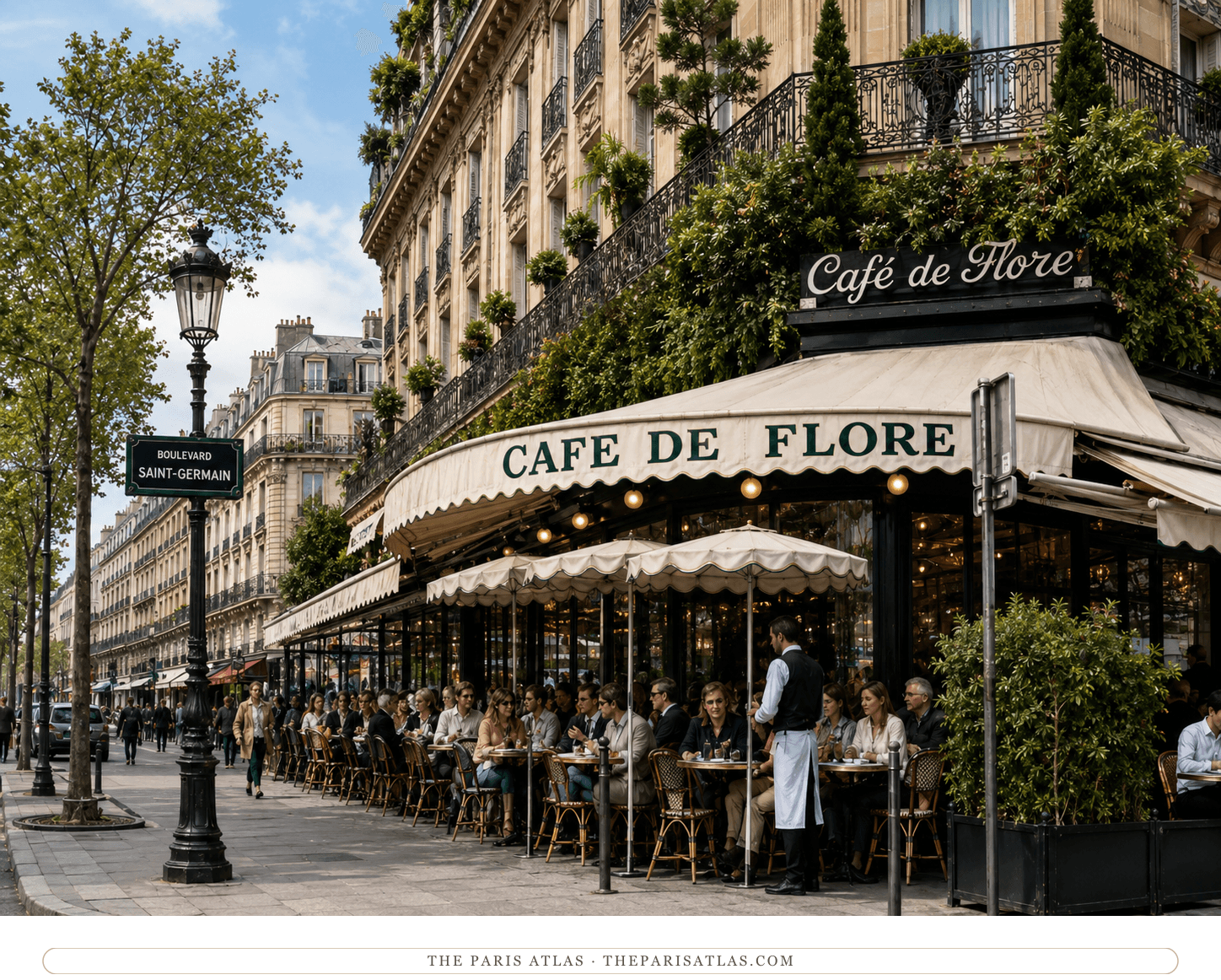
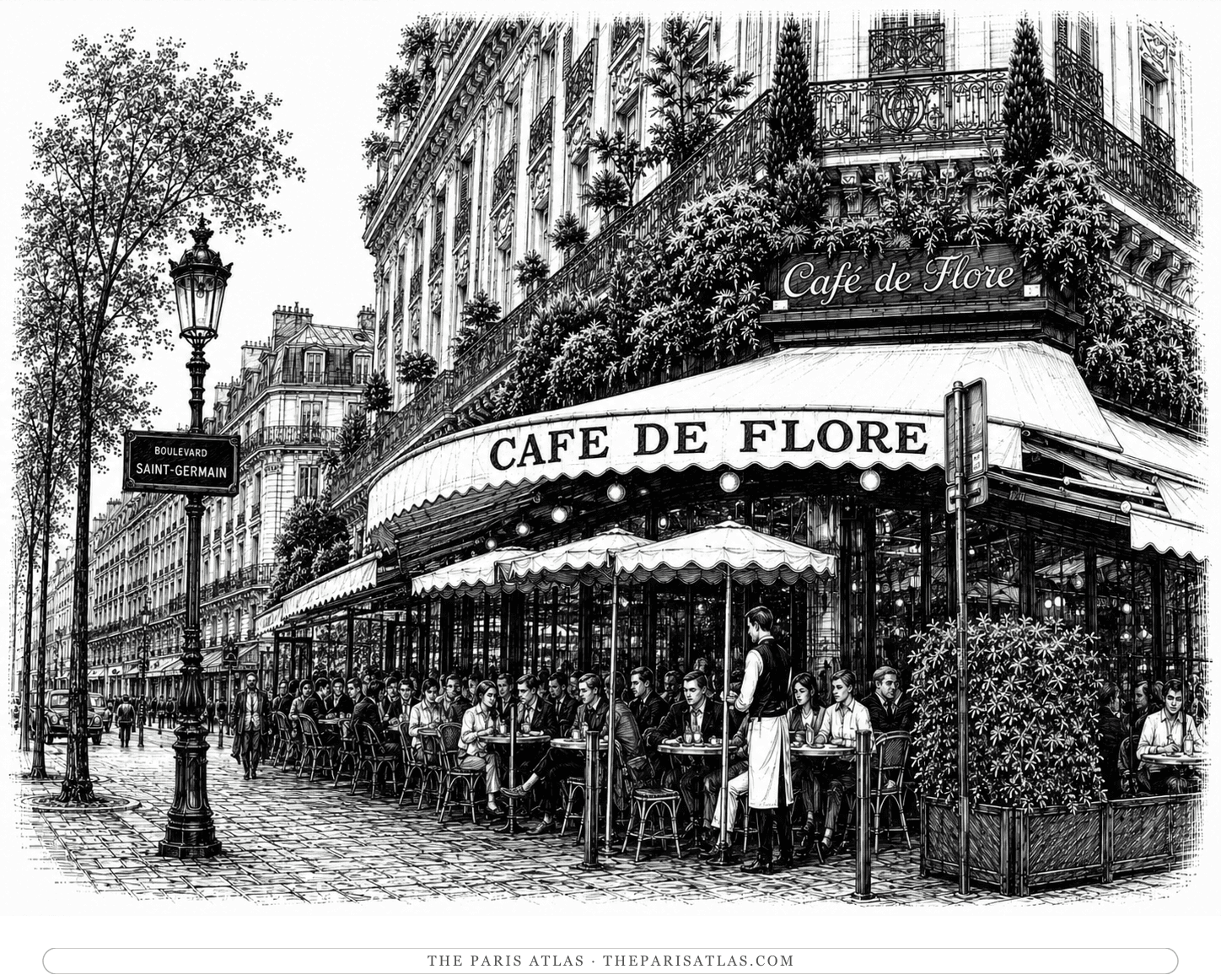
A few doors from Les Deux Magots and part of the same Left Bank circuit. Later became more associated with Jean-Paul Sartre and Simone de Beauvoir.
Visit the placeThe sources below include histories, archival materials, scholarly research, and official records that informed this page. They document Galerie Cahiers d'Art, 14 rue du Dragon, the people connected to it, and its place in Paris.


Web source consulted for documented facts and historical context presented on the Galerie Cahiers d'Art, 14 rue du Dragon page.
Web source consulted for documented facts and historical context presented on the Galerie Cahiers d'Art, 14 rue du Dragon page.
Web source consulted for documented facts and historical context presented on the Galerie Cahiers d'Art, 14 rue du Dragon page.
Web source consulted for documented facts and historical context presented on the Galerie Cahiers d'Art, 14 rue du Dragon page.
These references provide the documented foundation for this page's history and context. Claim-level citations remain attached to the specific claims they support.
 Explore more resources
Newsletter
The cafés, studios, and walk-up flats where the work was made — one story from the map in every letter.