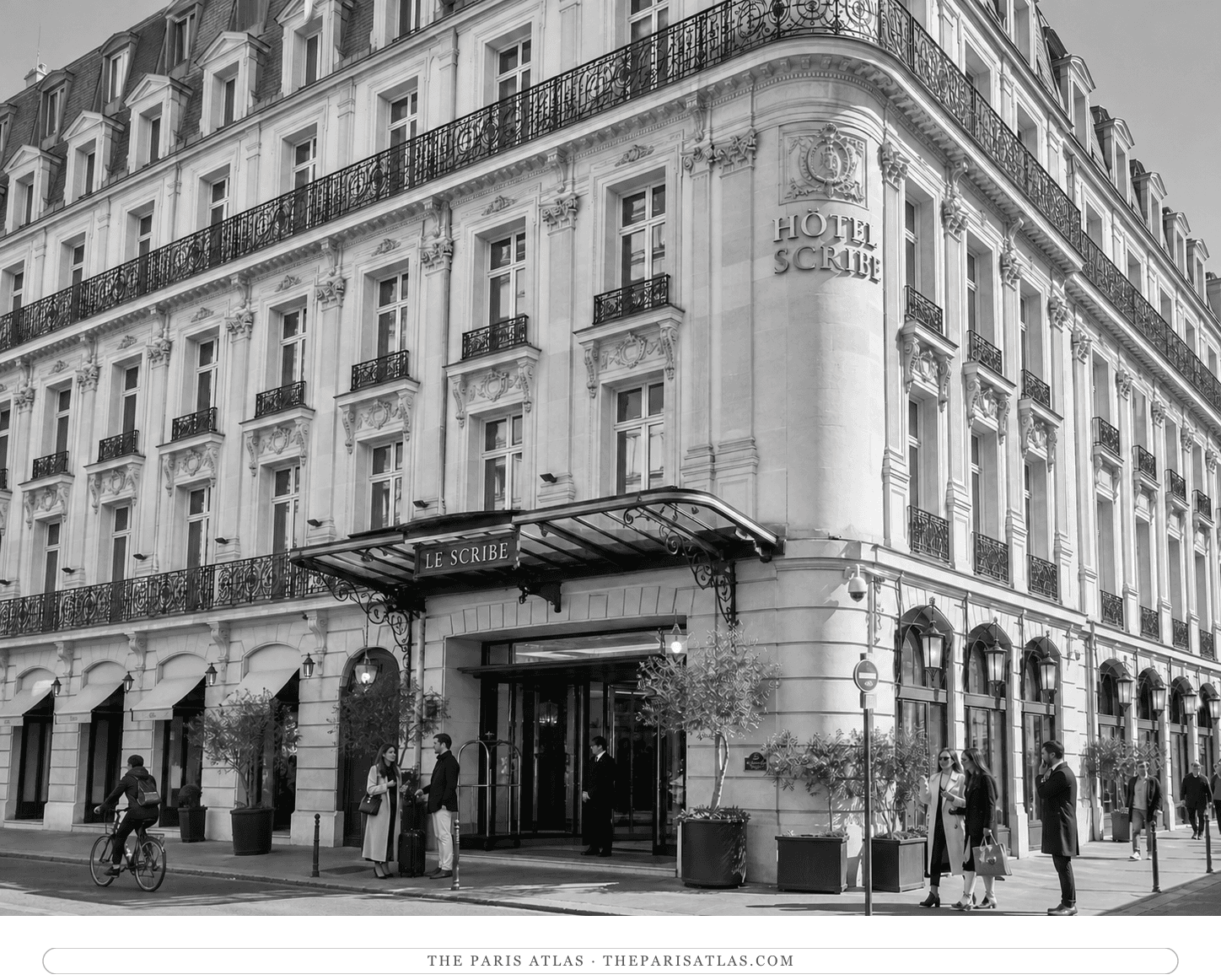

Setting of the story
Down and Out in Paris and London
Boris's best job before illness — waiting tables here for a hundred francs a day in tips — and the pavement the two of them wait on when they try to get it back.
Stay in Paris
The Hôtel Scribe now operates as Sofitel Le Scribe Paris Opéra at 1 rue Scribe. The current hotel has 201 rooms, including 38 suites, with dining and wellness facilities.
Explore the history of Hôtel Scribe
The hotel today
Open for stays
A current hotel at a historic address.
Choose your room
Compare the options, then check your dates with the hotel for availability, current rates, and the exact room configuration.
The hotel’s Superior category faces the courtyard.
Views and layouts differ between categories. Check the selected room’s description when booking.
The hotel lists king or queen configurations with a sofa, including a duplex option.
Prestige suites, terrace options, family suites, and an apartment offer other layouts. Confirm your group’s occupancy before reserving.
During your stay
The hotel offers breakfast, a café, and Restaurant Rivages. Check which meals are included in your rate.
A hammam and massage treatments are listed. Ask about access and treatment reservations before arrival.
Choose your dates to check room options and availability. Confirm breakfast, additional charges, and cancellation terms for the rate you choose.
The history of this address
A grand hotel behind the Opéra, on the rue Scribe. In Down and Out in Paris and London it is the good job that keeps slipping away — where Boris earned a hundred francs a day in tips before he fell ill, and where he and George Orwell stood on the pavement for an hour hoping the manager would come out and hire them.
The neighborhood
Hôtel Scribe is in Opéra.
The Hôtel Scribe stands on the corner of the rue Scribe, a street behind the Palais Garnier laid out as part of Haussmann's Opéra quarter. It was, and is, a large expensive hotel with a large expensive kitchen — which is exactly why it matters in Down and Out in Paris and London.
The book's economy runs on hotel kitchens. Boris, the Russian ex-officer George Orwell shares his hunger with, had climbed the trade: a brush factory, then portering at Les Halles, then dishwashing, then waiting tables. "When he fell ill he was at the Hôtel Scribe, and taking a hundred francs a day in tips." That is the peak he falls from, and the number the book measures every subsequent humiliation against.[1]
Later, at their lowest, the two of them come here to try to get it back. Orwell's account is four sentences of pure flatness: "We went to the Hôtel Scribe and waited an hour on the pavement, hoping that the manager would come out, but he never did. Then we dragged ourselves down to the rue du Commerce, only to find that the new restaurant, which was be—"
It is a small scene and one of the truest things in the book about looking for work with no money. There was no interview and no refusal. They simply stood outside a building for an hour, and nothing happened, and then they walked somewhere else.[2]
Orwell came back to the rue Scribe in better circumstances. He returned to Paris as a war correspondent in 1945, and stayed at the hotel — the same door, sixteen years and a reputation later.[3]
Boris is a waiter here on a hundred francs a day in tips before falling ill.
Orwell and Boris wait an hour on the pavement outside, hoping to be taken on.
Down and Out in Paris and London is published.
Orwell returns to Paris as a war correspondent and stays at the hotel.
It appears twice in Down and Out in Paris and London. It is where his friend Boris had his best job, waiting tables for a hundred francs a day in tips before illness ended it, and it is where the two of them later stood on the pavement for an hour hoping the manager would come out and hire them. He never did. Orwell returned to the hotel as a war correspondent in 1945.
Yes — it still operates at the same address as the Sofitel Le Scribe Paris Opéra. You do not need a room to get inside; its café is open to anyone, which makes it one of the easier Orwell locations to actually stand in.
1 rue Scribe in the 9th arrondissement, immediately behind the Palais Garnier in the Opéra quarter. It is a short walk from the Grands Boulevards and from the American Express office on the rue Scribe that appears elsewhere in expatriate Paris writing.
Setting of the story
Boris's best job before illness — waiting tables here for a hundred francs a day in tips — and the pavement the two of them wait on when they try to get it back.

Visited by · 1929
"We went to the Hôtel Scribe and waited an hour on the pavement, hoping that the manager would come out, but he never did." Orwell returned to the hotel as a war correspondent in 1945.

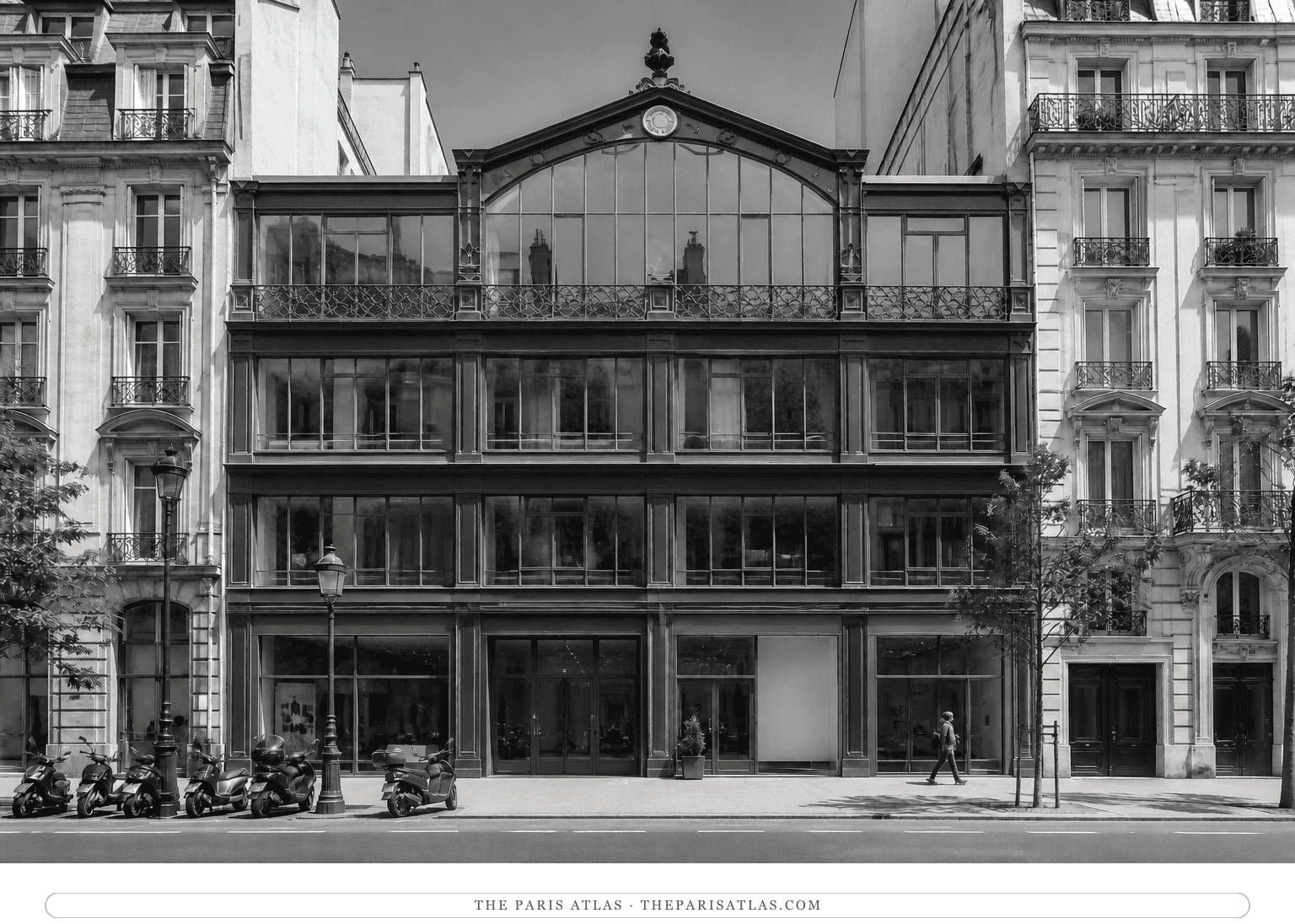
The photographer Nadar's former studio, where thirty artists mounted the independent exhibition of April 1874 that got them the name Impressionists.
Visit the place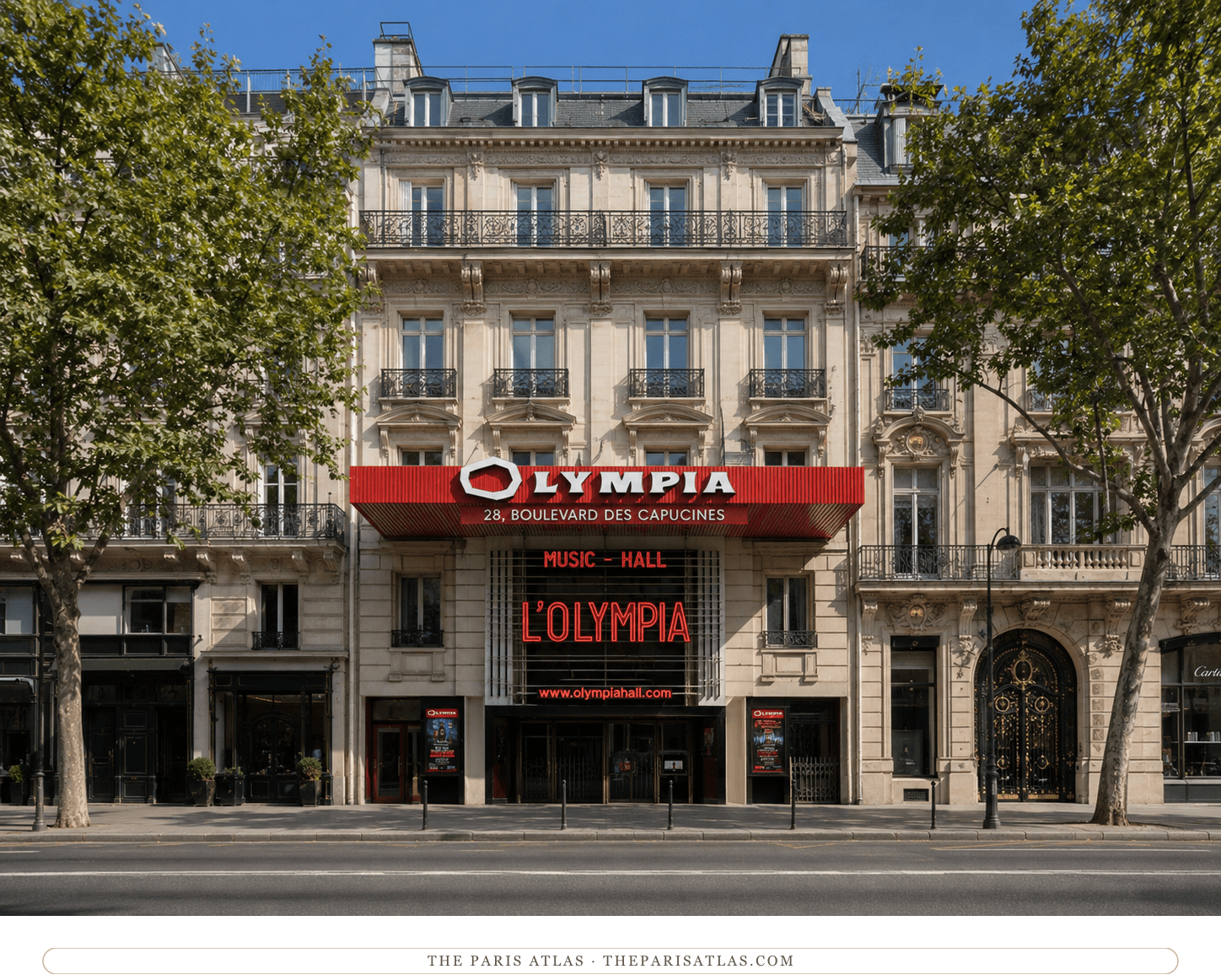
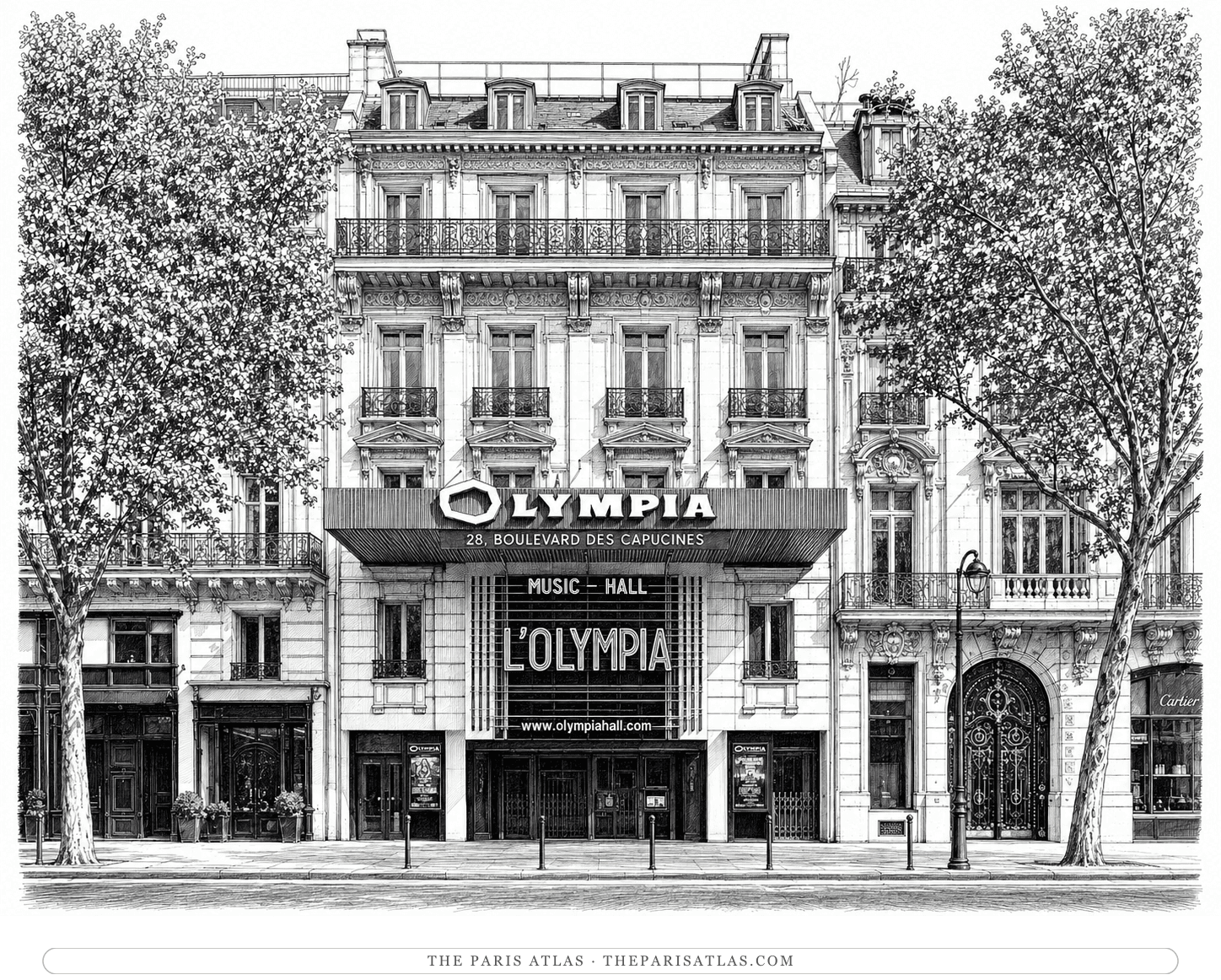
The boulevard music hall where Colette played the title role in La Romanichelle in 1906, during her run as a professional performer.
Visit the place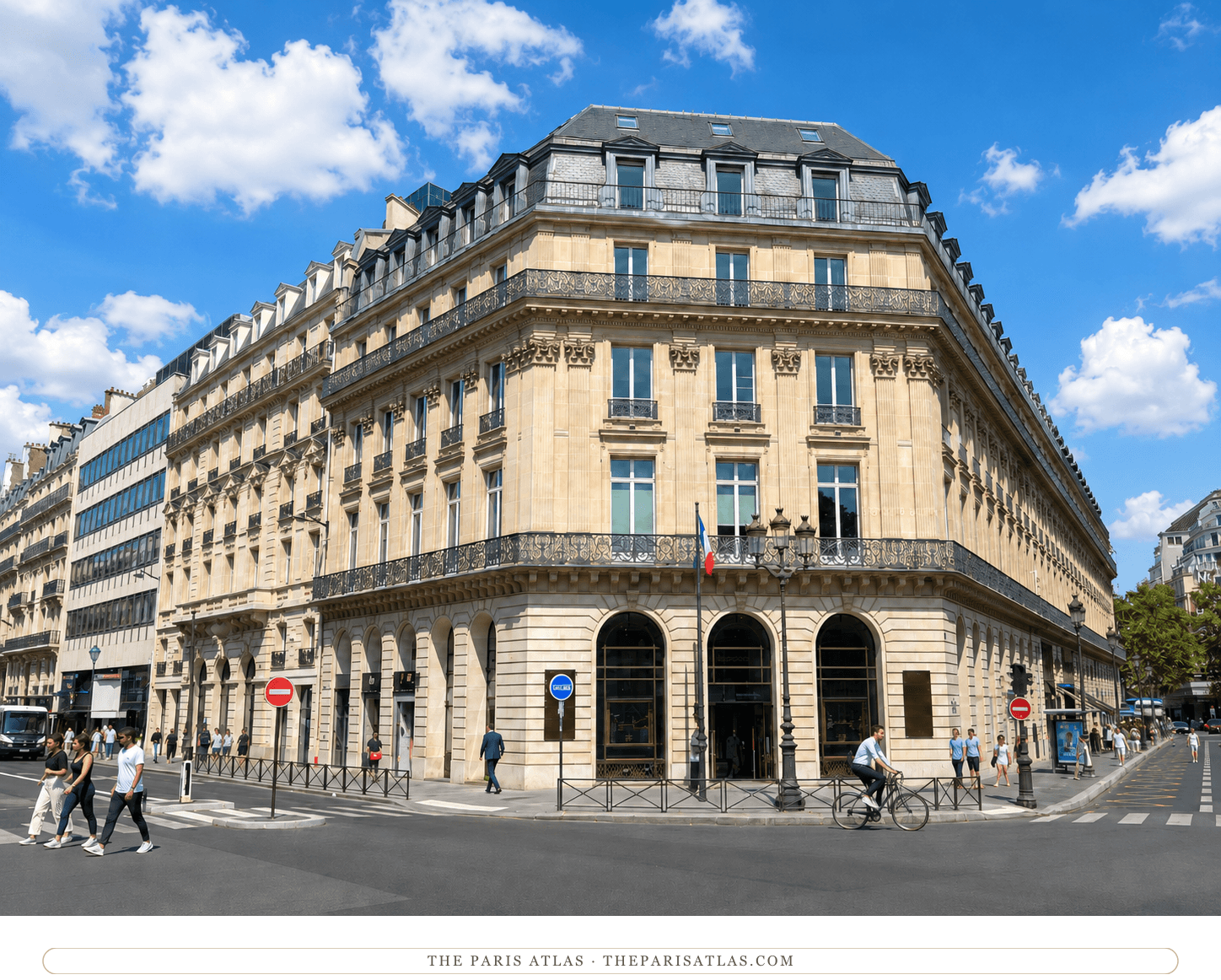
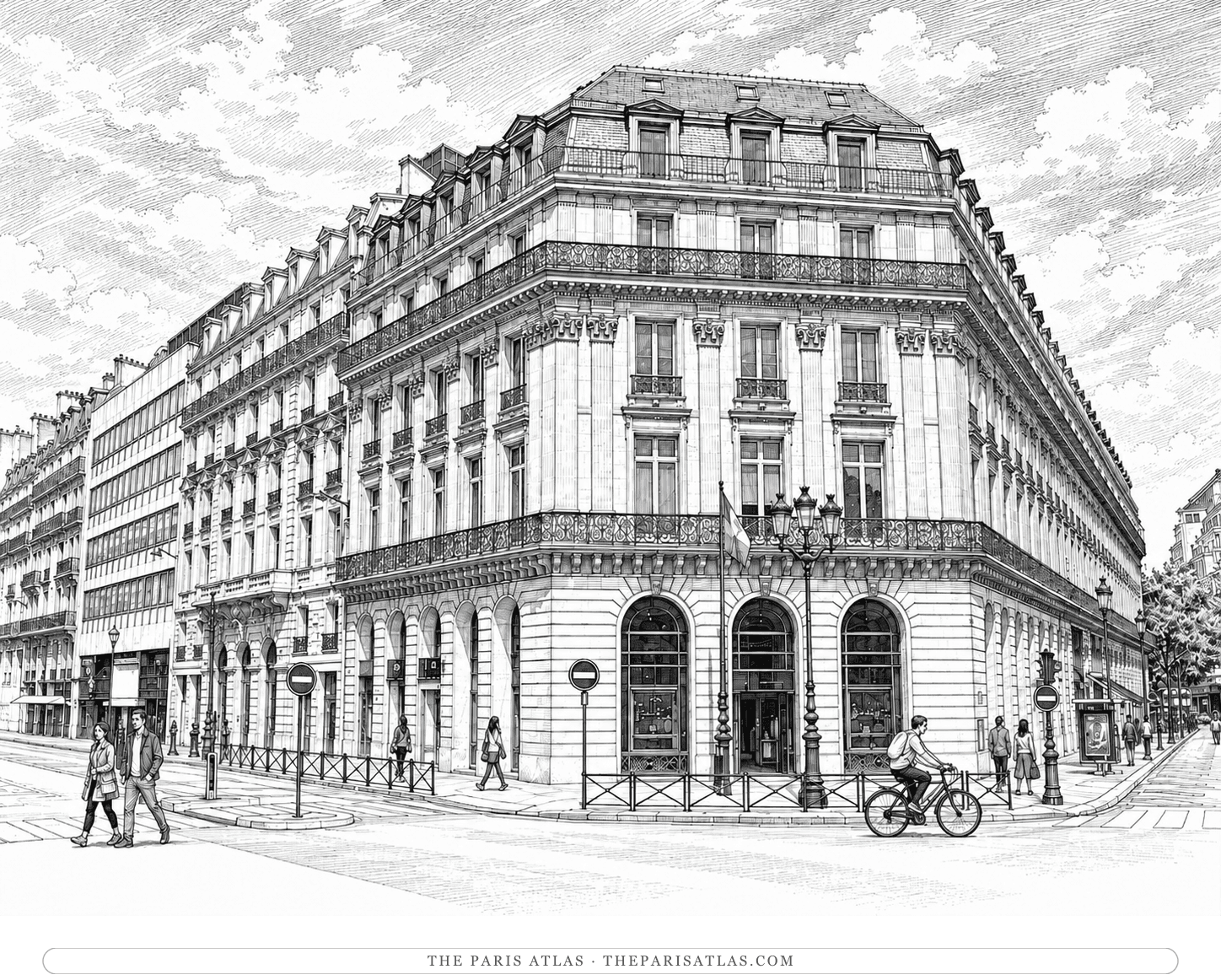
The office by the Opéra where American expatriates collected their mail and cashed their cheques, and where David goes to escape Giovanni's room in Baldwin's novel.
Visit the place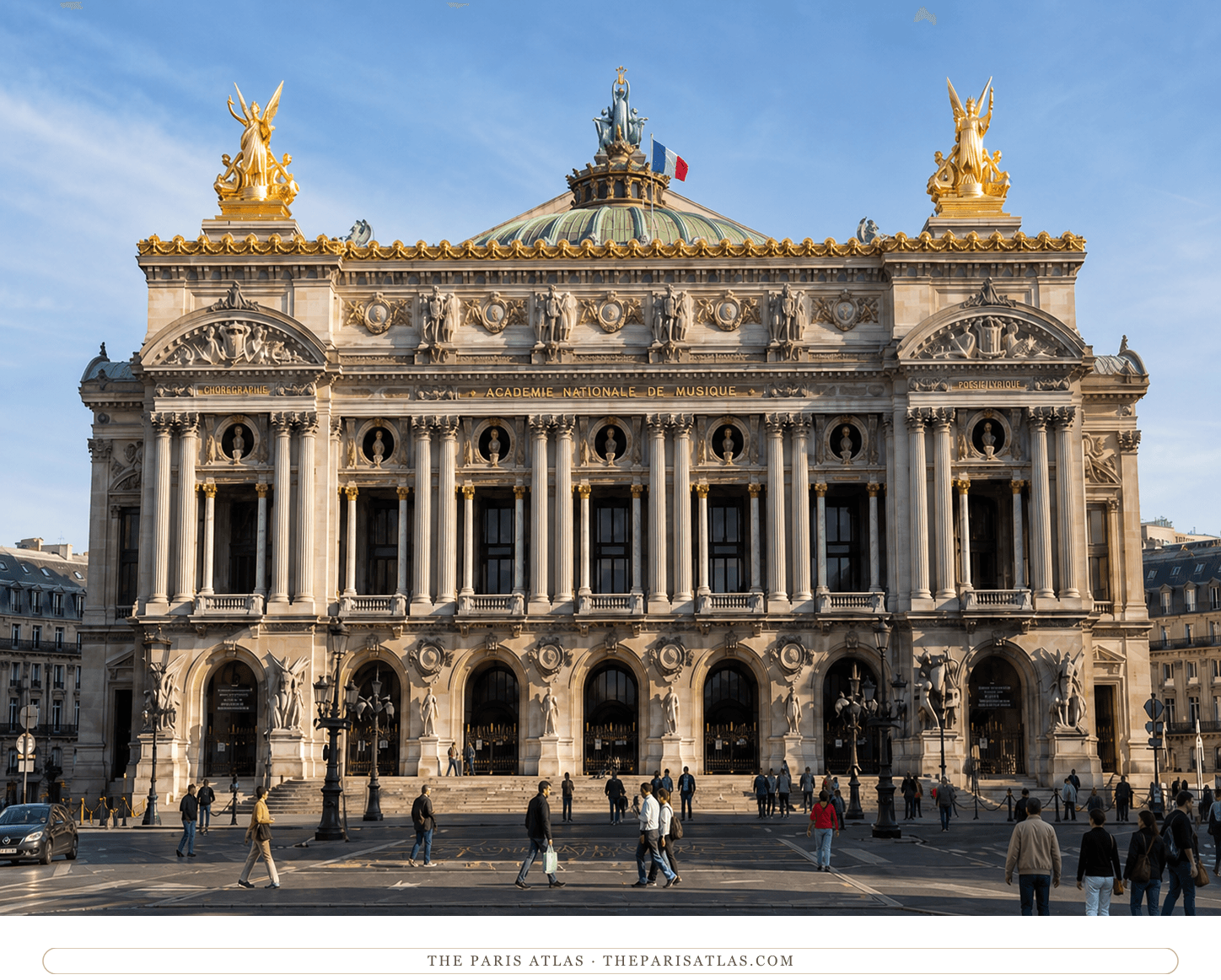
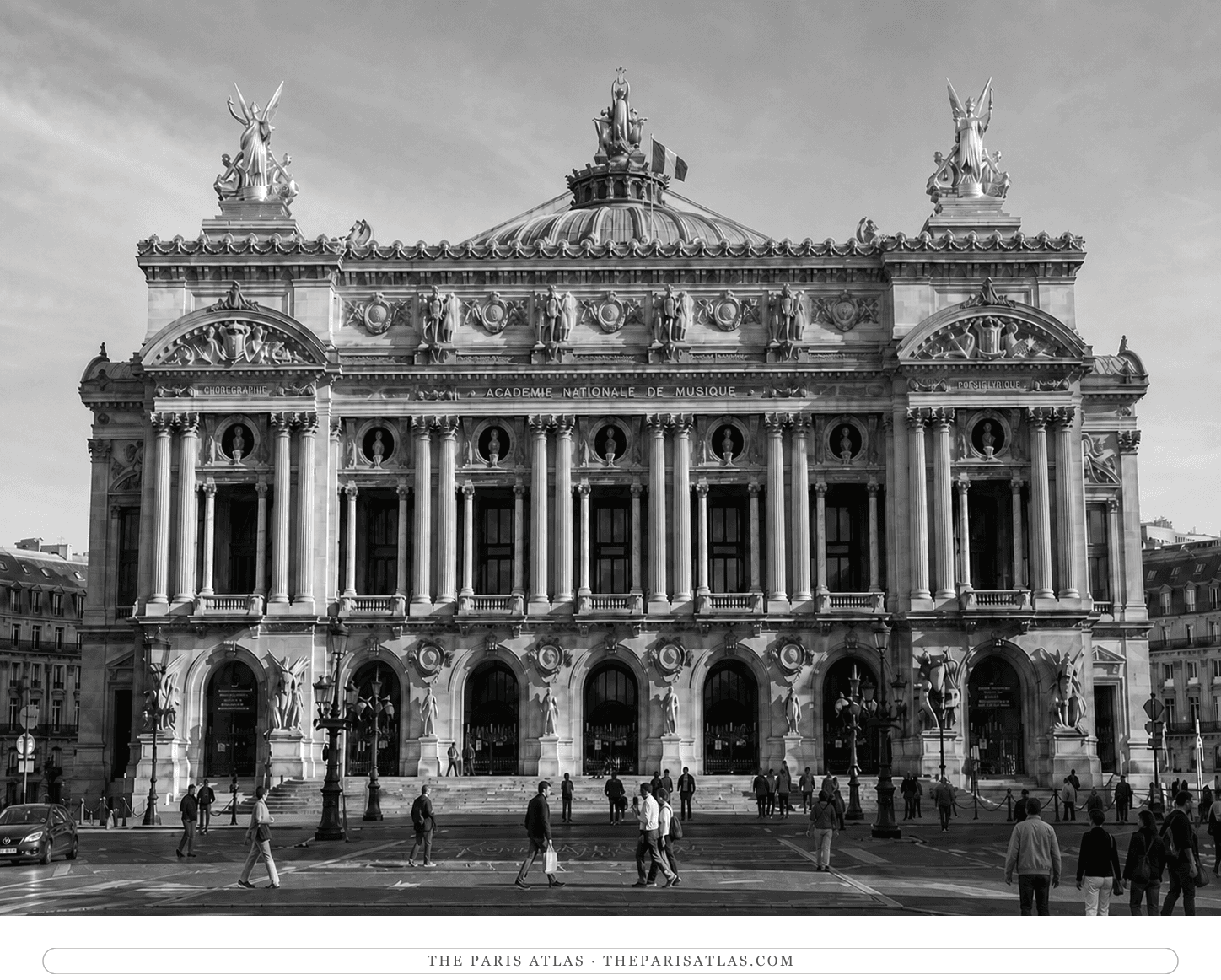
The Paris opera house — Charles Garnier's Second Empire palace on the place de l'Opéra, inaugurated on 5 January 1875 and the home of the Paris Opera ever since.
Visit the placeThe sources below include histories, archival materials, scholarly research, and official records that informed this page. They document Hôtel Scribe, the people connected to it, and its place in Paris.


Boris's hundred francs a day, and the hour spent waiting on the pavement outside.
Web source consulted for documented facts and historical context presented on the Hôtel Scribe page.
Biographical evidence used to verify chronology, relationships, and historical context connected to Hôtel Scribe.

Map data used to verify addresses, geographic coordinates, and the placement associated with Hôtel Scribe.
These references provide the documented foundation for this page's history and context. Claim-level citations remain attached to the specific claims they support.
 Explore more resources
Newsletter
The cafés, studios, and walk-up flats where the work was made — one story from the map in every letter.