Dante Alighieri quotes
40 quotations, each verified against its source and credited to the work it comes from — the wording as Dante Alighieri wrote or said it, not as the internet passes it around. Page 2 of 2.
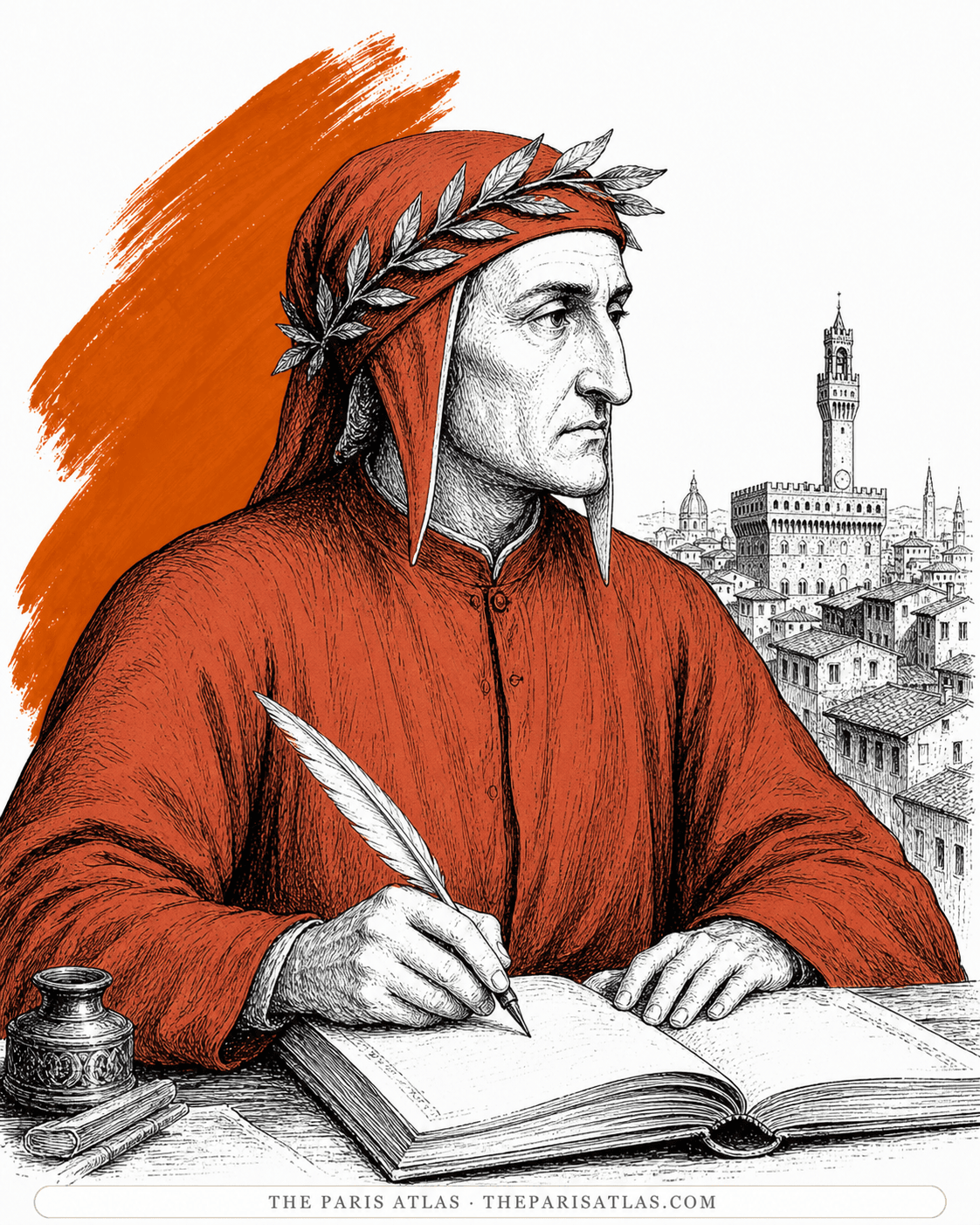
The vernacular we were hunting, which gives off its scent in every city and makes its home in none.
In that part of the book of my memory before the which is little that can be read, there is a rubric, saying, Incipit Vita Nova.In quella parte del libro de la mia memoria, dinanzi a la quale poco si potrebbe leggere, si trova una rubrica, la quale dice: Incipit vita nova.
At that moment, I say most truly that the spirit of life, which hath its dwelling in the secretest chamber of the heart, began to tremble so violently that the least pulses of my body shook therewith.In quello punto dico veracemente che lo spirito de la vita, lo quale dimora ne la secretissima camera de lo cuore, cominciò a tremare sì fortemente, che apparia ne li menimi polsi orribilmente.
It came into my mind that I might make use of this lady as a screen to the truth.E mantenente pensai di fare di questa gentile donna schermo de la veritade.
My lady looks so gentle and so pure / When yielding salutation by the way, / That the tongue trembles and has nought to say, / And the eyes, which fain would see, may not endure.Tanto gentile e tanto onesta pare / la donna mia quand’ella altrui saluta, / ch’ogne lingua deven tremando muta, / e li occhi no l’ardiscon di guardare.
This is not a woman, but one of the beautiful angels of Heaven.Questa non è femina, anzi è uno de’ bellissimi angeli di cielo.
It is my hope that I shall yet write concerning her what hath not before been written of any woman.Spero di dire di lei quello che mai non fu detto d’alcuna.
Midway upon the journey of our life / I found myself within a forest dark, / For the straightforward pathway had been lost.Nel mezzo del cammin di nostra vita / mi ritrovai per una selva oscura, / ché la diritta via era smarrita.
All hope abandon, ye who enter in!Lasciate ogne speranza, voi ch’intrate.
There is no greater sorrow / Than to be mindful of the happy time / In misery.Nessun maggior dolore / che ricordarsi del tempo felice / ne la miseria.
Then hunger did what sorrow could not do.Poscia, più che ’l dolor, poté ’l digiuno.
Thence we came forth to rebehold the stars.E quindi uscimmo a riveder le stelle.
It is the light eternal of Sigier, / Who, reading lectures in the Street of Straw, / Did syllogize invidious verities.essa è la luce etterna di Sigieri, / che, leggendo nel Vico de li Strami, / silogizzò invidïosi veri.
Thou shalt have proof how savoureth of salt / The bread of others, and how hard a road / The going down and up another’s stairs.Tu proverai sì come sa di sale / lo pane altrui, e come è duro calle / lo scendere e ’l salir per l’altrui scale.
The Love which moves the sun and the other stars.l’amor che move il sole e l’altre stelle.
From the books
Every book with a quote collection of its own, each line verified against the text.
- Convivio quotes · 5 lines (1307)
- De Monarchia quotes · 5 lines (1313)
- De Vulgari Eloquentia quotes · 5 lines (1305)
- La Vita Nuova quotes · 6 lines (1294)
- The Divine Comedy quotes · 8 lines (1321)
The Friday Letter
One story from the atlas, every Friday.
No algorithms chasing attention. A work, a place, and the connection between them — with the history checked.