The Paris AtlasCharting the artists, works, and places worth returning to.
  • Fashion designer
  • Architect
· Spanish-French · 1934–2023

Paco Rabanne

Trained as an architect, he opened a Paris fashion house in 1966 with a show of twelve dresses made of metal and plastic plaques linked by wire — clothes built rather than sewn. Coco Chanel called him a metalworker. The perfume business he began with the Puig family in 1969 outlasted the clothes and made the name global.

Details

Lived
1934–2023
Born
18 February 1934
Birthplace
Pasaia, Spain
Birth name
Francisco Rabaneda Cuervo
Died
3 February 2023 · aged 88
Nationality
Spanish-French
Profession
Fashion designer
Major works
Manifesto: 12 Unwearable Dresses in Contemporary Materials (1966); the chain-mail dresses; Calandre (1969)
Roles
Fashion designerArchitect

About Paco Rabanne

Paco Rabanne came to Paris in 1951 to train as an architect and stayed to build dresses. In 1966 he showed his first collection under a title that was also a warning — Manifesto: 12 Unwearable Dresses in Contemporary Materials. The dresses were plaques of metal and Rhodoid, a plastic, hung together on wire rings. The models walked barefoot because he could not afford to shoe them. Gabrielle 'Coco' Chanel, the couturière whose tweed suits were the opposite of everything on that runway, said of him: 'He's a metalworker not a couturier.'

He was born Francisco Rabaneda Cuervo in the Basque town of Pasaia, near San Sebastián, in 1934. His father, a colonel in the Spanish Republican army, was executed during the Spanish Civil War by the forces of General Francisco Franco; his mother, a seamstress at the original San Sebastián fashion house of the couturier Cristóbal Balenciaga, took her children out of Spain, and Paco grew up in Brittany. The escape and the arrival shaped what he made: clothes he described as armour, sold to a decade that wanted the future, and never sewn if they could be riveted, taped or linked instead.

A refugee childhood, then the Beaux-Arts

Francisco Rabaneda Cuervo was born on 18 February 1934 at Pasaia, a fishing port beside San Sebastián in the Spanish Basque Country. His father was a colonel in the army of the Spanish Republic and was executed by Franco's forces during the civil war of 1936 to 1939. His mother worked as a seamstress for Cristóbal Balenciaga, the Spanish couturier whose first house was in San Sebastián — the Victoria and Albert Museum in London, which holds Rabanne's clothes, calls her Balenciaga's head seamstress. She left Spain with her mother and four children, and the family were among the refugees camped near Guernica when German aircraft flying for Franco destroyed the town in 1937. They reached France, where Balenciaga had also moved, and Rabanne was brought up in Brittany.

In 1951 he came to Paris to study at the École nationale supérieure des Beaux-Arts, the state art and architecture school on the Left Bank, and specialised in building with reinforced concrete. He worked in architecture for most of the following decade. He paid for the training by making things with his hands for the couture houses a few streets away: abstract jewellery and novelty buttons in metal, leather and coffee beans for Elsa Schiaparelli, Christian Dior, Balenciaga, Pierre Cardin and Hubert de Givenchy, sketches for the shoemaker Charles Jourdan, and outsized plastic accessories for the young ready-to-wear designers of the early 1960s. By the time he made a dress he had spent ten years learning fashion from the outside — through its fastenings.

1966: twelve unwearable dresses

After a first presentation of experimental dresses in 1964, he opened a studio in 1965 and showed his first collection in Paris the following year. Its title was the argument: Manifesto: 12 Unwearable Dresses in Contemporary Materials. The dresses were mini-length, assembled from flat plaques of metal and of Rhodoid — a semi-transparent plastic — flexibly linked by wire ties, with no seam, no thread and no cloth anywhere in them. He showed the clothes on Black and white models — he and Yves Saint Laurent were among the first designers to cast non-white models on a Paris catwalk — and sent them out barefoot because shoes were beyond his budget. He also ran a soundtrack under the show, which few designers then did.

Who cares if no one can wear my dresses. They are statements.

Paco Rabanne to the French press after the 1966 show

The French fashion press was appalled and said so, which he encouraged. New York was delighted: Diana Vreeland, the editor of American Vogue, and Eugenia Sheppard of the New York Herald Tribune both took up the alternatives to cloth, and the art collector Peggy Guggenheim bought the dresses and wore them. Rabanne kept going into wood, mirror shards, mother-of-pearl paillettes — large sequin-like discs — that rang like wind chimes as the wearer moved, and a nylon-strengthened paper he taped and heat-sealed instead of stitching. He planned disposable paper dresses to be sold from vending machines to travellers in the world's new airports. That part never sold.

What he was after, he said, was a warrior heroine: a Joan of Arc who needed armour. The clothes photographed extremely well and the magazines ran them everywhere.

Who actually wore them

The customers were performers and collectors rather than the couture clientele. Françoise Hardy, the French singer whose cool, spare records defined 1960s pop in France, wore Rabanne on stage in gold and silver, including a dress made from nine kilograms of gold in 1968; the metal had to be adjusted with pliers between numbers. Jane Birkin, the English actor and singer then living in Paris, the American film actor Mia Farrow, and Peggy Guggenheim were among the others he dressed. For the 1967 comedy Two for the Road he contributed a metal-paillette mini-dress to Audrey Hepburn's wardrobe — the first screen wardrobe she had worn that was not from Givenchy, after years of dressing exclusively in his clothes.

The film most often attached to his name is Barbarella, Roger Vadim's science-fiction fantasy of 1968 starring Jane Fonda, and here the record needs care. The Victoria and Albert Museum's catalogue says Rabanne designed Fonda's wardrobe. The Guardian, the British newspaper, reporting his death in 2023, states that the costumes were designed by the French costume designer Jacques Fonteray and that Rabanne is often credited in error, his space-age look being the source of the idea rather than the clothes; the paper's obituary two days later was amended to say he inspired rather than made them. What is not disputed is the influence: the bare-limbed, metal-trimmed body armour that fantasy heroines have worn ever since starts here.

The perfume, the Puig years, and the prophecies

The lasting business was scent. In 1969 the Puig family, perfumers from Barcelona with a new Paris office, backed his first fragrance, Calandre. Paco Rabanne Pour Homme followed in 1973 and stayed in production for decades; the last scent he helped develop himself was 1 Million in 2008. Puig bought the fashion house in 1987. Meanwhile the clothes moved to the usual Paris model of licensing the name to outside manufacturers — some 140 licences, menswear ready-to-wear from 1983, womenswear from 1990 — and Rabanne retired in 1999.

He was as well known in France for what he said as for what he made. He chose the name Paco Rabanne partly because it has eleven letters, an auspicious number in numerology, and he published detailed accounts of his encounters with God and his previous lives, along with books on Buddhism, druids and coming catastrophes. In 1999 he predicted that the Mir space station would fall on Paris and destroy it. It did not, and the French press nicknamed him Wacko Paco. His own life was plain: few possessions, sober dress, and for a period the funding of hospices for people with Aids run by Benedictine monks. France made him an officer of the Légion d'honneur, its highest order of merit, in 2010.

He died on 3 February 2023, aged 88. The house he founded reopened its clothing line in 2011 and has been designed since 2013 by the French designer Julien Dossena; in March 2023 the Paris show closed with five original Rabanne dresses from the 1960s, and the front row wore chain mail.

Life events

  1. 1934

    Born Francisco Rabaneda Cuervo on 18 February at Pasaia, near San Sebastián, in the Spanish Basque Country.

    Veronica Horwell, Paco Rabanne obituary (2023)

  2. 1936–1939

    His father, a colonel in the Republican army, is executed by Franco's forces; his mother, a seamstress at Balenciaga's San Sebastián house, takes the children out of Spain. The family are among refugees near Guernica when the town is bombed in 1937, and reach France, where he is brought up in Brittany.

    Veronica Horwell, Paco Rabanne obituary (2023); Spanish fashion designer Paco Rabanne dies aged 88 (2023)

  3. 1951

    Arrives in Paris to study at the École nationale supérieure des Beaux-Arts, specialising in reinforced-concrete construction, and works in architecture for most of the next ten years.

    Veronica Horwell, Paco Rabanne obituary (2023); Spanish fashion designer Paco Rabanne dies aged 88 (2023)

  4. 1950s–1960s

    Pays for his studies by making buttons, jewellery and plastic accessories for Schiaparelli, Dior, Balenciaga, Cardin and Givenchy.

    Veronica Horwell, Paco Rabanne obituary (2023); Mini-dress, Paco Rabanne, Paris, 1968 (museum no. T.99-1988)

  5. 1964

    Shows a first presentation of his own, Twelve Experimental Dresses.

    Spanish fashion designer Paco Rabanne dies aged 88 (2023)

  6. 1966

    Opens his Paris house and shows Manifesto: 12 Unwearable Dresses in Contemporary Materials — metal and Rhodoid plaques on wire, worn by barefoot Black and white models. Chanel: 'He's a metalworker not a couturier.'

    Veronica Horwell, Paco Rabanne obituary (2023); Spanish fashion designer Paco Rabanne dies aged 88 (2023)

  7. 1967

    Contributes a metal-paillette mini-dress to Audrey Hepburn's wardrobe in Two for the Road, her first screen clothes after Givenchy.

    Veronica Horwell, Paco Rabanne obituary (2023)

  8. 1968

    Françoise Hardy performs in a Rabanne dress made from nine kilograms of gold; Barbarella reaches cinemas and fixes his name to the space-age look.

    Paris pays tribute to futuristic fashion of late Paco Rabanne (2023); Spanish fashion designer Paco Rabanne dies aged 88 (2023)

  9. 1969

    Launches his first fragrance, Calandre, backed by the Puig family perfume company of Barcelona.

    Veronica Horwell, Paco Rabanne obituary (2023)

  10. 1987

    Puig takes over the fashion house.

    Veronica Horwell, Paco Rabanne obituary (2023)

  11. 1999

    Retires from fashion, in the same year as his public prediction that the Mir space station would fall on Paris.

    Veronica Horwell, Paco Rabanne obituary (2023); Spanish fashion designer Paco Rabanne dies aged 88 (2023)

  12. 2010

    Made an officer of the Légion d'honneur.

    Veronica Horwell, Paco Rabanne obituary (2023)

  13. 2023

    Dies on 3 February, aged 88. The Paris show that March ends with five of his original 1960s dresses.

    Veronica Horwell, Paco Rabanne obituary (2023); Paris pays tribute to futuristic fashion of late Paco Rabanne (2023)

People they knew

Documented connections — every one carries its source.

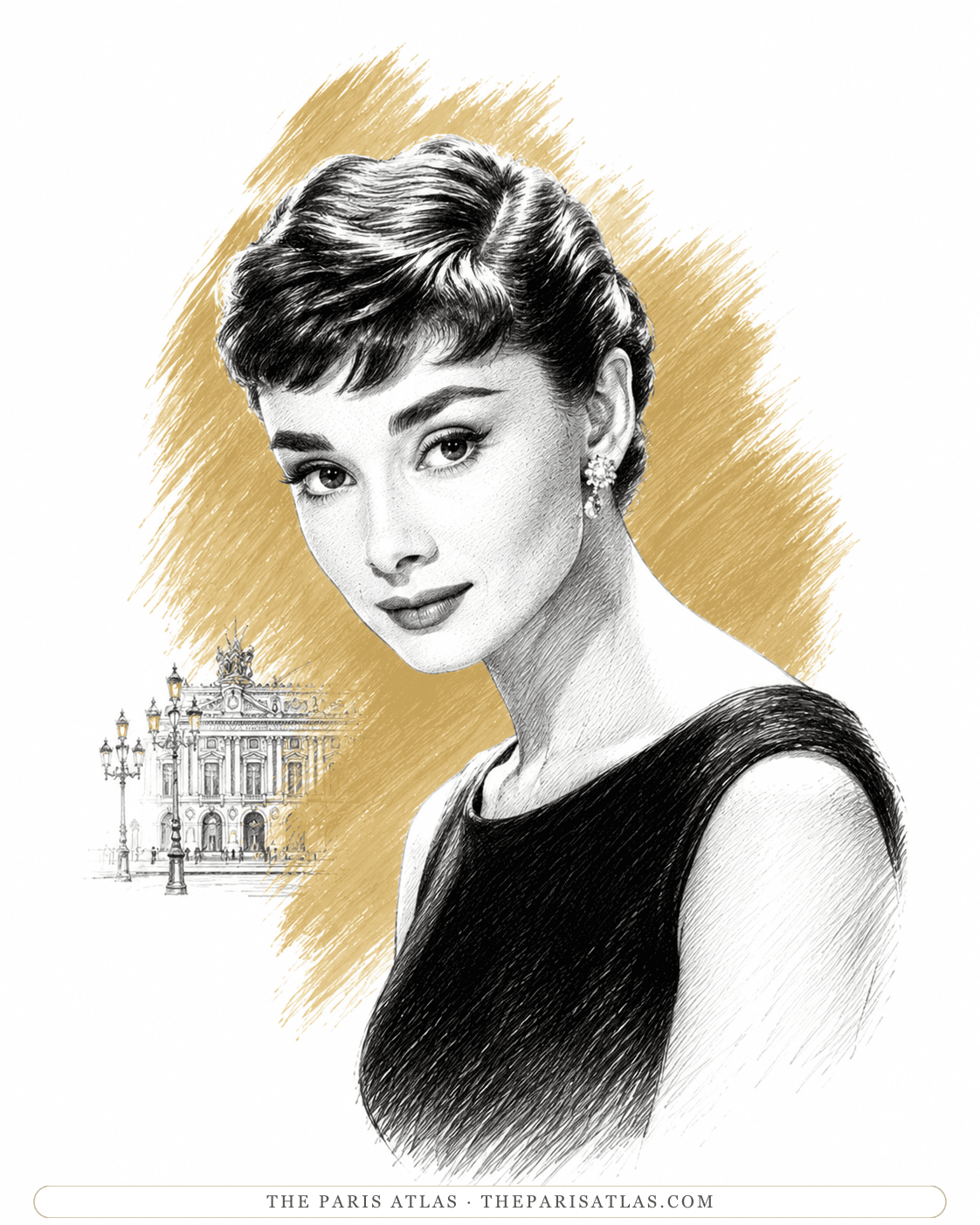
Illustrated portrait of Audrey Hepburn

Audrey Hepburn

  • Actor

Collaborated with · 1967

One film, one dress: Rabanne contributed a metal-paillette mini-dress to Audrey Hepburn's wardrobe for the 1967 comedy Two for the Road, her first screen clothes after years dressed exclusively by Hubert de Givenchy. The claim records that single documented professional contribution and not an ongoing working partnership, which the sources do not describe.

Veronica Horwell, Paco Rabanne obituary (2023)

Questions about Paco Rabanne

Who was Paco Rabanne?

A Spanish-born fashion designer who worked in Paris, born Francisco Rabaneda Cuervo in the Basque Country in 1934 and died in France in 2023. He trained as an architect at the École nationale supérieure des Beaux-Arts in Paris and opened a fashion house in 1966 with a collection of dresses made from metal and plastic plaques linked by wire rather than from cloth and thread. He also created the fragrance business — Calandre in 1969, Paco Rabanne Pour Homme in 1973, 1 Million in 2008 — that carried the name worldwide.

What were Paco Rabanne's dresses made of?

Metal and plastic, mostly. His 1966 debut used flat plaques of aluminium and of Rhodoid, a semi-transparent plastic, joined by wire ties and metal rings. Later collections used wood, mirror shards, mother-of-pearl paillettes, leather triangles held by studs, and a nylon-strengthened paper he taped and sealed instead of sewing. The Victoria and Albert Museum in London holds several examples, including a chain-mail evening dress of 1967 and a leather-and-stud mini-dress of 1968.

Did Paco Rabanne design the costumes for Barbarella?

Sources disagree, and the safest answer is that the look is his and the costumes probably are not. The Victoria and Albert Museum's catalogue credits him with Jane Fonda's wardrobe for the 1968 film. The Guardian, in its 2023 report of his death, says the costumes were designed by Jacques Fonteray and that Rabanne is often credited in error; its obituary was amended two days later to say he inspired rather than made them.

Why did Coco Chanel call Paco Rabanne a metalworker?

Because his clothes were assembled, not sewn. Gabrielle 'Coco' Chanel — whose jersey and tweed suits were the standard of Paris dressmaking — said of him: 'He's a metalworker not a couturier.' Rabanne had trained as an architect and worked with pliers, rings and wire rather than with needle and thread, and he did not treat the remark as an insult; he had already told the press that it did not matter whether anyone could wear his dresses, because they were statements.

Which celebrities wore Paco Rabanne?

The French singer Françoise Hardy performed in his gold and silver dresses, including one made from nine kilograms of gold in 1968 that had to be adjusted with pliers between songs. Audrey Hepburn wore one of his metal-paillette mini-dresses in the 1967 film Two for the Road. Jane Birkin, Mia Farrow, Jane Fonda and the art collector Peggy Guggenheim also wore his clothes.

What is Paco Rabanne's most famous perfume?

Calandre, launched in 1969 with the backing of the Puig family perfume company of Barcelona, was the first and made his fortune. Paco Rabanne Pour Homme followed in 1973 and sold for decades. 1 Million, released in 2008, was the last fragrance he helped develop himself.

How did Paco Rabanne die?

He died on 3 February 2023 at the age of 88, two weeks short of his eighty-ninth birthday. His death was announced by the Puig group, which owns the brand. Published reports of the death did not state a cause.

Does the Paco Rabanne fashion house still exist?

Yes, under the shortened name Rabanne. Paco Rabanne himself retired in 1999 and the clothing line went quiet; the Spanish group Puig revived it in 2011 with the designer Manish Arora, and Julien Dossena has led it since 2013. The first show after Rabanne's death, in March 2023, ended with five of his original 1960s dresses.

Sourced claims

Every connection the graph holds for Paco, with the evidence behind it.

Collaborated with · 1967

Audrey Hepburn

One film, one dress: Rabanne contributed a metal-paillette mini-dress to Audrey Hepburn's wardrobe for the 1967 comedy Two for the Road, her first screen clothes after years dressed exclusively by Hubert de Givenchy. The claim records that single documented professional contribution and not an ongoing working partnership, which the sources do not describe.

Veronica Horwell, Paco Rabanne obituary (2023)

References

References

The sources below include biographies, scholarly essays, interviews, and primary materials that informed this page. They reflect both the historical record and ongoing critical conversations about Paco Rabanne and their work.

  1. 1Paco Rabanne obituary

    The Guardian, 2023

    Full-length obituary by Veronica Horwell — the fullest published account of the childhood, the Beaux-Arts years and the 1966 show.

    View source
  2. 2Spanish fashion designer Paco Rabanne dies aged 88

    The Guardian, 2023

    News report of his death, with the correction on the Barbarella costume credit.

    View source
  3. 3Paris pays tribute to futuristic fashion of late Paco Rabanne

    The Guardian, 2023

    Report on the first Paris show after his death, with the gold dress made for Françoise Hardy.

    View source
  1. 4Mini-dress, Paco Rabanne, Paris, 1968 (museum no. T.99-1988)

    Victoria and Albert Museum, London

    Museum catalogue record for a 1968 leather-and-stud mini-dress, with the museum's summary of his career.

    View source
  2. 5Evening dress in plastic and wire, Paco Rabanne, 1967 (museum no. T.165:1 to 3-1983)

    Victoria and Albert Museum, London

    Museum record for a 1967 chain-mail evening dress in plastic and wire.

    View source
i
Why these sources are here

These references anchor the page in the documented record and in the scholarly conversations around Paco Rabanne. Every claim on this page traces back to one or more of the works listed here.

Explore more resources