The Heroic Slave
Frederick Douglass
The Heroic Slave
Frederick Douglass's novella of 1853 about a real revolt on the slave ship Creole, told from the side of the man who led it.
Read our takeBenito Cereno
Herman Melville
An American captain spends a day aboard a drifting Spanish slave ship and fails to see that the enslaved people have taken it over.
In 1799 Captain Amasa Delano, an American sealer, sees a battered Spanish ship drift into a bay off the coast of Chile. He goes aboard to help. The Spanish captain, Benito Cereno, is sick and strange, and never leaves the side of his devoted servant, Babo. Delano spends the whole day aboard without guessing the truth. The enslaved Africans have already risen, killed many of the Spaniards, and are acting out a play for him. Herman Melville published the story in Putnam's Monthly Magazine in 1855.
Melville took the story from a real book. Amasa Delano, a sea captain from Duxbury, Massachusetts, published A Narrative of Voyages and Travels in Boston in 1817. Chapter XVIII tells how, in February 1805, his ship the Perseverance met the Spanish ship Tryal at the island of St. Maria off Chile.[1]
Melville changed some things and kept others. He moved the date to 1799 and renamed the ships the San Dominick and the Bachelor's Delight. He kept Delano's own name. Near the end he printed a long court deposition, closely based on the Spanish court papers that Delano had printed in his book.[2][1]
Almost everything is seen through Delano's eyes. Melville calls him a man of "singularly undistrustful good-nature." Delano notices dozens of warning signs and explains each one away. He also holds settled ideas about Black people, and the story uses those ideas to fool him.[2]
The story ran in three parts in Putnam's Monthly Magazine, from October to December 1855.[3] The next year Melville put it in The Piazza Tales, published by Dix & Edwards in New York.[2]
Delano's ship lies at anchor off St. Maria, a small, uninhabited island near the southern end of the coast of Chile. One grey morning a strange ship comes into the bay, flying no flag and steering badly. Delano thinks she is in trouble and rows over to her with food.[2]
The San Dominick is a Spanish merchant ship carrying enslaved Africans. Her figurehead is wrapped in canvas, and below it someone has chalked the words "Seguid vuestro jefe" (follow your leader). On deck four old Black men pick old rope apart, and six others sit polishing hatchets.[2]
Captain Benito Cereno is young, sick and nervous. His servant Babo holds him up and never leaves him alone. Benito tells a story of storms off Cape Horn and a fever that killed most of his crew and the slaves' owner. Delano finds him cold and rude, and sometimes wonders whether Benito is plotting against him.[2]
Strange things happen all day. Every two hours a huge chained man named Atufal is brought before Benito and asked to beg pardon, and he refuses. An old sailor throws Delano a complicated knot and whispers in English, "Undo it, cut it, quick." Babo shaves his master with a Spanish flag tucked under his chin. The razor draws blood. Delano is uneasy, but he always finds a harmless explanation.[2]
At last Delano says goodbye and climbs into his boat. Benito suddenly leaps down into it after him. Babo leaps too, with a dagger, and Delano thinks Babo is trying to protect his master. Then he sees Babo aiming a second dagger at Benito. He understands the whole day at once.
The San Dominick cuts her cable, and the canvas falls from the bow. The figurehead is a human skeleton. Benito cries that it is Aranda, his murdered friend, the owner of the slaves. Delano's men chase the ship and board her, and nearly twenty of the Africans are killed.
A court in Lima hears Benito's sworn statement. The ship had sailed from Valparaíso with 160 enslaved people. They rose, killed Aranda and many of the Spaniards, and ordered Benito to sail them home to Senegal. When Delano came aboard, Babo made the Spaniards act out a normal ship.
On the voyage to Lima, Delano asks Benito why he is still so sad now that he is saved. "The negro," Benito answers. Babo never speaks again. He is hanged, and his head is set on a pole in the plaza at Lima. Three months later Benito dies in a monastery, and does, "indeed, follow his leader."
Delano's book prints an extract from the Perseverance's logbook. On the morning of Wednesday, 20 February, a ship came round the south head of St. Maria. Delano went aboard in the whaleboat and stayed there. Word came back that she was a Spaniard out of Buenos Aires, carrying slaves and badly short of water.
The Spanish court papers that follow list the Africans on board. Babo, the leader of the revolt, had been killed. His son Mure had played the servant all day. The Spanish captain told the court that Mure was a man "of capacity and talents," who acted "with all the appearance of submission of the humble slave."
Melville gave the servant's part to Babo and let him live. The court's sentence also went into the story. The judge ordered the condemned men dragged to the gallows at the tail of a beast of burden, and the heads of five of them set on a pole at Talcahuano. In Melville's version, Babo's head watches the plaza at Lima.
Most of the story follows Delano's thoughts. He suspects Benito of piracy, then scolds himself for it. He admires Babo's loyalty and enjoys the "African love of bright colors" when Babo uses a flag as an apron. The reader slowly sees what Delano misses.
Then the story changes shape. The deposition, in dry legal language, tells the same day again from the other side. Afterwards Delano wants to forget it all. "See, yon bright sun has forgotten it all," he says. Benito answers that the sun and the sea forget "because they are not human."
Pierre Leyris translated the story for Gallimard in Paris. In 1951 Gallimard published Benito Cereno et autres contes de la véranda, his version of The Piazza Tales, with the story at the front and in the title.
Seguid vuestro jefe
Undo it, cut it, quick.
you are saved: what has cast such a shadow upon you?
Every clue is on the page from the first scene. The fun, and the horror, is watching Delano explain each one away.
Melville built the story from Amasa Delano's own account of the Tryal in 1805, including the Spanish court papers.
The last part drops the narrative and gives a sworn legal statement, which tells the same day from the other side.
The Melville House edition is 128 pages, and the whole story takes place in a single day.
An American sea captain from Duxbury, Massachusetts, cheerful and trusting. Most of the story is seen through his eyes.
The young Spanish captain of the San Dominick, sick, nervous and elegantly dressed.
Benito's small, devoted servant, who never leaves his master's side.
A huge man kept in chains, who says he was a king in his own land and refuses to beg Benito's pardon.
A gentleman of Mendoza and Benito's friend, who owned most of the enslaved people on board.
20 February 1805
Amasa Delano's ship Perseverance meets the Spanish slave ship Tryal off the island of St. Maria, Chile.
1817
Delano publishes A Narrative of Voyages and Travels in Boston, with the Spanish court papers on the Tryal.
October 1855
Putnam's Monthly Magazine prints the first part of Benito Cereno.
December 1855
Putnam's prints the last part.
1856
Dix & Edwards publish The Piazza Tales, with Benito Cereno following Bartleby.
1951
Gallimard publishes Pierre Leyris's French translation, Benito Cereno et autres contes de la véranda.
2007
Melville House publishes the story on its own in The Art of the Novella series.


The Heroic Slave
Frederick Douglass
Frederick Douglass's novella of 1853 about a real revolt on the slave ship Creole, told from the side of the man who led it.
Read our takeBartleby, the Scrivener
Herman Melville
Printed beside Benito Cereno in The Piazza Tales. Another story told by a well-meaning man who cannot see what is in front of him.
Read our takeBilly Budd
Herman Melville
Melville's last story, also set on a ship in the 1790s, also about a revolt feared by officers and ending in a court.
Read our takeMoby-Dick
Herman Melville
Melville's great novel of a ship and its crew, where a captain's will decides everyone's fate.
Read our take
Frederick Douglass's own account of slavery, published ten years before Benito Cereno.
Read our takeAn American captain boards a Spanish slave ship off Chile to help, and spends the day aboard without realising that the enslaved Africans have taken over and are acting out a normal voyage for him. The truth comes out only when he leaves.
Yes. Melville used Amasa Delano's 1817 book A Narrative of Voyages and Travels, which describes the revolt on the Spanish ship Tryal in 1805 and prints the Spanish court papers.
In three parts in Putnam's Monthly Magazine, from October to December 1855. Melville collected it in The Piazza Tales in 1856.
"Follow your leader." The words are chalked on the ship's bow under the covered figurehead, and they return in the story's last line.
Benito Cereno's servant, who seems devoted to him all day. In the real case Melville drew on, the leader of the revolt was named Babo, and his son Mure played the servant.
Through its French translation. Gallimard in Paris published Pierre Leyris's version in 1951, as the title story of his French edition of The Piazza Tales.
ISBN 9781933633053 is the Melville House paperback of 2007, in The Art of the Novella series, 128 pages.
Explore authors with a similar voice, perspective, and influence.
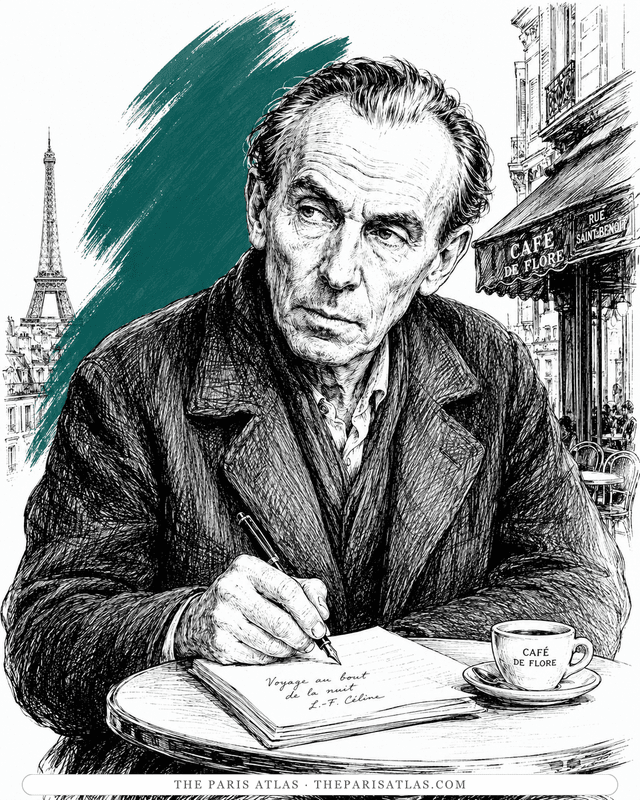
The doctor of the Paris slums who wrote the century's blackest, funniest novel — and changed the sound of French prose.
View author
American novelist and composer whose expatriate fiction explores dislocation, unstable intimacy, fatalism, and North Africa.
View author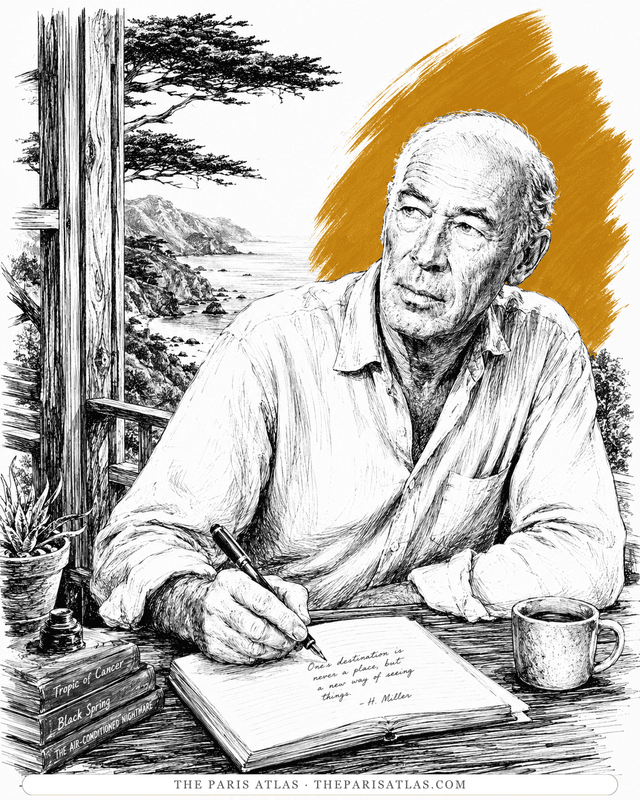
The Brooklyn dropout who arrived in Paris broke at thirty-eight and wrote the exuberant, banned books that ended American censorship.
View authorThe sources below include the primary text, editions, scholarship, archival materials, and other records that informed this page. They document Benito Cereno, its publication, and its place in literary history.


Amasa Delano's own account of the Tryal, with the ship's log and the Spanish court papers.
Dates of the Putnam's printing.
Edition record for ISBN 9781933633053.
Contents and text basis of the Penguin Classics collection.

Catalogue record for Pierre Leyris's French translation.
The primary text represented by this page, used for descriptions of the work’s contents and for any quoted passages shown here.
The primary text is the baseline reference for every book page. Additional references document publication history, interpretation, and historical context where that evidence is available.
 Explore more resources