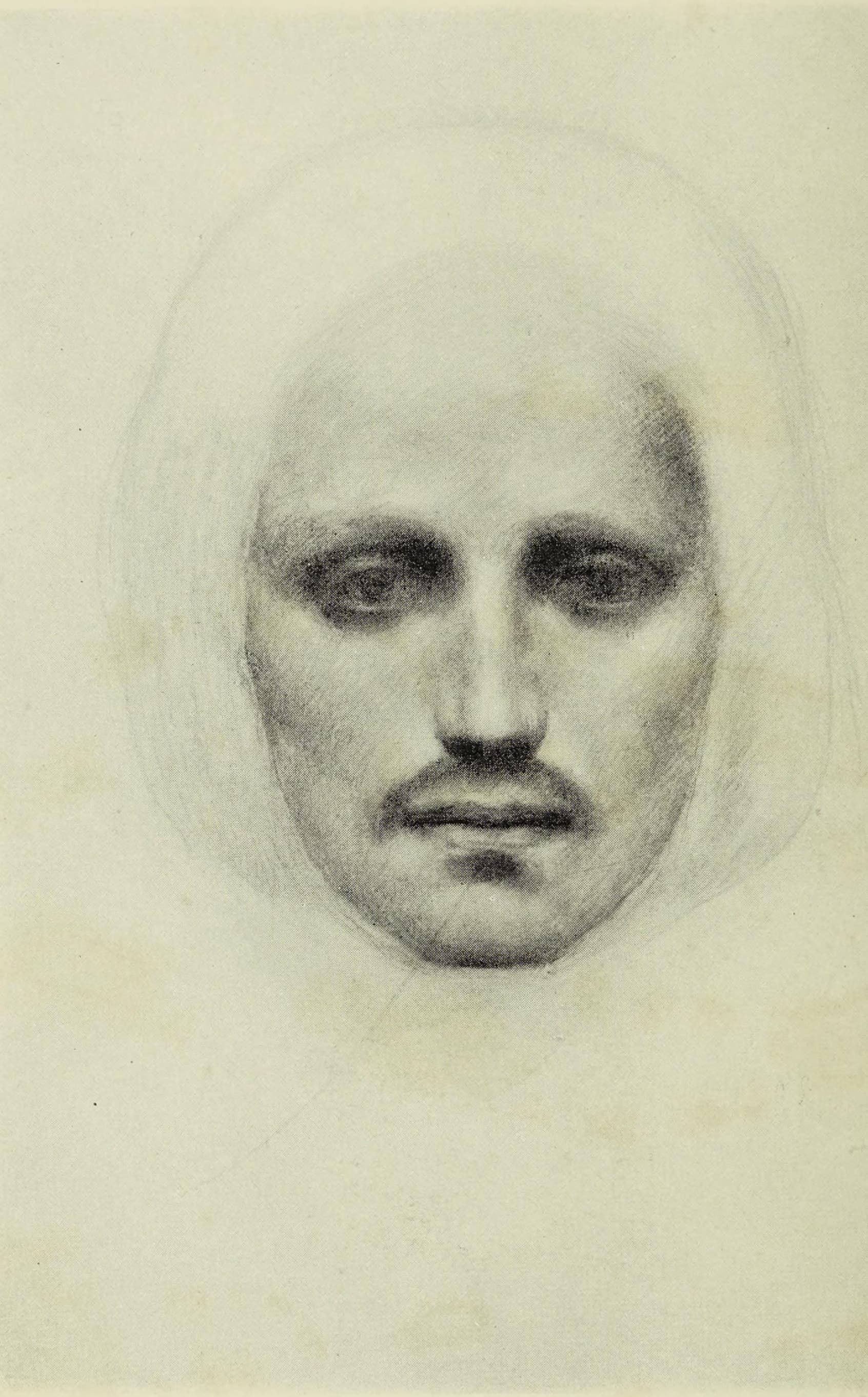
Face of Almustafa
A man's face, drawn frontally in charcoal and printed as the first thing a reader of The Prophet sees. Kahlil Gibran made the twelve illustrations for the book himself, and Alfred A. Knopf tipped this one in facing the title page in September 1923. The face is usually identified as Almustafa, the prophet whose farewell sermons fill the volume.
- 1923
- Charcoal, reproduced as the frontispiece plate of The Prophet (Alfred A. Knopf, New York, 1923)
About Kahlil Gibran
What the drawing shows
A face looks straight out, filling the middle of the plate. The eyes sit in two pools of shadow, and only the eye on the viewer's left has a drawn iris and a lower lid; the other is darker and less defined. The nose is long and straight, with a highlight left down the ridge and the nostrils cut in as two dark wedges.
A dark moustache crosses the closed mouth and reaches wider than the lips. Below the chin the drawing simply stops. Two faint lines run down and to the left where a neck and a shoulder would be, and the rest of that area is bare.
The hair is barely there. On both sides it is a curtain of long, pale, almost vertical strokes, and across the top of the head it is a single faint arc of charcoal with nothing drawn inside it. A crescent of harder shadow marks the temple on the viewer's right and separates the face from that curtain.
No dimensions have been published for the original sheet, and Alfred A. Knopf printed no measurement in the book.
The plate and the book
The Prophet was published in New York in September 1923. The copyright page of a first-edition copy reads "COPYRIGHT, 1923, BY KAHLIL GIBRAN" and "Published September, 1923", with no reprint line, and it credits the trade: the type set and printed by the Vail-Ballou Co. of Binghamton, the plates engraved by the Beck Engraving Company of New York, and the binding by the Plimpton Press.
The verso of the half-title carries a single printed sentence about the illustrations, in capitals, and nothing else.
“The twelve illustrations in this volume are reproduced from original drawings by the author.”
That is the whole of the book's comment on its own pictures. There is no list of plates, no caption under any of them, and no title for a single one: the table of contents gives the twenty-six prose sections and their page numbers only. This plate is tipped in facing the title page; the other eleven are spread through the volume.
The title Face of Almustafa is therefore not the book's. It comes from later cataloguing, and the State Library of New South Wales used it, with the medium given as charcoal, when the drawing was shown in its 2010 exhibition Kahlil Gibran: The Prophet, The Artist, The Man.
Who Almustafa is
Almustafa is the prophet of the book, and the first sentence of the text introduces him.
“Almustafa, the chosen and the beloved, who was a dawn unto his own day, had waited twelve years in the city of Orphalese for his ship that was to return and bear him back to the isle of his birth.”
The people of Orphalese ask him to speak before he sails, and his answers make up the twenty-six sections of the book. The face on the frontispiece is the reader's only sight of him.
The training behind the drawing
Kahlil Gibran learned to draw heads in Paris. Mary Haskell, the Boston schoolmistress who paid for his training, sent him there in July 1908. He worked at the Académie Julian, in the atelier of Jean-Paul Laurens, and left it for the studio of Pierre Marcel-Béronneau by February 1909.
In December 1909 he began a series of pencil portraits in Paris that he came to call the Temple of Art. Auguste Rodin, Claude Debussy, Edmond Rostand and Henri Rochefort were all drawn for it. Thirteen years before The Prophet appeared, the four portraits hung together in New York: the Montross Gallery catalogue for December 1914 lists them as drawings numbers 26 to 29.
The frontal head, shaded with charcoal and set on bare paper, is the shape those portraits had taught him.
Where the original is
No public collection record for the original charcoal was found. Telfair Museums in Savannah, which holds the largest collection of Kahlil Gibran's art in the United States, does not list it, and the Metropolitan Museum of Art does not hold it either.
What is reproduced here is the printed plate, cropped from the Internet Archive's scan of a first-edition copy of the book, now in the Princeton Theological Seminary Library. At close range the halftone screen the Beck Engraving Company used is visible across the face.
Close reading
Reading the work, detail by detail
The reproduction is a crop of the printed plate from a first-edition copy of The Prophet, so what the close views enlarge is a 1923 halftone rather than the charcoal itself. The drawing puts everything into the face and abandons the rest of the sheet: the hair is a few pale strokes, and below the chin there are two faint lines and nothing else.
1.Both eyes sit in pools of shadow
Neither brow is drawn as hair. Both are shadow, and the sockets beneath them are the darkest charcoal on the plate. The eye on the viewer's left has a ringed iris and a visible lower lid; the eye on the viewer's right is a deeper, flatter pool with the iris barely indicated.
2.The nose keeps a white ridge
A strip of the paper is left untouched down the ridge of the nose, and the shading stops on either side of it. The nostrils are two dark wedges. The cheek on the viewer's right of the nose carries almost no shading at all.
3.The moustache is wider than the mouth
The moustache is a dark band that reaches well past the corners of the mouth. The lips are closed, with a hard line between them and a small highlight left on the lower lip. Shadow gathers at both corners and runs down towards the jaw.
4.The top of the head is one faint arc
The crown is a single arc so faint it is easy to miss. Nothing is drawn inside it: the head has an outline at the top and no hair. The tone of the paper carries straight through the line.
5.The hair is a curtain of long pale strokes
On this side the hair is a run of long, nearly vertical strokes, laid parallel and kept pale. A slightly firmer line curves down the outer edge to hold the shape. The paper shows through everywhere between the strokes.
6.A crescent of shadow cuts the temple
A hard crescent of shadow curves from the brow down past the eye and separates the face from the hair. Beyond it two or three faint arcs mark the outer edge of the hair. A small ochre stain on the page sits between those arcs.
7.Below the jaw the drawing stops
Under the chin there are two faint lines running down and to the left, and then nothing. No neck is modelled, no collar is drawn, and no shoulder arrives. A small dark speck sits on the blank area at the left.
8.The printing screen is visible up close
At this range the tone breaks into an even grid of dots. The plate was engraved for the book by the Beck Engraving Company of New York, named on the copyright page, and the screen is theirs rather than the artist's. It is the clearest sign that this is a printed plate and not the charcoal sheet.
Timeline
1908
Kahlil Gibran reaches Paris in July on money sent by Mary Haskell and joins the atelier of Jean-Paul Laurens at the Académie Julian.
1909
He leaves the Académie Julian for the studio of Pierre Marcel-Béronneau, and in December begins the pencil portraits he later calls the Temple of Art.
1914
The Montross Gallery in New York shows his work from 14 to 30 December; the Temple of Art portraits of Auguste Rodin, Claude Debussy, Henri Rochefort and Edmond Rostand are numbers 26 to 29 in the catalogue.
1923
The Prophet is published in September by Alfred A. Knopf, with this drawing as the frontispiece and eleven further plates.
2010–11
Shown as Face of Almustafa in Kahlil Gibran: The Prophet, The Artist, The Man at the State Library of New South Wales, 4 December to 20 February.
Where to see it
Published in The Prophet (Alfred A. Knopf, New York, 1923)
This is a published reproduction, not a confirmed museum display. A public viewing address for the original has not been listed.
Frequently asked questions
What is the drawing at the front of The Prophet?
A charcoal head, printed as the frontispiece facing the title page of the 1923 first edition. Kahlil Gibran drew it himself, as he did all twelve illustrations in the book. Later catalogues call it Face of Almustafa, after the prophet whose sermons make up the text.
Did Kahlil Gibran illustrate The Prophet himself?
Yes. The verso of the half-title states that the twelve illustrations in the volume are reproduced from original drawings by the author. He was a trained painter as well as a writer, and had studied in Paris from 1908 to 1910.
How many illustrations are in The Prophet?
Twelve, including this frontispiece. The book gives no caption for any of them, no list of plates, and no titles: the contents page lists only the twenty-six prose sections. The plates are tipped in through the volume.
Is Face of Almustafa the drawing's real title?
Not one printed by the book. The 1923 edition captions none of its plates, so the title comes from later cataloguing; the State Library of New South Wales used it, and gave the medium as charcoal, for its 2010 exhibition.
Where is the original drawing?
Not established. No museum object record for it was found, including at Telfair Museums in Savannah, which holds the largest public collection of Kahlil Gibran's art in the United States. What can be seen is the printed plate.
Can the image be reproduced freely?
Yes. The Prophet was published in the United States in September 1923, and works published there before 1930 are in the public domain. Kahlil Gibran died in April 1931, so the drawing is also out of copyright in the European Union.
More by Kahlil Gibran
If you like Kahlil Gibran
Explore painters from the same movements and circles.
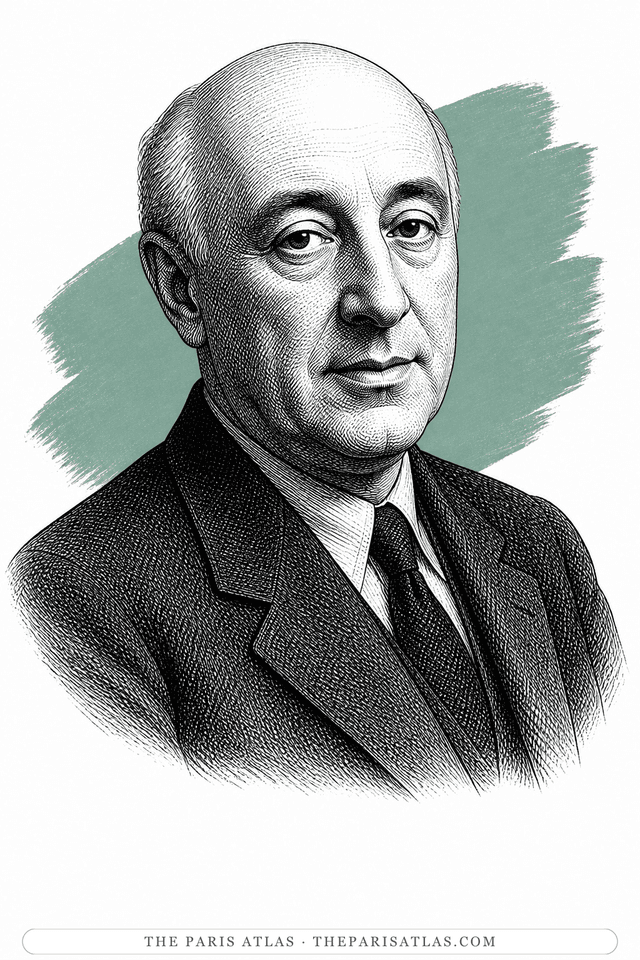
Jean Arp
Strasbourg-born sculptor and poet — Hans in German, Jean in French, both all his life — who co-founded Dada at the Cabaret Voltaire in 1916, composed collages by dropping torn paper 'according to the laws of chance', and settled at Meudon outside Paris in a house his wife Sophie Taeuber-Arp designed.
View artist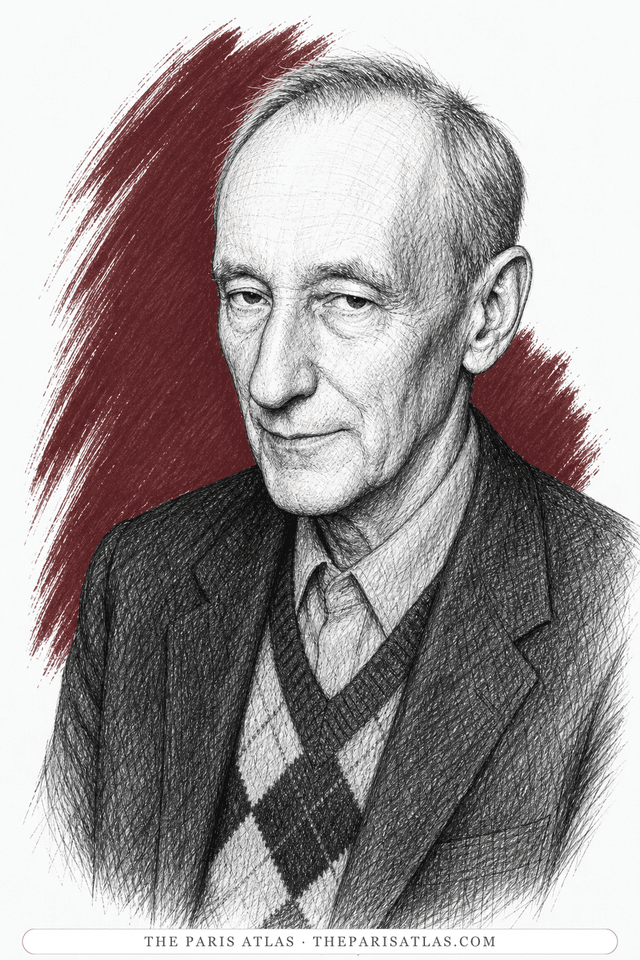
William S. Burroughs
American Beat novelist, essayist, performer and visual artist who completed Naked Lunch at the Beat Hotel in Paris and made cut-up writing a defining avant-garde method.
View artist
Leonora Carrington
English painter and writer who fled a debutante's future for Surrealist Paris at twenty, survived the war's wreckage of that life — internment for her lover Max Ernst, an asylum in Spain for her — and rebuilt herself in Mexico into one of the century's great painters of the uncanny.
View artist
References
The sources below include collection records, catalogues, scholarly research, and primary materials that informed this page. They document Face of Almustafa, its making, and its place in cultural history.

1Kahlil Gibran, The Prophet (New York: Alfred A. Knopf, 1923) — Internet Archive scan of the Princeton Theological Seminary Library copy
ArchiveAlfred A. Knopf, 1923Used forArchival evidence used to document the historical record connected to Face of Almustafa.

2Kahlil Gibran: The Prophet, The Artist, The Man — exhibition item captions, State Library of New South Wales, 4 December 2010 to 20 February 2011
WebsiteState Library of New South Wales, SydneyUsed forWeb source consulted for documented facts and historical context presented on the Face of Almustafa page.
3Exhibition of Pictures by Kahlil Gibran, December 14–30, 1914
Exhibition catalogueMontross Gallery, New York, 1914Used forCatalogue scholarship used to verify attribution, provenance, chronology, and interpretive context for Face of Almustafa.
4Prophet: The Life and Times of Kahlil Gibran
BiographySt. Martin's Press, 1998Used forThe standard biography, cited for the Académie Julian atelier of Jean-Paul Laurens, the move to Pierre Marcel-Béronneau's studio, and the start of the Temple of Art portraits in December 1909.
5The Art of Kahlil Gibran — Telfair Museums exhibition, 2010–11
WebsiteTelfair Museums, Savannah, GeorgiaUsed forWeb source consulted for documented facts and historical context presented on the Face of Almustafa page.
6Gibran: Man & Poet — the Kahlil Gibran Collective
WebsiteThe Kahlil Gibran CollectiveUsed forWeb source consulted for documented facts and historical context presented on the Face of Almustafa page.
These references provide the documented foundation for this work's history and interpretation. Claim-level citations remain attached to the specific claims they support.
 Explore more resources