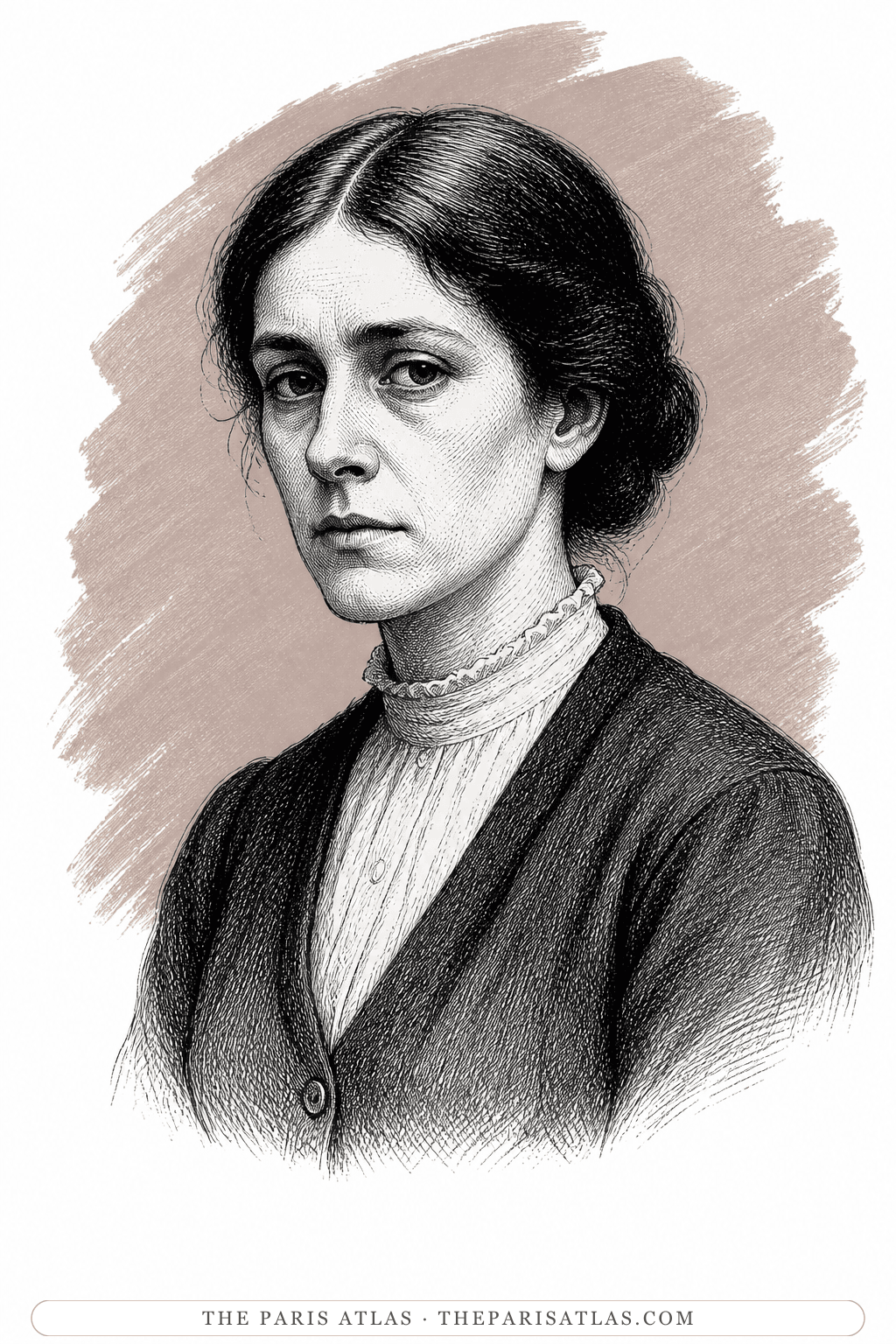
Blanche
Moloch's wife, holding the household together through its daily warfare — drawn from Miller's first marriage, to the pianist Beatrice Wickens.
For her husband to keep his job, come home in the evenings, and stop making a show of their marriage in front of guests.
The book

At a glance
- Blanche, the wife of Dion Moloch, who hires and fires messenger boys for a New York telegraph company
- The piano — convent-trained, technically exact, by her husband's account uninterested in anything newer
- A Brooklyn flat, with a small daughter, Edda
- A maiden aunt; her parents lived in Delaware and she had seen them about half a dozen times since childhood
- Hyper-sexed — the word she ends every quarrel with
- A "diseased soul"
- "Most of the time I think I'm living with a lunatic."
- Beatrice Wickens · Rochester, New York — raised by foster parents and schooled in a convent
Who they are in the book
Spoiler-freeBlanche is the wife of Dion Moloch, the main character of Moloch, a novel by the American writer Henry Miller. Miller wrote it in 1927 and 1928 and never published it, and it first appeared in 1992, twelve years after his death. Her husband is the personnel manager of a New York telegraph company, which means his job is hiring and firing the boys who deliver telegrams around the city. Blanche is a pianist. She keeps their flat in Brooklyn and raises their small daughter, Edda.
The marriage runs on argument. Miller writes that it is easier for the two of them to quarrel than for a preacher to say Amen. Moloch stays out most evenings, and on the rare nights he does come home he brings company with him, and the company sits talking philosophy until the icebox is empty. Blanche feeds them, refuses to join the conversation, and is baited by her husband for refusing. She does not believe in friends and hardly sees anyone.
Blanche does not say much in the book, and what she says lands. She tells a house guest that most of the time she thinks she is living with a lunatic. She calls her husband hyper-sexed, and whatever a quarrel started over, she finishes it with that word. She dislikes Prigozi, the young medical student her husband confides in, and thinks he has no business in their marriage. On the mornings Moloch will not get out of bed, she is the one who telephones his office with an excuse, and she lives in fear that somebody will see him out on the street on a workday and report him.
Almost everything else the book says about Blanche comes through her husband, and the novel itself flags that account as unreliable. When Prigozi tells Moloch he is being unfair, that Blanche is to be pitied and that no sensitive person can be treated that way indefinitely without breaking, Moloch says nothing at the time and then privately admits the point: she was not so bad, and he knew how much he had exaggerated. The book goes further later. Moloch used to get up in an old-fashioned nightshirt and clown around her, and stand in front of her swearing at her, deliberately, to break her cold stare and force some reaction out of a woman he had decided was, in his own phrase, a diseased soul.
Blanche is drawn from Beatrice Wickens, the pianist Henry Miller married in June 1917 and left in 1923 for the dancer June Miller, who became his second wife. Mary V. Dearborn, the biographer who found the lost manuscript in 1988 and wrote the introduction to the 1992 Grove Press edition, identifies the character as modelled on her, and describes the couple's life in the novel as an extended brawl. The book stays close to the biography. Beatrice Wickens was raised by foster parents and schooled in a convent; Blanche in the novel was brought up under the guardianship of a maiden aunt and still plays the pieces she learned at the convent. Miller and Beatrice Wickens had a daughter, Barbara, born in 1919, and the child in the book is called Edda.
This profile is drawn from the Grove Press text of 1992, read in the Internet Archive's scan. Where the novel passes judgement on Blanche, the judgement is her husband's.
How Blanche Is Portrayed
- A pianist trained in a conventBlanche plays the piano, and her husband has decided the instrument is wasted on her. By his account she has more talent than any of his friends' wives and does nothing with it, never opens a score of Stravinsky, Schoenberg or Honegger, and plays the same pieces she learned at the convent, exactly as Sister Dorothea played them. He grants her a perfect technique and no ideas. His friend Stanley, whose musical judgement the book says is narrow but precise, once said Blanche ought to be restrained by law from playing Stojowski's Love Song.
- What her husband notices about her handsIn the middle of one of the couple's arguments, Miller stops to look at Blanche's fingers: ten convulsive talons, nothing like the well-kept hands of a mistress, the nails short and tough, with the splendid independent finger movement that fast Hungarian rhapsodies demand.
- The evening her husband mocks her in front of a guestBringing a house guest home, Dion Moloch warns the man on the way that his wife may seem like a nightmare at first, that it is just her way, that she is a little nervous and probably has some glandular disturbance, and that she is a splendid musician. She meets the man at the door, takes his hand stiffly, looks him over as though he were a curiosity, and steps back tight-lipped to let them in. Her husband then delivers a speech about home and the good wife awaiting the husband's return, calls her an excellent hausfrau when she chooses to be, and calls her an old battle-horse. Miller notes that she was neither of those things and had daggers in her eyes.
- What she says out loud about her marriageWith a guest her husband has brought home sitting in the room, Blanche answers a question in a subdued voice: "Most of the time I think I'm living with a lunatic." Later the same evening Dion Moloch mutters an apology that nobody in the room takes any notice of: "Forgive me, Blanche. I'm a wretch."
- The visitors who empty her iceboxBlanche hates the evenings when her husband brings friends back, because they never settle anything and always end with the larder cleaned out. The talk runs to Pythagoras and the transmigration of souls while the jams, the fruit and the cheese she had been keeping back for later meals go steadily out of the icebox. Miller records her grievance: not one of these savants ever thought of bringing so much as a layer cake along, and if they addressed her at all it was to make sly fun of her.
- The mornings she telephones his excuses to workWhen Dion Moloch decides not to go to work, he pulls the covers over his head and leaves Blanche to telephone the office with an excuse. She detested these lies and hated being made to invent excuses for him, and she knew he would rather lose the job than get up and make the call himself. Every day he took off she went through tortures in case somebody saw him and reported him.
- She calls him hyper-sexed; he calls her a diseased soulBlanche calls her husband hyper-sexed. Whatever the argument was about and whatever turn it took, Miller writes, she always came back to that word and flung it at him like a red-hot poker. Dion Moloch settled on his own terms for her later and in private: a vicious slut, and a case of ingrown Puritanism.
- Her husband says she keeps their daughter from himDion Moloch tells his friend Prigozi that his wife has a trick of manoeuvring their small daughter Edda out of his way, and that it makes his blood boil, as though he were something contagious. Prigozi's reply is that Edda is the one getting a raw deal. When the three of them meet in the street, Edda slips out of her mother's hand and runs to her father, and while he swings the child in the air, Blanche is left making stiff conversation with Prigozi.
- Her husband's friend tells him she is to be pitiedPrigozi, the medical student Dion Moloch confides in, listens to him describe a night of fighting that ended with their small daughter screaming in the dark, and then stops him. He is sorry for Blanche, she is to be pitied, and a sensitive person cannot be treated that way indefinitely without breaking. "She must have some good qualities or you wouldn't have married her." Moloch resents being held responsible and detests the phrase "patch things up."
- Where she came from, and the mother she will not discussBefore she married, Blanche had been living under the guardianship of a maiden aunt, and the subject of her mother barely came up. Her parents lived in an out-of-the-way place in Delaware and she had visited them about half a dozen times since her childhood. She keeps a taboo on talk about her mother, whom she refers to as "the woman," and says there is something enigmatic about her.
Late in the book Blanche gets up early and makes her husband's breakfast, which the novel notes is unusual, then tells him calmly on his way out that she is going away. She will not say for how long. "I have no definite plans," she announced. "I'm just tired of it all. ... I want to go off somewhere and think things over." She takes Edda with her.
She stays away about two months, in a small room in a squalid Massachusetts town. The letters between husband and wife get more open as the weeks pass, and hers fill with affection and a steady undertone of sadness. When Moloch comes to visit, the two of them spend three days together and he leaves on the fourth; at the door their small daughter Edda sways on her bare feet and says, in a small voice, "Goodbye, Daddy." It is one of a number of pretty things Blanche had taught her to say while he was gone. Blanche has hidden a present in his bag: a copy of Knut Hamsun's novel Victoria, with a message written on the flyleaf.
On the train home Moloch reads her message and cries, and starts a letter of his own addressed to "Dear Victoria," using the name of that novel's heroine for his wife, and telling her he can no longer go on as a cog in a wheel and asking her to save him from the daily degradation. The reconciliation is real and it settles nothing. The book leaves the two of them writing to each other across the distance, with no separation and no return.
The real marriage had already ended by the time Miller sat down to write this. He met the dancer June Miller in 1923, his divorce from Beatrice Wickens came through that December, and he remarried within weeks of being free. He drafted Moloch four years after that, about a wife he had already left.
If you like Moloch


If you like Henry Miller
Explore authors with a similar voice, perspective, and influence.

Louis-Ferdinand Céline
Miller's acknowledged master at making literature out of the gutter. Journey gave him permission; Cancer is what he did with it.
View author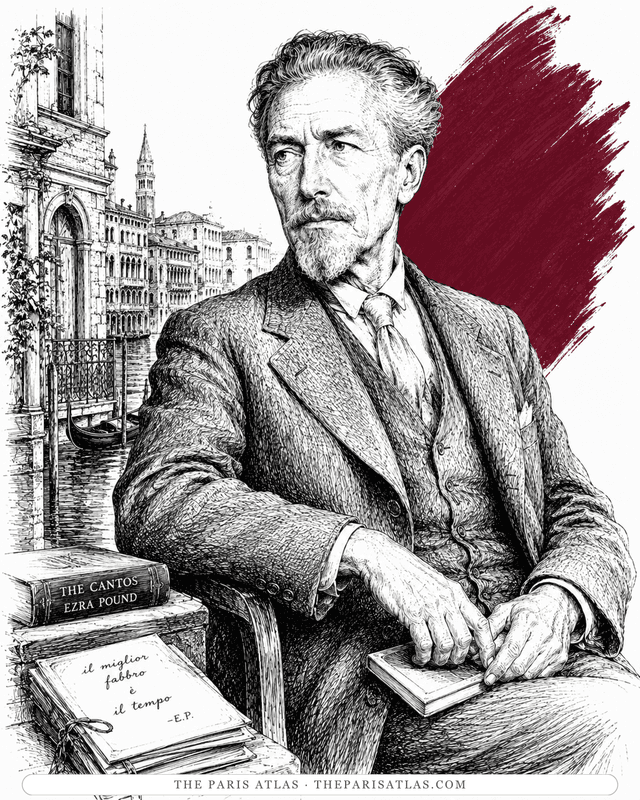
Ezra Pound
Pound read Cancer and sent Miller a famously backhanded postcard. Both believed literature's job was to wake the reader by any means necessary.
View author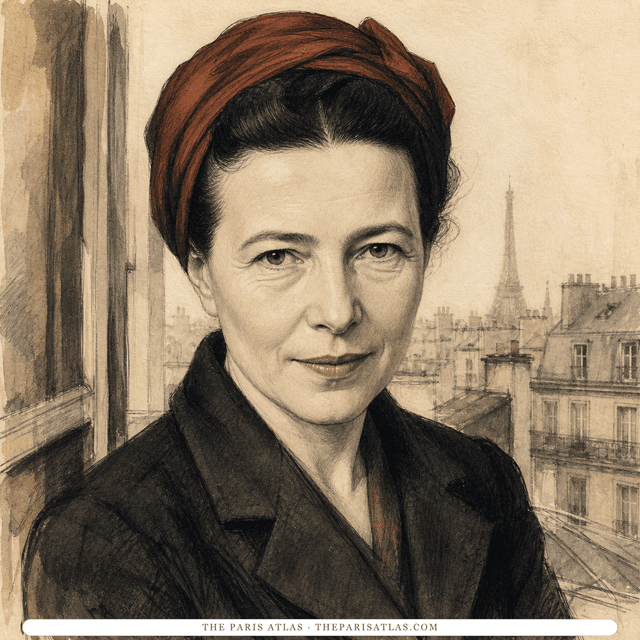
Simone de Beauvoir
French writer and philosopher whose novels, memoirs, and social analysis examined freedom, gender, responsibility, aging, and the material conditions that shape a life.
View author