
A Streetcar Named Desire
Tennessee Williams
A Streetcar Named Desire
Another Kazan and Williams play about a woman living on her looks and her illusions.
Read our takeSweet Bird of Youth
Tennessee Williams
A handsome drifter drives a fading film star back to the Gulf Coast town he left, hoping she will make him famous and win him back the girl he loved. The town has been waiting for him.
Sweet Bird of Youth opened at the Martin Beck Theatre in New York on 10 March 1959, directed by Elia Kazan. Paul Newman played Chance Wayne and Geraldine Page played the film star who calls herself the Princess Kosmonopolis. The run lasted 375 performances.[1] New Directions published the text the same year.[2] Chance comes home to a small Gulf Coast town with the ageing actress in tow. He hopes to use her to start a film career and to win back Heavenly, the daughter of the local political boss.[3] Paris saw the play in 1971 at the Théâtre de l'Atelier, in a French version by the novelist Françoise Sagan.[4]
The play takes place on a single Easter Sunday, from morning until late at night. The first production set it in the Royal Palms Hotel, somewhere on the Gulf Coast, and on the terrace of Boss Finley's house in the town of St. Cloud.[1]
Chance Wayne grew up in St. Cloud and went away with dreams of glory. He comes back years later as the companion of Alexandra Del Lago, a film star who is hiding from the world under the name Princess Kosmonopolis.[3][5] New Directions' first edition described Chance as a masseur and gigolo who hopes the star's money and fading glamour will make his dream come true.[6]
The Princess drinks, takes drugs and is sure her comeback film has failed.[7][8] Chance means to use her to start film careers for himself and Heavenly.[3] He does not know what the town, and Heavenly's father, have been waiting to do to him.[3]
Heavenly's father, Boss Finley, is the political master of the town. His son, Tom Junior, is a bully who does his father's dirty work.[3] Brooks Atkinson of The New York Times called the play a portrait of corruption. He saw Chance as the seamy side of the American dream, a man who means to take whatever he can snatch.[7]
The play opens in comic squalor in a bedroom at the Royal Palms Hotel, where Chance Wayne has brought the Princess Kosmonopolis.[1][7] Chance plans to use her to launch himself and his old girlfriend, Heavenly Finley, in films.[3]
Word of Chance's return spreads through St. Cloud. Boss Finley, Heavenly's father, and his son Tom Junior have been waiting for him. On his last visit Chance infected Heavenly with a disease, without knowing it, and the Finleys want revenge.[3][7]
The second act moves to Boss Finley's house and then back to the hotel. Along the way the play touches on political violence as well as sickness of mind and body.[7][3]
Back in the hotel, the Princess learns that her comeback film is a success after all. She pulls herself together, ready to return to Hollywood, and Chance's plans collapse.
Chance has lost Heavenly and his youth. Tom Junior and his men have announced that they will castrate him. Chance makes no attempt to escape and waits for them.
Cheryl Crawford produced the play at the Martin Beck Theatre. Elia Kazan directed and Jo Mielziner designed the sets and lighting. Paul Bowles wrote the incidental music, as he had for The Glass Menagerie.
Sidney Blackmer played Boss Finley, Rip Torn played Tom Junior and Diana Hyland played Heavenly. Bruce Dern had the small part of Stuff. In January 1960 Rip Torn took over as Chance.
Brooks Atkinson called Geraldine Page's performance fabulous and Paul Newman's young man the perfect companion piece. He praised Mielziner's wide settings and Bowles's spidery, tinkling music. He ranked the play among Williams's finest dramas.
Page, Torn and Kazan were all nominated for Tony Awards in 1960, and none of them won. Torn received a 1959 Theatre World Award. A Broadway revival that opened in December 1975 won the Tony Award for Best Actress in a Play.
Sweet Bird of Youth began as a shorter play called The Enemy: Time. New Directions printed that one-act version for the first time in its 2008 edition of the full play.
The same edition prints Williams's original foreword, an introduction by the playwright Lanford Wilson, and an essay by the Williams scholar Colby H. Kullman. The 1959 first edition ran to 114 pages with illustrations.
Williams kept revising after Broadway. In November 1961 he opened a new version at the Civic Playhouse in Los Angeles, with a happy ending in place of the tragic one. A Los Angeles reviewer disliked it.
Le Doux Oiseau de la jeunesse opened at the Théâtre de l'Atelier in Paris on 28 September 1971. Françoise Sagan wrote the French version. André Barsacq directed.
Edwige Feuillère played the Princess Alexandra Del Lago and Bernard Fresson played Chance Wayne. Jacques Monod played Boss Finley and Anne Saint-Mor played Heavenly. Jacques Dupont designed the set, and Frédéric Botton wrote the music.
The production ran for 110 performances at the Atelier. The company then toured to the Théâtre des Célestins in Lyon in November 1972 and to Neuchâtel in Switzerland in January 1973.
French readers met a different text. When Robert Laffont published the play in the third volume of Williams's Théâtre in 1972, it used an adaptation by Maurice Pons rather than Sagan's.
Metro-Goldwyn-Mayer released Richard Brooks's film in March 1962. Paul Newman and Geraldine Page repeated their stage parts, with Shirley Knight as Heavenly, Ed Begley as Boss Finley and Rip Torn again as Tom Junior.
The film softened the play. Before shooting began, a trade paper reported that the censors had approved Brooks's script and hinted that the castration was gone. In the film, Heavenly's secret is a pregnancy and an abortion rather than a disease.
Page, Knight and Begley were nominated for Academy Awards, and Begley won for Best Supporting Actor. Page won a Golden Globe and the British Academy award for best foreign actress.
Paul Newman and Geraldine Page played Chance and the Princess on Broadway and then on film. In Paris the parts went to Bernard Fresson and Edwige Feuillère.
The Princess is a film star terrified of her own reviews. Brooks Atkinson thought she was a monster but no fiend, a woman who knows exactly what she is doing.
The novelist of Bonjour tristesse adapted the play for the Théâtre de l'Atelier in 1971. Her version ran for 110 performances and then toured.
The published play, the 1961 Los Angeles version and the 1962 film all end differently. Reading the play shows how dark Williams first made it.
A good-looking drifter from St. Cloud who went away dreaming of film stardom. He comes home as a film star's companion, hoping to win back Heavenly. Paul Newman created the part on stage and film, and Bernard Fresson played it in Paris.
An ageing film star in hiding after what she believes is a failed comeback, travelling under a false title. Geraldine Page created the part on stage and film, and Edwige Feuillère played it in Paris.
The political boss of St. Cloud and Heavenly's father. Sidney Blackmer created the part, Ed Begley won an Academy Award for it, and Jacques Monod played it in Paris.
Boss Finley's daughter and the girl Chance left behind. Diana Hyland created the part, and Shirley Knight played it on film.
Boss Finley's son, who leads the men waiting for Chance. Rip Torn created the part and later took over as Chance.
1959
Opens at the Martin Beck Theatre in New York on 10 March, directed by Elia Kazan, with Paul Newman and Geraldine Page. New Directions publishes the text.
1960
The Broadway run closes on 30 January after 375 performances. Geraldine Page, Rip Torn and Elia Kazan are nominated for Tony Awards.
1961
Williams opens a revised version with a happy ending at the Civic Playhouse in Los Angeles in November.
1962
MGM releases Richard Brooks's film in March, with Paul Newman and Geraldine Page. Ed Begley wins an Academy Award as Boss Finley.
1971
Le Doux Oiseau de la jeunesse opens at the Théâtre de l'Atelier in Paris on 28 September, adapted by Françoise Sagan and directed by André Barsacq, with Edwige Feuillère.
1972
Robert Laffont publishes the play in French in Maurice Pons's adaptation. The Paris production tours to Lyon.
1975
A Broadway revival opens in December and wins the 1976 Tony Award for Best Actress in a Play.
2008
New Directions publishes a new edition that includes the one-act version, The Enemy: Time, for the first time.


A Streetcar Named Desire
Tennessee Williams
Another Kazan and Williams play about a woman living on her looks and her illusions.
Read our takeCat on a Hot Tin Roof
Tennessee Williams
The previous Kazan and Williams collaboration, also set among powerful Southern families.
Read our takeThe Night of the Iguana
Tennessee Williams
The next Williams play, where the drifter is a disgraced clergyman and the refuge is a hotel in Mexico.
Read our take
Françoise Sagan's first novel, by the writer who put Sweet Bird of Youth into French for Paris in 1971.
Read our takeChance Wayne, a young drifter who dreams of film stardom, drives an ageing film star back to his Gulf Coast hometown. He hopes she will help him into films and help him win back Heavenly, the daughter of the town's political boss. Heavenly's father and brother have been waiting for him to come back.
The name the film star Alexandra Del Lago uses while she hides from Hollywood. She believes her comeback film has failed, and she travels with Chance under the false title.
Paul Newman played Chance Wayne and Geraldine Page played the Princess, with Sidney Blackmer as Boss Finley and Rip Torn as Tom Junior. Elia Kazan directed, and the play opened at the Martin Beck Theatre on 10 March 1959.
She wrote the French version staged at the Théâtre de l'Atelier in Paris from 28 September 1971, as Le Doux Oiseau de la jeunesse. André Barsacq directed, and Edwige Feuillère played the Princess. The French book edition of 1972 used a different adaptation, by Maurice Pons.
Richard Brooks's film dropped the threat of castration, and it turned Heavenly's secret from a disease into a pregnancy and an abortion. Paul Newman and Geraldine Page kept their stage parts.
The New Directions paperback, ISBN 9780811218078, has the play, Williams's foreword and the one-act play it grew from, The Enemy: Time. The Methuen Drama Student Edition adds notes for study.
Explore authors with a similar voice, perspective, and influence.
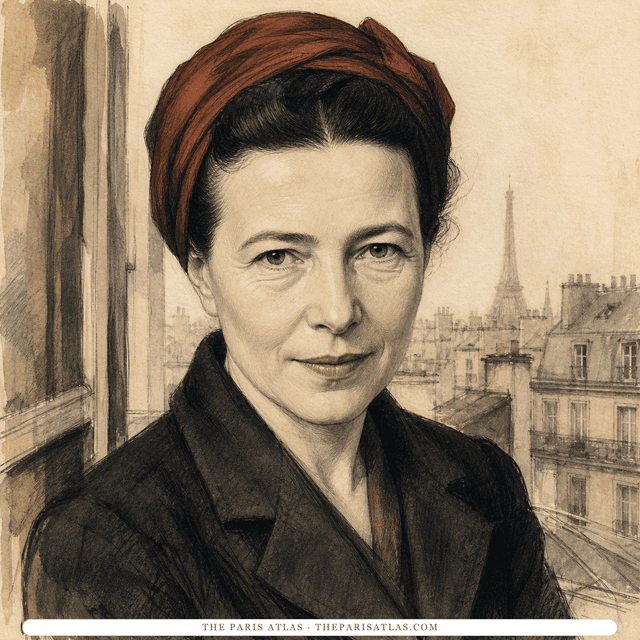
French writer and philosopher whose novels, memoirs, and social analysis examined freedom, gender, responsibility, aging, and the material conditions that shape a life.
View author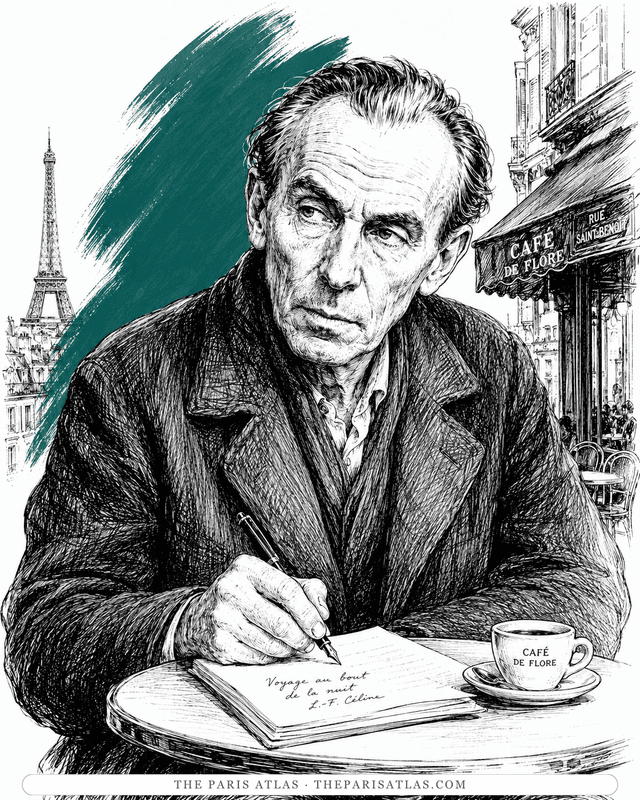
The doctor of the Paris slums who wrote the century's blackest, funniest novel — and changed the sound of French prose.
View author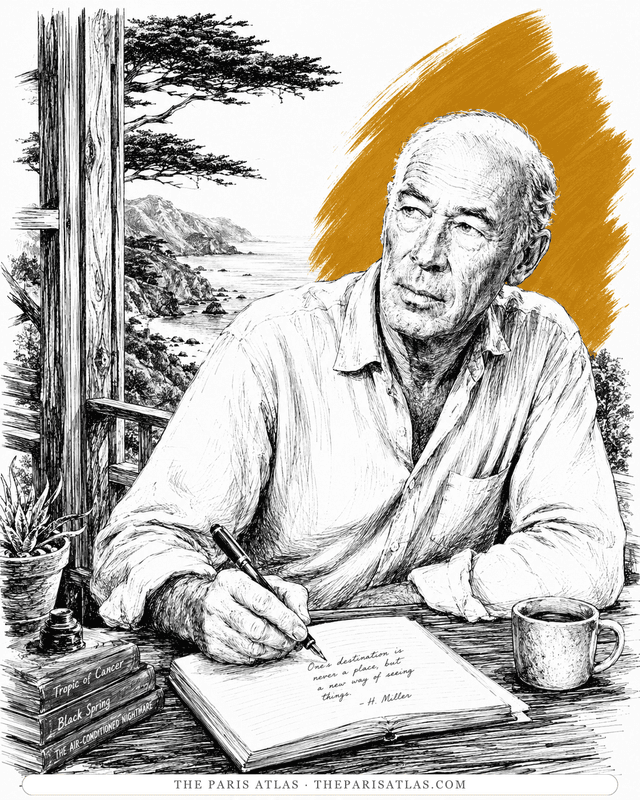
The Brooklyn dropout who arrived in Paris broke at thirty-eight and wrote the exuberant, banned books that ended American censorship.
View authorThe sources below include the primary text, editions, scholarship, archival materials, and other records that informed this page. They document Sweet Bird of Youth, its publication, and its place in literary history.


The Library of Congress record of the New Directions first edition.
The production record for Françoise Sagan's Paris version of 1971.
The publisher's page for the 2008 edition and its contents.
Catalogue records, including the first edition's description of Chance Wayne.
The American Film Institute catalogue entry for the 1962 film, with the 1961 Los Angeles revision, the script changes and the awards.
The Broadway League's record of The Glass Menagerie, for Paul Bowles's earlier music.
The Broadway League's list of Williams productions, including the 1975 revival.
The national library's record of the 1972 French book edition and its adapters.

The primary text represented by this page, used for descriptions of the work’s contents and for any quoted passages shown here.
The primary text is the baseline reference for every book page. Additional references document publication history, interpretation, and historical context where that evidence is available.
 Explore more resources