
A Streetcar Named Desire
Tennessee Williams
A Streetcar Named Desire
The first Pulitzer, also directed by Elia Kazan, with another marriage fought out in two small rooms.
Read our takeCat on a Hot Tin Roof
Tennessee Williams
A rich family gathers for the patriarch's birthday on a Mississippi plantation, and nobody will tell the truth: not about his illness, not about the money, and not about why his favourite son drinks.
Cat on a Hot Tin Roof opened at the Morosco Theatre in New York on 24 March 1955, staged by Elia Kazan. Barbara Bel Geddes played Margaret, Ben Gazzara played her husband Brick, and Burl Ives played his father, Big Daddy. The run lasted 694 performances.[1] The play won the 1955 Pulitzer Prize for Drama, Tennessee Williams's second.[2][3] The family has come together at a plantation house in the Mississippi Delta for Big Daddy's sixty-fifth birthday. He is dying of cancer, and the news slowly spreads through the house.[4][5][6] Paris saw the play on 19 December 1956, directed by Peter Brook, with Jeanne Moreau as Margaret.[7]
The whole play happens in one room on one summer evening. The first production set it in a bed-sitting room and part of the gallery of a plantation home in the Mississippi Delta.[1] The printed play opens with someone taking a shower behind a half-open bathroom door.[6]
The man in the shower is Brick Pollitt, a former football player who now drinks all day and keeps away from his wife.[6] His wife, Margaret, is called Maggie the Cat. She wants Brick back, and she wants a child, partly because a grandchild would help their claim to the estate.[8][5][9]
Brick's older brother, Gooper, and Gooper's wife, Mae, have come with their children. They want to see Maggie put in her place and Brick lose his position as the favourite son.[5] Big Daddy owns the plantation, and both sons' families are thinking about who will inherit it.[9][8]
Brooks Atkinson explained the title in his first-night review. Most of the family, he wrote, live as uncomfortably as the proverbial cat on a hot tin roof.[4] Tennessee Williams's father, Cornelius Williams, was the model for the blustering Big Daddy.[3]
Big Daddy is sixty-five today, and the family has gathered at his plantation in the Mississippi Delta. The party is cheerful on the surface. Underneath, old wrongs, greed and fear spoil it.[4][5]
In their bedroom, Brick drinks steadily and turns away from his wife's affection. Maggie made an error of judgement in the past that nearly ended their marriage, and she wants to make up for it.[5][6]
Big Daddy is dying of cancer, and the knowledge is slowly making its way round the family.[5][6] Gooper and Mae, with their many children, work to make sure the estate goes to them.[5][9]
Big Daddy and Brick finally have a long talk, father to son. Big Daddy hates insincerity, and the talk brings up memories and truths that father and son have both avoided.[4][6]
By the end of the evening everyone knows Big Daddy is dying. Maggie gives him the news he has wanted: she says she is pregnant by Brick. Her nerve and determination carry the evening.
Brick's love for his father, never said aloud before, pulls him back from destroying himself. The play ends with Brick returning to Maggie. Williams rewrote this last stretch of the play more than once, and theatres choose between his versions.
The Playwrights' Company produced the play at the Morosco Theatre. Elia Kazan staged it, Jo Mielziner designed the set and lighting, and Lucinda Ballard made the costumes. Mildred Dunnock played Big Mama, and Pat Hingle and Madeleine Sherwood played Gooper and Mae.
Brooks Atkinson called it Williams's finest drama. He noticed how little happens. Most of the play, he wrote, is long conversations between two people, and sometimes the actors speak straight to the audience. Mielziner built the bedroom on a platform pushed out towards the seats.
Atkinson saw a family held together by lies: lies about health, about the past and about the future. The characters mostly want to be kind to each other, he wrote, but lies are the only shelter they have from the truth.
The play won the Pulitzer Prize and a third New York Drama Critics' Circle award for Williams. The production was nominated for four Tony Awards in 1956, including Best Play, and won none. Williams later dated the decline of his own work from 1955, the year of Cat.
Tennessee Williams once said that no play of his was ever finished, even after production. The Harry Ransom Center, which holds his papers, quotes the remark in its guide to the collection. Cat on a Hot Tin Roof is one of the plays that fill the most boxes there.
The first edition came out from New Directions in 1955, running to 197 pages. Williams kept changing Cat for about twenty years. The text New Directions now publishes is the one he prepared for the American Shakespeare Festival production of 1974, which he treated as final.
The New Directions edition prints an essay by the Williams scholar Brian Parker, "Swinging a Cat", which traces the rewrites. The edition also includes Williams's own essay "Author and Director: A Delicate Situation", about working with a director, and an introduction by the playwright Edward Albee.
La Chatte sur un toit brûlant opened at the Théâtre Antoine in Paris on 19 December 1956. Peter Brook directed it and designed the set himself. André Obey wrote the French text.
Jeanne Moreau played Margaret and Paul Guers played Brick. Antoine Balpêtré was Big Daddy and Jane Marken was Big Mama. Jane Marken had played Amanda in the first Paris Glass Menagerie in 1947.
Obey's text was published in 1957 by Éditions J.-P. Mauclaire in Paris, with photographs. Robert Laffont included it in a collected Théâtre the next year. The production went on to the Théâtre des Célestins in Lyon in November 1957, with Ginette Leclerc as Margaret.
Metro-Goldwyn-Mayer released the film in colour in September 1958. Richard Brooks directed, Elizabeth Taylor played Maggie and Paul Newman played Brick. Burl Ives and Madeleine Sherwood kept their Broadway parts, and Judith Anderson played Big Mama.
Bosley Crowther of The New York Times noticed a large change. The play strongly suggests that Brick's trouble has to do with homosexuality. The film replaced that with a complicated story of hero-worship. Crowther thought the change left the film's explanation of Brick unconvincing.
The play keeps coming back to Broadway. There were revivals in 1974, 1990, 2003, 2008 and 2013. The 1990 production won a Tony Award for Best Featured Actor, and a London revival won the 2010 Olivier Award for Best Revival of a Play.
At the rise of the curtain someone is taking a shower in the bathroom, the door of which is half open.
The 1955 Pulitzer Prize for Drama went to Cat on a Hot Tin Roof. Brooks Atkinson of The New York Times called it Williams's finest drama.
Maggie, Brick and Big Daddy each get a long scene that actors fight for. Elizabeth Taylor, Paul Newman, Burl Ives and Jeanne Moreau have all played them.
The New Directions edition prints Williams's 1974 text with Brian Parker's essay on how the play changed over twenty years. Few plays let a reader see the rewriting so clearly.
In December 1956 Peter Brook staged the play at the Théâtre Antoine with the young Jeanne Moreau as Maggie, in André Obey's French text.
Brick's wife, quick, frank and determined to save her marriage and her share of the estate. Barbara Bel Geddes created the part, Jeanne Moreau played it in Paris, and Elizabeth Taylor on film.
Big Daddy's favourite son, a former football player who drinks to shut the world out and will not say why. Ben Gazzara created the part, Paul Guers played it in Paris, and Paul Newman on film.
The owner of the plantation, loud, rich and dying without knowing it. He was modelled on Williams's own father. Burl Ives played him on Broadway and in the film.
Big Daddy's wife, silly on the surface and stronger than she looks. Mildred Dunnock created the part, and Jane Marken played it in Paris.
Brick's older brother, known as Brother Man, with a large family and a close eye on the inheritance. Pat Hingle created the part.
Gooper's wife, known as Sister Woman, mother of a crowd of children and Maggie's rival. Madeleine Sherwood played her on Broadway and in the film.
1955
Opens at the Morosco Theatre in New York on 24 March, staged by Elia Kazan, with Barbara Bel Geddes, Ben Gazzara and Burl Ives. New Directions publishes the text.
1955
Wins the Pulitzer Prize for Drama, Williams's second, and his third New York Drama Critics' Circle award.
1956
Receives four Tony Award nominations, including Best Play. The Broadway run closes on 17 November after 694 performances.
1956
La Chatte sur un toit brûlant opens at the Théâtre Antoine in Paris on 19 December, directed by Peter Brook, with Jeanne Moreau as Margaret.
1957
André Obey's French text is published in Paris by Éditions J.-P. Mauclaire.
1958
MGM releases Richard Brooks's film in September, with Elizabeth Taylor, Paul Newman and Burl Ives.
1974
Williams prepares a revised text for the American Shakespeare Festival production. A Broadway revival opens in September.
1990
A Broadway revival wins the Tony Award for Best Featured Actor in a Play.
2004
New Directions publishes the current edition, with the 1974 text and an introduction by Edward Albee.
2013
The play's fifth Broadway revival opens in January.


A Streetcar Named Desire
Tennessee Williams
The first Pulitzer, also directed by Elia Kazan, with another marriage fought out in two small rooms.
Read our takeThe Glass Menagerie
Tennessee Williams
The poor family play, where the Delta is only something the mother remembers.
Read our takeSweet Bird of Youth
Tennessee Williams
The next Kazan and Williams play, about a Southern town, a political boss and a son who went wrong.
Read our take
Arthur Miller's family play about a father and a son who cannot tell each other the truth.
Read our takeA wealthy Mississippi family gathers for the patriarch Big Daddy's sixty-fifth birthday. He is dying of cancer, and the news spreads through the house during the evening. His son Brick drinks and ignores his wife, Maggie, while Brick's brother Gooper and his wife Mae angle for the inheritance.
The characters are as uneasy as a cat on a hot tin roof, unable to settle anywhere. Brooks Atkinson made the point in his first-night review in 1955. Maggie, Brick's restless wife, is known as Maggie the Cat.
Yes. The play won the 1955 Pulitzer Prize for Drama, Tennessee Williams's second after A Streetcar Named Desire. The play also won the New York Drama Critics' Circle award.
Barbara Bel Geddes played Maggie, Ben Gazzara played Brick, Burl Ives played Big Daddy and Mildred Dunnock played Big Mama. Elia Kazan staged it at the Morosco Theatre, where it opened on 24 March 1955.
Jeanne Moreau, in La Chatte sur un toit brûlant at the Théâtre Antoine, from 19 December 1956. Peter Brook directed, and André Obey wrote the French text.
The film, directed by Richard Brooks with Elizabeth Taylor and Paul Newman, dropped the play's strong suggestion that Brick's trouble involves homosexuality. The screenplay put a story of hero-worship in its place. The New York Times critic Bosley Crowther thought the change weakened the film.
The New Directions paperback, ISBN 9780811216012, prints the 1974 text Williams treated as final. The edition adds Edward Albee's introduction and Brian Parker's essay on the play's many versions.
Explore authors with a similar voice, perspective, and influence.
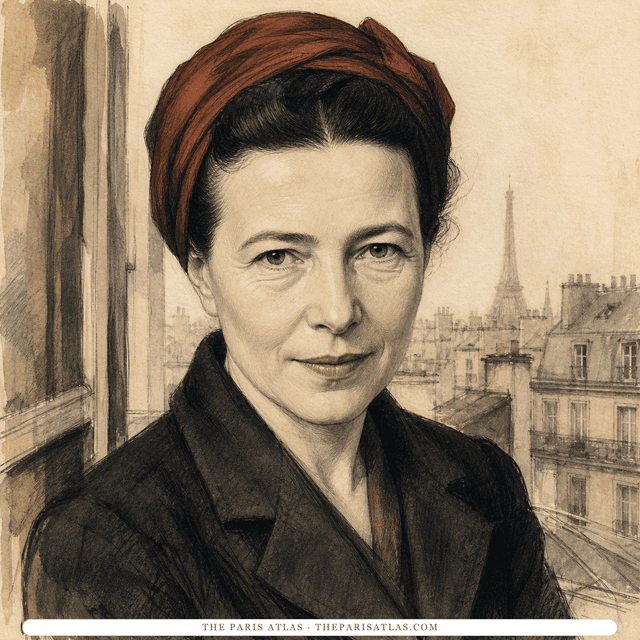
French writer and philosopher whose novels, memoirs, and social analysis examined freedom, gender, responsibility, aging, and the material conditions that shape a life.
View author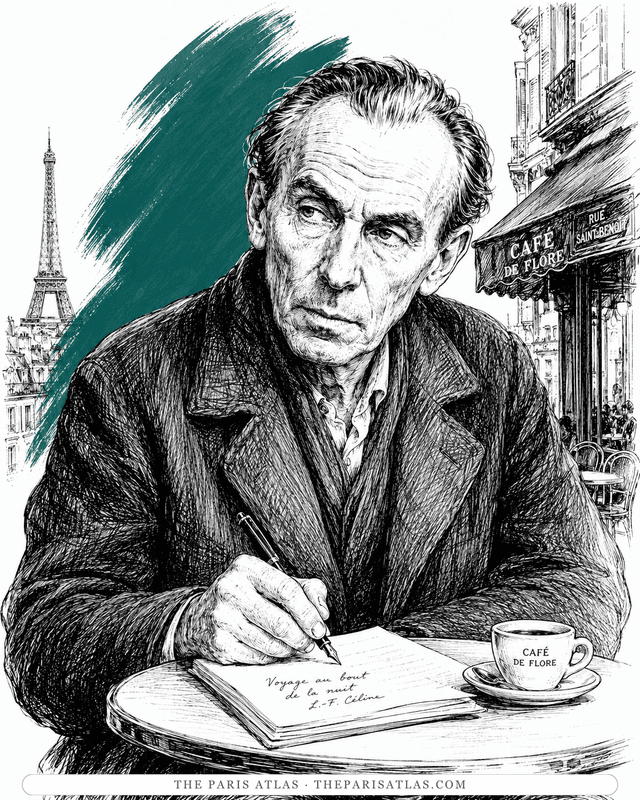
The doctor of the Paris slums who wrote the century's blackest, funniest novel — and changed the sound of French prose.
View author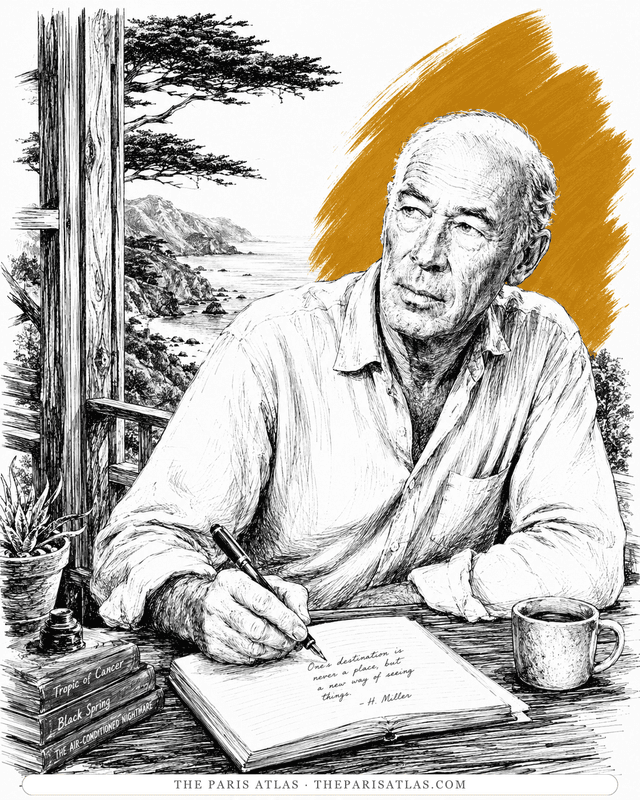
The Brooklyn dropout who arrived in Paris broke at thirty-eight and wrote the exuberant, banned books that ended American censorship.
View authorThe sources below include the primary text, editions, scholarship, archival materials, and other records that informed this page. They document Cat on a Hot Tin Roof, its publication, and its place in literary history.


The Pulitzer Prizes' own page for the 1955 award in Drama.
The production record for Peter Brook's Paris staging of 1956.
The Broadway League's list of Williams productions, including the play's Broadway revivals.
The Library of Congress record of the New Directions first edition.
The Harry Ransom Center's finding aid, which quotes Williams on unfinished plays.
The production record for the 1947 Paris Glass Menagerie, for Jane Marken's earlier part.
The national library's record of André Obey's published text.
The national library's record of Robert Laffont's 1958 collected Théâtre.

The primary text represented by this page, used for descriptions of the work’s contents and for any quoted passages shown here.
The primary text is the baseline reference for every book page. Additional references document publication history, interpretation, and historical context where that evidence is available.
 Explore more resources