
The Glass Menagerie
Tennessee Williams
The Glass Menagerie
The play two years earlier, also about a Southern woman who lives in her memories, told gently where Streetcar is brutal.
Read our takeA Streetcar Named Desire
Tennessee Williams
A Southern schoolteacher with nothing left moves into her sister's two rooms in New Orleans, and her sister's husband sets out to prove she is lying.
A Streetcar Named Desire opened at the Ethel Barrymore Theatre in New York on 3 December 1947, directed by Elia Kazan. Jessica Tandy played Blanche DuBois, Marlon Brando played Stanley Kowalski, and the run lasted 855 performances.[1] The play won the 1948 Pulitzer Prize for Drama.[2] New Directions published the text in New York in 1947.[3] Blanche has lost the family home in Mississippi to creditors. She moves in with her younger sister Stella and Stella's husband Stanley in the French Quarter of New Orleans.[4] Paris saw the play on 15 October 1949, in a French version by Jean Cocteau, with Arletty as Blanche.[5]
The title is a real streetcar. Tennessee Williams lived in the French Quarter of New Orleans and watched the trams run along Royal Street. One sign read Cemeteries and the other read Desire.[6] The pairing of longing and death helped him build the story of Blanche DuBois.[6]
The street the Kowalskis live on is called Elysian Fields. The printed play opens by placing their building on that street, between the railway tracks and the river.[7] The name has a Paris story behind it. The French settlers of New Orleans named the street after the Champs-Élysées, the great avenue in Paris.[6] Blanche arrives there from a lost family mansion called Belle Reve and finds two cramped rooms.[6][4]
Blanche is a schoolteacher from Mississippi. She criticises the flat and the people in it from the moment she walks in.[6] Stanley is a quick-tempered mechanic, one of the soldiers back from the war who filled the cheap flats of the district.[8][6] Blanche and Stanley compete for Stella, and Stella is caught between them.[6]
Much of the play happens at night, around a kitchen table where Stanley and his friends play poker. One of the players, Harold Mitchell, known as Mitch, is gentler than the others, and Blanche begins to hope he might marry her.[6] Brooks Atkinson of The New York Times noticed on the first night that the actress playing Blanche is hardly ever off the stage.[8]
Blanche DuBois arrives at her sister Stella's flat on Elysian Fields with a trunk of clothes and no money. The family plantation, Belle Reve, has been lost to creditors. Blanche finds the place shabby and says so. Stella's husband, Stanley Kowalski, distrusts her from the start.[6][4]
On the night of Stanley's poker game, Blanche meets Mitch, the gentlest of his friends. The game turns violent. A drunken Stanley throws the radio out of the window and hits Stella, and the women take refuge with the neighbours upstairs. When Stanley calls for his wife, Stella goes back down to him.[6]
The next morning Blanche calls Stanley a madman. Stella answers that things happen between a man and a woman in the dark that make everything else seem unimportant.[6] Over the summer Blanche and Mitch court. She tells him she was once married to a young man who killed himself after she confronted him about his homosexuality. Mitch proposes.[6]
Stanley digs into Blanche's past. He tells Stella and Mitch that Blanche was asked to leave her teaching job after an affair with a teenage student, and that she has a reputation for drinking. Mitch stays away from Blanche's birthday supper. Stanley gives her a one-way bus ticket back to Mississippi, and Stella goes into labour.[6]
While Stella is in hospital, Mitch comes to confront Blanche, and she admits her past. He tries to get her to sleep with him, they argue, and he leaves, telling her she is not good enough for him. Stanley comes home to find Blanche dressed up and talking about a cruise with an old admirer. He tears her lies apart and rapes her.
Three weeks later Stella is packing Blanche's clothes for a state mental hospital. Blanche believes her admirer has come to take her away. A nurse from the hospital arrives instead. Blanche shrinks from her, and Stanley helps trap her. The doctor speaks gently, and Blanche agrees to go with him, saying she has always depended on the kindness of strangers. Stella sobs as the men start another hand of poker.
Irene M. Selznick produced the play, and Elia Kazan directed it. Jo Mielziner designed the set and the lighting, and Lucinda Ballard made the costumes. The playbill set the action in New Orleans across one spring, summer and early autumn.
Brooks Atkinson reviewed the opening for The New York Times. He praised the single setting, which he said lightly sketched the house and the neighbourhood. He called Jessica Tandy's Blanche almost incredibly true. He also said the play was too long by Broadway standards, and then defended Tennessee Williams's right to write it that way.
Tandy won the Tony Award for Best Actress in a Play in 1948. She and Kim Hunter left the cast at the end of May 1949. Uta Hagen took over Blanche, and Anthony Quinn, who had covered for Marlon Brando's holiday, later toured the play with her. Jack Palance stepped in as Stanley when Brando broke his nose.
The printed play reached readers within weeks. Reviewing the book in February 1948, C. V. Terry wrote in The New York Times that the text would repay close study by anyone who cared about the theatre. Terry described the story as simple as a figure in geometry. New Directions still publishes the play, now with an introduction by Arthur Miller and Williams's essay "The World I Live In".
Un tramway nommé Désir opened at the Théâtre Édouard VII in Paris on 15 October 1949. Paule de Beaumont made the translation, and Jean Cocteau turned it into the acting text. Raymond Rouleau directed, and Lila de Nobili designed the set.
Arletty played Blanche. Yves Vincent played Stanley, Héléna Bossis played Stella, and Daniel Ivernel played Mitch. The young Louis de Funès had the small part of Pablo, one of Stanley's friends.
Paris was not the first French-language staging. A Brussels company, Le Rideau, had played the play at Ixelles in Belgium in 1948. London was four days ahead of Paris. The London premiere was on 11 October 1949, with Vivien Leigh as Blanche.
Cocteau's text came out as a book the same year. The Paris publisher Bordas issued it in 1949, with a cover and lithographs by Cocteau himself. Later French book editions printed a different text. The collected Théâtre that Robert Laffont published in 1958 credits the adaptation of the play to Paule de Beaumont alone.
The production travelled. The Paris company reached the Théâtre des Célestins in Lyon in December 1950, with Madeleine Robinson as Blanche, and gave one performance at the Palais des Beaux-Arts, now Bozar, in Brussels in April 1951.
Warner Bros. released Elia Kazan's film on 19 September 1951. Vivien Leigh played Blanche, and Marlon Brando, Kim Hunter and Karl Malden kept their Broadway parts. Bosley Crowther of The New York Times thought the film as fine as the play, if not finer.
Hollywood's censors objected to three things in the script. Blanche's young husband, Allan Grey, was plainly homosexual. Blanche herself had a sexual past. And Stanley rapes her. Letters in the censors' file show the studio and Kazan bargaining over all three for months.
The Catholic Legion of Decency then condemned the finished film. Warner Bros. cut it without asking Kazan, and the cuts earned it a milder rating. Warner Bros. put the missing footage back for a re-release in 1993.
The film won four Academy Awards. They went to Vivien Leigh for Best Actress, Kim Hunter and Karl Malden for the supporting parts, and the black-and-white art direction. Brando was nominated and did not win.
Tennessee Williams resisted the simple reading of the play, in which a brute destroys a delicate woman. He said he did not believe in villains or heroes, and that Blanche and Stanley were neither.
Brooks Atkinson made a similar point in 1947. To Stanley, he wrote, Blanche is an unforgivable liar. To Williams, she is one of the dispossessed, a woman whose past has left her unable to cope with real life.
Williams wrote the play in a year of private fear. He spent much of it convinced he was dying, and he later said he wrote Streetcar believing it would be his last play. Stanley's name and manner came from a loud co-worker at the St. Louis shoe factory where Williams had worked as a young man.
The exterior of a two-story corner building on a street in New Orleans which is named Elysian Fields and runs between the L & N tracks and the river.
there are things that happen between a man and a woman in the dark—that sort of make everything else seem—unimportant.
I have always depended on the kindness of strangers.
This game is seven-card stud.
The kindness of strangers, the streetcar named Desire, Stanley shouting for Stella: much of the play's language has passed into ordinary speech. Reading it shows where each line comes from and what it means in its scene.
The 1948 Pulitzer Prize went to it, and critics have argued ever since about whether Blanche or Stanley has the better claim. Tennessee Williams said neither was a villain or a hero.
Jean Cocteau wrote the French acting version, Arletty played Blanche, and the young Louis de Funès played a poker player. The production later toured to Lyon and Brussels.
The New Directions paperback runs to about 200 pages, including Arthur Miller's introduction and Williams's essay "The World I Live In". The play itself reads in two or three hours.
A schoolteacher from Mississippi who has lost the family plantation and her job. She talks like a lady and hides a past she cannot face. Jessica Tandy created the part on Broadway, Arletty in Paris and Vivien Leigh in London and on film.
Stella's husband, a working man who plays poker with his friends and trusts nothing Blanche says. Marlon Brando created the part on Broadway and on film; Yves Vincent played him in Paris.
Blanche's younger sister, who left Mississippi for New Orleans and married Stanley. She is expecting their first child, and Blanche and Stanley both fight for her loyalty. Kim Hunter won an Academy Award for the part in the 1951 film.
Stanley's friend from the poker table, gentler than the others and afraid of being lonely once his mother dies. He courts Blanche and proposes. Karl Malden played him on Broadway and on film, and Daniel Ivernel in Paris.
Blanche's young husband, dead before the play begins. He killed himself after Blanche confronted him about his homosexuality. He never appears, but his death shapes everything she does.
1947
Opens at the Ethel Barrymore Theatre in New York on 3 December, directed by Elia Kazan, with Jessica Tandy, Marlon Brando, Kim Hunter and Karl Malden. New Directions publishes the text in New York.
1948
Wins the Pulitzer Prize for Drama. Jessica Tandy wins the Tony Award for Best Actress in a Play.
1948
The first French-language staging is given in Belgium, by the Brussels company Le Rideau at Ixelles.
1949
The London premiere takes place on 11 October, with Vivien Leigh as Blanche.
1949
Un tramway nommé Désir opens at the Théâtre Édouard VII in Paris on 15 October, in Jean Cocteau's adaptation, directed by Raymond Rouleau, with Arletty as Blanche. Bordas publishes Cocteau's text with his own lithographs.
1949
The Broadway run closes on 17 December after 855 performances.
1950
The Paris production reaches the Théâtre des Célestins in Lyon in December, with Madeleine Robinson as Blanche.
1951
Warner Bros. releases Elia Kazan's film on 19 September, with Vivien Leigh and Marlon Brando, after cuts demanded by the censors. The film wins four Academy Awards.
1958
Robert Laffont publishes the play in a French collected Théâtre, in Paule de Beaumont's adaptation.
1993
Warner Bros. re-releases the film with the censored footage restored.
2004
New Directions issues the current reading edition, with an introduction by Arthur Miller.


The Glass Menagerie
Tennessee Williams
The play two years earlier, also about a Southern woman who lives in her memories, told gently where Streetcar is brutal.
Read our takeCat on a Hot Tin Roof
Tennessee Williams
The second Pulitzer, with Elia Kazan directing again and another marriage fought out in one room.
Read our takeSweet Bird of Youth
Tennessee Williams
Kazan and Williams together a third time, with a fading film star in place of a fading Southern lady.
Read our take
Elia Kazan directed Arthur Miller's play fourteen months after Streetcar, with Jo Mielziner again designing one set for the whole evening.
Read our takeBlanche DuBois, a schoolteacher who has lost her family's Mississippi plantation, moves in with her sister Stella and Stella's husband Stanley Kowalski in the French Quarter of New Orleans. Blanche and Stanley dislike each other on sight. Stanley sets out to expose the past Blanche is hiding, while she hopes to marry his friend Mitch.
New Orleans really had a streetcar line called Desire. Tennessee Williams watched the trams on Royal Street in the French Quarter, one marked Cemeteries and one marked Desire. The two signs, one for longing and one for death, gave him the shape of Blanche's story.
Yes. The play won the 1948 Pulitzer Prize for Drama, worth five hundred dollars. The citation asked for an original American play performed in New York that best showed the educational value and power of the stage.
Jessica Tandy played Blanche DuBois, Marlon Brando played Stanley Kowalski, Kim Hunter played Stella and Karl Malden played Mitch. Elia Kazan directed, and the production ran at the Ethel Barrymore Theatre from 3 December 1947 to 17 December 1949.
He wrote the French acting version, working from Paule de Beaumont's translation. His version opened at the Théâtre Édouard VII in Paris on 15 October 1949, with Arletty as Blanche. Bordas published Cocteau's text the same year, with a cover and lithographs he drew himself.
Elysian Fields is the real New Orleans street where the Kowalskis live. The city's French settlers named it after the Champs-Élysées in Paris. The printed play places the building between the railway tracks and the river.
The New Directions paperback, ISBN 9780811216029, is the standard American text. The edition adds an introduction by Arthur Miller and Tennessee Williams's essay "The World I Live In". The same edition is sold as an ebook.
Explore authors with a similar voice, perspective, and influence.

French writer and philosopher whose novels, memoirs, and social analysis examined freedom, gender, responsibility, aging, and the material conditions that shape a life.
View author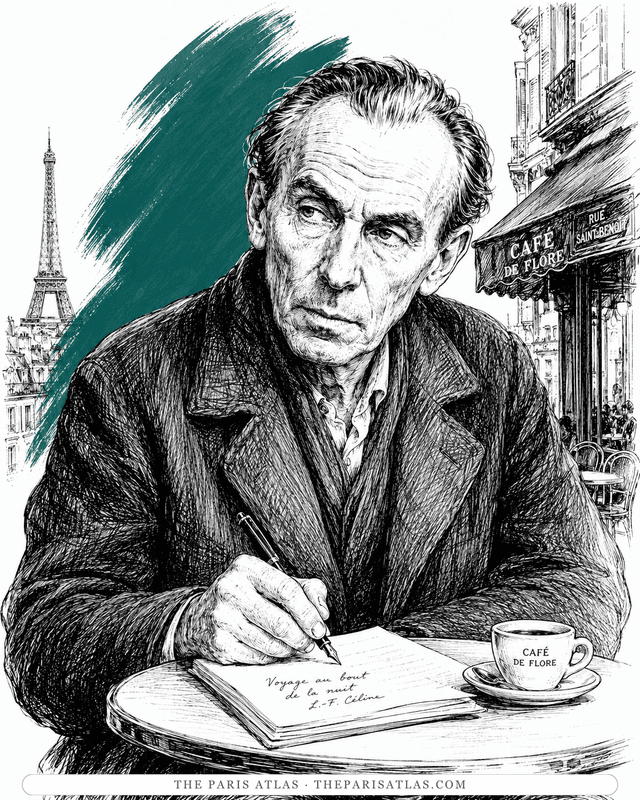
The doctor of the Paris slums who wrote the century's blackest, funniest novel — and changed the sound of French prose.
View author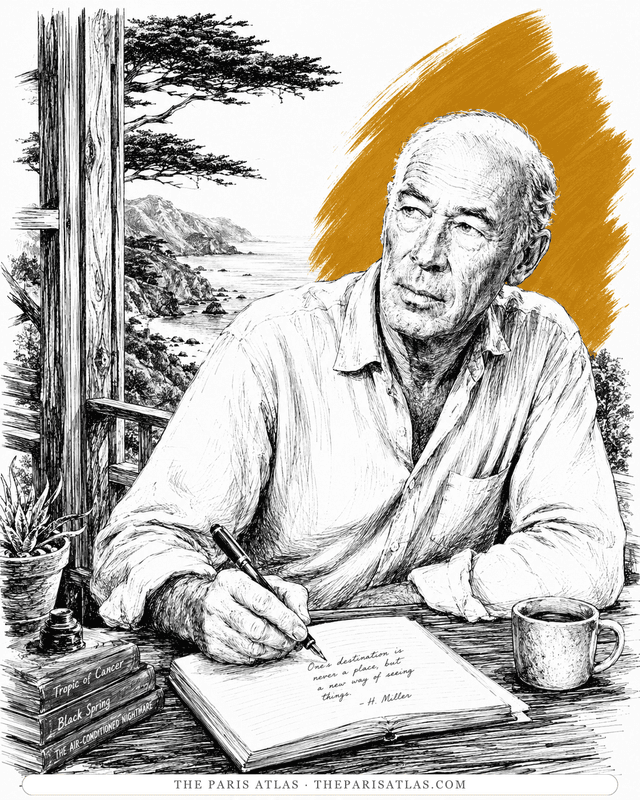
The Brooklyn dropout who arrived in Paris broke at thirty-eight and wrote the exuberant, banned books that ended American censorship.
View authorThe sources below include the primary text, editions, scholarship, archival materials, and other records that informed this page. They document A Streetcar Named Desire, its publication, and its place in literary history.


The Broadway League's record of the original production: dates, theatre, 855 performances, creative team, cast, replacements and awards.
The Pulitzer Prizes' own page for the 1948 award in Drama, with the citation, the prize money and the jury.
The Library of Congress record of the New Directions first edition.
The production record for the Paris creation of 15 October 1949 and its 1950 and 1951 dates.
The Shakespeare Theatre of New Jersey's study guide: the full synopsis, the streetcar signs, Elysian Fields and the Champs-Élysées, and short quotations from the text.
Catalogue records carrying the play's opening stage direction.
The publisher's page for the current reading edition, with its contents, ISBNs and page count.
The New York Times review of the printed play, February 1948.
The national library's catalogue record of the 1949 Paris production.
The production record for the earlier French-language staging in Belgium.
The national library's record of Jean Cocteau's text as published by Bordas in 1949.
The national library's record of Robert Laffont's 1958 collected Théâtre, naming each adapter.
The American Film Institute catalogue entry for the 1951 film, with the censorship file, the London premiere date and the Academy Awards.
Bosley Crowther's review of the film in The New York Times.

The primary text represented by this page, used for descriptions of the work’s contents and for any quoted passages shown here.
The primary text is the baseline reference for every book page. Additional references document publication history, interpretation, and historical context where that evidence is available.
 Explore more resources