
Sweet Bird of Youth
Tennessee Williams
Sweet Bird of Youth
The play before it, also about a drifter in a hotel, with a much darker ending.
Read our takeThe Night of the Iguana
Tennessee Williams
A clergyman thrown out of his church leads a coach party of schoolteachers to a run-down hotel on the Mexican coast, and falls apart over one stormy night.
The Night of the Iguana opened at the Royale Theatre in New York on 28 December 1961, directed by Frank Corsaro. Bette Davis played the hotel owner Maxine Faulk, Margaret Leighton played Hannah Jelkes and Patrick O'Neal played the Reverend T. Lawrence Shannon. The run lasted 316 performances.[1] The play won Tennessee Williams his fourth New York Drama Critics' Circle award, and was his last major success.[2] Shannon, locked out of his church, now works as a tour guide in Mexico. He brings a group of women teachers to Maxine's hotel above the Pacific.[3][4] Paris saw the play at the Théâtre des Bouffes du Nord in February 1977.[5]
The play takes place on the veranda of the Costa Verde Hotel, in Puerto Barrio on the west coast of Mexico, in the summer of 1940.[1] New Directions describes the hotel as run-down and sitting at the edge of a cliff over the Pacific Ocean.[4]
Shannon was locked out of his church for railing against God. He now guides coach tours for a living. His latest party is a group of women from a college in West Texas, and he is close to one of his recurring breakdowns.[3][4][6]
Maxine Faulk owns the hotel and has recently been widowed. Howard Taubman of The New York Times called her a determined, lusty widow.[3][6] Hannah Jelkes, a New England spinster, arrives with her grandfather Nonno, a poet of ninety-seven who is writing his last poem.[4][3]
Other guests fill the hotel. A family of German holidaymakers listen to radio reports of London burning and cheer them.[6] An iguana, caught by local boys to be eaten later, is tied by its throat to the veranda.[4][6]
The Reverend T. Lawrence Shannon arrives at the Costa Verde Hotel with his coach party of women teachers from Texas. He is feverish and close to another of his breakdowns. Maxine Faulk, the hotel's widowed owner, is an old friend.[6][3][7]
Shannon is in trouble with his tour. He has had a brief fling with Charlotte Goodall, the sixteen-year-old in the party, and he stands accused of statutory assault. The other teachers have turned against him, and their frantic leader, Miss Judith Fellowes, means to get him fired.[3][6][7]
Hannah Jelkes and her grandfather Nonno turn up with almost no money. They have been travelling across Mexico, living on what they can earn from her sketches and his poems. Maxine wants Shannon for herself. Shannon offers Hannah shelter for the night.[3][7]
The tour party leaves without Shannon. Late at night, Hannah talks him through his breakdown in a long scene between the two of them. For a moment they reach each other, and then the moment passes.
Nonno finishes his last poem and dies. The iguana is set free. Shannon, beaten, agrees to stay at the hotel under Maxine's protection, and Hannah must go on alone.
Charles Bowden produced the play at the Royale Theatre, and Frank Corsaro directed. Oliver Smith designed the set and Jean Rosenthal the lighting. Alan Webb played Nonno, and Patricia Roe and Lane Bradbury played two of the teachers.
Howard Taubman reviewed the opening for The New York Times. He found the first half slow, and thought the second half showed Williams at the top of his form. He called the long night scene between Hannah and Shannon one of the most beautiful passages Williams had ever written.
Taubman also noticed the weather. Oliver Smith's set was so real, he wrote, that you could feel the heat, and when the storm broke, real water fell through the gaps in the veranda roof.
Margaret Leighton won the 1962 Tony Award for Best Actress in a Play. The play was nominated for Best Play. Bette Davis left at the end of March 1962, and Shelley Winters took over as Maxine.
The play grew from a short story with the same title. New Directions calls the story the germ of the play and prints it in its current edition.
Howard Taubman wrote that the full play expanded a short piece Williams had written for the Spoleto Festival in Italy several years before. He thought that might explain the slow start.
Williams himself described the play as being about love in its purest terms, according to New Directions. The publisher also calls it a plea for endurance in the face of suffering. New Directions published the text in New York in 1962, in a first edition of 128 pages.
The film company Seven Arts bought the film rights for 500,000 dollars in May 1961, before the play had reached Broadway. The company also put up nearly all the money for the stage production.
John Huston directed the film for Seven Arts and Metro-Goldwyn-Mayer. Richard Burton played Shannon, Ava Gardner played Maxine and Deborah Kerr played Hannah. Sue Lyon played Charlotte Goodall, the teenage girl in the tour party.
Huston shot the film between September and December 1963, at Mismaloya and Puerto Vallarta on the Pacific coast of Mexico. Elizabeth Taylor joined Richard Burton there, and their affair brought the production a great deal of press attention.
The film had its New York premiere at Philharmonic Hall in Lincoln Center on 30 June 1964. The film won the Academy Award for black-and-white costume design.
La Nuit de l'iguane played at the Théâtre des Bouffes du Nord in Paris from 4 February 1977. Sophie Becker wrote the French version, and Andréas Voutsinas directed. The cast included Catherine Sauvage, Pierre Vaneck and Natasha Parry, and Hubert Monloup designed the set.
An earlier French text already existed in print. Robert Laffont published the play in 1972 in the third volume of Williams's Théâtre, in an adaptation by the novelist Marcel Aymé. Aymé had also adapted Arthur Miller's The Crucible for Paris in 1954.
In 2009 Georges Lavaudant staged a new translation by Daniel Loayza at the MC93 theatre in Bobigny, on the edge of Paris. The production ran for twenty performances, with Dominique Reymond and Tcheky Karyo in the cast, and then went to Grenoble.
The play won his fourth New York Drama Critics' Circle award and ran for most of 1962. Nothing he wrote afterwards did as well.
Howard Taubman of The New York Times called the late-night scene between Hannah and Shannon one of the most beautiful passages Williams ever wrote.
John Huston filmed the play in Mexico with Richard Burton, Ava Gardner and Deborah Kerr. The film won an Academy Award for its costumes.
Marcel Aymé's French text was published in 1972. Sophie Becker's version played at the Bouffes du Nord in 1977, and Daniel Loayza's translation reached the MC93 in Bobigny in 2009.
A clergyman locked out of his church, now leading coach tours through Mexico and near a breakdown. Patrick O'Neal created the part, and Richard Burton played it on film.
The recently widowed owner of the Costa Verde Hotel, earthy and practical, who wants Shannon to stay. Bette Davis created the part, and Ava Gardner played it on film.
A New England spinster and artist, travelling with her grandfather and living on her sketches. Calm on the outside and more tested than she shows. Margaret Leighton won a Tony Award for the part, and Deborah Kerr played it on film.
Hannah's grandfather, a poet of ninety-seven, frail and determined to finish one last poem. Alan Webb created the part.
The youngest member of the tour party, whose involvement with Shannon sets the teachers against him. Lane Bradbury created the part, and Sue Lyon played it on film.
The teacher who leads the tour party and is determined to have Shannon dismissed. Patricia Roe created the part, and Grayson Hall was nominated for an Academy Award for it.
1961
Seven Arts buys the film rights for 500,000 dollars in May, before the play reaches Broadway.
1961
Opens at the Royale Theatre in New York on 28 December, directed by Frank Corsaro, with Bette Davis, Margaret Leighton and Patrick O'Neal. Wins Williams's fourth New York Drama Critics' Circle award.
1962
New Directions publishes the text. Margaret Leighton wins the Tony Award for Best Actress in a Play. The Broadway run closes on 29 September after 316 performances.
1963
John Huston films the play at Mismaloya and Puerto Vallarta, Mexico, between September and December.
1964
The film has its New York premiere on 30 June, with Richard Burton, Ava Gardner and Deborah Kerr, and later wins an Academy Award for costume design.
1972
Robert Laffont publishes the play in French in Marcel Aymé's adaptation.
1977
La Nuit de l'iguane plays at the Théâtre des Bouffes du Nord in Paris from 4 February, in Sophie Becker's version.
2009
Georges Lavaudant directs a new translation by Daniel Loayza at the MC93 in Bobigny, just outside Paris. New Directions publishes the first trade paperback of the play.


Sweet Bird of Youth
Tennessee Williams
The play before it, also about a drifter in a hotel, with a much darker ending.
Read our takeA Streetcar Named Desire
Tennessee Williams
Another play where a fragile outsider arrives with nowhere else to go.
Read our takeThe Glass Menagerie
Tennessee Williams
The early memory play, where the fragile one is the daughter and nobody gets away.
Read our take
The Reverend T. Lawrence Shannon, a clergyman locked out of his church, now leads coach tours in Mexico. In the summer of 1940 he brings a party of women teachers to a run-down hotel on the Pacific coast. Over one stormy night he comes close to collapse, watched over by the hotel's owner, Maxine, and a travelling artist, Hannah Jelkes.
The iguana is tied by its throat to the veranda, waiting to be eaten. Howard Taubman of The New York Times linked its rope to old Nonno, who is set free by death as the iguana is set loose. He also saw the play as about the effort to break loose from the rope that tethers everyone.
Bette Davis played Maxine Faulk, Margaret Leighton played Hannah Jelkes, Patrick O'Neal played Shannon and Alan Webb played Nonno. Frank Corsaro directed, and the play opened at the Royale Theatre on 28 December 1961.
The play won the New York Drama Critics' Circle award, Tennessee Williams's fourth. Margaret Leighton won the 1962 Tony Award for Best Actress in a Play, and the play was nominated for Best Play.
John Huston directed it for Seven Arts and MGM, with Richard Burton, Ava Gardner and Deborah Kerr. The film was shot on the Pacific coast of Mexico in 1963 and opened in New York in 1964.
Yes. La Nuit de l'iguane played at the Théâtre des Bouffes du Nord from 4 February 1977, in Sophie Becker's French version, directed by Andréas Voutsinas. Georges Lavaudant staged a new translation at the MC93 in Bobigny, just outside Paris, in 2009.
The New Directions paperback, ISBN 9780811218528, has the play, Williams's foreword and the short story it grew from, with an introduction by the playwright Doug Wright.
Explore authors with a similar voice, perspective, and influence.
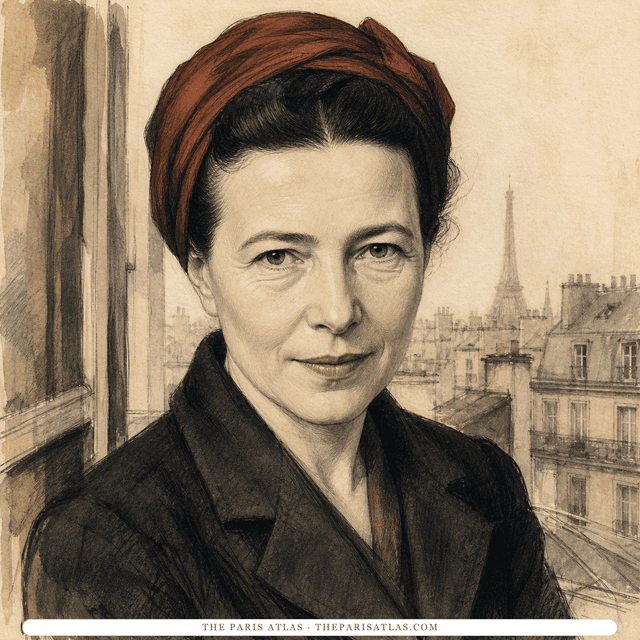
French writer and philosopher whose novels, memoirs, and social analysis examined freedom, gender, responsibility, aging, and the material conditions that shape a life.
View author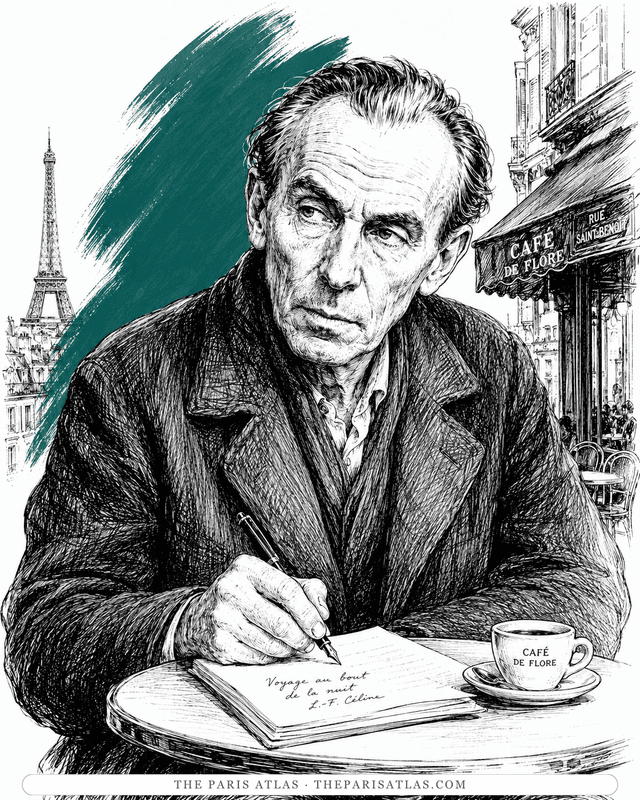
The doctor of the Paris slums who wrote the century's blackest, funniest novel — and changed the sound of French prose.
View author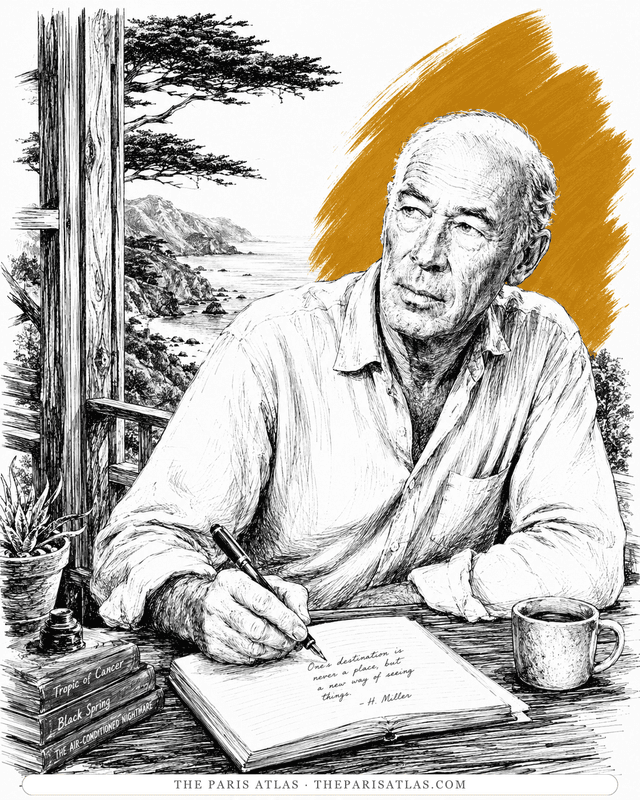
The Brooklyn dropout who arrived in Paris broke at thirty-eight and wrote the exuberant, banned books that ended American censorship.
View authorThe sources below include the primary text, editions, scholarship, archival materials, and other records that informed this page. They document The Night of the Iguana, its publication, and its place in literary history.


Mel Gussow's obituary, on the play's place as Williams's last major success.
The production record for the 1977 Paris staging at the Bouffes du Nord.
The Library of Congress record of the New Directions first edition.
The production record for Georges Lavaudant's 2009 staging at the MC93, Bobigny.
The national library's record of the 1972 French book edition, in Marcel Aymé's adaptation.
The national library's record of Marcel Aymé's 1954 Paris adaptation of The Crucible.

The primary text represented by this page, used for descriptions of the work’s contents and for any quoted passages shown here.
The primary text is the baseline reference for every book page. Additional references document publication history, interpretation, and historical context where that evidence is available.
 Explore more resources