The Paris AtlasCharting the artists, works, and places worth returning to.
  • Filmmaker
  • Actor
· American · 1906–1987

John Huston

American film director who trained as a painter, filmed the life of Henri de Toulouse-Lautrec in Moulin Rouge, and won two Academy Awards for The Treasure of the Sierra Madre.

In images

Details

Lived
1906–1987
Born
5 August 1906
Birthplace
Nevada, Missouri
Died
28 August 1987 · aged 81
Place of death
Middletown, Rhode Island
Nationality
American
Profession
Film director, screenwriter and actor
Major works
The Maltese Falcon, The Treasure of the Sierra Madre, The African Queen, Moulin Rouge, The Misfits, The Man Who Would Be King, Prizzi's Honor, The Dead
Married
Dorothy Harvey · married 1926, divorced 1933Lesley Black · married 1937, divorced in the mid-1940sEvelyn Keyes · married 1946, divorced 1950Enrica "Ricki" Soma · married 1950 until her death in 1969Celeste Shane · married 1972, divorced 1977
Children
Pablo Huston, Walter Anthony "Tony" Huston, Anjelica Huston, Danny Huston, Allegra Huston
Roles
FilmmakerActor

About John Huston

American film director, screenwriter and actor, who trained as a painter and filmed the life of Henri de Toulouse-Lautrec

John Huston was an American film director, screenwriter and actor, born in Nevada, Missouri, on 5 August 1906. He directed thirty-seven feature films across forty-six years and wrote the screenplays for most of them. The first was The Maltese Falcon in 1941 and the last was The Dead, finished months before he died in 1987.

He trained as a painter before he worked in film, studying at the Art Students League of Los Angeles in 1923 under Stanton Macdonald-Wright. He painted for the rest of his life and collected seriously. That training shaped the film that matters most to the history of art: Moulin Rouge (1952), about the painter Henri de Toulouse-Lautrec, shot partly in Paris and lit to imitate the flat colour of Lautrec's posters.

Huston won two Academy Awards, both for The Treasure of the Sierra Madre (1948), one for directing and one for the screenplay. He left the United States for Ireland in 1952 and became an Irish citizen in 1964, giving up his American citizenship. He died of pneumonia at Middletown, Rhode Island, on 28 August 1987, aged 81.

A childhood between a vaudeville stage and a newsroom, 1906–1925

John Huston was born on 5 August 1906 in the small town of Nevada, Missouri. His father, Walter Huston, was an actor who worked the vaudeville circuits before becoming a star of Broadway and then of Hollywood. His mother, Rhea Gore, was a newspaper journalist. They separated while he was small and divorced in 1913, and his childhood afterwards was split between them: touring theatres with his father, newspaper towns with his mother. Huston liked to say that his grandfather had won the town of Nevada, Missouri in a poker game, though that is a story he told about himself rather than a documented fact.

At about ten he was diagnosed with an enlarged heart and kidney trouble, and doctors thought the illness might kill him. He was sent to Arizona and recovered. He left school in his mid-teens, bored by it, and boxed as an amateur lightweight in California, winning most of roughly twenty-five bouts before a broken nose ended the career. In the mid-1920s he went to Mexico and took an honorary commission in the Mexican cavalry. He married his high-school sweetheart, Dorothy Harvey, in 1926.

Painting first: the Art Students League of Los Angeles, 1923

In 1923, aged seventeen, Huston enrolled at the Art Students League of Los Angeles and studied under Stanton Macdonald-Wright, the American painter who had helped invent Synchromism, a style that arranged colour the way music arranges harmony. Huston later credited Macdonald-Wright with the foundation of whatever education he had. He considered painting as a career and gave the idea up after his first marriage. He never stopped painting, though, and kept a studio in each of his houses for the rest of his life. Nothing, he said, had played a more important role in it. Two self-portraits survive, one from 1923 in the manner of Vincent van Gogh and Paul Gauguin, and a later one that borrows from Pablo Picasso's The Old Guitarist.

He collected as seriously as he painted, and preferred older and non-European work to the Greek and Roman canon. What hung in his houses included:

  • Paintings by Paul Klee, Maurice Utrillo, Amedeo Modigliani, Chaim Soutine, Rufino Tamayo and Morris Graves.
  • Juan Gris's Arlequin of 1925, a gift from his second wife, Lesley Black.
  • Claude Monet's Water Lilies of 1919, bought from a dealer at Deauville in 1952 for $10,000 and now in the Legion of Honor museum in San Francisco.
  • A large collection of pre-Columbian statuary, along with Japanese and West African masks.

Screenwriting, and a first film: The Maltese Falcon, 1931–1941

Huston sold his first short story, "Fool", to H. L. Mencken at The American Mercury, which published it in 1929. He moved to Los Angeles in 1931 and wrote scripts for Samuel Goldwyn and then Universal, among them Murders in the Rue Morgue in 1932. On 25 September 1933 a car he was driving struck and killed a pedestrian, Tosca Roulien, on Sunset Boulevard, and an inquest absolved him. He then spent an unsettled year or two in London and Paris, painting and sketching, at one point close to destitute.

Back at Warner Bros he became a reliable screenwriter, working on Jezebel (1938), Juarez (1939), Dr. Ehrlich's Magic Bullet (1940), High Sierra (1941) and Sergeant York (1941), and collecting Academy Award nominations for his scripts. The studio let him direct in 1941 and he chose Dashiell Hammett's novel The Maltese Falcon, which had already been filmed twice. He sketched every scene in advance, shot it in under six weeks, and made a star of Humphrey Bogart as the detective Sam Spade. It cost well under $400,000, earned $1.8 million, and was nominated for Best Picture.

The war films, 1942–1946

Huston joined the United States Army Signal Corps in 1942 and made three documentaries. Report from the Aleutians (1943) covered the Aleutian campaign in colour. The Battle of San Pietro (1945) followed the fight for the Italian village of San Pietro Infine, and the Army held it back over its footage of American dead until General George C. Marshall defended it as a training film. Huston said the combat footage had been shot under fire. The historian Peter Maslowski demonstrated in 1993 that much of it was re-created after the battle was over.

John Huston in United States Army uniform, published in February 1946. (Unknown photographer, National Board of Review · Public domain)

The third film was the one that cost him most. Let There Be Light (1946) filmed the psychiatric treatment of soldiers who had come home with what was then called battle neurosis. The Army banned it from public exhibition and the ban held for thirty-five years. It was released only after the film industry lobbied the Carter White House, and had its first public run at the Thalia Theater in Manhattan in January 1981.

The Treasure of the Sierra Madre and the post-war years, 1947–1951

In September 1947 Huston helped found the Committee for the First Amendment with the director William Wyler, the writer Philip Dunne and the actor Myrna Loy, to oppose the House Un-American Activities Committee's hearings into Hollywood. A group including Humphrey Bogart and Lauren Bacall flew to Washington on 27 October 1947. The protest failed and the committee broke up under the backlash that followed.

The Treasure of the Sierra Madre, released in 1948 from B. Traven's novel about three prospectors in Mexico, brought Huston Academy Awards for directing and for the screenplay. His father, Walter Huston, won Best Supporting Actor for the same film at the same ceremony, the first time a father and son had won together. Three more films followed quickly: Key Largo (1948), The Asphalt Jungle (1950) and The African Queen (1951), which won Humphrey Bogart his only Academy Award. In between came the one that got away. MGM cut The Red Badge of Courage (1951), his film of Stephen Crane's Civil War novel, from about two hours to roughly seventy minutes after bad previews, and the journalist Lillian Ross recorded the whole episode in her book Picture.

Moulin Rouge, 1952: filming a painter in the painter's colours

Moulin Rouge is the film that gives Huston a place in the history of art rather than only in the history of cinema. It tells the life of Henri de Toulouse-Lautrec, who painted the Montmartre dance halls in the 1890s. José Ferrer played both the painter and his father the Count, working in a harness that bound his legs to approximate Lautrec's height. Huston shot the film between 23 June and 10 September 1952, partly on location in Paris and partly at Shepperton Studios outside London.

What he wanted was a film that looked like the posters. He told his cinematographer, Oswald Morris, to shoot it as if Toulouse-Lautrec had directed it, and the two of them worked with the Life magazine photographer Eliot Elisofon to get there. They shot in three-strip Technicolor and then flattened it, using fog filters and smoke on the set to kill the depth and the gloss. They also gave individual characters their own coloured light: blue-green for Ferrer, purple for Colette Marchand, pink for Suzanne Flon. Technicolor disliked the result, since saturated colour was the whole selling point of the process, and made the muted prints anyway. Huston said afterwards that all of his interest in art had served him well in rebuilding Lautrec's world.

The film premiered in Los Angeles on 23 December 1952 and took about $9 million in North America. It received seven Academy Award nominations, including Best Picture, Best Director and Best Actor for Ferrer, and won two, both for the way it looked: colour art direction, and colour costume design for the Hungarian painter Marcel Vertès. While he was in France making it, Huston bought the Monet Water Lilies at Deauville.

Ireland, and giving up American citizenship, 1952–1971

Huston moved to Ireland in 1952, repelled by the political atmosphere in Hollywood during the blacklist years. He bought St Clerans, a Georgian house at Craughwell in County Galway, restored it, and served as Master of Fox Hounds of the County Galway Hunt, known as the Galway Blazers, from 1960 to 1971. He filmed Moby Dick there in the mid-1950s, co-written with Ray Bradbury, using the harbour town of Youghal to stand in for New Bedford.

On 3 January 1964 he became an Irish citizen at a ceremony in Dublin before the Minister for Justice, Charles Haughey, and gave up his American citizenship in the process. Accounts describing him as holding both passports are wrong. "I've lived in Ireland for the last twelve years," he said that day, "and I intend to make Ireland my home for the rest of my life." He sold St Clerans in 1971 and later settled in Mexico, near Puerto Vallarta.

The Misfits, Chinatown, and the long late run, 1961–1985

The Misfits (1961), written by Arthur Miller and shot in black and white around Reno, Nevada, turned out to be the last film for both of its stars. Clark Gable had a heart attack two days after filming ended and died on 16 November 1960. The film opened on 1 February 1961, which would have been his sixtieth birthday, and it was also the last film Marilyn Monroe completed. Huston went on to The Night of the Iguana (1964), from the Tennessee Williams play, shot at Mismaloya in Mexico, and The Bible: In the Beginning (1966), in which he directed, played Noah, and voiced God.

He acted for other directors throughout, most memorably as Noah Cross, the wealthy patriarch at the centre of Roman Polanski's Chinatown (1974). Fat City (1972), a small film about club boxers in Stockton, California, restored his critical standing after a thin decade. The Man Who Would Be King (1975), from Rudyard Kipling's story with Sean Connery and Michael Caine, was a project he had wanted to make since the 1950s. Prizzi's Honor (1985) brought him a Best Director nomination at seventy-nine, then the oldest in the award's history, and won his daughter Anjelica Huston the award for Best Supporting Actress. That made the Hustons the first family with Academy Award winners in three generations, and Huston had directed both his father and his daughter to their awards.

The Dead, and his death in 1987

Huston was diagnosed with emphysema in 1978, having smoked heavily all his life, and he made his last film anyway. The Dead (1987) is taken from the closing story of James Joyce's Dubliners, about a Christmas party in Dublin and a wife's memory of a boy who died loving her. His son Tony Huston wrote the screenplay and his daughter Anjelica Huston played Gretta Conroy. Filming began on 19 January 1987, with the interiors built on a soundstage at the California Institute of the Arts because he was too ill to travel. He directed from a wheelchair, breathing through oxygen tubes, watching the performances on monitors.

He died in his sleep on 28 August 1987 at a rented house in Middletown, Rhode Island, aged 81. The cause was pneumonia on top of his emphysema. He had come to Rhode Island to be near the set of Mr. North, a film his son Danny Huston was working on. The Dead premiered at the Venice Film Festival six days after his death and was nominated for two Academy Awards. He is buried at Hollywood Forever Cemetery in Los Angeles, near his mother.

Life events

  1. 1906

    Born on 5 August in Nevada, Missouri, to the actor Walter Huston and the journalist Rhea Gore.

    John Huston

  2. 1913

    His parents divorce; his childhood afterwards is divided between his father's theatre tours and his mother's newspaper towns.

    John Huston

  3. 1923

    Studies painting at the Art Students League of Los Angeles under Stanton Macdonald-Wright, aged seventeen.

    A Seed of Modernism: The Art Students League of Los Angeles, 1906-53

  4. 1926

    Marries Dorothy Harvey, his high-school sweetheart.

    John Huston

  5. 1929

    H. L. Mencken publishes his short story "Fool" in The American Mercury.

    An Interview With John Huston

  6. 1931

    Moves to Los Angeles and begins writing screenplays, first for Samuel Goldwyn and then for Universal.

    John Huston

  7. 1941

    Directs his first film, The Maltese Falcon, which premieres in New York on 3 October and is nominated for Best Picture.

    The Maltese Falcon (1941 film)

  8. 1942

    Joins the United States Army Signal Corps and begins making documentaries about the war.

    John Huston

  9. 1945

    The Battle of San Pietro is released on 3 May after Army objections to its footage of American dead.

    The Battle of San Pietro

  10. 1946

    The Army bans Let There Be Light, his documentary on soldiers treated for battle trauma, from public showing.

    John Huston in United States Army uniform, published in February 1946. (Unknown photographer, National Board of Review)

    John Huston

  11. 1947

    Co-founds the Committee for the First Amendment and flies to Washington on 27 October to oppose the HUAC hearings.

    Committee for the First Amendment

  12. 1948

    The Treasure of the Sierra Madre and Key Largo are both released.

    John Huston

  13. 1949

    Wins Academy Awards for directing and writing The Treasure of the Sierra Madre; his father Walter Huston wins Best Supporting Actor at the same ceremony.

    21st Academy Awards; Walter Huston

  14. 1950

    Marries the ballerina Enrica "Ricki" Soma; his son Tony is born; his father Walter Huston dies on 7 April.

    Walter Huston

  15. 1951

    Anjelica Huston is born; The African Queen wins Humphrey Bogart his only Academy Award, and MGM cuts The Red Badge of Courage by half.

    24th Academy Awards; The Red Badge of Courage (1951 film)

  16. 1952

    Moves to Ireland; shoots Moulin Rouge in Paris and at Shepperton between 23 June and 10 September; buys Monet's Water Lilies at Deauville.

    Moulin Rouge (1953); John Huston: Fine Arts and Films

  17. 1953

    Moulin Rouge takes seven Academy Award nominations and wins two, for colour art direction and colour costume design.

    Moulin Rouge (1953)

  18. 1960

    Becomes Master of Fox Hounds of the County Galway Hunt, a post he holds until 1971.

    John Huston

  19. 1961

    The Misfits opens on 1 February, the last film for both Clark Gable and Marilyn Monroe.

    The Misfits (1961 film)

  20. 1964

    Becomes an Irish citizen on 3 January in Dublin, giving up his American citizenship; The Night of the Iguana is released.

    John Huston Becomes Irish Citizen; The Night of the Iguana (film)

  21. 1969

    His wife Ricki Soma is killed in a car accident, aged 39.

    John Huston

  22. 1972

    Fat City restores his critical standing after a weak decade.

    John Huston

  23. 1974

    Plays Noah Cross in Roman Polanski's Chinatown.

    Chinatown (1974 film)

  24. 1975

    The Man Who Would Be King, from Rudyard Kipling's story, is released with Sean Connery and Michael Caine.

    John Huston

  25. 1978

    Diagnosed with emphysema after a lifetime of heavy smoking.

    John Huston

  26. 1981

    Let There Be Light finally reaches the public, opening at the Thalia Theater in New York in January, thirty-five years after it was banned.

    John Huston

  27. 1985

    Prizzi's Honor brings him a Best Director nomination at seventy-nine, then the oldest in the award's history.

    58th Academy Awards

  28. 1986

    Anjelica Huston wins Best Supporting Actress for Prizzi's Honor, making the Hustons the first family with Academy Award winners in three generations.

    58th Academy Awards

  29. 1987

    Directs The Dead from a wheelchair; dies at Middletown, Rhode Island, on 28 August, aged 81; the film premieres at Venice six days later.

    The Dead (1987 film)

People they knew

Documented connections — every one carries its source.

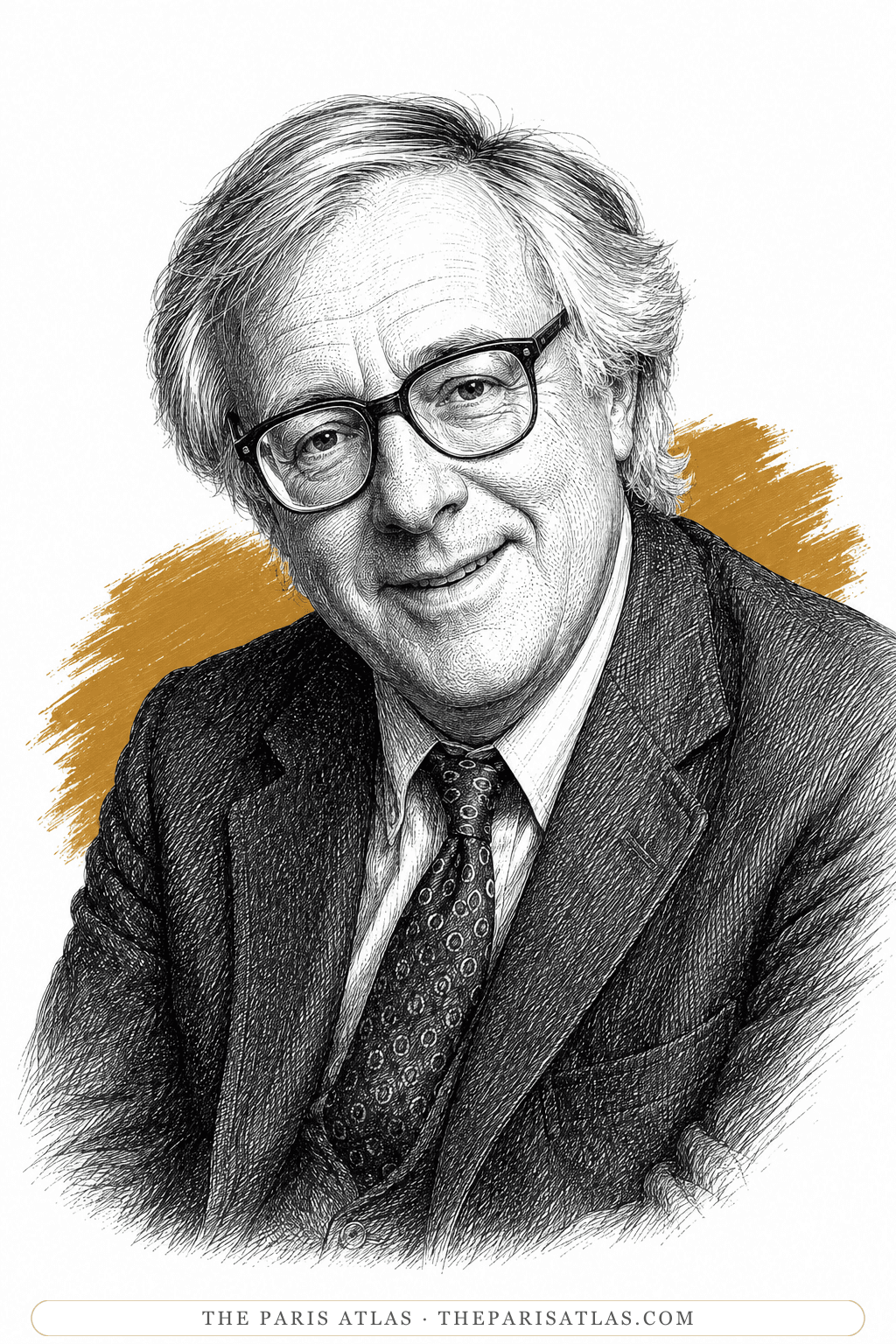
Illustrated portrait of Ray Bradbury

Ray Bradbury

  • Author
  • Poet
  • Playwright

Collaborated with · 1954–1956

Huston hired Bradbury to write the screenplay for Moby Dick, from Herman Melville's novel, and the two worked on it in Ireland while Huston was living at St Clerans. The film was released in 1956 with Gregory Peck as Ahab.

John Huston

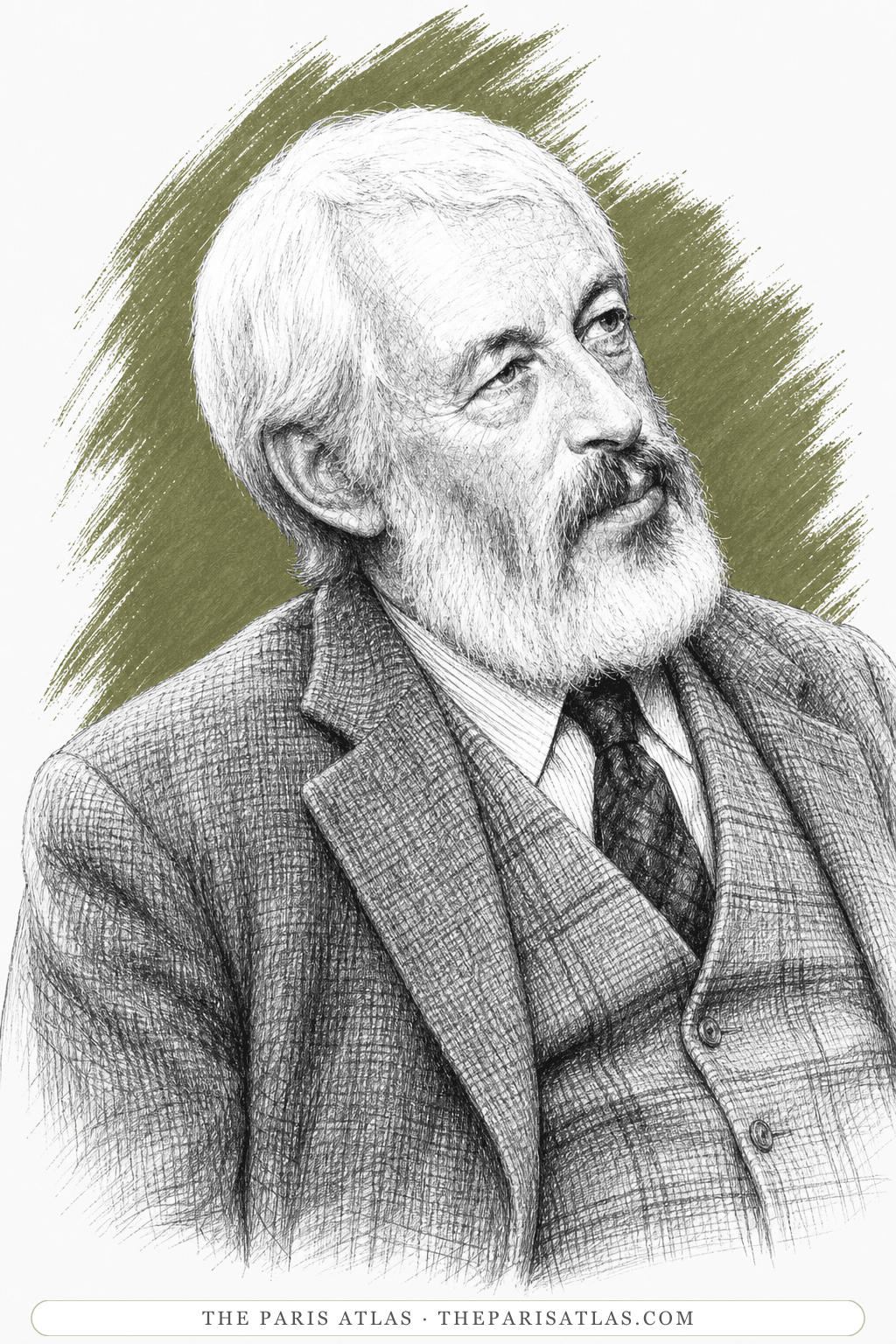
Illustrated portrait of J. P. Donleavy

J. P. Donleavy

  • Author
  • Playwright
  • Painter

Met

Donleavy knew Huston personally, and the filmmaker took him fishing.

The Ginger Man Letters

Questions about John Huston

Who was John Huston?

John Huston (1906–1987) was an American film director, screenwriter and actor who made thirty-seven features over forty-six years, from The Maltese Falcon in 1941 to The Dead in 1987. He won two Academy Awards, both for The Treasure of the Sierra Madre in 1948, one for directing and one for the screenplay. He trained as a painter before he worked in film and painted all his life.

What is the connection between John Huston and Toulouse-Lautrec?

Huston directed Moulin Rouge (1952), a film about the life of the painter Henri de Toulouse-Lautrec, with José Ferrer in the part. He shot it partly on location in Paris and told his cinematographer, Oswald Morris, to film it as if Toulouse-Lautrec had directed it. They used fog filters, smoke and coloured light on individual actors to flatten Technicolor into something closer to the palette of Lautrec's posters. The film won Academy Awards for colour art direction and colour costume design.

Was John Huston a painter?

Yes. He studied at the Art Students League of Los Angeles in 1923 under the Synchromist painter Stanton Macdonald-Wright, considered painting as a career, and kept a studio in every house he lived in. He also collected, owning work by Paul Klee, Maurice Utrillo, Amedeo Modigliani and Chaim Soutine, a Juan Gris harlequin, a Monet Water Lilies bought at Deauville in 1952, and a large group of pre-Columbian sculpture.

Why did John Huston become an Irish citizen?

He moved to Ireland in 1952 because he disliked the political climate in Hollywood during the blacklist years, and lived at St Clerans, a Georgian house in County Galway. On 3 January 1964 he took Irish citizenship at a ceremony in Dublin before the Minister for Justice, Charles Haughey, and gave up his American citizenship at the same time.

Was Let There Be Light really banned?

Yes. Huston's 1946 Army documentary followed soldiers being treated for what was then called battle neurosis, and the Army barred it from public exhibition for thirty-five years. It was released only after the film industry pressed the Carter administration, and had its first public run at the Thalia Theater in New York in January 1981.

How did John Huston die?

He died in his sleep on 28 August 1987 at a rented house in Middletown, Rhode Island, aged 81. The cause was pneumonia on top of the emphysema he had been diagnosed with in 1978 after a lifetime of heavy smoking. He is buried at Hollywood Forever Cemetery in Los Angeles, near his mother.

What was John Huston's last film?

The Dead (1987), adapted from the last story in James Joyce's Dubliners. His son Tony Huston wrote the screenplay and his daughter Anjelica Huston played Gretta Conroy. He directed it from a wheelchair using oxygen tubes, and it premiered at the Venice Film Festival six days after he died.

Which family were the first to have three generations of Academy Award winners?

The Hustons. Walter Huston won Best Supporting Actor for The Treasure of the Sierra Madre, John Huston won Best Director and Best Screenplay for the same film, and Anjelica Huston won Best Supporting Actress for Prizzi's Honor in 1986. John Huston directed both his father and his daughter in the films that won them their awards.

Sourced claims

Every connection the graph holds for John, with the evidence behind it.

Collaborated with · 1954–1956

Ray Bradbury

Huston hired Bradbury to write the screenplay for Moby Dick, from Herman Melville's novel, and the two worked on it in Ireland while Huston was living at St Clerans. The film was released in 1956 with Gregory Peck as Ahab.

John Huston

Met

J. P. Donleavy

Donleavy knew Huston personally, and the filmmaker took him fishing.

The Ginger Man Letters

References

References

The sources below include biographies, scholarly essays, interviews, and primary materials that informed this page. They reflect both the historical record and ongoing critical conversations about John Huston and their work.

  1. 1The Ginger Man Letters

    Website
    Fantastic Fiction
    Used for

    Web source consulted for documented facts and historical context presented on the John Huston page.

    View source
  2. 2Moulin Rouge (1953)

    Website
    AFI Catalog of Feature Films
    Used for

    The American Film Institute's production record for Moulin Rouge, used for the shooting dates, the Paris and Shepperton locations, the cast and the Academy Award nominations.

    View source
  3. 3Moulin Rouge (1952 film)

    Website
    Wikipedia
    Used for

    Cross-checked for the Technicolor treatment, Oswald Morris's fog filters and coloured lighting, and Huston's remarks about the film's look.

    View source
  4. 4John Huston: Fine Arts and Films

    Website
    The London Magazine
    Used for

    Essay on Huston's painting and collecting, the source for his self-portraits, the Deauville Monet and the contents of his collection.

    View source
  5. 5A Seed of Modernism: The Art Students League of Los Angeles, 1906-53

    Website
    Traditional Fine Arts Organization
    Used for

    Will South's history of the Art Students League of Los Angeles, which places Huston there in 1923 under Stanton Macdonald-Wright.

    View source
  6. 6An Interview With John Huston

    Website
    American Heritage
    Used for

    Long interview with Huston, used for his boxing years, leaving school, the Mexican cavalry and his early writing.

    View source
  7. 7John Huston Becomes Irish Citizen

    Website
    RTE Archives
    Used for

    RTÉ's newsreel record of the Dublin ceremony of 3 January 1964, which reports that he took Irish citizenship and gave up his American citizenship.

    View source
  8. 8John Huston

    Website
    Wikipedia
    Used for

    Reference article cross-checked for the chronology, the filmography, the marriages and the death.

    View source
  9. 9List of awards and nominations received by John Huston

    Website
    Wikipedia
    Used for

    Tabulated list of his Academy Award nominations and wins.

    View source
  10. 1021st Academy Awards

    Website
    Wikipedia
    Used for

    Web source consulted for documented facts and historical context presented on the John Huston page.

    View source
  11. 1124th Academy Awards

    Website
    Wikipedia
    Used for

    Web source consulted for documented facts and historical context presented on the John Huston page.

    View source
  1. 1258th Academy Awards

    Website
    Wikipedia
    Used for

    Web source consulted for documented facts and historical context presented on the John Huston page.

    View source
  2. 13The Maltese Falcon (1941 film)

    Website
    Wikipedia
    Used for

    Web source consulted for documented facts and historical context presented on the John Huston page.

    View source
  3. 14The Battle of San Pietro

    Website
    Wikipedia
    Used for

    Web source consulted for documented facts and historical context presented on the John Huston page.

    View source
  4. 15The Red Badge of Courage (1951 film)

    Website
    Wikipedia
    Used for

    Web source consulted for documented facts and historical context presented on the John Huston page.

    View source
  5. 16The Misfits (1961 film)

    Website
    Wikipedia
    Used for

    Web source consulted for documented facts and historical context presented on the John Huston page.

    View source
  6. 17The Night of the Iguana (film)

    Website
    Wikipedia
    Used for

    Web source consulted for documented facts and historical context presented on the John Huston page.

    View source
  7. 18Chinatown (1974 film)

    Website
    Wikipedia
    Used for

    Web source consulted for documented facts and historical context presented on the John Huston page.

    View source
  8. 19The Dead (1987 film)

    Website
    Wikipedia
    Used for

    Web source consulted for documented facts and historical context presented on the John Huston page.

    View source
  9. 20Committee for the First Amendment

    Website
    Wikipedia
    Used for

    Web source consulted for documented facts and historical context presented on the John Huston page.

    View source
  10. 21Walter Huston

    Website
    Wikipedia
    Used for

    Web source consulted for documented facts and historical context presented on the John Huston page.

    View source
i
Why these sources are here

These references anchor the page in the documented record and in the scholarly conversations around John Huston. Every claim on this page traces back to one or more of the works listed here.

Explore more resources
