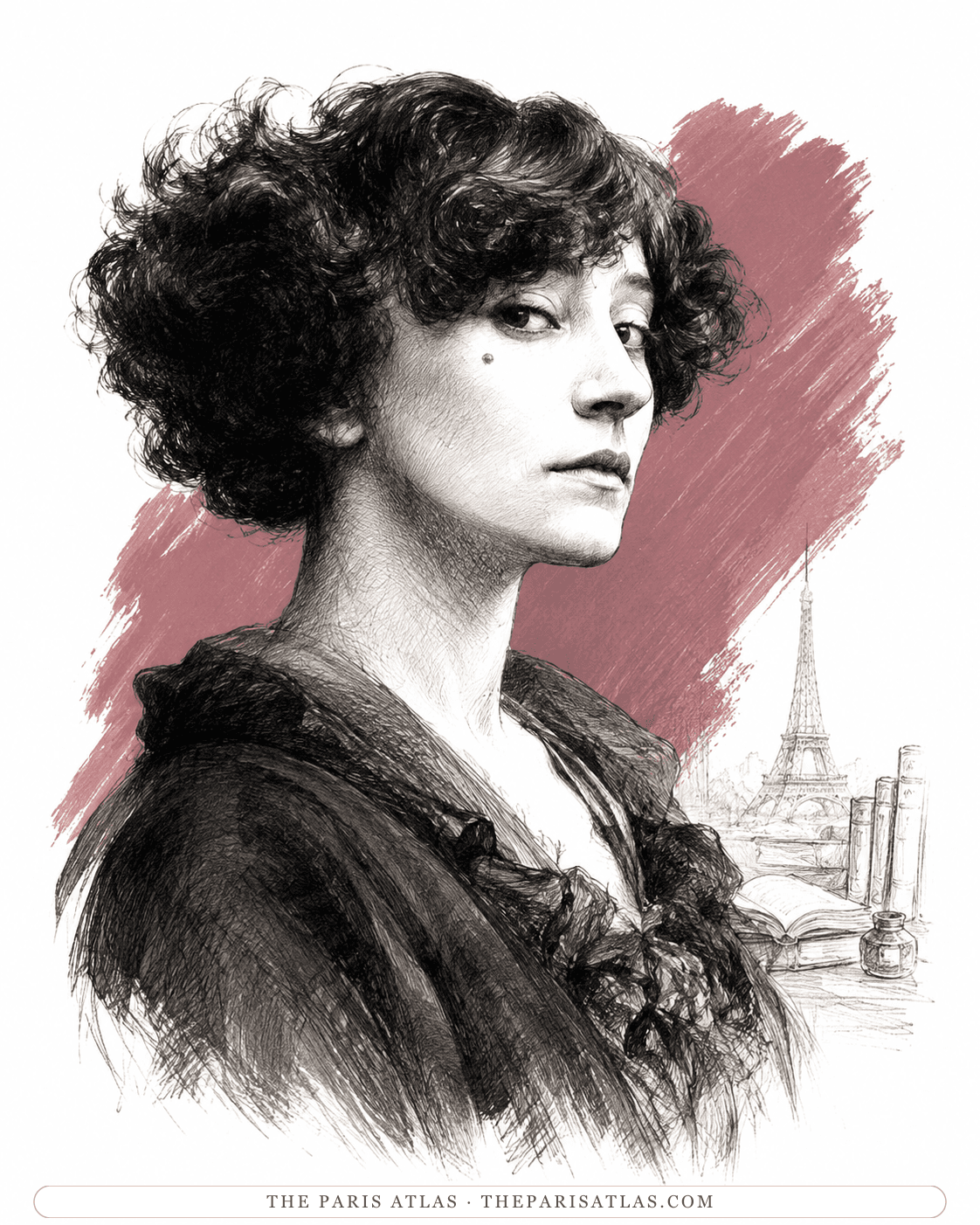

Bella-Vista
The later short-fiction collection where Colette again hides the decisive fact until a final turn.
Read our take
by Colette
Twenty-two short, dark tales of love's hidden side — betrayal, solitude, and illusion, told in the manner of a modern Maupassant.
The Hidden Woman is a collection of twenty-two very short stories Colette published in 1924, built from pieces that had run in the newspaper between 1921 and 1923. Despite that origin they are not journalism but tightly made tales — dark miniatures of love and its shadow side, turning on crime, betrayal, solitude, and illusion. Their editors called them noires idylles, dark idylls, and the comparison most often reached for is Maupassant. Several are among the most anthologized short stories Colette wrote. (What's inside is described below.)
The stories are brief — some only a few pages — and they share a temperature rather than a plot. Each looks at a couple, a marriage, or a solitary figure and finds the concealed thing underneath: the affair not admitted, the cruelty inside tenderness, the freedom a person guards in secret. Colette had written them for the newspaper across the early 1920s, but gathered here they form a coherent field, closer to the conte than to the column.
The title story sets the method. At a masked ball, a husband who believes his wife is home ill sees her moving anonymously through the crowd, taking a private, almost secret pleasure in going unrecognized. What the story exposes is not an affair but an appetite for a life unseen — the hidden woman of the title. The other pieces work the same seam of illusion, betrayal, and solitude, sometimes with a sudden turn worthy of the form's masters.
The Hidden Woman is one of the best entry points to Colette as a writer of short stories rather than novels. It shows her compression at its sharpest, and its darker pieces have traveled widely in English through The Collected Stories of Colette, where they sit under the heading 'Varieties of Human Nature.'
There is no continuous narrative. The book gathers twenty-two very short stories, each self-contained, unified by a shared subject: the hidden or shadow side of love. Colette had published the pieces in the newspaper between 1921 and 1923, but in book form they read as deliberate tales rather than reportage — dark miniatures of betrayal, solitude, crime, and illusion, several with the sudden final turn associated with Maupassant.
The title story, in which a wife passes unrecognized and secretly content through a masked ball while her husband watches, gives the collection its key: the concealed appetite, the life a person keeps unseen. Other stories in English editions include 'The Hand,' 'Dawn,' 'One Evening,' 'The Fox,' 'The Judge,' and 'The Other Wife.' The pieces vary in tone from the wry to the genuinely bleak, and the pleasure of the book is watching how much Colette can do in very little space.
The husband enters the ball under a disguise and a lie of his own, yet treats his wife's anonymity as a mystery he is entitled to solve. His repeated search for one identifiable lover fails to explain her movement through the crowd. Colette makes that failure disturb a possessive way of seeing: Irène need not be attached to someone else to exceed his knowledge of her. The story nevertheless follows his watching, not her private thoughts, leaving his shocked account of her freedom inseparable from the limits of his gaze.
In L'autre femme, Marc manages the table, the meal and the account of his first marriage, while Alice initially accepts his choices with pleasure. The former wife's quiet presence interrupts that shared certainty without a confrontation. Alice begins by assuming that the solitary woman should feel uncomfortable; she ends by wondering what this woman wanted that she herself has not imagined wanting. Because the former wife never explains herself, the reversal belongs to Alice's changing attention. An unreadable stranger becomes a measure against which her own happiness is newly uncertain.
The stories show how much she can stage in a few pages — a marriage, a secret, a reversal — which is why so many are anthologized.
Betrayal, solitude, and illusion run through every piece, giving a newspaper-born book a genuine unity of mood.
The dark idylls and sudden final turns invite the comparison, and the title story is a small classic of concealment.
1921
Colette begins publishing the short pieces in the newspaper that will make up the collection.
1924
La Femme cachée is published by Flammarion — twenty-two dark tales of love's shadow side.
1970
The collection appears with Sido and Noces in the Crémille collected edition.
The later short-fiction collection where Colette again hides the decisive fact until a final turn.
Read our take
Her wartime gathering of tales, close in method and in its interest in love gone wrong.
Read our take
The earlier collection of short pieces, before the contes darkened from reverie to shadow.
Read our takeColette. La Femme cachée was published in 1924, collecting twenty-two very short stories she had first run in the newspaper between 1921 and 1923.
No. It is a collection of twenty-two short stories, unified by a shared subject — the hidden side of love — rather than by a continuous plot.
At a masked ball, a husband who thinks his wife is home ill sees her moving unrecognized through the crowd, secretly content to go unseen. The story exposes a hidden appetite for an unseen life rather than an affair.
They are brief, dark tales of betrayal, solitude, and illusion, several turning on a sudden final revelation — the compressed, unsentimental manner of the classic French conte.
There is no securely verified standalone English edition, but the stories are widely available in The Collected Stories of Colette, under the heading 'Varieties of Human Nature.'
Explore authors with a similar voice, perspective, and influence.
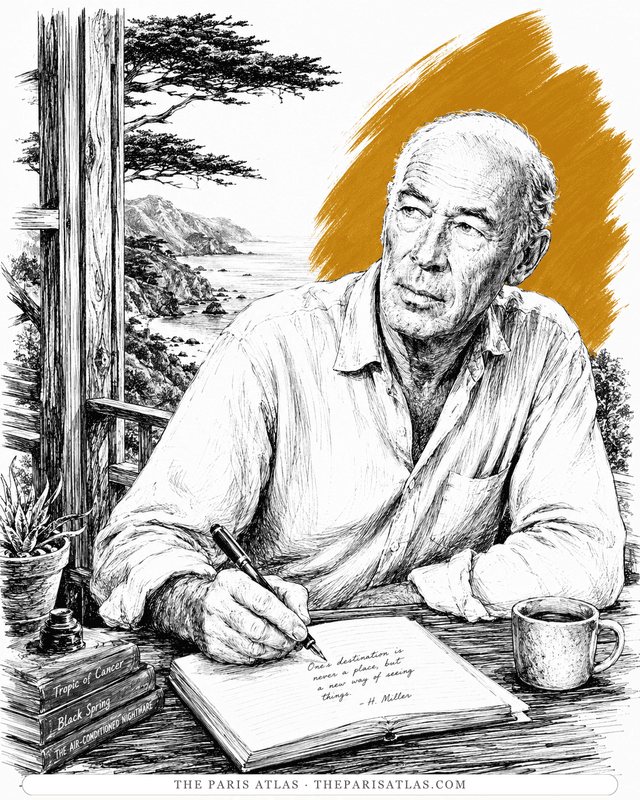
The Brooklyn dropout who arrived in Paris broke at thirty-eight and wrote the exuberant, banned books that ended American censorship.
View author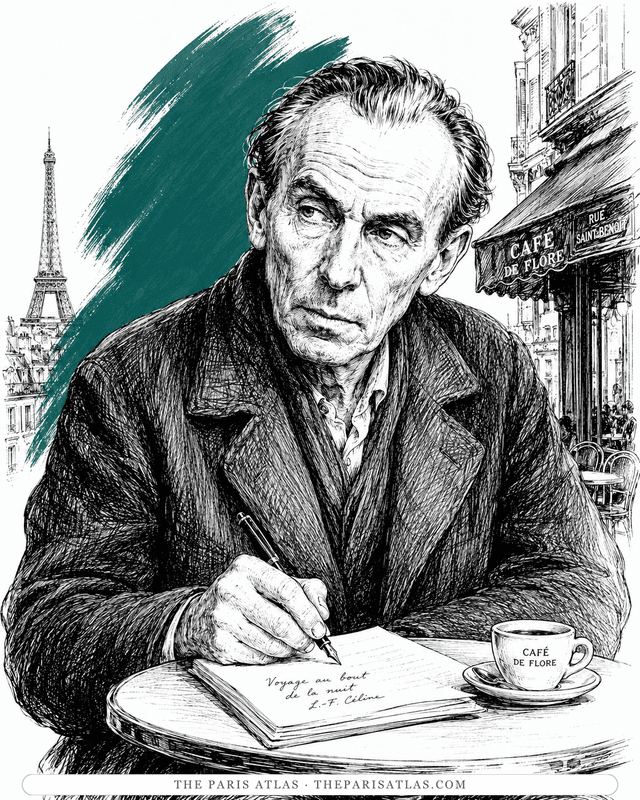
The doctor of the Paris slums who wrote the century's blackest, funniest novel — and changed the sound of French prose.
View author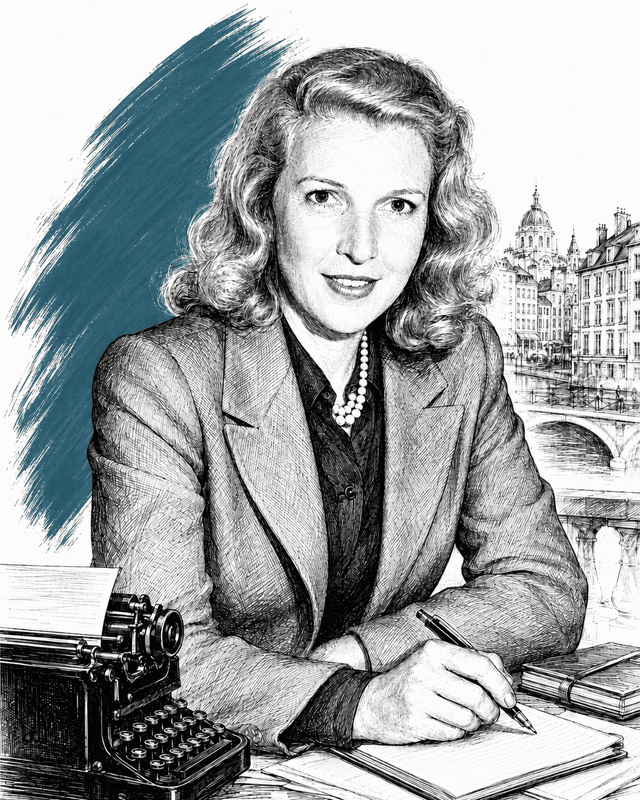
War correspondent who covered the Spanish Civil War, D-Day, and conflicts across five more decades; Hemingway's third wife, 1940–1945.
View authorThe sources below include the primary text, editions, scholarship, archival materials, and other records that informed this page. They document The Hidden Woman, its publication, and its place in literary history.


The primary text represented by this page, used for descriptions of the work’s contents and for any quoted passages shown here.
The two complete French stories named in the section locators support the added readings; the before-ball illustration remains imagined.
The Société des amis de Colette bibliography verifies the original edition's publisher and publication date.
Used to place The Hidden Woman within Colette's published work and verify its bibliographic context.

Used for independent biographical, archival, or historical context surrounding Colette's career and the period in which The Hidden Woman appeared.
Used to cross-check authorship, chronology, and the work's place in Colette's wider catalogue.
Used to verify Colette's bibliography and place The Hidden Woman within the broader chronology of Colette's career.
The primary text is the baseline reference for every book page. Additional references document publication history, interpretation, and historical context where that evidence is available.
 Explore more resources