
Bella-Vista
The nearby late collection, close in reticence and in its attention to love gone wrong.
Read our take
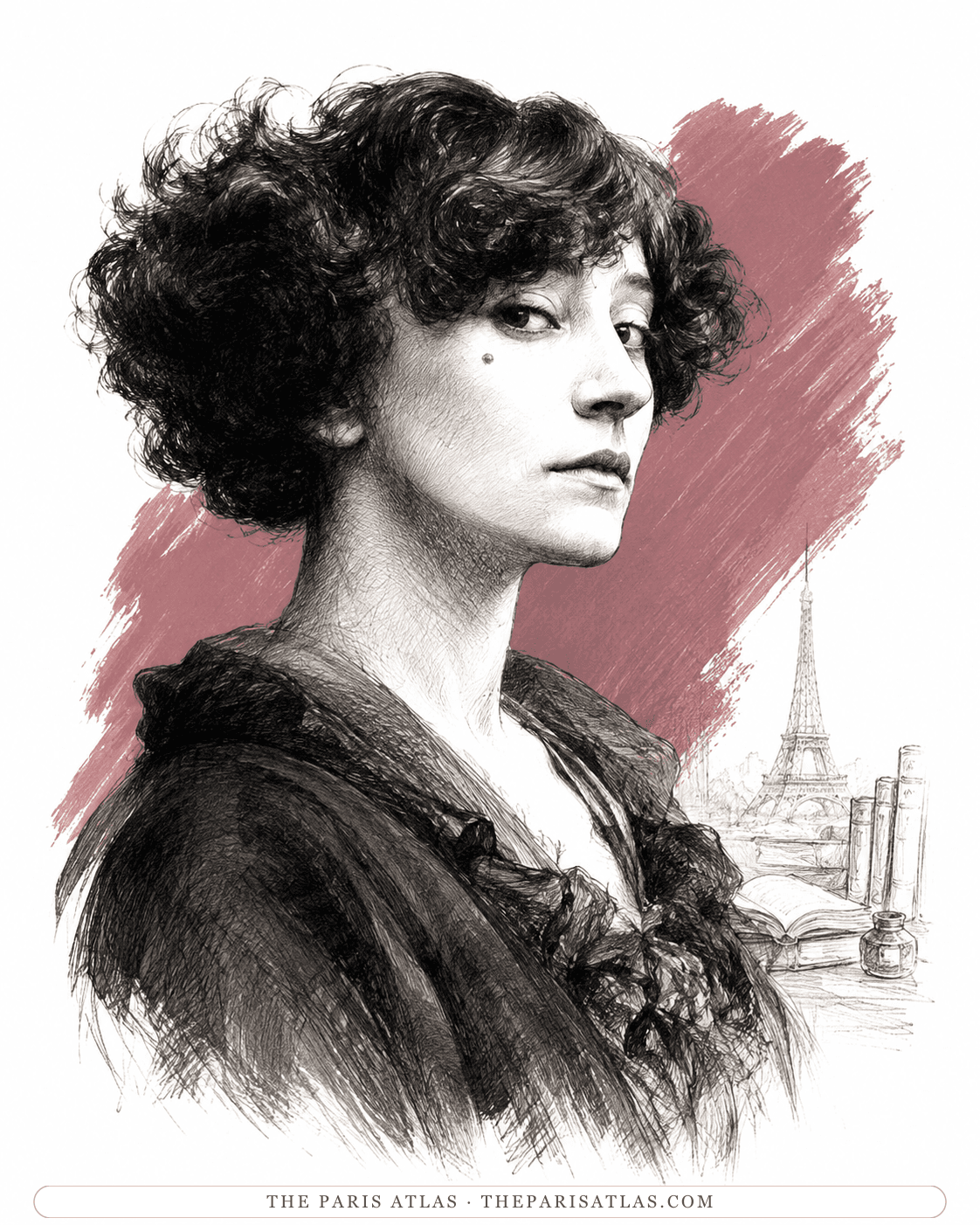
by Colette
Four wartime stories of frustrated love, shadowed by backward glances at the Paris circles of Colette's youth.
The Kepi is a collection of four stories Colette published in 1943, under the constraints of the Occupation. The pieces — 'La Cire verte,' 'Armande,' 'Le Tendron,' and the title story — are tales of love thwarted or mistimed, several of them lit by memories of the literary and theatrical Paris Colette had known decades earlier. The book reached print only after delays for paper shortage and censorship, and it carries a small footnote in literary history: a young publishing employee named Marguerite Donnadieu, not yet known as Marguerite Duras, helped move it along. (What's inside is described below.)
By 1943 Colette was seventy and writing in a diminished, occupied Paris. The four stories collected here had appeared in the magazine Candide in 1941–42; their gathering into a book was held up by wartime shortages and censorship. What unites them is a subject Colette had made her own — love that comes too late, too unequally, or at the wrong angle — and a habit of looking backward, so that the stories keep opening onto the circles and figures of her earlier life.
The title story turns on a late and unequal romance, and on the small, exposing gesture that ends it. But readers have often preferred 'La Cire verte,' a piece the novelist Amélie Nothomb later described as the moment she understood what prose could be. That split — the title story admired, a quieter piece loved — is characteristic of the book, which rewards the reader who does not stop at the first tale.
The Kepi belongs with Colette's late short fiction, alongside Bella-Vista: composed, reticent, and interested in the ways desire embarrasses and outlasts people. In English the title story and 'Armande' travel through The Collected Stories of Colette.
The book collects four stories rather than telling one. They are 'La Cire verte,' 'Armande,' 'Le Tendron,' and 'Le Képi,' each a self-contained tale of love thwarted, mistimed, or unequal. Several of them look back to the literary and theatrical Paris of Colette's youth, so the stories carry a retrospective shadow along with their immediate drama.
The title story concerns a late romance between an older woman and a younger man, and the small, revealing gesture that undoes it. Around it, the other pieces work variations on frustrated feeling, with the composure of Colette's late manner. The pleasure of the collection is its range within a narrow key — and readers have long argued over whether the title story or the quieter 'La Cire verte' is the finer piece.
The letter briefly suspends the narrator's teasing authority over Marco: its seriousness seems to require silence rather than advice. Her question about the lieutenant's age breaks that protection, introducing a comparison that Marco experiences as shame. Retouching her friend's makeup is a tender response, but also returns them to the demand that Marco manage how she appears. Looking back, the narrator identifies her own tactlessness. The scene makes friendship a troubled form of care, capable of sustaining an attachment while also transmitting the judgments that make it precarious.
The cap matters because Marco treats it playfully while the lieutenant's changed expression makes her suspect that she has crossed an unspoken boundary. The narrator does not witness the gesture: she reconstructs it from Marco's account and immediately imagines the condemning gaze herself. This doubled act of looking is more disturbing than an object's supposed power to end a romance. Marco asks for an explanation; the narrator's private judgments about appearance instead repeat the injury. The scene exposes how little protection intimacy offers against standards that remain unstated until someone fails them.
Four composed stories on desire's embarrassments and survivals, written when she was seventy.
'La Cire verte' has its own devoted following — Amélie Nothomb credited it with teaching her what prose could do.
Held up by shortage and censorship, and nudged along by a young Marguerite Duras before she was Duras.
1941
The stories begin appearing in the magazine Candide during the Occupation.
1943
Le Képi is published by Fayard after delays for paper shortage and censorship.
1950
The stories enter Volume XII of the Le Fleuron collected works.
The nearby late collection, close in reticence and in its attention to love gone wrong.
Read our take
The earlier gathering of short tales turning on concealment and thwarted feeling.
Read our take
The wartime novel written in the same years, sharing this book's backward glance at a vanished Paris.
Read our takeColette. Le Képi was published in 1943, a collection of four stories she wrote during the Occupation.
No. It is a collection of four stories — 'La Cire verte,' 'Armande,' 'Le Tendron,' and the title story — unified by the theme of frustrated love rather than by a plot.
It concerns a late, unequal romance between an older woman and a younger man, and the small, revealing gesture that brings it to an end.
As the book moved toward publication, a young employee of the publishers' syndicate named Marguerite Donnadieu — later known as the writer Marguerite Duras — helped move it along.
There is no securely verified standalone English edition, but the title story and 'Armande' appear in The Collected Stories of Colette.
Explore authors with a similar voice, perspective, and influence.
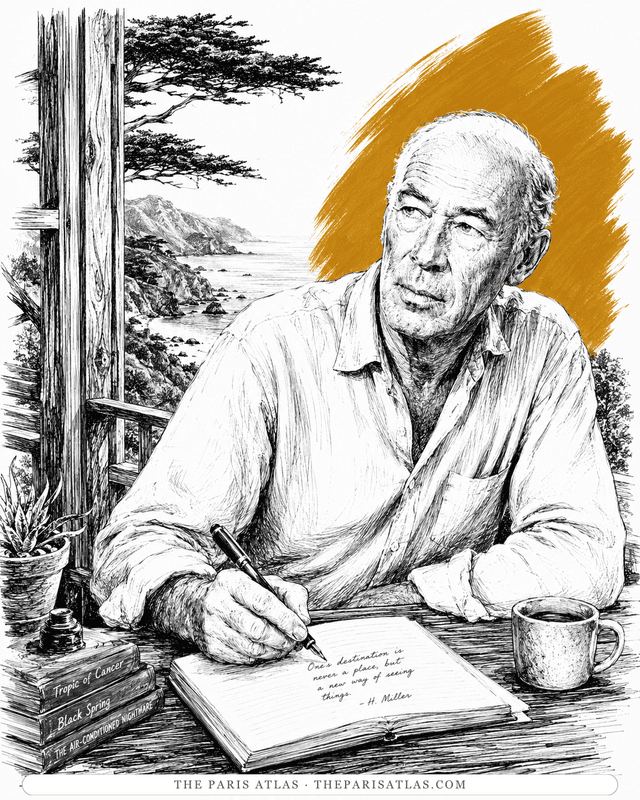
The Brooklyn dropout who arrived in Paris broke at thirty-eight and wrote the exuberant, banned books that ended American censorship.
View author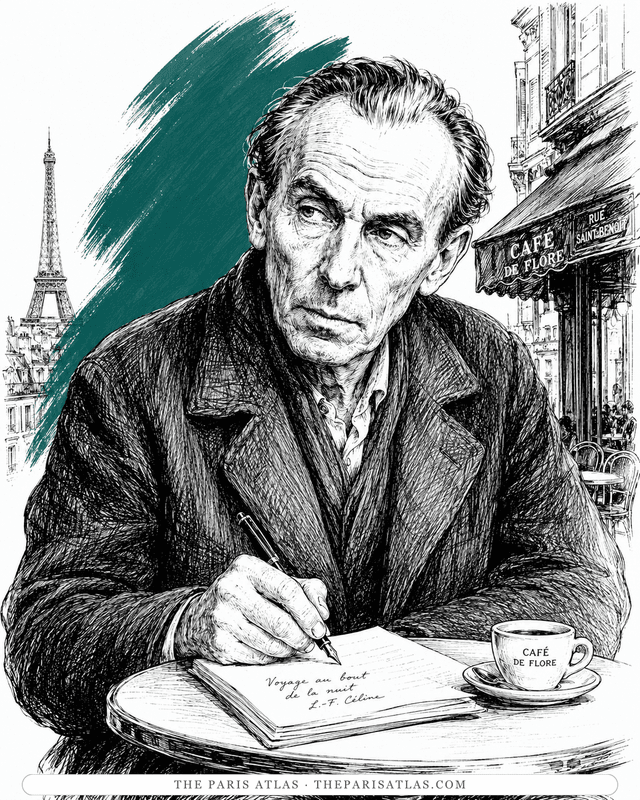
The doctor of the Paris slums who wrote the century's blackest, funniest novel — and changed the sound of French prose.
View author
War correspondent who covered the Spanish Civil War, D-Day, and conflicts across five more decades; Hemingway's third wife, 1940–1945.
View authorThe sources below include the primary text, editions, scholarship, archival materials, and other records that informed this page. They document The Kepi, its publication, and its place in literary history.

The primary text represented by this page, used for descriptions of the work’s contents and for any quoted passages shown here.
Selected passages of the French title story support the added readings; the narrator’s recollections and judgments are not independently verified biography.
The Société des amis de Colette bibliography verifies the original edition's publisher and publication date.
Used to place The Kepi within Colette's published work and verify its bibliographic context.

Used for independent biographical, archival, or historical context surrounding Colette's career and the period in which The Kepi appeared.
Used to cross-check authorship, chronology, and the work's place in Colette's wider catalogue.
Used to verify Colette's bibliography and place The Kepi within the broader chronology of Colette's career.
The primary text is the baseline reference for every book page. Additional references document publication history, interpretation, and historical context where that evidence is available.
 Explore more resources