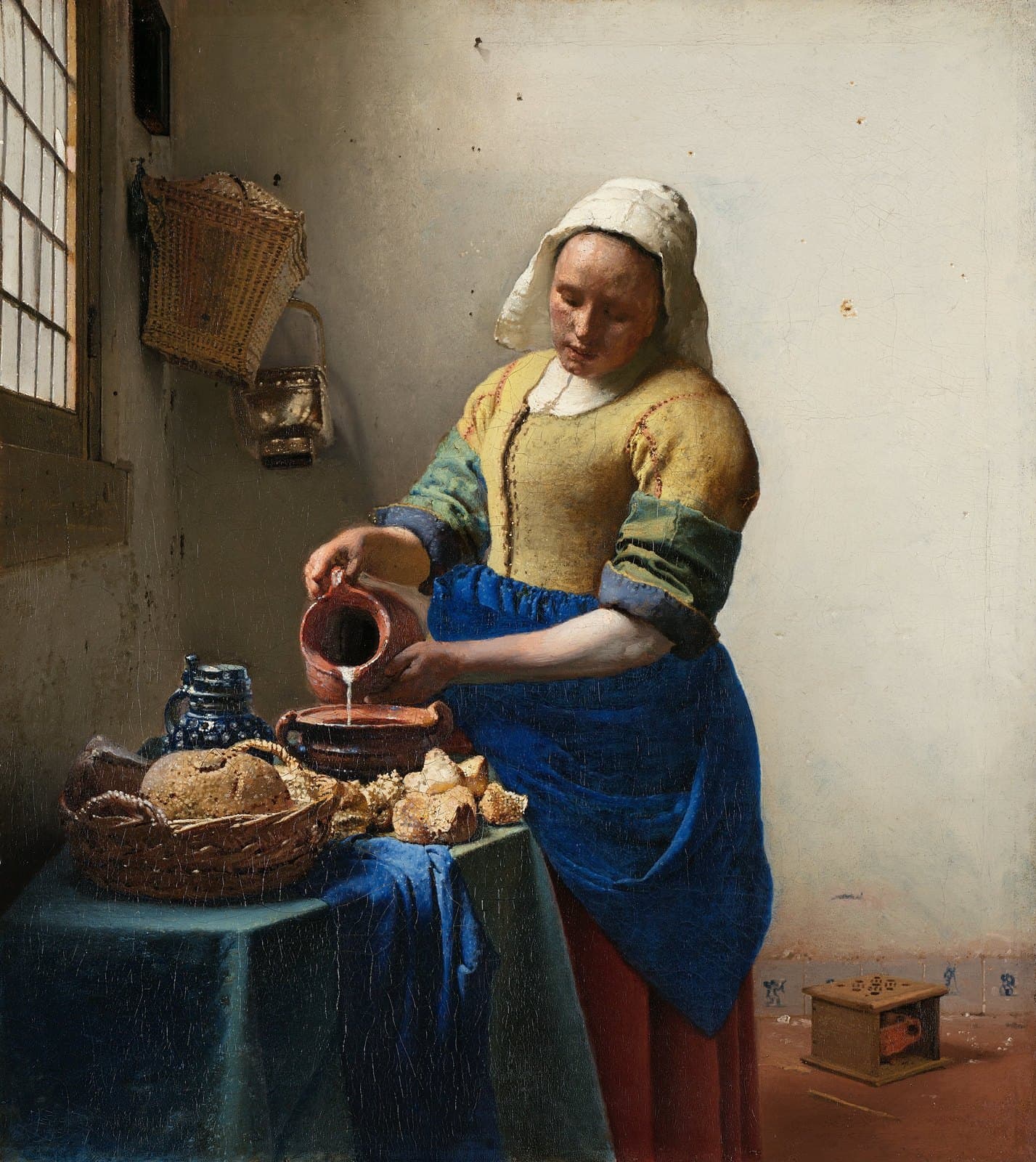
Johannes Vermeer painted The Milkmaid around 1660. It is a small picture, 45.5 by 41 centimetres, and it hangs in the Rijksmuseum in Amsterdam. A kitchen servant pours milk from a jug, and almost nothing else in the room moves.
The Milkmaid is an oil painting by Johannes Vermeer, housed in the Rijksmuseum, Amsterdam, which dates it to approximately 1660. Some scholarship places it slightly earlier, around 1657–1658. It depicts a domestic servant pouring milk in a modest interior, turning a small household action into the focus of unusually sustained attention. Measuring only 45.5 by 41 centimeters, the painting achieves a sense of substantial physical presence on an intimate scale.[1]
The Subject and Setting
Despite the familiar title, the woman is shown performing a kitchen task rather than milking a cow. She stands beside a table containing bread, a basket, and ceramic vessels, holding a jug with both hands as milk falls into a container below. Her downward gaze follows the action. Almost everything else in the composition is still.[1]
The room contains ordinary signs of use rather than conspicuous luxury. Light enters through a window on the left, passing over the woman, the table, and the uneven wall. Small details—including a projecting nail and marks in the plaster—give the setting specificity without competing with the central act. The identity of the model is not securely known, despite proposals connecting her with members of Vermeer's household.[2]
A Carefully Constructed Image
The impression of a naturally observed moment can conceal how thoroughly the painting has been organized. The woman's stable posture, the arrangement of objects, and the relationship between the lit wall and her silhouette concentrate attention on a limited group of forms. The low viewpoint and broadly pyramidal structure contribute to her monumental appearance.[3]
This combination of observation and invention is characteristic of Vermeer. His interiors are not straightforward documentary records of rooms encountered exactly as they appear. They depend on selected objects, adjusted relationships, and exceptionally deliberate applications of paint. Their credibility is the result of construction, not the absence of it.
Color, Texture, and Expensive Blue
Vermeer differentiates materials through changes in paint handling. Bread appears rough and granular, ceramic surfaces catch concentrated reflections, and the woman's clothing has weight and texture. Small bright touches help produce the sparkling appearance of the still life. These marks remain paint on a flat surface, yet at a suitable viewing distance they suggest the behavior of light across different substances.[4]
The blue apron contains natural ultramarine, a pigment derived from lapis lazuli. Its use provides a revealing contrast between subject and means: a comparatively humble garment was represented with an expensive artistic material. The painting's simplicity should therefore not be confused with inexpensive or technically casual execution.[5]
Does the Painting Contain Hidden Symbolism?
A foot warmer sits on the floor, and one of the tiles nearby carries an image of Cupid. Some scholars, notably Walter Liedtke, have connected these details with love or desire. His interpretation places the painting within an older Netherlandish tradition in which kitchen maids were associated with romantic or sexual themes.[6]
This is an interpretation rather than a settled explanation of the woman's thoughts. The objects also belong to a plausible domestic setting, and the painting does not show an explicit romantic encounter. Readings emphasizing desire coexist with those stressing labor, concentration, and dignity; the visible evidence does not require the viewer to choose a single exclusive meaning.
What Research Has Revealed
Technical examination has shown that the apparent spareness of the room emerged through revision. Imaging revealed a jug holder on the wall that Vermeer subsequently painted out. Its removal helped leave the woman's figure more clearly isolated against the background. The discovery provides concrete evidence that the painting's quietness was actively shaped during its creation.[5]
The work is also frequently discussed in connection with the camera obscura, an optical device capable of projecting an image. Vermeer's interest in optical effects makes the possibility worth considering, but it does not establish that he mechanically copied a projection. The Metropolitan Museum cautions that the device's importance has often been exaggerated at the expense of the artist's compositional and technical decisions.[3]
Early Reputation and Museum History
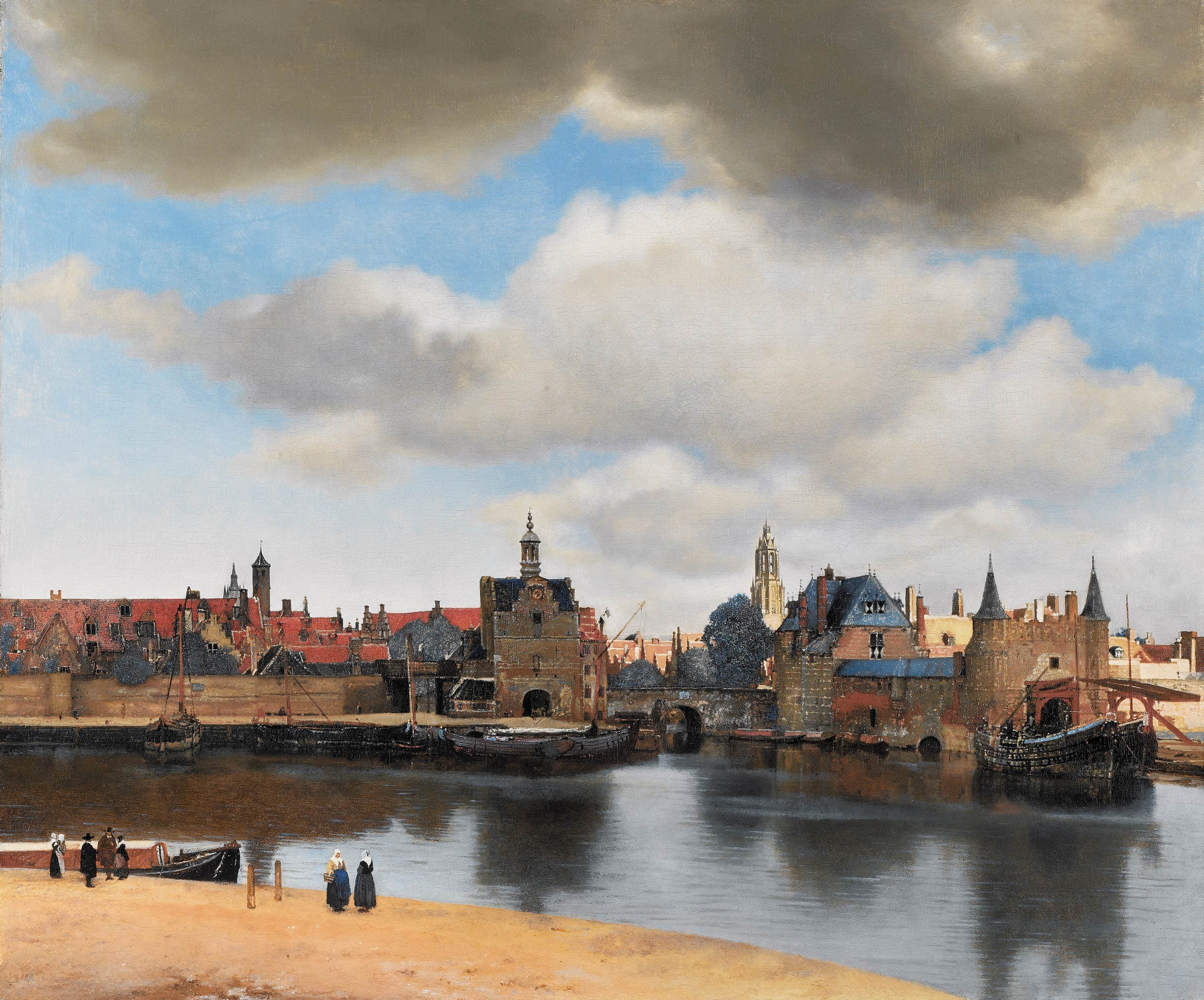
The Milkmaid was admired long before Vermeer became an internationally familiar name. At the 1696 Dissius sale, it achieved the second-highest price among the Vermeer paintings offered, surpassed by View of Delft. After passing through private collections, it entered the Rijksmuseum in 1908, with support from the Dutch government and the Rembrandt Society. Its history complicates the assumption that every major Vermeer was overlooked until a much later rediscovery.[2]
Close reading
Reading the work, detail by detail
Six views of the painting at close range: the pouring, the food on the table, the light source, the bare wall, the apron, and the floor behind the woman.
1.The stream of milk
One hand steadies the base of the jug and the other holds the handle, and the milk falls in a single thin line into the pot below. This is the only thing moving in the picture, and both of the woman's hands and her lowered eyes are given to it.
2.The bread and the basket
The crust of the loaf is built from small raised dots of thick pale paint, and the same dots run along the rim of the basket and across the broken rolls. Held close, they are separate specks of paint; at reading distance they read as light catching a rough surface.
3.The window on the left
All the light in the painting comes from this window on the left, and it falls across the woman, the table and the plaster behind her. The wicker basket and the brass pot hanging next to it are the only things left on the wall.
4.The wall behind her head
A nail sticks out of the plaster and casts a short shadow to its right; smaller holes and chips are scattered below it. Scans made in 2022 showed that Vermeer first sketched a jug holder with hanging jugs on this stretch of wall, then painted it out and left the plaster nearly empty.
5.The blue apron
The blue is natural ultramarine, made from crushed lapis lazuli imported from Afghanistan and among the costliest pigments a seventeenth-century painter could buy. Vermeer laid it in thick transparent layers over a monochrome underpainting, and spent it on a kitchen apron.
6.The foot warmer and the tile
The foot warmer is a wooden box with holes in the lid and a pot of coals inside, used to keep the feet warm while sitting. The tiles behind it carry small blue figures, and one of them shows Cupid — the detail scholars have used to argue that the picture is about love as well as work.
Johannes Vermeer paints The Milkmaid. The Rijksmuseum dates it to approximately 1660; some scholarship places it slightly earlier, around 1657–1658.
The Milkmaid, c. 1660, oil on canvas, 45.5 by 41 cm (Rijksmuseum, Amsterdam). Bought by the Rijksmuseum in 1908, with 38 other paintings from the Six family heirs, with support from the Vereniging Rembrandt. (Johannes Vermeer (Rijksmuseum, Amsterdam), via Google Arts & Culture and Wikimedia Commons)
1696
At the Dissius sale in Amsterdam, The Milkmaid takes the second-highest price among the Vermeer paintings offered, surpassed by View of Delft.
1908
The painting enters the Rijksmuseum, with support from the Dutch government and the Rembrandt Society, after passing through private collections.
Where to see it
Rijksmuseum
Amsterdam, Netherlands
A public viewing address has not yet been confirmed for this holding.
Collection locations and gallery displays can change. Check the museum's object record before making a special visit.
Frequently asked questions
Where is The Milkmaid?
The Milkmaid is in the Rijksmuseum in Amsterdam, object number SK-A-2344. It entered the museum in 1908, with support from the Dutch government and the Rembrandt Society, after passing through private collections.
When did Vermeer paint The Milkmaid?
The Rijksmuseum dates the painting to approximately 1660. Some scholarship places it slightly earlier, around 1657–1658.
How big is The Milkmaid?
The painting measures 45.5 by 41 centimeters, and is oil on canvas. At that small size it still achieves a sense of substantial physical presence.
What is the woman in The Milkmaid doing?
She is pouring milk from a jug into a container, not milking a cow, despite the familiar title. She stands beside a table holding bread, a basket, and ceramic vessels, her gaze following the stream of milk, while almost everything else in the composition is still.
Does The Milkmaid contain hidden symbolism?
Some scholars read the foot warmer and the nearby tile showing Cupid as references to love or desire. Walter Liedtke placed the painting in an older Netherlandish tradition that linked kitchen maids with romantic or sexual themes. That is an interpretation, not a settled explanation. The objects also belong to a plausible domestic setting, and readings that stress desire sit alongside readings that stress labor, concentration, and dignity.
Why is the apron in The Milkmaid so expensive to paint?
The blue apron contains natural ultramarine, a pigment made from lapis lazuli. A comparatively humble garment was therefore represented with an expensive artistic material, which is why the painting's simplicity should not be confused with technically casual execution.
What did technical research find under the paint?
Imaging revealed a jug holder on the wall that Vermeer subsequently painted out. Its removal helped leave the woman's figure more clearly isolated against the background, which shows that the apparent spareness of the room emerged through revision rather than being there from the start.
Did Vermeer use a camera obscura for The Milkmaid?
There is no evidence that he mechanically copied a projection. Vermeer's interest in optical effects makes the camera obscura worth considering, but the Metropolitan Museum cautions that the device's importance has often been exaggerated at the expense of the artist's compositional and technical decisions.
In the atlas
What the graph records about this work — every claim carries its citation.
Johannes Vermeer painted The Milkmaid in Delft around 1660, in the same decades as the grand religious and courtly Baroque painting made elsewhere in Europe. The picture is 45.5 by 41 centimeters and shows a servant pouring milk in a plain kitchen, and the blue of her apron is natural ultramarine, made from lapis lazuli. A Baroque period defined only by large public spectacle leaves this painting out.
— Johannes Vermeer, The Milkmaid — collection record, SK-A-2344; Jonathan Janson, The Milkmaid by Johannes Vermeer — catalogue entry
Explore painters from the same movements and circles.
Caravaggio
Italian painter who worked from live models straight onto the canvas, without preparatory drawings, and lit them with a single hard light against a dark ground. He killed a man in Rome in May 1606, spent his last four years as a fugitive in Naples, Malta and Sicily, and died at thirty-eight.
Dutch painter and etcher who worked in Leiden and Amsterdam and never traveled outside the Dutch Republic. He made about 300 etchings and roughly eighty self-portraits, trained some twenty-five painters, and was declared insolvent in 1656.
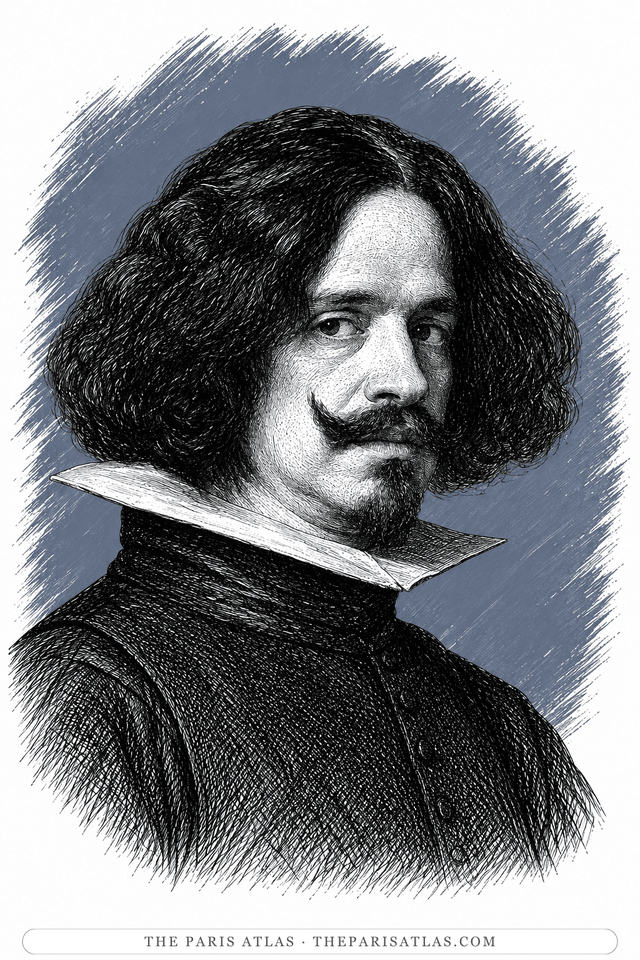
Spanish painter who spent thirty-seven years in the household of Philip IV, painting the king, his family and the dwarfs and jesters of the palace, and who ended his career as the official responsible for housing and moving the court.
The Milkmaid, c. 1660, oil on canvas, 45.5 by 41 cm (Rijksmuseum, Amsterdam). Bought by the Rijksmuseum in 1908, with 38 other paintings from the Six family heirs, with support from the Vereniging Rembrandt.c. 1660 · Johannes Vermeer (Rijksmuseum, Amsterdam), via Google Arts & Culture and Wikimedia Commons · Public domain
References
References
The sources below include collection records, catalogues, scholarly research, and primary materials that informed this page. They document The Milkmaid, its making, and its place in cultural history.
1abJohannes Vermeer, The Milkmaid — collection record
Website
Rijksmuseum
Used for
The museum's collection record: dating, medium, dimensions, credit line and full provenance.
These references provide the documented foundation for this work's history and interpretation. Claim-level citations remain attached to the specific claims they support.






 View source