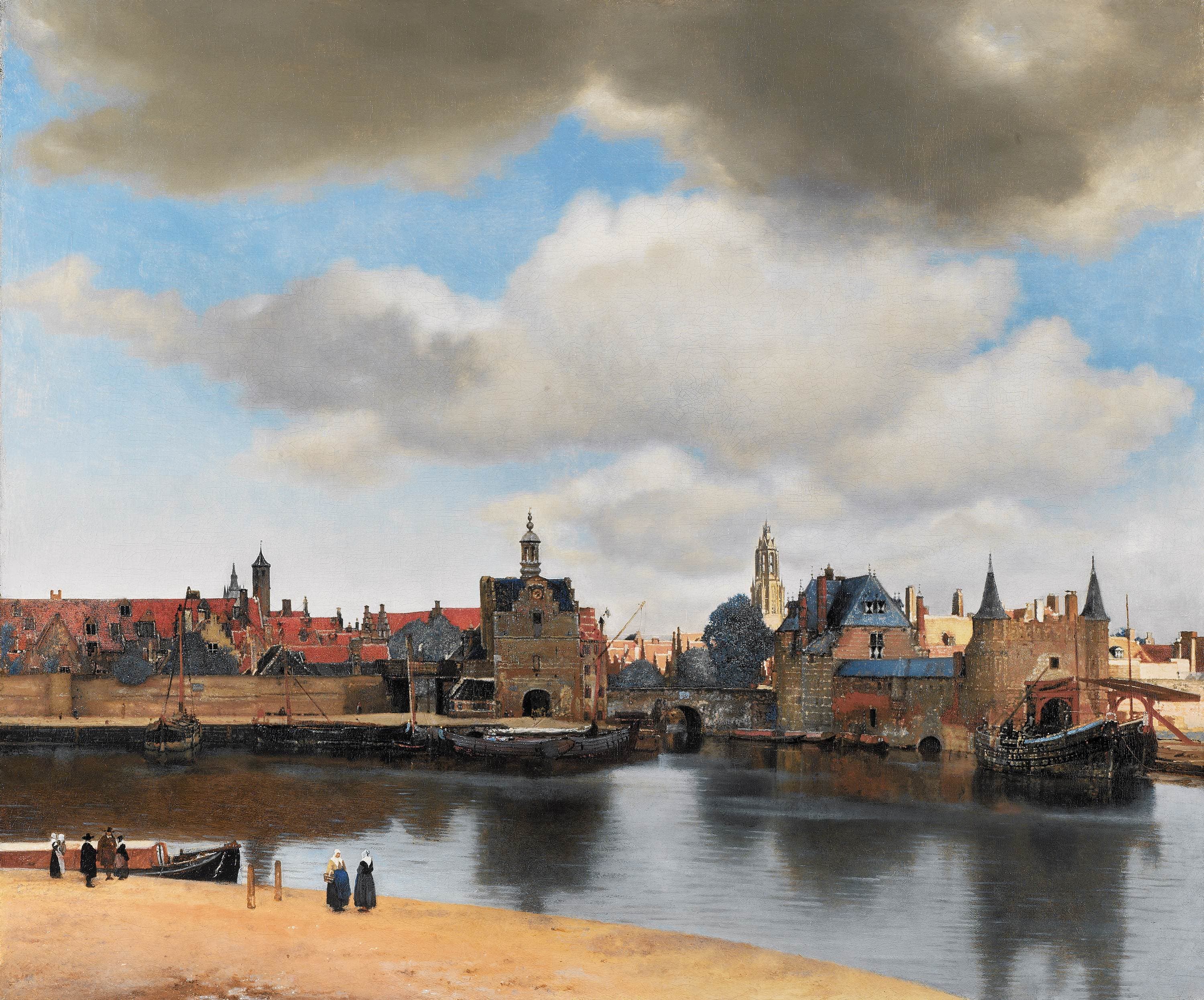
View of Delft
Delft seen across a harbour on a still morning, under a sky of heavy cloud, with the New Church tower lit by the sun. Johannes Vermeer painted it around 1660–1661. Marcel Proust called it the most beautiful painting in the world and set a death in front of it. The painting has belonged to the Mauritshuis in The Hague since 1822.
- c. 1660–1661
- Oil on canvas
- MauritshuisThe Hague, Netherlands
About Johannes Vermeer
What the painting shows
The town of Delft stretches across the picture, seen from the southeast across a triangular harbour called the Kolk. The Mauritshuis explains the view. On the left is part of the city wall. Then comes the Schiedam Gate, with its clock and small tower, and on the right the Rotterdam Gate, with its two pointed turrets. Between them the tower of the New Church rises above the roofs.
Boats are moored along the far quay with their sails down. There is almost no wind, and the water barely moves. The trees are in full leaf, so the season is late spring or summer. The Mauritshuis adds that it is morning, because the sun is in the east.
People play a small part. Two groups stand talking on the sandy shore in front, and a few tiny figures walk along the quay by the Schiedam Gate.
More than half the picture is sky. The nearest cloud is dark, and its shadow falls on the shore, the water and the nearest buildings. Further off, the roofs and the New Church tower are in bright sun. The Mauritshuis calls that contrast Vermeer's own invention.
A town tidied up
The painting looks like an exact record, but Vermeer adjusted the town. The Mauritshuis compared it with drawings of the same spot. The real buildings were arranged far more untidily, and the skyline was more jagged.
Vermeer made the bridge between the two gates straighter and longer than it was. He painted the Rotterdam Gate lower, close to the water. The one gap that would have let you see further into the town, over the bridge, he closed off with trees. The Mauritshuis says the point was to keep the lines of the water, the buildings and the sky flat and calm.
X-rays show more changes, according to Essential Vermeer. The reflections in the water were once much sharper, and the twin turrets of the Rotterdam Gate were first painted in sunlight. Vermeer also painted out a man in a broad hat who stood beside the two women on the shore.
Sand, dots and yellow
Vermeer chose a different way of painting for each surface. The Mauritshuis says that for the bright yellow roof on the right he mixed coarse grains of white lead into the paint underneath, to make the surface rough. Essential Vermeer adds that some of the paint for the stones and roofs contains sand.
On the sunlit parts of the New Church tower he laid a thick, smooth layer of lead-tin yellow, the brightest yellow a painter of his day could buy.
His boldest idea, the Mauritshuis says, is on the boat moored in front of the Rotterdam Gate. Its hull is covered in tiny dots of paint. From across the room they read as light glinting off wet wood.
What morning, what year?
The Mauritshuis dates the painting to about 1660–1661. Scholars have argued for slightly different years.
The Dutch art historian Kees Kaldenbach has tried to pin it down from what is in the picture. He points out that the New Church tower is shown without its bells, which were taken down in the spring of 1660. He also reads two big fishing boats in the harbour as being repaired before the fishing season opened on 1 June, and so suggests a morning in early May. Essential Vermeer reports these as Kees Kaldenbach's arguments, not settled facts.
Marcel Proust and the patch of yellow wall
Marcel Proust first saw the painting at the Mauritshuis in October 1902. In May 1921 it was lent to an exhibition of Dutch art at the Jeu de Paume in the Tuileries garden in Paris. Proust, who was ill, left his bed to see it again. In a letter to the critic Jean-Louis Vaudoyer he called it the most beautiful painting in the world.
Proust then wrote the scene into his novel. In La Prisonnière, published in 1923 after his death, the ailing novelist Bergotte goes to the same exhibition to look at a little patch of yellow wall that a critic has praised. He dies in front of the painting.
Readers have argued ever since about which patch Proust meant. Some point to the sunlit yellow roof behind the Rotterdam Gate. Others point to the far right edge of the picture, where there is no wall at all but part of a drawbridge. Proust never said.
From the Dissius sale to the Mauritshuis
The painting was lot 31 at the auction of Jacob Dissius's collection in Amsterdam on 16 May 1696. Before that it may have belonged to Pieter van Ruijven, a rich Delft collector whose family came to own many of Vermeer's paintings, and to his widow, Maria de Knuijt. Their daughter married Jacob Dissius.
The painting later belonged to the Kops family of Haarlem. At the S. J. Stinstra sale in Amsterdam on 22 May 1822 it was bought for the Mauritshuis.
The Mauritshuis says Vermeer was little known until about 1850, when the writings of the French critic Étienne-Joseph Thoré began to change that. Essential Vermeer says Thoré opened his study of Vermeer with an account of first seeing this painting in The Hague.
Both gates are gone. The Schiedam Gate was pulled down in 1834 and the Rotterdam Gate in 1836. Of the landmarks in the painting, only the New Church and the Old Church still stand.
The painting has been shown in Paris three times: at the Jeu de Paume in 1921, at the Orangerie in 1966 and at the Grand Palais in 1986.
Close reading
Reading the work, detail by detail
View of Delft looks like a plain record of a town across the water. Up close it is full of choices: a church tower thick with yellow paint, a boat whose hull is covered in dots, gates Vermeer lowered and a bridge he stretched, and two small groups of people chatting on the sand.
1.The New Church tower in full sun
The tower of the New Church rises in the middle of the skyline, pale yellow in full sun while the houses in front sit in shadow. The Mauritshuis says Vermeer laid thick, smooth lead-tin yellow on the brightest parts, the brightest yellow a painter of his day could buy. The art historian Kees Kaldenbach has argued that the tower is shown without its bells, which were taken down in 1660. At this size you cannot tell.
2.The Schiedam Gate and its clock
The Schiedam Gate is the brick gatehouse with the stepped gable and the little tower on top. A small round clock sits in the gable. Essential Vermeer reads the time as about seven in the morning, but the hands cannot be read at this size. The gate was pulled down in 1834, and nothing of it survives.
3.The Rotterdam Gate, lowered to the water
The Rotterdam Gate is the big brick block with the two pointed turrets. The Mauritshuis says Vermeer painted it lower and closer to the water than it really stood, to keep the skyline flat and calm. X-rays show he first painted the turrets in bright sun and then put them in shadow. The gate was demolished in 1836.
4.A boat covered in dots of light
The hull of the big boat in front of the Rotterdam Gate is covered in tiny pale dots. From close to they are just blobs of paint. From across the room they read as light glinting off wet wood. The Mauritshuis calls these dots perhaps the most daring thing in the painting.
5.Two women talking on the sand
Two women in white caps stand talking on the sandy bank. The woman on the left has a basket on her arm and a blue apron. Essential Vermeer says Vermeer first painted a man in a broad hat standing just to their right, then painted him out. Nothing of the man shows now.
6.A group by the boats
At the far left a small group stands beside two moored boats, a long red one and a black one. There are two women in white head-cloths, a man in a black cloak and wide hat, a man in a brown coat, and another woman in black. Essential Vermeer reads the men's clothes as the dress of well-off townspeople and the women's as plainer country dress.
7.Where the signature should be
The Mauritshuis records Vermeer's monogram, IVM, on the boat at the lower left. In this photograph the letters cannot be picked out on either the black boat or the red one. The signature is there, but you would need to stand in front of the painting to find it.
8.A bridge made longer and straighter
Between the two gates a stone bridge crosses the water on a dark arch. The Mauritshuis says Vermeer made the bridge straighter and longer than it was. He also let the trees behind it block the one gap that would have shown the town beyond. The trees look dark blue-green.
9.Looking for Proust's patch of yellow wall
In Marcel Proust's novel, the writer Bergotte dies in front of this painting while admiring a little patch of yellow wall. Readers have argued ever since about which patch Proust meant. Some point to the sunlit yellow roof and walls behind the Rotterdam Gate. Others point to the far right edge, where the red drawbridge frame is. Proust never said.
10.Red roofs and a glimpse of the Old Church
Along the left the town is a long line of red tiled roofs above the brown city wall. Just behind a dark pointed tower, a thin grey Gothic spire pokes above the roofs. Essential Vermeer identifies the spire as the tower of the Old Church, where Vermeer was buried in 1675. Vermeer gave the Old Church almost no space in the picture.
11.A barge tied up under the wall
A small sailing barge is tied up against the quay under the city wall, its mast and ropes standing against the brick. Essential Vermeer lists several kinds of boat in the harbour, from cargo barges to the small tow boats that carried passengers between towns. It is not clear which kind this barge is.
12.Blurred reflections in still water
The water is nearly still, and the buildings and boats reflect in it as long, soft shapes. Essential Vermeer says X-rays show the reflections were once much sharper. Vermeer blurred them and pulled them down toward the bottom edge of the picture.
13.A dark cloud over the harbour
More than half the picture is sky. A heavy dark cloud hangs across the top and throws its shadow over the near shore and water, while the town beyond is in sun. The Mauritshuis says that contrast was Vermeer's own invention. The dark cloud pulls your eye underneath it and into the light.
Timeline
c. 1660–1661
Johannes Vermeer paints Delft from across the Kolk harbour.
View of Delft, c. 1660–1661, oil on canvas, 96.5 by 115.7 cm (Mauritshuis, The Hague). Delft seen from the southeast across the harbor, with the tower of the Nieuwe Kerk in sunlight. Bought by the Mauritshuis at the Stinstra sale in Amsterdam on 22 May 1822. 1696
Lot 31 at the Dissius auction in Amsterdam on 16 May.
1822
Bought for the Mauritshuis at the S. J. Stinstra sale in Amsterdam on 22 May.
1834–1836
The Schiedam Gate and the Rotterdam Gate are demolished.
1902
Marcel Proust sees the painting at the Mauritshuis in October.
1921
Lent to the exhibition of Dutch art at the Jeu de Paume in Paris, where Marcel Proust sees it again in May.
1923
La Prisonnière is published, with the scene of Bergotte dying in front of the painting.
1966
Shown in Paris at the Orangerie in Dans la lumière de Vermeer.
Where to see it
Mauritshuis
The Hague, Netherlands
A public viewing address has not yet been confirmed for this holding.
The Mauritshuis listed the painting in Room 15 in September 2026. Displays change, so check the museum's page before a special visit.
Frequently asked questions
Where is View of Delft?
In the Mauritshuis in The Hague, inventory number 92. In September 2026 the museum listed it in Room 15.
What part of Delft does it show?
The south side of the town, seen from the southeast across a triangular harbour called the Kolk. The Schiedam Gate is on the left, the Rotterdam Gate on the right, and the New Church tower rises between them.
Is it an accurate picture of Delft?
Mostly, but not exactly. The Mauritshuis says Vermeer smoothed out the skyline, made the bridge straighter and longer, and lowered the Rotterdam Gate toward the water, to make the scene calmer.
What is Proust's patch of yellow wall?
A phrase from Marcel Proust's novel La Prisonnière, where the writer Bergotte dies in front of this painting while looking at a little patch of yellow wall. Critics disagree about which part of the painting Proust meant.
When was it painted?
About 1660–1661, according to the Mauritshuis. The historian Kees Kaldenbach has argued, from the missing church bells and the boats under repair, for a morning in May 1660.
How big is it?
96.5 by 115.7 centimetres, oil on canvas. The painting is signed with the monogram IVM on the boat at the lower left.
More by Johannes Vermeer
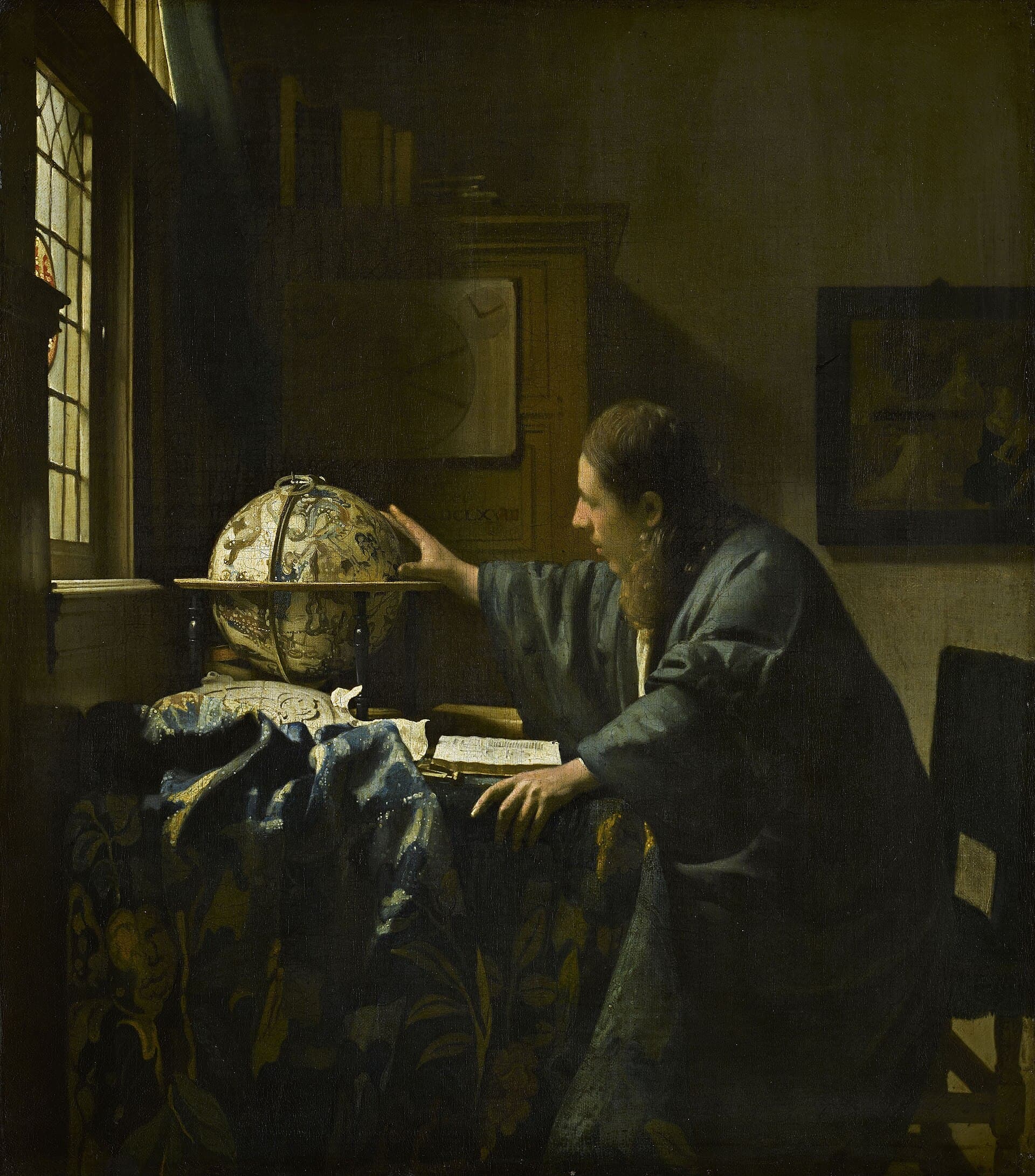
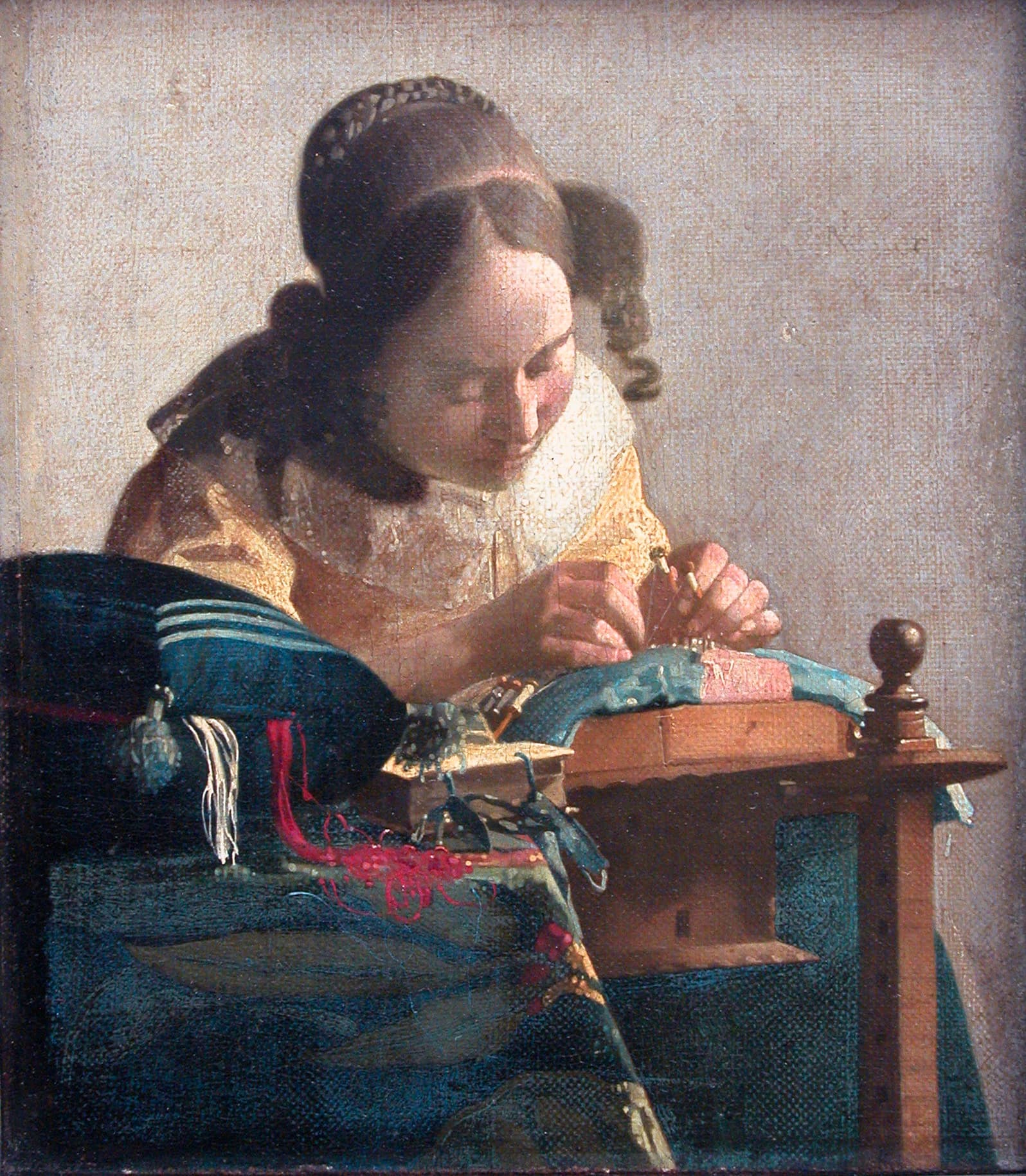
If you like Johannes Vermeer
Explore painters from the same movements and circles.
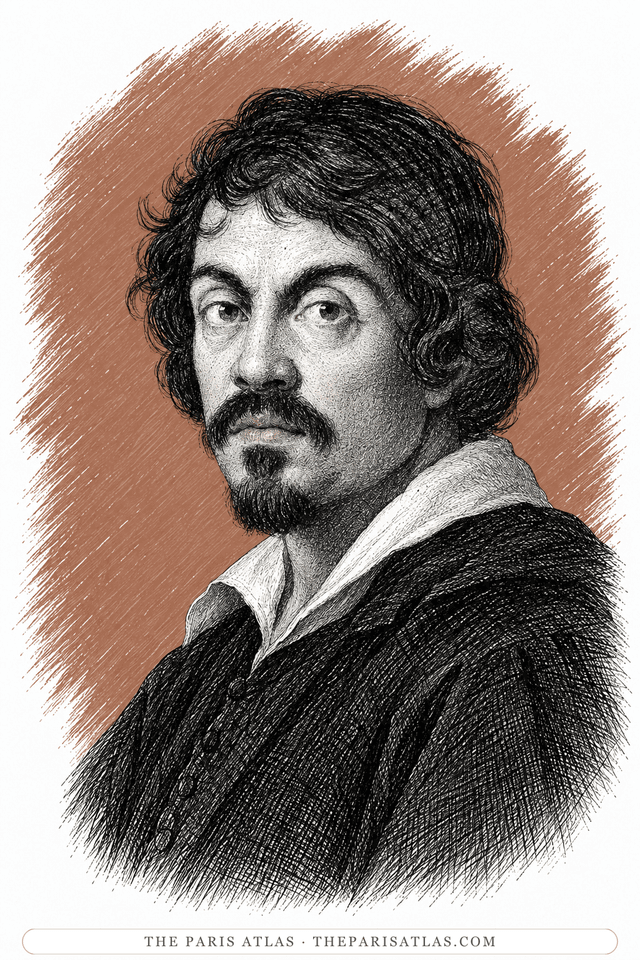
Caravaggio
Italian painter who worked from live models straight onto the canvas, without preparatory drawings, and lit them with a single hard light against a dark ground. He killed a man in Rome in May 1606, spent his last four years as a fugitive in Naples, Malta and Sicily, and died at thirty-eight.
View artist
Rembrandt van Rijn
Dutch painter and etcher who worked in Leiden and Amsterdam and never traveled outside the Dutch Republic. He made about 300 etchings and roughly eighty self-portraits, trained some twenty-five painters, and was declared insolvent in 1656.
View artist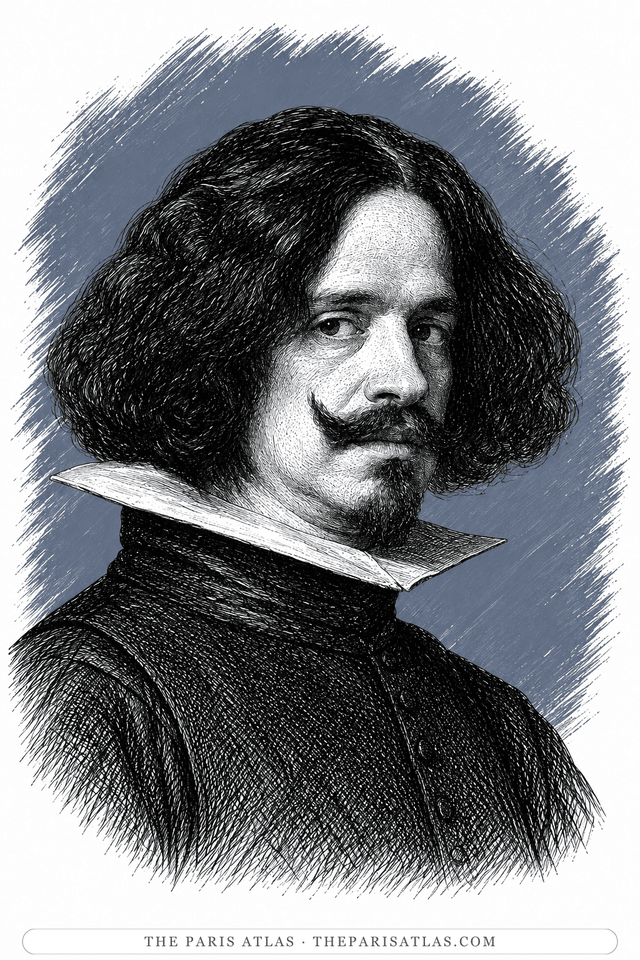
Diego Velázquez
Spanish painter who spent thirty-seven years in the household of Philip IV, painting the king, his family and the dwarfs and jesters of the palace, and who ended his career as the official responsible for housing and moving the court.
View artist
In images
References
The sources below include collection records, catalogues, scholarly research, and primary materials that informed this page. They document View of Delft, its making, and its place in cultural history.


1Johannes Vermeer, View of Delft, c. 1660–1661 — collection record 92
WebsiteMauritshuis, The HagueUsed forThe holding museum's record: the view, the changes Vermeer made, the rough roof, the lead-tin yellow, the dotted boat, Proust and the provenance.
2View of Delft by Johannes Vermeer — catalogue entry
WebsiteEssential VermeerUsed forSpecialist catalogue entry: the X-ray findings, the figures, the gates and churches, Kees Kaldenbach's dating, the sand in the paint and the exhibition history.
3Proust and Vermeer: the 'petit pan de mur jaune'
WebsiteEssential VermeerUsed forThe Bergotte passage and the readings critics have proposed for the patch of yellow wall.

4Tout et rien. La Vue de Delft invisible de Proust
PeriodicalQuaderni Proustiani, Padova University Press, 2015Used forDates Marcel Proust's Jeu de Paume visit to May 1921 and quotes his letter to Jean-Louis Vaudoyer.
5Proust Ink — Marcel Proust chronology (ed. William C. Carter)
WebsiteUsed forMarcel Proust sees the painting in The Hague in October 1902.
6Thoré-Bürger and the Rediscovery of Johannes Vermeer
WebsiteEssential VermeerUsed forThéophile Thoré and the rediscovery of Vermeer.
7View of Delft — Johannes Vermeer (Mauritshuis)
WebsiteMauritshuis, via Google Arts & CultureUsed forThe Mauritshuis's zoomable image of the painting.
These references provide the documented foundation for this work's history and interpretation. Claim-level citations remain attached to the specific claims they support.
 Explore more resources