The Lacemaker
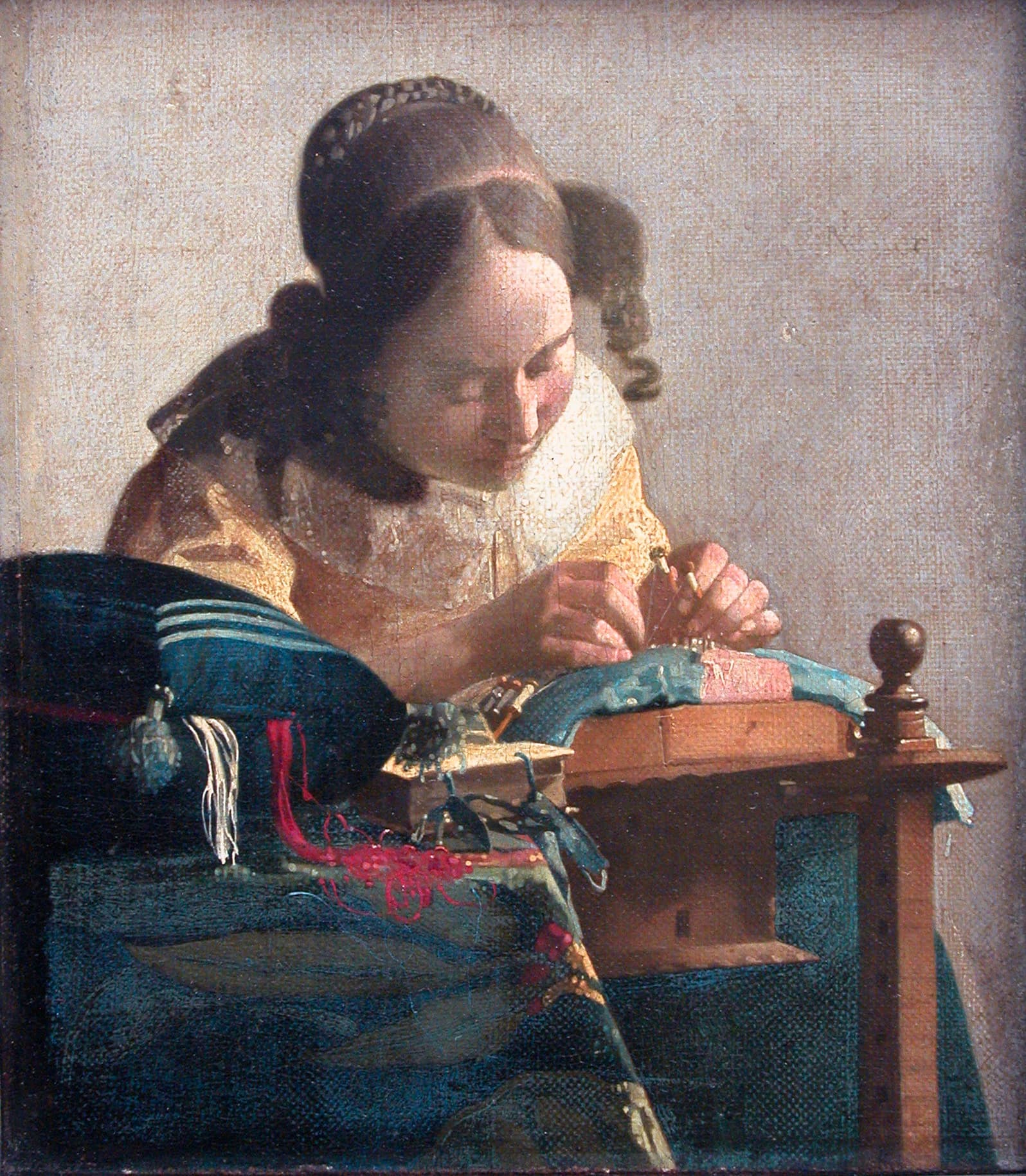
A young woman in a yellow bodice bends close over her lace pillow, bobbins in her fingers, while red and white threads spill from a sewing cushion in front of her. Johannes Vermeer painted it around 1669–1670. At 24 by 21 centimetres it is his smallest picture. The Louvre bought it in 1870, and it hangs in the Richelieu wing, inventory number MI 1448.
- c. 1669–1670
- Oil on canvas mounted on wood
- Musée du LouvreParis, France
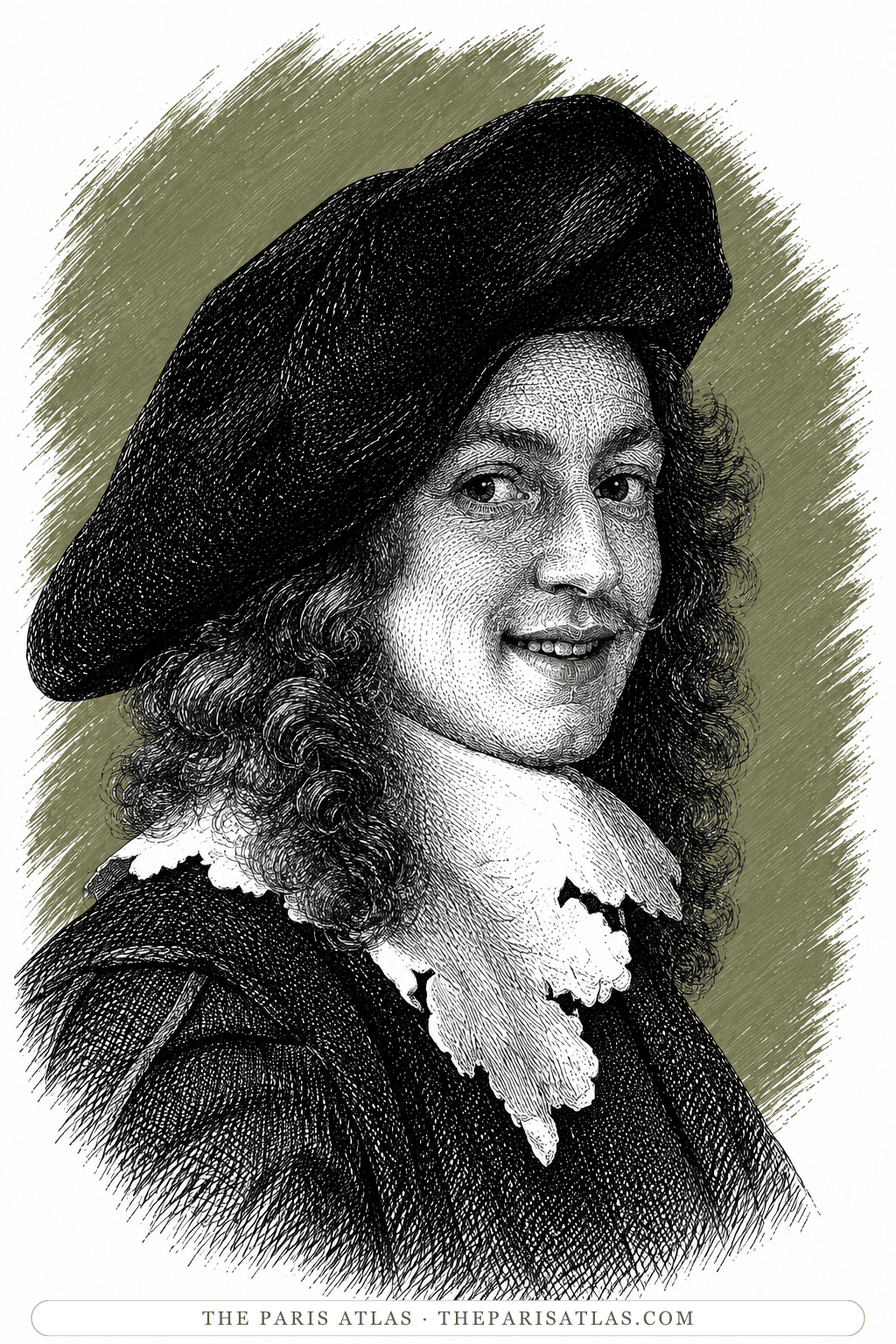
About Johannes Vermeer
What the painting shows
A young woman bends over her work at a small table, so close that we look down on her face. Her hair is pulled back smooth, with a ringlet hanging beside her cheek. She wears a yellow bodice and a wide white collar.
Her two hands hover over a flat blue-green lace pillow. She holds small wooden bobbins, and fine threads run from them down to a row of pins.
In front of her, on a table covered with a heavy flowered cloth, stands a blue sewing cushion with red and white threads spilling out of it. A small closed book lies next to it. Behind her there is nothing but a bare grey wall.
The light comes from the right. The Louvre points out that this is rare for Vermeer, whose rooms are nearly always lit from the left.
Sharp threads and blurred threads
The sharpest thing in the painting is the pair of threads the woman is working with, stretched between her fingers. The threads spilling from the sewing cushion in front are the opposite. Vermeer painted them so loosely that they melt into soft red loops and blotches.
The Louvre describes the blurred threads as a close-up, almost hazy view that makes the woman's hands look all the sharper. Some writers see in them the blur of a lens and take them as a sign that Vermeer used a camera obscura, a darkened box that throws an image onto a surface. Others see a painter deciding where to be exact. No document settles the question.
A picture of a virtuous woman
The Louvre says a woman making lace was a traditional sign of a good, hard-working household, with a religious undertone. The Louvre reads the little book on the table as almost certainly a small Bible or prayer book. Essential Vermeer adds that other writers have suggested a pattern book for lace.
According to the Louvre, she is a woman of the house, and not a professional lacemaker. There is no proof she is the painter's wife. Essential Vermeer suggests one of Vermeer's daughters might have posed, but no document says who she was.
The sewing cushion was a familiar object. Essential Vermeer explains that it was a cloth-covered box that held a woman's sewing things, and that it stood for a woman who worked diligently rather than idly.
How it reached Paris
The Louvre traces the painting back to Pieter van Ruijven of Delft, whom it calls Vermeer's patron and his chief collector, and to his widow, Maria de Knuijt. The painting passed to their daughter and her husband, Jacob Dissius, and was lot 12 at the Dissius auction in Amsterdam on 16 May 1696.
The Lacemaker then went through a string of Dutch owners and sales. It was sold in Paris in 1817, and later belonged to Baron van Nagell van Ampsen, a former Dutch foreign minister.
By 1860 it belonged to the Rotterdam collector Dirk Vis Blokhuyzen. The Louvre notes that the writers Edmond and Jules de Goncourt admired it in 1861. Dirk Vis Blokhuyzen left his whole collection to the city of Rotterdam, but in 1869 the city refused the gift because it did not want to pay the heirs.
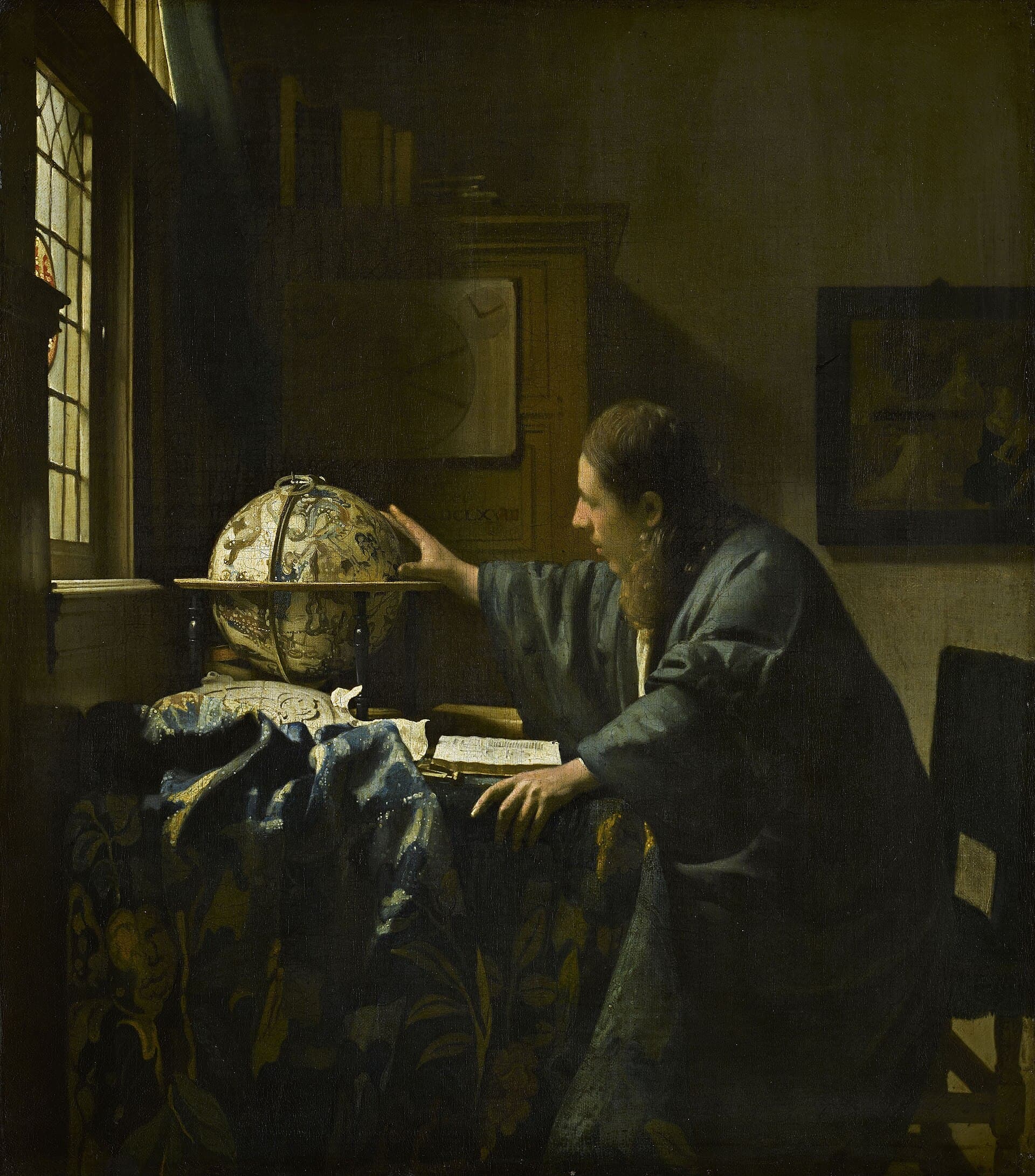
His collection was sold in Paris on 1 April 1870. The Louvre bought The Lacemaker in June 1870 from the expert and painter Eugène Féral. The Lacemaker is one of only two Vermeers in the French national collections. The other is The Astronomer, which hangs in the same room.
Salvador Dalí and the rhinoceros
Salvador Dalí was obsessed with The Lacemaker. In 1955 he painted a small copy of it in front of the original at the Louvre. The copy is now in the Robert Lehman Collection at the Metropolitan Museum of Art in New York.
In the same year he painted the Paranoiac-critical Study of Vermeer's 'The Lacemaker', now in the Guggenheim Museum, in which the woman breaks apart into rhinoceros horns. On 30 April 1955 he painted beside a live rhinoceros at the Vincennes zoo with a reproduction of the picture. In December 1955 he told an audience at the Sorbonne that everything starts from the rhinoceros horn and from Vermeer's Lacemaker.
A very small picture
The canvas is glued onto a wooden panel. Essential Vermeer, drawing on the 1995 exhibition catalogue edited by Arthur K. Wheelock Jr., says the panel is oak and that the canvas was once a little taller and narrower than it is now.
An X-ray shows that Vermeer first painted the woman's knee lower down, with a triangle of wall showing under the table. The blue of the tablecloth has faded over time.
An eighteenth-century watercolour by Jan Stolker put the woman inside a painted niche, which led some to think the painting had been cut down. The Louvre says it certainly has not been.
Close reading
Reading the work, detail by detail
The Lacemaker is Vermeer's smallest painting, about the size of a sheet of writing paper folded in half. Up close its sharpest point is the pair of threads between the woman's fingers, while the red and white threads spilling from her sewing cushion dissolve into blurs.
1.Two hands, the bobbins and the pins
The woman's two hands hover over the lace pillow, holding small wooden bobbins. Fine threads run down from the bobbins to a row of pins. The pins are stuck into a pinkish patch, which is probably the pattern card the lace is worked over. The hands and threads are the sharpest part of the picture, and everything else is softer.
2.A face bent over the work
The woman bends so far over her work that you look down on her face. Her eyes are lowered to her hands, and one side of her face is in soft shadow. The Louvre says she is a woman of the house, not a professional lacemaker, and that there is no proof she is the painter's wife.
3.Plaited hair and a row of pale shapes
The woman's hair is pulled back smooth, with a band of small pale shapes running around the crown. The pale shapes might be plaits catching the light, or a string of small beads. The canvas texture is strong here, and it is hard to say which. Essential Vermeer notes that her hairstyle was in fashion for only a few years, which helps date the painting.
4.A curl against the wall
A single dark ringlet hangs beside the woman's cheek and ends in a corkscrew tip against the pale wall. Essential Vermeer compares these dangling locks to those of the Young Woman Seated at a Virginal, painted in the same years.
5.A collar you can see through
The woman's collar is a thin, patchy white laid over her yellow bodice, so the yellow underneath shows through. Essential Vermeer says the pattern of the lace cannot be made out, but that Vermeer caught how see-through the collar is with very little paint.
6.Threads that melt into blurs
Red and white threads spill out of the sewing cushion and down over the table. Vermeer painted them so loosely that they turn into soft red loops and blotches. The Louvre calls the effect a close-up, almost blurred view that makes the woman's hands look sharper. Some writers see the blur of a lens in it. Others see a painter simply choosing where to be exact.
7.The sewing cushion's tassel
A grey-blue tassel hangs from the corner of the sewing cushion, next to a bunch of loose white threads. Essential Vermeer explains that a sewing cushion like this was a cloth-covered box that held a woman's sewing things, and that it stood for a hard-working, virtuous woman.
8.A small book with its ties
A small book lies closed on the table, its pale edge catching the light. Dark ribbons hang from it, which Essential Vermeer takes to be the book's ties. The Louvre says the book is almost certainly a small Bible or prayer book. Other writers have suggested a pattern book for lace.
9.The lace pillow and its pins
The woman works on a flat blue-green pillow resting on the table. The pinkish patch is where the lace is being made, and a row of small pins stands in it. Essential Vermeer explains that a card punched with holes sits on the pillow, and a pin goes into each hole for the threads to be twisted around.
10.The knob on the lacemaking table
A dark turned wooden knob tops the post at the corner of the table. Essential Vermeer describes the table as a special stand for lacemaking, whose height could be changed by moving a peg in the post. No other seventeenth-century picture shows one quite like it.
11.The yellow bodice in shadow
The woman's far shoulder, in her yellow bodice, is mostly in shadow. The light comes from the right, and the Louvre points out that this is rare in Vermeer, whose rooms are nearly always lit from the left.
12.A faded tapestry cloth
The table is covered with a heavy tapestry cloth, woven with large pointed leaves. The cloth now looks dark blue-green and olive. Essential Vermeer says the blue has changed colour over time, so the cloth was once brighter. A similar cloth appears in other Vermeers, and it may have been woven in Delft.
13.A bare wall with a faint signature
Behind the woman is nothing but a grey wall. The Louvre records the signature up here at the top right: I Meer, with the first two letters joined. In this photograph only a few faint dark strokes show near the top of the view, too faint to read.
Timeline
c. 1669–1670
Johannes Vermeer paints the young woman making lace.
The Lacemaker, c. 1669–1670, oil on canvas mounted on panel, 24 by 21 cm (Musée du Louvre, Paris). Vermeer's smallest painting, bought by the Louvre in June 1870. 1696
Lot 12 at the Dissius auction in Amsterdam on 16 May.
1817
Sold at auction in Paris.
1861
Edmond and Jules de Goncourt admire it while it belongs to Dirk Vis Blokhuyzen.
1869
The city of Rotterdam refuses Dirk Vis Blokhuyzen's bequest of his collection.
1870
The Vis Blokhuyzen collection is sold in Paris on 1 April. The Louvre buys The Lacemaker in June.
1955
Salvador Dalí copies the painting at the Louvre and paints it as rhinoceros horns.
2017
Shown at the Louvre in Vermeer et les maîtres de la peinture de genre.
2023
Lent to the Vermeer exhibition at the Rijksmuseum in Amsterdam.
Where to see it
Musée du Louvre
Paris, France
A public viewing address has not yet been confirmed for this holding.
The Louvre listed the painting in the Richelieu wing, level 2, Room 837, in September 2026. Displays change, so check the museum's page before a special visit.
Frequently asked questions
Where is The Lacemaker?
In the Louvre in Paris, inventory number MI 1448. In September 2026 the Louvre listed it in the Richelieu wing, level 2, Room 837, next to The Astronomer.
How small is it?
24 by 21 centimetres, about the size of a sheet of writing paper folded in half. The Lacemaker is Vermeer's smallest painting. The canvas is glued onto a wooden panel.
Why are some of the threads blurry?
Vermeer painted the red and white threads spilling from the sewing cushion very loosely, so they look out of focus next to the sharp threads between the woman's fingers. Some writers think he copied the blur of a lens. Others think it was simply a painter's choice.
What is the book on the table?
The Louvre says it is almost certainly a small Bible or prayer book. Other writers have suggested a pattern book for lace.
Who is the woman?
Nobody knows. The Louvre says she is a woman of the house rather than a professional lacemaker, and that there is no proof she is Vermeer's wife.
What did Salvador Dalí do with The Lacemaker?
He copied it at the Louvre in 1955, painted a version in which the figure breaks into rhinoceros horns, and told an audience at the Sorbonne that everything starts from the rhinoceros horn and from Vermeer's Lacemaker.
More by Johannes Vermeer
If you like Johannes Vermeer
Explore painters from the same movements and circles.
Caravaggio
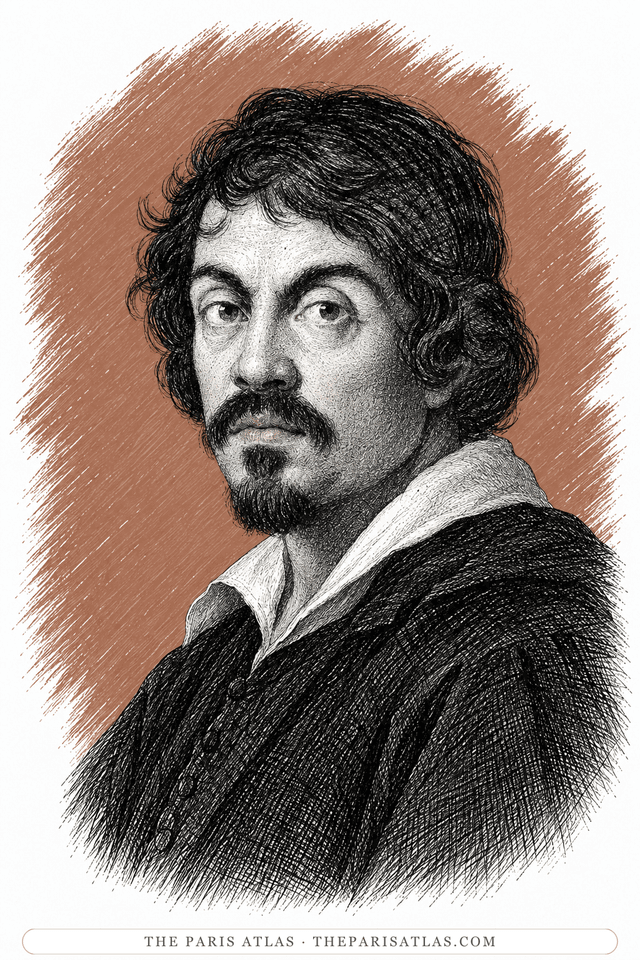
Italian painter who worked from live models straight onto the canvas, without preparatory drawings, and lit them with a single hard light against a dark ground. He killed a man in Rome in May 1606, spent his last four years as a fugitive in Naples, Malta and Sicily, and died at thirty-eight.
View artist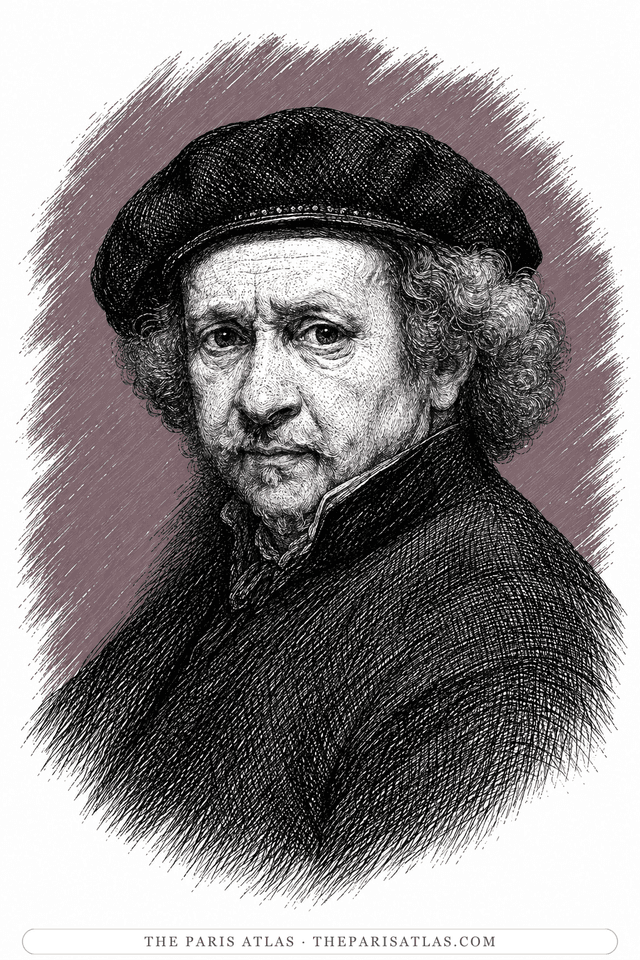
Rembrandt van Rijn
Dutch painter and etcher who worked in Leiden and Amsterdam and never traveled outside the Dutch Republic. He made about 300 etchings and roughly eighty self-portraits, trained some twenty-five painters, and was declared insolvent in 1656.
View artist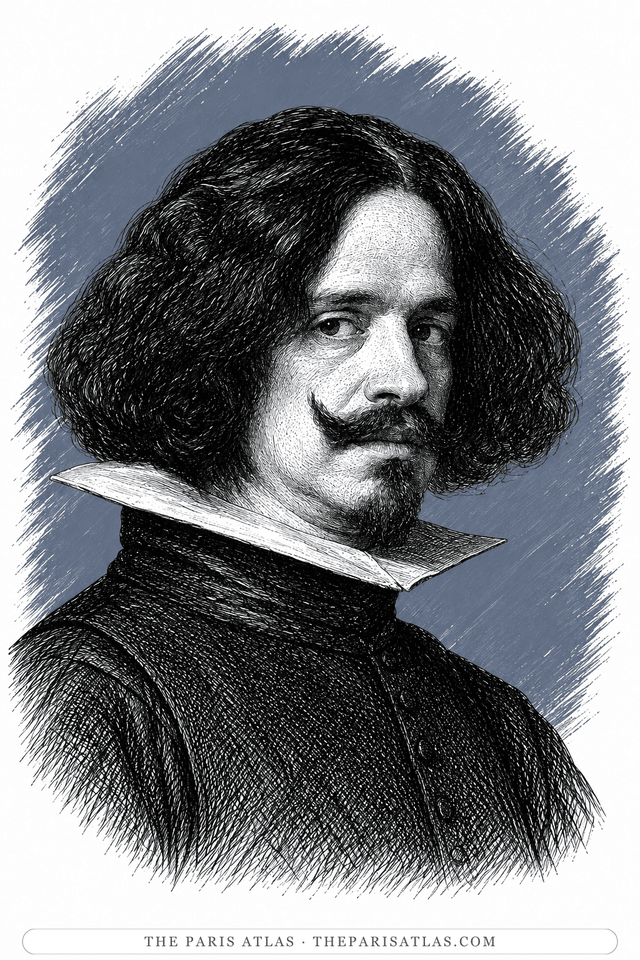
Diego Velázquez
Spanish painter who spent thirty-seven years in the household of Philip IV, painting the king, his family and the dwarfs and jesters of the palace, and who ended his career as the official responsible for housing and moving the court.
View artist
In images
References
The sources below include collection records, catalogues, scholarly research, and primary materials that informed this page. They document The Lacemaker, its making, and its place in cultural history.


1La Dentellière — Louvre site des collections
WebsiteMusée du LouvreUsed forThe holding museum's record: the reading of the picture, the light from the right, the signature, the full provenance and the 1870 purchase.
2The Lacemaker by Johannes Vermeer — catalogue entry
WebsiteEssential VermeerUsed forSpecialist catalogue entry: the sewing cushion, the book, the lace pillow, the table, the tapestry, the X-ray and the technical report.
3The Astronomer by Johannes Vermeer — Collections Rothschild
WebsiteInstitut national d'histoire de l'art (INHA)Used forThe Institut national d'histoire de l'art on The Lacemaker and The Astronomer as the only two Vermeers in the French national collections.
4Vermeer and the Camera Obscura, part one
WebsiteEssential VermeerUsed forThe argument over whether Vermeer used a lens.
5Salvador Dalí, The Lacemaker (after Vermeer), 1955 — Robert Lehman Collection
WebsiteThe Metropolitan Museum of ArtUsed forSalvador Dalí's 1955 copy in the Robert Lehman Collection.
6Paranoiac-critical Study of Vermeer's 'The Lacemaker' — catalogue raisonné P 703
WebsiteFundació Gala-Salvador DalíUsed forThe rhinoceros-horn version, catalogue raisonné P 703.
7Classic Copy of 'The Lacemaker' — catalogue raisonné P 701
WebsiteFundació Gala-Salvador DalíUsed forThe copy, catalogue raisonné P 701.

8People, Dec. 26, 1955
PeriodicalTIME, 1955Used forContemporary report of Salvador Dalí's Sorbonne lecture.
9Vermeer-Related Works of Art: The Lacemaker
WebsiteEssential VermeerUsed forSalvador Dalí at the Louvre and at the Vincennes zoo.
These references provide the documented foundation for this work's history and interpretation. Claim-level citations remain attached to the specific claims they support.
 Explore more resources