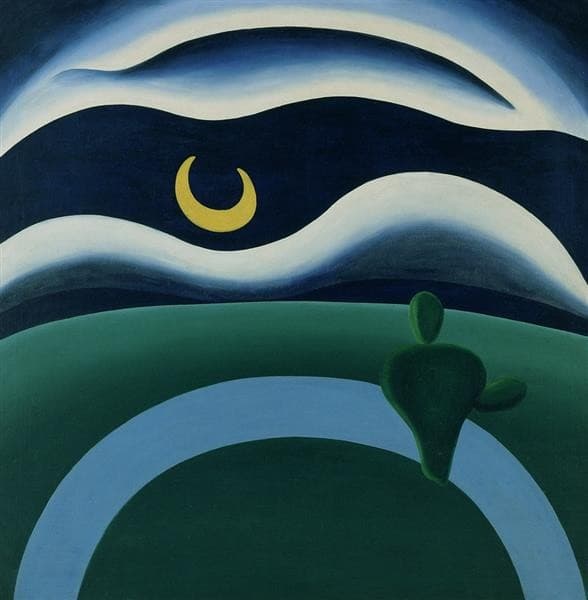
Tarsila do Amaral painted The Moon, or A Lua, in Brazil in 1928. A green form that could be a cactus or a person stands beside a curving stream, under dark hills, undulating clouds and a small crescent moon. The Museum of Modern Art in New York acquired it in 2019.
The Moon, or A Lua, is an oil painting completed by the Brazilian artist Tarsila do Amaral in 1928. Its dreamlike landscape combines a crescent moon, flowing bands of land and water, and an ambiguous plantlike figure. The work belongs to the Museum of Modern Art in New York, which acquired it in 2019.
A Landscape Between Plant and Person
A green form stands near a curving stream, its rounded projections suggesting both vegetation and a human presence. Behind it, dark hills and undulating clouds frame the small crescent moon. Shapes are clearly outlined, yet their identities remain unstable: the scene is recognizable as a landscape without becoming a straightforward description of an actual place.
The relationship between the foreground figure and the moon gives the picture a contemplative quality. The plant can appear almost to be looking across the water, although that impression remains an interpretation rather than an explicitly defined narrative. Tarsila's simplified forms make it possible for landscape and figure to approach one another without fully merging.
Paris and the Making of a Brazilian Modernism
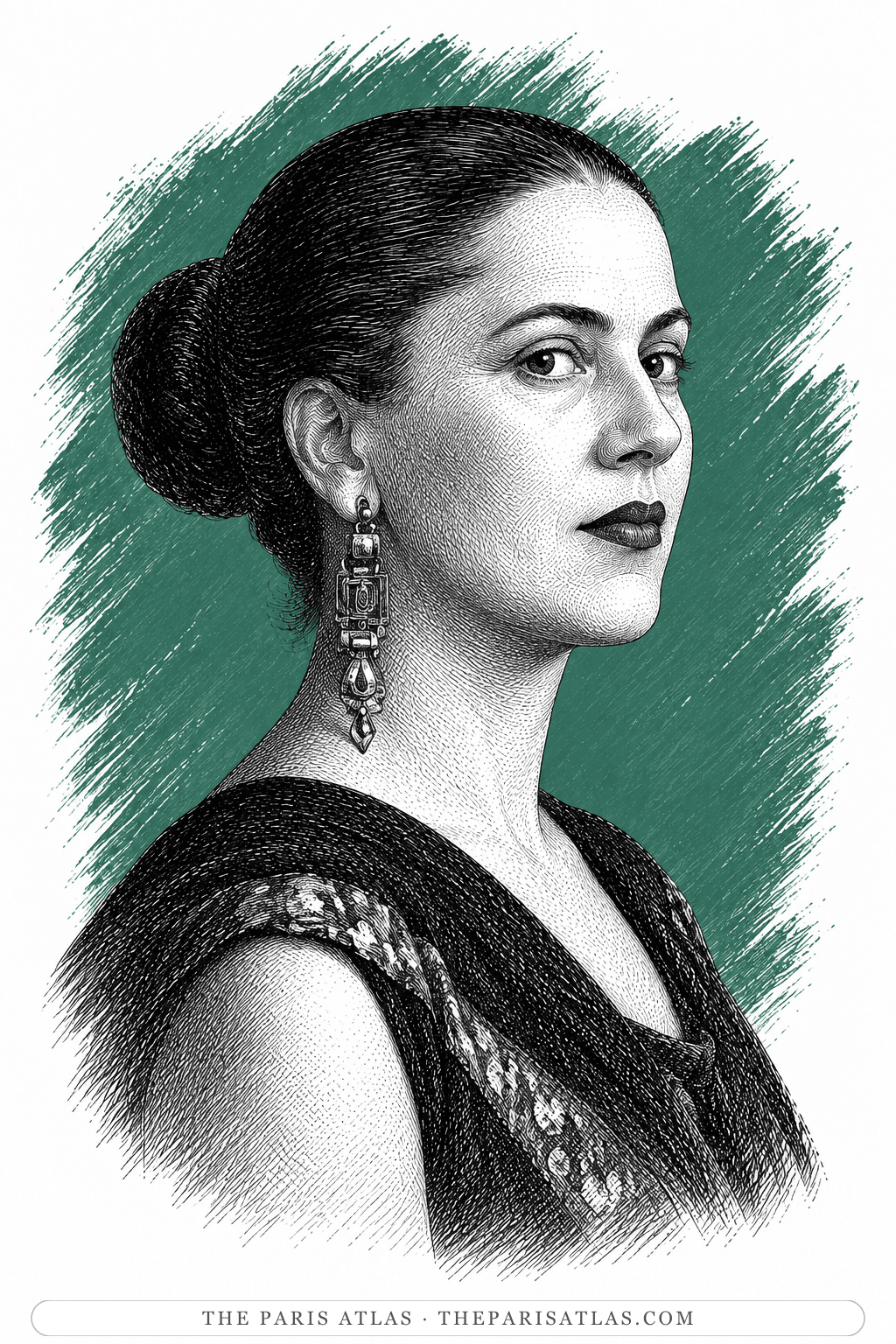
During the 1920s, Tarsila moved between Brazil and Paris, encountering European avant-garde art while pursuing a distinctive vision of her own country. Her importance does not lie in having transferred an established European style unchanged to a Brazilian setting. She used those encounters to develop new relationships among modern form, remembered landscapes, and cultural identity.
Her work emerged from the larger effort to create a modern Brazilian artistic culture. That project could involve borrowing from Europe while refusing the assumption that European art should remain the standard against which everything else was judged. Tarsila's Paris experience was therefore a resource, not the final destination of her painting.
Anthropophagy and Cultural Independence
The Moon belongs to the period associated with anthropofagia, or cultural cannibalism. In the 1928 manifesto written by Oswald de Andrade, this provocative metaphor proposed that Brazilian culture could absorb foreign influences and transform them into something of its own. The objective was neither passive imitation nor complete isolation.
A related painting, Abaporu, helped catalyze this development after Tarsila gave it to Oswald as a birthday present in January 1928. The Moon is a separate work, but it belongs to the same productive moment in which transformed bodies, unusual landscapes, and cultural self-definition became closely connected.
Historical Importance
The painting broadens the usual account of modern art by showing that formal experimentation outside Europe was not merely a secondary response to European invention. Its forms participate in international modernism while pursuing a specifically Brazilian cultural project. Tarsila's work thus makes it possible to understand modern art as a history of interacting centers and competing claims to originality.
Close reading
Reading the work, detail by detail
A crescent, pale waves, a blue curve, and a green plantlike figure occupy a shallow landscape. Each detail shows how Tarsila combines clear outlines with forms whose scale and identity remain uncertain.
1.The crescent is small and sharply bounded
The crescent has a clean yellow outline against deep blue. It is much smaller than the pale bands around it and receives little surface modeling. That small, flat shape gives the viewer a recognizable celestial object within a landscape whose other forms are harder to identify.
2.A pale band rises and narrows
The upper band rises into a long arch and tapers toward the right. Light and dark blue along its edges give it a rounded appearance, but its smooth, continuous outline remains strongly decorative. It can suggest a cloud without describing the broken and irregular form of an ordinary cloud.
3.A second wave repeats the curve
The lower pale band repeats the broad motion of the one above it, but its highest point falls farther to the right. This displacement prevents the two waves from becoming exact copies. Their related curves link the upper and lower parts of the sky while preserving an uneven rhythm.
4.The plant suggests a head and an arm
An upright oval sits above a broad tapering body, and a short lobe projects to the right. That arrangement can suggest a head, torso, and arm without becoming an anatomically complete person. The figure remains equally available as a plant. Its ambiguity depends on a few large, clearly drawn shapes.
5.The blue strip bends without a visible source
The blue strip enters from below and curves across the green area. Its width and smooth edges make it read partly as a shape on the canvas, even if it is interpreted as water. With no visible source or destination, the bend directs attention around the foreground rather than into a distant landscape.
6.A few overlaps establish the shallow space
The green land overlaps the darker blue above, while the plantlike form interrupts both the land and the blue strip. These crossings establish which shapes sit in front of others. There is little conventional perspective, but a small number of overlaps provides enough spatial order for the scene to hold together.
Tarsila do Amaral paints Abaporu in January as a birthday present for the writer Oswald de Andrade, and paints The Moon the same year.
1928
Oswald de Andrade publishes the Manifesto Antropófago in May, proposing that Brazilian culture could absorb foreign influences and transform them.
2019
The Museum of Modern Art in New York acquires The Moon.
Where to see it
Museum of Modern Art
New York, United States
A public viewing address has not yet been confirmed for this holding.
Acquired by the Museum of Modern Art in 2019. Gallery displays change, so check the museum's own object record before making a special visit.
Frequently asked questions
What does The Moon by Tarsila do Amaral show?
A green form that reads as both a cactus and a standing figure, beside a curving stream. Dark hills and undulating clouds sit behind it, and a small crescent moon hangs above. The shapes are sharply outlined but hard to name with certainty.
What is anthropophagy, and how does The Moon relate to it?
Anthropophagy, or antropofagia, was the idea that Brazilian culture could absorb foreign influences and turn them into something of its own rather than copying them. Oswald de Andrade set it out in a manifesto of May 1928. The Moon was painted that same year and belongs to the same moment, in which transformed bodies and invented landscapes carried a cultural argument.
Is The Moon a Surrealist painting?
It has been compared to Surrealism, and the dreamlike atmosphere invites it. But Tarsila's sources also include childhood memories of the family estates in São Paulo, Brazilian stories, and her own habits of simplification. Reading the picture only as a European movement applied to a tropical subject misses where its forms came from.
How big is The Moon?
110 by 110 centimetres, oil on canvas — a square painting a little over a metre on each side.
Where is The Moon now?
At the Museum of Modern Art in New York, which acquired it in 2019. Gallery displays change, so check the museum's own object record before making a special visit.
In the atlas
What the graph records about this work — every claim carries its citation.
Tarsila do Amaral painted A Lua in 1928, the year Oswald de Andrade's Manifesto Antropófago proposed that Brazilian culture could absorb foreign influences and transform them. The picture's cactus reads as a standing figure, which places formal experiment outside Europe rather than in reply to it.
— Tarsila do Amaral — artist page; Tarsila do Amaral: Inventing Modern Art in Brazil — exhibition
If you like Tarsila do Amaral
Explore painters from the same movements and circles.
Jacob Lawrence
American painter of narrative series, best known for The Migration Series of 1941; he trained in Harlem under Charles Alston and Augusta Savage.
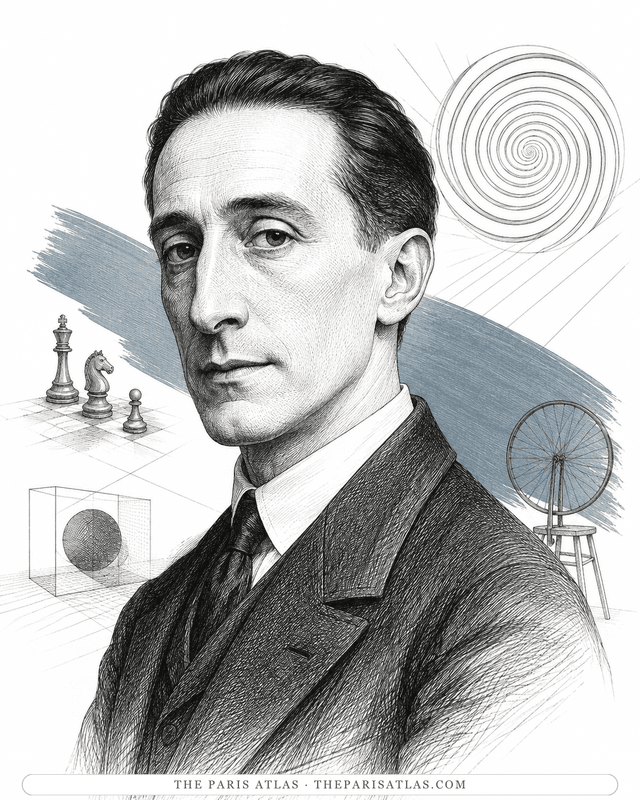
The century's quietest revolutionary — readymades, the abandonment of painting, chess on a Paris rooftop in Entr'acte, and one anemic film of spinning puns signed Rrose Sélavy.
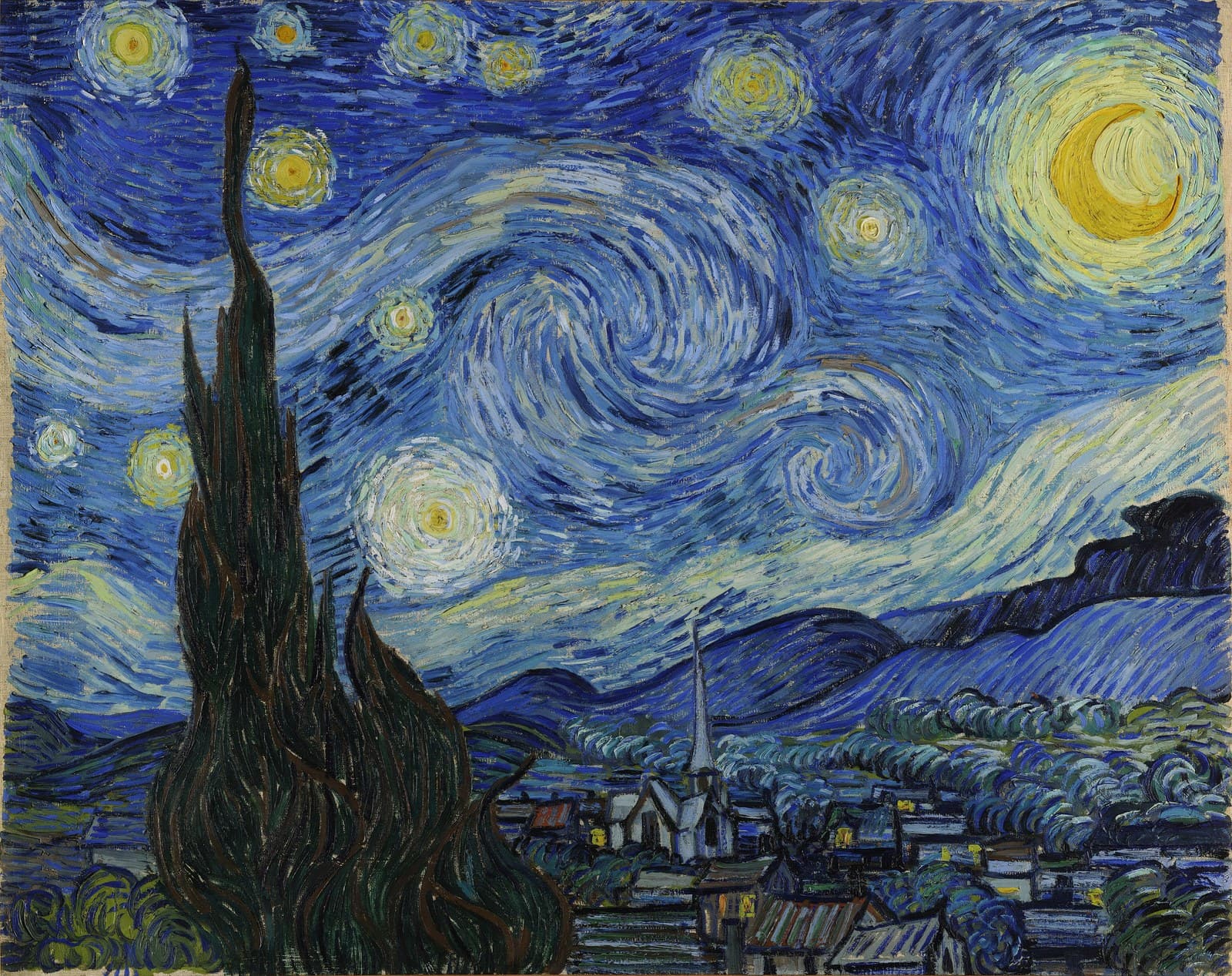
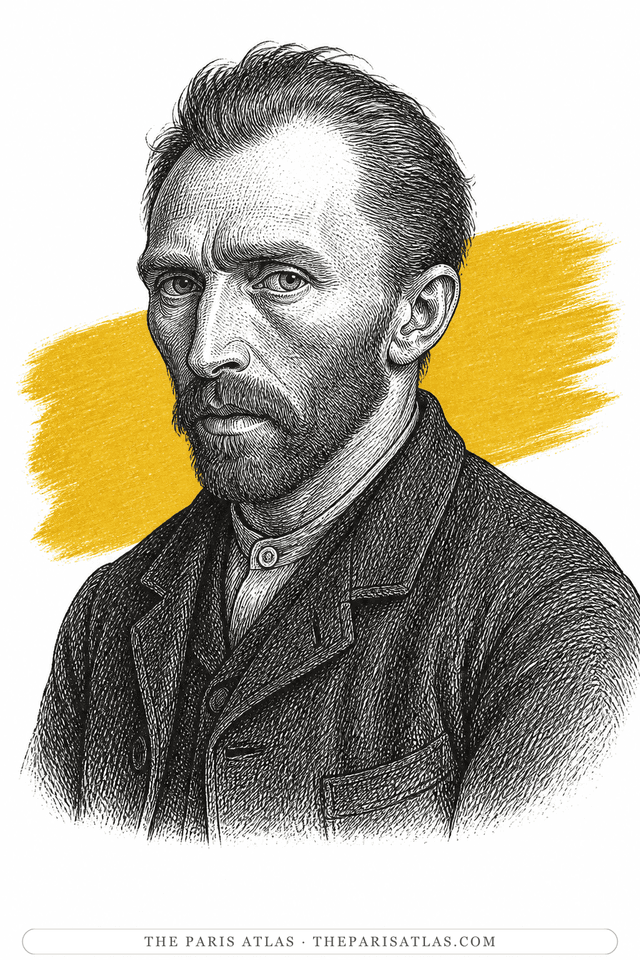
Dutch painter who lived in Montmartre with his brother Theo from March 1886 to February 1888 — the two years in which his dark Dutch palette turned into colour. He painted more than 200 pictures in Paris and died at Auvers-sur-Oise, north of the city, in 1890.
The sources below include collection records, catalogues, scholarly research, and primary materials that informed this page. They document The Moon, its making, and its place in cultural history.
1Tarsila do Amaral — artist page
Website
The Museum of Modern Art
Used for
The holding museum's record: the 1928 date, the 110 by 110 cm dimensions, the 2019 acquisition, and the anthropophagy context.
These references provide the documented foundation for this work's history and interpretation. Claim-level citations remain attached to the specific claims they support.



 View source