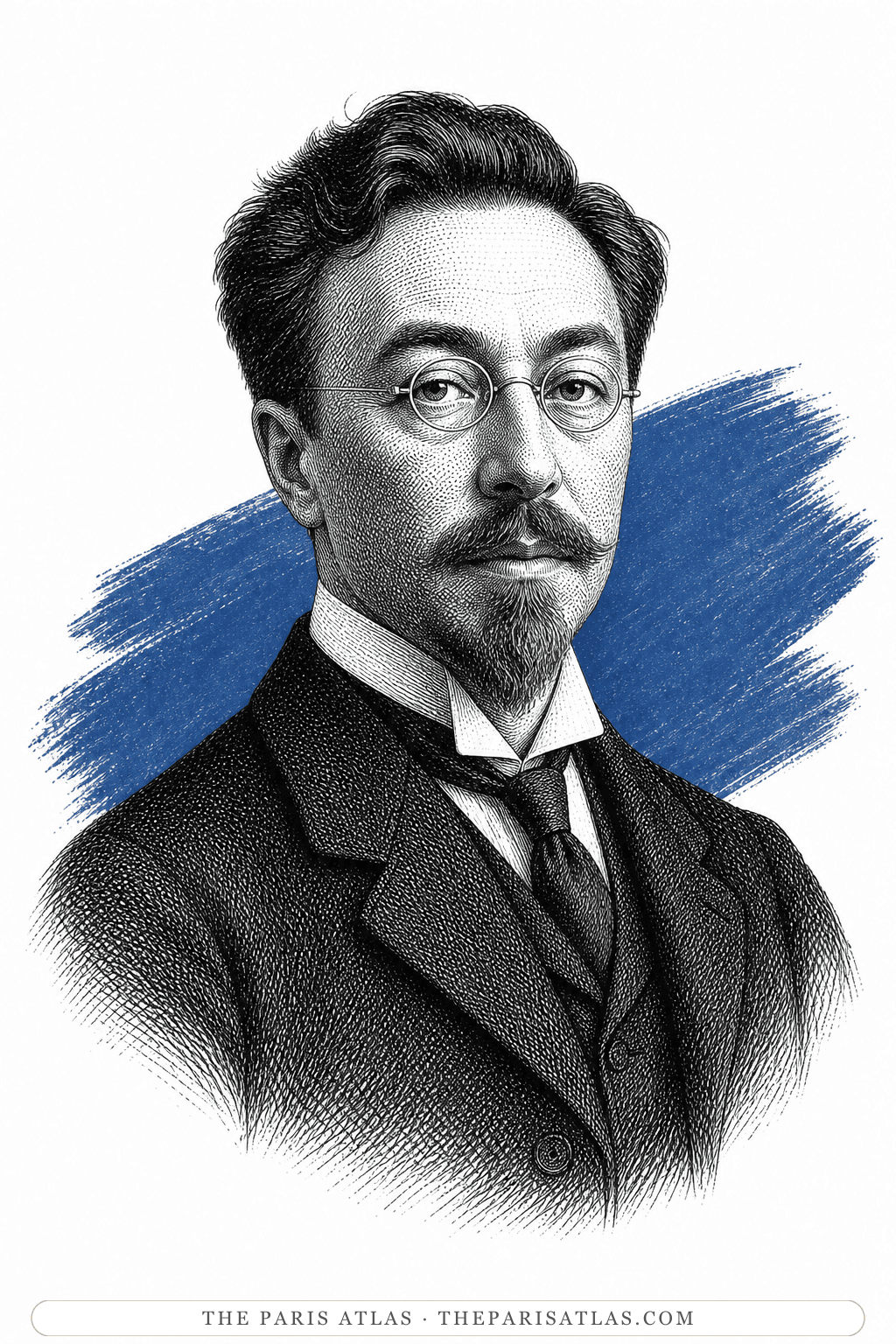
Wassily Kandinsky
Exhibited here · 1936–1942
Jeanne Bucher exhibited Kandinsky in 1936, 1939 and 1942 - the last of them under an occupation whose cultural authorities had classified abstract painting as degenerate.
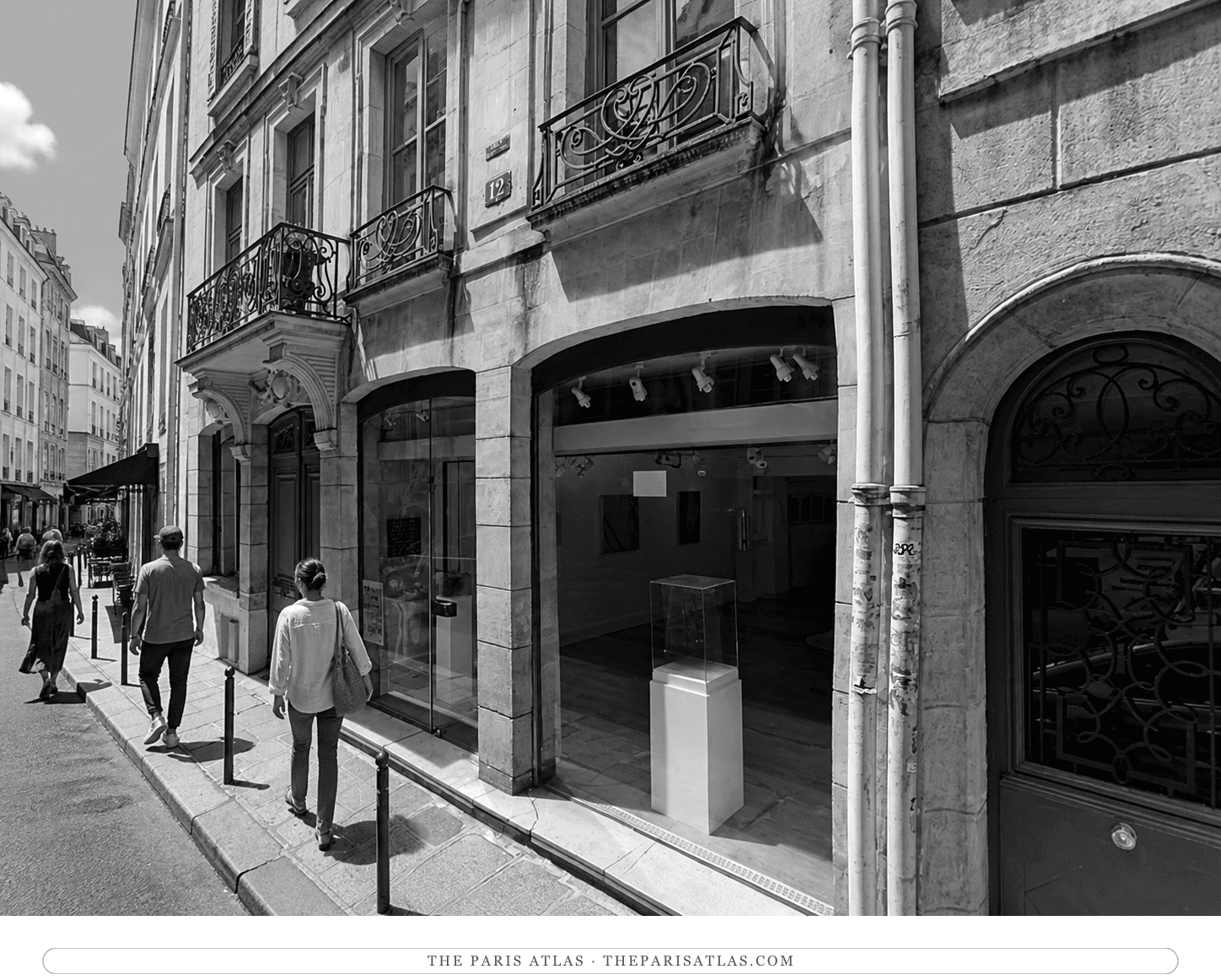
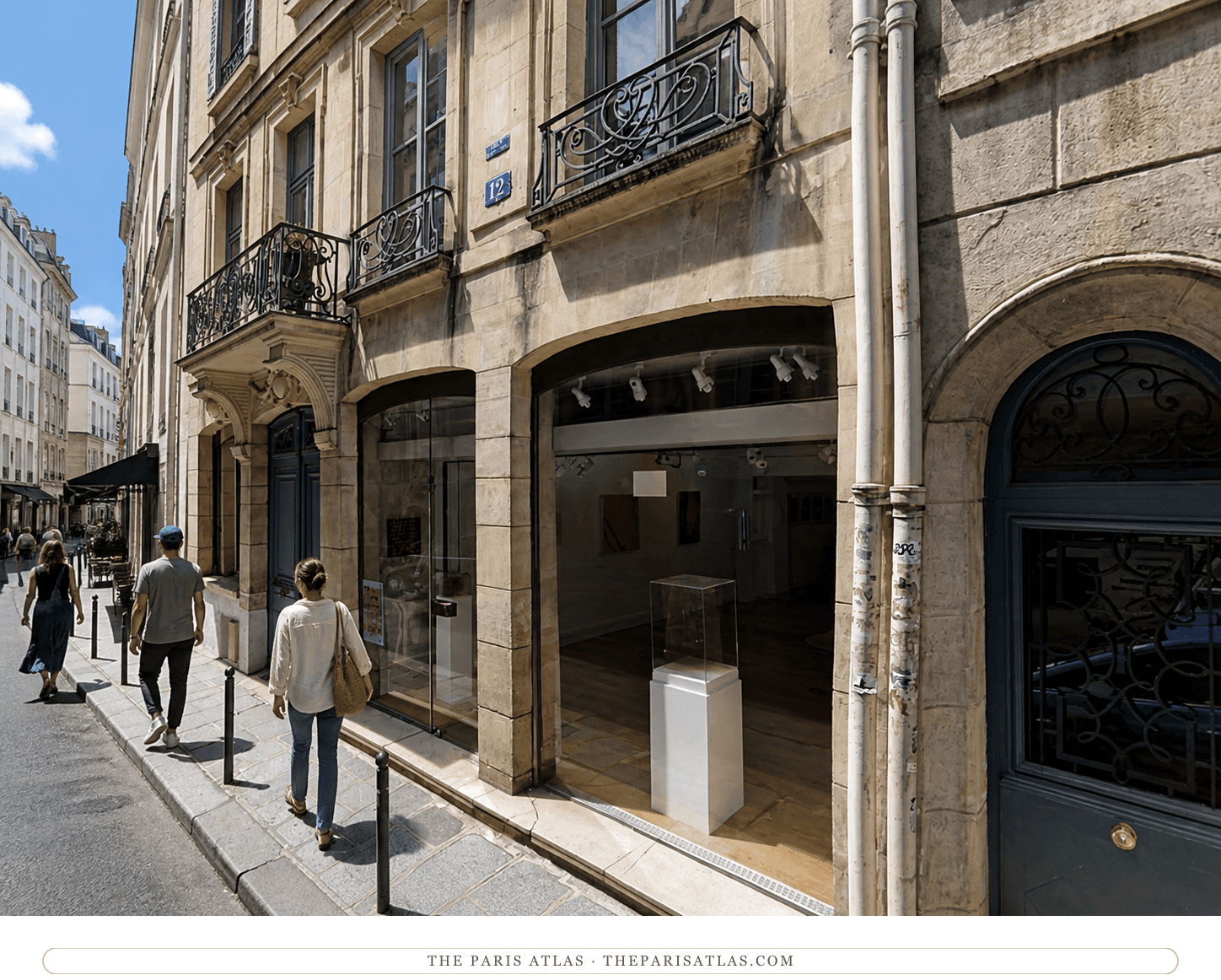
The gallery of Jeanne Bucher, who went on showing abstract painting in occupied Paris when it was neither profitable nor safe — including Kandinsky, in 1936, 1939 and 1942.
Jeanne Bucher opened her gallery in the 1920s and spent the next two decades backing work almost nobody wanted to buy: abstraction, Surrealism, and artists who were foreign, Jewish, or both. That was a commercial problem in the 1930s. After June 1940 it became a considerably more serious one.
She kept going anyway. Wassily Kandinsky, living in exile at Neuilly and largely unsellable, showed with her in 1936, 1939 and again in 1942 — under an occupation whose cultural authorities had classified precisely this kind of painting as degenerate. She also showed Kandinsky's fellow exiles and helped artists at risk in ways that had nothing to do with selling pictures.
Bucher died in 1946. The gallery carries her name to this day at other premises, which makes it one of the longest-running dealerships in Paris.
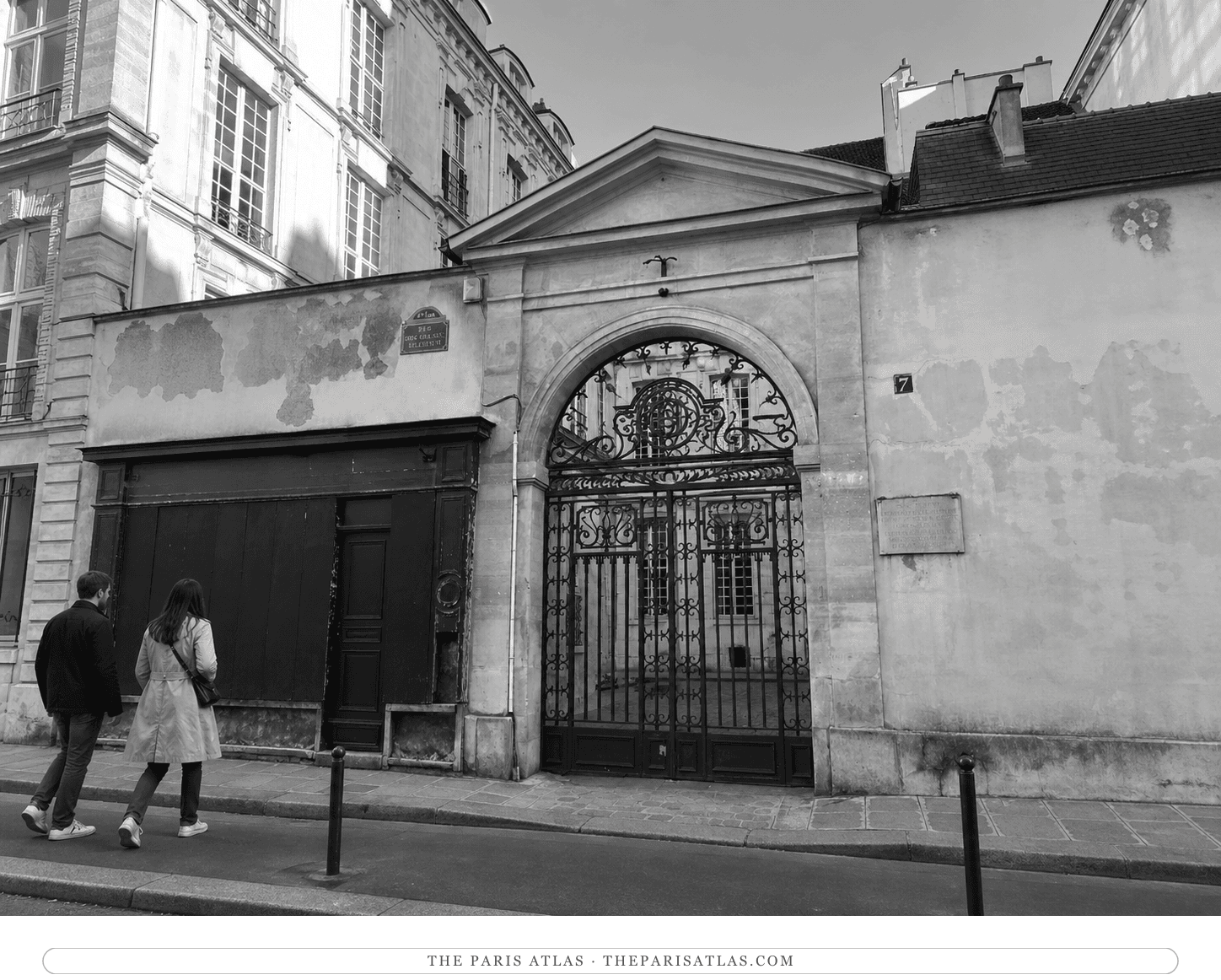
This building is the wartime address, on a quiet street running down to the Seine.
Kandinsky exhibits with Jeanne Bucher.
A second Kandinsky exhibition.
A third, under the German occupation of Paris.
Jeanne Bucher dies; the gallery continues under her name.
A Paris dealer who showed abstract and Surrealist work from the 1920s and continued to exhibit it through the German occupation, including three Kandinsky shows.
Yes, under her name, at other premises. 12 rue Guénégaud is the historic wartime address.
Exhibited here · 1936–1942
Jeanne Bucher exhibited Kandinsky in 1936, 1939 and 1942 - the last of them under an occupation whose cultural authorities had classified abstract painting as degenerate.
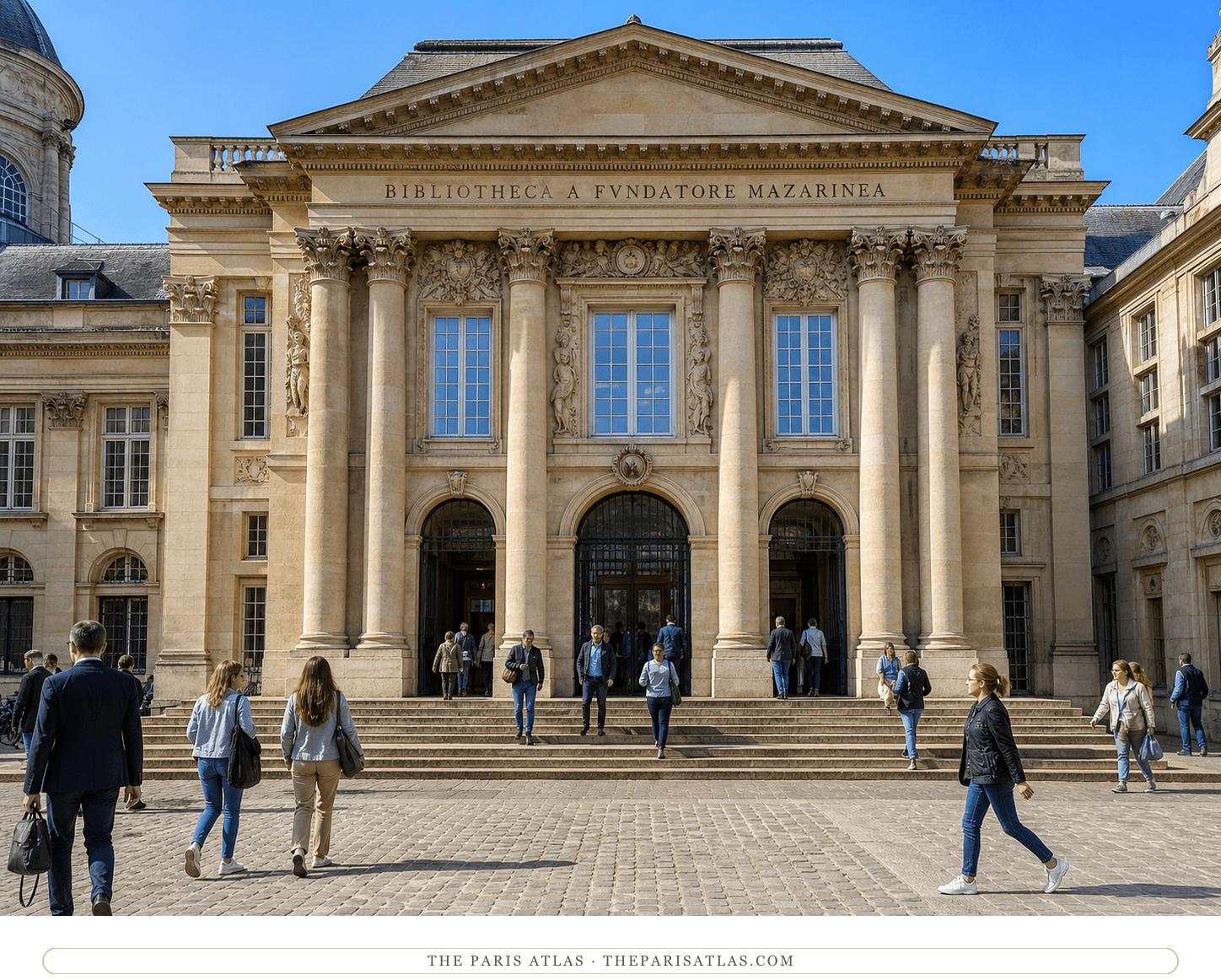
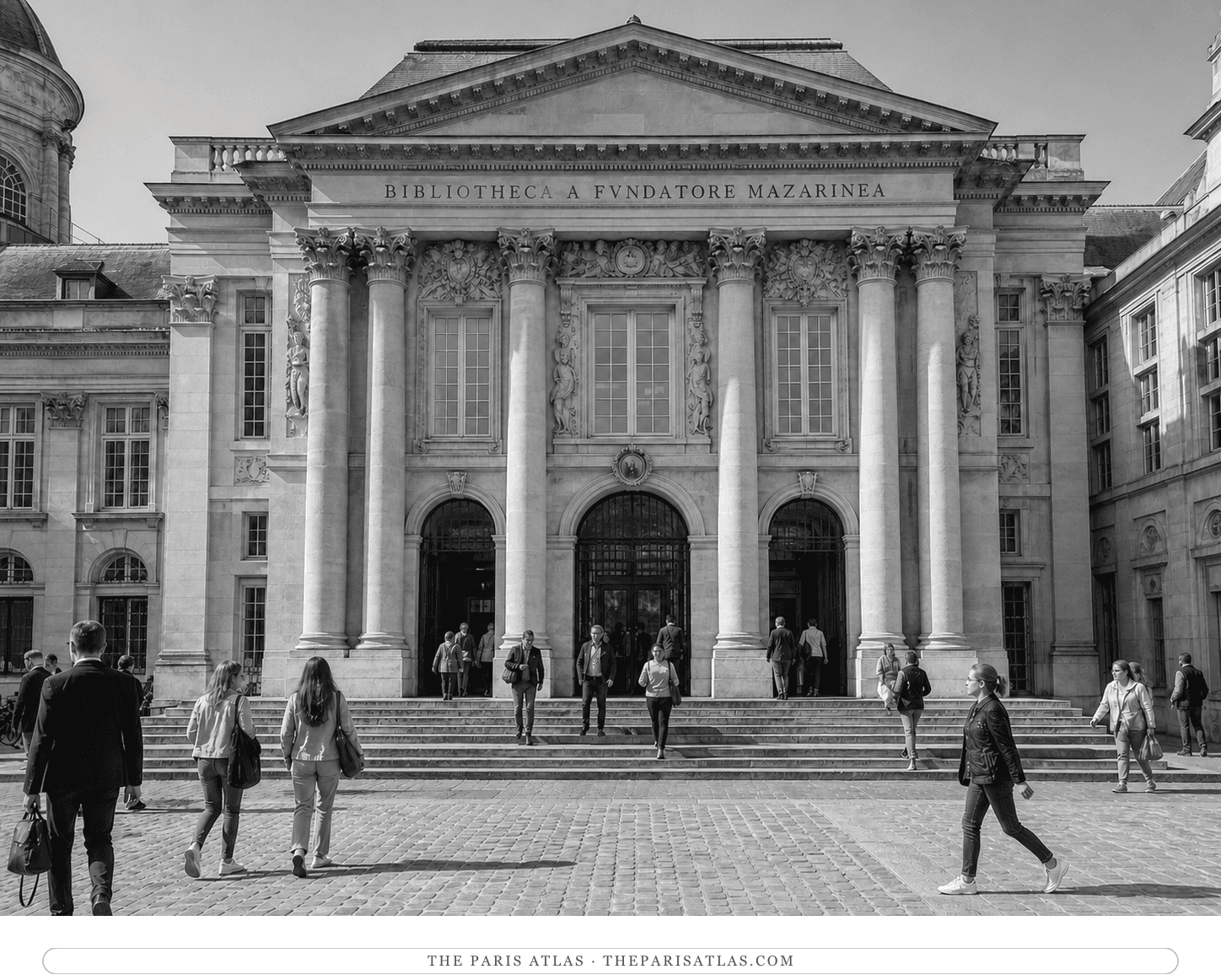
France's oldest public library, in the Institut de France on the quai de Conti. Marcel Proust was appointed an unpaid attaché here in 1895 — a post he held while, by the city's own dry account, showing up only rarely.
Visit the place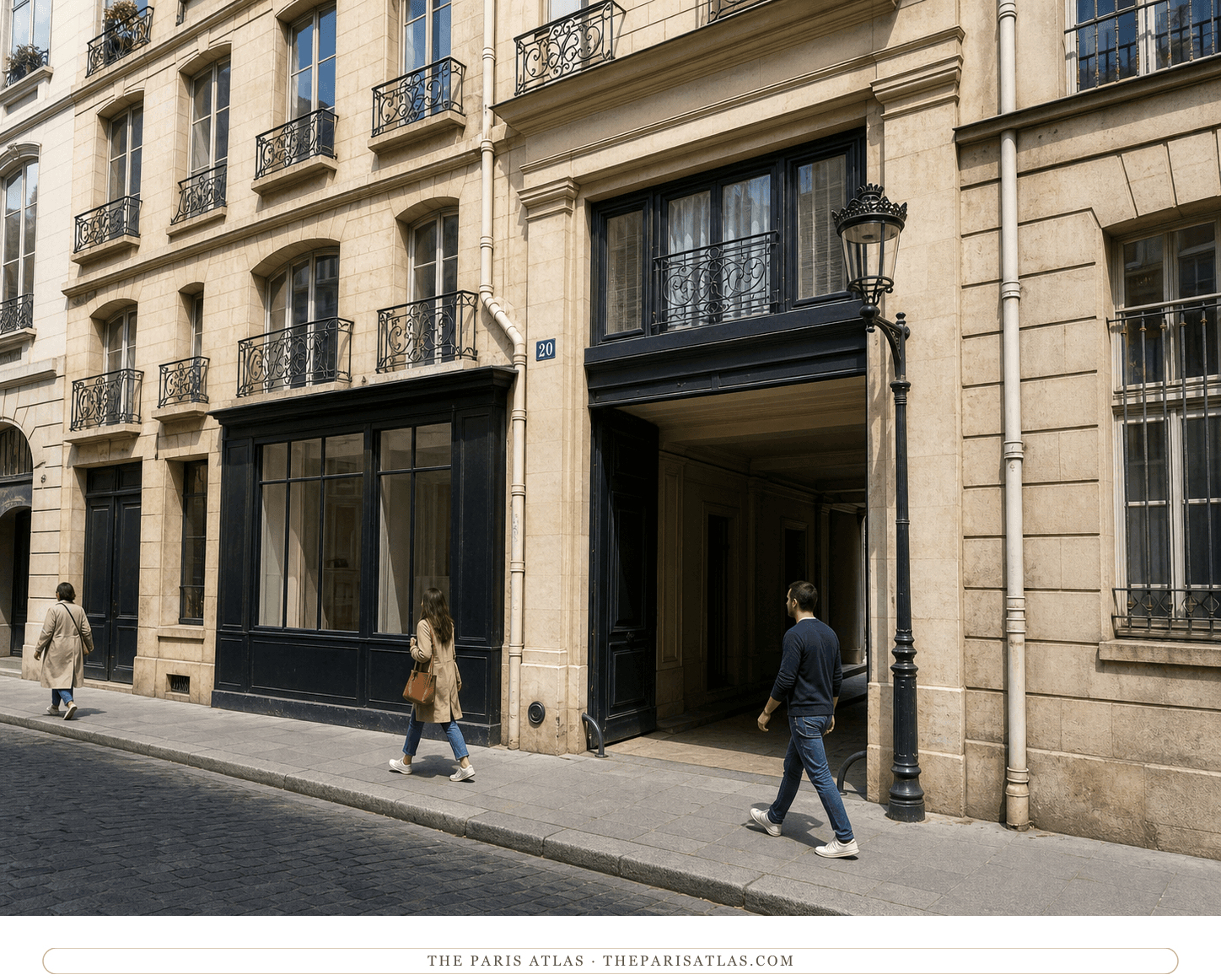
The courtyard pavilion where Natalie Clifford Barney held her Friday salon for sixty years, and the small Doric temple in its garden.
Visit the place
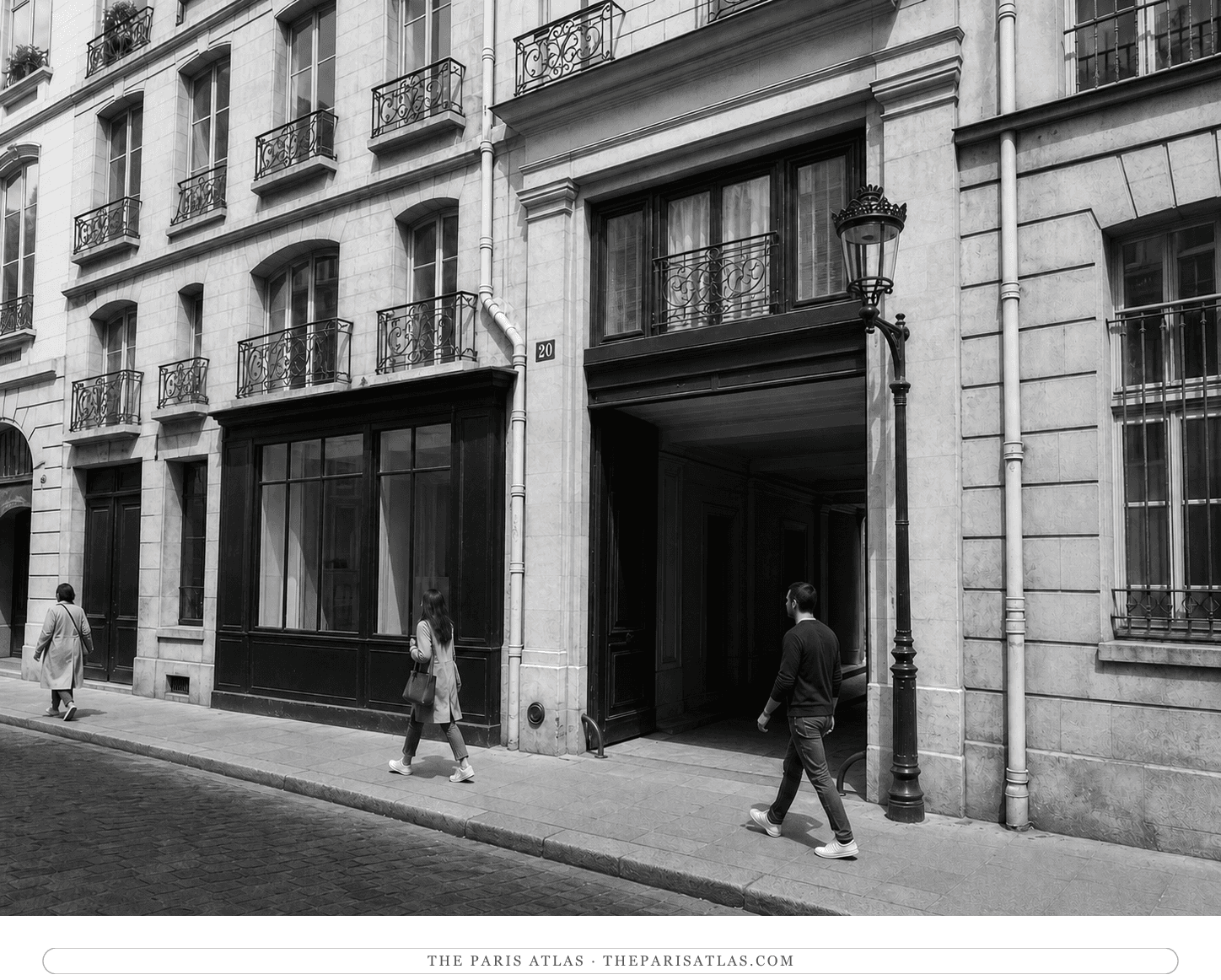
Pablo Picasso's Paris studio from the winter of 1936 until 1955, and the room in which Guernica was painted between 1 May and 4 June 1937. Dora Maar photographed the picture at every stage of its making here — the only complete photographic record of a major painting being built.
Visit the place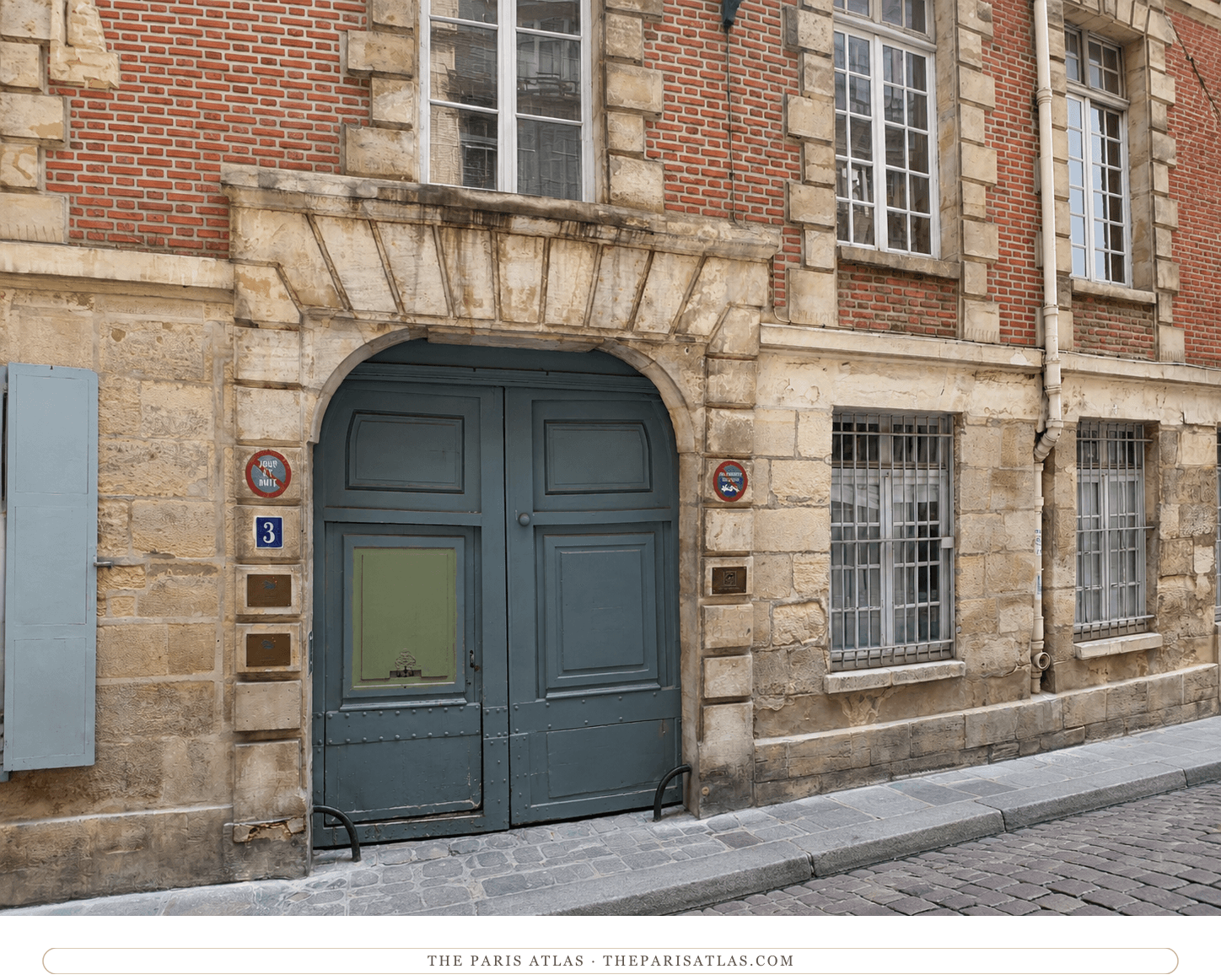
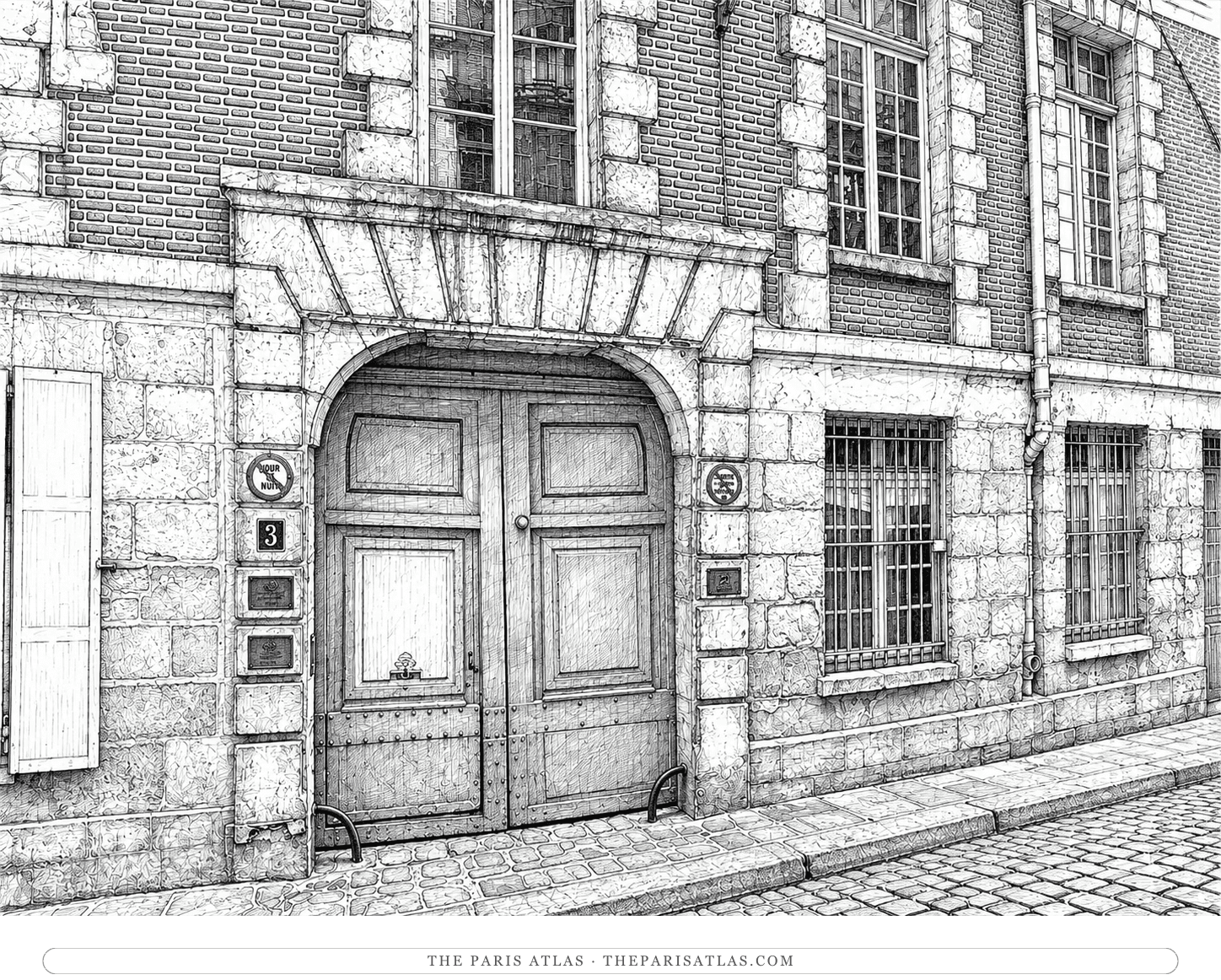
Robert and Sonia Delaunay's apartment and studio from 1910 to 1935 — where La Prose du Transsibérien took its colors, and whose key Blaise Cendrars held while the couple waited out the First World War abroad.
Visit the placeThe sources below include histories, archival materials, scholarly research, and official records that informed this page. They document Galerie Jeanne Bucher, 12 rue Guénégaud, the people connected to it, and its place in Paris.

Web source consulted for documented facts and historical context presented on the Galerie Jeanne Bucher, 12 rue Guénégaud page.
Web source consulted for documented facts and historical context presented on the Galerie Jeanne Bucher, 12 rue Guénégaud page.
Web source consulted for documented facts and historical context presented on the Galerie Jeanne Bucher, 12 rue Guénégaud page.
Web source consulted for documented facts and historical context presented on the Galerie Jeanne Bucher, 12 rue Guénégaud page.
These references provide the documented foundation for this page's history and context. Claim-level citations remain attached to the specific claims they support.
 Explore more resources
Newsletter
The cafés, studios, and walk-up flats where the work was made — one story from the map in every letter.