The Paris AtlasCharting the artists, works, and places worth returning to.
  • Composer
  • Pianist
  • Editor
  • Critic
· Cuban-Spanish · 1879–1949

Joaquín Nin

Cuban-Spanish pianist and composer who taught at the Schola Cantorum and returned eighteenth-century Spanish keyboard music to print. He left his wife and three children in 1913, and his daughter Anaïs Nin began her diary as a letter meant to bring him back.

Details

Lived
1879–1949
Born
29 September 1879
Birthplace
Havana, Cuba
Died
24 October 1949 · aged 70
Place of death
Havana, Cuba
Nationality
Cuban-Spanish
Married
Rosa Culmell · 1902–1924
Children
Anaïs Nin, Thorvald Nin, Joaquín Nin-Culmell
Roles
ComposerPianistEditorCritic
Also known as
Joaquín Nin y Castellanos · José Joaquín Nin y Castellanos · Joaquim Nin i Castellanos

About Joaquín Nin

Joaquín Nin was a Cuban-Spanish pianist, composer and music editor. He was born in Havana in 1879, grew up in Barcelona, and made his career in Paris, where he taught piano at the Schola Cantorum from 1905 to 1908 and spent the 1920s putting eighteenth-century Spanish keyboard and vocal music back into print.

In 1913 he left his wife, the Cuban singer Rosa Culmell, and their three children at Arcachon on the French Atlantic coast. His daughter Anaïs Nin was ten. On the crossing to New York the following year she began a letter meant to bring him back, and went on writing it. That letter became her diary.

Father and daughter met again as adults twenty years later. Her unexpurgated diary, published in 1992 as Incest, records a sexual relationship between them in the summer of 1933, which she ended after about three months. Nin returned to Havana in 1939 and died there in 1949.

Barcelona, Paris, and the Schola Cantorum

Joaquín Nin was born in Havana on 29 September 1879 and raised in Barcelona, where he studied piano with Carles Vidiella. He went on to Paris, worked on his playing with Moritz Moszkowski, and took composition in Vincent d'Indy's class at the Schola Cantorum. In 1905 he joined the school's own piano faculty and taught there until 1908. Erik Satie enrolled at the Schola as a counterpoint student the same year Nin began teaching.

He had married the Cuban singer Rosa Culmell in Havana in 1902 and brought her back to Paris. Their three children arrived over the next six years: Anaïs at Neuilly-sur-Seine in 1903, Thorvald in 1905, and Joaquín in Berlin in 1908. The household moved with the concert work — Berlin, then Havana and Brussels, then Paris again — and Nin toured through Europe and South America as a soloist and chamber player.

Piano or harpsichord

His specialism was early keyboard music: Johann Sebastian Bach and his sons, and the Spanish eighteenth century. He also had a public argument about how it should be played. Nin held that the repertoire belonged on the modern piano, against Wanda Landowska, who was building the harpsichord revival on the opposite conviction. He put the case in print in 1912, in an article for the Revue musicale S.I.M. titled 'Piano ou clavecin?'

He wrote about music at length, and published wherever he was living at the time:

  • Pour l'art (Berlin, 1908)
  • Huit années d'action musicale, 1903–1911 (privately printed, 1911)
  • Idées et commentaires (Brussels and Paris, 1912)
  • Las tres grandes escuelas del siglo XVIII (Bilbao, c. 1913)

Putting Spanish music back into print

Through Max Eschig in Paris, Nin published Seize sonates anciennes d'auteurs espagnols in 1925 and Dix-sept sonates et pièces anciennes d'auteurs espagnols in 1929, two anthologies that brought a body of forgotten eighteenth-century Spanish keyboard music into circulation. Their most consequential effect was the return of Padre Antonio Soler to the repertoire.

Two volumes of early Spanish song followed in 1926, Sept chants lyriques espagnols anciens and Sept chansons picaresques espagnoles anciennes, and in 1937 he edited ten violin pieces by José Herrando. He also made violin-and-piano transcriptions for the players he worked with, among them Paul Kochanski, Mischa Elman and Jacques Thibaud.

His own compositions run mostly to songs and short pieces built on Spanish popular material: Veinte cantos populares españoles (1923), Danza ibérica (1926), Mensaje a Claude Debussy (1929), and Canto de cuna para los huérfanos de España (1939).

Arcachon, 1913

In 1913 Nin left the family at Arcachon, on the Atlantic coast south of Bordeaux. Rosa Culmell took the three children to Barcelona, to his parents, and kept them there for about a year before sailing for New York in 1914. Anaïs was ten when he went and eleven when they arrived.

She began the diary on that crossing. It was addressed to him and it was meant to work: a letter that would explain what he had done and bring him home. He did not come, and she kept writing anyway, for sixty years. Most of what is known about his private life comes from it.

He and Rosa Culmell divorced in 1924. Father and daughter were out of each other's lives for the better part of twenty years.

The reunion, and what the diary records

They resumed contact in the early 1930s and spent a holiday together in the summer of 1933 at Valescure, in the south of France. Nin was fifty-three. His daughter was thirty, married, living outside Paris, and in analysis with René Allendy and then Otto Rank. What happened there was a sexual relationship between father and daughter, and it ran about three months before she ended it.

Her account of it went into the journal. The sequence was cut from the diary published in her lifetime and appeared only in 1992, fifteen years after her death, in Incest: From a Journal of Love. The account is hers, written in a journal she revised for decades, and nothing outside it witnesses those days.

Biographers disagree about how he treated his children before 1913. Deirdre Bair's 1995 biography describes a father who abused them; Noël Riley Fitch characterises what Anaïs Nin suffered as childhood sexual abuse. The evidence everyone argues from is a set of photographs he took of his daughter nude as a small child, and the disagreement about what they establish is unresolved.

He had already become a character by then. Winter of Artifice, published in Paris in 1939, turns the reunion into fiction: the father of the title novella is a Spanish concert pianist who walked out on a wife and three children and returns twenty years later to court his grown daughter's admiration. Neither he nor she is named in the book.

They wrote to each other until 1940, when the war put them on separate continents. Sky Blue Press published both sides of that correspondence in 2020 as Reunited, edited by Paul Herron.

Havana

The Spanish Civil War and the war that followed it ended his European career. Nin returned to Havana in 1939 and stayed there for the last decade of his life. He died in the city he was born in on 24 October 1949, aged seventy. He was a member of the Real Academia de Bellas Artes de San Fernando in Madrid, a corresponding member of the Spanish Academy, and a member of the Légion d'honneur.

The children

All three children outlived him, and two of them made their living in the arts.

  • Anaïs Nin (1903–1977), the writer, whose sixty-year diary began as a letter to him and whose unexpurgated volumes are the principal record of their relationship.
  • Thorvald Nin (born 1905), who went into business.
  • Joaquín Nin-Culmell (1908–2004), composer, pianist and conductor. He studied at the Schola Cantorum and then at the Paris Conservatoire under Paul Dukas, taught at the University of California, Berkeley until 1971, and wrote the opera La Celestina (1985).

Life events

  1. 1879

    Born in Havana on 29 September; raised in Barcelona.

    Nin (y Castellanos), Joaquín — Baker's Biographical Dictionary of Musicians

  2. 1902

    Marries the Cuban singer Rosa Culmell in Havana and takes her to Paris.

    Joaquín Nin-Culmell and José Joaquín Nin y Castellanos family papers (MS 076) — finding aid

  3. 1903

    His daughter Anaïs is born at Neuilly-sur-Seine on 21 February.

  4. 1905

    Joins the piano faculty of the Schola Cantorum in Paris; teaches there until 1908.

    Nin (y Castellanos), Joaquín — Baker's Biographical Dictionary of Musicians; Michelle Debra, Joaquín Nin, 145 ans (2024)

  5. 1908

    His son Joaquín Nin-Culmell, later a composer and Berkeley professor, is born in Berlin.

    Joaquín Nin-Culmell and José Joaquín Nin y Castellanos family papers (MS 076) — finding aid

  6. 1912

    Publishes 'Piano ou clavecin?' in the Revue musicale S.I.M., arguing early keyboard music belongs on the piano.

    Joaquín Nin (1879–1949) — notice and list of writings

  7. 1913

    Leaves the family at Arcachon. Anaïs is ten; her mother takes the children to Barcelona, then to New York the following year.

    The Official Anaïs Nin Blog — 'Anaïs Nin Myth of the Day', 18 February 2009

  8. 1923

    Veinte cantos populares españoles, the best known of his own compositions.

    Nin (y Castellanos), Joaquín — Baker's Biographical Dictionary of Musicians

  9. 1924

    Divorced from Rosa Culmell.

    Joaquín Nin-Culmell and José Joaquín Nin y Castellanos family papers (MS 076) — finding aid

  10. 1925

    Seize sonates anciennes d'auteurs espagnols, published by Max Eschig — the anthology that returned Padre Antonio Soler to the repertoire.

    Nin (y Castellanos), Joaquín — Baker's Biographical Dictionary of Musicians

  11. 1933

    Reunited with his daughter at Valescure in the south of France. Her unexpurgated diary records a sexual relationship there, ended after about three months.

    Anaïs Nin, Incest: From "A Journal of Love" — The Unexpurgated Diary of Anaïs Nin, 1932–1934 (1992)

  12. 1939

    Returns to Havana as the European career ends; Winter of Artifice, the novella drawn from the reunion, appears in Paris the same year.

    Joaquín Nin-Culmell and José Joaquín Nin y Castellanos family papers (MS 076) — finding aid

  13. 1949

    Dies in Havana on 24 October, aged seventy.

    Nin (y Castellanos), Joaquín — Baker's Biographical Dictionary of Musicians

Featured in these books

Cover of Winter of Artifice by Anaïs Nin

Winter of Artifice

by Anaïs Nin

How Joaquín appears in its pages: A concert pianist who walked out on his wife and three children and comes back twenty years later to court his grown daughter's admiration. Vain, charming, terrified of germs, and unable to tell her the truth about anything.

Read the character guide
People they knew

Documented connections — every one carries its source.

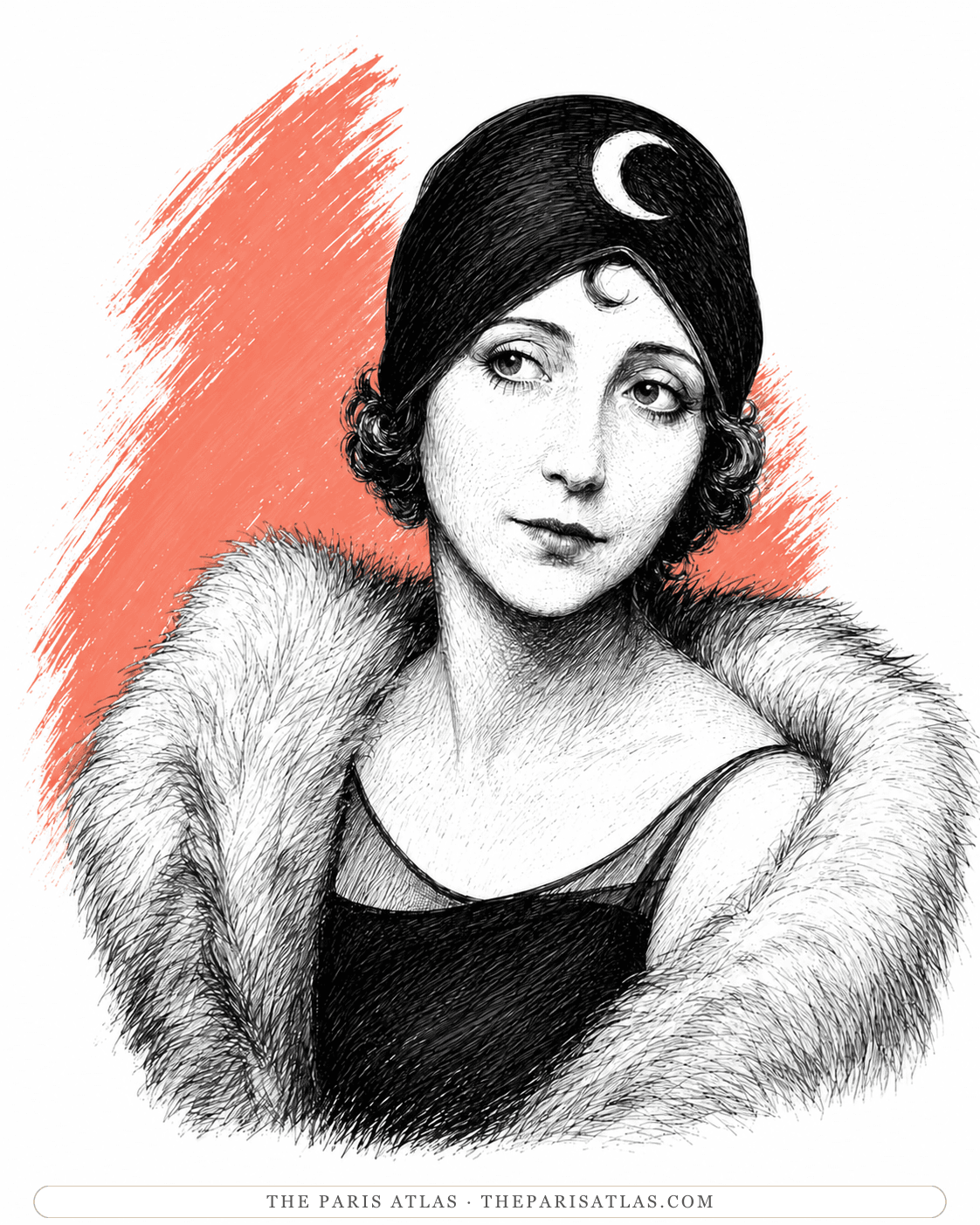
Illustrated portrait of Anaïs Nin

Anaïs Nin

  • Author
  • Critic
  • Publisher
  • +1

Parent of

The eldest of the three children of Joaquín Nin and the singer Rosa Culmell, born at Neuilly-sur-Seine in 1903. He left the family at Arcachon in 1913, when she was ten; the diary she began on the crossing to New York the following year was addressed to him.

Joaquín Nin-Culmell and José Joaquín Nin y Castellanos family papers (MS 076) — finding aid; Nin (y Castellanos), Joaquín — Baker's Biographical Dictionary of Musicians; The Official Anaïs Nin Blog — 'Anaïs Nin Myth of the Day', 18 February 2009

In works

Works in these pages connected to Joaquín through the claims of the graph.

Cover of Incest by Anaïs Nin

Depicted in · Book

Incest

Anaïs Nin · 1992

The volume takes its title from him. The unexpurgated diary of 1932–1934, published in 1992, records the reunion with her father at Valescure in the summer of 1933 and the sexual relationship that followed, which ran about three months before she ended it. The material was cut from the diary published in her lifetime. The account is Nin's own and nothing outside it witnesses those days.

Anaïs Nin, Incest: From "A Journal of Love" — The Unexpurgated Diary of Anaïs Nin, 1932–1934 (1992)

Cover of Reunited by Anaïs Nin

Depicted in · Book

Reunited

Anaïs Nin · 2020

Half the book is his. Sky Blue Press published both sides of the correspondence between Joaquín Nin and his daughter in 2020, edited by Paul Herron: the letters run from the 1933 reunion to the 1940 separation and are the only substantial record of the relationship in his own hand.

Anaïs Nin and Joaquín Nin, edited by Paul Herron, Reunited: The Correspondence of Anaïs and Joaquín Nin, 1933–1940 (2020)

Questions about Joaquín Nin

Who was Joaquín Nin?

A Cuban-Spanish pianist, composer and music editor (1879–1949). He was born in Havana, raised in Barcelona, taught piano at the Schola Cantorum in Paris from 1905 to 1908, and is best remembered for the editions that returned eighteenth-century Spanish keyboard music to circulation. He was the father of the writer Anaïs Nin.

What did Joaquín Nin compose?

Mostly songs and short pieces built on Spanish popular material. Veinte cantos populares españoles (1923) is the best known; Danza ibérica (1926), Mensaje a Claude Debussy (1929) and Canto de cuna para los huérfanos de España (1939) followed. He also made violin-and-piano transcriptions for players including Paul Kochanski, Mischa Elman and Jacques Thibaud.

What did Joaquín Nin do for early Spanish music?

He edited and published it. Seize sonates anciennes d'auteurs espagnols (1925) and Dix-sept sonates et pièces anciennes d'auteurs espagnols (1929), both from Max Eschig in Paris, put a body of forgotten eighteenth-century keyboard music into print and brought Padre Antonio Soler back into the repertoire. Two volumes of early Spanish song followed in 1926. He argued, against Wanda Landowska, that this music should be played on the piano rather than the harpsichord.

Was Joaquín Nin the father of Anaïs Nin?

Yes. He and the singer Rosa Culmell married in 1902 and had three children: the writer Anaïs Nin (1903–1977), Thorvald Nin (born 1905), and the composer Joaquín Nin-Culmell (1908–2004), who later taught at the University of California, Berkeley.

When did Joaquín Nin leave his family?

In 1913, at Arcachon on the French Atlantic coast. Anaïs Nin was ten. Rosa Culmell took the three children to Barcelona and then, in 1914, to New York; on the crossing Anaïs began the letter to her absent father that became her diary. The marriage was dissolved in 1924.

What does Anaïs Nin's diary Incest say about her father?

That they had a sexual relationship. Father and daughter met again as adults and spent a holiday together at Valescure in the summer of 1933; the unexpurgated diary published in 1992 as Incest records the relationship that followed, which she ended after about three months. The account is hers alone, written in a journal she revised for decades, and nothing outside it witnesses those days.

Where and when did Joaquín Nin die?

In Havana, the city he was born in, on 24 October 1949, aged seventy. The Spanish Civil War and the Second World War had ended his European career, and he returned to Cuba in 1939.

Sourced claims

Every connection the graph holds for Joaquín, with the evidence behind it.

Parent of

Anaïs Nin

The eldest of the three children of Joaquín Nin and the singer Rosa Culmell, born at Neuilly-sur-Seine in 1903. He left the family at Arcachon in 1913, when she was ten; the diary she began on the crossing to New York the following year was addressed to him.

Joaquín Nin-Culmell and José Joaquín Nin y Castellanos family papers (MS 076) — finding aid; Nin (y Castellanos), Joaquín — Baker's Biographical Dictionary of Musicians; The Official Anaïs Nin Blog — 'Anaïs Nin Myth of the Day', 18 February 2009

Depicted in · 1933

Incest

The volume takes its title from him. The unexpurgated diary of 1932–1934, published in 1992, records the reunion with her father at Valescure in the summer of 1933 and the sexual relationship that followed, which ran about three months before she ended it. The material was cut from the diary published in her lifetime. The account is Nin's own and nothing outside it witnesses those days.

Anaïs Nin, Incest: From "A Journal of Love" — The Unexpurgated Diary of Anaïs Nin, 1932–1934 (1992)

Depicted in · 1933–1940

Reunited

Half the book is his. Sky Blue Press published both sides of the correspondence between Joaquín Nin and his daughter in 2020, edited by Paul Herron: the letters run from the 1933 reunion to the 1940 separation and are the only substantial record of the relationship in his own hand.

Anaïs Nin and Joaquín Nin, edited by Paul Herron, Reunited: The Correspondence of Anaïs and Joaquín Nin, 1933–1940 (2020)

Inspired · 1939

Winter of Artifice

The father of the title novella is unnamed and is a Spanish concert pianist who left a wife and three children and returns twenty years later to court his grown daughter's admiration. Nin drew him from her own reunion with Joaquín Nin in 1933, which her unexpurgated diary records directly. The novella is the transformed use of that material, not the account itself.

Anaïs Nin, Winter of Artifice (1948), 'Winter of Artifice'; Anaïs Nin, Incest: From "A Journal of Love" — The Unexpurgated Diary of Anaïs Nin, 1932–1934 (1992)

Sources and further reading

  • Nin (y Castellanos), Joaquín — Baker's Biographical Dictionary of Musicians
  • Joaquín Nin-Culmell and José Joaquín Nin y Castellanos family papers (MS 076) — finding aid
  • Michelle Debra, Joaquín Nin, 145 ans (2024)
  • Joaquín Nin (1879–1949) — notice and list of writings
  • The Official Anaïs Nin Blog — 'Anaïs Nin Myth of the Day', 18 February 2009
  • Anaïs Nin, Incest: From "A Journal of Love" — The Unexpurgated Diary of Anaïs Nin, 1932–1934 (1992)
  • Anaïs Nin and Joaquín Nin, edited by Paul Herron, Reunited: The Correspondence of Anaïs and Joaquín Nin, 1933–1940 (2020)
  • Anaïs Nin, Winter of Artifice (1948)