The father
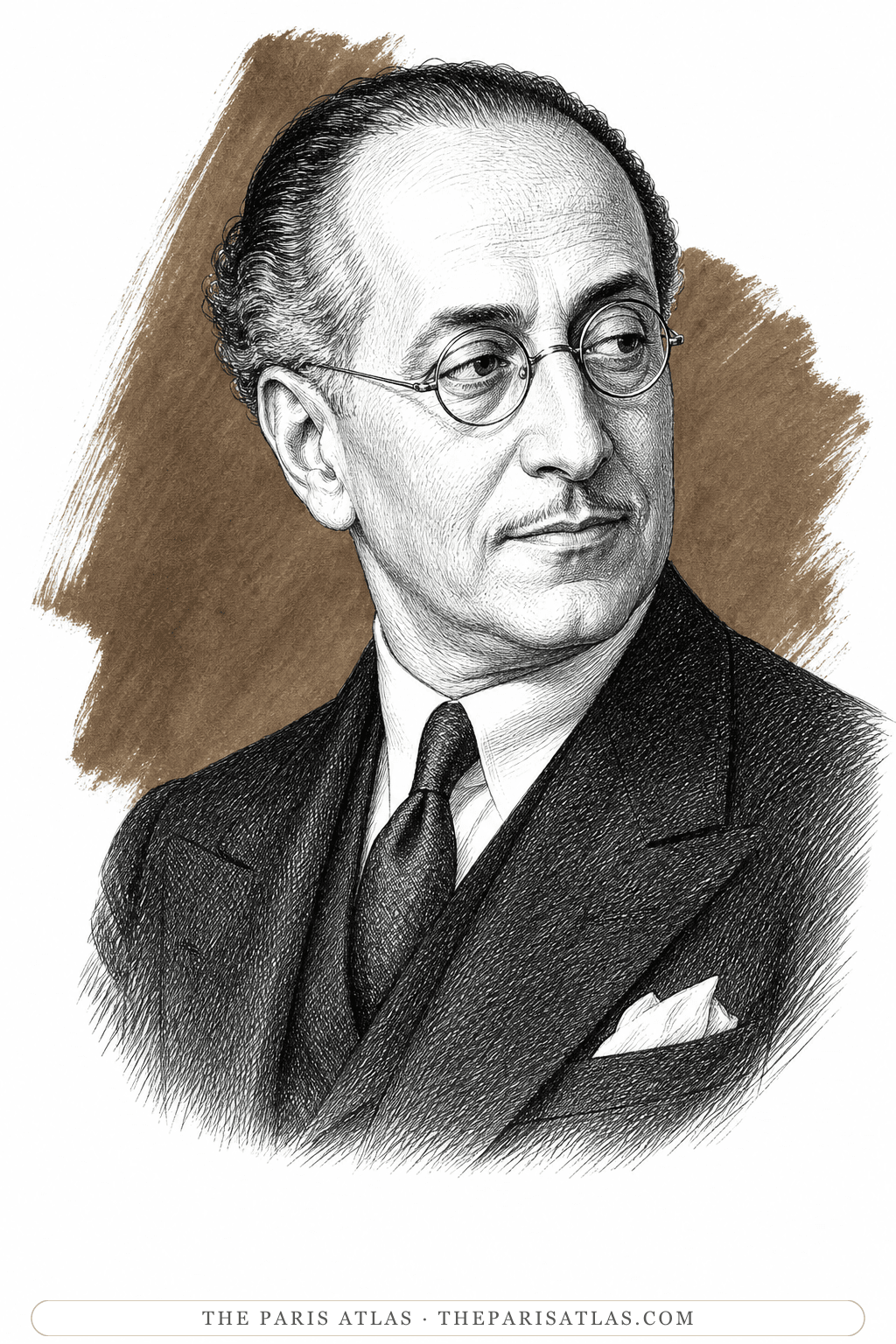
A concert pianist who walked out on his wife and three children and comes back twenty years later to court his grown daughter's admiration. Vain, charming, terrified of germs, and unable to tell her the truth about anything.
To be at the center of every life he touches, which the novella says outright and which he then proves by becoming jealous of his daughter's letters.
The book

At a glance
- The father in the title novella, never named
- Concert pianist. He has played, he says, in every city in the world
- His wife and three children, when the daughter was a child
- Laura, his present wife, who is not in the story but is in his stories
- Joaquín Nin · Cuba, and a European concert career
Who they are in the book
Spoiler-freeThe father is the second figure in the title novella of Winter of Artifice, published in 1939 by the French-born American writer Anaïs Nin. Like his daughter he has no name. He is a Spanish concert pianist who left his wife and three children when the daughter was a small girl, and who arrives at her door two decades later, on time to the minute, having checked his watch.
What Nin does with him is a portrait of a man made entirely of surface. He apologises for the past before he has said hello, in a long and beautifully constructed speech that seems to be addressed to a judge standing somewhere behind his daughter. He tells stories about his conquests and mistresses that do not survive examination. He is fastidious to the point of illness: filtered water for the fruit, silverware passed through an alcohol flame, a nicotine filter in the cigarette holder, and hands washed over and over.
He is also, for a while, exactly what she has wanted. He tells her that they think alike, that her blood obeyed him, that she is the sum of every woman he pursued. The novella lets that flattery run to its natural end, which is that he cannot bear her to have loved anyone else, including in the past, and reads her old diary looking for evidence that she stopped grieving too soon.
This profile is drawn from the Swallow Press edition of 1948, read in the Internet Archive's scan of the book.
How The father Is Portrayed
- The apology at the doorHe takes off his gloves, checks his watch to confirm he is on time, kisses her, tells her she has become beautiful, and then begins explaining why he left — a long, polished, faultless piece of pleading that his daughter admires as a performance while noticing it is not addressed to her.
- The map of womenHe says that when he looks at a map it seems to him the smallest villages could be replaced by the names of women, and that fortunately he is a musician, so his women come out as a note in a sonata and stay unrecognisable.
- "They will take you for my mistress, that will be delightful."Said in the first hour of the reunion, inviting her to come south with him in June. It is the tone the whole novella runs on.
- The hotel under siegeIn the south of France he arrives with six silver-grey valises and takes to his bed with lumbago. Meals come to the room, the shutters are oiled, a noisy water pipe is silenced, the plumber and the hairdresser and the doctor are summoned, the elevator man is sent out for a special medicine and the bus driver for a particular brand of English crackers.
- WashingHe disinfects his mouth, washes the fruit in filtered water, passes the silverware through an alcohol lamp like a surgeon's instruments, and never eats the part of the bread his own fingers have touched. His daughter watches him at the tap and thinks about the one microbe he has not studied.
- The filesHe keeps a wall of them, clipped from newspapers and magazines every day, dated and glued: China, Science, Photography, Ancient Instruments, Egypt, Morocco, Cancer, Radio, Inventions, The Guitar, Spain. His cupboards hold years' worth of writing paper and medicine.
- Cruelty delivered as tasteTwo things he said stay with her for life. As a small child she came out of a fever pale and thin and he looked at her and said how ugly she was. As a grown woman she told him she was pregnant and he said she was now worth less on the market.
- Jealous of the diaryHe reads the journal she kept for him and is offended by what he finds: that after two years of unbroken grief she recovered, and then fell in love with an Irish boy and a violinist. He would have preferred her to spend her life yearning.
- "I can't marry you!"Sitting up in bed, he tells her that all the women he chased are in her, that she is the synthesis of all of them, and then that she is his daughter and he cannot marry her. Elsewhere he tells her plainly that his blood trained her even though he was not there.
- How he sleepsWithout a pillow, because a pillow makes wrinkles, and with his elbow jammed under his chin so his mouth cannot fall open, because that is ugly.
If you like Winter of Artifice


If you like Anaïs Nin
Explore authors with a similar voice, perspective, and influence.

Henry Miller
The entangled careers of the Villa Seurat: she financed and prefaced his scandal, he detonated her prose — and each wrote the other into the century's record.
View author
Louis-Ferdinand Céline
The doctor of the Paris slums who wrote the century's blackest, funniest novel — and changed the sound of French prose.
View author
Martha Gellhorn
War correspondent who covered the Spanish Civil War, D-Day, and conflicts across five more decades; Hemingway's third wife, 1940–1945.
View author