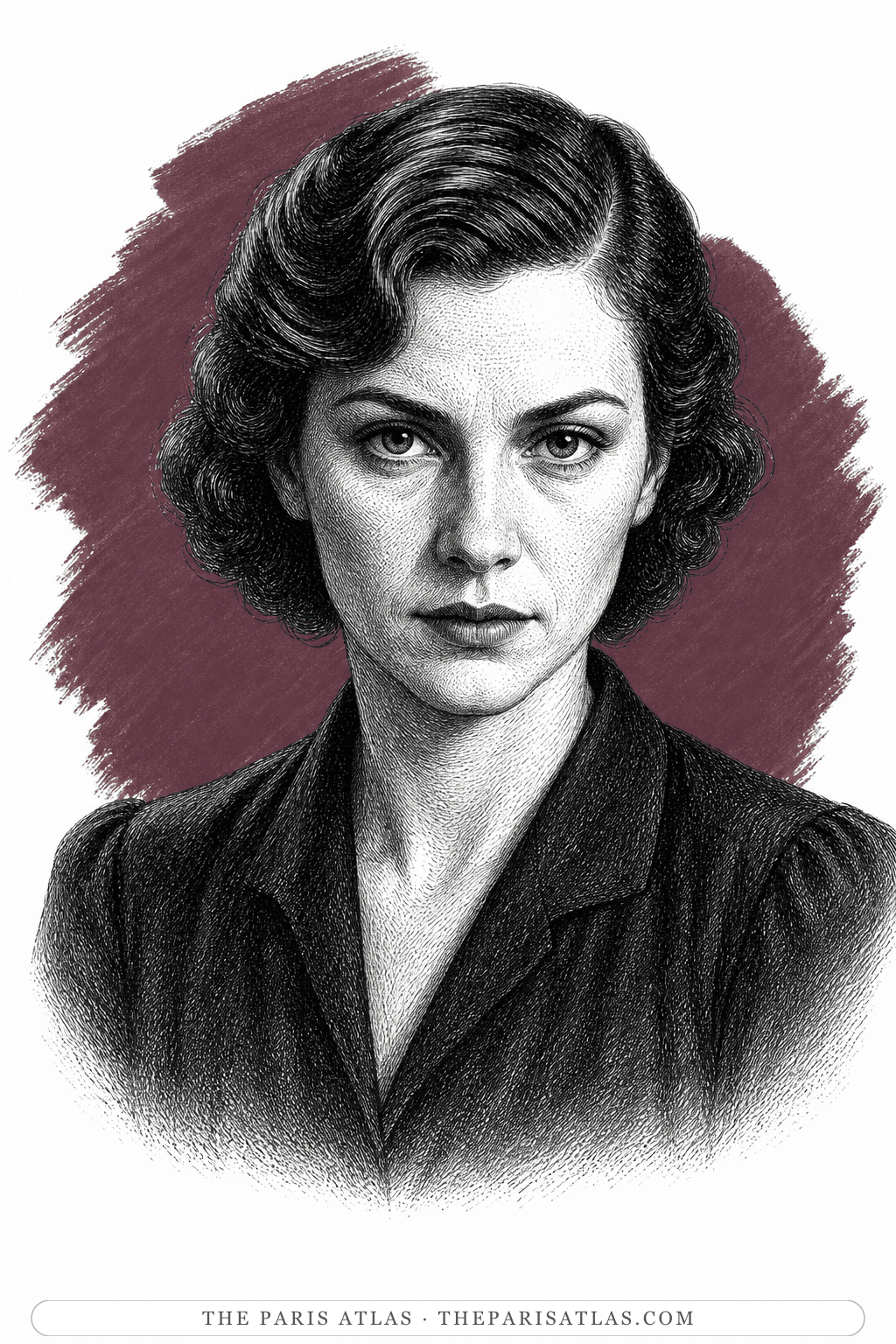
Lilith
A patient of the analyst in the third novella who arrives determined to catch him out and ends by falling in love with him. She has spent her life being leaned on and cannot let herself lean on anyone.
To be caught out in something she cannot manage alone — she says it is what would make her love him, and it is what she spends the story avoiding.
The book

At a glance
- The main patient in "The Voice"
- A father who left and later went mad, and a brother, Eric Pellan, coming home from India
- Yes, to a man the book calls very simple, in a marriage she resisted physically
- Djuna, who tells her the truth about what she is doing
Who they are in the book
Spoiler-freeLilith is the principal patient in "The Voice", the last of the three novellas printed in Winter of Artifice, the 1939 book by the French-born American writer Anaïs Nin. She lies down in the analyst's room already hostile, waiting for him to say something obvious enough to laugh at, because if he does she can go back to managing herself alone.
He does not. What he finds is a woman organised entirely around not needing anyone: a father who left, a mother she watched go on afterwards like someone who had lost an arm, a house sold and the furniture auctioned in the garden, and a brother she fought battles for with an umbrella. She protects everybody and is protected by nobody, and she says she does not much care what happens to her.
The novella follows her out of the room too, walking in a street that suddenly feels different on her skin, and into a night with her friend Djuna. What happens between her and the analyst is the story's second subject: she falls in love with him, Djuna tells her it is a mirage, and she keeps finding reasons to postpone the moment when the doctor becomes a man.
This profile is drawn from the Swallow Press edition of 1948, read in the Internet Archive's scan of the book.
How Lilith Is Portrayed
- Waiting at the gangplankShe goes to meet a brother returning from India after fifteen years and is afraid she will not recognise him. She watches the whole ship disembark and he is not among them; his papers are not in order and he is being kept aboard until morning.
- The umbrellaHer brother's first speech is about how she used to fight his battles for him and beat the other boys with an umbrella, and how they laughed at him for having a sister who fought for him. He tells her she cannot boss him now.
- The marriageIt began with a locked door every night and a hatred of her husband's desire. Eventually they discussed it coolly and she asked him to explain what it was like; he made a drawing, which frightened her more, and she would not let him kiss her afterwards. She preferred the idea of a knife and had it done by a doctor.
- Her father's headachesShe gets them too, and they terrify her, because her father's madness started with headaches and a slow loss of memory. She says madness is only solitude — the moment when someone sees a thing nobody else can see — and that she wanted to enter her father's dream in time to hold him back.
- "To think that even a stone can feel!"She cried it out angrily on hearing that stones have a faint pulse. Nin gives it as the reason she is tender with everything, and it arrives just as the analyst is proving that the granite core of her is not granite.
- "Now I hate you."Said when he has taken away the cover she kept over things. She tells him she feels humiliated at having exposed herself, and that she is a person who very rarely confesses.
- The meaning of her nameHe tells her Lilith was born before Eve and made of red clay rather than human substance — the unmated woman, who can seduce and enchant but cannot melt into a man. She asks, without looking at him, whether he thinks she is like the first one.
- Announcing the love affairShe arrives in Djuna's room throwing her bag on the bed, her scarf on the desk and her gloves on the bookshelf, and says she is falling in love with the Voice, that he is a kind of soul detective, and that she will love him on the day he captures her. Djuna tells her it is a mirage.
If you like Winter of Artifice


If you like Anaïs Nin
Explore authors with a similar voice, perspective, and influence.

Henry Miller
The entangled careers of the Villa Seurat: she financed and prefaced his scandal, he detonated her prose — and each wrote the other into the century's record.
View author
Louis-Ferdinand Céline
The doctor of the Paris slums who wrote the century's blackest, funniest novel — and changed the sound of French prose.
View author
Martha Gellhorn
War correspondent who covered the Spanish Civil War, D-Day, and conflicts across five more decades; Hemingway's third wife, 1940–1945.
View author