The Paris AtlasCharting the artists, works, and places worth returning to.
Cover of All the Sad Young Men by F. Scott Fitzgerald

All the Sad Young Men

by F. Scott Fitzgerald

F. Scott Fitzgerald's third story collection, published ten months after The Great Gatsby — nine stories about money and class, including “Winter Dreams” and “The Rich Boy.”

Published
1926
Pages
240
Shelf rating
4.3

About F. Scott Fitzgerald

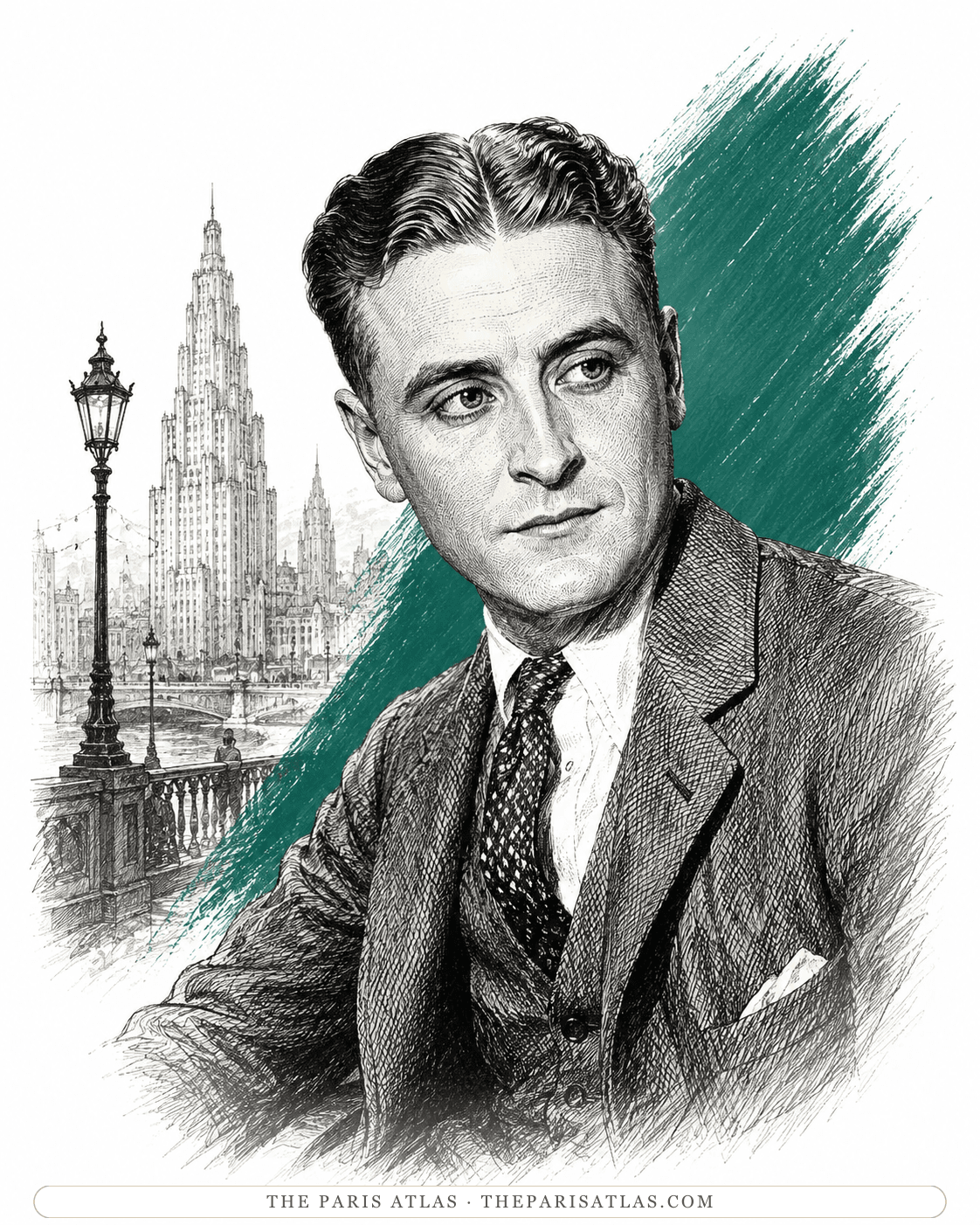
Illustrated portrait of F. Scott Fitzgerald
F. Scott Fitzgerald

8 books on our shelves

The story, briefly

Spoiler-free

Nine stories by the American writer F. Scott Fitzgerald, published in February 1926, ten months after his novel The Great Gatsby. Most of them are about money. A caddie from a Minnesota lake town makes a fortune in laundries and still cannot keep the girl he wants. The eldest son of a fifteen-million-dollar New York family lets the woman he loves marry somebody else rather than ask her in time. An eleven-year-old boy in the Dakota wheat country tells a lie in the confessional and finds he prefers it to the truth. Two of the nine came directly out of Gatsby: Fitzgerald wrote “Absolution” as the novel's opening chapter and cut it, and he described “Winter Dreams” to his editor as a first draft of the same idea. (A collection of nine separate stories — nothing here to spoil.)

The story, in more detail

Charles Scribner's Sons published All the Sad Young Men on 26 February 1926, at two dollars a copy. Every one of the nine stories had already been printed in a magazine — the oldest, “Winter Dreams,” in Metropolitan in December 1922; the newest, “The Rich Boy,” across the January and February 1926 issues of Redbook, while the book was at the printers. This was how F. Scott Fitzgerald made his living: the novels made his name and the magazines paid for the year. He dedicated the book to Ring and Ellis Lardner — the humorist and his wife, who had been the Fitzgeralds' neighbours at Great Neck on Long Island.

It sold well for a book of stories. The first printing ran to 10,100 copies, a second of 3,020 followed in March and a third of 3,050 in May, about 16,170 copies in all during 1926. Reviewers were respectful rather than excited. The New York Times found stories of fine insight and finished craft in it, and nothing in it to match The Great Gatsby.

Two of the nine were made out of the novel's own material. Fitzgerald wrote “Absolution” in 1924 as the opening chapter of The Great Gatsby, a picture of the hero's boyhood, then cut it because he wanted to keep the man's origins dark; H. L. Mencken printed it on its own in The American Mercury that June, while the novel was being finished. “Winter Dreams” came earlier still, written in September 1922, and Fitzgerald described it to his editor Maxwell Perkins as “a sort of first draft of the Gatsby idea.” Read either one beside the novel and the machinery shows through: a poor boy, a rich girl, and a fortune assembled to reach her.

What's inside

Nine stories, none of them connected to the others. Three carry the book's reputation. “The Rich Boy,” the longest, follows Anson Hunter, eldest of six children who will one day divide fifteen million dollars, from a wartime engagement he lets slip to a thirtieth birthday spent telephoning people who have moved away. “Winter Dreams” follows Dexter Green, a grocer's son who caddies at a Minnesota golf club, walks off the job at fourteen, makes a fortune in laundries, and spends his twenties trying to hold on to Judy Jones, the member's daughter he first saw when she was eleven. “Absolution” is a single hot afternoon in a Dakota wheat town: a boy of eleven confesses a lie he told in confession, to a priest who is coming apart in the heat.

The other six range wider than that reputation suggests. Two are domestic comedies with real teeth in them — a fight between two fathers on an icy suburban lawn after a children's party, and an advertising man who drugs his wife's coffee to keep her at home for a day. One is a farce about an heiress worth seventy-five million dollars who will not marry an American because no American has any imagination. One is a fable about a bored young wife made to grow up, presided over by a shabby doctor with a strange authority. One is about a man who lends money he cannot spare, and what his wife thinks of him for it. And “The Sensible Thing” retells the engagement Fitzgerald himself lost in 1919 and won back a year later, with the happiness taken out of the ending.

Themes and analysis

The line everyone misquotes

“The Rich Boy” opens with a narrator explaining why he will not generalise about wealthy people, and two paragraphs later it contains the most quoted sentence Fitzgerald ever wrote about money. It is almost always quoted wrong.

Let me tell you about the very rich. They are different from you and me.

F. Scott Fitzgerald, “The Rich Boy” (1926)

The version people repeat — “the rich are different from you and me,” followed by the retort “Yes, they have more money” — comes from Ernest Hemingway. In the text of his story “The Snows of Kilimanjaro” printed in Esquire in August 1936, Hemingway named Fitzgerald outright, gave him the line, and had somebody put him down with the reply. The exchange never happened. Hemingway had heard the retort at a New York lunch from the Irish writer Mary Colum, who aimed it at him, and he handed it to Fitzgerald instead. Fitzgerald complained to Maxwell Perkins, who edited them both at Scribner; when the story was reprinted in 1938 the name had been changed to Julian.

What the stories keep coming back to

Most of the nine turn on the same arithmetic. A young man wants a young woman, he does not have enough money, and somebody with more money is standing nearby. Fitzgerald is specific about the sums, which is what keeps the stories from going soft.

  • Dexter Green borrows a thousand dollars on his college degree and buys a partnership in a laundry.
  • George O'Kelly has an engineering degree from the Massachusetts Institute of Technology and a job as an insurance clerk at forty dollars a week.
  • Anson Hunter's salary and commissions pass twelve thousand dollars in 1920 and reach twenty-five thousand by the time he is twenty-eight, and none of it helps him.
  • Rags Martin-Jones inherited seventy-five million dollars on her tenth birthday and cannot find anything in New York she wants to buy.

The women are not written as prizes, which is the collection's other surprise. Judy Jones is bored, honest about being bored, and does exactly as she likes. Paula Legendre breaks an engagement over drinking and says plainly why. Jonquil Cary refuses a marriage she cannot afford and does not pretend it is about anything else. Each of them is given a flat, unmistakable sentence explaining herself, and in every case the man does not take it in.

Why we recommend it

  1. “Winter Dreams,” which became Gatsby

    Fitzgerald called it a first draft of the Gatsby idea, and it is one: a poor boy from a Minnesota lake town, a rich girl he cannot keep, and a fortune built for a purpose it never serves.

  2. “The Rich Boy”

    The long story about Anson Hunter, heir to fifteen million dollars, and the source of the most quoted sentence Fitzgerald ever wrote about money — the one Hemingway later misquoted in print, with Fitzgerald named.

  3. “Absolution”

    The chapter cut from the front of The Great Gatsby, published on its own: an eleven-year-old boy, a lie told in a confessional, and a priest coming apart across one Dakota afternoon.

What this book explores

The people in its pages

Nine separate stories, so almost nobody here has met anybody from another one. Each guide says at the top which story its character belongs to. All of them are invented. The nearest thing to a real person in the book is George O'Kelly, whose broken engagement in “The Sensible Thing” is Fitzgerald's own. Endings and aftermath sit behind a warning.

  • Anson Hunter

    The eldest son of a New York family with fifteen million dollars, in the story “The Rich Boy.” A friend from his days in the navy tells his story.

  • Paula Legendre

    The woman Anson Hunter loves, and does not marry, in the story “The Rich Boy.” She is serious, rich in her own right, and not prepared to wait forever.

  • Dexter Green

    A grocer's son who caddies at a Minnesota golf club, makes a fortune in laundries, and cannot stop wanting Judy Jones. “Winter Dreams” is his story.

  • Judy Jones

    The golf club member's daughter whom Dexter Green cannot stop wanting, in the story “Winter Dreams.” She is eleven when he first sees her, and has a dozen men circling her by eighteen.

  • Rudolph Miller

    The eleven-year-old boy at the centre of “Absolution” — the chapter F. Scott Fitzgerald cut from the front of The Great Gatsby and published on its own.

  • Father Schwartz

    The parish priest in “Absolution.” He hears the boy's confession, and by the end of the afternoon he is the one in trouble.

  • Carl Miller

    Rudolph Miller's father in “Absolution,” the freight agent of a small Dakota town. He is most of what is wrong in his son's life, and he does not know it.

  • George O'Kelly

    An engineer working as an insurance clerk at forty dollars a week, in “The Sensible Thing.” Fitzgerald built the story out of his own broken engagement.

  • Jonquil Cary

    The girl in Tennessee whom George O'Kelly cannot afford to marry, in the story “The Sensible Thing.” She is the one who decides that marrying him now would not be sensible.

  • Rags Martin-Jones

    An orphaned heiress worth seventy-five million dollars, home from five years in Europe and bored by everything New York can offer. The comic story of the collection is hers.

  • John M. Chestnut

    The man who has been in love with Rags Martin-Jones for five years, in “Rags Martin-Jones and the Pr-nce of W-les.” She thinks he has no imagination.

  • Luella Hemple

    A twenty-three-year-old New York wife who is bored by her husband, her house and her small son, and says so out loud. “The Adjuster” is her story.

  • Doctor Moon

    The shabby general practitioner Charles Hemple brings home to dinner in “The Adjuster.” He makes Luella Hemple stay, and the story never explains him.

Also in the book

  • Dolly Karger

    The girl Anson Hunter takes up with after Paula Legendre marries, in “The Rich Boy.” He tells her repeatedly that he does not love her, which does not help.

  • Irene Scheerer

    The woman Dexter Green becomes engaged to in “Winter Dreams,” once he has decided he cannot have Judy Jones.

Bring it to book club

  • Fitzgerald called “Winter Dreams” a sort of first draft of the Gatsby idea. Set the story next to the novel. What does Dexter Green have that Jay Gatsby does not, and what had to be taken away from him before Gatsby was possible?
  • “Absolution” was written as the opening chapter of The Great Gatsby, showing the hero's boyhood, and cut because Fitzgerald wanted the man's origins kept dark. Read as that chapter, what does Rudolph Miller's afternoon tell you about the man he might become — and is a reader better off not having been told it?
  • Anson Hunter never blames himself for anything in “The Rich Boy,” and the man telling the story is his friend. Find the places where the narrator lets something show anyway. Is the story asking you to judge Anson, or asking why nobody around him does?
  • Judy Jones, Paula Legendre and Jonquil Cary each say plainly what they want and why they will not wait. Take one of the three, set what she actually says beside what the man does next, and work out whether he has heard a word of it.

A complete discussion guide is on our editorial calendar. Join the letter to hear when it ships.

Stories in its pages

Work inside this book that also had a life of its own.

The Rich Boy

Anson Hunter is the eldest of six children who will one day divide fifteen million dollars. A friend from his navy days tells the story of the woman he loved and did not marry, and of the years he spends afterwards solving everybody else's problems. First printed in Redbook, January and February 1926.

Winter Dreams

Dexter Green caddies at a Minnesota golf club and quits at fourteen, the morning he first sees an eleven-year-old member's daughter named Judy Jones. He makes a fortune in laundries; she grows up beautiful and does as she likes. Fitzgerald called it a first draft of the Gatsby idea. First printed in Metropolitan, December 1922.

The Baby Party

A two-and-a-half-year-old girl takes another child's teddy bear at a suburban children's party and pushes him over twice. Within the hour both fathers are fighting in the snow outside. First printed in Hearst's International, February 1925.

Absolution

An eleven-year-old boy in the Dakota wheat country tells a lie in the confessional and cannot undo it, and the priest he goes to for help is in worse trouble than he is. Written as the opening chapter of The Great Gatsby and cut. First printed in The American Mercury, June 1924.

Rags Martin-Jones and the Pr-nce of W-les

An orphaned heiress worth seventy-five million dollars comes home from five years in Europe, tells the man who has loved her since she was sixteen that no American has any imagination, and is offered the Prince of Wales. First printed in McCall's, July 1924.

The Adjuster

A young New York wife is bored by her husband, her house and her small son, and her husband brings a shabby general practitioner home to dinner to tell her so. First printed in Redbook, September 1925.

Hot and Cold Blood

A young husband lends three hundred dollars he cannot spare to a friend who buys a sports car with it, and his pregnant wife tells him what she thinks of professional nice fellows. First printed in Hearst's International, August 1923.

The Sensible Thing

George O'Kelly, an engineer working as an insurance clerk at forty dollars a week, travels seven hundred miles to hold on to an engagement he cannot afford. Fitzgerald's own broken engagement to Zelda Sayre, retold five years after the fact. First printed in Liberty, 15 July 1924.

Gretchen's Forty Winks

An advertising man has six weeks to win the biggest account of his life and a wife who wants to go out in the evenings. He solves the problem with a visit to the druggist. First printed in the Saturday Evening Post, 15 March 1924.

Timeline

  1. 1922

    Fitzgerald writes “Winter Dreams” in September; Metropolitan prints it in December.

  2. 1924

    He cuts the opening chapter from the novel he is finishing and sells it separately. H. L. Mencken prints it in The American Mercury in June as “Absolution.”

  3. 1925

    The Great Gatsby is published in April. Redbook prints “The Adjuster” in September.

  4. 1926

    Redbook runs “The Rich Boy” across its January and February issues. Charles Scribner's Sons publishes the collection on 26 February at two dollars; three printings follow within four months, about 16,170 copies in all.

  5. 1936

    Hemingway puts the “very rich” line into “The Snows of Kilimanjaro,” misquoted and attributed to Fitzgerald by name. Maxwell Perkins has the name changed to Julian for the 1938 reprint.

  6. 2022

    The collection enters the United States public domain, and Project Gutenberg posts the full text that June.

Book editions

Hardcover
Hardcover
Charles Scribner's Sons
1926
First edition, published 26 February 1926 at two dollars
Paperback edition cover
Paperback
Vintage
2024
ISBN-13
9780593687703
Paperback edition cover
Paperback
Cambridge University Press
2014
ISBN-13
9781107671737
The scholarly Cambridge Edition, edited by James L. W. West III — the nine stories plus eleven Fitzgerald never collected
Ebook
Ebook
Public domain — free on Project Gutenberg

Reader reviews

Loading reviews…

Cover of The Great Gatsby by F. Scott Fitzgerald

The Great Gatsby

F. Scott Fitzgerald

Two of these nine stories are made from the novel's leftovers. “Absolution” was written as its opening chapter and cut; “Winter Dreams” worked out the same idea three years earlier. Read the novel first, then read those two.

Read our take
Cover of This Side of Paradise by F. Scott Fitzgerald

This Side of Paradise

F. Scott Fitzgerald

Fitzgerald's first novel, from 1920. Its success is what changed Zelda Sayre's mind after she had refused to marry him for having no money. “The Sensible Thing,” in this collection, tells the refusal again and gives it a colder ending.

Read our take
Cover of Tender Is the Night by F. Scott Fitzgerald

Tender Is the Night

F. Scott Fitzgerald

The novel Fitzgerald published eight years later. It takes the subject of these stories, what money does to the people who have it, and gives it four hundred pages instead of forty.

Read our take
Cover of Men Without Women by Ernest Hemingway

Men Without Women

Ernest Hemingway

Ernest Hemingway's story collection of the following year, from the same publisher. Hemingway later put the “very rich” line from “The Rich Boy” into a story of his own, misquoted and with Fitzgerald named, which is one reason the two of them stopped being friends.

Read our take

All the Sad Young Men: frequently asked questions

Who wrote All the Sad Young Men?

F. Scott Fitzgerald. Charles Scribner's Sons published it on 26 February 1926, ten months after his novel The Great Gatsby. It was his third collection of short stories.

What stories are in All the Sad Young Men?

Nine: “The Rich Boy,” “Winter Dreams,” “The Baby Party,” “Absolution,” “Rags Martin-Jones and the Pr-nce of W-les,” “The Adjuster,” “Hot and Cold Blood,” “The Sensible Thing” and “Gretchen's Forty Winks.” All nine had already been printed in magazines between 1922 and 1926.

How is All the Sad Young Men connected to The Great Gatsby?

Two of its stories came out of the novel. Fitzgerald wrote “Absolution” as the novel's opening chapter, showing the hero's boyhood, and cut it because he wanted to keep the man's origins mysterious. He described “Winter Dreams,” written in 1922, to his editor Maxwell Perkins as a sort of first draft of the Gatsby idea.

Did Fitzgerald write “The very rich are different from you and me”?

Not in those words. The sentences in “The Rich Boy” are “Let me tell you about the very rich. They are different from you and me.” The shortened version, and the reply “Yes, they have more money,” both come from Ernest Hemingway's 1936 story “The Snows of Kilimanjaro,” which named Fitzgerald and invented the exchange between them.

Which story should I read first?

“Winter Dreams” if you have read The Great Gatsby, because it is the same idea in first draft. “Absolution” if you have not, because it is the shortest and the strangest. “The Rich Boy” is the longest in the book and the one most often anthologised.

Is All the Sad Young Men in the public domain?

Yes. It was published in 1926 and entered the United States public domain in 2022. The full text is free on Project Gutenberg.