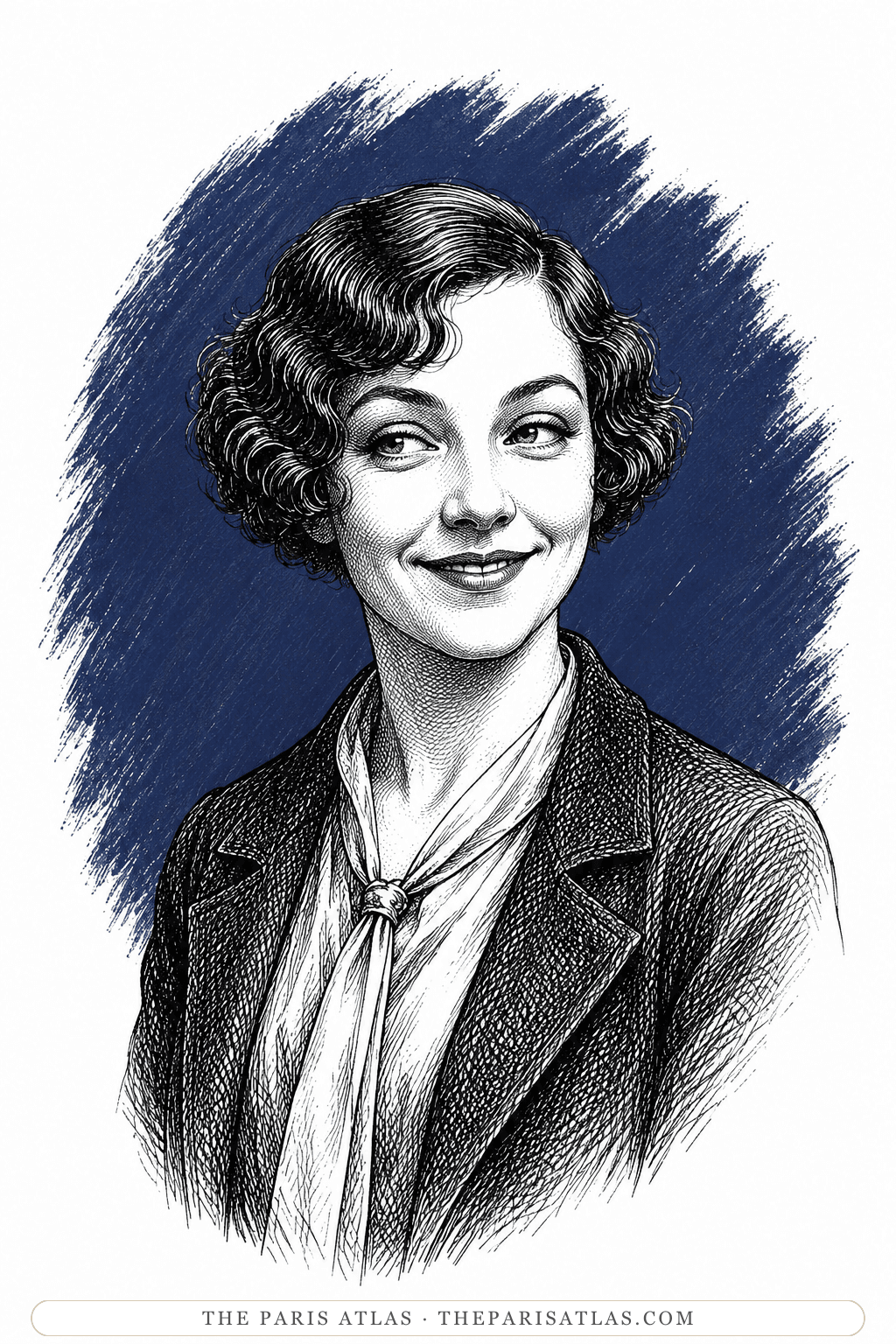
Rags Martin-Jones
An orphaned heiress worth seventy-five million dollars, home from five years in Europe and bored by everything New York can offer. The comic story of the collection is hers.
Something to happen that she has not paid for. She tells the man who has loved her for five years exactly what is missing: “I want a man who's capable of a gallant gesture.”
The book

At a glance
- Rags Martin-Jones — invented by F. Scott Fitzgerald; everybody had forgotten her real name long ago
- The Martin-Jones fortune of seventy-five million dollars, inherited on her tenth birthday
- Lost together on the Titanic in 1913
- Three maids, five dogs, a French orphan child, and a monocle
- No Americans have any imagination, and Paris is the only large city where a civilized woman can breathe
Who they are in the book
Spoiler-freeRags Martin-Jones is the central figure of “Rags Martin-Jones and the Pr-nce of W-les,” a story by the American writer F. Scott Fitzgerald, first printed in McCall's in July 1924 and collected in All the Sad Young Men. She is invented, and nobody in the story remembers her real name.
Her parents went down on the Titanic together in 1913 rather than be separated, and the Martin-Jones fortune of seventy-five million dollars passed to her on her tenth birthday. She comes home to New York after five years in the capitals of Europe with three maids, five dogs, a French orphan child and a monocle, and announces that she is going back to Paris tomorrow because there is not an amusing man in New York. The story is a farce, and it is the funniest thing in the book.
How Rags Martin-Jones Is Portrayed
- The arrivalShe comes off the Majestic last, behind two French maids carrying small purple dogs, a squad of porters blind and invisible under bunches of fresh flowers, a third maid leading a sad-eyed orphan child of a French flavour, and the second officer pulling three reluctant wolfhounds.
- The monocleShe wears a preposterous monocle in an eye of clear childish blue, and every few steps her long lashes tilt it out, so she laughs a bored, happy laugh and replaces it in the other eye. Her hair is cut to what the story calls convict's length. She weighs one hundred and five pounds.
- Seventy-five million dollarsThe fortune came to her on her tenth birthday. Six lawyers and bankers of the Martin-Jones trust wait in the hall of her suite at the Ritz from half past one, through her bath, her nap, a masseuse, a manicure and a Parisian hairdresser, and are eventually told she is much too weary from her trip to talk to them.
- The man on the dockJohn M. Chestnut has been hopelessly in love with her for five years and is at the pier to meet her. When he raises his voice about it in front of a crowd she takes a brisk step forward, and he retreats, finds nothing behind him, and goes off the thirty-foot dock into the Hudson River. She leans over the pier, makes a megaphone of her hands, and calls down that she will be in at half past four.
- The bazaarsHer account of what life offers her: a series of glistening bazaars, a merchant in front of each one rubbing his hands and calling it the best bazaar in the world, and her own purse full of beauty and money and youth. Whatever else they are out of, they always give her love before she goes, and for nothing. That, she says, is the one revenge she has.
- Dressing to meet a princeTold the Prince of Wales will be in a New York night club that evening, she calls all three maids at once and issues orders: the gold dress and the slippers with the real gold heels, all the pearls and the egg-diamond, the stockings with the sapphire clocks, another bath half full of almond cream, Tiffany's before it closes for anything at all bearing the arms of the house of Windsor, and four dozen orchids so she can choose four.
- In the spotlightThe night-club comedian picks her out with a baby spotlight and makes her the joke of the evening. She composes her face at the first shock of the light and smiles a smile with a vast impersonality in it, as though she is amused at somebody infinitely far away, and sits there glittering until the comedian begins to feel more alone than he has ever felt before. He signals for the light to be switched out.
The evening goes wrong in a way that appears to be nobody's fault. John Chestnut turns white, tells her a warrant has been out for him for over an hour, and admits under questioning that it is for murder. She crosses the floor to the prince's table and begs two seats in the car going over the border that night, and gets them by saying it is a runaway marriage. Then policemen come in at both doors, a plain-clothes man shouts for John M. Chestnut by name, the aides draw revolvers, and the roof fills with smoke and shooting.
He mentions as an afterthought that while she was at the other table he sold a restaurant man the whole idea for the night club. She takes the monocle from around her neck, throws the ribbon over Cedric's head, and thanks him for the second greatest thrill of her life. Then Chestnut rubs his hands together in a commercial gesture and starts the bazaar joke again, and she buys.
If you like All the Sad Young Men


If you like F. Scott Fitzgerald
Explore authors with a similar voice, perspective, and influence.
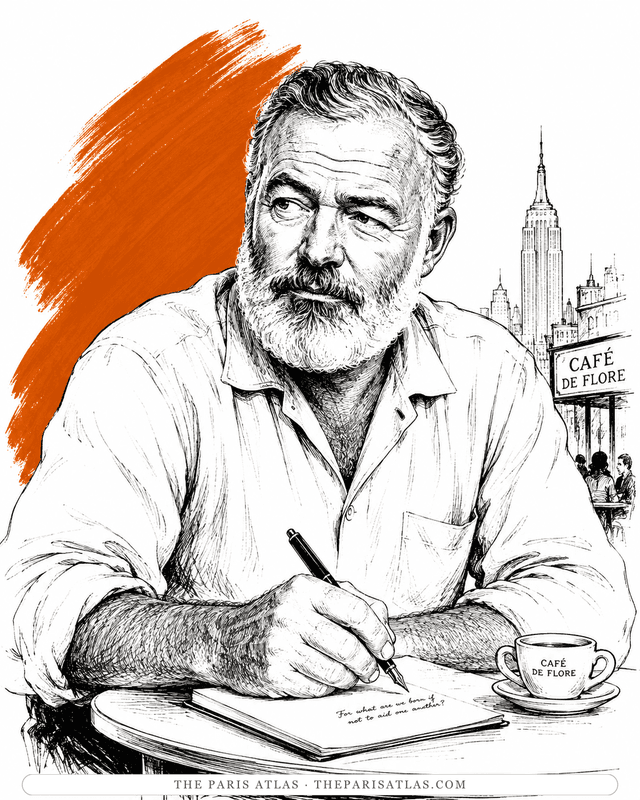
Ernest Hemingway
Fitzgerald vouched for him to Scribner's before they had met, then edited him better than he edited himself; the friendship's five rounds are chronicled in our journal.
View author
Henry Miller
The Brooklyn dropout who arrived in Paris broke at thirty-eight and wrote the exuberant, banned books that ended American censorship.
View author
Louis-Ferdinand Céline
The doctor of the Paris slums who wrote the century's blackest, funniest novel — and changed the sound of French prose.
View author