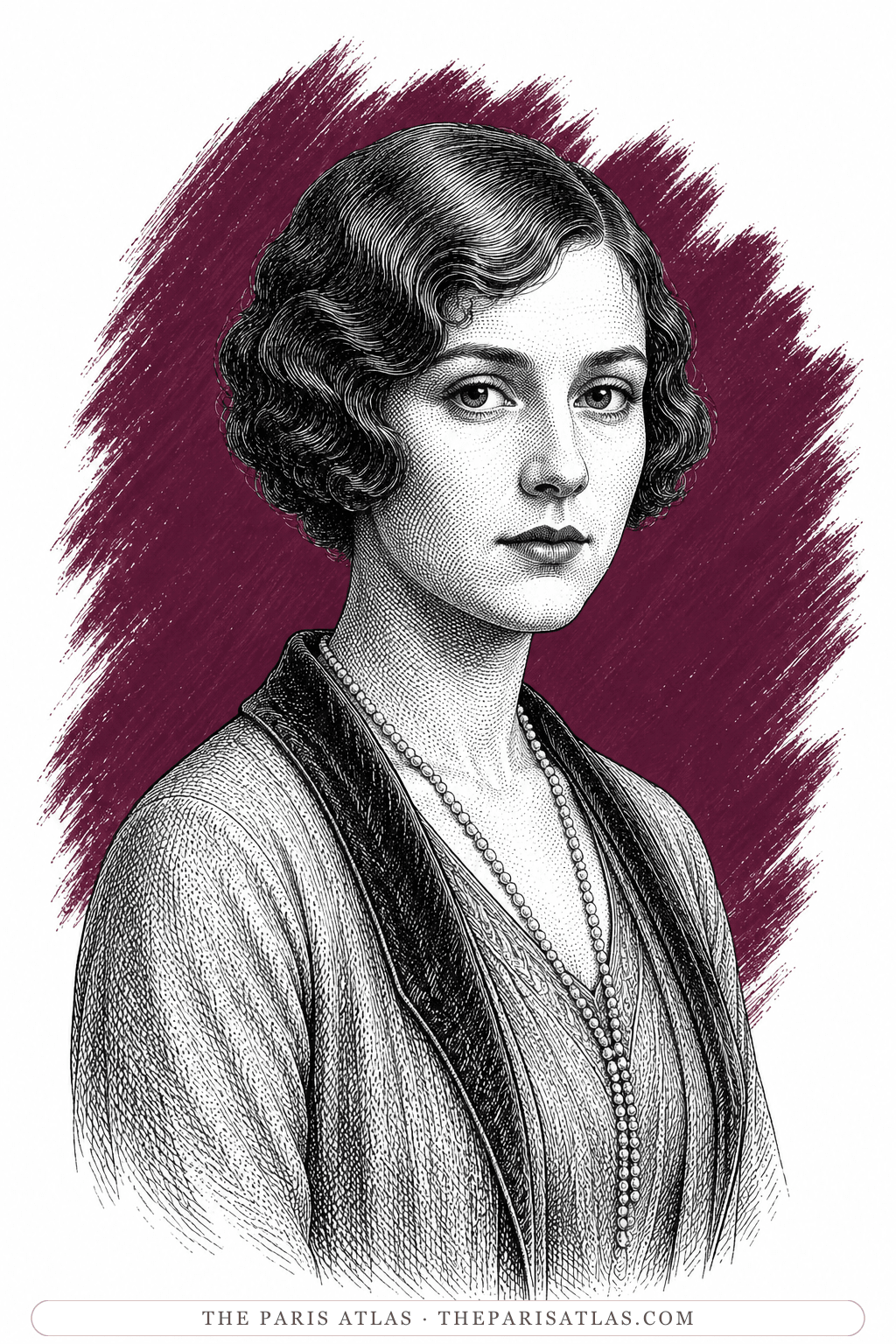
Luella Hemple
A twenty-three-year-old New York wife who is bored by her husband, her house and her small son, and says so out loud. “The Adjuster” is her story.
Excitement, and she is not particular about what kind. She says so in one sentence: “I want excitement; and I don't care what form it takes or what I pay for it, so long as it makes my heart beat.”
The book

At a glance
- Luella Hemple — invented by F. Scott Fitzgerald
- Twenty-three, and married three years
- Charles Hemple, in the middle thirties, with distinguished iron-grey hair
- Chuck, two years old
- An apartment the Hemples own, in a white New York building known by its number instead of a name
- 1920, described by the story from the vantage-point of 1925
Who they are in the book
Spoiler-freeLuella Hemple is the central figure of “The Adjuster,” a story by the American writer F. Scott Fitzgerald, first printed in Redbook in September 1925 and collected in All the Sad Young Men. She is invented. She is twenty-three, has been married three years to a New York businessman named Charles Hemple, and has a son, Chuck, who turns two the day after the story opens.
She is bored, and she is honest enough about it to say the parts that do not flatter her. The story begins with her telling a friend over tea at the Ritz that she and Charles are drifting toward a divorce, that the baby is what keeps them together, and that even the baby bores her. Everything she asks for in that conversation, she is given.
How Luella Hemple Is Portrayed
- The Ritz at five o'clockShe and her friend Ede Karr take a table for two on the raised horseshoe balcony in the amber hour when the tea things are still going. Luella is the one in the dress: a black immaculate affair with big buttons and the red ghost of a cape at the shoulders, suggesting with faint and fashionable irreverence the garb of a French cardinal, as it was meant to do when it was invented in the Rue de la Paix.
- The powderShe is tall, with the sort of flaxen hair English country girls should have and seldom do, and skin so radiant there is no need of putting anything on it. In deference to the fashion of 1920 she has powdered out its high roses and drawn on a new mouth and new eyebrows, which the story says are no more successful than such meddling deserves — and then adds that at the time the effect she gave was exactly right.
- “Even my baby bores me”She offers it to her friend as something outrageous and then does not take it back. He does not begin to fill her life. She loves him with all her heart, and when she has him to take care of for an afternoon she gets so nervous she wants to scream, and after two hours she begins praying for the moment the nurse will walk in the door.
- The kitchenShe is a vile housekeeper with no intention of turning into a good one, and she explains why rather than apologising. She never wants to hear about food until it comes to the table, and a kitchen is about as interesting to her as a boiler-room: simply a machine she does not understand. The servants leave every week — the young ones because she cannot train them, the experienced ones because they hate a house where a woman takes no interest in the price of asparagus.
- What she and Charles do not shareHe is lukewarm about the theatre and hates the opera, dancing and cocktail parties; sometimes she thinks he hates everything pleasant in the world. She sat at home for a year while the baby was coming and while she was nursing him, and did not mind. Then she told Charles frankly that she was still young enough to want some fun, and since then they have been going out whether he wants to or not.
- A good sportMen had always told her before her marriage that she was a good sport, and she has tried to carry that fairness into it: she sees Charles's point of view as clearly as she sees her own. In the same breath she says she is so sorry for him she does not know what to do — and that she would rather he was unhappy than she was.
- The furnitureThe Hemples own their apartment, in one of those impersonal white palaces that are known by a number instead of a name, and they furnished it on their honeymoon: England for the big pieces, Florence for the bric-à-brac, Venice for the lace and the coloured glass. Choosing things gave the trip a purposeful air. It amazes her sometimes that all of it is indisputably hers. It amazes her more that it has begun to bore her.
- The hand on the faceCharles rubs his face and mouth with his hand all the time — at table, at the theatre, even when he is in bed. It gives him an air of unflattering abstraction and sometimes obscures his words, so that she is continually saying “What?” She has mentioned it several times and he has apologised in a surprised way and gone on doing it. Her verdict on the marriage rests on it: when things like that begin to irritate you, it is nearly over.
The evening Doctor Moon first comes to dinner, Charles Hemple's mind gives way. He throws the food out of the ice-box and is found in his room crying and singing. Twenty years of almost uninterrupted work are behind it, and so is the pressure at home: the story says plainly that he had begun taking the blame for situations Luella had obviously brought about, and that his mind sickened at length with the effort of putting himself in the wrong.
Luella is a good sport and cannot take advantage of a sick man, so the question of her liberties is postponed and she becomes a nurse as well as a wife. Then the household comes apart across one afternoon. The cook walks out; the agency will send nobody else until the seventy-five cents an hour is paid; Luella cannot work the stove and has to be shown by the baby's nurse, who has a splitting headache; and the nurse then faints on the kitchen floor.
She gets as far as the hall, where Doctor Moon is standing, and she does not get past him. He tells her she is trying to leave herself behind and cannot. She goes back and asks the nurse whether she may take her husband out for a drive.
The last page jumps two years, to 1925. Charles comes home at six with hair gone dead white and no other mark on him. Luella is a little stouter, with lines round her eyes that came the evening Chuck died, and there is a mature kindness about her face at twenty-eight, as if suffering had touched her only reluctantly and then hurried away. Ede and her husband are coming to dinner and there are theatre tickets.
If you like All the Sad Young Men


If you like F. Scott Fitzgerald
Explore authors with a similar voice, perspective, and influence.

Ernest Hemingway
Fitzgerald vouched for him to Scribner's before they had met, then edited him better than he edited himself; the friendship's five rounds are chronicled in our journal.
View author
Henry Miller
The Brooklyn dropout who arrived in Paris broke at thirty-eight and wrote the exuberant, banned books that ended American censorship.
View author
Louis-Ferdinand Céline
The doctor of the Paris slums who wrote the century's blackest, funniest novel — and changed the sound of French prose.
View author