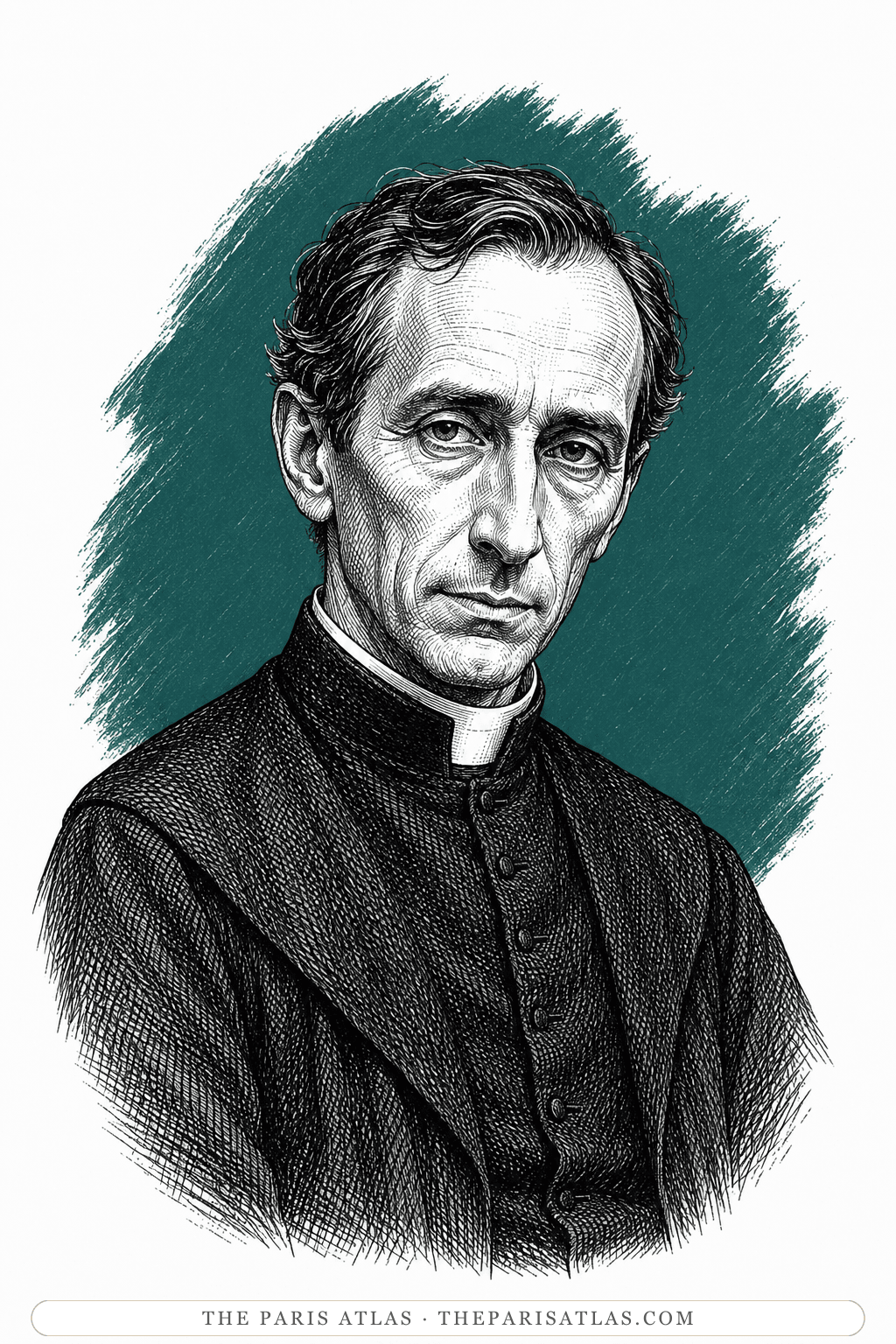
Father Schwartz
The parish priest in “Absolution.” He hears the boy's confession, and by the end of the afternoon he is the one in trouble.
To get through four o'clock. The heat, the wheat outside the window and the sound of girls on the path are what he prays to be delivered from, and several times he prays aloud for the twilight to come.
The book

At a glance
- The Reverend Adolphus Schwartz — invented by F. Scott Fitzgerald
- A small town in the Dakota wheat country, in the valley of the Red River
- Cold, watery eyes; a haggard voice; nerves strung thin
- He cannot attain a complete mystical union with God, and the afternoons are warm and long
Who they are in the book
Spoiler-freeFather Adolphus Schwartz is the priest in “Absolution,” the story the American writer F. Scott Fitzgerald wrote as the opening chapter of The Great Gatsby and then cut. He is invented. He keeps a parish in a small town in the Dakota wheat country, and the story opens with him weeping in the still of the night because the afternoons are warm and long and he cannot attain a complete mystical union with God.
When an eleven-year-old parishioner named Rudolph Miller turns up at his study in a panic about a sin, the priest's first feeling is relief that somebody has come into his haunted room. He is not able to help. What he says instead is one of the strangest passages Fitzgerald ever published, and the boy takes it as encouragement.
How Father Schwartz Is Portrayed
- The story's first sentence“There was once a priest with cold, watery eyes, who, in the still of the night, wept cold tears.” It is the last thing in the story that sounds like a fairy tale.
- Four o'clockThere is no escape from what the story calls the hot madness of four o'clock. Swede girls go rustling along the path by his window, and in their shrill laughter he finds a terrible dissonance.
- Romberg's Drug StoreWalking back from Saturday confessions he passes the drug store at dusk, when the yellow lights are on inside and the nickel taps of the soda fountain are gleaming, and finds the scent of cheap toilet soap desperately sweet upon the air. He grows careful to walk on the other side of the street so the smell will float upward before it reaches him.
- The wheat and the carpetFrom his window the Dakota wheat throngs the valley of the Red River as far as he can see, and it is terrible to look upon. He bends his eyes in agony to the carpet pattern instead, and the pattern sends his thoughts brooding through grotesque labyrinths that are always open to the sun.
- In the confessionalHe is audible from the pew outside, which is part of why the boy dreads his turn. He is brisk with what he hears: told that the boy stayed in a hayloft while a girl and another boy said immodest things, he answers that he should have gone and should have told the girl to go. When the boy begins to name the place, the priest interrupts him sharply and says he does not want to hear any names.
- What he says instead of absolutionUnable to remember what he is meant to say to the frightened child in front of him, he says this instead: “When a lot of people get together in the best places things go glimmering.” He repeats it, asks whether the boy can hear the hammer and the clock ticking and the bees, and says that is no good — the thing is to have a lot of people in the centre of the world, wherever that happens to be.
- The amusement parkHe tells the boy to go and see an amusement park at night and stand a little way off from it in a dark place, under dark trees: a big wheel made of lights turning in the air, a long slide shooting boats down into the water, a band playing somewhere, a smell of peanuts, everything twinkling. Then the warning. “But don't get up close,” he warned Rudolph, “because if you do you'll only feel the heat and the sweat and the life.”
- The rosaryWhile he struggles to remember the thing that keeps slipping further away from him, his nerves are strung thin and the beads of his rosary are crawling and squirming like snakes upon the green felt of his table top.
The boy gives a sharp cry and runs from the house. The story does not stay in the room. Its last paragraph goes out into the wheat instead: girls with yellow hair walking along the roads that bound the fields, calling innocent, exciting things to the young men working between the grain, and the certainty that in three hours it will be night and they will be lying out beside the wheat under the moon.
The heat and the life outside the window are what the story has been setting against the priest since its first page, and it ends on them rather than on him. Nothing is said about what happens to him next.
If you like All the Sad Young Men


If you like F. Scott Fitzgerald
Explore authors with a similar voice, perspective, and influence.

Ernest Hemingway
Fitzgerald vouched for him to Scribner's before they had met, then edited him better than he edited himself; the friendship's five rounds are chronicled in our journal.
View author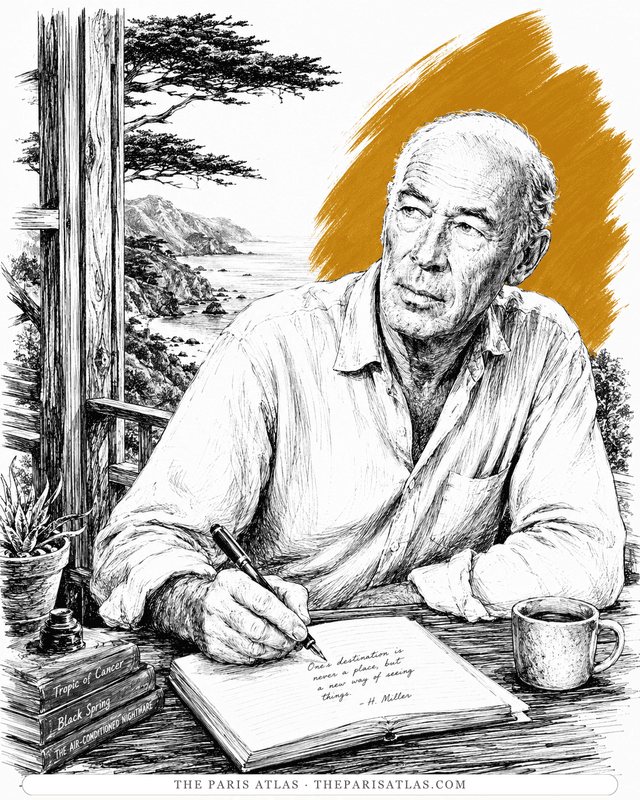
Henry Miller
The Brooklyn dropout who arrived in Paris broke at thirty-eight and wrote the exuberant, banned books that ended American censorship.
View author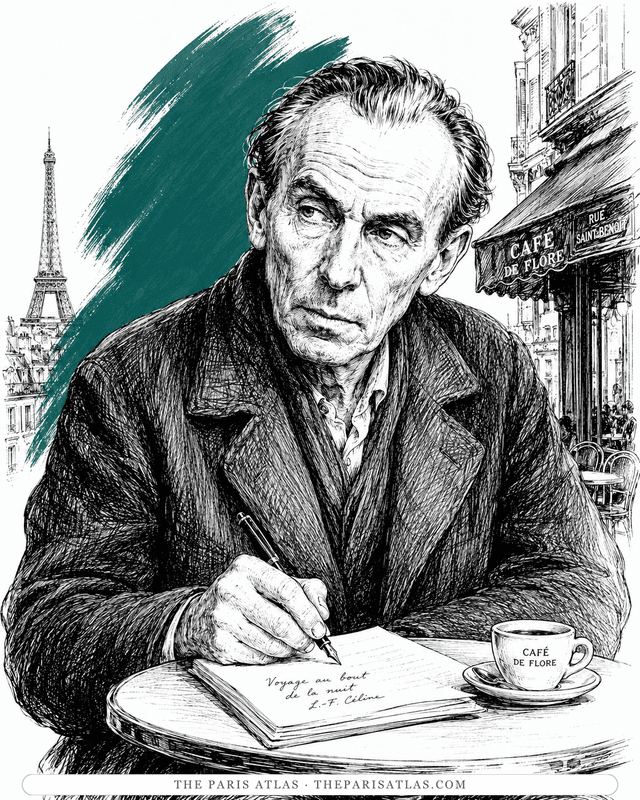
Louis-Ferdinand Céline
The doctor of the Paris slums who wrote the century's blackest, funniest novel — and changed the sound of French prose.
View author