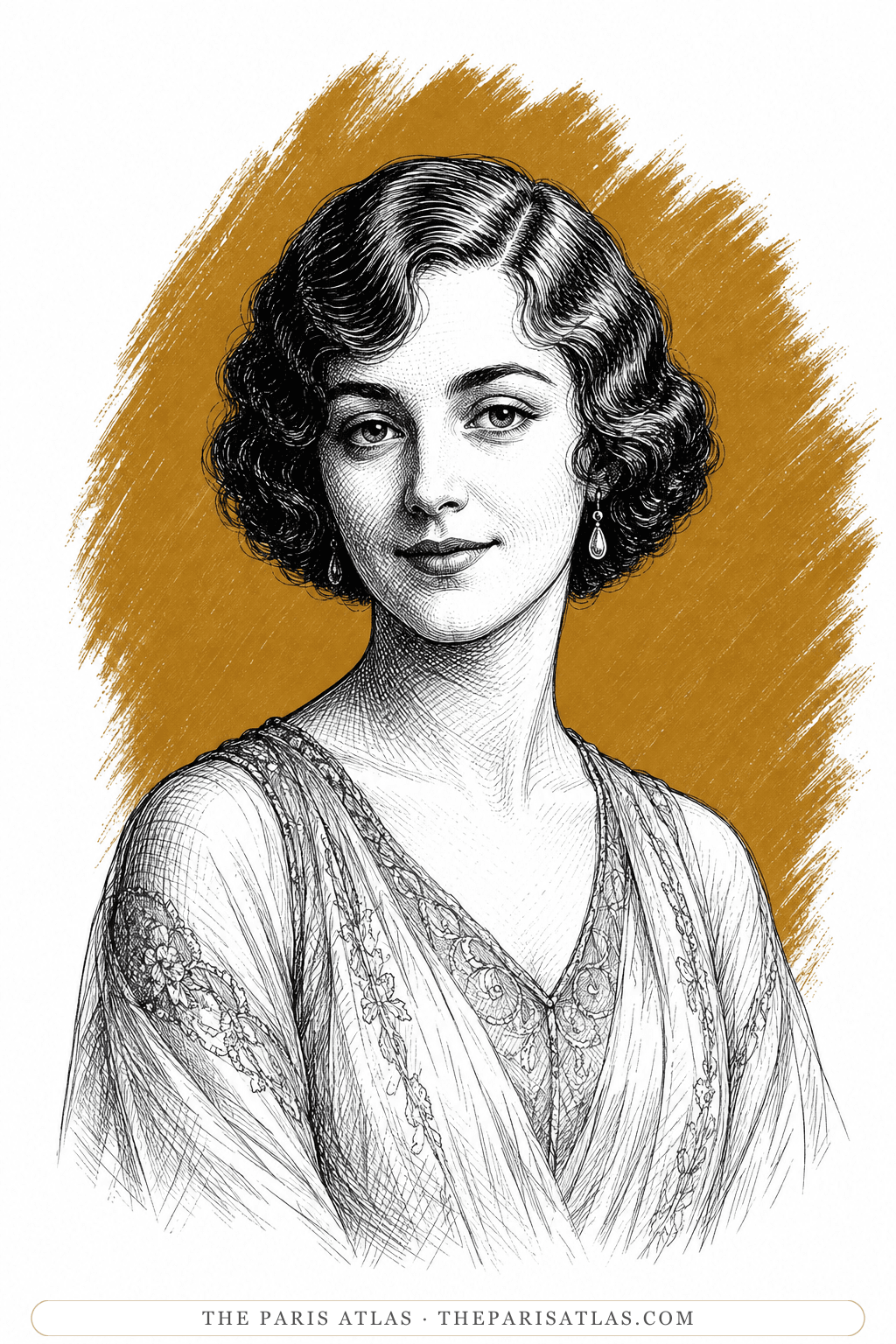
Jonquil Cary
The girl in Tennessee whom George O'Kelly cannot afford to marry, in the story “The Sensible Thing.” She is the one who decides that marrying him now would not be sensible.
To marry George O'Kelly at a point when it will not be a disaster. She tells him she loves him with all her heart and cannot see how she could ever love anyone else, and that if he had been ready two months earlier she would have married him.
The book

At a glance
- Jonquil Cary — invented by F. Scott Fitzgerald
- With her parents in a city in Tennessee
- Dark, straight hair and dark velvet eyes; a picturesque fragility that boys respond to
- He is not ready, and marrying him now would not be the sensible thing
- Zelda Sayre broke her engagement to Fitzgerald in 1919 for the same reason
Who they are in the book
Spoiler-freeJonquil Cary is a character in “The Sensible Thing,” the 1924 story by the American writer F. Scott Fitzgerald about a young engineer who cannot afford to marry. She is invented. She lives with her parents in a city in Tennessee, where George O'Kelly worked for a year before giving up engineering for an insurance office in New York.
She is the one who says the thing the title comes from, and she says it without any cruelty in it. Fitzgerald wrote the story out of his own broken engagement to Zelda Sayre, who had refused him in 1919 for the same reason, and he gave the refusal to Jonquil more or less straight.
How Jonquil Cary Is Portrayed
- The station platformNothing has ever looked so fresh and pale to George as her face when she sees him and flees to him along the platform. Her arms are raised and her mouth is half parted for his kiss when she holds him off suddenly, looks around with a touch of embarrassment, and introduces two young men standing in the background who have driven her there.
- The other boysThere have been a dozen of them around her since he first came to the city, responding with adolescent worship to what the story calls her picturesque fragility, a few of them noticing that her beautiful eyes are also sane and kind. When George asks whether they still come, the question surprises her: of course they do, all the time, and she has told him so in letters.
- The electric fanWhen the conversation turns dangerous she says it is hot and goes to get the electric fan. He tells her to shut off the damned thing because it is like a clock ticking away all the time he has with her. She turns it off, draws his head down into her lap, and offers to put him to sleep.
- “Are you ready for me to marry you?”Her reply when he asks when she will marry him. It is the whole argument in one line, and it ends the evening.
- How she ends itShe has seen the end before he has, and she is silent a long time before she speaks, because she knows every word will seem more cruel than the last. Then she says she loves him with all her heart and cannot see how she can ever love anyone else, and that she cannot marry him now because it does not seem to be the sensible thing.
- What she has insteadThere is no one else, which is true. What she has found, reacting from the strain of the affair, is the company of boys like Jerry Holt, who have the merit of meaning absolutely nothing in her life.
- The taxi to the stationShe orders a cab so they can drive around until his train leaves, and rides with him for an hour holding his hand. At the station two people they both know appear and stand talking for an interminable five minutes, and she seems relieved by it. When the train comes she takes an uncertain step toward him, falters, and presses his hand quickly, the way you take leave of a chance friend.
- A year laterHer voice on the telephone is cool and unmoved, pleasantly glad to hear from him. It is the voice of a stranger, and it disturbs him more than anger would have. When she comes into the room she is in pale green with a gold ribbon binding back her dark, straight hair like a crown, and a spasm of fright goes through him at her beauty's power of inflicting pain.
Fifteen months after she sends him away, George comes back off a train from Peru with money behind him and a job waiting in New York. She is not married and not engaged. He asks whether she loves someone else and she shakes her head; he asks whether she still loves him, and she says no, in one word, without raising her voice.
Then she changes her mind without announcing it. In the gardens of a neighbour who wanted to meet the man from the newspaper, he steps aside to let her through a gate and she stands still and looks at him for a moment instead, and they both take a short, faintly accelerated breath. That evening she says she is never going to marry, and a few minutes later she interrupts his story to say “Look.” What the story says about it is that he could search through eternity and never recapture those lost April hours.
If you like All the Sad Young Men


If you like F. Scott Fitzgerald
Explore authors with a similar voice, perspective, and influence.

Ernest Hemingway
Fitzgerald vouched for him to Scribner's before they had met, then edited him better than he edited himself; the friendship's five rounds are chronicled in our journal.
View author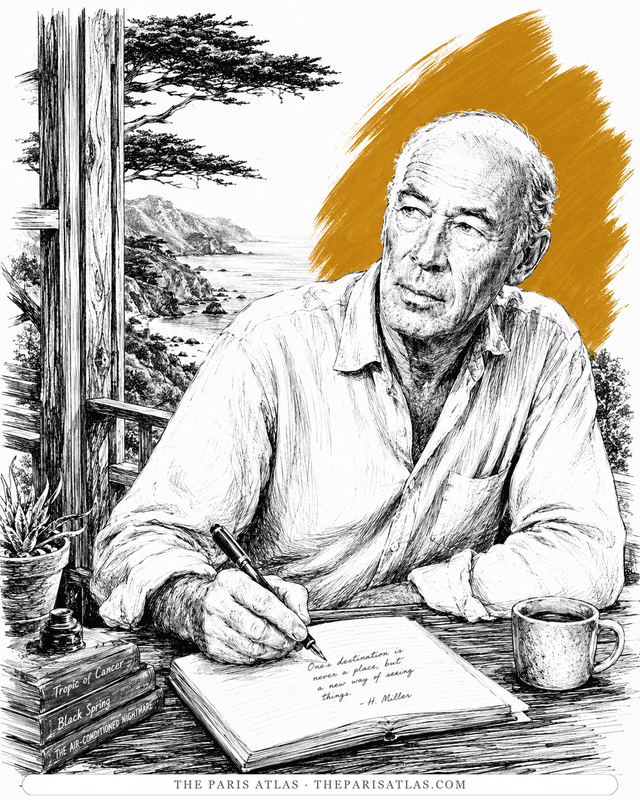
Henry Miller
The Brooklyn dropout who arrived in Paris broke at thirty-eight and wrote the exuberant, banned books that ended American censorship.
View author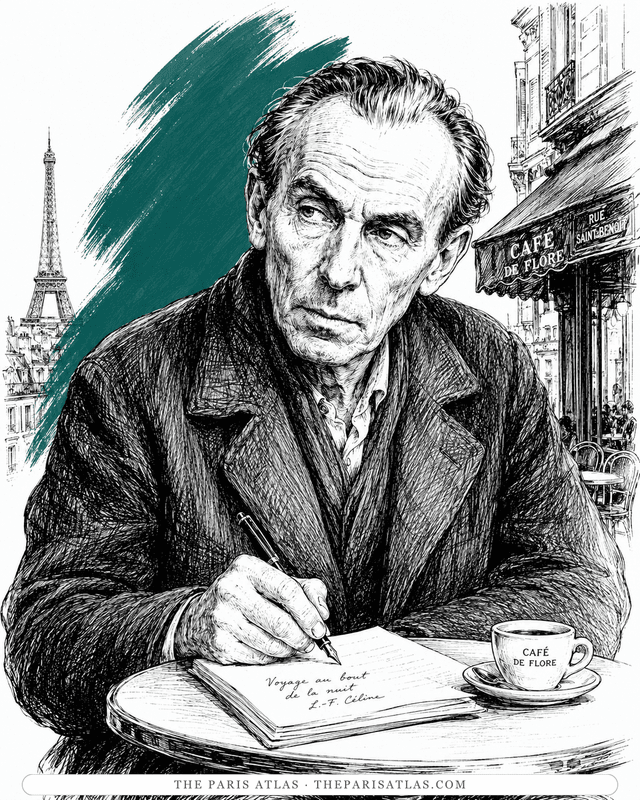
Louis-Ferdinand Céline
The doctor of the Paris slums who wrote the century's blackest, funniest novel — and changed the sound of French prose.
View author