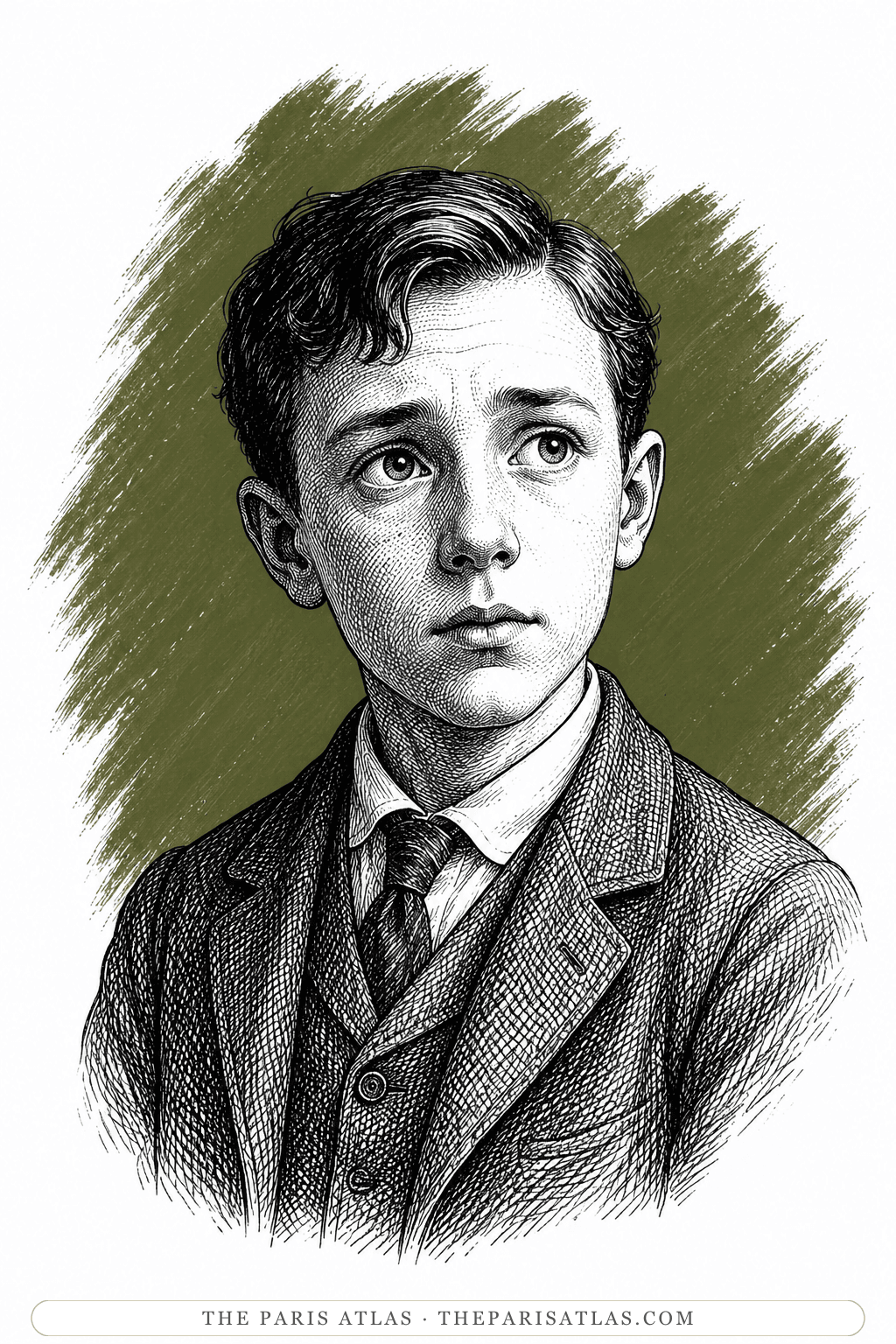
Rudolph Miller
The eleven-year-old boy at the centre of “Absolution” — the chapter F. Scott Fitzgerald cut from the front of The Great Gatsby and published on its own.
To be somebody with a better name. When he half closes his eyes he becomes Blatchford Sarnemington, who lives in great sweeping triumphs and has envious mutters following him down the street.
The book

At a glance
- Rudolph Miller — invented by F. Scott Fitzgerald
- Eleven
- Carl Miller, the local freight agent, of German and Irish stock
- Ludwig, a small town in the Dakota wheat country of the Red River valley
- Blatchford Sarnemington, when his eyes are half closed
- Written as the opening chapter of The Great Gatsby and cut before publication
Who they are in the book
Spoiler-freeRudolph Miller is the boy in “Absolution,” a story the American writer F. Scott Fitzgerald wrote in 1924 as the opening chapter of The Great Gatsby and then cut, because he preferred to keep his hero's origins mysterious. H. L. Mencken printed it on its own in The American Mercury that June, and it was collected in All the Sad Young Men two years later. Rudolph is invented, and because of where the story came from he is as close as anything Fitzgerald published to a picture of Jay Gatsby's boyhood.
He is eleven, the son of Carl Miller, the freight agent in a small town called Ludwig in the Dakota wheat country, and the story opens with him arriving at the parish priest's study in a state of abject fear over a sin he thinks he cannot confess. The whole thing takes one afternoon, with the previous Saturday and Sunday told inside it.
How Rudolph Miller Is Portrayed
- How the priest first sees himA beautiful, intense little boy of eleven, brought in by the housekeeper and sitting down in a patch of sunshine: two enormous, staccato eyes lit with gleaming points of cobalt light, and a trembling mouth he keeps covering with his hand.
- The list he brings to confessionTaking the Name of the Lord in vain, which was bravado and near enough to a brag. Being mean to old lady Swenson, who kept the baseball they knocked through her window, so they yelled “Twenty-three, Skidoo” at her all afternoon until she had a fit and the doctor was sent for. And not believing he was the son of his parents, out of pride.
- The lieThe priest asks whether he has told any lies, and something almost exterior to himself answers for him: “Oh, no, Father, I never tell lies.” For a moment he tastes the pride of the situation, like a commoner in the king's chair. Then he realises he has told a lie in confession, and the slat closes before he can fix it.
- Blatchford SarnemingtonThe name he repeats to himself all the way home. Blatchford Sarnemington is himself, and the words are in effect a lyric: when he becomes Blatchford, a suave nobility flows out of him and there are envious mutters in the air as he goes by.
- The corner he keeps from GodGod already knows about the lie, but Rudolph reserves a corner of his mind where he is safe from God and where he prepares the subterfuges with which he often tricks Him. The plan he works out in that corner is to drink water by accident in the morning, which under church law would make him unfit to receive communion that day.
- Caught at the sinkHis father comes downstairs at six on Sunday morning and finds him barefoot at the kitchen sink, one hand on the still-dripping faucet and the other clutching a full glass of water. Rudolph says he forgot about communion. He knows as the word leaves his mouth that it is the wrong answer, and that he should never have come downstairs at all — he had wanted to leave a wet glass by the sink as evidence, and the honesty of his imagination betrayed him.
- What he ownsHe sleeps on a cot in a screened-off corner of the hall, among his Alger books, his collection of cigar bands and his mothy pennants — “Cornell,” “Hamlin,” and “Greetings from Pueblo, New Mexico” — and whatever else belongs to his private life.
- The second confessionSent back into the church by his father, he kneels down and says, “I accuse myself of missing my morning prayers.” Asked whether that is all, he says that is all. What fills him afterwards the story calls a maudlin exultation.
Rudolph takes communion in what he believes to be a state of mortal sin, waiting through the whole service for God to stop his heart. Nothing happens except his father's elbow poking him to sit up straight at the rail. Walking back to the pew he hears the sharp taps of his own cloven hoofs loud upon the floor, and knows it is a dark poison he carries in his heart.
What happens in the priest's study afterwards is not absolution. Father Schwartz, who cannot remember what he is supposed to say, tells him instead that when a lot of people get together in the best places things go glimmering, and sends him to look at an amusement park from a dark place at night — but not to get up close, because up close there is only the heat and the sweat and the life. Rudolph leaves with his own conviction confirmed rather than corrected: that there is something ineffably gorgeous somewhere that has nothing to do with God. It is the nearest thing in Fitzgerald to an account of where a Jay Gatsby comes from.
If you like All the Sad Young Men


If you like F. Scott Fitzgerald
Explore authors with a similar voice, perspective, and influence.
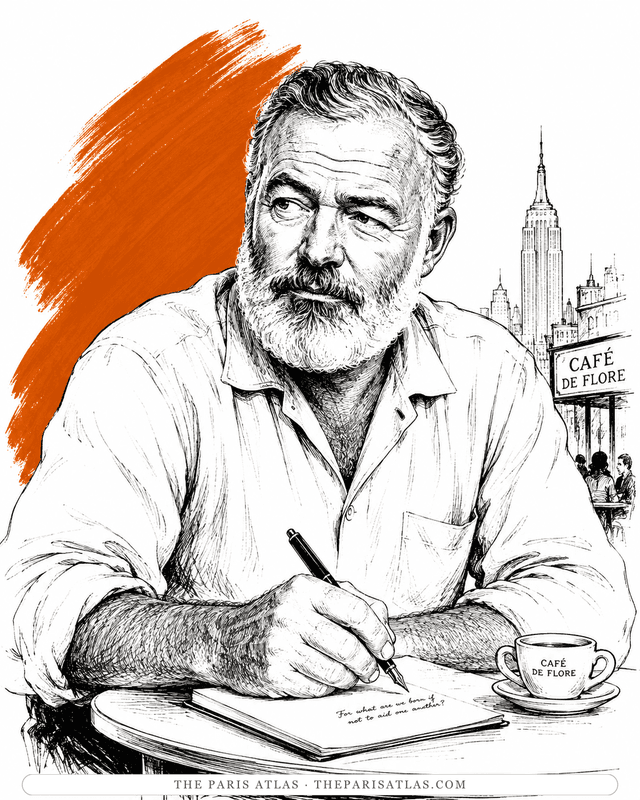
Ernest Hemingway
Fitzgerald vouched for him to Scribner's before they had met, then edited him better than he edited himself; the friendship's five rounds are chronicled in our journal.
View author
Henry Miller
The Brooklyn dropout who arrived in Paris broke at thirty-eight and wrote the exuberant, banned books that ended American censorship.
View author
Louis-Ferdinand Céline
The doctor of the Paris slums who wrote the century's blackest, funniest novel — and changed the sound of French prose.
View author